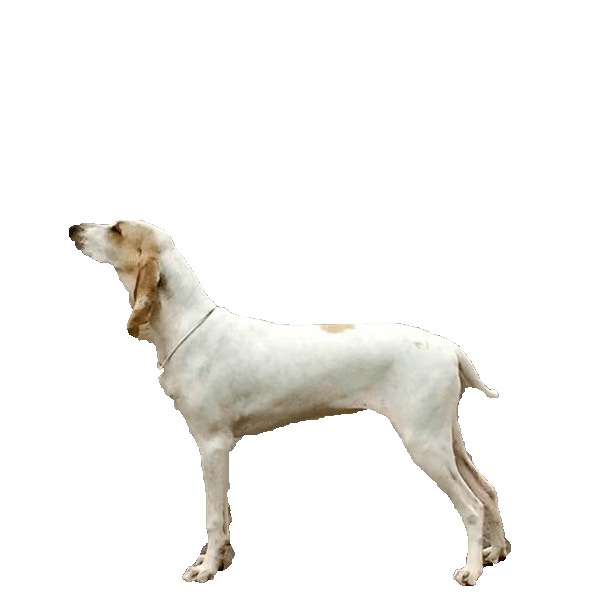
The Sloughi is a noble North African sighthound known for its reserved grace, deep loyalty, and elegant athletic build.
How the Sloughi coat is built, and what that means when you groom it.
A few of the Sloughi profiles members have added to United Pet Club.
A medium-sized North African sighthound from Morocco, the Sloughi is reserved with outsiders, deeply attached to its own household, and built lean for speed.
The Sloughi is a short-coated sighthound that took shape across North Africa, with Morocco recognized as its country of origin. It belongs to the same wider family as the Saluki and the Azawakh, dogs built for speed and endurance over open ground rather than short bursts. The breed stands at medium height, with a lean, dry frame, long legs, and a deep chest that gives it the racing profile typical of coursing hounds.
In temperament the Sloughi is loyal and forms a strong bond with its own household. With strangers it tends to hold back, sometimes appearing distant, and it carries itself with a quiet, composed manner indoors. It is an independent thinker rather than a dog that works in constant step with its handler, a trait most sighthounds share since they were bred to hunt at a distance from their owner.
The Sloughi suits owners in the Philippines who want a calm, sensitive companion and who can offer secure space for it to run, whether a fenced backyard in the provinces or an open field away from traffic. It is not a breed for harsh handling or for households expecting an outgoing, eager-to-please dog. Early socialization and a settled household routine help the Sloughi settle in with confidence.
| Attribute | Detail |
|---|---|
| Origin | Morocco (North Africa) |
| Size | Medium |
| Lifespan | 12 to 15 years |
| Group / role | Sighthound, coursing and hunting hound |
| Good with | Bonded family; reserved with strangers; needs careful, supervised introductions to small pets |
The Sloughi fits active, patient owners who value a quiet house dog that turns athletic once outdoors. A securely fenced area for it to gallop matters a lot, since the breed has a strong urge to chase anything that moves. Those who want a dog that bonds tightly with one household, and who respect its sensitive, independent character, will get along well with the Sloughi.
An ancient North African sighthound long linked to Morocco and nearby regions, the Sloughi was used to hunt game across desert and open country.
The Sloughi took shape in North Africa and is closely tied to Morocco, the country recognized as its place of origin. Lean, smooth-coated sighthounds of this type have existed in the region for a very long time, kept by people across the Maghreb to run down game over open ground.
The breed earned its keep as a hunting hound, not as a household pet in the way many dogs are kept today. It coursed hare, gazelle, and other desert game, relying on sharp sight, speed, and stamina across rough terrain. Hounds stayed close to the family and were looked after with care, a working partnership between hunter and dog rather than a purely outdoor arrangement.
The Sloughi shares ancestry and a general look with other African and Middle Eastern sighthounds, including the Saluki and the Azawakh, though it remains a distinct breed with its own regional history. Differences in coat, build, and color set it apart from these relatives.
In recent decades the Sloughi has been bred and shown outside North Africa and is registered with major kennel organizations abroad. In the Philippines it remains rare, known mostly to sighthound enthusiasts and occasionally seen through PCCI-linked shows or imported bloodlines, kept by owners who value its working heritage and quiet temperament.
The Sloughi is a lean, smooth-coated sighthound with a deep chest, long legs, and a fine head, giving it the elegant racing outline typical of coursing hounds.
The Sloughi carries a dry, athletic build with almost no excess flesh. The body shows clear bone structure, a deep chest, a tucked-up underline, and long, straight legs. The head is fine and refined, set on a long neck, with large, dark eyes that give the breed a gentle, watchful expression. The tail is thin and carried low, curving upward at the tip when the dog is at ease.
| Trait | Standard |
|---|---|
| Height | Roughly 60 to 72 cm (24 to 28 in) at the shoulder; females smaller |
| Weight | About 18 to 28 kg (40 to 62 lb) |
| Coat | Short, fine, and smooth, lying close to the body |
| Colors | Shades of sand and fawn through to red, with or without black markings or a dark mask; brindle also occurs |
| Eyes | Large, dark, set well in the skull |
The coat is short and smooth and needs no clipping, a practical trait given the Philippines' year-round heat and humidity. Color runs across the sand spectrum, from pale cream through fawn to a deeper red. Many dogs carry a black mask, dark mantle, or brindle striping. The skin is fine, and the overall look is of a sleek, low-maintenance hunting hound rather than a heavily coated breed.
The Sloughi is loyal and devoted to its family, reserved or aloof with strangers, and independent in nature, with the strong chase instinct typical of sighthounds.
The Sloughi builds a close, lasting bond with its household and is gentle and affectionate with the people it trusts. With strangers it stays reserved and can come across as aloof, holding back rather than seeking attention. This reserve is normal for the breed and should not be mistaken for aggression.
Around family the Sloughi is calm and quiet indoors, often content to rest near its people on a cool tiled floor during the hottest part of the day. It can live with children when raised together and introduced with care, though its sensitive nature means it does best in a settled home without rough handling. With other dogs it is generally sociable, but its strong prey drive means small pets such as cats, or backyard chickens, may be chased unless the dog is raised with them and watched closely.
The breed is independent and was bred to make its own decisions while hunting at a distance from its handler. It is intelligent but not eager to please in the way some working breeds are, so it responds to patient, respectful handling rather than pressure or repetition.
| Trait | Rating |
|---|---|
| Affection (with family) | 4 |
| Energy | 4 |
| Trainability | 3 |
| Vocalness | 2 |
| Shedding | 2 |
The Sloughi is low-maintenance to groom but needs regular hard exercise, secure space to run, and protection from the cold, since its thin coat gives little insulation.
The Sloughi adjusts well to a calm home and stays quiet indoors, but it needs access to space where it can run flat out. Even with a tropical climate working in its favor for warmth, the breed's thin coat and low body fat mean it can still feel a chill during cool nights or the rainy season, so a light coat and a warm, padded resting spot are worth having on hand. A secure garden or covered run matters too, since a Sloughi can cover ground fast once something catches its eye, and open compounds without proper fencing are common in many subdivisions.
The Sloughi does well on a complete, good-quality diet matched to its lean frame and activity level, fed in measured amounts to keep its naturally slim outline.
The Sloughi is naturally lean, and a slight outline of the last ribs is normal for the breed rather than a sign it is underfed. Feed a complete, balanced diet suited to a medium-sized active dog, and adjust the amount to the individual dog's weight, age, and exercise level. As a deep-chested breed, the Sloughi may carry a higher risk of bloat, so splitting the daily ration into two meals and holding off on hard activity right after eating is a sensible precaution.
| Life stage | Amount per day | Meals |
|---|---|---|
| Puppy (2 to 6 months) | Per product guidance for growth, divided across the day | 3 to 4 |
| Junior (6 to 12 months) | Growth ration tapering toward adult | 2 to 3 |
| Adult | About 250 to 400 g of quality dry food, by size and activity | 2 |
| Senior | Adult ration adjusted for lower activity | 2 |
Keep treats to a small share of daily calories to protect the breed's lean condition. Most Sloughis on a complete diet need no extra supplements. Check with a veterinarian before adding anything, especially for puppies, pregnant dogs, or seniors with existing health concerns.
The Sloughi is generally a healthy, long-lived sighthound with a lifespan of 12 to 15 years, though it shares some sighthound-specific sensitivities owners should know.
The Sloughi is typically a sturdy breed with a lifespan of 12 to 15 years. As a sighthound it carries a low percentage of body fat and shows sensitivity to certain anesthetics and drugs, so it matters to use a veterinarian who understands sighthound physiology, since not every clinic has that experience. Responsible breeders screen for known concerns, and routine veterinary care supports a long, healthy life.
| Condition | Signs | Note |
|---|---|---|
| Anesthesia sensitivity | Slow recovery, exaggerated drug response | Low body fat affects drug handling; inform the vet of breed type |
| Bloat / gastric torsion | Swollen abdomen, retching, restlessness | Risk in deep-chested dogs; seek emergency care |
| Eye conditions (e.g. PRA) | Night vision loss, cloudiness | Breeders may screen; veterinary eye checks advised |
| Heat or cold stress | Shivering in cold, overheating in heat | Thin coat and low fat reduce temperature tolerance |
The Sloughi is intelligent but independent, and responds best to patient, reward-based training and early socialization rather than repetition or pressure.
The Sloughi is a thinking, independent dog rather than a handler-focused worker, so training calls for patience and consistency. It learns well when motivated but loses interest in drilling and reacts poorly to harsh corrections, which can damage trust with a sensitive breed. Short, upbeat sessions work better than long ones. Because the chase instinct runs strong, off-lead reliability around moving animals is hard to guarantee, so a secure area or a long line stays the safer default, especially in open compounds where stray animals wander through.
Sloughi breeding follows the pattern of medium sighthounds, with health-screened parents, an average gestation near nine weeks, and modest litter sizes.
Sloughis generally reach physical and mental maturity slowly, as many sighthounds do, and breeding is best left until the dog is fully grown and health-tested. Responsible breeders confirm temperament and screen for known concerns before mating. Gestation in dogs averages about 63 days, and Sloughi litters tend to be moderate in size.
Raising Sloughi puppies centers on gentle, early socialization, since the breed's reserved nature means confident exposure to people and everyday situations in the first months shapes how the adult dog turns out. Puppies should be kept warm, especially during cooler nights, fed well for steady growth, and introduced to handling, household sounds, and other animals at a measured pace. Reputable breeders place puppies only with owners who understand the breed's exercise needs and sensitive character, and in the Philippines this often means a small circle of dedicated sighthound keepers rather than open litters for sale.
| Metric | Value |
|---|---|
| Sexual maturity | Reached during the first year; breed when fully mature |
| Gestation | About 63 days (roughly nine weeks) |
| Average litter size | Around 4 to 8 puppies |
| Weaning | About 6 to 8 weeks |
| Key focus | Health screening of parents and early socialization of puppies |
The city vet office handles the RA 9482 paperwork; a free United Pet Club record is what a finder anywhere can actually search for your Sloughi.
Type in your Sloughi's name, his birth date, and a clear photo, add your mobile number, and save. That is the entire process, and the profile stays free for his whole life. Dog registration works with or without a chip, so the vet visit can come later.
If a vet has already implanted a chip, the number still has to be filed where a scanner can trace it, because an unfiled chip points at nobody. Register the microchip free on the lifetime plan: any brand sold in the Philippines qualifies, updates after you move house or change SIM cost nothing, and the record stays searchable here and abroad. Create your free account and cover both in one go.
Open a free United Pet Club account, add your Sloughi's details and a photo, then save the profile. It stays free for his whole life and sits alongside the city vet office registration RA 9482 requires.
Type the 15-digit chip number into your free account together with your mobile number and address. The lifetime plan charges nothing for the registration or for any update, whatever brand the clinic used.
Yes, RA 9482 requires dog registration with your city or municipal veterinary office, along with current anti-rabies vaccination. The United Pet Club profile is the searchable half: free, worldwide, and tied to your current mobile.
Nothing. The free lifetime plan covers the profile, the microchip record, and every update, with no renewal fees at all.
Common questions about the Sloughi cover its size, temperament, care needs, lifespan, suitability as a pet, and availability.
The Sloughi is a medium-sized sighthound. Most stand roughly 60 to 72 cm (24 to 28 in) at the shoulder and weigh about 18 to 28 kg (40 to 62 lb), with females usually smaller than males.
It is loyal and affectionate with its family, reserved or aloof with strangers, and independent by nature. Indoors it stays quiet and calm, while outdoors it shows the athletic drive of a coursing hound.
Grooming is easy because of the short coat, but the breed needs regular hard exercise and secure space to run. Its thin coat and low body fat mean it needs protection from the cold, and its chase instinct calls for fenced areas or a long lead.
The typical lifespan is 12 to 15 years. Routine veterinary care, a lean healthy weight, and a sighthound-aware vet help support a long life.
It can be, in a calm home that suits its sensitive nature. It bonds closely with its household and can live with respectful children, but it needs careful introductions to small pets because of its prey drive.
The Sloughi is an uncommon breed kept mainly by enthusiasts, and this holds true locally as well. Finding a puppy usually means reaching out to dedicated breeders, often through PCCI-linked networks or importers, and waiting lists are common.

![Shami [Hon. Florence Amhert's], a Male Sloughi registered with United Pet Club](https://media.unitedpetclub.com/m/KY3ijpRN6B/shami-hon-florence-amhert-s-sloughi_orig.avif "Shami [Hon. Florence Amhert's] — Sloughi")