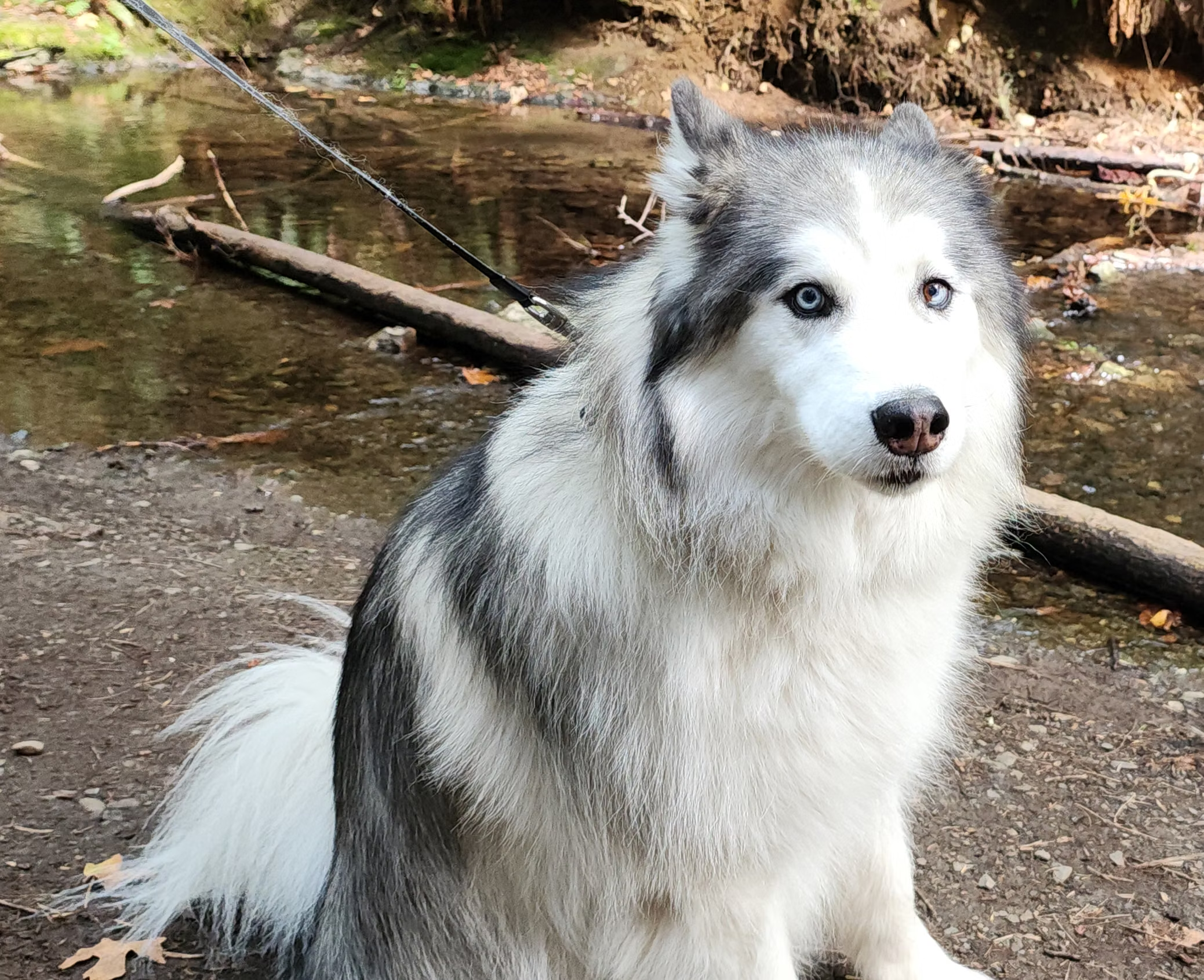
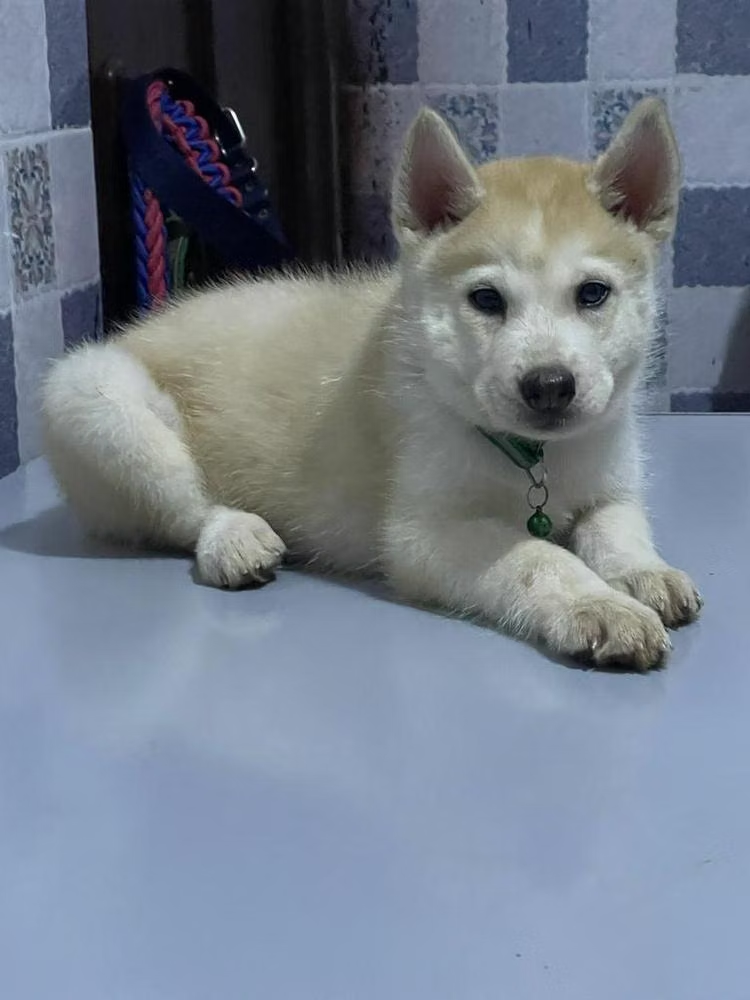
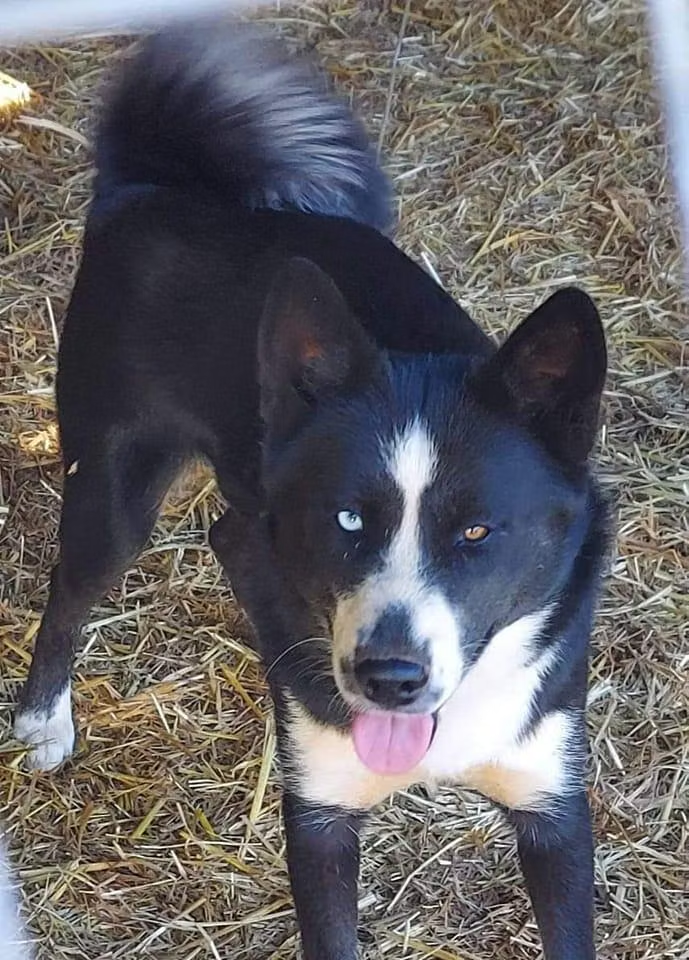
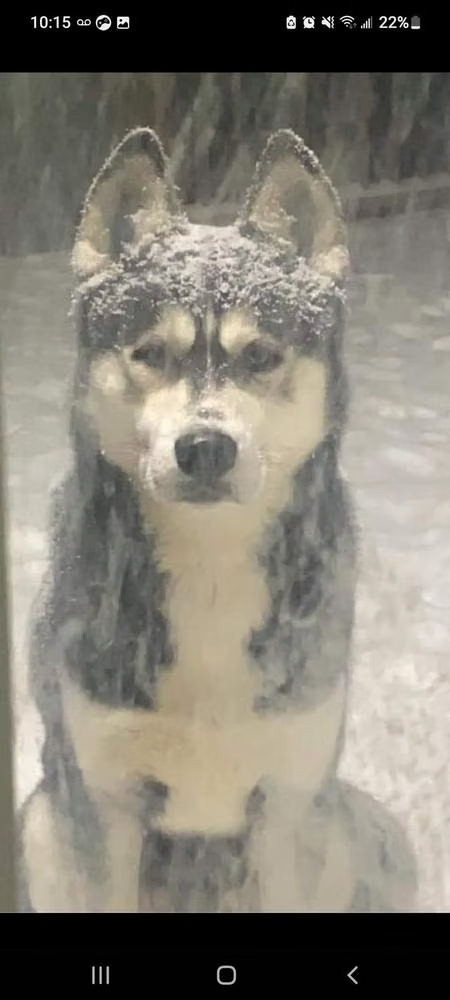
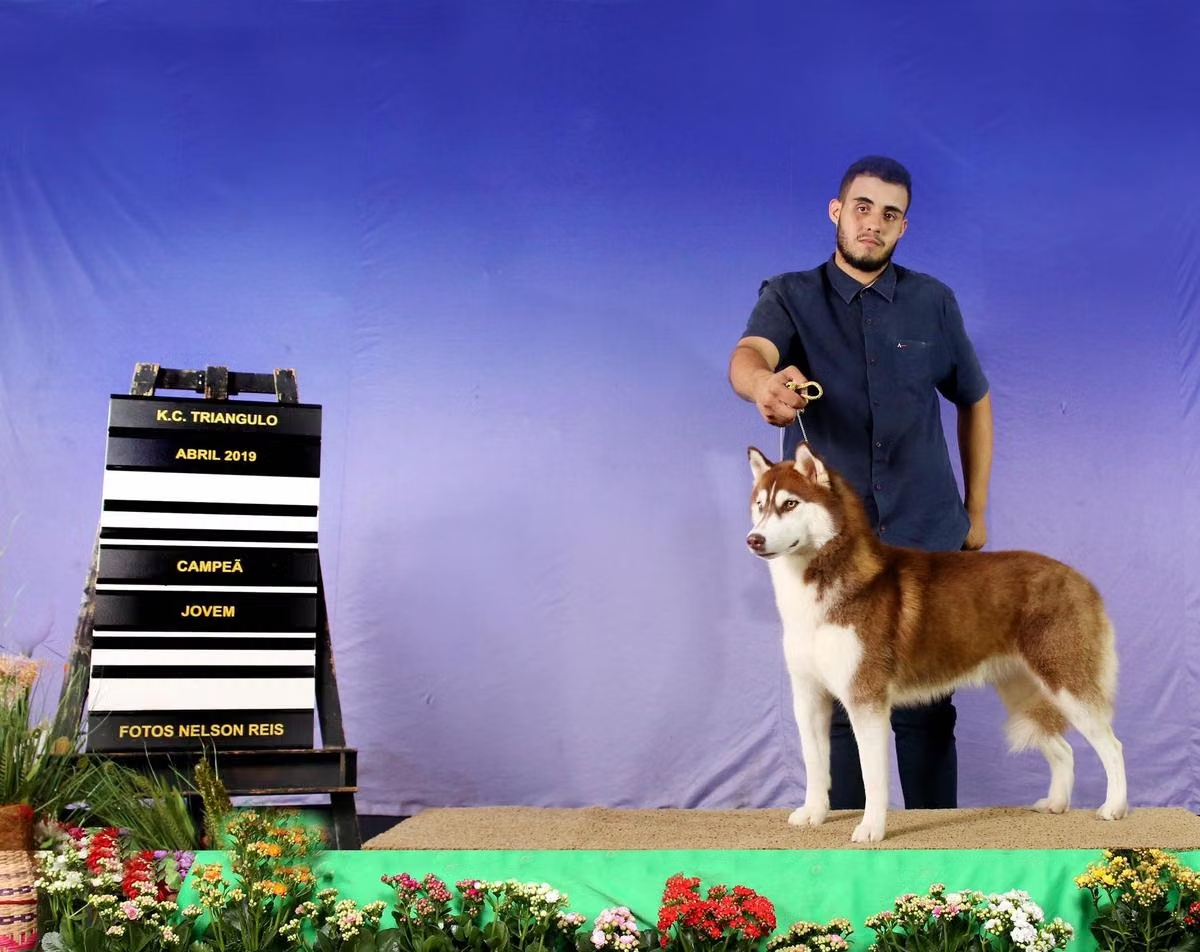
The Siberian Husky is a friendly, outgoing sled dog known for its boundless energy, free spirit, and good-natured sociability.
How the Siberian Husky coat is built, and what that means when you groom it.
Critical: A Siberian Husky should not be shaved.
The undercoat keeps heat out as well as in, and the outer coat shields the skin from sun and insect bites. Clipping the whole coat off removes both. It often grows back patchy, soft or a different colour, and in some animals the guard hairs never return properly. Brush the undercoat out instead of cutting it off.
Information: A Siberian Husky drops its undercoat in heavy bursts.
The undercoat comes out in heavy bursts over a few weeks. An undercoat rake, or a bath followed by a proper blow-dry, clears it far faster than daily brushing. Clipping the coat down is not a shortcut for this.
A few of the Siberian Husky profiles members have added to United Pet Club.
The Siberian Husky is a medium-sized sled dog from Russia, prized for its friendly nature and high energy level.
The Siberian Husky is a medium-sized working dog developed to pull light loads over long distances in cold weather. The breed comes from the Chukchi people of northeastern Russia, who used these dogs for transport across frozen ground. A full-grown Husky stands about 20 to 23.5 inches at the shoulder and weighs 35 to 60 pounds, with males larger than females.
Huskies are friendly and even-tempered, without much of the territorial or guarding instinct found in many working breeds. They warm up quickly to strangers, so they make poor watchdogs but easy, sociable companions in an active household. The breed is also independent, a holdover from its days making decisions on the trail, and that independence often comes across as stubbornness during training.
What defines the breed most is its energy level. A Husky that does not get enough exercise tends to dig, howl, or find a way out of the yard. It suits owners who can commit to vigorous daily exercise and a securely fenced space.
| Attribute | Detail |
|---|---|
| Origin | Russia |
| Size | Medium (35 to 60 lb) |
| Lifespan | 12 to 14 years |
| Group/role | Working dog, sled puller |
| Good with | Families, children, other dogs |
The Siberian Husky fits active families who make time for daily exercise and outdoor activity. It thrives in cooler surroundings and a home with a secure yard. It is not the right match for anyone who wants a guard dog, is away from home for long stretches, or cannot handle shedding and a fairly vocal dog.
The Siberian Husky was bred by the Chukchi people of northeastern Siberia as a sled dog, then brought to Alaska in the early 1900s.
The Siberian Husky comes from the Chukchi people of the Chukotka region in northeastern Siberia. They needed a dog that could pull a light sled over long distances while eating comparatively little, so they selected for endurance, a stable temperament, and a willingness to live in close quarters with the family. These dogs often slept alongside children and were prized for cooperation rather than aggression, unlike many dogs kept for guarding.
Sled dogs from Siberia reached Alaska in 1908, where miners and settlers used them for hauling and for sled races during the gold rush years. The dogs held up well over long distances and quickly earned a name for themselves among local mushers.
The breed became widely known in 1925 after the serum run to Nome, when teams of sled dogs relayed diphtheria antitoxin across hundreds of miles of frozen ground to stop an outbreak. Siberian Huskies took part in that effort, and news of the run brought the breed to public attention.
The American Kennel Club recognized the Siberian Husky in 1930. In the Philippines, the Philippine Canine Club, Inc. (PCCI), the country's national kennel club, recognizes the breed as well. Today the Husky is kept mostly as a companion rather than a working sled dog, though it has not lost its drive to run and pull.
The Siberian Husky is a medium-sized, well-balanced dog with erect ears, a dense double coat, and almond-shaped eyes in blue, brown, or both.
Everything about the Siberian Husky's build points back to its work pulling a sled. The body is slightly longer than it is tall, the chest is deep without being wide, and the legs are straight with good muscle. The tail carries a full brush of fur and curls up in a sickle shape when the dog is alert, though it drops when the dog relaxes. The gait is smooth and light, almost effortless to watch.
| Trait | Detail |
|---|---|
| Height | 21 to 23.5 in (males), 20 to 22 in (females) |
| Weight | 45 to 60 lb (males), 35 to 50 lb (females) |
| Coat | Medium-length double coat, dense and straight |
| Colors | Black, gray, red, sable, agouti, and white, often with markings |
| Eyes | Almond-shaped; blue, brown, amber, or mixed |
The double coat pairs a soft, thick undercoat with a straight outer coat that lies close to the body. Twice a year the undercoat sheds out heavily, a stretch owners commonly call blowing coat. Colors run from pure white through gray, black, red, sable, and agouti, most often combined with white on the legs, chest, and face. Facial markings differ a lot from one dog to the next. Eye color has nothing to do with coat color, and a Husky with one blue eye and one brown eye, a trait called heterochromia, is accepted within the breed.
The Siberian Husky is friendly and sociable with people and other dogs, yet independent enough to roam or howl when it gets bored.
The Siberian Husky is friendly by nature and rarely holds a grudge. Because the breed grew up living close to families, it shows affection toward people of every age and generally gets along well with children. A Husky greets strangers with curiosity rather than suspicion, which is exactly why it makes such a poor guard dog.
Around other dogs, the Husky is typically sociable, a trait shaped by generations of working and living in teams. Its prey drive runs strong, though, so it may go after cats, small pets, or livestock, which is reason enough to socialize a Husky early and supervise it around smaller animals.
Independence sits at the center of the breed's character. Huskies were bred to make their own calls out on the trail, and that same self-reliance turns into stubbornness once they are home. They are clever dogs, but not the type that lives to please a handler, so training calls for patience and consistency more than repetition. Many Huskies are vocal in a distinctive way, favoring howls and a kind of talking sound over ordinary barking. One that is bored or under-exercised tends to dig, escape, or howl, so both physical exercise and mental stimulation matter.
| Trait | Rating |
|---|---|
| Affection | 4 |
| Energy | 5 |
| Trainability | 2 |
| Vocalness | 4 |
| Shedding | 5 |
The Siberian Husky needs heavy daily exercise, regular brushing through seasonal shedding, and a secure yard to stop it from escaping.
Keeping a Siberian Husky demands more effort in exercise and containment than in grooming, since the coat is fairly easy to maintain between sheds. The breed was built for cold weather and struggles in heat, a real consideration in a country like the Philippines, where the climate stays hot and humid throughout the year. Owners here need to watch for signs of heat stress and give the dog shade, water, and rest during the hottest parts of the day.
A secure home with a tall fence set into the ground, not just resting on top of it, suits this breed best. Huskies are notorious escape artists that climb, jump, and dig their way under barriers. They handle cold with ease but need shade and constant access to water once temperatures climb. Apartment or condo living works only for owners fully committed to daily exercise.
The Siberian Husky is an efficient eater that needs a balanced diet matched to its activity level, fed in measured portions to avoid weight gain.
Owners often describe the Siberian Husky as an efficient feeder, meaning it holds its condition on less food than its size would suggest. That trait traces back to generations of working hard on scarce rations. A complete and balanced diet suited to the dog's age and activity level covers its needs. Dogs that work or pull sleds may need more calories and fat during heavy activity, while pet Huskies need their portions watched closely to stay lean.
| Life stage | Amount per day | Meals |
|---|---|---|
| Puppy (2 to 6 months) | 1 to 2 cups | 3 to 4 |
| Junior (6 to 12 months) | 1.5 to 2.5 cups | 2 to 3 |
| Adult | 1.5 to 2 cups | 2 |
| Senior | 1 to 1.75 cups | 2 |
Limit treats to around 10 percent of daily calories to keep weight in check. A Husky on a complete diet usually needs no extra supplements, though a veterinarian may suggest omega fatty acids for coat health or joint support as the dog ages. Keep fresh water available at all times, especially after exercise.
The Siberian Husky is generally a hardy breed with a 12 to 14 year lifespan, though it can be prone to certain eye conditions and hip dysplasia.
The Siberian Husky is a sturdy, generally healthy breed, which fits its history of working under demanding conditions. Most live between 12 and 14 years. The conditions to watch for are mainly inherited eye disorders and joint problems, and responsible breeders screen their dogs for both. Routine veterinary care paired with a sensible exercise routine keeps most Huskies sound well into old age.
| Condition | Signs | Note |
|---|---|---|
| Cataracts | Cloudy eye, vision loss | Can appear in young adults; screen breeding stock |
| Progressive retinal atrophy | Night blindness, declining vision | Inherited; DNA tests available |
| Corneal dystrophy | Hazy spots on the cornea | Often mild; affects appearance more than vision |
| Hip dysplasia | Limping, stiffness, reluctance to exercise | Lower incidence than in many breeds |
| Hypothyroidism | Weight gain, coat changes, low energy | Managed with daily medication |
The Siberian Husky is intelligent but independent, so training calls for patience, consistency, and reward-based methods over repetitive drills.
The Siberian Husky picks things up fast, but its independent streak means it does not always choose to obey just because it understood the command. The breed was bred to work with a fair amount of autonomy, so a degree of stubbornness comes with the territory. Short, varied sessions built around rewards work far better than long, repetitive drills, which the dog simply tunes out. Recall is one of the harder skills to teach, given the strong prey drive and the urge to run, and many owners never fully trust a Husky off leash in open spaces. Early exposure to people, other dogs, and routine handling lays the groundwork for a well-adjusted adult.
Siberian Huskies typically reach breeding maturity around two years, with a pregnancy of about 63 days and average litters of four to six puppies.
Responsible breeding of Siberian Huskies starts with health screening and a close look at temperament. Dogs are physically capable of breeding earlier, but most breeders hold off until at least two years of age so that hip and eye health can be properly evaluated first. Females usually cycle into season twice a year. Pregnancy runs about 63 days from conception, and litters average four to six puppies, though bigger litters do happen.
Newborn puppies rely completely on their mother for warmth and food during the first weeks of life. Their eyes open at around two weeks, and weaning starts near the four-week mark as they begin taking solid food. The socialization window, roughly three to twelve weeks, matters a great deal for a breed this independent, so early exposure to people, sounds, and gentle handling shapes how the adult dog turns out. Most breeders send puppies to their new homes at eight weeks or later. Anyone considering breeding should confirm health clearances on both parents and have homes lined up for every puppy in the litter.
| Metric | Value |
|---|---|
| Breeding maturity | Around 2 years |
| Heat cycle | Twice per year |
| Gestation | About 63 days |
| Average litter | 4 to 6 puppies |
| Eyes open | About 14 days |
| Weaning | Around 4 to 6 weeks |
| Go-home age | 8 weeks or older |
The city vet office handles the RA 9482 paperwork; a free United Pet Club record is what a finder anywhere can actually search for your Siberian Husky.
A Siberian Husky that gets loose during a storm is identified by whatever record answers the scan, not by the barangay it came from. Give it a record that answers: your mobile number, the dog's photo, and his details, free for life with United Pet Club. Register your dog today and it is done for good.
If a vet has already implanted a chip, the number still has to be filed where a scanner can trace it, because an unfiled chip points at nobody. Register the microchip free on the lifetime plan: any brand sold in the Philippines qualifies, updates after you move house or change SIM cost nothing, and the record stays searchable here and abroad. Create your free account and cover both in one go.
Open a free United Pet Club account, add your Siberian Husky's details and a photo, then save the profile. It stays free for his whole life and sits alongside the city vet office registration RA 9482 requires.
Type the 15-digit chip number into your free account together with your mobile number and address. The lifetime plan charges nothing for the registration or for any update, whatever brand the clinic used.
Yes, RA 9482 requires dog registration with your city or municipal veterinary office, along with current anti-rabies vaccination. The United Pet Club profile is the searchable half: free, worldwide, and tied to your current mobile.
Nothing. The free lifetime plan covers the profile, the microchip record, and every update, with no renewal fees at all.
Common questions Filipino owners ask about the Siberian Husky cover its size, temperament, everyday care, lifespan, and fit for first-time owners.
It is a medium-sized breed. Males stand 21 to 23.5 inches and weigh 45 to 60 pounds, while females stand 20 to 22 inches and weigh 35 to 50 pounds.
Yes. The breed is friendly and even-tempered and was raised to live closely with families, so it usually does well with children. It is also sociable with strangers, which means it will not make a good guard dog.
It is demanding when it comes to exercise and containment. A Husky needs one to two hours of vigorous activity every day, a securely fenced yard, and regular brushing, especially during its twice-yearly heavy shedding.
Most live 12 to 14 years. The breed is generally hardy, with inherited eye conditions and hip dysplasia as the main health concerns.
They are intelligent but independent, so training takes patience and consistency. Short, reward-based sessions work best, and recall is difficult because of the strong prey drive and the urge to run.
It can be a challenge for a first-time owner. The breed's energy, independence, talent for escaping, and vocal nature suit experienced, active owners who can commit to daily exercise and firm, consistent handling.
They bark less than many breeds, but they make up for it with howling and a distinctive talking sound. A Husky that is bored or under-exercised tends to be noisier.