
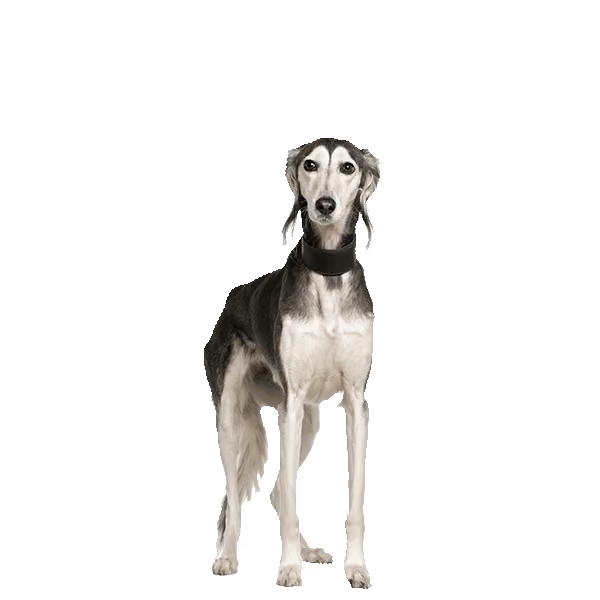
Saluki
The Saluki is an ancient, graceful sighthound known for its remarkable speed and quietly dignified, aloof elegance.
- Size
- Medium
- Lifespan
- 12–14 years
- Origin
- Arabian Peninsula
- Temperament
- Dignified
- Standard colors
- Black, White, and Gray and 8 more
Characteristics
Coat and grooming
How the Saluki coat is built, and what that means when you groom it.
- Coat layers
- Single coat
- Coat texture
- Silky
- Coat length
- Short
- Shedding
- Low shedding
Grooming guidance
Information: A Saluki needs clipping every few weeks.
This coat keeps growing rather than shedding out, so it has to be trimmed every few weeks. Left to grow it mats down against the skin and traps moisture, dirt and heat.
Saluki colors and patterns
What each club's breed standard says about every Saluki color and pattern. Point at a ruling to see the club's own wording.
Breed standards describe the Saluki in Black, White, Gray, Blue, Silver, Chocolate, Tan, Red, Gold, Cream, and Fawn. Standard patterns: Solid, Tricolor, Brindle, Parti-color, Sable, Grizzle, Tan point, and Reverse brindle.
| Color or pattern | FCI | AKC | UKC | KC | KUSA |
|---|---|---|---|---|---|
| Black | Standard (“Any colour or combination of colours is permissible”) | Standard (“Black”) | Standard (“Any color or combination of colors is permissible”) | Standard (“Black Particolour”) | Standard (“Any colour or combination of colours permissible”) |
| White | Standard (“Any colour or combination of colours is permissible”) | Standard (“White”) | Standard (“Any color or combination of colors is permissible”) | Standard (“White”) | Standard (“Any colour or combination of colours permissible”) |
| Gray | Standard (“Any colour or combination of colours is permissible”) | Standard (“Gray”) | Standard (“Any color or combination of colors is permissible”) | Standard (“Any colour or combination of colours permissible”) | Standard (“Any colour or combination of colours permissible”) |
| Blue | Standard (“Any colour or combination of colours is permissible”) | Not recognized | Standard (“Any color or combination of colors is permissible”) | Not recognized (“brindle, blue or merle which are unacceptable”) | Not recognized (“brindle, blue or merle which are unacceptable”) |
| Silver | Standard (“Any colour or combination of colours is permissible”) | Standard (“Silver”) | Standard (“Any color or combination of colors is permissible”) | Standard (“Silver Grizzle”) | Standard (“Any colour or combination of colours permissible”) |
| Chocolate | Standard (“Any colour or combination of colours is permissible”) | Standard (“Chocolate”) | Standard (“Any color or combination of colors is permissible”) | Standard (“Chocolate & Tan”) | Standard (“Any colour or combination of colours permissible”) |
| Tan | Standard (“Any colour or combination of colours is permissible”) | Standard (“Black & Tan”) | Standard (“Any color or combination of colors is permissible”) | Standard (“Black & Tan”) | Standard (“Any colour or combination of colours permissible”) |
| Red | Standard (“Any colour or combination of colours is permissible”) | Standard (“Red”) | Standard (“Any color or combination of colors is permissible”) | Standard (“Red”) | Standard (“Any colour or combination of colours permissible”) |
| Gold | Standard (“Any colour or combination of colours is permissible”) | Standard (“Golden”) | Standard (“Any color or combination of colors is permissible”) | Standard (“Gold”) | Standard (“Any colour or combination of colours permissible”) |
| Cream | Standard (“Any colour or combination of colours is permissible”) | Standard (“Cream”) | Standard (“Any color or combination of colors is permissible”) | Standard (“Cream”) | Standard (“Any colour or combination of colours permissible”) |
| Fawn | Standard (“Any colour or combination of colours is permissible”) | Standard (“Fawn”) | Standard (“Any color or combination of colors is permissible”) | Standard (“Fawn”) | Standard (“Any colour or combination of colours permissible”) |
| Albino | No ruling | Not recognized | Disqualifying (“Albinism”) | No ruling | No ruling |
| Patterns | |||||
| Solid | Standard (“Any colour or combination of colours is permissible”) | Standard (“White, cream, fawn, golden, red”) | Standard (“Any color or combination of colors is permissible”) | Standard (“Any colour or combination of colours permissible”) | Standard (“Any colour or combination of colours permissible”) |
| Tricolor | Standard (“Any colour or combination of colours is permissible”) | Standard (“tricolor (white, black and tan)”) | Standard (“Any color or combination of colors is permissible”) | Standard (“Black & Tan Tricolour”) | Standard (“Any colour or combination of colours permissible”) |
| Brindle | Fault (“Brindles are undesirable”) | Standard (“Red Brindle”) | Fault (“brindles, which are undesirable”) | Not recognized (“brindle, blue or merle which are unacceptable”) | Not recognized (“brindle, blue or merle which are unacceptable”) |
| Parti-color | Standard (“Any colour or combination of colours is permissible”) | Standard (“Parti-Color”) | Standard (“Any color or combination of colors is permissible”) | Standard (“Black & White Particolour”) | Standard (“Any colour or combination of colours permissible”) |
| Sable | Standard (“Any colour or combination of colours is permissible”) | Standard (“Sable”) | Standard (“Any color or combination of colors is permissible”) | Standard (“Black Fringed Fawn”) | Standard (“Any colour or combination of colours permissible”) |
| Grizzle | Standard (“Any colour or combination of colours is permissible”) | Standard (“Grizzle Markings”) | Standard (“Any color or combination of colors is permissible”) | Standard (“Black Grizzle”) | Standard (“Any colour or combination of colours permissible”) |
| Tan point | Standard (“Any colour or combination of colours is permissible”) | Standard (“Black & Tan”) | Standard (“Any color or combination of colors is permissible”) | Standard (“Black & Tan”) | Standard (“Any colour or combination of colours permissible”) |
| Reverse brindle | Fault (“Brindles are undesirable”) | Standard (“Red Brindle”) | Fault (“brindles, which are undesirable”) | Not recognized (“brindle, blue or merle which are unacceptable”) | Not recognized (“brindle, blue or merle which are unacceptable”) |
| Merle | No ruling | Not recognized | No ruling | Not recognized (“brindle, blue or merle which are unacceptable”) | Not recognized (“brindle, blue or merle which are unacceptable”) |
| Double merle | No ruling | Not recognized | No ruling | No ruling | No ruling |


| Color or pattern | FCI | AKC | UKC | KC | KUSA |
|---|---|---|---|---|---|
| Dark brown | Standard (“Dark to hazel”) | Standard (“Dark to hazel”) | Standard (“dark to hazel”) | Standard (“Dark to hazel”) | Standard (“Dark to hazel”) |
| Hazel | Standard (“Dark to hazel”) | Standard (“Dark to hazel”) | Standard (“dark to hazel”) | Standard (“Dark to hazel”) | Standard (“Dark to hazel”) |
| Color or pattern | FCI | AKC | UKC | KC | KUSA |
|---|---|---|---|---|---|
| Black | Standard (“Black or liver brown”) | Standard (“Nose black or liver”) | Standard (“black or liver”) | Standard (“Nose black or liver”) | Standard (“Nose black or liver”) |
| Liver | Standard (“Black or liver brown”) | Standard (“Nose black or liver”) | Standard (“black or liver”) | Standard (“Nose black or liver”) | Standard (“Nose black or liver”) |
What the rulings mean
- Standard
- Described by the club's breed standard.
- Fault
- Named by the club's breed standard as a fault: the animal can be shown but is penalized.
- Disqualifying
- The club's breed standard disqualifies an animal of this color or pattern.
- Not recognized
- The club does not accept this color or pattern for the breed.
Color changes
How a Saluki's colors can change over its life.
Blackchanges toRust
Coat · With body condition · can change back
Blackchanges toGray
Coat · Progressive
Blackchanges toBrown
Coat · In the sun · can change back
Whitechanges toRoan
Coat · With age · from 2 weeks
Tan pointchanges toSaddle
Coat · With age · from 6 to 156 weeks
Blackchanges toSnow nose
Nose · With the season · can change back
Blackchanges toPink
Nose · With the season · can change back


Sources
Each ruling comes from the club's published breed standard or color list.
Meet some of our Saluki
A few of the Saluki profiles members have added to United Pet Club.


About the Saluki
The Saluki is an ancient sighthound from the Arabian Peninsula, calm and reserved by nature, that needs a securely fenced yard rather than condo living in the Philippines.
The Saluki is one of the oldest sighthound types, developed across the Arabian Peninsula and the wider Middle East over many generations. It is a medium-sized dog built to run down game across open desert by sight rather than scent, using a long, ground-eating gallop instead of short bursts of speed. The frame is narrow and light, with a deep chest and long, fine legs made for sustained running.
At home the Saluki is quiet and gentle, but it stays independent and reserved around people outside the family. It bonds closely with its own household while remaining aloof with visitors, a mix of calm indoor behavior and intense outdoor drive that defines the breed.
Salukis carry themselves with dignity rather than the bubbly energy common in many companion breeds. They are sensitive to harsh handling and do best with owners who understand sighthound behavior, including a strong instinct to chase anything that moves, whether it is a ball, a cat, or a stray dog wandering into the yard.
| Attribute | Detail |
|---|---|
| Origin | Arabian Peninsula |
| Size | Medium |
| Lifespan | 12 to 14 years |
| Group / role | Sighthound, originally a hunting hound |
| Good with | Family members and older children; needs careful introductions to small pets and neighborhood strays because of its chase instinct |
Who the Saluki suits in a Philippine household
The Saluki suits owners who want a calm, clean, quiet housemate that also needs serious daily exercise in a secure, fenced space. This usually means a house with a private compound instead of a condominium unit. It works best for families who accept an independent dog that may not come straight back once it starts running. High, solid fencing matters in gated subdivisions and provincial properties alike, and households with free-roaming cats, chickens, or neighborhood dogs should plan first introductions with care.
History and origin
The Saluki ranks among the oldest sighthound types, shaped over thousands of years by desert and nomadic peoples of the Arabian Peninsula and the Middle East as a coursing hound.
The Saluki traces its roots to the Arabian Peninsula and the wider Middle East, where desert and nomadic communities kept lean, fast hounds to hunt gazelle, hare, and other game across open ground. Depictions of slender, long-legged hounds appear in ancient art from the region, and the type is widely regarded as one of the oldest hunting hound lines still recognizable today.
The breed developed alongside a hunting tradition where fast hounds covered open terrain, at times working together with falcons and horses. Local bloodlines were valued for speed and stamina, and the dogs were often kept as prized household companions rather than plain working stock. Regional differences produced both smooth-coated and feathered dogs suited to different terrain.
Salukis reached Europe through travelers, traders, and diplomatic ties with the Middle East. Interest in Britain picked up during the late 1800s and early 1900s, when dedicated breeders worked to establish the type in Western kennels.
From there the Saluki gained recognition from major kennel clubs and spread to other countries as both a show dog and companion, while keeping a following among owners who still practice lure coursing and similar speed sports. In the Philippines the breed remains uncommon, mostly kept by sighthound enthusiasts and hobbyist breeders working with PCCI (Philippine Canine Club, Inc.) registration. Its core purpose has not changed across the centuries: a sighthound built to spot and run down fast game over distance.
Appearance and breed standard
The Saluki is a slender, graceful sighthound of medium size with long legs, a deep narrow chest, and a smooth or lightly feathered coat that comes in many colors.
The Saluki has a light, elegant outline built purely for speed. The body is narrow and deep through the chest, the back rises slightly at the loin, and the legs are long and fine-boned. The head is long and refined with a smooth skull, and the large, oval eyes carry a calm, far-off expression. The long tail hangs low with a natural curve and often shows feathering underneath.
Two coat types occur: the smooth variety, which has a short, close coat all over, and the feathered variety, which carries longer hair on the ears, the back of the legs, and the tail.
| Trait | Standard |
|---|---|
| Height | Roughly 58 to 71 cm (23 to 28 in) at the shoulder; females are usually smaller |
| Weight | About 18 to 27 kg (40 to 60 lb) |
| Coat | Smooth or feathered; soft and silky to the touch |
| Colors | A wide range, including cream, fawn, golden, red, grizzle, black and tan, and tricolor |
| Eyes | Large, oval, dark to hazel, with a calm expression |
Coat and colors
The Saluki coat lies fine and close to the body. Grooming takes far less time than with heavier-coated breeds, a real advantage in the Philippine heat. Feathered dogs carry the extra hair mainly on the ears, legs, and tail. Color varies widely, including solid cream and red, grizzle, black and tan, and tricolor patterns. The coat is thin and gives little protection from cold, though this rarely matters in a country where temperatures stay warm all year.
Temperament and personality
Salukis are gentle and devoted with their own family but reserved with strangers, and they carry a strong instinct to chase anything that runs, from cats to street dogs.
At home the Saluki is usually quiet and gentle, content to rest for long stretches between bursts of exercise. With its own family it can be affectionate and closely bonded, though it shows this in a reserved rather than showy way. The breed is sensitive and does not respond well to rough handling or loud scolding.
Around strangers the Saluki tends to be aloof and undemonstrative. It is not an aggressive breed as a rule, but it may keep its distance and take a while to warm up to visitors or new household helpers. It is usually patient with children and does best with older kids who already know how to handle a dog calmly and with respect.
The defining trait is the sighthound chase drive. A moving cat, a small dog, a chicken, or a stray wandering in from the street can set off an instant, full-speed pursuit, and a Saluki in full chase is very hard to call back. Solid, high fencing and leashed walks outside a secured yard matter for this reason, and introductions to smaller pets or backyard animals need patience and close supervision.
| Trait | Rating |
|---|---|
| Affection | 3 |
| Energy | 4 |
| Trainability | 2 |
| Vocalness | 2 |
| Shedding | 2 |
Care and grooming
Salukis need only modest grooming but plenty of secure running space, along with protection from Philippine sun, heat, and typhoon-season storms.
Grooming
- Brush the smooth variety weekly; brush the feathered variety two to three times a week to keep the ear, leg, and tail feathering free of tangles.
- Check and clean the long ears regularly, since the hanging shape traps moisture and dirt easily, especially during the rainy season.
- Trim nails as needed and check the paws after runs on hot pavement or rough ground.
- Bathe only occasionally; the coat stays fairly clean and does not carry much odor.
Exercise
- Give the Saluki daily exercise, including time to run at full speed inside a securely fenced area.
- Keep the dog on a leash or inside a fully enclosed space, since off-leash recall is unreliable once a chase starts.
- Lure coursing and similar sighthound sports suit the breed well, and small groups now hold these events in parts of the country.
- Schedule hard running for the cooler hours, early morning or after sunset, and let the dog take the long rest periods it naturally wants indoors during the heat of the day.
Environment
The Saluki settles well into a calm household and stays fairly quiet indoors. The coat is thin and body fat is low. On rare cool spells or long air-conditioned nights the breed can feel a chill, and a light blanket or padded bed helps then. The bigger day-to-day concern in the Philippines is heat: direct midday sun, high humidity, and long dry-season stretches call for shade, water within reach, and exercise scheduled outside peak heat hours. During typhoon season, secure the yard and bring the dog indoors well before a storm arrives, since a spooked Saluki can clear a low fence and cover ground fast enough to get lost or hurt.
Nutrition and feeding
Salukis do well on a complete, balanced diet matched to their lean build and activity level, with portions adjusted to keep the breed's natural sighthound waistline.
The Saluki is naturally lean, and a slim, tucked-up waist is normal and healthy for the breed rather than a sign that the dog is underfed. Feed a complete, balanced food suited to the dog's age and activity level, and adjust the amount so the ribs are easily felt but not sharply visible. Active dogs doing lure coursing or hard running may need more food on heavy training days, while a quiet house dog needs less. Clean, fresh water should always be within reach, and it matters even more in Philippine heat, since the breed drinks more to stay cool.
| Life stage | Amount per day | Meals |
|---|---|---|
| Puppy (2 to 6 months) | Per puppy food label, by weight | 3 to 4 |
| Adolescent (6 to 12 months) | Per label, by weight | 2 to 3 |
| Adult | About 2 to 3 cups of quality dry food, split across meals | 2 |
| Senior or less active | Reduced portion to maintain lean weight | 2 |
Treats and supplements
Keep treats to a small share of daily calories so the lean body condition holds steady. Most Salukis on a complete diet do not need extra supplements. Anything added, such as joint support for an active or older dog, should be discussed with a veterinarian first. The breed runs lean and burns through food quickly, so switch diets gradually to avoid stomach upset. In humid weather, do not leave wet food out too long, since it spoils faster than in a cooler climate.
Health and lifespan
Salukis are generally healthy, with a typical lifespan of 12 to 14 years, though owners should watch for heart conditions, certain cancers, and the breed's sensitivity to anesthesia.
The Saluki is generally a hardy, long-lived breed, with a typical lifespan of 12 to 14 years. As a lean sighthound it carries very little body fat. This affects how it handles cold and how it reacts to certain medications. Like every breed it has a handful of health concerns worth watching, and care from a veterinarian familiar with sighthounds, not always easy to find outside Metro Manila and a few other cities, makes a real difference.
| Condition | Signs | Note |
|---|---|---|
| Heart disease (including cardiomyopathy) | Tiring easily, coughing, fainting, changes in breathing | Periodic cardiac checks are worthwhile in older dogs |
| Cancer | Lumps, weight loss, lethargy | A fairly common cause of illness in aging sighthounds |
| Anesthesia sensitivity | Slow or unusual recovery from sedation | Lean body and low body fat affect how drugs are processed; tell the vet the dog is a sighthound |
| Hypothyroidism | Weight gain, coat changes, low energy | Diagnosed with a blood test and managed with medication |
Preventive care
- Keep vaccinations and parasite control current, including protection against mosquito-borne heartworm, a year-round risk in the Philippine climate.
- Book regular dental checks and yearly health exams, with more frequent visits for senior dogs.
- Maintain a lean body condition and a steady exercise routine.
- Use a vet who understands sighthounds for any procedure that involves anesthesia.
- Keep the dog cool and shaded rather than cold; on the rare chilly night, a light blanket is enough.
Training and socialization
Salukis are intelligent but independent and sensitive, so they respond best to patient, reward-based training and early socialization instead of repetition or harsh correction.
The Saluki is intelligent but independent, and it does not train with the eager, please-the-owner attitude common in many working breeds. It can learn commands well, yet it often decides for itself whether to comply, especially outdoors where the chase instinct competes with any recall command. The breed is sensitive and shuts down under harsh handling, so calm, consistent, reward-based methods work far better than pressure or repetition. Early socialization helps a naturally reserved dog grow confident around people, places, and other animals, including the street dogs and cats it will likely meet on daily walks.
Basics
- Start socialization early, gently exposing the puppy to different people, surfaces, sounds, and calm, vaccinated dogs.
- Teach a reliable leash routine early, since most exercise will happen on lead in open or shared spaces.
- Build attention and name response with food and praise in quiet, low-distraction settings first.
- Practice recall only inside a fully fenced space, and accept that recall around a moving cat or street dog may never be fully reliable.
- Keep sessions short and upbeat to match the breed's sensitivity and limited attention span.
Breeding and raising young
Saluki breeding follows normal canine reproduction with an average litter of several puppies, and responsible breeders screen for health while prioritizing sound temperament and structure.
Salukis mature slowly, and breeding is best left until both parents are fully grown and health-screened, generally around two years of age. Mating, pregnancy, and whelping follow the usual canine pattern, with a gestation period of roughly nine weeks. Litter size varies, averaging several puppies.
Newborn puppies depend entirely on the mother for warmth and milk during the first weeks. The breed is lean and does not carry much natural insulation, so a warm, draft-free whelping area matters. In the Philippines this also means keeping the space dry and well-ventilated during the rainy months. Puppies should stay with the mother and littermates through the early socialization window so they learn normal dog behavior, then continue gentle exposure to new experiences once they move to new homes. Responsible breeders screen their breeding stock for heart problems and other known concerns, and they place puppies only with owners ready for a sighthound's exercise and containment needs, including secure fencing suited to Philippine subdivisions and provincial compounds.
| Metric | Value |
|---|---|
| Breeding maturity | Around 2 years |
| Gestation | About 63 days (roughly 9 weeks) |
| Average litter size | Several puppies (varies by individual) |
| Weaning | Around 6 to 8 weeks |
| Recommended health screening | Cardiac evaluation and general health checks of both parents |
Registering your Saluki and its microchip in the Philippines
The city vet office handles the RA 9482 paperwork; a free United Pet Club record is what a finder anywhere can actually search for your Saluki.
How to register a Saluki in the Philippines
The Anti-Rabies Act, Republic Act 9482, tells every dog owner to register with the city or municipal veterinary office and keep the anti-rabies shots current, and that covers the local paperwork for your Saluki. What the city record cannot do is tell a finder two provinces away how to reach you. A free United Pet Club profile fills that gap for life. Registering your dog costs nothing to start and nothing later.
If a vet has already implanted a chip, the number still has to be filed where a scanner can trace it, because an unfiled chip points at nobody. Register the microchip free on the lifetime plan: any brand sold in the Philippines qualifies, updates after you move house or change SIM cost nothing, and the record stays searchable here and abroad. Create your free account and cover both in one go.
How do I register my Saluki in the Philippines?
Open a free United Pet Club account, add your Saluki's details and a photo, then save the profile. It stays free for his whole life and sits alongside the city vet office registration RA 9482 requires.
How do I register my Saluki's microchip?
Type the 15-digit chip number into your free account together with your mobile number and address. The lifetime plan charges nothing for the registration or for any update, whatever brand the clinic used.
Is registration required for a Saluki in the Philippines?
Yes, RA 9482 requires dog registration with your city or municipal veterinary office, along with current anti-rabies vaccination. The United Pet Club profile is the searchable half: free, worldwide, and tied to your current mobile.
How much does it cost to register a Saluki?
Nothing. The free lifetime plan covers the profile, the microchip record, and every update, with no renewal fees at all.
Frequently asked questions
Common questions about Saluki size, temperament, care needs, lifespan, suitability, and availability in the Philippines.
How big does a Saluki get?
The Saluki is a medium-sized dog, standing roughly 58 to 71 cm (23 to 28 in) at the shoulder and weighing about 18 to 27 kg (40 to 60 lb). Females are usually smaller than males.
What is the temperament of a Saluki?
Salukis are gentle and quiet at home, independent in how they think, and reserved around strangers. They are devoted to their own family but show it in a calm, undemonstrative way, and they have a strong instinct to chase anything that moves fast, from cats to street dogs.
Is a Saluki hard to take care of in the Philippines?
Grooming needs are modest, but the breed needs regular hard running in a secure, fenced area and protection from midday heat. The main challenges are containment, unreliable off-leash recall, and keeping the dog cool and hydrated, not coat upkeep.
How long do Salukis live?
Salukis typically live 12 to 14 years. They are generally healthy, though heart conditions and certain cancers are among the concerns to watch for as they age.
Is the Saluki a good family dog?
It can be, in the right home. Salukis are gentle and patient, and they often do well with older children. They suit calm households with secure space to run, ideally a house with a private compound rather than a condo unit, and an understanding of the breed's chase drive around small pets and neighborhood animals.
Where can I get a Saluki puppy in the Philippines?
The Saluki is an uncommon breed here, so finding a puppy from a responsible, PCCI-registered breeder can take time and may involve a waiting list. Sighthound rescue and adoption groups are another route worth checking.
From the community
Ask about the SalukiNo questions about the Saluki yet. Be the first to ask.
Browse Dog breeds