
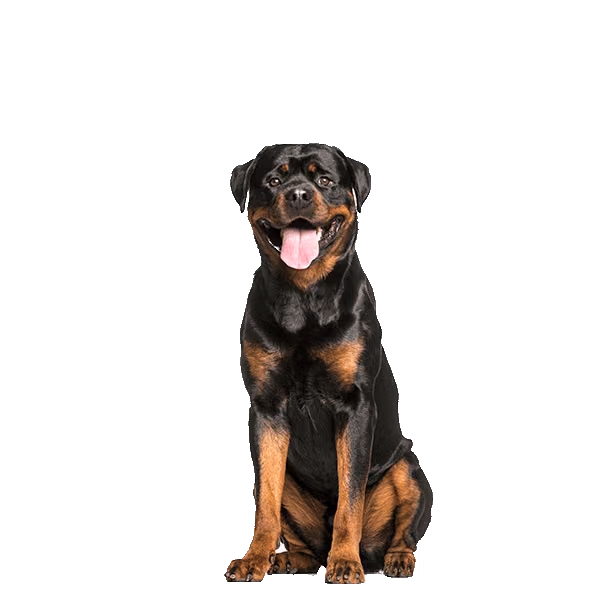
Rottweiler
The Rottweiler is a confident, loyal guardian known for its intelligence, protective devotion, and calm self-assurance.
- Size
- Large
- Lifespan
- 9–10 years
- Origin
- Germany
- Temperament
- Confident
- Standard colors
- Black and Tan
Characteristics
Coat and grooming
How the Rottweiler coat is built, and what that means when you groom it.
- Coat layers
- Double coat
- Coat texture
- Smooth
- Coat length
- Short
- Shedding
- Seasonal shedding
Grooming guidance
Critical: A Rottweiler should not be shaved.
The undercoat keeps heat out as well as in, and the outer coat shields the skin from sun and insect bites. Clipping the whole coat off removes both. It often grows back patchy, soft or a different colour, and in some animals the guard hairs never return properly. Brush the undercoat out instead of cutting it off.
Information: A Rottweiler drops its undercoat in heavy bursts.
The undercoat comes out in heavy bursts over a few weeks. An undercoat rake, or a bath followed by a proper blow-dry, clears it far faster than daily brushing. Clipping the coat down is not a shortcut for this.
Rottweiler colors and patterns
What each club's breed standard says about every Rottweiler color and pattern. Point at a ruling to see the club's own wording.
Breed standards describe the Rottweiler in Black and Tan. Standard patterns: Tan point.
| Color or pattern | FCI | AKC | UKC | KC | KUSA |
|---|---|---|---|---|---|
| Black | Standard (“Black”) | Standard (“Black & Tan”) | Standard (“black”) | Standard (“Black”) | Standard (“Black”) |
| Tan | Standard (“markings of a rich tan”) | Standard (“Black & Tan”) | Standard (“rich tan markings”) | Standard (“Colour of markings from rich tan to mahogany”) | Standard (“markings of a rich tan”) |
| White | Disqualifying (“White markings”) | Fault (“white marking any place on dog”) | Disqualifying (“White markings anywhere on the dog”) | Fault (“White marking is highly undesirable”) | Disqualifying (“White markings”) |
| Albino | Disqualifying | Disqualifying | Disqualifying (“Albinism”) | Not recognized | Disqualifying |
| Blue | Disqualifying | Disqualifying | No ruling | Not recognized | Disqualifying |
| Red | Disqualifying | Disqualifying | No ruling | Not recognized | Disqualifying |
| Patterns | |||||
| Tan point | Standard (“Black with clearly defined markings of a rich tan”) | Standard (“Black & Tan”) | Standard (“black with clearly-defined rich tan markings”) | Standard (“Black & Tan”) | Standard (“Black with clearly defined markings of a rich tan”) |
| Sable | Disqualifying | Fault (“sooty markings”) | Disqualifying | Not recognized | Disqualifying |
| Solid | Disqualifying | Disqualifying (“absence of all markings”) | Disqualifying | Not recognized | Disqualifying |


| Color or pattern | FCI | AKC | UKC | KC | KUSA |
|---|---|---|---|---|---|
| Dark brown | Standard (“dark brown in colour”) | Standard (“The desired color is a uniform dark brown”) | Standard (“dark brown in color”) | Standard (“dark brown in colour”) | Standard (“dark brown in colour”) |
| Light brown | No ruling | No ruling | No ruling | Fault (“light eye undesirable”) | No ruling |
| Yellow | Disqualifying (“yellow eyes”) | Fault (“Yellow (bird of prey) eyes”) | Fault (“Yellow eyes”) | No ruling | Disqualifying (“yellow eyes”) |
| Patterns | |||||
| Odd-eyed | Disqualifying (“different coloured eyes”) | Fault (“eyes of different color or size”) | Fault (“Eyes of different color or size”) | No ruling | Disqualifying (“different-coloured eyes”) |

| Color or pattern | FCI | AKC | UKC | KC | KUSA |
|---|---|---|---|---|---|
| Black | Standard (“always black”) | Standard (“always black”) | Standard (“The nose is broad and black in color”) | Standard (“always black”) | Standard (“always black”) |
| Pink | Fault (“pale or spotted nose”) | No ruling | No ruling | No ruling | Fault (“pale or spotted nose”) |
| Patterns | |||||
| Butterfly nose | Fault (“spotted nose (butterfly nose)”) | No ruling | No ruling | No ruling | Fault (“spotted nose (butterfly nose)”) |

What the rulings mean
- Standard
- Described by the club's breed standard.
- Fault
- Named by the club's breed standard as a fault: the animal can be shown but is penalized.
- Disqualifying
- The club's breed standard disqualifies an animal of this color or pattern.
- Not recognized
- The club does not accept this color or pattern for the breed.
Color changes
How a Rottweiler's colors can change over its life.
Blackchanges toRust
Coat · With body condition · can change back
Blackchanges toGray
Coat · Progressive
Blackchanges toBrown
Coat · In the sun · can change back
Whitechanges toRoan
Coat · With age · from 2 weeks
Tan pointchanges toSaddle
Coat · With age · from 6 to 156 weeks
Blackchanges toSnow nose
Nose · With the season · can change back
Blackchanges toPink
Nose · With the season · can change back


Sources
Each ruling comes from the club's published breed standard or color list.
Health
Conditions recorded as more common in the Rottweiler than in its species as a whole. A higher risk is not a diagnosis: many never develop any of them, and your vet can say which screening tests are worth doing.
High risk
- Musculoskeletal system
Canine elbow dysplasia
Strong evidenceHereditaryInheritance: Polygenic - Musculoskeletal system
Canine hip dysplasia
Strong evidenceHereditaryInheritance: Polygenic - Skeletal
Osteosarcoma
Strong evidence - Musculoskeletal system
Cranial cruciate ligament disease
Moderate evidence
This content is for educational purposes and is not a substitute for professional veterinary advice. If you are worried about your pet, contact your veterinarian.
All health conditionsMeet some of our Rottweiler
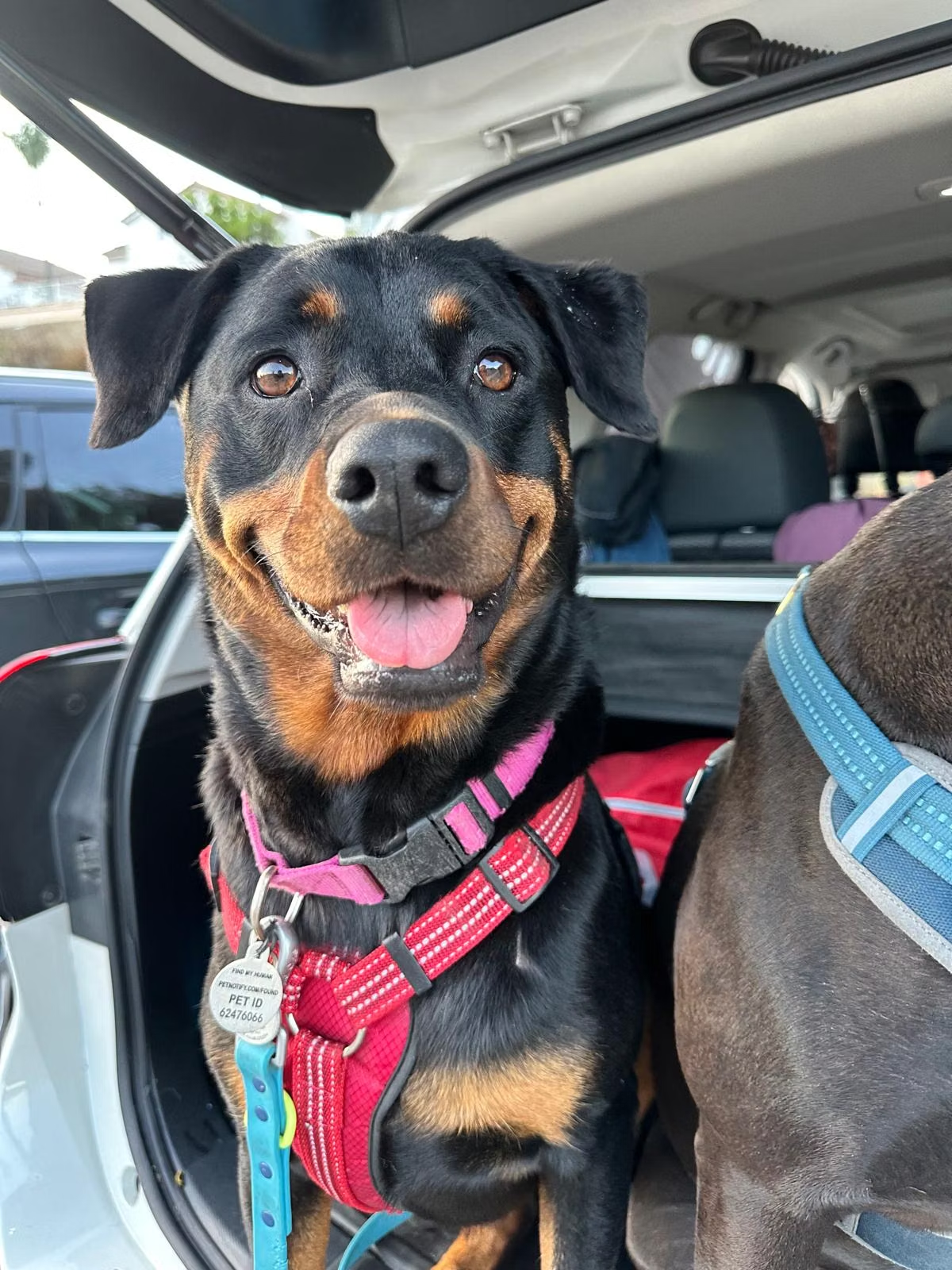
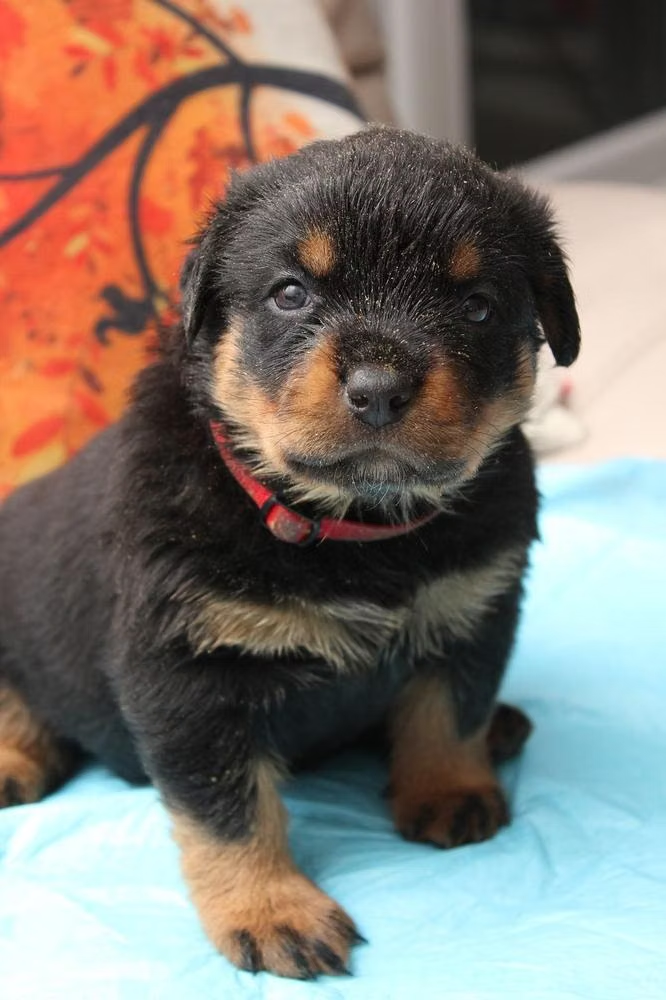
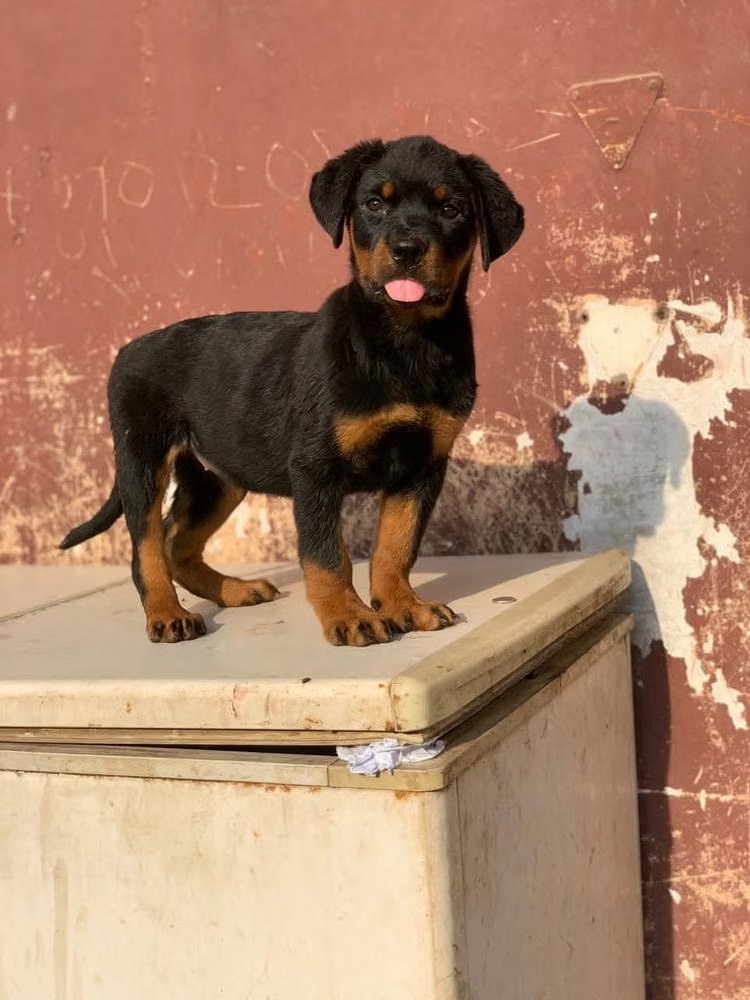
A few of the Rottweiler profiles members have added to United Pet Club.






About the Rottweiler
The Rottweiler is a large German working breed standing 56 to 69 cm at the shoulder, recognized by its black coat and rust markings, and valued for its composed temperament and close loyalty to its household.
Keeping a Rottweiler in the Philippines is a genuine commitment, and that starts with understanding what the breed actually is. The Rottweiler is a large German working dog, built to drive cattle and pull heavy loads, with a broad chest, heavy bone structure, and a short black coat marked by rust to mahogany patches. Adults range from 56 to 69 cm at the shoulder and weigh between 36 and 61 kilograms, with males considerably heavier than females.
The breed is composed and self-assured by nature, not nervous or excitable. At home it tends to settle quietly near its people, becoming alert when something feels out of place. That watchfulness with strangers is part of the breed's character. Many Filipino households keep the Rottweiler as a guardian precisely because of this instinct, but the instinct only functions well when shaped by proper socialization from early puppyhood. A Rottweiler that has met many people, environments, and situations while young develops the judgment to distinguish a threat from a visitor. One that has been kept isolated may not.
The breed's working background matters for daily management. A Rottweiler that does not receive enough exercise and mental engagement tends to become destructive or difficult. This is not a dog suited to being left in a small yard while the household is out all day.
| Attribute | Detail |
|---|---|
| Origin | Germany |
| Size | Large (36 to 61 kg) |
| Lifespan | 9 to 10 years |
| Group / role | Working dog, guardian and herder |
| Good with | Family and children when socialized and supervised |
Who the Rottweiler suits
This breed fits an owner with time for daily exercise, early socialization, and consistent training. A household where someone is present often and where clear rules are followed by everyone living there is the right environment. The Rottweiler is a poor match for a first-time owner expecting a low-effort pet, for any household that cannot manage a physically powerful dog, or for a home without a secure, shaded outdoor space. In the Philippine context, heat management and the ability to provide structure are the two factors that determine whether ownership goes well.
History and origin
The Rottweiler traces its lineage to Roman drover dogs and is named after Rottweil, a German market town where it worked as a cattle herder and butcher's cart dog before being developed into a police and military breed in the early 20th century.
The breed's origins lie with the Roman legions that moved north through Europe, bringing large mastiff-type dogs to herd the cattle that supplied the armies. When Roman settlements took root in what is now southern Germany, these dogs remained and crossbred with local herding stock over the following generations.
Rottweil, a market town that grew up in the region, became an important cattle-trading center through the Middle Ages. The dogs developed from this Roman foundation were put to work driving herds to market, guarding livestock and their owners along the route, and pulling the heavy carts of the local butchers. That occupational history gave the breed its name: Rottweiler Metzgerhund, meaning the butcher's dog of Rottweil.
The 19th century changed things sharply. Railway expansion made it practical to transport cattle by train rather than drive them overland, and demand for drover dogs collapsed. The Rottweiler came close to extinction by the late 1800s. A revival came in the early 1900s when the breed's combination of intelligence, strength, and even temperament made it well suited to police and military roles. German breed clubs formed during that period, a unified standard was drawn up, and the Rottweiler was systematically developed as a working dog.
The breed expanded internationally through the rest of the 20th century. In the Philippines it is registered with the Philippine Canine Club Inc (PCCI) and has found a following both as a working guard dog and as a household companion.
Appearance and breed standard
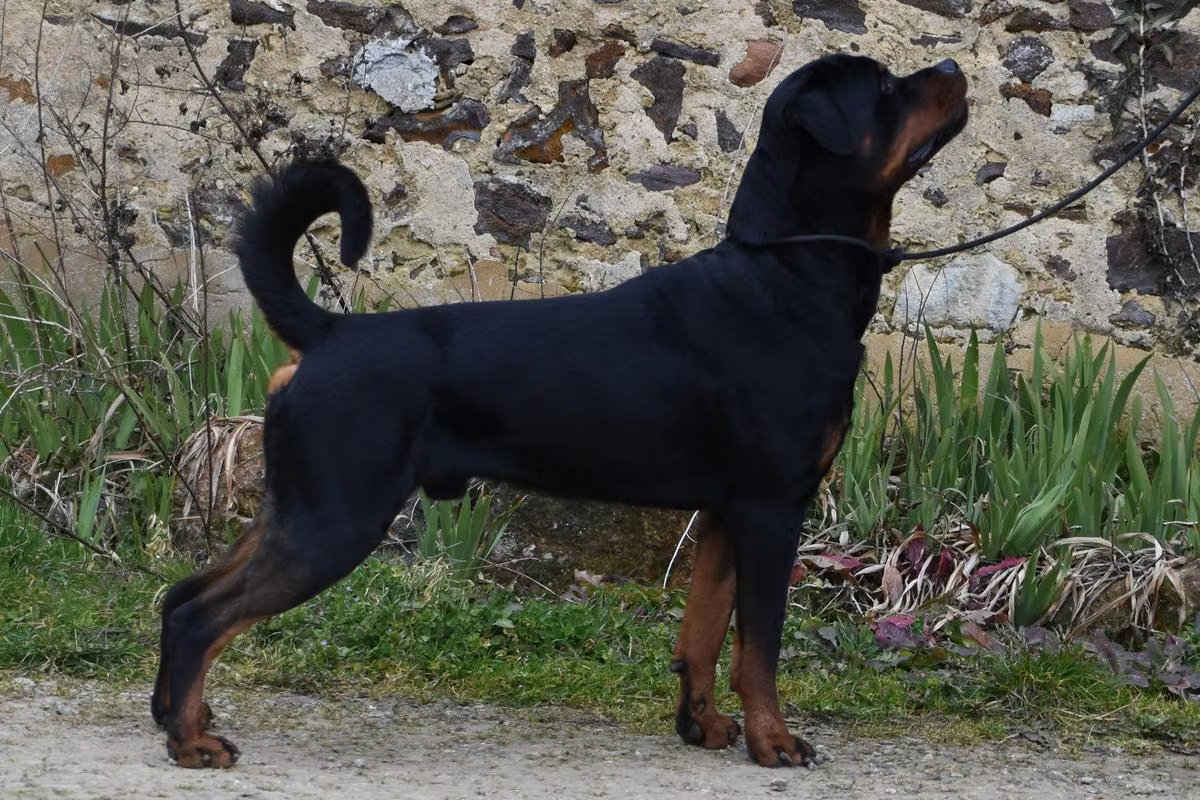
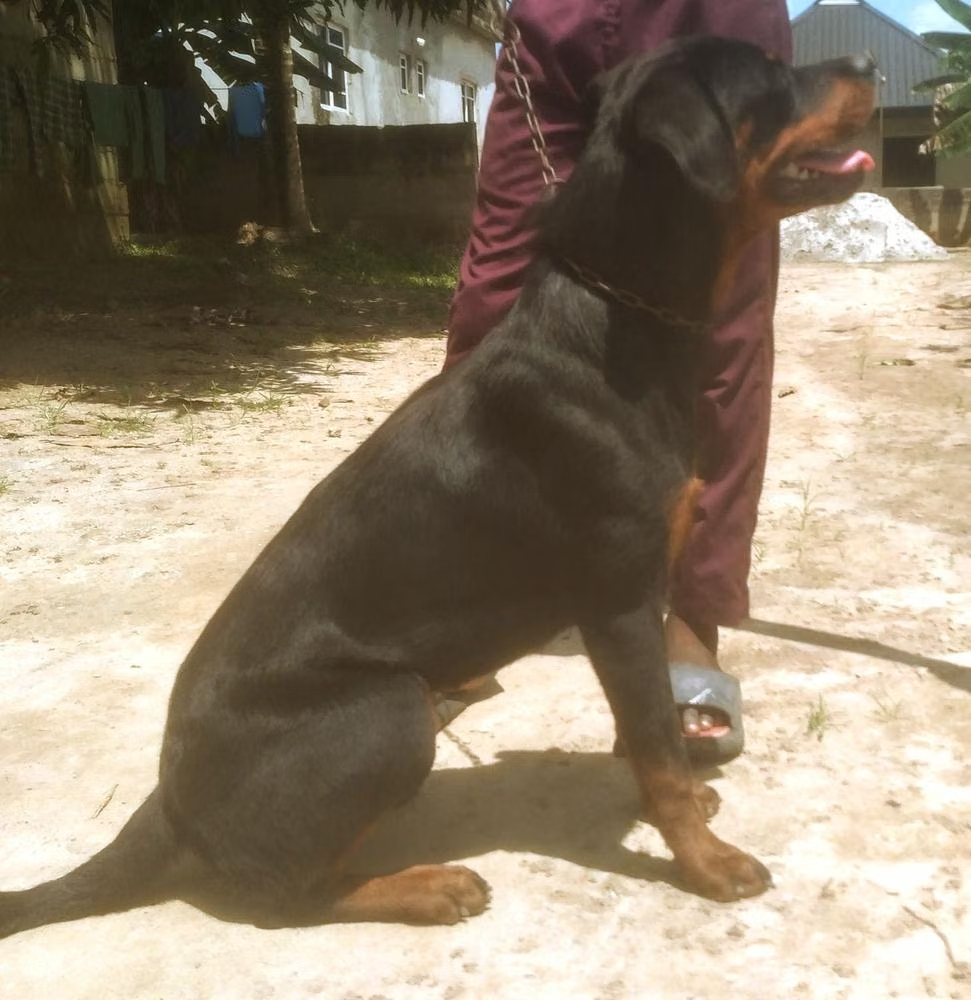
The Rottweiler is a compact, muscular dog with a broad head, dark almond-shaped eyes, and a short black double coat with clearly defined rust to mahogany markings on the face, chest, and limbs.
The Rottweiler's black-and-rust color pattern is consistent and clearly defined by the breed standard. The base coat is always black. Rust to mahogany markings appear in fixed positions: a spot over each eye, patches on the cheeks and muzzle, on the chest and the legs, and beneath the tail. Sharp, well-defined markings are preferred. Any deviation from this pattern is a disqualification under the standard.
The body is slightly longer than it is tall, compact and deep through the chest, with a straight level back and heavy bone throughout. The head is broad, with a moderately arched skull and a strong, well-developed muzzle. Dark brown, almond-shaped eyes give the breed its characteristic calm and watchful expression. Ears are medium-sized, triangular, and carried forward close to the cheeks.
| Trait | Standard |
|---|---|
| Height | Males 61 to 69 cm, females 56 to 64 cm |
| Weight | Males 43 to 61 kg, females 36 to 45 kg |
| Coat | Short, dense double coat with a flat outer coat |
| Colors | Black with rust to mahogany markings |
| Eyes | Dark brown, almond-shaped |
Coat and colors
The outer coat is short, straight, and dense, lying flat against the body. Beneath it is a softer undercoat concentrated most heavily around the neck and thighs. In the Philippine climate, this double coat can trap heat against the body and contributes to the breed's sensitivity to high temperatures. The coat is easy to keep clean and sheds moderately most of the year, with heavier shedding twice a year. The tail was traditionally docked, though natural tails are increasingly common and are carried level with the back when the dog is in motion.
Temperament and personality
The Rottweiler is loyal, calm, and protective at home, naturally cautious with strangers, and capable of serious behavioral problems if isolated or poorly socialized.
The Rottweiler bonds closely with its household and tends to be affectionate and physically attentive with the people it trusts, often seeking contact or staying near a favored person. At home the breed is generally calm and even-tempered, content to settle when the household is settled. That quality can be misleading for owners who interpret it as easygoing. The same dog that rests quietly at the foot of a chair will assess a stranger at the gate with full concentration.
With strangers the breed takes its time. A Rottweiler does not warm up quickly, and this wariness is part of its guarding instinct rather than a flaw. What matters is whether the dog has been socialized well enough to use that instinct with judgment. A puppy that meets many different people, situations, and animals during its first months of life grows into an adult that can distinguish a threat from an unfamiliar visitor. A dog that has spent its early life confined to one yard without varied exposure can become reactive in ways that are difficult to manage.
With children in its own household, a well-raised Rottweiler is typically patient and tolerant. Given the breed's size, any interaction with small children should still be supervised. Around other dogs, outcomes vary: same-sex aggression is possible, particularly among intact males, but dogs raised alongside other animals generally manage well. Clear leadership and consistent rules from the owner are more important with this breed than with many others.
| Trait | Rating |
|---|---|
| Affection | 4 |
| Energy | 3 |
| Trainability | 5 |
| Vocalness | 2 |
| Shedding | 3 |
Care and grooming
Heat is the primary care challenge for Rottweilers in the Philippines. Exercise must be timed to cooler hours, ear and skin checks are needed more frequently in the humid climate, and typhoon season calls for specific advance preparation.
The most pressing care consideration for a Rottweiler in the Philippines is heat. The breed is built for temperate weather and handles cool conditions far better than the year-round tropical heat and humidity here. During the hottest parts of the day, the dog should be indoors where there is aircon or good ventilation. Exercise belongs in the early morning or after sunset. On days when a brownout cuts the aircon, watch the dog closely for early signs of heat stress: heavy, rapid panting, thick drooling, reluctance to move, or disorientation. Cooling with wet towels and cool (not ice-cold) water is the immediate response before getting to a vet.
Grooming
- Brush once or twice a week with a firm bristle brush or rubber curry to remove loose hair. During the heavy twice-yearly shed, daily brushing reduces the amount left around the home.
- Bathe every four to six weeks, or after heavy rain or outdoor play. In the Philippine climate, make sure the coat dries completely after each bath. A coat that stays damp under the undercoat encourages skin irritation and infection.
- Check and clean the ears at least once a week. Humid conditions make ear infections more common in this breed. Odor, dark discharge, or frequent head-shaking are signs to see a vet.
- Trim nails every three to four weeks.
- Brush teeth several times a week.
Exercise
- Provide at least one to two hours of daily activity, split across morning and evening sessions to avoid peak heat.
- Mental exercise matters as much as physical. Obedience drills, scent work, and food-puzzle toys reduce boredom and channel the breed's working instinct.
- For owners in Metro Manila or Cebu where training facilities are available, structured activities such as tracking or protection sports give the dog focused work to do.
- Avoid repetitive, hard-surface exercise with young dogs. The joints are still developing until around 18 months and heavy impact on concrete during that period increases the risk of problems later.
Environment
A subdivision home with a shaded, securely fenced yard is well suited to this breed. The dog should live indoors as part of the household rather than outside or chained in a yard. Typhoon season runs from June to November, and large dogs present a specific challenge during evacuation or extended shelter-in-place situations. Practical preparation includes a travel crate or carrier, waterproof storage for PCCI papers and vaccination records, and knowing which nearby shelters or hotels can accommodate a large dog.
Nutrition and feeding
Rottweilers need a complete large-breed diet with strictly measured portions. The breed puts on weight easily, and excess weight accelerates joint damage and increases cardiac strain.
The Rottweiler gains weight readily, and excess body weight is one of the most damaging things for a dog with this skeletal structure. Joints, especially hips and elbows, deteriorate faster under extra load, and the heart works harder. Portion control at every meal matters more than it does for lighter breeds. Feed a measured amount at set times rather than leaving food available all day, and adjust portions if the dog's weight changes. A large-breed adult formula is appropriate for most adult Rottweilers. Puppies should have a large-breed puppy formula, which is calibrated for slower, more controlled growth to reduce joint stress during development.
| Life stage | Amount per day | Meals |
|---|---|---|
| Puppy (2 to 6 months) | 3 to 5 cups, split | 3 to 4 |
| Puppy (6 to 12 months) | 4 to 6 cups, split | 2 to 3 |
| Adult | 4 to 8 cups | 2 |
| Senior | 3 to 6 cups, adjusted for activity | 2 |
Treats and supplements
Treats should account for no more than around 10 percent of the dog's daily calories. Joint supplements containing glucosamine and chondroitin are commonly used with this breed, and omega-3 fatty acids are sometimes added for coat and joint support. Confirm any supplements with your vet before starting them. Fresh water must be available at all times, particularly given the Philippine heat. Because the Rottweiler has a deep chest, feeding two smaller meals rather than one large daily meal and avoiding vigorous exercise in the hour after eating can help reduce the risk of bloat.
Health and common conditions
The Rottweiler lives an average of 9 to 10 years and has elevated risk for joint dysplasia, certain cancers, cardiac conditions, and bloat. In the Philippines, heat stress and chronic ear infections are additional routine concerns.
The Rottweiler is a sturdy breed overall, but large dogs have shorter average lifespans, and this one averages 9 to 10 years. Several hereditary conditions are associated with the breed, and the best protection against them is sourcing a puppy from PCCI-registered breeders who screen for hip dysplasia, elbow dysplasia, and cardiac problems before breeding.
Two concerns that are more pronounced in the Philippine climate than in temperate countries are worth flagging. Heat stress is a genuine risk for a dog this size in year-round tropical conditions, particularly during the hot months before the rains arrive. Ear infections are also more frequent here than in drier climates. The combination of humidity, dense coat, and ears that lie close to the head creates conditions where infections establish easily. Weekly ear checks and thorough drying after baths or rain are straightforward preventive steps.
| Condition | Signs | Note |
|---|---|---|
| Hip and elbow dysplasia | Limping, stiffness, difficulty rising | Screen breeding stock, manage weight |
| Osteosarcoma (bone cancer) | Lameness, swelling on a limb | The breed has elevated risk |
| Aortic stenosis | Fatigue, fainting, heart murmur | Detected on cardiac screening |
| Gastric dilatation-volvulus (bloat) | Swollen belly, retching, distress | A medical emergency |
| Hypothyroidism | Weight gain, low energy, coat changes | Managed with daily medication |
Preventive care
- Schedule annual vet checkups. Veterinary clinics with experience in large working breeds are most accessible in Metro Manila and Cebu. Owners in other regions should identify the nearest capable clinic before a problem arises rather than during one.
- Keep vaccinations and parasite prevention current year-round. Tick and flea control is especially relevant in a tropical climate.
- Maintain a lean body weight. This is one of the most effective things an owner can do to protect joints and reduce cardiac strain.
- Check ears weekly and dry the ear canal thoroughly after bathing or exposure to rain.
- Monitor dental health and joint condition regularly as the dog ages.
Training
The Rottweiler is highly trainable and responds well to reward-based methods, but its strength and independent will mean training must begin early, stay consistent, and be maintained throughout the dog's life.
Consistency is what makes Rottweiler training work. The breed is intelligent and picks up new behaviors quickly, but it also has a strong, independent streak. An owner who is clear about rules from the start builds a well-mannered dog. An owner who is inconsistent, harsh, or who starts training late finds the breed much harder to manage as it reaches full size and confidence.
Socialization in the first months of life is as important as any formal training. A puppy taken to different places, introduced to many kinds of people, and given varied experiences before four months of age develops behavioral steadiness that training alone cannot produce. In urban areas, puppy classes run by trainers experienced with working breeds are available and worth starting as early as the vaccination schedule allows.
Basics
- Begin socialization as early as possible. Bring the puppy to different environments and introduce it to a variety of people, sounds, and situations before it reaches four months of age.
- Teach core obedience cues: sit, down, stay, come, and loose-leash walking, while the dog is still small enough to correct easily.
- Keep training sessions short and frequent. Ten to fifteen minutes of focused work with clear rewards is more effective than long irregular sessions.
- Make sure every person in the household follows the same rules. Inconsistency from one family member undoes what another has built.
- Add more demanding work once the basics are solid: tracking, protection sports, advanced obedience, or carting all give the breed purposeful activity.
- Continue reinforcing trained behaviors throughout the dog's life rather than treating training as something that ends after puppyhood.
Breeding
Responsible Rottweiler breeding requires health screening at around two years before mating, produces litters of 6 to 12 puppies, and demands careful placement given the breed's size and guarding character.
Litter sizes for the Rottweiler are typically large, often 6 to 12 puppies, which reflects the breed's body size. A large litter from a large breed means whelping can carry complications, and responsible breeders plan for veterinary support during delivery. In the weeks after birth, the newborn puppies depend entirely on the dam for warmth and nutrition. The breeder's work during this period is to keep the whelping space clean, consistently warm, and quiet, and to track each puppy's weight to confirm that feeding is going well.
Most responsible breeders wait until a dog is around two years old before breeding. At that age, hip, elbow, and cardiac screening can be completed, and the dog's adult temperament is established and can be assessed honestly. Females come into heat roughly twice a year, and after a successful mating, gestation runs about 63 days.
Puppies are generally weaned by seven to eight weeks. Early handling and exposure to varied sounds and experiences during the litter period prepares them for life outside the whelping box. Given the Rottweiler's physical size and protective nature, placing puppies with owners who understand the breed's demands is a genuine responsibility. Breeders registered with the Philippine Canine Club Inc (PCCI) are expected to follow welfare standards and can provide pedigree documentation for each puppy.
| Metric | Value |
|---|---|
| Breeding maturity | Around 2 years |
| Heat cycle | About twice per year |
| Gestation | About 63 days |
| Average litter size | 6 to 12 puppies |
| Weaning age | About 7 to 8 weeks |
Registering your Rottweiler and its microchip in the Philippines
The city vet office handles the RA 9482 paperwork; a free United Pet Club record is what a finder anywhere can actually search for your Rottweiler.
How to register a Rottweiler in the Philippines
A Rottweiler that gets loose during a storm is identified by whatever record answers the scan, not by the barangay it came from. Give it a record that answers: your mobile number, the dog's photo, and his details, free for life with United Pet Club. Register your dog today and it is done for good.
The clinic's part ended with the implant; the tracing part is yours. File your Rottweiler's 15-digit number with United Pet Club and every scan leads to your phone: free for life, all brands accepted, updates free every time your details change. Microchip registration plus a free account finishes the job.
How do I register my Rottweiler in the Philippines?
Open a free United Pet Club account, add your Rottweiler's details and a photo, then save the profile. It stays free for his whole life and sits alongside the city vet office registration RA 9482 requires.
How do I register my Rottweiler's microchip?
Type the 15-digit chip number into your free account together with your mobile number and address. The lifetime plan charges nothing for the registration or for any update, whatever brand the clinic used.
Is registration required for a Rottweiler in the Philippines?
Yes, RA 9482 requires dog registration with your city or municipal veterinary office, along with current anti-rabies vaccination. The United Pet Club profile is the searchable half: free, worldwide, and tied to your current mobile.
How much does it cost to register a Rottweiler?
Nothing. The free lifetime plan covers the profile, the microchip record, and every update, with no renewal fees at all.
Frequently asked questions
Common questions about the Rottweiler's size, temperament, suitability in the Philippine climate, grooming needs, lifespan, and what prospective owners should know before getting one.
How big does a Rottweiler get?
Males typically stand 61 to 69 cm at the shoulder and weigh 43 to 61 kilograms. Females stand 56 to 64 cm and weigh 36 to 45 kilograms. The size difference between males and females is noticeable, and a large male can weigh as much as a fully grown adult person.
Can a Rottweiler cope with the Philippine climate?
The breed can live in the Philippines with the right management. Because it is built for temperate weather, it needs shade, aircon or good ventilation, and exercise limited to early morning or evening hours. During brownouts, monitor the dog carefully for signs of heat stress. The warm, humid conditions also make ear infections more frequent than in cooler countries, so weekly ear checks are important.
Are Rottweilers good family dogs?
A well-socialized and trained Rottweiler is loyal, calm, and protective with its own household and is generally tolerant of children it has grown up with. Its size means that interactions with small children should always be supervised, regardless of the individual dog's temperament.
How long do Rottweilers live?
The average lifespan is 9 to 10 years, which is typical for a dog of this size. Maintaining a healthy weight, providing regular veterinary care, and sourcing from PCCI-registered breeders who screen for hereditary conditions all contribute to a longer and healthier life.
Are Rottweilers suitable for first-time dog owners?
The breed is better matched to owners who have some experience with dogs or who commit seriously to professional training support. Its physical strength, guarding instinct, and independent will require consistent handling from early puppyhood onward. A first-time owner who does the work can manage, but this is not a breed that forgives a hands-off approach.
Do Rottweilers shed a lot?
They shed moderately most of the year and more heavily during the twice-yearly coat change. Weekly brushing with a firm bristle brush or rubber curry keeps loose hair under control. During heavy shedding periods, brushing every day or two reduces the volume noticeably.
Are Rottweilers aggressive?
The breed is naturally protective and reserved with strangers, which is different from aggression. A Rottweiler that has been well socialized from puppyhood and handled consistently is typically stable and discerning. Behavior problems tend to trace back to poor socialization, inconsistent or harsh handling, or poor breeding selection rather than to the breed's fundamental nature.
From the community
Ask about the RottweilerNo questions about the Rottweiler yet. Be the first to ask.
Browse Dog breeds