
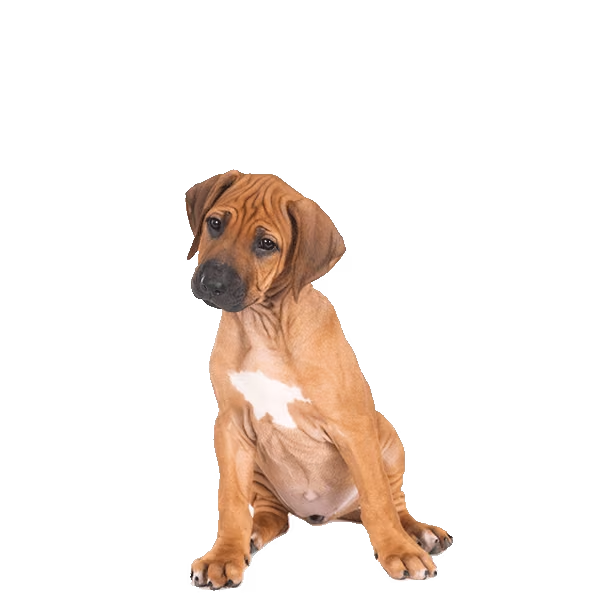
Rhodesian Ridgeback
The Rhodesian Ridgeback is a strong, loyal hound known for the distinctive ridge along its back and its dignified, protective devotion.
- Size
- Large
- Lifespan
- 10–12 years
- Origin
- South Africa
- Temperament
- Loyal
- Standard colors
- Wheaten
Characteristics
Coat and grooming
How the Rhodesian Ridgeback coat is built, and what that means when you groom it.
- Coat layers
- Single coat
- Coat texture
- Smooth
- Coat length
- Short
- Shedding
- Moderate shedding
Rhodesian Ridgeback colors and patterns
What each club's breed standard says about every Rhodesian Ridgeback color and pattern. Point at a ruling to see the club's own wording.
Breed standards describe the Rhodesian Ridgeback in Wheaten. Standard patterns: Solid.
| Color or pattern | FCI | AKC | UKC | KC | KUSA |
|---|---|---|---|---|---|
| Wheaten | Standard (“Light wheaten to red wheaten”) | Standard (“Wheaten”) | Standard (“the range from light wheaten to red wheaten”) | Standard (“Light wheaten to red wheaten”) | Standard (“Light wheaten to red wheaten”) |
| Black | Not recognized | Disqualifying (“Solid black”) | Not recognized | Not recognized | Not recognized |
| Albino | Not recognized | Not recognized | Disqualifying (“Albinism”) | Not recognized | Not recognized |
| Brown | Not recognized | Disqualifying (“brown and tan in brown/liver nosed dogs”) | Not recognized | Not recognized | Not recognized |
| Tan | Not recognized | Disqualifying (“Black and tan, or brown and tan”) | Not recognized | Not recognized | Not recognized |
| Patterns | |||||
| Solid | Standard | Standard | Standard | Standard (“Head, body, legs and tail of uniform colour”) | Standard |
| Sable | Fault (“Excessive black hairs throughout the coat are highly undesirable”) | No ruling | Fault (“Excessive black hairs throughout the coat are highly undesirable”) | Not recognized | Fault (“Excessive black hairs throughout the coat are highly undesirable”) |
| Tan point | No ruling | Disqualifying (“Black and tan, or brown and tan in brown/liver nosed dogs”) | No ruling | Not recognized | No ruling |

%22%3E%3Crect%20x%3D%220%22%20y%3D%220%22%20width%3D%2264%22%20height%3D%2264%22%20fill%3D%22url(%23g)%22%2F%3E%3Cg%20fill%3D%22none%22%20stroke%3D%22%231C1C1C%22%20stroke-width%3D%221%22%20stroke-linecap%3D%22round%22%20stroke-linejoin%3D%22round%22%3E%3Cpath%20d%3D%22M15.7%2014.8l1.9%203.6M26.4%2024.1l1.2%204.1M42.7%2029.5l0.1%203.3M35.9%2025l1.6%203.2M31.3%2028.1l0.7%203.7M15.5%2011.1l1.6%203.6M41.1%2023.8l0.6%203.2M12.1%2020.7l1.2%203M15.4%2011.2l0.8%203.8M42.9%2027.3l0.7%202.9M48.2%2033.2l0.5%204.1M23.1%2024.7l1.4%203.4M51.9%2036.1l0.3%204.3M18.7%2023.9l1.2%203.7M50.4%2027.4l0.5%204.1M18.4%2020.4l0.1%203.1M55.6%2021.4l1.1%203.9M18.6%2024.9l1.7%203.8M8.3%2023.2l1.7%202.9M18.7%2024.2l0.2%203.1M46.4%2022.7l0.6%202.6M14.3%207l0.9%203.5M50.5%2024.9l0.5%203.7M23.2%2024.7l1.2%204.3M10.5%2022.3l1.6%203.4M56.9%2018.2l1.1%202.5M20.8%2021.7l1.1%203.5M10.9%2020.2l0.2%203.9M6.6%2023.3l1%202.4M54.5%2021.7l0.9%203.8M13.3%2021l0.4%203M11.7%2019.5l0.3%204M39%2023.2l0.7%202.5M20.8%2016.7l0%202.6M18.4%2016l0.2%202.6M46.4%2038.2l1.4%203.2M12.9%2022.6l0.6%203.3M13%2020.9l0.3%204.3M35.3%2024.9l1.3%202.3M29.5%2022.1l0.5%202.8M36.6%2023.4l0.2%204.3M20.5%2017.6l0.7%204.1M18.3%2020.6l0.6%203M20.5%2025.8l0.5%203.8M23.5%2040.2l1.1%202.9M22.8%2024.9l1.5%203M25.5%2023.1l0.5%203.3M47.7%2024.7l1.5%203.7M12.9%2018.4l1.9%203.8M29.5%2023.7l0.5%204.1M37.7%2026.5l0%202.9M16.8%2016.4l0.1%203.3M49.8%2028l1.7%203.8M29.4%2025.5l0.5%203.6M9.3%2023l1.3%203.1M47.4%2025.6l0.5%203.5M48.1%2023.8l1.6%203.2M9.9%2018.3l1.3%202.5M12.2%2016.6l0.4%203.2M22%2022.1l1.4%202.7M43.9%2024.7l1.4%203.9M14.3%2020l1.8%203.2M46.3%2040.1l0.3%203.6M14.9%207l0.3%204M17.5%2016.7l1.2%202.4M54.6%2040l1%203.5M13.3%2013.9l1.6%204.2M15.3%2016.5l1.2%202.9M23.8%2038.5l0.2%203.8M18.2%2019l0.6%203M11.2%2023.6l0.7%204.1M33.1%2023.2l0.9%204.3M13.6%2019.9l0.4%204.5M19.7%2023.1l1.9%203.7M50.5%2027.1l0.3%204.1M28.2%2028.5l0.2%203.8M29%2028.4l0.1%204M47.7%2024.5l0.6%202.5M10.7%2017.2l1.4%202.7M25.5%2040.3l0.6%204.1M37.6%2022.8l0.7%204.4M57%2018.6l0.2%203.4M16.9%2022.2l1.7%203.8M43.5%2024.7l1.8%203.4M49.2%2026l1.5%203.6M47.7%2032.3l0.4%203.7M35.4%2030.8l0.5%202.7M47%2026.1l1%203.9M24.3%2028.1l1.5%204.2M50.5%2023.8l1.3%203.4M58.1%2014.1l0.3%202.6M13.9%2018.2l0.7%202.5M8.2%2021l0.7%202.9M41.4%2026.4l0.4%202.7M16.3%2020.4l0.5%204.3M43.4%2025.9l1.2%203.2M32.3%2022.4l0.3%203.9M43.6%2025.9l2.1%203.8M33.5%2026.3l1.5%203M48.3%2030.6l1.4%203.4M44.2%2024.7l0.9%203.2M12.3%2017.7l0.9%203.7M46.2%2032l1.9%203.4M51%2028.3l0.1%203.7M30.4%2023.1l1.1%203.2M52.6%2022.6l0.9%204.3M16.6%2015.4l0.9%203.1M58.4%2012.8l0.3%202.8M42.8%2032.5l1.8%203.2%22%2F%3E%3Cpath%20d%3D%22M16.4%2026.1l0.1%204.3M14%2017.1l1.3%202.8M36.9%2027.2l1.3%202.6M38.6%2025.8l0.4%203.6M57.6%2014.3l0.3%203.9M14.7%208.2l1%204.3M53.4%2023l1.9%203.4M51.5%2030.3l0.8%202.7M56.2%2020l1.9%203.5M15.9%2010l0.2%202.8M15.8%2022.6l1.8%203.9%22%2F%3E%3C%2Fg%3E%3C%2Fg%3E%3Cuse%20href%3D%22%23s%22%20fill%3D%22none%22%20stroke%3D%22%233B2A20%22%20stroke-opacity%3D%220.6%22%20stroke-width%3D%221%22%20stroke-linejoin%3D%22round%22%2F%3E%3Cellipse%20cx%3D%223.2%22%20cy%3D%2221.7%22%20rx%3D%221.3%22%20ry%3D%221.2%22%20fill%3D%22%231C1C1C%22%2F%3E%3Ccircle%20cx%3D%2210.8%22%20cy%3D%2219.3%22%20r%3D%221.1%22%20fill%3D%22%231C1C1C%22%2F%3E%3C%2Fsvg%3E)
%22%3E%3Ccircle%20cx%3D%2212%22%20cy%3D%2217.2%22%20r%3D%221.25%22%20fill%3D%22%23C4996A%22%2F%3E%3Cpath%20d%3D%22M1.5%2021.2L9%2018.6L12.6%2021L12.2%2026.2L3.5%2024.4Z%22%20fill%3D%22%23C4996A%22%2F%3E%3Cpath%20d%3D%22M10%2026L14.5%2026.4L18.2%2029.2L13.5%2029.8Z%22%20fill%3D%22%23C4996A%22%2F%3E%3Cellipse%20cx%3D%2221.2%22%20cy%3D%2230.6%22%20rx%3D%221.6%22%20ry%3D%222.3%22%20fill%3D%22%23C4996A%22%2F%3E%3Crect%20x%3D%220%22%20y%3D%2247%22%20width%3D%2264%22%20height%3D%2217%22%20fill%3D%22%23C4996A%22%2F%3E%3Cpath%20d%3D%22M51.5%2024.5L55%2027L54.2%2032L50.5%2028.5Z%22%20fill%3D%22%23C4996A%22%2F%3E%3Cpath%20d%3D%22M45%2038.5L48%2039L48.5%2047L45.5%2047Z%22%20fill%3D%22%23C4996A%22%2F%3E%3C%2Fg%3E%3Cuse%20href%3D%22%23s%22%20fill%3D%22none%22%20stroke%3D%22%233B2A20%22%20stroke-opacity%3D%220.6%22%20stroke-width%3D%221%22%20stroke-linejoin%3D%22round%22%2F%3E%3Cellipse%20cx%3D%223.2%22%20cy%3D%2221.7%22%20rx%3D%221.3%22%20ry%3D%221.2%22%20fill%3D%22%231C1C1C%22%2F%3E%3Ccircle%20cx%3D%2210.8%22%20cy%3D%2219.3%22%20r%3D%221.1%22%20fill%3D%22%231C1C1C%22%2F%3E%3C%2Fsvg%3E)
| Color or pattern | FCI | AKC | UKC | KC | KUSA |
|---|---|---|---|---|---|
| Dark brown | Standard (“A black nose should be accompanied by dark eyes”) | Standard (“A black nose should be accompanied by dark eyes”) | Standard (“A black nosed dog has dark eyes”) | Standard (“Black nose accompanied by dark eyes”) | Standard (“A black nose should be accompanied by dark eyes”) |
| Amber | Standard (“a brown nose by amber eyes”) | Standard (“a brown or liver nose with amber eyes”) | Standard (“a brown-nosed dog has amber eyes”) | Standard (“brown nose by amber eyes”) | Standard (“a brown nose by amber eyes”) |
| Color or pattern | FCI | AKC | UKC | KC | KUSA |
|---|---|---|---|---|---|
| Black | Standard (“The nose should be black or brown”) | Standard (“Should be black, or brown, also known as liver”) | Standard (“The nose has black or brown pigment”) | Standard (“Nose black or brown”) | Standard (“The nose should be black or brown”) |
| Liver | Standard (“The nose should be black or brown”) | Standard (“Should be black, or brown, also known as liver”) | Standard (“The nose has black or brown pigment”) | Standard (“Nose black or brown”) | Standard (“The nose should be black or brown”) |
What the rulings mean
- Standard
- Described by the club's breed standard.
- Fault
- Named by the club's breed standard as a fault: the animal can be shown but is penalized.
- Disqualifying
- The club's breed standard disqualifies an animal of this color or pattern.
- Not recognized
- The club does not accept this color or pattern for the breed.
Color changes
How a Rhodesian Ridgeback's colors can change over its life.
Blackchanges toSnow nose
Nose · With the season · can change back
Blackchanges toPink
Nose · With the season · can change back
%22%3E%3Crect%20x%3D%2217%22%20y%3D%2210%22%20width%3D%2230%22%20height%3D%2242%22%20fill%3D%22url(%23g)%22%2F%3E%3C%2Fg%3E%3Cuse%20href%3D%22%23s%22%20fill%3D%22none%22%20stroke%3D%22%233B2A20%22%20stroke-opacity%3D%220.6%22%20stroke-width%3D%221%22%20stroke-linejoin%3D%22round%22%2F%3E%3Cpath%20d%3D%22M12.5%2037Q13%2032%2018.5%2032Q23.5%2032.5%2023.5%2036.5Q20.5%2035.5%2018.8%2037Q17.4%2038.6%2018%2041.5Q13.6%2040.4%2012.5%2037Z%22%20fill%3D%22%231C1C1C%22%20fill-opacity%3D%220.8%22%20stroke%3D%22%23F5F5F0%22%20stroke-opacity%3D%220.4%22%20stroke-width%3D%220.9%22%2F%3E%3Cpath%20d%3D%22M51.5%2037Q51%2032%2045.5%2032Q40.5%2032.5%2040.5%2036.5Q43.5%2035.5%2045.2%2037Q46.6%2038.6%2046%2041.5Q50.4%2040.4%2051.5%2037Z%22%20fill%3D%22%231C1C1C%22%20fill-opacity%3D%220.8%22%20stroke%3D%22%23F5F5F0%22%20stroke-opacity%3D%220.4%22%20stroke-width%3D%220.9%22%2F%3E%3Cpath%20d%3D%22M32%2040V50%22%20fill%3D%22none%22%20stroke%3D%22%231C1C1C%22%20stroke-width%3D%221.3%22%20stroke-opacity%3D%220.5%22%20stroke-linecap%3D%22round%22%20stroke-linejoin%3D%22round%22%2F%3E%3Cellipse%20cx%3D%2232%22%20cy%3D%2221%22%20rx%3D%2212%22%20ry%3D%223.5%22%20fill%3D%22%23F5F5F0%22%20fill-opacity%3D%220.18%22%2F%3E%3C%2Fsvg%3E)
Sources
Each ruling comes from the club's published breed standard or color list.
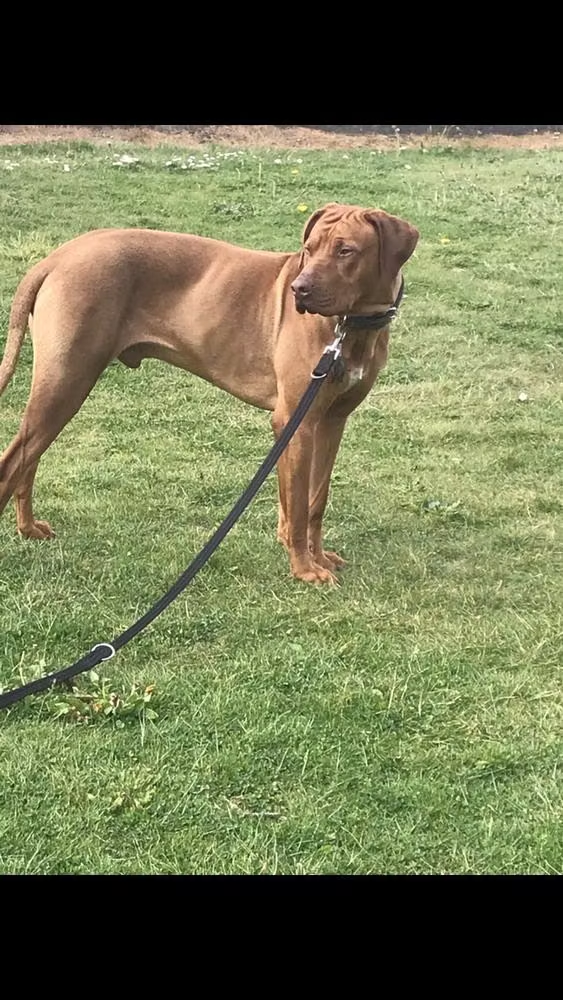
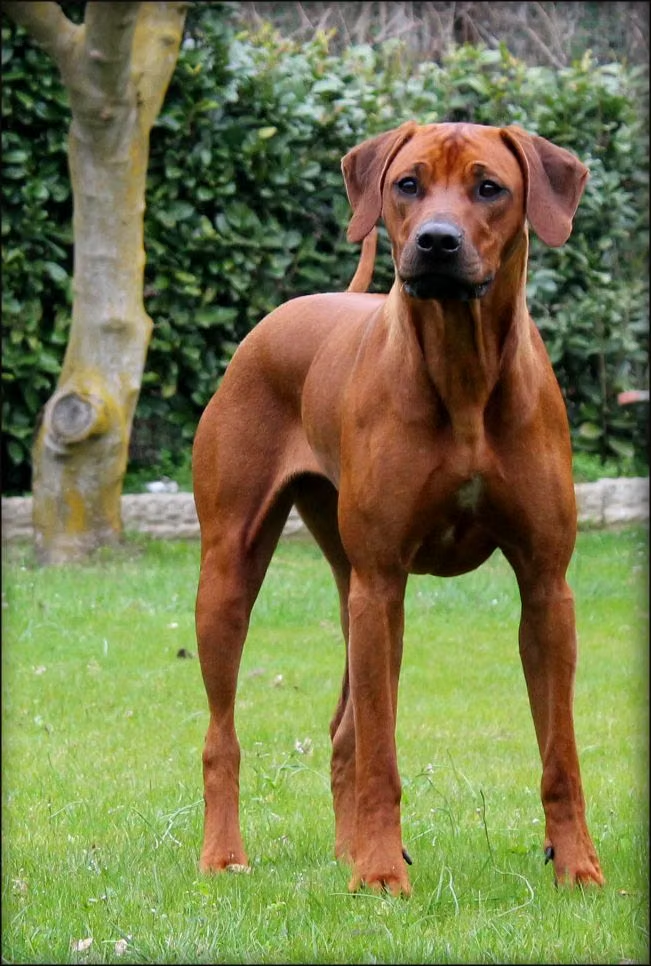
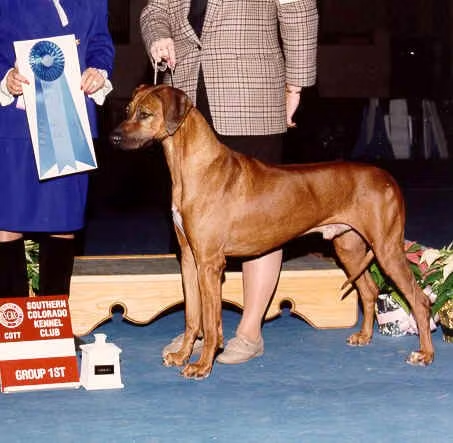
Meet some of our Rhodesian Ridgeback
A few of the Rhodesian Ridgeback profiles members have added to United Pet Club.







About the Rhodesian Ridgeback
The Rhodesian Ridgeback is a large, loyal hound from Southern Africa, known for the ridge of backward-growing hair on its spine and a protective, dignified nature.
The Rhodesian Ridgeback is a large hound that originated in Southern Africa, where it was raised to track and hold game and to guard the home. Its most recognizable trait is the ridge of hair running down the back, growing in the opposite direction from the rest of the coat. This ridge gives the breed its name and is the defining mark of its standard.
An adult typically weighs between 32 and 39 kg and stands 61 to 69 cm at the shoulder. The coat is short, dense, and comes in one shade of wheaten, from light to red. The build is muscular and well-proportioned, made for covering ground at speed over long distances.
In temperament, the Ridgeback is loyal and attached to its family, independent-minded, and reserved around people it does not know. It stays quiet at home and rarely barks without cause, though it remains alert and takes on the role of watchful guardian. Its combination of strength, intelligence, and a strong will means it does best with an owner who gives it consistent structure and early socialization.
| Attribute | Detail |
|---|---|
| Origin | South Africa |
| Size | Large (32 to 39 kg) |
| Lifespan | 10 to 12 years |
| Group/role | Hound, hunting and guarding |
| Good with | Families with older children and experienced owners |
Who it suits
The Rhodesian Ridgeback fits an active household that can give it daily exercise and firm, fair handling. It suits owners who want a calm indoor companion that also doubles as a capable guard dog. Given its size, strength, and independent streak, it is a better match for someone with prior dog-owning experience than for a first-timer looking for an easy, obedient pet. A home with a securely fenced yard and time to spend on training and companionship will get the most out of this breed.
History and origin of the Rhodesian Ridgeback
The Rhodesian Ridgeback developed in Southern Africa from European hunting dogs crossed with ridged native dogs of the Khoikhoi, with the standard set in Rhodesia in the 1920s.
The breed traces back to the Cape Colony in Southern Africa, where European settlers from the 1600s onward brought along hunting and guard dogs such as mastiffs, greyhounds, and various scent hounds. These were crossed with the semi-domesticated ridged dogs kept by the Khoikhoi people. The native ridged dogs passed on both the hardiness needed for the local climate and the distinctive strip of reversed hair along the spine.
Farmers and hunters valued the resulting dogs for their ability to work in the heat, get by on little water, and guard property through the night. They were used to locate and corner large game, holding it at bay until the hunter caught up. This is where the older name "African Lion Hound" comes from, though the dogs did not actually kill lions on their own.
In the 1870s, several of these dogs were brought further north into what was then Rhodesia, where big-game hunting was widespread. There, breeders refined the type specifically for this kind of work. In 1922, a group of breeders in Bulawayo came together to draw up a written standard, using the Dalmatian standard as a template for the format. The breed took its name, Rhodesian Ridgeback, from the region and its trademark feature.
From the 1920s on, the standard made its way to kennel clubs overseas, and the breed earned recognition in Britain and the United States over the decades that followed. The ridge stayed the core requirement of the standard the whole time, and the breed kept its dual reputation as hunting hound and family guardian. Today the Philippine Canine Club, Inc. (PCCI) recognizes the breed and registers it locally for owners here.
Appearance and breed standard of the Rhodesian Ridgeback
The Rhodesian Ridgeback is a muscular, well-proportioned hound with a short wheaten coat and the signature ridge of reversed hair along its back.
The Rhodesian Ridgeback is a large, athletic dog built for speed and stamina. The body is slightly longer than it is tall, with a deep chest, a strong loin, and clean, powerful legs. The overall look is one of balance and quiet strength rather than bulk. The head is of fair length with a flat skull, and the muzzle is long and deep.
The defining trait is the ridge, a strip of hair along the spine that grows forward, against the direction of the rest of the coat. It starts just behind the shoulders and tapers toward the hips. On a correct ridge, the pattern is clean and symmetrical, beginning with two matching crowns, or whorls, of equal size set opposite each other near the top.
| Trait | Standard |
|---|---|
| Height | Males 63 to 69 cm, females 61 to 66 cm |
| Weight | Males about 36 to 39 kg, females about 32 to 34 kg |
| Coat | Short, dense, sleek, and glossy |
| Colors | Light wheaten to red wheaten |
| Eyes | Round, set well apart, color matching the coat |
Coat and colors
The coat lies short and flat against the body, offering little protection from the cold but well-suited to a warm climate, which is part of why the breed's short coat adapts so easily to the Philippines' hot, humid weather. The accepted color is wheaten in any shade from light to red. Most standards allow a small patch of white on the chest and toes, while too much white counts as a fault. Some dogs have a darker muzzle and ears. The nose is brown or black depending on the coat shade, and eye color follows the nose: darker eyes go with a black nose, and amber eyes with a brown one.
Temperament and personality of the Rhodesian Ridgeback
The Rhodesian Ridgeback is loyal to its family, calm and quiet indoors, independent-minded, and naturally reserved with strangers.
The Rhodesian Ridgeback forms a close bond with its own family and tends to attach deeply to the household. Indoors it is usually calm, even-tempered, and quiet, and it is not the type to bark without reason. That same quiet confidence is what makes it such a watchful guardian: it stays alert to changes around the property and will position itself between the family and anything it sees as a threat.
With strangers, the breed holds back rather than greeting them warmly, taking its time to size up a newcomer before warming up. This reserve is typical of the breed and is one reason early, wide-ranging socialization matters so much. With children in its own family, it is generally patient and gentle, though its size means it suits households with older kids who can manage a strong dog better than those with toddlers.
The Ridgeback is smart and independent, bred to make its own calls while working far from the handler out in the bush. That means it can be strong-willed and will test the limits it is given. It is not stubborn so much as self-reliant, and it responds best to an owner who stays consistent and fair. Around other dogs it can get along well if raised with them, though some individuals, especially males, can be pushy with other male dogs. Its background as a hunting dog also gives it a strong urge to chase smaller animals.
| Trait | Rating |
|---|---|
| Affection | 4 |
| Energy | 4 |
| Trainability | 3 |
| Vocalness | 2 |
| Shedding | 2 |
Care and grooming for a Rhodesian Ridgeback
The Rhodesian Ridgeback is low-maintenance to groom but needs plenty of daily exercise and a secure yard to stay balanced and content.
Grooming
The short coat is simple to maintain and sheds lightly for a dog this size.
- Brush once a week with a rubber curry brush or grooming mitt to lift out loose hair
- Bathe only every few months or when the dog gets dirty, since the coat does not carry much odor
- Check and clean the ears on a regular basis to prevent buildup
- Trim the nails every few weeks and brush the teeth several times a week
Exercise
This is an athletic breed that needs real physical activity every day. Without enough of it, the dog can grow restless and destructive around the house.
- At least 60 to 90 minutes of activity a day for an adult dog
- Long walks, jogging, and free running in a securely fenced yard
- Activities that engage the mind, such as scent games or training drills
- Skip hard, repetitive exercise for puppies until the joints have finished developing
Environment
The Rhodesian Ridgeback does best in a home with a secure yard and a tall, solid fence, since it can jump and is athletic enough to clear low barriers with ease. Its short coat means the tropical heat here suits the breed naturally, though it still needs shade, plenty of water, and a cool spot to rest during the hottest part of the day. At its core this is an indoor dog that should live alongside the family rather than being left outside alone for long stretches.
Nutrition and feeding guide for the Rhodesian Ridgeback
The Rhodesian Ridgeback needs a balanced diet suited to a large, active dog, fed in measured meals to keep it lean and protect its joints.
A Rhodesian Ridgeback does well on a complete, balanced diet formulated for large, active breeds. Look for dog food with real animal protein as the main ingredient and a fat level suited to its activity. Because the breed is deep-chested, feeding measured meals instead of one large serving helps lower the risk of bloat. Keep the dog lean, since extra weight puts strain on the joints and the heart. Adjust portions to the individual dog's age, weight, and activity level rather than feeding by appetite alone, and keep fresh water available at all times.
| Life stage | Amount per day | Meals |
|---|---|---|
| Puppy (2 to 6 months) | Per growth formula, divided | 3 to 4 |
| Junior (6 to 12 months) | About 3 to 4 cups | 2 to 3 |
| Adult | About 3 to 4.5 cups | 2 |
| Senior | About 2.5 to 3.5 cups | 2 |
Treats and supplements
Keep treats to no more than about ten percent of the dog's daily calories, and factor them into the total food amount for the day. Good options include small pieces of plain cooked meat or store-bought low-fat training treats. Most Ridgebacks on a complete diet do not need extra supplements, but a vet may recommend joint support for older dogs or those doing heavy work. Bring in any change to the diet gradually, over several days, to avoid upsetting the stomach.
Health and common conditions in the Rhodesian Ridgeback
The Rhodesian Ridgeback is generally healthy with a 10 to 12 year lifespan, though it can be prone to a few inherited conditions including dermoid sinus and hip dysplasia.
The Rhodesian Ridgeback is a hardy breed, and most dogs enjoy good health, with a typical lifespan of 10 to 12 years. Responsible breeding paired with routine veterinary visits lowers the risk of the conditions known to affect the breed. Being deep-chested, it also carries a higher than average risk of bloat, so owners should know the warning signs. The points below cover the issues seen most often.
| Condition | Signs | Note |
|---|---|---|
| Dermoid sinus | Tube-like opening in the skin along the spine or neck | A breed-specific neural-tube defect, present from birth |
| Hip dysplasia | Stiffness, limping, trouble rising | Inherited joint malformation; screen breeding stock |
| Elbow dysplasia | Front-leg lameness, reluctance to exercise | Managed with weight control and veterinary care |
| Bloat (gastric torsion) | Swollen belly, retching, restlessness, distress | A life-threatening emergency in deep-chested dogs |
| Hypothyroidism | Weight gain, low energy, coat changes | Diagnosed by blood test, managed with medication |
Preventive care
- Get a puppy from a breeder who screens for hip, elbow, and thyroid problems and checks litters for dermoid sinus
- Keep vaccinations and parasite control up to date
- Feed measured meals and hold off on hard exercise right after eating to lower bloat risk
- Keep the dog at a lean weight to protect the joints
- Book annual veterinary checkups, and more frequent ones once the dog is a senior
Training and socialization for the Rhodesian Ridgeback
The Rhodesian Ridgeback is intelligent but independent, so it responds best to early socialization and consistent, reward-based training from a confident owner.
The Rhodesian Ridgeback is sharp and picks things up quickly, but it was bred to work alone and think for itself, so it will not simply obey to please its owner. It needs someone calm, consistent, and clear about the house rules. Harsh or heavy-handed methods tend to make the breed shut down or dig in its heels, while fair, reward-based training earns its cooperation. Start training and socialization while the dog is still a puppy, exposing it to plenty of people, places, and other animals so its natural wariness of strangers does not turn into full-on suspicion. Keep sessions short and mixed up to hold its attention.
Basics
- Set house rules and a routine from the first day at home
- Socialize the puppy widely with people, dogs, and everyday situations
- Teach name recognition, sit, down, and a reliable recall early on
- Work on loose-leash walking before the dog reaches full size and strength
- Run short daily sessions and reward correct responses right away
- Build up to steady manners around distractions and other animals
Breeding and raising Rhodesian Ridgeback puppies
Rhodesian Ridgeback breeding calls for health-tested parents and careful checks for dermoid sinus, with litters of six to nine puppies after a pregnancy of about nine weeks.
Rhodesian Ridgebacks reach sexual maturity by around one year old, but responsible breeders wait until a dog is fully mature physically and mentally, usually around two years, before breeding it. Both parents should clear health screening for hip and elbow dysplasia and thyroid function, and the pair should have sound temperaments that reflect the breed correctly.
The mother's pregnancy runs about 63 days. Litters typically run six to nine puppies, though bigger litters do happen. Every newborn should be checked for dermoid sinus, the inherited defect along the spine, since it can be present from birth and may call for veterinary attention. Newborn puppies rely completely on the mother for warmth and feeding during the first weeks.
From around three weeks old, the puppies start exploring and should be handled gently while getting exposed to ordinary household sights and sounds. This early stage shapes a lot of the adult temperament. Puppies are usually weaned by six to eight weeks and should stay with the mother and littermates until at least eight weeks so they pick up normal dog behavior. Breeding a large, strong breed like this is a serious undertaking and should only be done with the welfare of both parents and puppies as the top priority. Anyone planning to breed and register locally should check current requirements with the Philippine Canine Club, Inc. (PCCI).
| Metric | Value |
|---|---|
| Sexual maturity | About 12 months |
| Recommended breeding age | About 2 years |
| Pregnancy length | About 63 days |
| Average litter size | 6 to 9 puppies |
| Weaning age | 6 to 8 weeks |
| Earliest rehoming | 8 weeks and older |
Registering your Rhodesian Ridgeback and its microchip in the Philippines
The city vet office handles the RA 9482 paperwork; a free United Pet Club record is what a finder anywhere can actually search for your Rhodesian Ridgeback.
How to register a Rhodesian Ridgeback in the Philippines
Type in your Rhodesian Ridgeback's name, his birth date, and a clear photo, add your mobile number, and save. That is the entire process, and the profile stays free for his whole life. Dog registration works with or without a chip, so the vet visit can come later.
The clinic's part ended with the implant; the tracing part is yours. File your Rhodesian Ridgeback's 15-digit number with United Pet Club and every scan leads to your phone: free for life, all brands accepted, updates free every time your details change. Microchip registration plus a free account finishes the job.
How do I register my Rhodesian Ridgeback in the Philippines?
Open a free United Pet Club account, add your Rhodesian Ridgeback's details and a photo, then save the profile. It stays free for his whole life and sits alongside the city vet office registration RA 9482 requires.
How do I register my Rhodesian Ridgeback's microchip?
Type the 15-digit chip number into your free account together with your mobile number and address. The lifetime plan charges nothing for the registration or for any update, whatever brand the clinic used.
Is registration required for a Rhodesian Ridgeback in the Philippines?
Yes, RA 9482 requires dog registration with your city or municipal veterinary office, along with current anti-rabies vaccination. The United Pet Club profile is the searchable half: free, worldwide, and tied to your current mobile.
How much does it cost to register a Rhodesian Ridgeback?
Nothing. The free lifetime plan covers the profile, the microchip record, and every update, with no renewal fees at all.
Frequently asked questions about the Rhodesian Ridgeback
Common questions about the Rhodesian Ridgeback cover its size, temperament, care needs, lifespan, suitability, and availability.
How big does a Rhodesian Ridgeback get?
It is a large breed. Males stand 63 to 69 cm at the shoulder and weigh about 36 to 39 kg, while females stand 61 to 66 cm and weigh about 32 to 34 kg.
What is the Rhodesian Ridgeback's temperament like?
It is loyal to its family, calm and quiet at home, independent-minded, and reserved with strangers. It is also a natural guardian that stays alert to what is going on around it.
Is the Rhodesian Ridgeback hard to take care of?
Grooming is easy thanks to the short coat, but the breed needs a lot of daily exercise and firm, consistent training. The main demands are physical activity and clear handling rather than coat upkeep.
How long do Rhodesian Ridgebacks live?
The typical lifespan is 10 to 12 years. Good breeding, a lean weight, and routine veterinary care help a Ridgeback reach the upper end of that range.
Is the Rhodesian Ridgeback a good family dog?
It can be an excellent family dog for an active household with older children. Given its size, strength, and independent nature, it suits experienced owners better than first-time dog owners.
Does the Rhodesian Ridgeback get along with other pets?
Raised alongside other dogs, it can be sociable, though some males can be pushy toward other male dogs. Its hunting background gives it a strong instinct to chase, so care is needed around small animals and cats.
Are Rhodesian Ridgebacks easy to find in the Philippines?
They are an established breed available through dedicated breeders, though less common than many popular breeds. Expect to research carefully and look for a breeder registered with the Philippine Canine Club, Inc. (PCCI) who health-tests the parents and checks puppies for dermoid sinus.
From the community
Ask about the Rhodesian RidgebackNo questions about the Rhodesian Ridgeback yet. Be the first to ask.
Browse Dog breeds