The Rat Terrier is a spirited, intelligent American farm dog prized for its versatility, friendly temperament, and tireless vermin-hunting drive.
How the Rat Terrier coat is built, and what that means when you groom it.
A few of the Rat Terrier profiles members have added to United Pet Club.
The Rat Terrier is a small, intelligent American farm dog known for its friendly temperament, high energy, and strong drive to hunt vermin.
The Rat Terrier is a small working dog developed in the United States as an all-purpose farm companion and vermin hunter. It combines a compact, muscular build with a quick mind and steady nerves, which made it a fixture on American farms through the early twentieth century. Most adults stand between 10 and 18 inches tall and weigh roughly 10 to 25 pounds, depending on the line and individual.
The breed has two recognized size types in some registries, a miniature and a standard, but both share the same alert expression and easy short coat. Rat Terriers are people-oriented and bond closely with their households. They remain active well into adulthood and keep the hunting instincts that defined the breed.
This is a dog that wants a job and human company. It suits active owners who can provide daily exercise, mental stimulation, and a securely fenced yard or controlled outdoor time.
| Attribute | Detail |
|---|---|
| Origin | United States |
| Size | Small (about 10 to 25 pounds) |
| Lifespan | 12 to 18 years |
| Group / role | Terrier, farm dog and vermin hunter |
| Good with | Families, older children, and households that enjoy active dogs |
The Rat Terrier fits households that can keep up with a busy, curious dog. It does well with owners who want a small companion that is still hardy and athletic. First-time owners can manage the breed if they commit to early socialization and consistent routines, since the dog's drive and intelligence need an outlet.
The Rat Terrier was developed in the United States from several British terrier types and became a common farm and vermin-control dog in the early 1900s.
The Rat Terrier traces its roots to terriers brought to North America by British immigrants in the nineteenth century. Early stock drew on the same European working terriers that fed many ratting breeds of the period, including types ancestral to the Manchester Terrier and the smooth Fox Terrier.
American farmers crossed these terriers with other breeds to sharpen specific traits. Outcrosses to the Beagle and Whippet are often cited, adding scenting ability and speed to the original digging and killing instinct. The result was a flexible farm dog that could clear barns and fields of rats and other small pests.
The name Rat Terrier came into common use in the early twentieth century, and the breed was a familiar sight on American farms during that era. As farming changed and chemical pest control spread through the mid-1900s, numbers fell and the breed survived largely in rural areas and among dedicated keepers.
Organized breed recognition came later. The United Kennel Club recognized the Rat Terrier in 1999, and the American Kennel Club granted full recognition in 2013, placing it in the Terrier Group. These steps helped formalize the standard while the breed kept much of its working character.
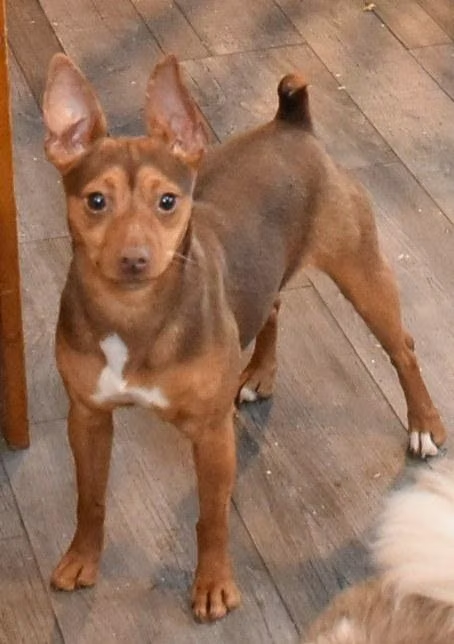
The Rat Terrier is a small, compact, muscular dog with a short smooth coat, erect or button ears, and a wide range of color patterns.
The Rat Terrier has a balanced, athletic outline that reads as sturdy rather than delicate. The body is slightly longer than tall, with a deep chest, level topline, and clean muscling that suits a dog built for digging and quick bursts of speed. The head is wedge-shaped with a moderate stop, and the ears may be erect, button, or tipped.
Movement is smooth and efficient, reflecting the breed's working past. Despite the small frame, the overall impression is one of strength and agility.
| Trait | Standard |
|---|---|
| Height | Miniature about 10 to 13 inches; standard about 13 to 18 inches at the shoulder |
| Weight | About 10 to 25 pounds |
| Coat | Short, dense, and smooth |
| Colors | Often pied (white with colored patches); black, chocolate, tan, blue, lemon, and combinations |
| Eyes | Round to slightly oval, dark, with an alert expression |
The coat is short and close-lying, which makes grooming simple and shedding moderate. Most Rat Terriers carry a pied pattern, meaning a white base with one or more colored patches, though solid and bicolor dogs occur. Common colors include black, chocolate, tan, blue, and lemon, often with tan points or ticking. The skin under the coat is tight, and the short hair offers limited protection in very cold weather.
The Rat Terrier is friendly, alert, and intelligent, devoted to its family while remaining watchful with strangers and driven to chase small animals.
The Rat Terrier is affectionate and closely attached to its people. It tends to bond with the whole household and often follows family members from room to room. With children it is usually playful and tolerant, and it does best with older children who understand how to handle an active small dog.
With strangers the breed is alert and sometimes reserved. It will announce visitors and notice changes in its environment, which makes it a capable watchdog despite its size. Early socialization helps it settle quickly once it learns a newcomer is welcome.
Around other pets the picture is mixed. Rat Terriers generally live well with dogs they are raised with, but the strong prey drive means small animals such as rodents, rabbits, and sometimes cats can trigger chasing. Secure fencing and supervision are sensible. The breed is intelligent and quick to learn, but that same intelligence can lead to stubborn or mischievous behavior without enough activity.
| Trait | Rating |
|---|---|
| Affection | 5 |
| Energy | 4 |
| Trainability | 4 |
| Vocalness | 3 |
| Shedding | 2 |
The Rat Terrier needs daily exercise and mental work, but its short coat keeps grooming simple and low-maintenance.
The Rat Terrier adapts to apartments or houses as long as it gets enough daily exercise. It prefers to be near its family and can develop nuisance behaviors if left alone for long stretches. The short coat means the dog feels cold quickly, so a coat or sweater helps in low temperatures, and shade and water are important in heat.
The Rat Terrier does well on a complete diet suited to small, active dogs, with portions controlled to prevent weight gain.
The Rat Terrier needs a balanced, complete diet formulated for its life stage and activity level. An active adult benefits from quality protein to support lean muscle, with calories matched to how much the dog moves each day. Because the breed is small and food-motivated, portions should be measured rather than free-fed to avoid excess weight, which strains the joints and shortens healthy years.
Fresh water should always be available. Most owners feed a commercial diet labeled complete and balanced; home-prepared diets should be planned with a veterinarian to avoid gaps.
| Life stage | Amount per day | Meals |
|---|---|---|
| Puppy (2 to 6 months) | About 1/2 to 1 cup, by weight and product | 3 to 4 |
| Junior (6 to 12 months) | About 1/2 to 1 cup | 2 to 3 |
| Adult | About 1/2 to 1 cup | 2 |
| Senior | Adjusted slightly down for lower activity | 2 |
Keep treats to roughly 10 percent of daily calories and use small pieces for training. Most Rat Terriers on a complete diet do not need supplements. Discuss joint, skin, or coat supplements with a veterinarian before adding them, and reduce meal portions on days with heavy treat use.
The Rat Terrier is generally healthy with a long lifespan of 12 to 18 years, though it can be prone to a few joint, eye, and dental conditions.
The Rat Terrier is a hardy breed and often lives 12 to 18 years. Many lines stay sound well into old age, partly because the breed kept a working background rather than extreme physical features. Even so, responsible care and routine veterinary checks help catch problems early. Reputable breeders screen breeding stock for known issues and share results with buyers.
| Condition | Signs | Note |
|---|---|---|
| Patellar luxation | Skipping gait, intermittent hind-leg lameness | Common in small breeds; ranges from mild to surgical |
| Hip dysplasia | Stiffness, reduced activity, difficulty rising | Less frequent than in large breeds but possible |
| Dental disease | Bad breath, tartar, gum redness | Small jaws crowd teeth; routine dental care helps |
| Allergies and skin issues | Itching, ear infections, hair loss | May be food or environmental |
| Eye conditions | Cloudiness, vision changes | Screening recommended in breeding dogs |
The Rat Terrier is intelligent and quick to learn, and it responds best to short, varied, reward-based sessions that hold its attention.
The Rat Terrier learns fast and enjoys the challenge of training. That intelligence cuts both ways, since a bored or under-exercised dog will invent its own games. Keep sessions short and upbeat, and end on a success. The breed's prey drive and independence mean recall and impulse control need steady, patient work, especially around small animals.
Socialization should start early. Exposing the puppy to varied people, dogs, surfaces, and sounds builds the confident, settled adult the breed can be.
Rat Terriers reach maturity around one to two years, carry litters of about three to six puppies, and benefit from health screening before breeding.
Responsible Rat Terrier breeding starts with health-tested parents and sound temperaments. Females generally should not be bred until they are physically mature, often after the first year and once health clearances are complete. Gestation in dogs runs about 63 days from conception, and litter sizes for the breed typically fall in the range of three to six puppies, though smaller and larger litters occur.
Raising the young calls for a clean, warm whelping area and close monitoring of the dam and pups in the first weeks. Puppies should stay with the mother and littermates until at least eight weeks, which supports social development. Early gentle handling and exposure during this window help produce well-adjusted adults. Breeding should be left to people who can commit to screening, lifelong support of the puppies they produce, and finding suitable homes.
| Metric | Value |
|---|---|
| Sexual maturity | About 6 to 12 months (breed later, after full maturity) |
| Recommended breeding age | After about 1 to 2 years, with health clearances |
| Gestation | About 63 days |
| Average litter size | About 3 to 6 puppies |
| Weaning age | About 6 to 8 weeks |
| Earliest rehoming | 8 weeks or later |
The city vet office handles the RA 9482 paperwork; a free United Pet Club record is what a finder anywhere can actually search for your Rat Terrier.
A Rat Terrier that gets loose during a storm is identified by whatever record answers the scan, not by the barangay it came from. Give it a record that answers: your mobile number, the dog's photo, and his details, free for life with United Pet Club. Register your dog today and it is done for good.
If a vet has already implanted a chip, the number still has to be filed where a scanner can trace it, because an unfiled chip points at nobody. Register the microchip free on the lifetime plan: any brand sold in the Philippines qualifies, updates after you move house or change SIM cost nothing, and the record stays searchable here and abroad. Create your free account and cover both in one go.
Open a free United Pet Club account, add your Rat Terrier's details and a photo, then save the profile. It stays free for his whole life and sits alongside the city vet office registration RA 9482 requires.
Type the 15-digit chip number into your free account together with your mobile number and address. The lifetime plan charges nothing for the registration or for any update, whatever brand the clinic used.
Yes, RA 9482 requires dog registration with your city or municipal veterinary office, along with current anti-rabies vaccination. The United Pet Club profile is the searchable half: free, worldwide, and tied to your current mobile.
Nothing. The free lifetime plan covers the profile, the microchip record, and every update, with no renewal fees at all.
Common questions about Rat Terrier size, temperament, care needs, lifespan, suitability, and availability.
Rat Terriers are small dogs. Miniatures stand about 10 to 13 inches tall and standards about 13 to 18 inches, with weight ranging from roughly 10 to 25 pounds depending on type and individual.
Yes. They are friendly and affectionate with their families and usually playful with children, doing best with older kids. Early socialization helps them settle around visitors and other pets.
Grooming is easy thanks to the short coat, but the breed is high energy and intelligent. The main work is meeting its daily exercise and mental stimulation needs to prevent boredom behaviors.
The breed is long-lived for a dog, often reaching 12 to 18 years with good care, a healthy weight, and routine veterinary attention.
It varies. They can live with cats and dogs they are raised with, but a strong prey drive means small animals like rodents and rabbits may be chased. Supervision and secure spaces are important.
Yes, the breed is established in the United States and available through reputable breeders and rescues, though specific colors, sizes, or lines may take time to locate. Always ask about health clearances.
They are alert and will announce visitors or unusual activity, which makes them good watchdogs. Excessive barking is usually a sign of boredom and improves with enough exercise and training.