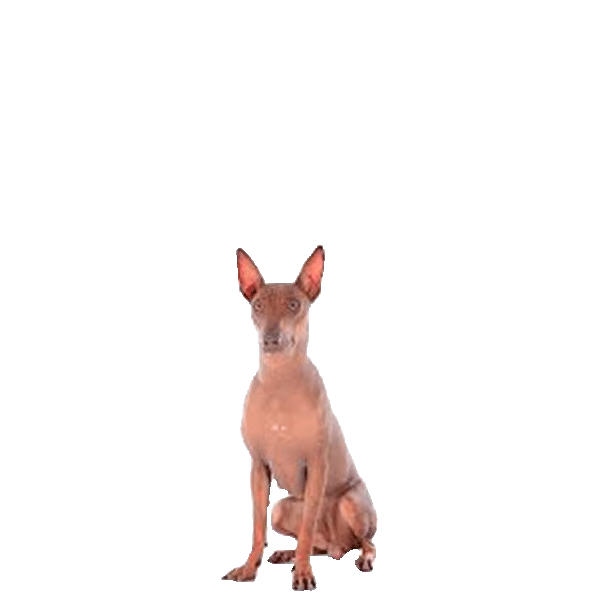
The Peruvian Inca Orchid is an elegant, loyal sighthound of ancient Peruvian origin, affectionate with family yet reserved with strangers.
How the Peruvian Inca Orchid coat is built, and what that means when you groom it.
Caution: A Peruvian Inca Orchid needs protection from the sun.
Bare skin burns quickly and offers no insulation against cold either. Time outdoors needs shade, a coat in cool weather, or a sunscreen a vet has approved for animals.
A few of the Peruvian Inca Orchid profiles members have added to United Pet Club.
The Peruvian Inca Orchid is a medium-sized Peruvian sighthound, affectionate with family but reserved with strangers. It comes in hairless and coated types and lives 12 to 14 years.
The Peruvian Inca Orchid is a slim, athletic dog whose line goes back to pre-Columbian Peru. Most people know it as a hairless dog, though a coated type can turn up in the same litter. It has the build of a sighthound paired with smooth, warm skin, giving it a look you will not mistake for any other breed at a PCCI show.
This is a sensitive dog that centers its world on its household. It usually singles out one or two favorite people and stays close to them. Around visitors it hangs back and watches rather than making a fuss, so it works well as a quiet companion that notices when something at the gate is not right. Quick reflexes and agility come from its sighthound background, and it still keeps a fair prey drive.
Breed standards recognize three sizes: small, medium, and large. This profile covers the medium size. Across all three, the dog keeps the same graceful shape, fine bone, and calm, affectionate nature indoors.
| Attribute | Detail |
|---|---|
| Origin | Peru |
| Size | Medium |
| Lifespan | 12 to 14 years |
| Group / role | Sighthound, companion |
| Good with | Household members it knows well, plus calm, supervised meetings with others |
The breed suits an owner who can give it steady company and a warm home free of stray drafts from the aircon. It fits people who are usually around, since it does not take well to being left alone for long stretches. Hairless dogs need skin care and sun protection, so the breed works for someone willing to keep up with bathing, sunscreen, and a jacket for cooler nights or a trip up to Baguio. Its sighthound instinct means a securely fenced yard or covered court is the safer choice for off-leash time. It can share a home with respectful older kids and with other dogs once introductions are handled carefully, though a neighbor's cat or anything small and fast-moving may set off a chase.
The Peruvian Inca Orchid descends from hairless dogs kept along coastal Peru for centuries, shown in pre-Columbian Moche pottery. Peru named it a national breed in the twentieth century, and PCCI owners keep a small following in the Philippines today.
Hairless dogs go back a long way on the Peruvian coast. Pottery and woven cloth from pre-Columbian groups such as the Moche, Chimu, and Chancay show dogs that look much like today's Peruvian Inca Orchid, so the type likely reaches back well over a thousand years. These dogs lived alongside people in the coastal valleys and held a place in both everyday life and ceremony.
Under the Inca, hairless dogs were kept in the household partly for the warmth of their skin. One story often repeated is that they were kept apart from the cultivated orchids during the day and let indoors at night, which is one explanation offered for the breed's name. This belongs more to breed folklore than to settled record, so it is worth treating with some caution.
After the Spanish conquest, the breed lost ground in the cities but held on in the countryside, where local families kept breeding it informally. In the twentieth century, Peruvian breeders and government bodies worked to protect the type, and Peru now recognizes it as a national breed. The Federation Cynologique Internationale accepted it in 1981, placing it among the recognized hairless breeds worldwide.
Other registries later added the breed to their books, and it picked up a small, loyal following outside Peru, including a handful of owners in the Philippines who keep and show the breed under the Philippine Canine Club, Inc. (PCCI). It remains rare here and in most countries outside Peru, and most of the world population still lives in its home country.
The Peruvian Inca Orchid is a fine-boned, athletic sighthound with an elegant outline, large upright or rose ears, and almond-shaped eyes. It comes in hairless and coated types across a wide range of skin and coat colors.
The Peruvian Inca Orchid has the lean, deep-chested frame typical of sighthounds. The body is slightly longer than it is tall, the back is firm, and the limbs are fine but strong, giving the dog a light, springy trot. The head is wedge-shaped with a moderate stop, and the ears are large and held upright when the dog is alert. The eyes are almond-shaped and run from yellow to dark brown, usually darker on dogs with darker skin.
The hairless type has smooth, warm skin, sometimes with a light dusting of hair on the head, feet, and tip of the tail. Hairless dogs often have some missing teeth, a trait linked to the same gene that causes hairlessness and accepted under the standard. The coated type wears a short, close coat and keeps a full set of teeth. Both types can appear in one litter, so a breeder cannot promise a hairless puppy in advance.
| Trait | Standard |
|---|---|
| Height | About 40 to 50 cm (16 to 20 in) at the shoulder for the medium size |
| Weight | Roughly 8 to 12 kg (18 to 26 lb), scaling with size and build |
| Coat | Hairless (smooth skin) or coated (short, close hair) |
| Colors | Any color or mix, from black, gray, and brown to pink and mottled skin or coat |
| Eyes | Almond-shaped, yellow to dark brown |
Skin and coat color covers a wide range. Hairless dogs can be a single solid shade or carry patches and spots over a lighter base, and exposed skin often darkens with sun exposure, which happens fast under Philippine sun. Light-skinned dogs sunburn more easily and need cover when they are out during midday. The coated type shows the same broad color range in short hair. Since color is not fixed by the standard, two dogs from the same litter can look quite different while keeping the same elegant shape and proportions.
The Peruvian Inca Orchid is devoted to its family, watchful with strangers, and naturally quick on its feet. It bonds tightly, dislikes being left on its own, and keeps a sighthound's instinct to chase.
Indoors, the Peruvian Inca Orchid is gentle, quiet, and firmly attached to its people. It often looks for warmth and contact and may curl up near or under a blanket, handy in a household that runs the aircon at night. The dog reads its owner's mood quickly and does not respond well to rough handling. Left alone for long hours it can turn anxious, so it fits best in a home where someone is around for most of the day, which suits many Filipino households where family members take turns staying home.
With strangers the dog stays reserved. It rarely warms up right away and prefers to size up a new person before accepting them. This caution, paired with its alertness, makes it a natural watchdog that lets the household know someone is at the gate without turning into a nonstop barker that annoys the neighbors. Early and continued exposure to new people and places helps it grow into a confident adult rather than a shy one.
With other dogs it is usually friendly once introductions are handled properly, and it often gets along well with littermates or dogs it already knows. Its sighthound instinct means small, fast-moving animals, such as a neighbor's chicken or the house cat, can set off a chase, so households with smaller pets should introduce them slowly and watch the early meetings closely. The breed is agile and enjoys short bursts of speed followed by long stretches of rest at home.
| Trait | Rating |
|---|---|
| Affection | 5 |
| Energy | 3 |
| Trainability | 3 |
| Vocalness | 2 |
| Shedding | 1 |
Care centers on protecting the skin of the hairless type, giving moderate daily exercise, and keeping the home warm and sheltered through the rainy and typhoon months. The breed needs sun protection, regular bathing, and steady company.
Daily care for the Peruvian Inca Orchid depends partly on whether the dog is hairless or coated, though both types need a warm home and steady attention to comfort, especially during the rainy and typhoon months when temperatures dip and drafts find their way indoors.
The breed lives indoors. The hairless type has no coat to soften heat or cold, so the home should stay warm and free of drafts, with a soft, warm spot to sleep. On cooler evenings or trips to higher elevations, a jacket or sweater is a sensible choice, and strong sun calls for shade and sunscreen to protect the skin. The dog should not be kept outdoors, in a garage, or in a garden shed.
The Peruvian Inca Orchid does well on a complete, balanced diet matched to its life stage and activity, served in set daily portions. Watch the body condition of this lean, fine-boned breed and keep toxic human food out of reach.
Feed a complete, balanced food suited to the dog's life stage, size, and activity level. As a lean sighthound, it should carry little extra fat, and the last ribs should be easy to feel under light pressure. Adjust the portion to keep a trim waist rather than sticking to a fixed amount printed on the bag. Fresh water should be available at all times, which matters even more in the tropical heat. Dogs with fewer teeth may manage softened food or smaller kibble more comfortably.
| Life stage | Amount per day | Meals |
|---|---|---|
| Puppy (2 to 6 months) | Per product guidance for expected adult weight | 3 to 4 |
| Junior (6 to 12 months) | Slightly reduced from puppy amount as growth slows | 2 to 3 |
| Adult (medium, active) | About 150 to 250 g of quality dry food, split across meals | 2 |
| Senior | Reduced calories to match lower activity | 2 |
Keep treats to a small share of daily calories so the dog stays lean. Use small pieces of its regular food or plain, dog-safe options for training rewards. A diet that is already complete and balanced does not usually need extra supplements; add them only on a veterinarian's advice. If you switch foods, do it gradually over several days to avoid an upset stomach.
The Peruvian Inca Orchid is generally healthy and typically lives 12 to 14 years. The main concerns involve the hairless skin, dental gaps in hairless dogs, and care around anesthesia and cold sensitivity.
The Peruvian Inca Orchid is a hardy breed with a typical lifespan of 12 to 14 years. Most of its health considerations trace back to the hairless trait rather than to widespread inherited disease. With good skin care, routine veterinary checks, and protection from extreme temperatures, many dogs stay well into old age.
| Condition | Signs | Note |
|---|---|---|
| Skin problems (sunburn, dryness, acne) | Redness, flaking, blackheads, sore patches | Mainly affects hairless dogs; sun protection and skin care lower the risk |
| Dental issues | Missing teeth, tartar, gum inflammation | Hairless dogs often have fewer teeth; regular dental care helps |
| Cold sensitivity | Shivering, reluctance to go out in cold | Provide clothing and warmth; the hairless skin gives little insulation |
| Sensitivity to anesthesia and some medications | Reaction during or after procedures | Discuss the breed with the veterinarian before surgery or sedation |
The Peruvian Inca Orchid is intelligent and willing but sensitive, so it responds best to calm, reward-based training, early socialization, and reliable recall given its prey drive.
The Peruvian Inca Orchid learns well when training stays gentle and consistent. It is a thinking dog that reads its handler closely, so it puts in the most effort for someone it trusts. Harsh corrections break that trust and tend to produce a shy or shut-down dog rather than a cooperative one. Short, upbeat sessions hold its attention better than long drills.
Socialization comes first. Because the breed is naturally aloof with strangers, early and varied exposure to people, places, and other dogs helps it grow into a confident adult. Recall deserves special attention: the sighthound chase instinct can override training the moment a small animal bolts, so off-leash freedom belongs in secure areas only, never on an open street or an unfenced court.
Breeding the Peruvian Inca Orchid involves the genetics of the hairless trait, which produces both hairless and coated puppies and carries a lethal factor in double form. Responsible breeders pair dogs carefully and raise litters with attention to skin and dentition.
Hairlessness in the breed follows a dominant gene that is lethal when an embryo inherits two copies, so breeders generally pair a hairless dog with a coated one, or a hairless dog with another hairless dog, accepting that some embryos carrying two copies will not develop. The result is that litters contain both hairless and coated puppies, and the coated type is an important, valued part of the breeding population rather than a fault to cull.
Females usually reach sexual maturity within the first year, but responsible breeding waits until the dog is physically and mentally mature and has been health-screened. Gestation in dogs runs about 63 days. The breed produces modest litters, and newborns, hairless pups especially, need a warm, draft-free environment because they cannot regulate their temperature well on their own.
Raising a litter means early handling and socialization to build the breed's confidence, plus attention to skin and to the gaps in dentition common in hairless lines. Because the breed is uncommon here, breeders should keep proper pedigree records, avoid heavy inbreeding, and place puppies only with owners ready for hairless-dog care and a PCCI-registered breeding program where possible.
| Metric | Value |
|---|---|
| Sexual maturity | Around 6 to 12 months (breed later) |
| Gestation | About 63 days |
| Typical litter size | Small, commonly a few puppies |
| Coat outcome | Both hairless and coated puppies in the same litter |
| Key genetic note | Hairless gene is lethal in homozygous (double) form |
| Weaning | Around 6 to 8 weeks, with warmth and early socialization |
The city vet office handles the RA 9482 paperwork; a free United Pet Club record is what a finder anywhere can actually search for your Peruvian Inca Orchid.
Type in your Peruvian Inca Orchid's name, his birth date, and a clear photo, add your mobile number, and save. That is the entire process, and the profile stays free for his whole life. Dog registration works with or without a chip, so the vet visit can come later.
If a vet has already implanted a chip, the number still has to be filed where a scanner can trace it, because an unfiled chip points at nobody. Register the microchip free on the lifetime plan: any brand sold in the Philippines qualifies, updates after you move house or change SIM cost nothing, and the record stays searchable here and abroad. Create your free account and cover both in one go.
Open a free United Pet Club account, add your Peruvian Inca Orchid's details and a photo, then save the profile. It stays free for his whole life and sits alongside the city vet office registration RA 9482 requires.
Type the 15-digit chip number into your free account together with your mobile number and address. The lifetime plan charges nothing for the registration or for any update, whatever brand the clinic used.
Yes, RA 9482 requires dog registration with your city or municipal veterinary office, along with current anti-rabies vaccination. The United Pet Club profile is the searchable half: free, worldwide, and tied to your current mobile.
Nothing. The free lifetime plan covers the profile, the microchip record, and every update, with no renewal fees at all.
Common questions about the Peruvian Inca Orchid cover its size, temperament, care needs, lifespan, suitability as a pet, and availability in the Philippines.
The breed comes in small, medium, and large sizes. The medium size stands about 40 to 50 cm (16 to 20 in) at the shoulder and weighs roughly 8 to 12 kg (18 to 26 lb). All three sizes share the same lean, elegant sighthound build.
It is affectionate and devoted with its family and aloof with strangers. The breed stays alert, agile, and quiet indoors, bonds closely with its people, and does not like being left alone for long stretches.
Care is moderate but specific. The hairless type needs skin care, sun protection during the hot months, and warmth on cooler nights, plus regular bathing. Exercise needs are moderate, and the breed needs steady company rather than long hours alone at home.
The typical lifespan is 12 to 14 years. With good skin care, dental care, a lean weight, and routine veterinary checks, many dogs stay healthy well into old age.
Yes, for the right home. It suits people who are often around, can manage its skin and warmth needs, and want a quiet, devoted companion. It can live with respectful older kids and, after careful introductions, with other dogs.
The hairless type sheds almost nothing and the coated type sheds lightly. No dog is truly non-allergenic, since reactions can come from skin and saliva as well as hair, so allergic owners should spend time with the breed before committing.
The breed is uncommon outside Peru, so finding a puppy locally can take time and patience. Work with a responsible breeder who health-screens, keeps pedigree records under PCCI, and prepares owners for hairless-dog care, or check with breed-specific rescue groups.



