
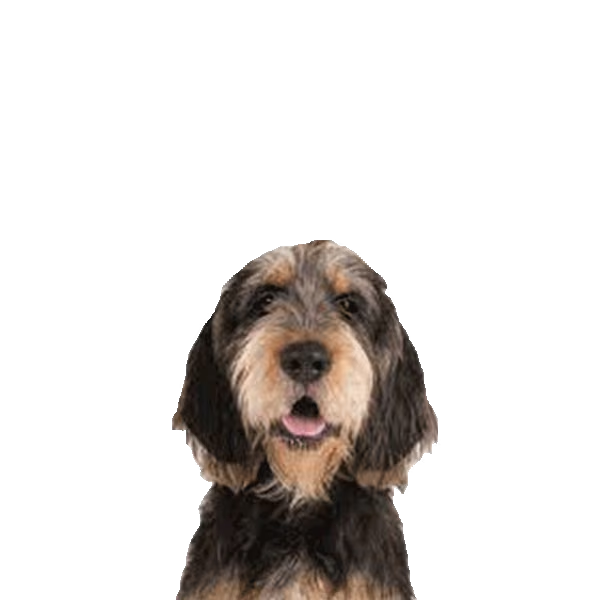
Otterhound
The Otterhound is a boisterous, good-natured scenthound known for its shaggy coat, webbed feet, and love of water.
- Size
- Large
- Lifespan
- 10–13 years
- Origin
- England
- Temperament
- Good-natured
- Standard colors
- Black, White, and Gray and 8 more
Characteristics
Coat and grooming
How the Otterhound coat is built, and what that means when you groom it.
- Coat layers
- Double coat
- Coat texture
- Wire
- Coat length
- Medium
- Shedding
- Low shedding
Grooming guidance
Caution: A Otterhound coat should be hand-stripped rather than clipped.
A wire coat is meant to be pulled out at the root once the hair is ready to release. Clippers cut it off part way instead, leaving the soft undercoat behind. The result is a coat that grows back limp and faded, and the weatherproof texture only returns after the hair is stripped out again.
Otterhound colors and patterns
What each club's breed standard says about every Otterhound color and pattern. Point at a ruling to see the club's own wording.
Breed standards describe the Otterhound in Black, White, Gray, Blue, Liver, Tan, Red, Lemon, Cream, Wheaten, and Sandy. Standard patterns: Solid, Bicolor, Tricolor, Piebald, Parti-color, Agouti, Grizzle, and Tan point.
| Color or pattern | FCI | AKC | UKC | KC | KUSA |
|---|---|---|---|---|---|
| Black | Standard (“Black and tan”) | Standard (“Black”) | Standard (“Any color or combination of colors is acceptable”) | Standard (“Black and tan”) | Standard (“Black and tan”) |
| White | Standard (“White hounds”) | Standard (“White”) | Standard (“Any color or combination of colors is acceptable”) | Standard (“White hounds”) | Standard (“White Hounds”) |
| Gray | No ruling | Standard (“Gray”) | Standard (“Any color or combination of colors is acceptable”) | Not recognized | No ruling |
| Blue | Standard (“blue”) | Standard (“Blue & Cream”) | Standard (“Any color or combination of colors is acceptable”) | Standard (“blue”) | Standard (“blue”) |
| Liver | Standard (“occasional liver, tan and liver”) | Standard (“Liver & Tan”) | Standard (“Any color or combination of colors is acceptable”) | Standard (“occasional liver, tan and liver”) | Standard (“occasional liver, tan and liver”) |
| Tan | Standard (“Black and tan, blue and tan”) | Standard (“Tan”) | Standard (“Any color or combination of colors is acceptable”) | Standard (“Black and tan, blue and tan”) | Standard (“Black and tan, blue and tan”) |
| Red | Standard (“red”) | Standard (“Any color or combination of colors is acceptable”) | Standard (“Any color or combination of colors is acceptable”) | Standard (“red”) | Standard (“red”) |
| Lemon | Standard (“White hounds may have slight lemon, blue or badger pied markings”) | Standard (“Lemon”) | Standard (“Any color or combination of colors is acceptable”) | Standard (“White hounds may have slight lemon, blue or badger pied markings”) | Standard (“White Hounds may have slight lemon, blue, or badger pied markings”) |
| Cream | Standard (“black and cream”) | Standard (“Blue & Cream”) | Standard (“Any color or combination of colors is acceptable”) | Standard (“black and cream”) | Standard (“black and cream”) |
| Wheaten | Standard (“wheaten”) | Standard (“Wheaten”) | Standard (“Any color or combination of colors is acceptable”) | Standard (“wheaten”) | Standard (“wheaten”) |
| Sandy | Standard (“sandy”) | Standard (“Any color or combination of colors is acceptable”) | Standard (“Any color or combination of colors is acceptable”) | Standard (“sandy”) | Standard (“sandy”) |
| Albino | No ruling | No ruling | Disqualifying (“Albinism”) | Not recognized | No ruling |
| Patterns | |||||
| Solid | Standard (“whole coloured”) | Standard (“Any color or combination of colors is acceptable”) | Standard (“Any color or combination of colors is acceptable”) | Standard (“Whole coloured”) | Standard (“whole-coloured”) |
| Bicolor | Standard (“tan and white”) | Standard (“Blue & Cream”) | Standard (“Any color or combination of colors is acceptable”) | Standard (“White & Black”) | Standard (“tan and white”) |
| Tricolor | Not recognized (“a white-bodied hound with black and tan patches distinctly separate”) | Standard (“White Black & Tan”) | Standard (“Any color or combination of colors is acceptable”) | Not recognized (“a white-bodied hound with distinctly separate black patches and tan patches”) | Not recognized (“a white-bodied Hound with black and tan patches distinctly separate”) |
| Piebald | Standard (“White hounds may have slight lemon, blue or badger pied markings”) | Standard (“Any color or combination of colors is acceptable”) | Standard (“Any color or combination of colors is acceptable”) | Standard (“White hounds may have slight lemon, blue or badger pied markings”) | Standard (“White Hounds may have slight lemon, blue, or badger pied markings”) |
| Parti-color | No ruling | Standard (“Any color or combination of colors is acceptable”) | Standard (“Any color or combination of colors is acceptable”) | Standard (“Particolour”) | No ruling |
| Agouti | Standard (“badger pied markings”) | Standard (“Badger Markings”) | Standard (“Any color or combination of colors is acceptable”) | Standard (“badger pied markings”) | Standard (“badger pied markings”) |
| Grizzle | Standard (“grizzle”) | Standard (“Grizzle Markings”) | Standard (“Any color or combination of colors is acceptable”) | Standard (“grizzle”) | Standard (“grizzle”) |
| Tan point | Standard (“Black and tan, blue and tan”) | Standard (“Black & Tan”) | Standard (“Any color or combination of colors is acceptable”) | Standard (“Black and tan, blue and tan”) | Standard (“Black and tan, blue and tan”) |


| Color or pattern | FCI | AKC | UKC | KC | KUSA |
|---|---|---|---|---|---|
| Dark brown | No ruling | Standard (“The eyes are dark”) | Standard (“The deeply set eyes are dark”) | No ruling | No ruling |
| Hazel | Standard (“a blue and tan hound may have hazel eyes”) | Standard (“those with liver or slate pigment may have hazel eyes”) | Standard (“Those with liver or slate pigment may have hazel eyes”) | Standard (“a blue and tan hound may have hazel eyes”) | Standard (“a blue and tan Hound may have hazel eyes”) |
| Yellow | Fault (“Yellow eye undesirable”) | No ruling | No ruling | Fault (“Yellow eye undesirable”) | Fault (“Yellow eye undesirable”) |
| Color or pattern | FCI | AKC | UKC | KC | KUSA |
|---|---|---|---|---|---|
| Black | No ruling | Standard (“black, liver, or slate, depending on the color of the hound”) | Standard (“Dogs with black-pigmented eye rims and noses”) | No ruling | No ruling |
| Slate | No ruling | Standard (“black, liver, or slate, depending on the color of the hound”) | Standard (“Those with liver or slate pigment”) | No ruling | No ruling |
| Liver | Standard (“a tan hound may have a brown nose”) | Standard (“black, liver, or slate, depending on the color of the hound”) | Standard (“Those with liver or slate pigment”) | Standard (“a tan hound may have a brown nose”) | Standard (“a tan Hound may have a brown nose”) |
| Patterns | |||||
| Butterfly nose | Standard (“A slight butterfly nose permissible”) | No ruling | No ruling | Standard (“A slight butterfly nose permissible”) | Standard (“A slight butterfly nose permissible”) |

What the rulings mean
- Standard
- Described by the club's breed standard.
- Fault
- Named by the club's breed standard as a fault: the animal can be shown but is penalized.
- Disqualifying
- The club's breed standard disqualifies an animal of this color or pattern.
- Not recognized
- The club does not accept this color or pattern for the breed.
Color changes
How a Otterhound's colors can change over its life.
Blackchanges toRust
Coat · With body condition · can change back
Blackchanges toGray
Coat · Progressive
Blackchanges toBrown
Coat · In the sun · can change back
Whitechanges toRoan
Coat · With age · from 2 weeks
Tan pointchanges toSaddle
Coat · With age · from 6 to 156 weeks
Blackchanges toSnow nose
Nose · With the season · can change back
Blackchanges toPink
Nose · With the season · can change back


Sources
Each ruling comes from the club's published breed standard or color list.
Meet some of our Otterhound
A few of the Otterhound profiles members have added to United Pet Club.


About the Otterhound
The Otterhound is a large, easygoing English scenthound with a shaggy coat and webbed feet, bred to swim after otters and now a rare find for any household in the Philippines.
The Otterhound is a big scenthound that started out in England, built to track and swim after otters along cold rivers and streams. That hunting job shaped two features that stand out right away: a rough, oily double coat that turns away water, and large webbed feet built for strong swimming, not just wading.
Grown Otterhounds are tall and heavily built. Males often stand around 69 centimeters (about 27 inches) at the shoulder and weigh 36 to 52 kilograms (80 to 115 pounds), so this is not a lapdog by any measure. The breed pairs real stamina with a deep, carrying bark and one of the keenest noses among hounds, able to work a scent trail across water just as well as on dry ground.
Temperament runs friendly and easygoing, closer to a laid-back barkada member than a guard dog. The Otterhound gets along with people and other dogs but keeps the independent streak typical of scenthounds, so it will not always come running on the first call. It is also one of the rarest breeds anywhere, including here, where sightings at local shows or in subdivisions are close to unheard of, and most dogs an owner might see would trace to imported bloodlines.
| Attribute | Detail |
|---|---|
| Origin | England |
| Size | Large (36 to 52 kg) |
| Lifespan | 10 to 13 years |
| Group / role | Hound; water scenthound |
| Good with | Families, children, other dogs; needs supervision around small pets |
Who it suits
The Otterhound suits a household with room to move and time set aside for daily exercise, ideally with access to a pool, river, or the sea for swimming. Owners who enjoy hiking or spend weekends outdoors and who can handle a vocal, strong-willed dog will get along with it best. The shaggy coat needs steady grooming, and heat and humidity add extra upkeep, so a small condo unit or an apartment with no outdoor space is a poor fit, as is an owner expecting instant obedience.
History and origin of the Otterhound
The Otterhound took shape in medieval England to hunt otters preying on fish stocks, and it survives today as one of the rarest breeds, with no established line yet in the Philippines.
The Otterhound took shape in England, where hunting packs chased otters along rivers and streams. Otters ate into local fish stocks, and organized otter hunting with hounds goes back to at least medieval times, with records naming the sport during the reigns of several English monarchs. The practice held on in some form for centuries.
Breeders are thought to have built the modern Otterhound from a mix of rough-coated hounds and other working dogs, crosses that supplied the dense coat, big frame, and strong scenting nose needed for wet ground and cold water. Nobody kept exact records of which dogs went into the mix, but the breed was clearly shaped for swimming and for working alongside other hounds over long days out.
Otter hunting fell off through the twentieth century as otter numbers dropped. The United Kingdom gave otters legal protection in the late 1970s, which shut down otter hunting in England and Wales and took away the breed's original job. Packs broke up or shifted to other work, and the number of puppies bred each year fell sharply.
The Otterhound today lives mainly as a companion dog and carries recognition from the major kennel clubs, though not as a breed the Philippine Canine Club, Inc. (PCCI) sees registered in any number locally. It stays extremely rare worldwide, with only a handful of puppies registered each year, and conservation breeding programs work to keep the surviving bloodlines going. Anyone in the Philippines interested in the breed would need to look abroad, since local litters are effectively nonexistent.
Appearance and breed standard
The Otterhound is a large, rough-coated hound with a shaggy double coat, broad head, big webbed feet, and a build suited to swimming rather than tropical heat.
The Otterhound is a big, sturdy dog with a long, rough outer coat over an oily undercoat that sheds water. The head is large and fairly narrow, with a long muzzle and low-hanging, folded ears covered in hair. The eyes sit deep, and the whole expression reads open and good-humored rather than fierce.
The body runs slightly longer than it is tall, with a deep chest, a strong back, and a tail carried up when the dog is alert or moving. The feet are large, broad, and webbed, built for swimming rather than for pounding pavement.
| Trait | Standard |
|---|---|
| Height | Males about 69 cm; females about 61 cm at the shoulder |
| Weight | 36 to 52 kg |
| Coat | Rough, dense double coat; oily, water-resistant undercoat |
| Colors | Any recognized hound color; often grizzle, wheaten, black and tan, and liver shades |
| Eyes | Deep-set, dark, with an open expression |
Coat and colors
The coat is what people notice first. It runs hard and shaggy, usually 5 to 15 centimeters long over the body, with softer hair on the head and lower legs. The undercoat carries a bit of natural oil, which sheds water and helps the dog stay warm while swimming in cold water, a trait that matters less here than in England but still calls for the same grooming routine. Coat color varies widely and is accepted in a wide range. Grizzle and wheaten patterns turn up often, alongside black and tan, blue and cream, and assorted liver and tan mixes. Regular brushing keeps the coat from matting, especially around the ears and feet, and matters even more in a hot, humid climate where a tangled coat traps moisture and heat.
Temperament and personality
The Otterhound is friendly and sociable but independent and vocal, with a scenting drive strong enough to override recall in an instant.
The Otterhound carries an even temper and genuine affection, and it generally likes company. It treats strangers warmly and rarely turns aggressive, which rules it out as a guard dog but makes it a pleasant presence around the house. Bred to work in packs, it typically gets along with other dogs without much fuss.
Around children, the breed tends to be patient and tolerant, though its size and bounce mean playtime with small kids needs an adult watching. Around cats and small pets, some caution is warranted, since the strong hunting and scenting instinct can flip a switch and set off a chase.
Independence defines the breed as much as its coat does. The Otterhound thinks for itself and can tune out a command the moment an interesting scent crosses its path. It is also a notably vocal dog, with a deep bay that carries well beyond the yard and would draw attention fast in a subdivision or a row of townhouses. Owners should expect a dog that is sociable and game for anything but not naturally obedient.
| Trait | Rating |
|---|---|
| Affection | 4 |
| Energy | 4 |
| Trainability | 2 |
| Vocalness | 5 |
| Shedding | 3 |
Care and grooming needs
The Otterhound needs steady coat grooming, 60 to 90 minutes of daily exercise, and secure fenced space, with extra care against heat and humidity in the Philippines.
The Otterhound demands real commitment in both coat care and exercise, more so under Philippine heat and humidity than in its native England. It suits owners who can set aside time outdoors daily and who will not skip regular grooming sessions.
Grooming
- Brush the rough coat once or twice a week to stop matting and clear out debris
- Give extra attention to the long-haired ears, beard, and feet, which trap dirt and moisture fast in humid weather
- Check and clean the folded ears often, since heat and moisture raise the risk of infection
- Bathe now and then, but not too often, since over-bathing strips the protective oils from the undercoat
- Trim nails as needed and check the webbed feet after time outdoors, especially after wading through puddles in the rainy season
Exercise
- Set aside at least 60 to 90 minutes of activity a day, scheduled for early morning or late afternoon to dodge the worst midday heat
- Offer swimming whenever possible, in a pool, river, or the sea, since it suits the breed's build and instincts far better than a hot afternoon walk
- Use long walks and scent games to work the strong nose without overheating the dog
- Keep the dog leashed or inside a fenced area, since a scent trail can override any recall training
Environment
The Otterhound does best in a house with a securely fenced yard, not a condo unit or an apartment with no outdoor access. The fence needs to stand high and solid, since the breed is large, energetic, and a capable escape artist in water. The loud, frequent bay can bother close neighbors in a tightly packed subdivision, so a rural or semi-rural property suits the breed better than dense city housing. During typhoon season, plan for secure, dry shelter, since the coat holds water and takes a while to dry out fully.
Nutrition and feeding
The Otterhound needs a complete large-breed diet fed in two measured meals a day, with portions matched to size and activity to avoid weight gain and bloat risk.
As a large, active hound, the Otterhound needs a complete and balanced diet made for big dogs. Feed a measured amount split into two meals a day instead of leaving food out all day, which helps manage weight and keeps energy steady. Adjust portions to the individual dog's age, activity level, and body condition, and keep clean water available at all times, topping it up more often in hot weather.
| Life stage | Amount per day | Meals |
|---|---|---|
| Puppy (2 to 6 months) | 3 to 5 cups, large-breed puppy food | 3 to 4 |
| Junior (6 to 18 months) | 4 to 6 cups | 2 to 3 |
| Adult | 3.5 to 5 cups | 2 |
| Senior / less active | 3 to 4 cups | 2 |
Treats and supplements
Keep treats to around 10 percent of daily calories to guard against weight gain, which puts extra strain on a large dog's joints. Since the Otterhound is deep-chested, it carries a real risk of bloat, so skip hard exercise right before and after meals, especially in the heat. Talk to a veterinarian before adding any joint or omega-3 supplement.
Health and common conditions
The Otterhound generally lives 10 to 13 years but is prone to hip dysplasia, bloat, and an inherited bleeding disorder that responsible breeders screen for.
The Otterhound is a generally sturdy working breed with a typical lifespan of 10 to 13 years. Since the worldwide population is so small, responsible breeders screen carefully to keep inherited problems in check. As a large, deep-chested dog, it carries the same size-related risks common to big breeds, and anyone considering a puppy, likely an import given how rare the breed is locally, should ask the breeder for health-screening results on both parents.
| Condition | Signs | Note |
|---|---|---|
| Hip dysplasia | Stiffness, limping, reluctance to rise | Screen breeding stock; keep weight controlled |
| Elbow dysplasia | Foreleg lameness, especially when young | Common in large breeds |
| Gastric dilatation-volvulus (bloat) | Swollen abdomen, retching, distress | Emergency; deep-chested dogs are at risk |
| Glanzmann thrombasthenia | Excessive bleeding, easy bruising | Inherited platelet disorder seen in the breed; DNA testing available |
| Ear infections | Head shaking, odor, scratching | Linked to long folded ears and water exposure |
Preventive care
- Keep core vaccinations and parasite prevention up to date, including protection against heartworm, which mosquitoes spread year-round in this climate
- Maintain a healthy weight to protect the hips and elbows
- Feed measured meals and let the dog rest after eating to lower bloat risk
- Clean and dry the ears often, especially after swimming or a rainy walk
- Ask the breeder about DNA testing for the inherited bleeding disorder
- Book annual veterinary checkups, and see the vet more often once the dog reaches its senior years
Training tips
The Otterhound is intelligent but independent, so training calls for patience, short reward-based sessions, and a long line instead of repetitive drills.
The Otterhound is smart but strong-willed, a combination that slows training down compared to breeds that live to please. It was bred to work at a distance and make its own calls, so it will size up whether a command is worth following before it acts. Short, varied sessions that keep the dog motivated work far better than long repetitive drills. A dependable recall is hard to count on once the dog locks onto a scent, so secure areas and a long line matter throughout training.
Basics
- Start socialization early, introducing the puppy to people, dogs, and different settings, including noisy streets and crowded areas it will likely meet later
- Teach the dog's name and a reward marker so it learns that cooperating pays off
- Build a solid recall on a long line in a quiet area before adding distractions
- Practice loose-lead walking early, since a grown Otterhound is large and strong enough to pull an adult off balance
- Add scent and search games to put the breed's natural drive to work in a way that earns rewards
Breeding and puppies
The Otterhound is critically rare, so breeding is carefully managed worldwide to protect genetic diversity, and Philippine buyers should expect to import.
Otterhound breeding stays closely managed because the breed sits at critically low numbers worldwide. With such a small global population and a narrow gene pool, breeders coordinate matings to protect genetic diversity and keep inherited conditions from concentrating. Females reach physical maturity at around 18 to 24 months, and responsible breeders wait until then before a first litter.
Gestation runs about 63 days, typical for dogs. Litters run moderate to large for the breed, and the puppies mature slowly in body and mind, often not fully grown until two to three years old. Raising them well takes early socialization, careful nutrition for steady large-breed growth, and screening of breeding stock for hip and elbow status along with the inherited bleeding disorder. Anyone looking for a puppy should expect a long wait and, in the Philippines, should expect to import from an established, health-tested line abroad rather than find one locally, since PCCI-registered Otterhound litters are essentially nonexistent.
| Metric | Value |
|---|---|
| Sexual maturity | About 18 to 24 months (first breeding) |
| Gestation | Approximately 63 days |
| Average litter size | Moderate to large for the breed |
| Physical maturity | 2 to 3 years |
| Population status | Very rare; conservation breeding in place |
Registering your Otterhound and its microchip in the Philippines
The city vet office handles the RA 9482 paperwork; a free United Pet Club record is what a finder anywhere can actually search for your Otterhound.
How to register an Otterhound in the Philippines
Type in your Otterhound's name, his birth date, and a clear photo, add your mobile number, and save. That is the entire process, and the profile stays free for his whole life. Dog registration works with or without a chip, so the vet visit can come later.
The clinic's part ended with the implant; the tracing part is yours. File your Otterhound's 15-digit number with United Pet Club and every scan leads to your phone: free for life, all brands accepted, updates free every time your details change. Microchip registration plus a free account finishes the job.
How do I register my Otterhound in the Philippines?
Open a free United Pet Club account, add your Otterhound's details and a photo, then save the profile. It stays free for his whole life and sits alongside the city vet office registration RA 9482 requires.
How do I register my Otterhound's microchip?
Type the 15-digit chip number into your free account together with your mobile number and address. The lifetime plan charges nothing for the registration or for any update, whatever brand the clinic used.
Is registration required for an Otterhound in the Philippines?
Yes, RA 9482 requires dog registration with your city or municipal veterinary office, along with current anti-rabies vaccination. The United Pet Club profile is the searchable half: free, worldwide, and tied to your current mobile.
How much does it cost to register an Otterhound?
Nothing. The free lifetime plan covers the profile, the microchip record, and every update, with no renewal fees at all.
Frequently asked questions about the Otterhound
Common questions about the Otterhound's size, temperament, care needs, lifespan, family suitability, and how hard it is to find one in the Philippines.
How big does an Otterhound get?
It is a large breed. Males stand about 69 centimeters at the shoulder and females about 61 centimeters, with weights ranging from 36 to 52 kilograms.
What is the Otterhound's temperament like?
It is friendly, good-natured, and sociable with people and other dogs, but independent and quite vocal, with a strong drive to follow scents.
Is the Otterhound hard to take care of?
Yes, fairly demanding. The shaggy coat needs grooming once or twice a week, the dog needs 60 to 90 minutes of daily exercise, and the loud bay along with the independent streak take patience to manage, more so in a hot, humid climate.
How long do Otterhounds live?
The typical lifespan runs 10 to 13 years.
Is the Otterhound good for families?
Yes. It is usually patient and affectionate with children, though its size and bounce mean play with small kids should be supervised, and it needs caution around cats and small pets.
Are Otterhounds easy to find in the Philippines?
No. The Otterhound is one of the rarest dog breeds in the world, with only a small number of puppies registered each year, and it has no established local breeding base, so expect long waiting lists and likely an import from a health-tested breeder abroad.
Do Otterhounds like the water?
Yes. They were bred to hunt otters and carry a water-resistant coat and webbed feet that make them strong, eager swimmers, well suited to time in a pool or at the beach.
From the community
Ask about the OtterhoundNo questions about the Otterhound yet. Be the first to ask.
Browse Dog breeds