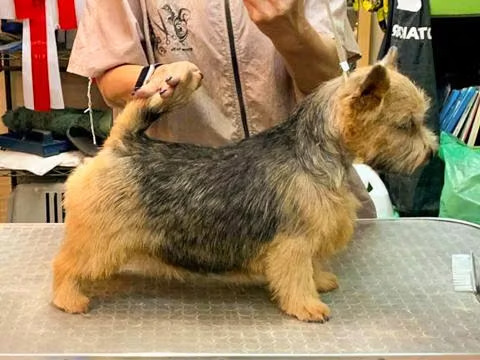
The Norwich Terrier is a spirited, affectionate little dog with prick ears, famed for its fearless heart and sociable companionship.
How the Norwich Terrier coat is built, and what that means when you groom it.
Caution: A Norwich Terrier coat should be hand-stripped rather than clipped.
A wire coat is meant to be pulled out at the root once the hair is ready to release. Clippers cut it off part way instead, leaving the soft undercoat behind. The result is a coat that grows back limp and faded, and the weatherproof texture only returns after the hair is stripped out again.
A few of the Norwich Terrier profiles members have added to United Pet Club.
The Norwich Terrier is a small, affectionate terrier from England with prick ears and a bold, sociable nature, well suited to active households and apartment living alike.
The Norwich Terrier is one of the smallest working terriers, standing around 10 inches at the shoulder and weighing about 12 pounds. It originated in the East Anglia region of England, where it was bred to hunt rats and bolt foxes from their dens. Despite its size, it carries the confident, fearless temperament common to working terriers.
This breed is affectionate and people oriented. It forms close bonds with its family and generally enjoys company rather than long stretches alone. The prick ears and weatherproof double coat are defining features, and the breed is closely related to the Norfolk Terrier, which differs mainly in its dropped ears.
Norwich Terriers are curious, spirited, and alert. They adapt to both city apartments and rural homes provided they get daily exercise and mental stimulation. Their compact build and sociable disposition make them a practical companion for a range of living situations.
| Attribute | Detail |
|---|---|
| Origin | England |
| Size | Small (about 10 in, 12 lb) |
| Lifespan | 12 to 16 years |
| Group/role | Terrier; ratting and den work |
| Good with | Families, other dogs, and older children |
The Norwich Terrier suits owners who want a small dog with a large personality. It works well for active singles, couples, and families with older children who can match its energy. The breed enjoys human company and does best where someone is home for much of the day. Prospective owners should be prepared for a strong prey drive and a tendency to dig and chase.
The Norwich Terrier was developed in the East Anglia region of England in the late 1800s as a small ratting terrier, and it shared a breed standard with the Norfolk Terrier until the two were separated by ear type.
The Norwich Terrier traces to the East Anglia region of England in the late nineteenth century. Farmers and stable hands kept small, hardy terriers to control rats and other vermin, and these dogs formed the foundation stock for the breed. The town of Norwich gave the breed its name.
The breed gained early popularity among students at Cambridge University, where small terriers became a fashionable companion. One influential dog, often cited as a key sire in early pedigrees, helped fix the type that breeders worked toward in the following decades.
For much of its early history, the Norwich Terrier included dogs with both prick ears and dropped ears under a single standard. Breeders debated whether the two ear types should be classified together. The drop-eared variety was eventually recognized as the separate Norfolk Terrier, while the prick-eared dogs retained the Norwich name.
The Norwich Terrier was recognized by the Kennel Club in England in 1932 and by the American Kennel Club in 1936. The split between the Norwich and Norfolk breeds was formalized later, with the American Kennel Club recognizing the Norfolk Terrier as distinct in 1979. The breed remains relatively uncommon, in part because litters tend to be small.
The Norwich Terrier is a compact, sturdy small dog with prick ears, a hard wiry double coat, and a foxy expression, standing about 10 inches and weighing around 12 pounds.
The Norwich Terrier is a short, stocky dog with a level back and substantial bone for its size. The head is slightly rounded with a foxy muzzle, and the small, pointed prick ears are a defining trait that separates it from the drop-eared Norfolk Terrier. The eyes are dark and oval, giving an alert expression. The tail may be left natural or docked depending on regional custom and regulation.
| Trait | Standard |
|---|---|
| Height | Approximately 10 in (25 cm) at the shoulder |
| Weight | About 11 to 12 lb (5 kg) |
| Coat | Hard, wiry, weatherproof double coat with a longer ruff at the neck |
| Colors | Red, wheaten, black and tan, and grizzle |
| Eyes | Small, dark, and oval with an alert expression |
The outer coat is hard and wiry and lies close to the body, with a softer undercoat beneath for insulation. The hair is slightly longer around the neck and shoulders, forming a mane, and there are bushier eyebrows and whiskers on the face. Accepted colors are red in various shades, wheaten, black and tan, and grizzle. The coat is designed to shed dirt and resist weather, which reflects the breed's working background.
The Norwich Terrier is affectionate, curious, and spirited, friendly with people and generally sociable with other dogs, though it retains a strong prey drive toward small animals.
The Norwich Terrier is known for an affectionate and companionable nature. It bonds closely with its family and is generally friendly toward strangers, which makes it less reserved than some other terriers. With early socialization it tends to get along with other dogs, and many Norwich Terriers do well in multi-dog homes.
The breed is curious and spirited, with the boldness expected of a working terrier. It is alert and will bark to announce visitors, though it is not typically a constant barker. Its strong prey drive means small pets such as rodents may not be safe, and cats are best introduced carefully and early.
Norwich Terriers are intelligent and enjoy being involved in household activity. They can be independent and a little stubborn, but they are responsive to engaged, consistent handling. They are usually good with older children who treat them with care.
| Trait | Rating |
|---|---|
| Affection | 5 |
| Energy | 4 |
| Trainability | 3 |
| Vocalness | 3 |
| Shedding | 2 |
The Norwich Terrier needs regular brushing and periodic hand-stripping of its wiry coat, daily exercise to satisfy its energy, and adapts well to apartments when its activity needs are met.
The Norwich Terrier is a moderate-maintenance breed. Its wiry coat sheds little but needs routine grooming to stay healthy and to keep the correct texture. Most of its care needs center on coat upkeep and daily physical and mental activity.
The Norwich Terrier adapts to apartments and houses alike. It is small enough for city living but needs daily outlets for its energy regardless of home size. A secure yard is a benefit but is not essential. The breed prefers to be near its people and is not suited to long hours of isolation.
The Norwich Terrier does well on a complete diet portioned for a small, active dog, fed in two meals a day, with careful monitoring to prevent weight gain.
The Norwich Terrier needs a complete and balanced diet formulated for small breeds and matched to its life stage and activity level. Because it is a small dog with a hearty appetite, portion control matters. Measure meals rather than free-feeding, and adjust amounts based on body condition. A defined waist and ribs that are easy to feel but not visible indicate a healthy weight.
| Life stage | Amount per day | Meals |
|---|---|---|
| Puppy (2 to 6 months) | Per puppy-food label, divided | 3 to 4 |
| Junior (6 to 12 months) | About 1/2 to 3/4 cup | 2 to 3 |
| Adult | About 1/2 to 1 cup | 2 |
| Senior | Adjusted down for lower activity | 2 |
Keep treats to no more than about 10 percent of daily calories, which is easy to exceed in a 12-pound dog. Use small training treats or pieces of the dog's regular kibble during sessions. Most Norwich Terriers on a complete diet need no supplements; consult a veterinarian before adding any, especially joint or skin products.
The Norwich Terrier is generally a hardy breed with a lifespan of 12 to 16 years, though it can be affected by an upper-airway condition known as upper airway syndrome, along with dental and joint issues.
The Norwich Terrier is generally robust and long-lived, with a typical lifespan of 12 to 16 years. As with all breeds, it has a few conditions that owners and breeders watch for. Buying from a breeder who screens breeding stock reduces the risk of inherited problems.
| Condition | Signs | Note |
|---|---|---|
| Upper airway syndrome | Noisy breathing, exercise intolerance, gagging | An airway issue documented in the breed; severity varies |
| Patellar luxation | Skipping gait, intermittent hind-leg lameness | Common in small breeds; ranges from mild to surgical |
| Dental disease | Bad breath, tartar, gum inflammation | Small jaws crowd teeth; routine dental care helps |
| Hip dysplasia | Stiffness, reluctance to jump | Less common in small dogs but reported |
The Norwich Terrier is intelligent and eager to engage but can be independent, so short, consistent, reward-based sessions and early socialization produce the best results.
The Norwich Terrier is bright and willing to work with an owner it respects, though its terrier independence can show as stubbornness. It responds best to short, varied sessions that hold its attention and reward good choices. Harsh corrections tend to backfire and can make the dog less cooperative. Early socialization with people, other dogs, and everyday situations helps the breed become the confident, friendly companion it is known to be.
The Norwich Terrier reaches breeding maturity at one to two years, carries a gestation of about 63 days, and typically produces small litters, often delivered by cesarean section.
Responsible breeding of the Norwich Terrier centers on health screening and the breed's small litter size. Females are generally bred after full maturity, around one to two years of age, once health clearances are in place. Gestation lasts about 63 days. Litters are small, commonly one to three puppies, which is one reason the breed remains uncommon and puppies can be hard to find.
Whelping can be difficult relative to litter size, and cesarean delivery is not unusual in the breed. Newborn puppies are small and need a warm, clean environment and close monitoring of weight gain in the first weeks. The dam typically raises the litter, with the breeder supporting feeding, warmth, and early handling.
Puppies should remain with the dam and littermates until at least eight weeks of age for proper social development. Early gentle handling and exposure to household sights and sounds set the foundation for a well-adjusted adult.
| Metric | Value |
|---|---|
| Breeding maturity | 1 to 2 years |
| Gestation | About 63 days |
| Typical litter size | 1 to 3 puppies |
| Delivery | Cesarean section is common |
| Weaning | About 4 to 8 weeks |
| Earliest rehoming | 8 weeks or later |
The city vet office handles the RA 9482 paperwork; a free United Pet Club record is what a finder anywhere can actually search for your Norwich Terrier.
Type in your Norwich Terrier's name, his birth date, and a clear photo, add your mobile number, and save. That is the entire process, and the profile stays free for his whole life. Dog registration works with or without a chip, so the vet visit can come later.
The clinic's part ended with the implant; the tracing part is yours. File your Norwich Terrier's 15-digit number with United Pet Club and every scan leads to your phone: free for life, all brands accepted, updates free every time your details change. Microchip registration plus a free account finishes the job.
Open a free United Pet Club account, add your Norwich Terrier's details and a photo, then save the profile. It stays free for his whole life and sits alongside the city vet office registration RA 9482 requires.
Type the 15-digit chip number into your free account together with your mobile number and address. The lifetime plan charges nothing for the registration or for any update, whatever brand the clinic used.
Yes, RA 9482 requires dog registration with your city or municipal veterinary office, along with current anti-rabies vaccination. The United Pet Club profile is the searchable half: free, worldwide, and tied to your current mobile.
Nothing. The free lifetime plan covers the profile, the microchip record, and every update, with no renewal fees at all.
Common questions about the Norwich Terrier cover its size, temperament, care needs, lifespan, suitability, and availability.
It is one of the smallest terriers, standing about 10 inches at the shoulder and weighing around 11 to 12 pounds when fully grown.
The breed is affectionate, curious, spirited, and sociable. It bonds closely with its family, is generally friendly with people and other dogs, and stays alert without excessive barking.
Care is moderate. The wiry coat sheds little but needs regular brushing and periodic hand-stripping, and the dog needs daily exercise and mental stimulation. Ear and dental care should be routine.
They are long-lived for a dog, with a typical lifespan of 12 to 16 years when kept at a healthy weight and given regular veterinary care.
Yes. Its small size suits apartment living as long as it gets daily activity, and it does well with families and older children. It prefers company and does not like long hours alone.
They are relatively uncommon, partly because litters are small. Expect waiting lists with reputable breeders, and research breed rescues as an alternative.
The two breeds share a common origin and are very similar. The main difference is ear type: the Norwich Terrier has upright prick ears, while the Norfolk Terrier has folded drop ears.