
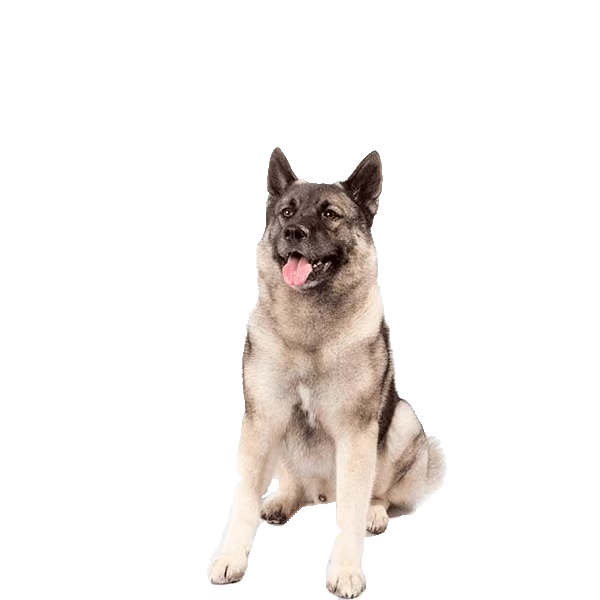
Norwegian Elkhound
The Norwegian Elkhound is a bold, hardy Nordic hound known for its confident spirit and ancient role tracking big game.
- Size
- Medium
- Lifespan
- 12–15 years
- Origin
- Norway
- Temperament
- Confident
- Standard colors
- Black, Gray, and Silver
Characteristics
Coat and grooming
How the Norwegian Elkhound coat is built, and what that means when you groom it.
- Coat layers
- Double coat
- Coat texture
- Plush
- Coat length
- Medium
- Shedding
- Seasonal shedding
Grooming guidance
Critical: A Norwegian Elkhound should not be shaved.
The undercoat keeps heat out as well as in, and the outer coat shields the skin from sun and insect bites. Clipping the whole coat off removes both. It often grows back patchy, soft or a different colour, and in some animals the guard hairs never return properly. Brush the undercoat out instead of cutting it off.
Information: A Norwegian Elkhound drops its undercoat in heavy bursts.
The undercoat comes out in heavy bursts over a few weeks. An undercoat rake, or a bath followed by a proper blow-dry, clears it far faster than daily brushing. Clipping the coat down is not a shortcut for this.
Norwegian Elkhound colors and patterns
What each club's breed standard says about every Norwegian Elkhound color and pattern. Point at a ruling to see the club's own wording.
Breed standards describe the Norwegian Elkhound in Black, Gray, and Silver. Standard patterns: Sable and Agouti.
| Color or pattern | FCI | AKC | UKC | KC | KUSA |
|---|---|---|---|---|---|
| Black | Standard (“the black tips of the hair of the outer coat”) | Standard (“Black & Gray”) | Standard (“The muzzle, ears and tail tip are black”) | Standard (“Grey & Black”) | Standard (“the black tips of the hair of the outer coat”) |
| Gray | Standard (“Grey, of various shades”) | Standard (“Gray & Black”) | Standard (“Grey of various shades”) | Standard (“Grey of various shades”) | Standard (“Grey, of various shades”) |
| Silver | Standard (“Light grey undercoat”) | Standard (“Silver & Black”) | Standard (“The undercoat is clear, light and silver”) | Standard (“undercoat pure pale grey”) | Standard (“Light grey undercoat”) |
| White | Fault (“White on tail tip. White on chest”) | Fault (“Black White & Silver”) | Fault (“White patches”) | Fault (“white markings undesirable”) | Fault (“White on tail tip. White on chest”) |
| Brown | Fault (“Colour in brown or yellow”) | Fault (“Yellow or brown shading”) | Fault (“Yellow or brown shading”) | Fault (“Any pronounced variation from the grey colour ... undesirable”) | Fault (“Colour in brown or yellow”) |
| Yellow | Fault (“Colour in brown or yellow”) | Fault (“Yellow or brown shading”) | Fault (“Yellow or brown shading”) | Fault (“Any pronounced variation from the grey colour ... undesirable”) | Fault (“Colour in brown or yellow”) |
| Red | Disqualifying | Disqualifying (“Any overall color other than gray ... such as red”) | Disqualifying (“Any overall color other than gray, as described; such as red”) | Not recognized | Disqualifying |
| Patterns | |||||
| Sable | Standard (“The colour is made by the black tips of the hair of the outer coat”) | Standard (“variations in shade determined by the length of black tips”) | Standard (“determined by the quantity of the black tips of the guard hairs”) | Standard (“with black tips to outer coat”) | Standard (“The colour is made by the black tips of the hair of the outer coat”) |
| Agouti | No ruling | No ruling | No ruling | Standard (“Wolf Grey”) | No ruling |
| Solid | No ruling | Disqualifying (“solid black, white or other solid color”) | Disqualifying (“solid black, white or other solid color”) | Not recognized | No ruling |


| Color or pattern | FCI | AKC | UKC | KC | KUSA |
|---|---|---|---|---|---|
| Dark brown | Standard (“dark brown in colour”) | Standard (“very dark brown”) | Standard (“dark brown in color”) | Standard (“dark brown”) | Standard (“dark brown in colour”) |
| Light brown | Fault (“Light eyes”) | No ruling | No ruling | No ruling | Fault (“Light eyes”) |
| Blue | Disqualifying (“Yellow or blue eyes”) | No ruling | No ruling | No ruling | Disqualifying (“Yellow or blue eyes”) |
| Yellow | Disqualifying (“Yellow or blue eyes”) | No ruling | No ruling | No ruling | Disqualifying (“Yellow or blue eyes”) |
| Color or pattern | FCI | UKC | KUSA |
|---|---|---|---|
| Black | Standard (“Black”) | Standard (“The nose is black”) | Standard (“Black”) |
What the rulings mean
- Standard
- Described by the club's breed standard.
- Fault
- Named by the club's breed standard as a fault: the animal can be shown but is penalized.
- Disqualifying
- The club's breed standard disqualifies an animal of this color or pattern.
- Not recognized
- The club does not accept this color or pattern for the breed.
Color changes
How a Norwegian Elkhound's colors can change over its life.
Blackchanges toRust
Coat · With body condition · can change back
Blackchanges toGray
Coat · Progressive
Blackchanges toBrown
Coat · In the sun · can change back
Whitechanges toRoan
Coat · With age · from 2 weeks
Blackchanges toSnow nose
Nose · With the season · can change back
Blackchanges toPink
Nose · With the season · can change back


Sources
Each ruling comes from the club's published breed standard or color list.
Meet some of our Norwegian Elkhound
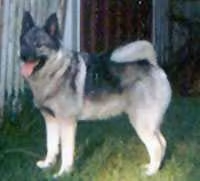
A few of the Norwegian Elkhound profiles members have added to United Pet Club.


About the Norwegian Elkhound
The Norwegian Elkhound is a medium-sized Nordic hunting dog with a thick gray coat and a bold, watchful nature, best suited to owners ready for its cool-climate needs in a tropical country.
The Norwegian Elkhound is a medium-sized spitz breed that started out in Norway, bred to trail and hold large game such as moose, known in parts of Europe as elk. That naming history explains where the breed got its name. In the field, the dog works mostly by scent and pins down game with steady barking until the hunter catches up.
Body shape is square and compact, with a tail that curls tightly over the back and a heavy double coat in gray tones tipped with black. The face carries a sharp, friendly look. A full-grown Elkhound usually weighs 20 to 25 kilograms and stands roughly 49 to 52 centimeters at the shoulder.
At home, the Norwegian Elkhound sticks close to its family and warms up fast to household routines. It stays alert and speaks up often, which makes it a dependable watchdog in a subdivision or barangay setting, and it carries itself with quiet self-assurance. Its stamina traces back to generations spent working rough, snow-covered ground, a far cry from the tropical heat this dog would meet in the Philippines.
| Attribute | Detail |
|---|---|
| Origin | Norway |
| Size | Medium (about 20 to 25 kg) |
| Lifespan | 12 to 15 years |
| Group/role | Hunting dog and watchdog for big game |
| Good with | Families, older kids, active households |
Who this breed suits
This breed fits an owner who can commit to daily exercise and firm, steady handling. The Elkhound is built for cool weather, so life in a tropical setting means real adjustments: a fenced yard with shade, a cool room to retreat to during the hottest hours, and walks scheduled for early morning or after sunset. Vocal by nature, it works better in a subdivision or freestanding house than in a small condo unit with close neighbors. People who enjoy hiking trips to Baguio or Tagaytay, long walks, and a dog with a mind of its own will get along with this breed.
History and origin
The Norwegian Elkhound traces back centuries in Norway as a moose-tracking hunter, gaining formal recognition in the late 1800s long before it ever set foot in a Philippine household.
The Norwegian Elkhound ranks among the oldest spitz-type breeds in Scandinavia. Dogs of similar build lived alongside people in that region for a very long stretch of history, and remains of spitz-type dogs have turned up at Nordic dig sites going back thousands of years. The breed took shape in Norway as a hunting and guard companion suited to a harsh northern climate, the opposite of the heat and humidity found across the Philippine archipelago.
Its main task was hunting moose. The dog ran ahead of the hunter, tracked game by scent, and held it in place with continuous barking until the hunter arrived. That kind of work demanded endurance, nerve, and a dog willing to think for itself, qualities still visible in the breed today. Elkhounds also worked other big game and stood guard over farms and homesteads.
Interest in setting a fixed standard grew in the late 1800s. Norway ran its first organized dog shows in the 1870s, and the Elkhound featured among the breeds shown. Breed clubs and written standards followed soon after, locking in the type recognized now.
The breed eventually reached other parts of Europe and North America, picked up by major kennel clubs in the early 1900s. In the Philippines, Norwegian Elkhounds remain uncommon and typically arrive through import from breeders abroad, since no established local breeding line exists. Prospective owners often go through the Philippine Canine Club, Inc. (PCCI) for registration and pedigree matters. The breed still holds status as a national breed of Norway and stays valued both as a working hound and a family dog.
Appearance and breed standard
The Norwegian Elkhound has a square, compact spitz frame, a gray double coat built for cold, a tightly curled tail, and sharp, dark eyes.
The Norwegian Elkhound carries a square, balanced outline, with body length close to its height at the shoulder. The build is sturdy without excess bulk, with solid bone and a deep chest built for stamina. The head is wedge-shaped, ears stand erect and pointed, and the muzzle stays clean. The tail sits high, carries heavy coat, and curls tightly over the back.
| Trait | Standard |
|---|---|
| Height | Males about 52 cm, females about 49 cm at the shoulder |
| Weight | Males about 23 kg, females about 20 kg |
| Coat | Dense double coat, coarse guard hairs over a soft undercoat |
| Colors | Gray with black-tipped guard hairs, darker along the back, lighter on the chest and legs |
| Eyes | Dark brown, oval-shaped, with a sharp and friendly look |
Coat and colors
The coat sets this breed apart. A coarse, weatherproof outer layer sits over a thick, woolly undercoat built to trap warmth, a feature that works against the dog once heat and humidity enter the picture. The standard color is gray, made up of black-tipped guard hairs over a lighter base. Shading usually runs darker along the back and saddle, lighter on the belly, chest, legs, and underside of the tail. A black mask and darker ears show up often. The undercoat blows out heavily during seasonal coat changes, and since Philippine weather does not follow Norway's spring and autumn calendar, owners here may notice shedding cycles that run less predictably through the year.
Temperament and personality
The Norwegian Elkhound stays friendly and confident with family, alert and vocal with strangers, and independent enough to test a first-time dog owner's patience.
The Norwegian Elkhound is bold, friendly, and sure of itself. Around its own family it stays affectionate and even-tempered, and it tends to bond with the whole household rather than fixate on one person. It takes naturally to being part of the daily routine, whether that means trailing someone around the house or waiting by the gate for everyone to come home.
Toward strangers, the Elkhound stays alert and watchful. It sounds off at anyone approaching the gate, a trait many households value for home security, though the noise is more warning bark than real aggression. Given the close quarters typical of many Philippine subdivisions, early and consistent socialization matters so the dog learns to settle once it has announced a visitor.
With other pets, an Elkhound raised alongside cats or smaller dogs can adapt well. Its hunting instinct runs strong, though, so a stray cat wandering into the yard or a neighbor's chicken can set off a chase, which means introductions and supervision count for a lot. The breed is sharp-minded and independent, a mix that can look like stubbornness, so it does best with an owner who stays firm, fair, and consistent.
| Trait | Rating |
|---|---|
| Affection | 4 |
| Energy | 4 |
| Trainability | 3 |
| Vocalness | 5 |
| Shedding | 5 |
Care and daily needs
The Norwegian Elkhound needs steady brushing, heavier grooming during coat blowouts, daily exercise, and cooling measures to handle Philippine heat.
Grooming
- Brush the coat once or twice a week to clear out loose hair and keep the undercoat in good shape.
- During the coat blowout periods, brush daily, since the undercoat comes out in heavy amounts.
- Bathe only when needed. The coat sheds dirt well on its own, and washing too often strips natural oils, which humid weather can make worse.
- Trim nails on a regular schedule and check the ears for dirt or dampness, especially during rainy season.
- Brush the teeth several times a week to keep dental health in check.
Exercise
- Give at least 60 minutes of activity daily, split between walks and off-lead time in a secure area.
- Schedule hikes or long walks for cooler hours, early morning or after sunset, since the breed's stamina was built for cold-weather trails, not midday tropical sun.
- Bring in scent games and puzzle toys to keep the mind occupied, especially on days too hot for outdoor play.
- Keep the dog leashed or fenced in, since the hunting drive can pull it toward wildlife scents, stray chickens, or a neighbor's pets.
Environment
The Norwegian Elkhound is built for cold and handles outdoor time in freezing weather without trouble, which makes Philippine conditions a real test for the breed. Heat and humidity wear it down fast, so exercise belongs in the early morning or evening, and the dog needs constant access to shade, water, and ideally a cool, well-ventilated room during the hottest hours. A house with a yard suits the breed better than a condo, and it prefers to stay close to its people rather than get left alone in a garage or outdoor kennel for long stretches.
Nutrition and feeding
The Norwegian Elkhound thrives on a measured, balanced diet, with portions watched closely since the breed puts on weight easily.
The Norwegian Elkhound needs a complete, balanced diet suited to its age, weight, and activity level. This breed eats with enthusiasm and gains weight without much effort, so portions call for measuring out rather than free-feeding. Keeping a lean build protects the joints and supports a long, active life. Clean, fresh water should stay available at all times, doubly important given how much a dog can lose to heat in Philippine weather.
| Life stage | Amount per day | Meals |
|---|---|---|
| Puppy (2 to 6 months) | Follow the product guide for growth, split across meals | 3 to 4 |
| Junior (6 to 12 months) | About 1.5 to 2 cups of quality dry food | 2 to 3 |
| Adult | About 1.5 to 2 cups, adjusted to activity level | 2 |
| Senior | Slightly reduced, watch closely for weight gain | 2 |
Treats and supplements
Treats should stay under about 10 percent of daily calories, and the regular meal portion needs cutting back whenever extra treats come into play. Most Elkhounds on a complete commercial diet get by without supplements. Anything extra, such as a joint supplement for an older dog, deserves a conversation with a veterinarian first.
Health and lifespan
The Norwegian Elkhound generally lives 12 to 15 years but can face hip dysplasia, eye conditions, and weight problems, made worse by tropical heat.
The Norwegian Elkhound is a sturdy, hardy breed with a typical lifespan of 12 to 15 years. Sound breeding, sensible feeding, and regular exercise go a long way toward keeping the dog healthy. As with most breeds, a handful of inherited and lifestyle conditions deserve attention, and the tropical climate adds heat stress to that list.
| Condition | Signs | Note |
|---|---|---|
| Hip dysplasia | Stiffness, limping, reluctance to jump | Screening breeding stock lowers the risk |
| Progressive retinal atrophy | Night blindness, vision that fades over time | An inherited eye condition; DNA and eye testing help catch it early |
| Hypothyroidism | Weight gain, low energy, coat changes | Managed with daily medication once diagnosed |
| Obesity | Extra weight, poor stamina | Kept in check with measured feeding and regular exercise |
Preventive care
- Keep vaccinations and parasite prevention current, including tick and heartworm protection given the year-round warm climate.
- Book yearly veterinary checkups, more often for senior dogs.
- Keep the dog lean to protect the hips and joints.
- Brush the teeth regularly and schedule dental cleanings as the vet advises.
- Ask about hip and eye screening results before choosing a breeder or import source.
Training and socialization
The Norwegian Elkhound is smart but independent, so it responds best to early, consistent, reward-based training and steady socialization.
The Norwegian Elkhound is sharp and capable, but it was bred to work at a distance from the hunter and make its own calls in the field. That independence means it will not always obey just because it is told to. Training goes best when sessions stay consistent, short, and rewarding, and when the dog sees a real reason to cooperate. Harsh corrections tend to backfire with this breed and can push it toward more stubbornness rather than less.
Early socialization carries real weight. Exposing the puppy to a mix of people, dogs, places, and sounds, including the noise of jeepneys, tricycles, and crowded streets typical in the Philippines, builds a confident, settled adult. Since the breed is naturally vocal, teaching a solid quiet cue early on helps keep barking under control, especially useful in close-set neighborhoods.
Basics
- Start with name recognition and a reliable recall inside a secure, fenced area.
- Teach sit, down, and stay using small food rewards.
- Work on loose-lead walking, since the breed likes to pull toward interesting scents.
- Layer in a quiet cue to manage barking once basic obedience sticks.
- Keep sessions short and daily, and end each one on a win.
Breeding and raising young
Norwegian Elkhounds reach breeding age at one to two years, carry litters of around six puppies over roughly nine weeks, and raise sturdy young.
Responsible breeding of Norwegian Elkhounds starts with health-tested parents and a real understanding of the breed. Dogs reach physical maturity around one to two years old, and most breeders hold off until the second year before a first litter so the dam has finished growing. Screening for hip and eye conditions before mating cuts down on inherited problems passed to puppies.
Pregnancy runs about 63 days. Litters average around six puppies, though the number shifts from dam to dam. Whelping usually goes smoothly, but a quiet, cool space and a veterinarian on standby are worth arranging ahead of time, given how much Philippine heat can add to the strain.
Newborn puppies arrive blind and deaf, fully dependent on the mother for warmth and milk. Eyes open around two weeks in. Weaning starts near the three to four week mark, and structured socialization should begin in the weeks after that. Puppies are typically ready for new homes around eight weeks, once they are eating solid food and showing steady early growth.
| Metric | Value |
|---|---|
| Breeding maturity | About 1 to 2 years |
| Gestation | About 63 days |
| Average litter size | About 6 puppies |
| Eyes open | About 14 days |
| Weaning | About 3 to 4 weeks |
| Ready for new home | About 8 weeks |
Registering your Norwegian Elkhound and its microchip in the Philippines
The city vet office handles the RA 9482 paperwork; a free United Pet Club record is what a finder anywhere can actually search for your Norwegian Elkhound.
How to register a Norwegian Elkhound in the Philippines
A Norwegian Elkhound that gets loose during a storm is identified by whatever record answers the scan, not by the barangay it came from. Give it a record that answers: your mobile number, the dog's photo, and his details, free for life with United Pet Club. Register your dog today and it is done for good.
The clinic's part ended with the implant; the tracing part is yours. File your Norwegian Elkhound's 15-digit number with United Pet Club and every scan leads to your phone: free for life, all brands accepted, updates free every time your details change. Microchip registration plus a free account finishes the job.
How do I register my Norwegian Elkhound in the Philippines?
Open a free United Pet Club account, add your Norwegian Elkhound's details and a photo, then save the profile. It stays free for his whole life and sits alongside the city vet office registration RA 9482 requires.
How do I register my Norwegian Elkhound's microchip?
Type the 15-digit chip number into your free account together with your mobile number and address. The lifetime plan charges nothing for the registration or for any update, whatever brand the clinic used.
Is registration required for a Norwegian Elkhound in the Philippines?
Yes, RA 9482 requires dog registration with your city or municipal veterinary office, along with current anti-rabies vaccination. The United Pet Club profile is the searchable half: free, worldwide, and tied to your current mobile.
How much does it cost to register a Norwegian Elkhound?
Nothing. The free lifetime plan covers the profile, the microchip record, and every update, with no renewal fees at all.
Frequently asked questions
Common questions about the Norwegian Elkhound cover size, temperament, grooming demands, lifespan, family fit, and how easy the breed is to find in the Philippines.
How big does a Norwegian Elkhound get?
It is a medium-sized breed. Males stand about 52 cm at the shoulder and weigh around 23 kg, while females run slightly smaller at about 49 cm and 20 kg.
Is the Norwegian Elkhound friendly or aggressive?
It is friendly and confident with its family, alert and vocal around strangers, and independent by nature. It makes a solid watchdog and a loyal companion at home.
Is the Norwegian Elkhound hard to take care of?
Care sits at a moderate level. The main demands are heavy seasonal shedding, which calls for daily brushing during coat blowouts, plus a real need for daily exercise. First-time owners who can keep up with those demands, and who can manage the heat, can handle the breed.
How long do Norwegian Elkhounds live?
The typical lifespan runs 12 to 15 years, supported by a lean weight, regular exercise, and routine veterinary visits.
Is the Norwegian Elkhound good with kids?
Yes. It bonds closely with the whole household and gets along well with older kids. As with any dog, supervise interactions with young children.
Does the Norwegian Elkhound bark a lot?
Yes. The breed is naturally vocal, a trait tied back to its original job of holding game at bay with barking. Teaching a quiet cue early keeps the barking manageable, which matters in close-set Philippine neighborhoods.
Where can I get a Norwegian Elkhound in the Philippines?
The breed is recognized by major kennel clubs abroad but stays uncommon locally, with no established Philippine breeding line. Most owners import from breeders overseas, and the Philippine Canine Club, Inc. (PCCI) can help with registration and pedigree matters. Expect a wait and higher cost compared to more common breeds sold locally.
From the community
Ask about the Norwegian ElkhoundNo questions about the Norwegian Elkhound yet. Be the first to ask.
Browse Dog breeds