
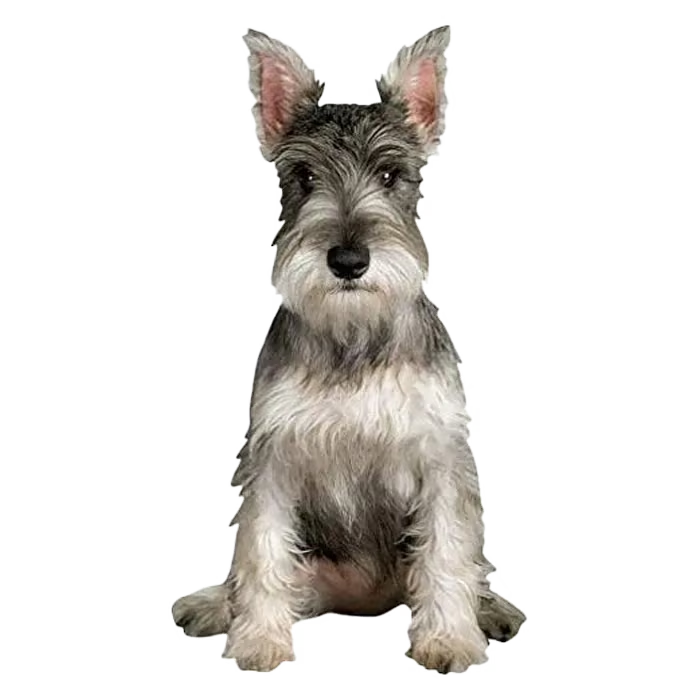
Miniature Schnauzer
The Miniature Schnauzer is a spirited, intelligent German breed beloved for its bristly beard, friendly nature, and alert watchdog instincts.
- Size
- Small
- Lifespan
- 12–15 years
- Origin
- Germany
- Temperament
- Spirited
- Standard colors
- Black, White, and Silver and 2 more
Characteristics
Coat and grooming
How the Miniature Schnauzer coat is built, and what that means when you groom it.
- Coat layers
- Double coat
- Coat texture
- Wire
- Coat length
- Medium
- Shedding
- Low shedding
Grooming guidance
Caution: A Miniature Schnauzer coat should be hand-stripped rather than clipped.
A wire coat is meant to be pulled out at the root once the hair is ready to release. Clippers cut it off part way instead, leaving the soft undercoat behind. The result is a coat that grows back limp and faded, and the weatherproof texture only returns after the hair is stripped out again.
Miniature Schnauzer colors and patterns
What each club's breed standard says about every Miniature Schnauzer color and pattern. Point at a ruling to see the club's own wording.
Breed standards describe the Miniature Schnauzer in Black, White, Silver, Salt and pepper, and Tan. Standard patterns: Solid and Tan point.
| Color or pattern | FCI | AKC | UKC | KC | KUSA |
|---|---|---|---|---|---|
| Black | Standard (“Pure black with black undercoat”) | Standard (“Black”) | Standard (“Black”) | Standard (“Pure Black”) | Standard (“Pure black”) |
| White | Standard (“Pure white with white undercoat”) | Disqualifying (“White”) | Standard (“White, with a white undercoat”) | Standard (“White”) | Standard (“White”) |
| Silver | Standard (“Black/Silver”) | Standard (“Black & Silver”) | Standard (“Black and Silver”) | Standard (“Black and silver”) | Standard (“Black and silver”) |
| Salt and pepper | Standard (“Pepper and Salt”) | Standard (“Salt & Pepper”) | Standard (“Salt and Pepper”) | Standard (“Pepper and salt”) | Standard (“Pepper and salt”) |
| Tan | Not recognized | Standard (“tan shadings permissible in the banded or unbanded hair of the topcoat”) | Fault (“Any suggestion of tan or red banding”) | Not recognized (“Liver & Tan”) | Not recognized |
| Red | Not recognized | Disqualifying | Fault (“Any suggestion of tan or red banding”) | Not recognized | Not recognized |
| Albino | Not recognized | Disqualifying | Disqualifying (“Albinism”) | Not recognized | Not recognized |
| Liver | Not recognized | Disqualifying (“Liver”) | Disqualifying | Not recognized (“Liver”) | Not recognized |
| Wheaten | Not recognized | Disqualifying (“Wheaten”) | Disqualifying | Not recognized (“Chocolate & Wheaten”) | Not recognized |
| Patterns | |||||
| Solid | Standard (“Pure black”) | Standard (“Black is the only solid color allowed”) | Standard (“The entire dog is solid black”) | Standard (“Pure Black”) | Standard (“Pure black”) |
| Tan point | Standard (“Black/Silver”) | Standard (“Black & Silver”) | Standard (“Black and Silver”) | Standard (“solid black with silver markings”) | Standard (“Solid black with silver markings”) |
| Parti-color | Fault (“Patchy coat in the colours black/silver and white”) | Disqualifying (“Parti-Color”) | Disqualifying | Not recognized (“Parti Black & White”) | Not recognized |


| Color or pattern | FCI | AKC | UKC | KC | KUSA |
|---|---|---|---|---|---|
| Dark brown | Standard (“dark”) | Standard (“dark brown”) | Standard (“dark brown”) | Standard (“dark”) | Standard (“dark”) |
| Light brown | Fault (“Light, too large or round eyes”) | No ruling | Fault (“Light eyes”) | No ruling | No ruling |
| Color or pattern | FCI | AKC | UKC | KC | KUSA |
|---|---|---|---|---|---|
| Black | Standard (“always black”) | Standard (“the nose must be solid black”) | Standard (“Nose is always black”) | Standard (“Nose black”) | Standard (“Nose black”) |
What the rulings mean
- Standard
- Described by the club's breed standard.
- Fault
- Named by the club's breed standard as a fault: the animal can be shown but is penalized.
- Disqualifying
- The club's breed standard disqualifies an animal of this color or pattern.
- Not recognized
- The club does not accept this color or pattern for the breed.
Color changes
How a Miniature Schnauzer's colors can change over its life.
Blackchanges toRust
Coat · With body condition · can change back
Blackchanges toGray
Coat · Progressive
Blackchanges toBrown
Coat · In the sun · can change back
Whitechanges toRoan
Coat · With age · from 2 weeks
Tan pointchanges toSaddle
Coat · With age · from 6 to 156 weeks
Blackchanges toSnow nose
Nose · With the season · can change back
Blackchanges toPink
Nose · With the season · can change back


Sources
Each ruling comes from the club's published breed standard or color list.
Health
Conditions recorded as more common in the Miniature Schnauzer than in its species as a whole. A higher risk is not a diagnosis: many never develop any of them, and your vet can say which screening tests are worth doing.
High risk
- Metabolic
Hyperlipidemia
Strong evidence - Urinary system
Calcium oxalate urolithiasis
Moderate evidence - Gastrointestinal system
Pancreatitis
Moderate evidence
Moderate risk
- Hepatobiliary system
Congenital portosystemic shunt
Moderate evidenceHereditaryInheritance: Complex / multifactorial
This content is for educational purposes and is not a substitute for professional veterinary advice. If you are worried about your pet, contact your veterinarian.
All health conditionsMeet some of our Miniature Schnauzer
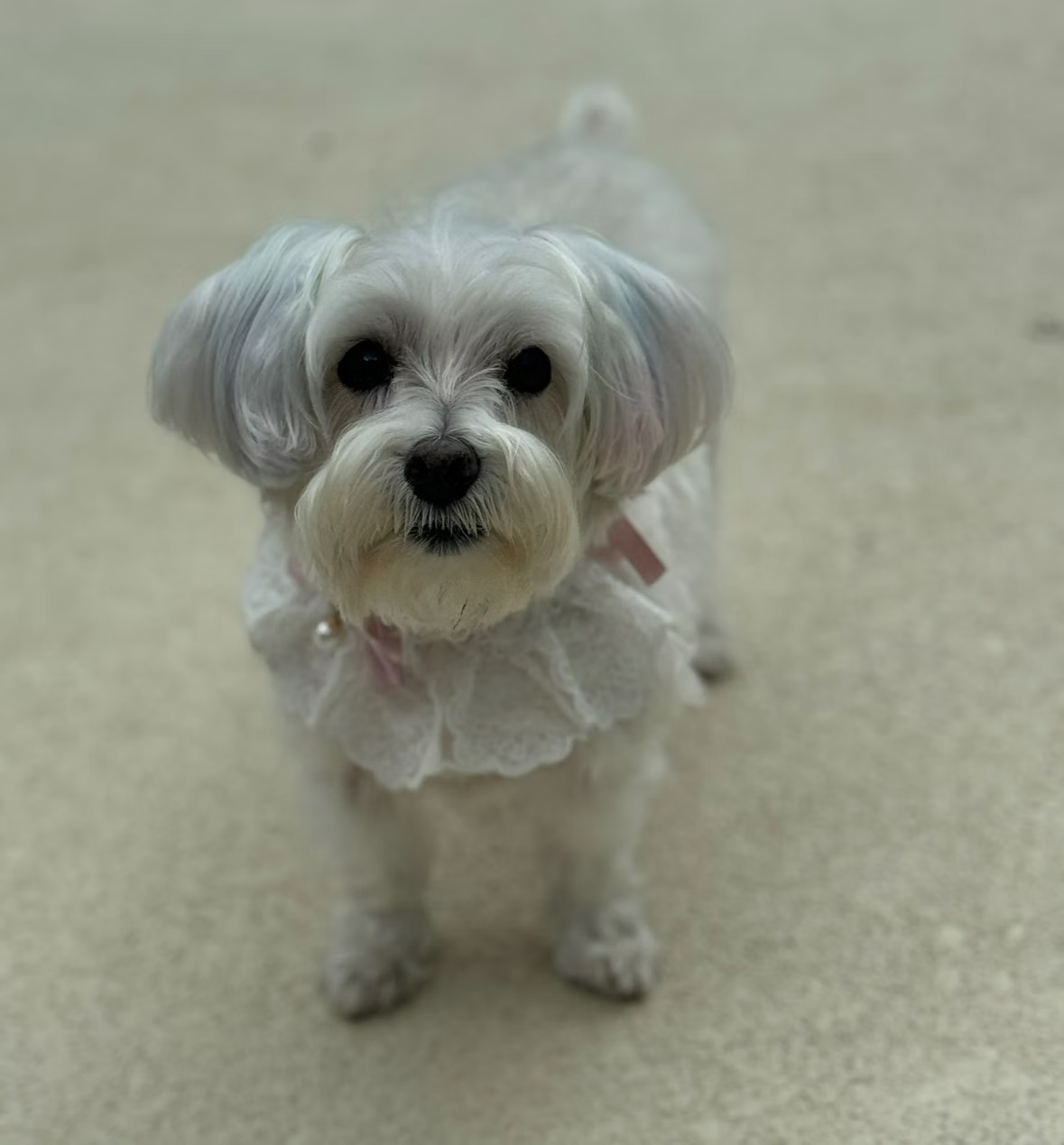
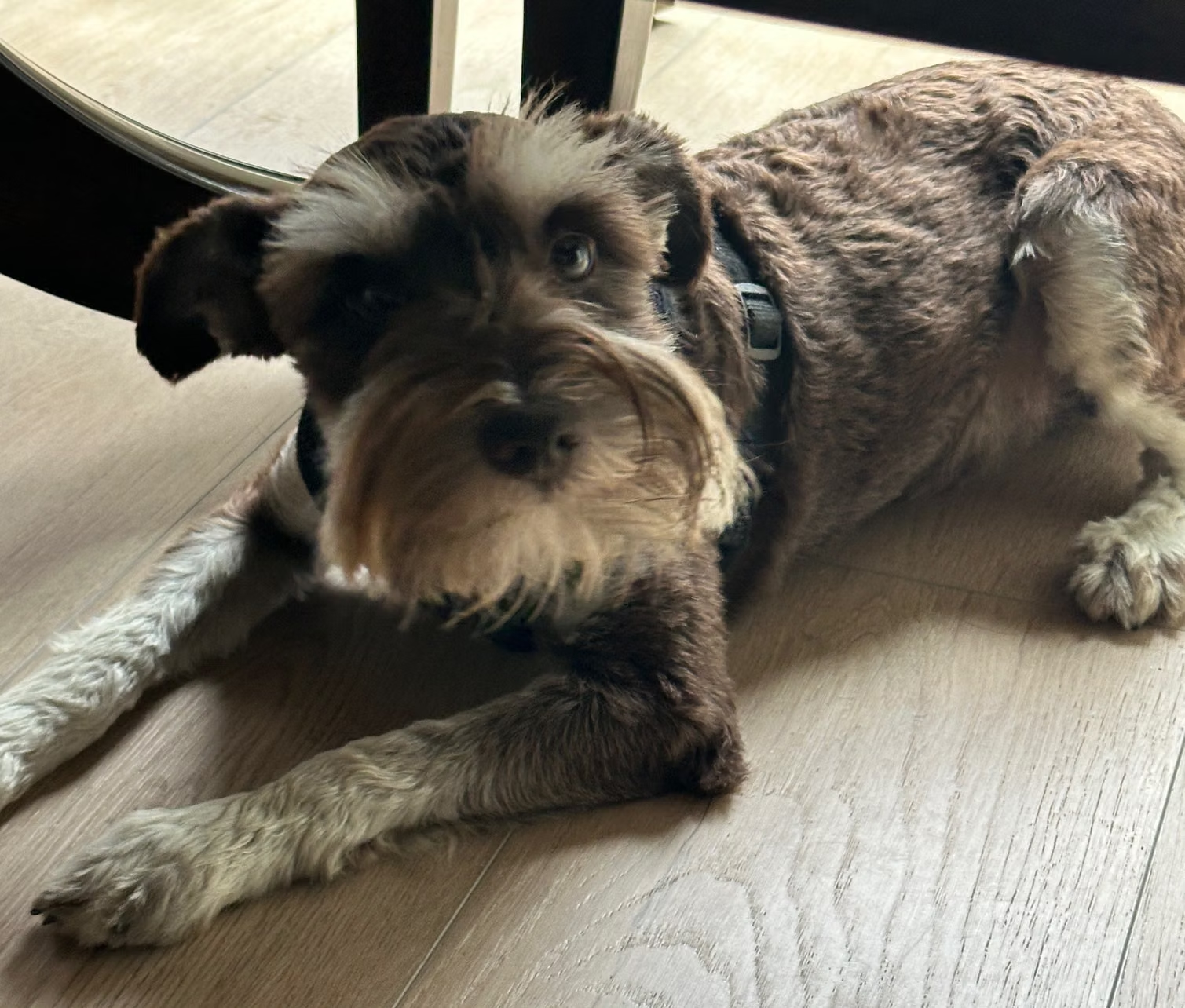
A few of the Miniature Schnauzer profiles members have added to United Pet Club.

About the Miniature Schnauzer
The Miniature Schnauzer is a small, alert German breed with a wiry coat, bushy beard and brows, prized in the Philippines as a low-shedding, apartment-friendly companion.
Germany produced the Miniature Schnauzer as a scaled-down version of the Standard Schnauzer, and the breed keeps the sturdy, square build of a working terrier despite its small size. Adults weigh between 5 and 9 kg and stand roughly 30 to 36 cm at the shoulder. The harsh wiry coat, prominent beard, and arched eyebrows give the face a distinctive, almost human expression that owners often mention first.
Watchdog instinct runs deep in this breed, a holdover from its farm days catching rats around barns. A Miniature Schnauzer barks readily at unfamiliar sounds and stays alert to activity near the home, while remaining warm and attached to the people it lives with. Families in the Philippines often describe the temperament as feisty but loyal, quick to sound the alarm yet just as quick to settle once the visitor turns out to be familiar.
The coat sheds very little, which matters in homes without much outdoor space, and the compact frame suits both condominium units and houses with a small yard. Between the manageable size, the trainable mind, and the personality that fills a room, the Miniature Schnauzer has held steady as one of the more sought-after small breeds among local dog owners.
| Attribute | Detail |
|---|---|
| Origin | Germany |
| Size | Small (5 to 9 kg) |
| Lifespan | 12 to 15 years |
| Group/role | Farm ratter and companion; classed in the Terrier group by some registries and the Utility/Working group by others |
| Good with | Families, children, and other dogs when socialized; small pets need supervision due to prey drive |
Who should get a Miniature Schnauzer
A Miniature Schnauzer fits owners who want a small, trainable dog with real personality and a sharp, alert edge. Condo living works fine as long as the dog gets daily exercise and something to occupy its mind. The low-shedding coat is a draw for households that would rather not deal with fur on the furniture, though the trade-off is regular grooming upkeep. This is not the breed for anyone hoping for a quiet dog, since it tends to bark at anything moving outside.
History and origin of the Miniature Schnauzer
Bred in Germany in the late 1800s from the Standard Schnauzer crossed with smaller breeds, the Miniature Schnauzer was built as a compact farm ratter.
Wiry, medium-sized farm dogs have worked southern Germany's barns and stables for centuries as ratters, guards, and drovers, and the Schnauzer type descends directly from that working stock. The name itself comes from the German word for muzzle or snout, pointing straight at the breed's bearded face. Of the three Schnauzer sizes, the Standard came first and served as the base from which the Miniature was developed.
German breeders in the late nineteenth century wanted a smaller dog that could still clear rats from a barn while living comfortably inside the house. They crossed the Standard Schnauzer down in size using smaller breeds, the Affenpinscher chief among them, with the Miniature Pinscher likely contributing as well. The aim was to keep the Schnauzer's look and working drive but pack it into a smaller frame.
By the 1890s the Miniature Schnauzer was being exhibited in Germany as its own variety, and the Pinscher-Schnauzer Club of Germany logged it in its early stud records. The breed crossed to the United States in the early 1900s and gained American Kennel Club recognition in 1926, filed under the Terrier group even though it has no British terrier ancestry.
Over the twentieth century the breed moved away from barn work and into households as a companion dog. Its size, trainable nature, and coat that does not shed heavily made it a natural fit for city living, and it has stayed among the more commonly kept small breeds worldwide since the mid-1900s. In the Philippines, dogs of this breed and their pedigrees can be registered with the Philippine Canine Club, Inc. (PCCI), the country's national kennel club.
Appearance and breed standard
The Miniature Schnauzer is a small, square-built dog with a harsh double coat, a prominent beard and eyebrows, and a sturdy frame.
Viewed from the side, the Miniature Schnauzer traces a nearly square outline, with body length close to height at the withers. Bone structure runs sturdy rather than fine, a trait carried over from its working past. The head is rectangular and the muzzle strong, framed by the trademark beard, while the eyebrows arch over dark oval eyes and give the face its alert, almost quizzical look. Ears fold naturally, though in some countries they are cropped to stand erect; cropping is banned in a number of regions and increasingly falls out of favor even where it remains legal.
| Trait | Standard |
|---|---|
| Height | 30 to 36 cm at the withers |
| Weight | 5 to 9 kg |
| Coat | Double coat with a harsh wiry outer coat and soft undercoat |
| Colors | Salt and pepper, black and silver, solid black, and white |
| Eyes | Small, oval, dark brown, deep-set |
Coat and colors
The outer coat runs hard and wiry, a texture that sheds dirt easily and holds up against weather, backed by a softer, denser undercoat underneath. Salt and pepper turns up most often, a banded gray effect from hairs that alternate light and dark along their length. Black and silver pairs a black body with silver markings across the eyebrows, muzzle, chest, and legs. Solid black and solid white both occur too, though not every registry accepts white as a standard color. Owners typically let the beard and leg furnishings grow longer than the rest of the coat. Show dogs get hand-stripped to keep that wiry texture intact, while pet dogs are more commonly clipped, a routine that softens the coat's texture over time, something worth knowing before committing to the grooming style long term.
Temperament and personality traits
The Miniature Schnauzer is friendly, spirited, and intelligent, staying closely bonded to its family while remaining alert and quick to bark at strangers.
Outgoing and lively describes this breed well; a Miniature Schnauzer stays plugged into whatever the household is doing rather than content to be left on its own for hours. It grows genuinely attached to family members and does best with people who give it jobs to do and regular attention, since the same intelligence that makes it easy to teach also makes it easy to bore.
Strangers get a different reception. The breed alerts fast to visitors and odd noises, barking readily enough to double as a reliable alarm, though that habit needs training to stay within bounds. Once the newcomer has been properly announced, most Miniature Schnauzers turn sociable rather than staying guarded.
Other dogs generally get along fine with a Miniature Schnauzer that was socialized early. The terrier-bred prey drive is worth watching, though: small pets like hamsters, birds, and sometimes cats can set off a chase instinct, so first introductions call for supervision. Kids tend to get a playful, tolerant companion, and the breed's sturdy little frame takes rougher household play in stride better than many toy breeds manage.
| Trait | Rating |
|---|---|
| Affection | 4 |
| Energy | 4 |
| Trainability | 4 |
| Vocalness | 4 |
| Shedding | 1 |
Care and grooming needs
The Miniature Schnauzer needs regular coat grooming, daily exercise, and mental stimulation, and adapts well to both condo and house living in the Philippines.
Grooming routine
- Brush the body two to three times a week, and comb through the beard and leg furnishings more often so mats do not set in.
- Clip every six to eight weeks, or hand-strip if you want to keep true show coat texture.
- Wipe the beard down after meals, since food and water tend to collect in it.
- Trim nails every few weeks and check the ears for wax or debris.
- Bathe roughly every four to six weeks for most pet dogs, adjusting if the coat picks up dirt or odor sooner given the local humidity.
Exercise routine
- Give the dog 45 to 60 minutes of activity daily, spread across walks and play sessions.
- Let it run off-leash in a secure area when possible, since this breed genuinely enjoys moving.
- Work in scent games, fetch, and chase toys to give the old working drive something to do.
- Keep the dog leashed or fenced in wherever small animals might be around.
Living environment
A Miniature Schnauzer settles into condo units and houses about equally well, provided its exercise needs are actually met. It wants to be near its family and can turn bored or noisy if left alone too long. A yard with solid fencing suits the breed fine, since it will dig and investigate given the chance, so gaps or gaps-in-waiting are worth closing off. The Philippines' hot, humid climate and its distinct typhoon season call for some care too: skip the midday walk in favor of early morning or evening, and keep the dog indoors during storms. Daily mental work, whether training drills or puzzle feeders, goes a long way toward heading off nuisance barking and destructive habits.
Nutrition and feeding guide
The Miniature Schnauzer does well on a balanced diet portioned to its small size, with high-fat foods avoided due to the breed's pancreatitis risk.
Feed a Miniature Schnauzer a complete and balanced diet matched to its life stage and activity level. The breed puts on weight easily, so portions should be measured out rather than left free-feeding, with treats counted as part of the day's total calories, not extra. This breed also runs a known tendency toward high blood fat, which is why many owners and vets steer toward lower-fat commercial food and skip fatty table scraps altogether.
| Life stage | Amount per day | Meals |
|---|---|---|
| Puppy (2 to 6 months) | Per product guide, by weight | 3 to 4 |
| Junior (6 to 12 months) | Per product guide, by weight | 2 to 3 |
| Adult | Roughly 70 to 130 g of dry food | 2 |
| Senior | Reduced calories, adjusted to activity | 2 |
Treats and supplements
Cap treats at around 10 percent of daily calories, sticking to low-fat options for this breed in particular. Fresh water should stay available at all times, especially given how hot the weather gets locally. A dog on a good complete commercial diet usually needs no extra supplements, though a vet might recommend something for joint support, or a prescription diet for a dog running high blood fat. Check with a veterinarian before adding any supplement to the routine.
Health issues and lifespan
The Miniature Schnauzer typically lives 12 to 15 years and stays generally healthy, though it is prone to pancreatitis, high blood fat, and certain eye and urinary conditions.
Miniature Schnauzers rank as a fairly hardy small breed, typically living 12 to 15 years. Like any breed, though, it carries some inherited and acquired conditions worth watching for. Sourcing a puppy from a breeder who screens breeding stock, and keeping the adult dog at a healthy weight, cuts the risk on several of the more common problems.
| Condition | Signs | Note |
|---|---|---|
| Pancreatitis | Vomiting, abdominal pain, loss of appetite, lethargy | Linked to high-fat meals; can be serious and needs prompt vet care |
| Hyperlipidemia (high blood fat) | Often none; found on blood tests | Common in the breed; managed with low-fat diet |
| Bladder and kidney stones | Straining to urinate, blood in urine, frequent urination | Breed has raised risk; diet and hydration help |
| Eye disease (cataracts, progressive retinal atrophy) | Cloudy eyes, night vision loss, bumping into objects | Screening of breeding dogs lowers risk |
| Portosystemic shunt | Stunted growth, confusion after meals, poor weight gain | Congenital liver vessel defect; seen in some lines |
Preventive care
- Keep vaccinations and parasite control on schedule, including protection appropriate for the tropical climate.
- Maintain a healthy weight and feed a low-fat diet to cut pancreatitis risk.
- Book annual vet checks, moving to twice a year once the dog reaches senior age.
- Ask breeders for eye testing results and health records on both parents.
- Keep fresh water available and toileting regular to support urinary tract health.
- Stay on top of dental care, since small breeds tend toward tartar buildup.
Training and socialization tips
The Miniature Schnauzer is intelligent and eager to learn, responding best to consistent, reward-based training that also keeps its barking in check.
A Miniature Schnauzer picks things up fast and genuinely enjoys working alongside its handler, putting it among the more trainable small breeds around. Obedience work, tricks, and dog sports like agility or scent work all come naturally to it. That same sharpness cuts both ways, though: a bored dog invents its own entertainment, so regular training sessions matter for keeping the mind busy, not just for teaching commands. Some independence shows up too, a trait handed down from its ratter days, so consistency wins out over force every time. Managing the barking deserves its own attention in training, since this breed alerts often.
Training basics
- Start socialization while the dog is still a puppy, exposing it to different people, places, sounds, and animals.
- Teach name recognition and basic cues like sit, down, and recall using rewards.
- Introduce a quiet cue early on to keep alert barking under control.
- Keep sessions short, five to ten minutes, and end on a win.
- Add structured outlets like agility or nose work to burn off extra energy.
- Reinforce calm behavior around small animals to keep the prey drive in check.
Breeding and raising puppies
Miniature Schnauzers reach maturity by about 18 months, carry litters for roughly 63 days, and typically produce three to six puppies per litter.
Sexual maturity in Miniature Schnauzers arrives around six to twelve months, but responsible breeders hold off until the dog is fully mature physically and behaviorally, usually around 18 to 24 months, before breeding. Health screening of both parents, eye testing included, is standard practice in the breed and cuts down on inherited disease passed to the litter.
Gestation runs about 63 days from conception. Litters usually land between three and six puppies, though smaller and larger litters happen too. Most dams whelp without needing help, but a vet should be reachable in case something goes wrong.
Puppies arrive deaf and blind, with their eyes opening around 10 to 14 days old. Weaning starts near the four-week mark and typically wraps up by seven to eight weeks. Whatever handling and socialization happen during those early weeks shapes the adult dog's temperament, so breeders who do this well expose puppies to gentle handling, everyday household sounds, and new experiences before sending them to new homes, usually no earlier than eight weeks.
| Metric | Value |
|---|---|
| Sexual maturity | 6 to 12 months |
| Recommended breeding age | 18 to 24 months |
| Gestation | About 63 days |
| Average litter size | 3 to 6 puppies |
| Eyes open | 10 to 14 days |
| Weaning | About 7 to 8 weeks |
| Typical rehoming age | 8 weeks or later |
Registering your Miniature Schnauzer and its microchip in the Philippines
The city vet office handles the RA 9482 paperwork; a free United Pet Club record is what a finder anywhere can actually search for your Miniature Schnauzer.
How to register a Miniature Schnauzer in the Philippines
The Anti-Rabies Act, Republic Act 9482, tells every dog owner to register with the city or municipal veterinary office and keep the anti-rabies shots current, and that covers the local paperwork for your Miniature Schnauzer. What the city record cannot do is tell a finder two provinces away how to reach you. A free United Pet Club profile fills that gap for life. Registering your dog costs nothing to start and nothing later.
The clinic's part ended with the implant; the tracing part is yours. File your Miniature Schnauzer's 15-digit number with United Pet Club and every scan leads to your phone: free for life, all brands accepted, updates free every time your details change. Microchip registration plus a free account finishes the job.
How do I register my Miniature Schnauzer in the Philippines?
Open a free United Pet Club account, add your Miniature Schnauzer's details and a photo, then save the profile. It stays free for his whole life and sits alongside the city vet office registration RA 9482 requires.
How do I register my Miniature Schnauzer's microchip?
Type the 15-digit chip number into your free account together with your mobile number and address. The lifetime plan charges nothing for the registration or for any update, whatever brand the clinic used.
Is registration required for a Miniature Schnauzer in the Philippines?
Yes, RA 9482 requires dog registration with your city or municipal veterinary office, along with current anti-rabies vaccination. The United Pet Club profile is the searchable half: free, worldwide, and tied to your current mobile.
How much does it cost to register a Miniature Schnauzer?
Nothing. The free lifetime plan covers the profile, the microchip record, and every update, with no renewal fees at all.
Miniature Schnauzer frequently asked questions
Common questions Filipino owners ask about the Miniature Schnauzer's size, temperament, grooming, lifespan, and suitability for local homes.
How big does a Miniature Schnauzer get?
It stays a small breed, standing about 30 to 36 cm at the shoulder and weighing roughly 5 to 9 kg once fully grown.
Is the Miniature Schnauzer a good family dog?
Yes. It is affectionate with its family and usually playful and tolerant with kids. It stays alert and barks at strangers, which makes it a decent watchdog, and its prey drive means small pets need supervision around it.
Is the Miniature Schnauzer high maintenance?
The demands are moderate overall. The coat is the main commitment, needing brushing several times a week plus clipping or hand-stripping every six to eight weeks. It also needs daily exercise and mental stimulation, but shedding is minimal, which many owners find worth the trade-off.
How long do Miniature Schnauzers live?
Most live 12 to 15 years. Keeping the dog at a healthy weight, feeding a low-fat diet, and staying current on vet visits all support a longer life.
Do Miniature Schnauzers bark a lot?
They are vocal by nature and alert quickly to sounds and visitors. Early training, including teaching a quiet cue, helps keep the barking manageable.
Is a Miniature Schnauzer suitable for a condo unit?
Yes, as long as its exercise and mental stimulation needs are met. It adapts well to condo living, though the alert barking may need some management in close quarters with neighbors nearby.
Are Miniature Schnauzers easy to find in the Philippines?
Yes. The breed is popular and reasonably available locally, but buyers should still look for breeders who health-test their dogs, register litters with the Philippine Canine Club, Inc. (PCCI), or consider breed-specific rescue groups.
From the community
Ask about the Miniature SchnauzerNo questions about the Miniature Schnauzer yet. Be the first to ask.
Browse Dog breeds