The Maltese is an affectionate, gentle toy breed known for its silky white coat, playful charm, and devoted companionship.
How the Maltese coat is built, and what that means when you groom it.
Caution: A Maltese coat mats easily.
Fine or long hair tangles at the base of the coat, out of sight, where the mats tighten and pull on the skin. Brushing has to reach right down to the roots in sections, not just skim the surface.
Information: A Maltese needs clipping every few weeks.
This coat keeps growing rather than shedding out, so it has to be trimmed every few weeks. Left to grow it mats down against the skin and traps moisture, dirt and heat.
A few of the Maltese profiles members have added to United Pet Club.
The Maltese is an affectionate Mediterranean toy breed under 7 lbs, known for its long, silky white coat and its devotion to its family.
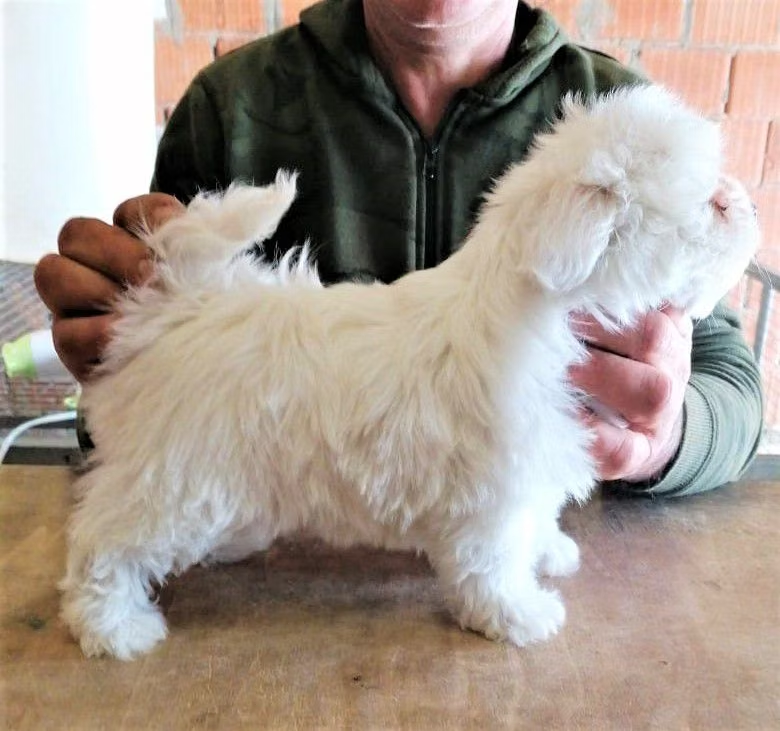
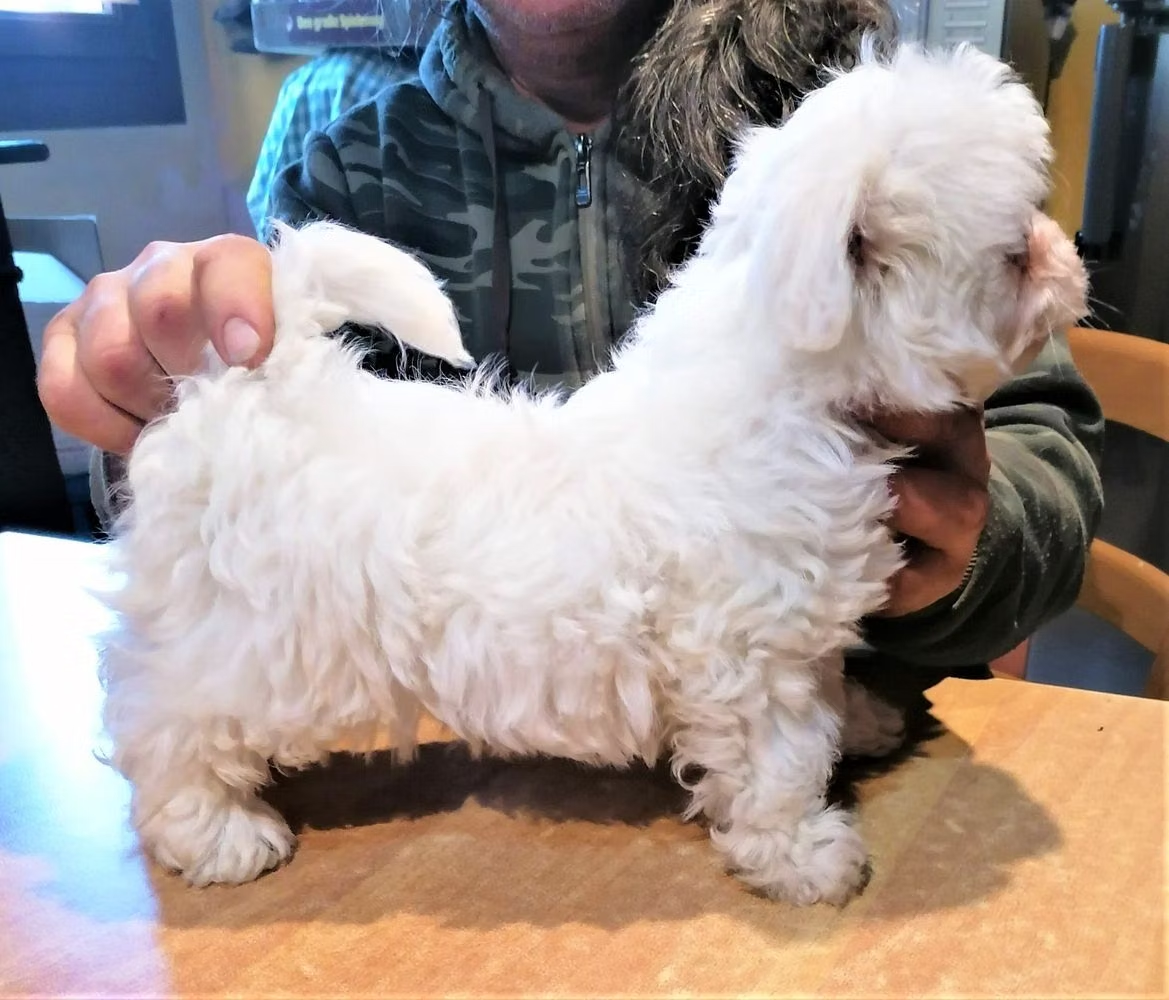
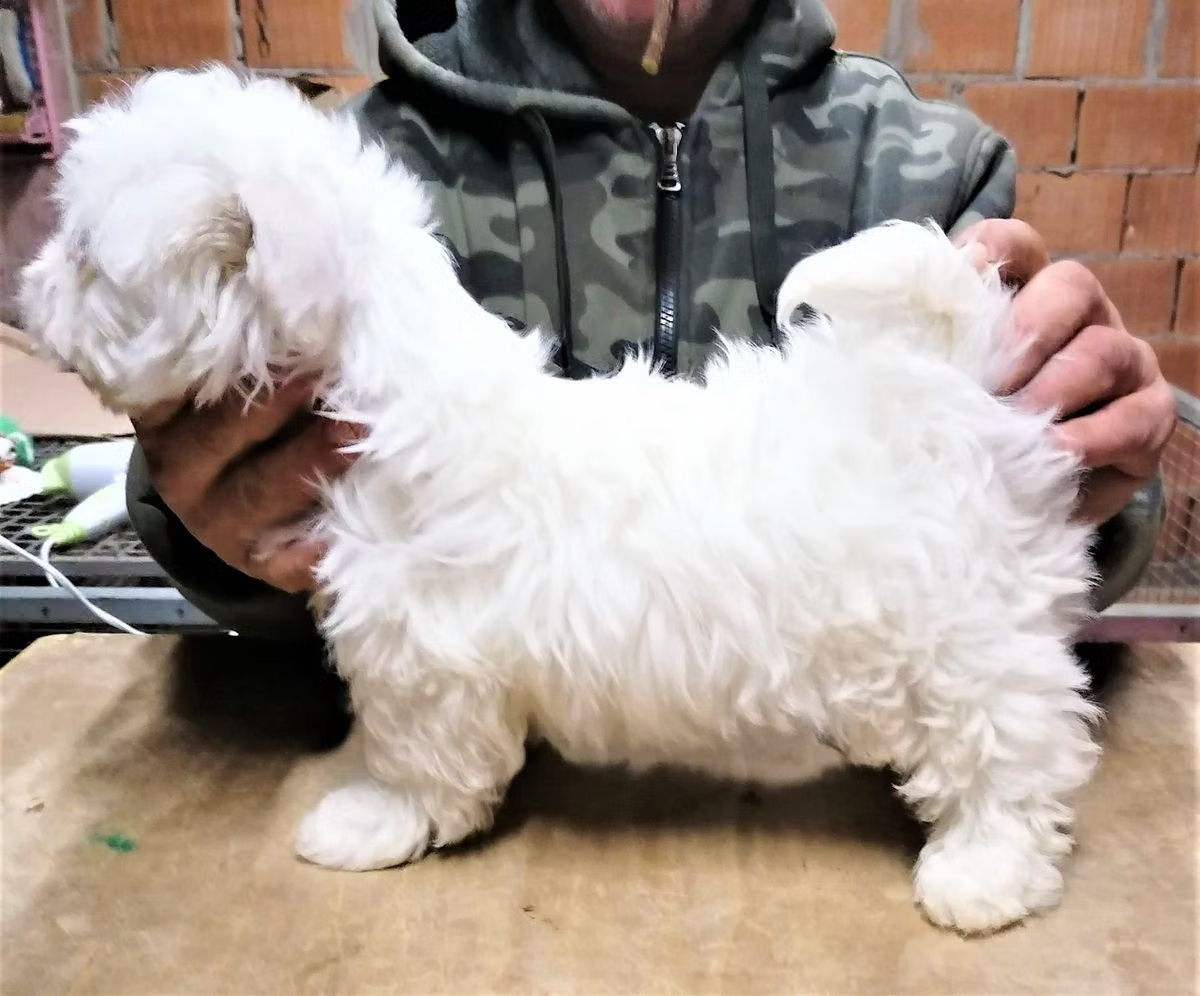
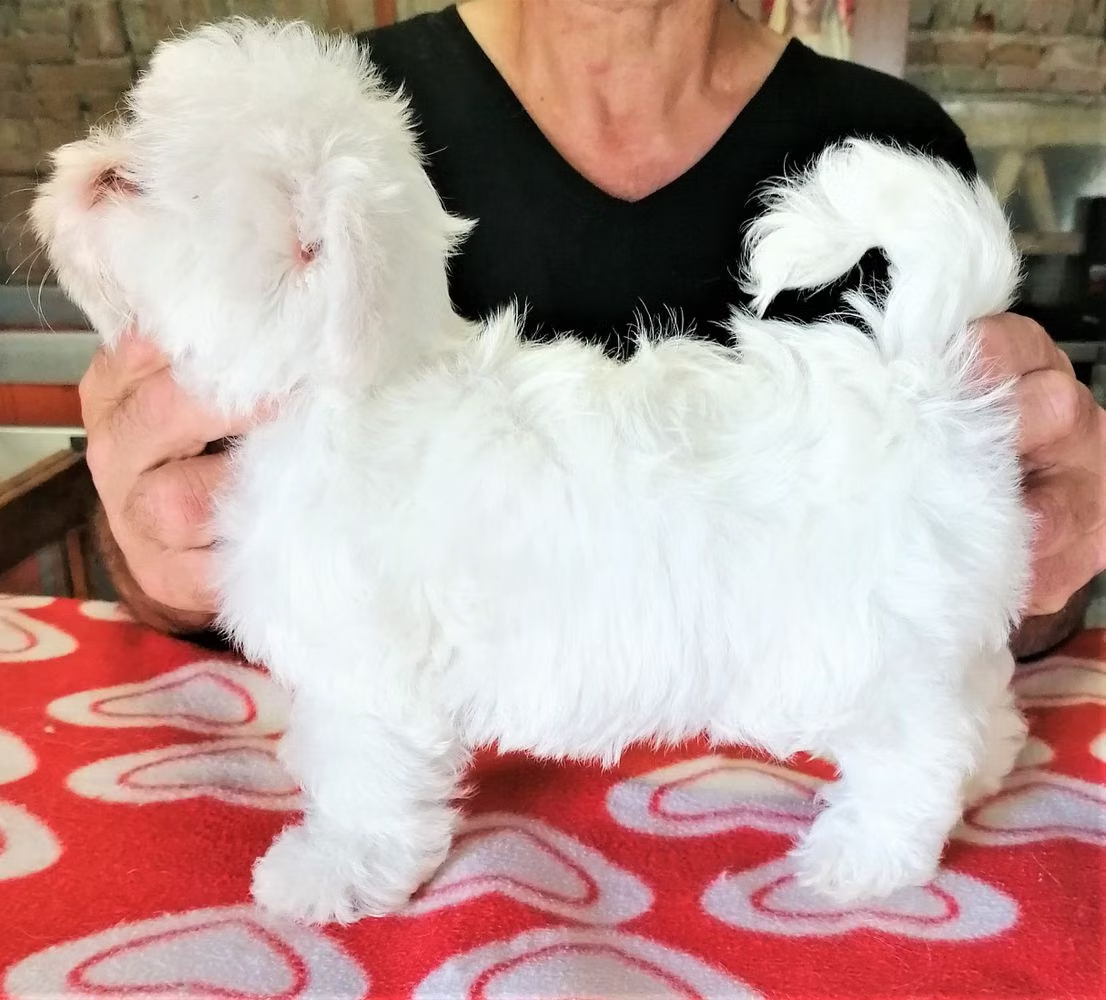
The Maltese is a toy companion breed with a single coat of long, straight white hair that lies close to the body. A grown Maltese weighs under 7 lbs (roughly 3.2 kg) and stands about 8 to 10 inches at the shoulder, putting it among the smallest dogs in the toy group. The delicate build does not carry over to how it moves: a Maltese walks with a light, steady gait and holds itself well on its feet.
The breed has been a lap dog for centuries, and its temperament still shows that history. A Maltese is affectionate, gentle, and playful, and it usually attaches itself closely to the people it lives with. It is also alert, so it tends to bark when someone comes to the gate or knocks on the door, even though it has no real guarding ability given its size.
Because the coat keeps growing and sheds very little, many furparents choose the Maltese when they want a small dog that does not leave hair on the sofa or the bed. That same coat, however, demands regular upkeep, so the breed is best suited to an owner who can commit to daily brushing or a shorter, low-maintenance clip.
| Trait | Detail |
|---|---|
| Origin | Malta |
| Size | Toy (under 7 lb) |
| Lifespan | 12 to 15 years |
| Group | Toy group, companion dog |
| Good with | Families, seniors, condo living, gentle older kids |
The Maltese suits owners who want a small, indoor companion and who are around often enough to give it attention through the day. It adapts well to condominium units and smaller homes since it does not need much outdoor exercise. First-time dog owners and retirees can manage the breed well as long as they stay on top of coat care and dental hygiene. In households with very young children, close supervision is a must, since the dog's small frame injures easily during rough play.
The Maltese traces back to small Mediterranean companion dogs linked to Malta since antiquity, later favored by European nobility and now registered with kennel clubs worldwide.
The Maltese ranks among the oldest toy breeds, with roots that go back to the central Mediterranean. Small white lap dogs from that region turn up in Greek and Roman writing and art, and the island of Malta is the traditional source of the breed's name. What happened before the classical period is not documented in any reliable way, so claims of an exact founding date are best treated as tradition rather than fact.
For most of its history the Maltese was kept purely as a companion, not a working dog. Roman writers described a small Melitaean dog, and the type shows up on pottery and in accounts of lap dogs kept by wealthy households. That role as an indoor companion has stayed constant across the centuries.
By the Renaissance the Maltese had become a favorite of European nobility and appears in portraits from the period, often painted on the lap of an aristocratic owner. That patronage kept the small white type alive even as tastes in dogs shifted over time.
The breed reached England and, later, North America in the 1800s, where fanciers began showing it and breeding it to a written standard. Kennel clubs recognized the Maltese in the late nineteenth and early twentieth centuries. In the Philippines, the breed is recognized by the Philippine Canine Club Inc. (PCCI), the country's national kennel club, and it remains a familiar entrant at local conformation shows and a common household pet in cities across the country.
The Maltese is a compact toy dog under 7 lbs with a long, straight, single white coat, dark round eyes, and a level topline that gives it a balanced, square outline.
The Maltese has a compact, slightly square build with a level topline and a plumed tail that curves over the back. The head is proportional to the body, with a moderate stop, a black nose, and dark, round eyes that give the dog an alert, curious expression. The ears sit low, hang close to the head, and are covered in long hair that blends into the rest of the coat. Overall, the breed looks refined rather than sturdy, though its movement is anything but fragile.
| Trait | Standard |
|---|---|
| Height | 8 to 10 in (20 to 25 cm) at the shoulder |
| Weight | Under 7 lb (about 3.2 kg) |
| Coat | Single, long, straight, silky; no undercoat |
| Colors | Pure white; a touch of pale tan or lemon on the ears is allowed but not favored |
| Eyes | Dark, round, with dark rims |
The Maltese's trademark feature is its single coat: long, straight hair with no undercoat, parted down the center and, in a full show coat, long enough to brush the floor. The standard color is pure white, though a hint of pale tan or lemon on the ears is tolerated under some standards without being preferred. Since the coat is closer to human hair than to typical dog fur, shedding is minimal, but it mats and tangles quickly without daily brushing. Many pet owners in the Philippines keep the coat trimmed in a short puppy cut to cut down on maintenance, especially in the heat, while still keeping the face and feet soft to the touch.
The Maltese is affectionate, gentle, and playful with its family, and alert enough to bark at visitors despite its small size.
The Maltese is a people-focused dog that would rather stay near its owners than explore on its own. Around family it is affectionate and gentle, often trailing its favorite person from room to room. Many keep a playful, almost puppyish streak well into their adult years and enjoy short bursts of play with toys.
Around strangers the breed usually warms up once introduced, but it barks readily at new arrivals, delivery riders, and unfamiliar noises. That alertness is useful as an early-warning system around the house, even though the dog has no real ability to guard anything given its size. Socializing a Maltese early helps keep the barking in check and builds its confidence around new people.
With other household pets, a Maltese generally gets along fine when raised alongside them, cats included. Extra caution is needed around much larger dogs simply because of the size gap. The breed can also grow attached enough to develop separation anxiety, so it is not the best fit for a home where it would be left alone for long stretches of the day.
| Trait | Rating |
|---|---|
| Affection | 5 |
| Energy | 3 |
| Trainability | 3 |
| Vocalness | 4 |
| Shedding | 1 |
A Maltese needs daily coat brushing, light daily exercise, and an indoor, air-conditioned home, with attention to dental care and tear stains.
A Maltese is an indoor dog through and through, and it settles comfortably into a condominium unit or a small house. Given the Philippines' hot, humid climate and its distinct rainy season, the breed does best with steady access to a cool, air-conditioned room rather than time left outdoors in the heat or the rain. A draft-free bed, a couple of safe chew toys, and a ramp or steps up to a favorite sofa spot go a long way toward protecting the dog's small frame from jumping injuries.
A Maltese thrives on a complete small-breed diet fed in measured portions across two or three meals, with care taken over dental health and puppy hypoglycemia.
A Maltese does best on a complete and balanced diet made for small or toy breeds. Smaller kibble pieces are easier to chew and gentler on the teeth. Since the breed gains weight easily for its size, portions should be measured out rather than left down all day, and treats should stay a small slice of the daily calorie count. Clean water should be available at all times.
| Life stage | Amount per day | Meals |
|---|---|---|
| Puppy (2 to 6 months) | About 1/4 to 1/2 cup | 3 to 4 |
| Puppy (6 to 12 months) | About 1/4 to 1/2 cup | 2 to 3 |
| Adult | About 1/4 to 1/2 cup | 2 |
| Senior | Adjusted to maintain weight | 2 |
Stick to small, low-calorie treats for training, and count them toward the day's total food intake. A Maltese eating a complete commercial diet usually needs no extra supplements, though a veterinarian may recommend dental chews or a joint or coat supplement in specific cases. Toy-breed puppies can drop into low blood sugar (hypoglycemia) if a meal is skipped, so puppies need small meals on a fixed schedule rather than one or two large ones.
The Maltese typically lives 12 to 15 years but is prone to dental disease, patellar luxation, and other small-breed conditions that regular vet visits help catch early.
The Maltese is a generally healthy breed with a typical lifespan of 12 to 15 years, and plenty of individuals live well beyond that with good care. As with most toy breeds, most concerns trace back to its small size: crowded teeth, fragile bones, and joints that can slip out of place. Choosing a breeder who screens their dogs for known conditions, paired with consistent veterinary checkups, cuts down on the risk.
| Condition | Signs | Note |
|---|---|---|
| Dental disease | Bad breath, tartar buildup, loose teeth | Common in toy breeds; manage with brushing and professional cleanings |
| Patellar luxation | Skipping gait, on-and-off hind-leg limping | Kneecap slips out of its groove; severity varies by dog |
| Hypoglycemia (puppies) | Weakness, wobbliness, collapse | Low blood sugar; prevent with small, regular meals |
| Portosystemic (liver) shunt | Stunted growth, disorientation after eating | A blood vessel bypasses the liver; some cases need surgery |
| Collapsing trachea | Honking cough, worse when excited | Walk on a harness instead of a neck collar |
| Tear staining | Reddish-brown marks under the eyes | Cosmetic issue; daily cleaning keeps it in check |
The Maltese is intelligent and eager to please but can be slow to house-train, so short, consistent, reward-based sessions work best.
The Maltese is sharp and attentive, and it generally enjoys training sessions as long as they stay short and upbeat. The breed responds to praise, food rewards, and play far better than to harsh correction, which tends to make a sensitive dog anxious rather than obedient. House-training often takes extra patience, since a small bladder means frequent trips outside or to a designated pee pad, so a fixed schedule and plenty of consistency make the biggest difference. Early exposure to different people, sounds, and handling helps a Maltese grow out of shyness and cuts down on excessive barking at anything new.
Maltese females typically reach maturity around 12 months, carry small litters of one to four puppies for about 63 days, and often need close monitoring during whelping.
Breeding a Maltese takes extra care because of how small the breed is. Females can come into season earlier, but responsible breeders wait until a female is physically mature, usually around 18 to 24 months, before breeding her. Litters run small, typically one to four puppies, with gestation lasting about 63 days from conception. Because the puppies themselves are tiny at birth, whelping carries a higher risk of complications, and some dams need veterinary help or a cesarean section to deliver safely.
Newborn puppies chill easily and are prone to low blood sugar, so the whelping area needs to stay warm, and each puppy should be checked for steady nursing and weight gain. Weaning usually starts around three to four weeks, and puppies are typically ready to go to new homes at eight to twelve weeks, once they are eating well on their own and have had some early socialization. Responsible breeders screen their breeding stock for patellar and liver issues and avoid pairing two dogs that both carry the same fault.
| Metric | Value |
|---|---|
| Sexual maturity | About 6 to 12 months |
| Recommended breeding age (female) | About 18 to 24 months |
| Gestation | About 63 days |
| Typical litter size | 1 to 4 puppies |
| Weaning | About 3 to 4 weeks |
| Ready for new homes | 8 to 12 weeks |
The city vet office handles the RA 9482 paperwork; a free United Pet Club record is what a finder anywhere can actually search for your Maltese.
A Maltese that gets loose during a storm is identified by whatever record answers the scan, not by the barangay it came from. Give it a record that answers: your mobile number, the dog's photo, and his details, free for life with United Pet Club. Register your dog today and it is done for good.
If a vet has already implanted a chip, the number still has to be filed where a scanner can trace it, because an unfiled chip points at nobody. Register the microchip free on the lifetime plan: any brand sold in the Philippines qualifies, updates after you move house or change SIM cost nothing, and the record stays searchable here and abroad. Create your free account and cover both in one go.
Open a free United Pet Club account, add your Maltese's details and a photo, then save the profile. It stays free for his whole life and sits alongside the city vet office registration RA 9482 requires.
Type the 15-digit chip number into your free account together with your mobile number and address. The lifetime plan charges nothing for the registration or for any update, whatever brand the clinic used.
Yes, RA 9482 requires dog registration with your city or municipal veterinary office, along with current anti-rabies vaccination. The United Pet Club profile is the searchable half: free, worldwide, and tied to your current mobile.
Nothing. The free lifetime plan covers the profile, the microchip record, and every update, with no renewal fees at all.
Common questions Filipino owners ask about Maltese size, temperament, grooming, lifespan, and where to find one.
The Maltese is a toy breed. Adults weigh under 7 lbs and stand about 8 to 10 inches at the shoulder, one of the smallest sizes among companion dogs.
It is affectionate, gentle, and playful, and it bonds closely with its household. It is also alert and tends to bark at visitors and unfamiliar sounds.
Exercise needs are light, but the coat takes real effort. Expect daily brushing or a shorter clip, regular baths, daily eye cleaning, and consistent dental care.
The typical lifespan is 12 to 15 years, and many live even longer with good veterinary care, dental hygiene, and a healthy weight.
Yes. Its small size and light exercise needs make it a solid match for condominium units and smaller homes, as long as it is not left alone for long periods.
No. The single coat is closer to hair than to dense fur, so shedding is minimal. That same coat tangles easily, though, and needs regular brushing to avoid mats.
Maltese puppies are available through breeders registered with the Philippine Canine Club Inc. (PCCI) who health-screen their stock, as well as through breed-specific rescue groups. Ask about the parents' patella and liver health, and meet the puppy in person before committing.