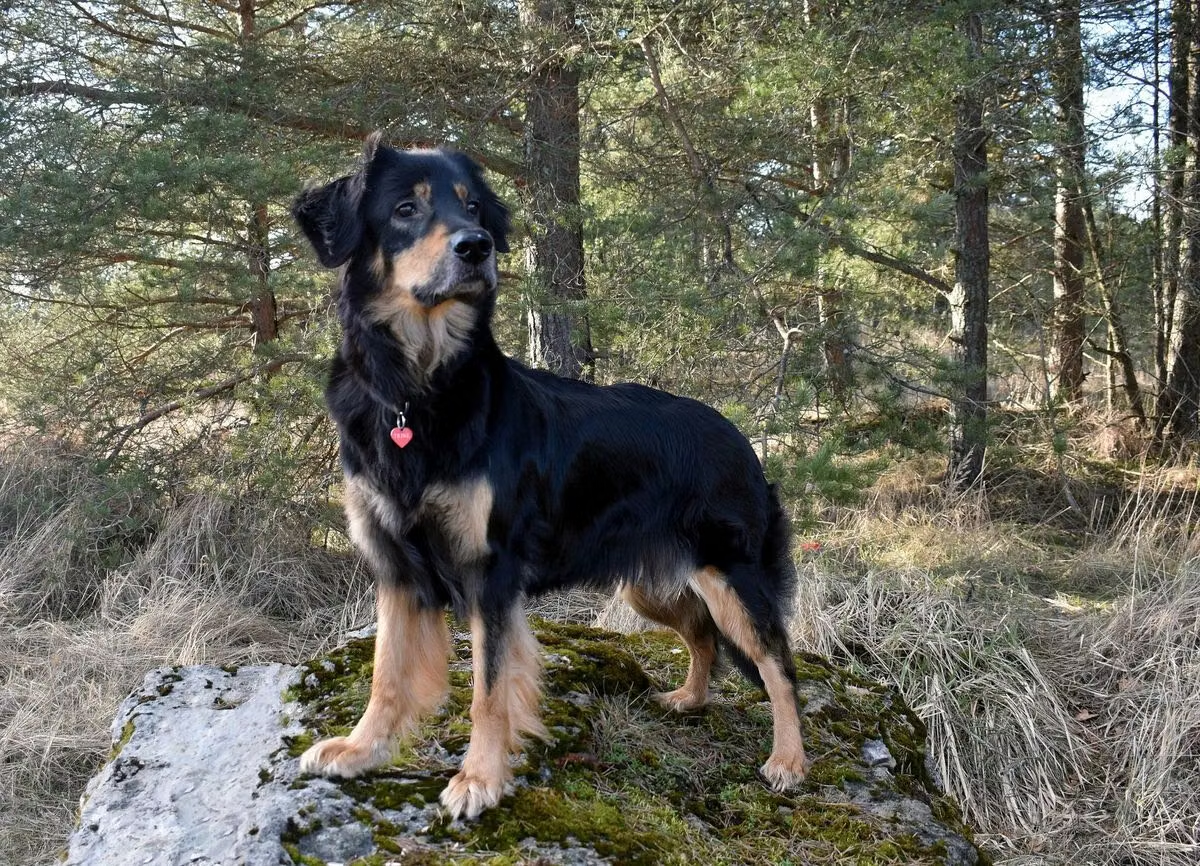
The Hovawart is a devoted, intelligent German working and guarding breed that is deeply loyal and naturally protective of its home.
How the Hovawart coat is built, and what that means when you groom it.
Critical: A Hovawart should not be shaved.
The undercoat keeps heat out as well as in, and the outer coat shields the skin from sun and insect bites. Clipping the whole coat off removes both. It often grows back patchy, soft or a different colour, and in some animals the guard hairs never return properly. Brush the undercoat out instead of cutting it off.
Caution: A Hovawart coat mats easily.
Fine or long hair tangles at the base of the coat, out of sight, where the mats tighten and pull on the skin. Brushing has to reach right down to the roots in sections, not just skim the surface.
Information: A Hovawart drops its undercoat in heavy bursts.
The undercoat comes out in heavy bursts over a few weeks. An undercoat rake, or a bath followed by a proper blow-dry, clears it far faster than daily brushing. Clipping the coat down is not a shortcut for this.
A few of the Hovawart profiles members have added to United Pet Club.
A large German guard dog, loyal and quick thinking, the Hovawart minds the gate closely and suits an experienced owner ready for its long adolescence.
The Hovawart is a large working dog from Germany, bred to guard farms and estates. The name comes from old German words meaning "yard guardian," which says plainly what the dog was kept for. Adults are tall and carry a medium-long coat, usually black, black and gold, or blonde. The build is powerful without being bulky, which suits a dog expected to patrol and stay on duty for long stretches.
In temperament the Hovawart is sure of itself and even keeled. It attaches to the whole household rather than to one person, and it keeps watch over the gate in the way many Filipino families expect of a guard dog. Because it holds back with strangers, it needs early socialization and steady handling before it can live comfortably in a subdivision or a shared compound where helpers, delivery riders, and visitors come and go all day. A properly raised Hovawart settles quietly indoors and reacts only when something is genuinely off.
This breed grows up slowly. Many Hovawarts are not mentally mature until about three years old, so be ready for an extended adolescence. The dog is intelligent and picks things up fast, but it thinks for itself and will test the house rules if nobody enforces them fairly and consistently.
| Attribute | Detail |
|---|---|
| Origin | Germany |
| Size | Large |
| Lifespan | 10 to 14 years |
| Group / role | Working and guarding breed |
| Good with | Families and committed, experienced owners |
The Hovawart belongs in an active household that can give it daily exercise, training, and a clear job. It does best with owners who have handled working or guard breeds before and who can put in the hours through its long adolescence. It is a poor match for first-time owners, for a condo unit or a townhouse with no outdoor space, and for homes where everyone leaves at dawn and gets back after the evening traffic.
An old German farm guardian, the Hovawart was rebuilt from Black Forest and Harz working dogs starting around 1915 and recognized as a breed in 1937.
The Hovawart traces back to the working farm dogs of medieval Germany. German texts from that period mention a guarding dog called the "hovawart," a name given to the dog kept to look after the yard and the property. Whether those early dogs formed one distinct type or were simply farm dogs doing a particular job is not settled, but the name and the guarding work carried on.
By the nineteenth century the old farm guardian had thinned out as a recognizable type, pushed aside by other working and herding breeds. The dog we have today came out of a planned rebuilding effort in the early twentieth century.
From around 1915, German breeders under Kurt Friedrich König gathered farm dogs from the Black Forest and the Harz mountain areas that still carried the old guarding type, then crossed them with several established breeds to settle size, coat, and temperament. The program was organized and the results were recorded as the work went along.
Germany recognized the Hovawart as a breed in 1937. Numbers dropped sharply during and after the Second World War, as they did for many European breeds, and a fresh round of breeding followed in the mid twentieth century. The breed is now solid in Germany and kept in other countries as well, both as a family guardian and as a working dog. In the Philippines it is still an uncommon sight beside the usual German Shepherds, Belgian Malinois, and Rottweilers kept for security work.
Large and solidly built with a medium-long wavy coat in black, black and gold, or blonde. Males reach 70 cm at the withers and around 50 kg.
The Hovawart is a strongly built dog, a little longer than it is tall. It looks powerful and balanced rather than heavy. The head is broad with a rounded forehead, the ears hang down and sit high and wide apart, and the bushy tail reaches below the hock. Males are clearly bigger and heavier than females, and you can tell the sexes apart at a glance from the build alone.
| Trait | Standard |
|---|---|
| Height | Males 63 to 70 cm; females 58 to 65 cm at the withers |
| Weight | Roughly 30 to 50 kg depending on sex and frame |
| Coat | Medium-long, slightly wavy, dense, with light undercoat |
| Colors | Black, black and gold, blonde |
| Eyes | Oval, dark to medium brown |
The coat runs medium to long, lies flat against the body, and has a slight wave. It is thickest on the chest, belly, the back of the legs, and the tail, and shorter on the head and the front of the legs. Three colors are recognized. The black variety is solid black with a metallic sheen. The black and gold variety has a black base with clear tan or gold markings on the chest, legs, muzzle, and above the eyes. The blonde variety runs from light to medium gold. The coat sheds rain well and holds up to outdoor work in changeable weather, which is worth remembering here, since a wet dog left to dry on its own after a downpour is asking for skin trouble.
Loyal to the whole household, confident, and protective by nature. The Hovawart holds back with strangers, so socialization from puppyhood is not optional.
The Hovawart is even tempered and self-assured. At home it is affectionate and loyal, and the bond usually covers everyone in the house, not just one favorite person. Its protective drive is high and it will look after its people and its property. That is what makes it a capable guardian, and it is also why the dog has to be taught the difference between a real threat and the ordinary traffic of a Filipino household: the water delivery, the LPG man, the neighbors dropping by, cousins staying the weekend.
With strangers the Hovawart is reserved rather than aggressive. A well socialized dog is polite and controlled when guests arrive, while still keeping watch. Without enough early exposure to people and places, that protective instinct can harden into suspicion or over-guarding, so start socializing while the puppy is young.
Around children the breed is generally patient and tolerant when raised with them, although its size means play with small kids should always be supervised. With other dogs and pets, much depends on socialization and on the individual dog; some Hovawarts are sociable, others are choosy. It is a bright breed that forms close bonds, and it does badly when left on its own for long hours.
| Trait | Rating |
|---|---|
| Affection | 5 |
| Energy | 4 |
| Trainability | 4 |
| Vocalness | 3 |
| Shedding | 3 |
Brush once or twice a week, allow one to two hours of daily exercise, and shift walks to early morning or after sundown to keep this heavy-coated breed out of the heat.
The Hovawart does best in a house with a securely fenced yard, but it should live indoors with the family and never be chained or kennelled outside on its own. The coat handles cold and rough weather well, so here the problem is the opposite: give the dog constant shade, fresh water, and good airflow, and let it lie somewhere cool during the hottest hours. Long stretches of solitude do not suit it. A bored dog with this much guarding drive turns into a problem for the neighbors, the guards, and anyone coming through the gate.
Feed a balanced large-breed ration matched to age and activity, keep puppy growth slow to protect the joints, and keep adults lean with water always available.
The Hovawart does well on a complete, balanced diet made for large active dogs. Match the food and the portion to the dog's age, weight, and activity. This is a slow-maturing large breed, so puppies do better on a large-breed puppy formula that supports steady, controlled growth instead of a fast run-up in weight, which spares the developing joints. Keep adults lean, because every extra kilo lands on the hips and elbows. In hot weather dogs often eat less and drink more, so watch the water bowl as closely as the food bowl.
| Life stage | Amount per day | Meals |
|---|---|---|
| Puppy (2 to 6 months) | Per large-breed puppy formula by weight | 3 to 4 |
| Junior (6 to 18 months) | Adjust to growth and condition | 2 to 3 |
| Adult | Roughly 350 to 600 g dry food by size and activity | 2 |
| Senior | Slightly reduced, watch weight | 2 |
Hold treats to about ten percent of the daily calories and count them against the ration so the dog does not gain weight. Set aside part of the day's food for training rewards. Most Hovawarts on a complete diet need no supplements at all; talk to your veterinarian before starting joint support or anything else. Keep clean, fresh water within reach at all times, and refill it more often on hot days.
Hovawarts usually live 10 to 14 years. Watch for hip and elbow dysplasia, hypothyroidism, and bloat, and buy only from breeders who screen their stock.
The Hovawart counts as a fairly healthy large breed, thanks to a breeding history that kept working ability and sound structure at the front. Most live 10 to 14 years. As with large dogs generally, the joints are the main worry, and serious breeders screen their breeding stock for it. Buying from a breeder who does health testing is the single most effective way to lower your risk. Add the local hazards to your list too: heartworm, ticks, and heat stress are year-round concerns in this climate, so keep prevention current.
| Condition | Signs | Note |
|---|---|---|
| Hip dysplasia | Stiffness, limping, reluctance to rise | Screen breeding dogs; keep weight controlled |
| Elbow dysplasia | Foreleg lameness, especially when young | Detected by screening and imaging |
| Hypothyroidism | Weight gain, lethargy, coat changes | Managed with daily medication |
| Bloat (gastric torsion) | Swollen abdomen, retching, distress | Medical emergency in deep-chested dogs |
Bright but independent, the Hovawart needs consistent handling and early socialization, with training carried well past puppy class because it matures late.
The Hovawart learns quickly and likes working with its handler, but it also has a mind of its own and will query any command it sees no point in. It responds to patient, consistent training from an owner who sets clear limits and follows through. Since the breed matures late and stays adolescent for a few years, treat training as something that continues rather than something you finish after puppy class. Rough handling breaks the bond and can turn a confident guard dog defensive, so stay firm and stay fair.
Hovawart females cycle about twice a year and carry for roughly 63 days. Breeding stock should be hip and elbow screened and steady in temperament.
The Hovawart matures slowly, and careful breeders wait until a dog is grown up in body and mind before breeding it, which means later than with most breeds. Females come into season roughly twice a year. Both parents should be screened for hip and elbow dysplasia and assessed for temperament, because sound structure and a stable head matter equally in this breed.
Gestation in dogs runs about 63 days. Litters are usually moderate to large for a dog of this size. Newborn puppies depend completely on the dam for warmth and milk in the first weeks, and the breeder's job is to keep the litter warm, clean, and well fed while she handles most of the early care. Here the whelping box needs airflow and shade more than added heat, so watch the room temperature closely. Gentle handling and exposure to everyday household life help the puppies grow into steady adults.
Because this is a guarding breed with a strong protective drive, selecting for temperament counts as much as selecting for physical soundness. Look for breeders who health test, raise their puppies inside the home, register their litters with the Philippine Canine Club, Inc. (PCCI), and hand over pups with socialization already underway.
| Metric | Value |
|---|---|
| Sexual maturity | Around 1 to 2 years; bred later when fully mature |
| Seasons per year | About 2 |
| Gestation | Approximately 63 days |
| Litter size | Typically moderate to large for the breed's size |
| Weaning | Around 6 to 8 weeks |
The city vet office handles the RA 9482 paperwork; a free United Pet Club record is what a finder anywhere can actually search for your Hovawart.
The Anti-Rabies Act, Republic Act 9482, tells every dog owner to register with the city or municipal veterinary office and keep the anti-rabies shots current, and that covers the local paperwork for your Hovawart. What the city record cannot do is tell a finder two provinces away how to reach you. A free United Pet Club profile fills that gap for life. Registering your dog costs nothing to start and nothing later.
If a vet has already implanted a chip, the number still has to be filed where a scanner can trace it, because an unfiled chip points at nobody. Register the microchip free on the lifetime plan: any brand sold in the Philippines qualifies, updates after you move house or change SIM cost nothing, and the record stays searchable here and abroad. Create your free account and cover both in one go.
Open a free United Pet Club account, add your Hovawart's details and a photo, then save the profile. It stays free for his whole life and sits alongside the city vet office registration RA 9482 requires.
Type the 15-digit chip number into your free account together with your mobile number and address. The lifetime plan charges nothing for the registration or for any update, whatever brand the clinic used.
Yes, RA 9482 requires dog registration with your city or municipal veterinary office, along with current anti-rabies vaccination. The United Pet Club profile is the searchable half: free, worldwide, and tied to your current mobile.
Nothing. The free lifetime plan covers the profile, the microchip record, and every update, with no renewal fees at all.
Answers on size, temperament, upkeep in a tropical climate, lifespan, life with children, guarding habits, and where to find a PCCI registered puppy.
It is a large breed. Males stand about 63 to 70 cm at the withers and females about 58 to 65 cm, with weight running roughly 30 to 50 kg depending on sex and build.
Loyal, confident, intelligent, and protective. It bonds tightly with the family, stays watchful and reserved with strangers, and needs early socialization so its guarding instinct is pointed the right way.
It is a high-commitment breed. Plan on one to two hours of exercise daily plus mental work, weekly brushing, and steady training through a long adolescence. The heat adds to the load, since walks have to move to early morning or evening and the dog needs shade, airflow, and water all day. It suits experienced, active owners rather than beginners.
Usually 10 to 14 years. Keeping the dog lean and choosing a puppy from health-screened parents give you the best shot at the upper end of that range.
Yes, for the right family. It is affectionate and loyal with its household and generally patient with children it grew up with, though its size and guarding nature make supervision sensible around small kids and visiting cousins.
The breed is well established in Germany and kept in a number of other countries, but it is rare here compared with the usual guard breeds. Expect to check PCCI registered breeders, look into importing, and wait your turn on a list for a health-tested puppy.
It is naturally watchful and will sound off at anything unusual, but it is not a dog that barks non-stop. With socialization and training it learns to tell a real concern from the daily comings and goings at the gate.