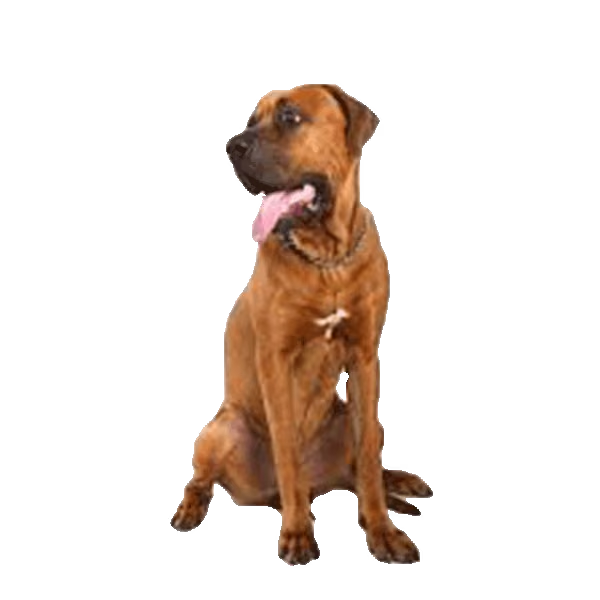
The Hanoverian Scenthound is a calm, intensely focused tracking dog bred to follow wounded game with unwavering determination.
How the Hanoverian Scenthound coat is built, and what that means when you groom it.
The Hanoverian Scenthound is a large German tracking dog known for calm focus and the ability to follow the scent trail of wounded game over long distances.
The Hanoverian Scenthound is a large working dog from Germany, bred specifically to track wounded game after a hunt. Its main job is the cold blood trail: following the faint scent left by an injured deer or boar hours after the shot. Dogs of this breed work slowly and methodically rather than fast, and they are valued for accuracy over speed.
This is a serious working hound, not a casual companion. It tends to be calm and steady at home but switches into deep concentration once it picks up a trail. The breed forms a close bond with one handler and is reserved with strangers, which suits its role as a one-person tracking partner. Hunters in central Europe still use the breed for its original purpose today.
A mature dog stands tall and heavily boned for its frame, with a deep voice and a strong drive to follow scent. Owners describe the breed as loyal, focused, and hardworking. Without a job or substantial daily activity, that drive can turn into restlessness.
| Attribute | Detail |
|---|---|
| Origin | Germany |
| Size | Large |
| Lifespan | 10 to 12 years |
| Group / role | Scenthound, game tracking |
| Good with | Experienced active owners and hunting households |
The breed fits an active owner who can give it a real job, ideally tracking, trailing, or other scent work. It does best with someone who has handled working dogs before and can provide firm, consistent guidance. Apartment life and long hours alone do not match its needs. A hunting or rural household with space and time for daily exercise is the natural setting.
The Hanoverian Scenthound was developed in Germany during the 19th century from older German tracking hounds to follow wounded game on the blood trail.
The breed traces back to older German tracking hounds used to recover wounded game long before the modern type took shape. As forests and large estates were managed for hunting, handlers needed dogs that could find injured animals reliably, both to recover the game and to end the animal's suffering. That practical need shaped the breed's slow, careful working style.
The modern Hanoverian Scenthound was formed in and around Hanover, in northern Germany, during the 19th century. Game wardens and foresters bred selectively for nose, stamina, and a calm temperament under pressure. The aim was a dog that would stay on a single trail for hours without being distracted by fresher, easier scents.
A dedicated breed club was founded in Germany to set a standard and keep working ability central to breeding decisions. Registration has long been linked to proven tracking performance rather than appearance alone, which has kept the breed close to its original function.
The breed remains uncommon outside its working circles. Most dogs still go to hunters, foresters, and tracking handlers in Germany and neighboring countries, where the cold blood trail is a recognized discipline.
The Hanoverian Scenthound is a large, heavily built hound with a short dense coat in shades of red to brindle, a deep chest, and an alert, serious expression.
The Hanoverian Scenthound is built for endurance rather than speed. It has a strong, slightly elongated body, a deep chest, and heavy bone for its size. The head is broad with a defined stop, long drop ears, and an expression that reads as serious and attentive. The overall impression is of a solid, powerful tracker that can work all day in difficult terrain.
| Trait | Detail |
|---|---|
| Height | About 50 to 55 cm (20 to 22 in) at the shoulder |
| Weight | About 25 to 40 kg (55 to 88 lb) |
| Coat | Short, dense, and close lying |
| Colors | Red, fawn, and brindle shades, often with a darker mask |
| Eyes | Dark, with a calm and focused expression |
The coat is short and dense, which protects the dog while working through brush. Colors range from light red and fawn to deep red and brindle, and many dogs carry a darker mask on the face. Some white on the chest is sometimes seen. The coat needs little upkeep and does not require trimming. Skin and coat stay in good condition with a balanced diet and regular brushing.
The Hanoverian Scenthound is calm, loyal, and reserved, bonding closely with its handler while staying intensely focused once it is on a trail.
At home the Hanoverian Scenthound is usually quiet and even tempered. It bonds strongly with one person and tends to be devoted to that handler, watching closely and staying near. With strangers it is reserved rather than aggressive, often holding back until it decides a new person is acceptable.
With family members the breed is steady and affectionate in a low key way. It is not a clingy or demonstrative dog, but it stays loyal and attentive. Early socialization helps it settle around children and visitors. Around other dogs it can be sociable, though its strong prey and tracking drive means small animals may trigger a chase.
The defining trait is focus. Once the dog locks onto a scent, it can tune out almost everything else, which is exactly what the work demands. That same single mindedness means a bored or under worked dog will look for its own outlet. A job, scent games, or regular tracking practice keeps the temperament balanced.
| Trait | Rating |
|---|---|
| Affection | 3 |
| Energy | 4 |
| Trainability | 4 |
| Vocalness | 3 |
| Shedding | 3 |
The Hanoverian Scenthound needs little grooming but a great deal of physical and mental exercise, ideally through scent work and time outdoors.
The breed suits a rural or suburban home with secure outdoor space rather than a small apartment. It tolerates cold and wet conditions well thanks to its dense coat. A reliable fence matters, because a dog that catches an interesting scent may try to follow it. Time with its handler is as important as physical space.
The Hanoverian Scenthound needs a complete, high quality diet matched to its large size and working activity level, split across two daily meals.
Feed a complete diet formulated for large, active dogs, with quality animal protein as the main ingredient. Working dogs in heavy tracking seasons need more energy than dogs that are mostly resting, so adjust portions to activity and body condition rather than feeding a fixed amount year round. You should be able to feel the ribs easily without seeing them clearly.
Clean fresh water must always be available, especially after long days of work. Sudden diet changes can upset digestion, so switch foods gradually over about a week.
| Life stage | Amount per day | Meals |
|---|---|---|
| Puppy (2 to 6 months) | Per growth formula on the label, divided | 3 to 4 |
| Adolescent (6 to 12 months) | Adjusted to growth and activity | 2 to 3 |
| Adult | About 300 to 450 g of quality dry food, by weight and activity | 2 |
| Senior | Slightly reduced, watch weight | 2 |
Keep treats to a small share of daily calories and use them mainly to reward training and tracking. Most dogs on a complete diet need no extra supplements. As a deep chested large breed, this dog can be at risk of bloat, so avoid heavy exercise right before and after meals. Ask a veterinarian before adding any joint or other supplement.
The Hanoverian Scenthound is generally a hardy working breed with a lifespan of 10 to 12 years, though it can face joint problems, ear infections, and bloat.
The Hanoverian Scenthound is generally a sturdy, healthy breed, helped by a breeding history that has kept working ability and soundness central. Typical lifespan is 10 to 12 years. As a large, deep chested dog it shares some risks common to that body type, so awareness and routine veterinary care matter.
| Condition | Signs | Note |
|---|---|---|
| Hip and elbow dysplasia | Stiffness, limping, trouble rising | More common in large breeds; screening of parents helps |
| Bloat (gastric torsion) | Swollen belly, retching, distress | Medical emergency; act fast |
| Ear infections | Head shaking, odor, scratching | Long drop ears trap moisture and debris |
| Working injuries | Cuts, strains, sore paws | From rough terrain during tracking |
The Hanoverian Scenthound is intelligent and trainable with a strong work ethic, responding best to a consistent handler and channeled scent work.
This breed is smart and willing to work, which makes it trainable in the right hands. It learns quickly when training has a clear purpose and connects to its natural drive to track. The flip side is independence: a dog bred to make decisions on a trail will not blindly follow a weak or inconsistent handler. Calm, confident, and steady guidance works far better than force.
Start socialization and basic obedience early, while the dog is young. Channel the scent drive into structured tracking from the beginning so the dog learns to use that energy on cue. Short, focused sessions hold attention better than long repetitive drills.
Hanoverian Scenthound breeding is usually tied to proven working ability and health screening, with litters typically averaging around six to eight puppies.
Responsible breeding of the Hanoverian Scenthound centers on working ability, sound temperament, and health rather than looks alone. In its home country, breeding stock is often expected to prove tracking performance before it is used, which keeps the breed true to its purpose. Breeders also screen for joint problems common in large dogs.
Females generally reach physical maturity before they should be bred, and breeding is best left until the dog is grown and proven. Pregnancy in dogs lasts roughly nine weeks. The dam usually whelps and raises the litter with close monitoring, and puppies stay with her and littermates through the early weeks for important socialization.
Because the breed is uncommon and oriented toward serious hunting and tracking homes, puppies are not widely available. Prospective owners often join a waiting list through a recognized breed club or working breeder.
| Metric | Value |
|---|---|
| Sexual maturity | Around 12 to 18 months |
| Recommended breeding age | After full maturity and health checks |
| Gestation | About 63 days (roughly 9 weeks) |
| Average litter size | About 6 to 8 puppies |
| Weaning | Around 6 to 8 weeks |
The city vet office handles the RA 9482 paperwork; a free United Pet Club record is what a finder anywhere can actually search for your Hanoverian Scenthound.
A Hanoverian Scenthound that gets loose during a storm is identified by whatever record answers the scan, not by the barangay it came from. Give it a record that answers: your mobile number, the dog's photo, and his details, free for life with United Pet Club. Register your dog today and it is done for good.
The clinic's part ended with the implant; the tracing part is yours. File your Hanoverian Scenthound's 15-digit number with United Pet Club and every scan leads to your phone: free for life, all brands accepted, updates free every time your details change. Microchip registration plus a free account finishes the job.
Open a free United Pet Club account, add your Hanoverian Scenthound's details and a photo, then save the profile. It stays free for his whole life and sits alongside the city vet office registration RA 9482 requires.
Type the 15-digit chip number into your free account together with your mobile number and address. The lifetime plan charges nothing for the registration or for any update, whatever brand the clinic used.
Yes, RA 9482 requires dog registration with your city or municipal veterinary office, along with current anti-rabies vaccination. The United Pet Club profile is the searchable half: free, worldwide, and tied to your current mobile.
Nothing. The free lifetime plan covers the profile, the microchip record, and every update, with no renewal fees at all.
Common questions about the Hanoverian Scenthound cover its size, temperament, care needs, lifespan, suitability, and availability.
It is a large breed, standing about 50 to 55 cm (20 to 22 in) at the shoulder and weighing roughly 25 to 40 kg (55 to 88 lb), with heavy bone built for endurance.
It is calm and loyal at home, reserved with strangers, and intensely focused once it is on a scent trail. It bonds closely with one main handler.
Grooming is easy because the short coat needs little upkeep. The demanding part is exercise and mental work: the dog needs daily activity and ideally real scent work to stay balanced.
Typical lifespan is 10 to 12 years with good care, a healthy weight, and routine veterinary attention.
It can be steady and loyal with its family, but it is first a working tracking dog. It suits active, experienced owners who can give it a job rather than a quiet household pet role.
No. The breed is uncommon and mostly goes to hunting and tracking homes in Germany and nearby countries. Buyers usually work through a recognized breed club or working breeder and may wait for a litter.
It can be sociable with other dogs, but its strong tracking and prey drive means small animals may be chased. Early socialization and supervision help.
