

Greyhound
The Greyhound is a gentle, elegant sighthound known for its astonishing speed and surprisingly calm, couch-loving nature at home.
- Size
- Large
- Lifespan
- 10–13 years
- Origin
- England
- Temperament
- Gentle
- Standard colors
- Black, White, and Blue and 3 more
Characteristics
Coat and grooming
How the Greyhound coat is built, and what that means when you groom it.
- Coat layers
- Single coat
- Coat texture
- Smooth
- Coat length
- Short
- Shedding
- Low shedding
Greyhound colors and patterns
What each club's breed standard says about every Greyhound color and pattern. Point at a ruling to see the club's own wording.
Breed standards describe the Greyhound in Black, White, Blue, Liver, Red, and Fawn. Standard patterns: Solid, Brindle, Parti-color, Roan, and Reverse brindle.
| Color or pattern | FCI | AKC | UKC | KC | KUSA |
|---|---|---|---|---|---|
| Black | Standard (“Black”) | Standard (“Black”) | Standard (“Immaterial”) | Standard (“Black”) | Standard (“Black”) |
| White | Standard (“white”) | Standard (“White”) | Standard (“Immaterial”) | Standard (“white”) | Standard (“white”) |
| Blue | Standard (“blue”) | Standard (“Blue”) | Standard (“Immaterial”) | Standard (“blue”) | Standard (“blue”) |
| Liver | Not recognized | Standard (“Liver”) | Standard (“Immaterial”) | Not recognized | Not recognized |
| Red | Standard (“red”) | Standard (“Red”) | Standard (“Immaterial”) | Standard (“red”) | Standard (“red”) |
| Fawn | Standard (“fawn, fallow”) | Standard (“Fawn”) | Standard (“Immaterial”) | Standard (“fawn”) | Standard (“fawn, fallow”) |
| Albino | Not recognized | No ruling | Disqualifying (“Albinism”) | Not recognized | Not recognized |
| Patterns | |||||
| Solid | Standard (“Black, white, red, blue, fawn, fallow”) | Standard (“Solid”) | Standard (“Immaterial”) | Standard (“Black, white, red, blue, fawn”) | Standard (“Black, white, red, blue, fawn, fallow”) |
| Brindle | Standard (“brindle”) | Standard (“Red Brindle”) | Standard (“Immaterial”) | Standard (“brindle”) | Standard (“brindle”) |
| Parti-color | Standard (“any of these colours broken with white”) | Standard (“Parti-Color”) | Standard (“Immaterial”) | Standard (“any of these colours broken with white”) | Standard (“any of these colours broken with white”) |
| Roan | Not recognized | Standard (“Ticked”) | Standard (“Immaterial”) | Not recognized | Not recognized |
| Reverse brindle | Standard (“brindle”) | Standard (“Red Brindle”) | Standard (“Immaterial”) | Standard (“brindle”) | Standard (“brindle”) |


| Color or pattern | FCI | AKC | UKC | KC | KUSA |
|---|---|---|---|---|---|
| Dark brown | Standard (“Preferably dark”) | Standard (“Dark”) | Standard (“dark in color”) | Standard (“Preferably dark”) | Standard (“Preferably dark”) |
What the rulings mean
- Standard
- Described by the club's breed standard.
- Disqualifying
- The club's breed standard disqualifies an animal of this color or pattern.
- Not recognized
- The club does not accept this color or pattern for the breed.
Color changes
How a Greyhound's colors can change over its life.
Blackchanges toRust
Coat · With body condition · can change back
Blackchanges toGray
Coat · Progressive
Blackchanges toBrown
Coat · In the sun · can change back
Whitechanges toRoan
Coat · With age · from 2 weeks
Sources
Each ruling comes from the club's published breed standard or color list.
Meet some of our Greyhound
A few of the Greyhound profiles members have added to United Pet Club.
About the Greyhound
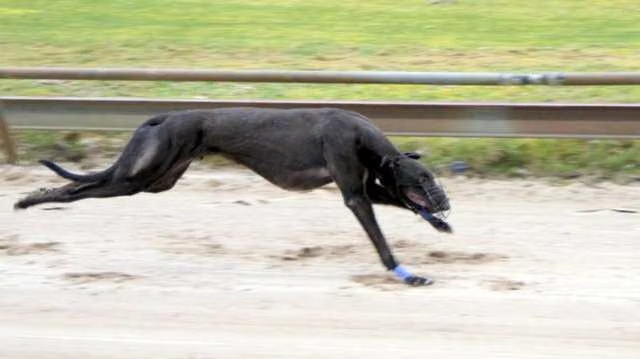
The Greyhound is a tall, lean sighthound from England that can hit near 45 mph yet turns into a calm, couch-loving companion at home.
The Greyhound is a tall, fine-boned sighthound built for short bursts of speed. A full-grown dog stands around 27 to 30 inches at the shoulder and weighs about 60 to 70 pounds, with a deep chest, a tucked-up waist, and long legs that give it that unmistakable racing shape. Over a flat stretch, a healthy Greyhound can hit near 45 mph, though only for a short distance.
Despite the athletic build, the breed is surprisingly low-key once indoors. Greyhounds are affectionate, gentle, and easygoing, and most spend a good part of the day curled up asleep. Owners who bring one home quickly learn why the breed gets called a couch potato that happens to run fast. Around the household, a Greyhound tends to stay calm and quiet rather than rowdy.
The breed fits owners looking for a big, gentle companion without the demands of an all-day energetic dog. A short run or play session in a secured area, ideally during the cooler hours of early morning or late afternoon given the local heat, is usually enough to satisfy a Greyhound before it settles back down. New owners mainly need to prepare for the breed's strong instinct to chase anything that moves.
| Attribute | Detail |
|---|---|
| Origin | England |
| Size | Large (about 60 to 70 lb) |
| Lifespan | 10 to 13 years |
| Group / role | Sighthound, bred for coursing and racing |
| Good with | Families and other dogs; supervise around small pets due to chase drive |
Who fits this breed
A Greyhound suits households that can offer a secured, fenced space for off-leash sprints and a soft corner to rest indoors. The breed works well in condo units and small city homes because it is quiet and sleeps most of the day, a real advantage in tight Metro Manila spaces. Owners who already have cats or small pets should take introductions slowly and manage the sighthound's chase instinct from day one.
History and origin
The Greyhound is an ancient sighthound type polished in England for hare coursing, later carried worldwide by the rise of track racing.
Sighthounds built like the Greyhound show up in art and writing from many ancient civilizations, proof that dogs of this general type have hunted by sight for thousands of years. The breed took the form we recognize today in Britain, where breeders developed it specifically for coursing fast game across open fields.
During medieval and early modern England, owning a Greyhound was closely tied to nobility, and several laws at the time restricted who could keep coursing hounds. Hunters prized the breed for chasing hares, depending on sharp eyesight and explosive speed rather than scent.
Formal coursing clubs formed in England through the 1700s and 1800s, and competitive hare coursing helped lock in the breed's build and running style. Pedigree records kept by coursing enthusiasts of that era shaped the consistent type seen in Greyhounds today.
By the 20th century, oval track racing behind a mechanical lure carried the Greyhound to many parts of the world, and breeders produced large numbers of dogs for the sport. Greyhound racing never took hold in the Philippines, so most Greyhounds found in the country today arrive through PCCI-registered breeders or through international programs that rehome retired racing dogs as companions.
Appearance
The Greyhound is a tall, narrow, deep-chested dog with a short, smooth coat, long legs, and a sleek head, standing about 27 to 30 inches at the shoulder.
The Greyhound has that unmistakable racing silhouette. The body is long and narrow with a deep chest that tapers sharply into a tucked-up abdomen, an arched loin, and long, muscular legs. The head is long and narrow, the neck is long with a slight curve, and the tail is fine and tapering. Even standing still, the breed looks built to move forward fast.
| Trait | Description |
|---|---|
| Height | About 27 to 30 inches at the shoulder |
| Weight | About 60 to 70 pounds |
| Coat | Short, smooth, and close-lying |
| Colors | Black, white, fawn, red, blue (grey), brindle, and combinations with white |
| Eyes | Dark, oval, and alert |
Coat and colors
The coat is short and fine, so it gives very little insulation. Greyhounds feel the cold quickly, which matters more than owners expect even in a tropical country, since strong aircon indoors, cold tile floors, and chilly monsoon rain can all leave a Greyhound shivering. Colors run wide, covering solid black, fawn, red, and blue (a diluted grey), plus brindle patterning, with many of these shades broken up by white markings. The thin coat lies close to the skin and shows off the muscle underneath.
Temperament
Greyhounds are gentle, affectionate, and remarkably calm at home, friendly with people and usually good with other dogs, though the sighthound's chase instinct never really switches off.
The Greyhound has a gentle, even temper. Indoors it stays calm and quiet, happy to rest for hours at a stretch, and it rarely raises a fuss. With family, the breed is affectionate and often leans its whole body against people for contact. Toward strangers, most Greyhounds are polite but hold back a little rather than greeting everyone at once.
With other dogs, Greyhounds are usually sociable, and many genuinely enjoy the company of their own kind. The one thing to watch is the chase instinct: a small, fast-moving animal can flip the switch into pursuit mode, so cats and small pets need slow, careful introductions and ongoing supervision. Some Greyhounds settle in fine with cats at home, while others never become safe around them.
The breed is sensitive and does not do well with rough handling or a raised voice. A quiet, predictable household paired with calm, reward-based interaction brings out the best in a Greyhound.
| Trait | Rating |
|---|---|
| Affection | 4 |
| Energy | 2 |
| Trainability | 3 |
| Vocalness | 1 |
| Shedding | 2 |
Care and grooming
Greyhounds need little grooming but do need a secured space for short sprints, protection from cold tile floors and strong aircon, and soft bedding for their bony frame.
Grooming
- Brush the short coat weekly with a soft brush or grooming mitt to clear out loose hair
- Bathe only when needed, since the coat holds very little odor
- Trim nails on a regular schedule, as overly long nails throw off the gait
- Check the teeth often and brush them regularly, since the breed tends to build up tartar
- Check the thin skin for nicks and scrapes after any outdoor activity
Exercise
- Give a couple of short walks daily, plus a chance to sprint inside a securely fenced area, timed for the cooler hours of early morning or late evening given the heat
- Keep a Greyhound on leash in open or unfenced spaces, since a sighthound can bolt after prey in seconds
- Skip long-distance endurance runs; this breed sprints, it does not go the distance
- Allow plenty of rest; many Greyhounds are content with one short burst of activity followed by sleep
Environment
Greyhounds adjust well to condo units and quiet homes because they stay calm and rarely bark, a plus in buildings with strict noise rules. The thin coat and low body fat mean the breed chills quickly, so keep the aircon on a moderate setting rather than blasting cold, and consider a light coat during heavy monsoon rain or in air-conditioned rooms. Soft, padded bedding protects the bony elbows, hips, and prominent spine from pressure sores, which matters even more on the tiled floors common in Philippine homes.
Nutrition and feeding
Adult Greyhounds usually eat about 3 to 4 cups of quality dog food a day split into two meals, with feeding habits managed carefully to lower the risk of bloat.
Feed a complete, balanced diet built for a large, lean, athletic dog. Greyhounds naturally carry very low body fat, so a healthy dog looks slim with a visible waist and the last ribs faintly showing through; this is normal for the breed, not a sign that the dog is underweight. Adjust the portions based on the dog's activity level and body condition rather than sticking to one fixed number. Fresh water should always be available.
| Life stage | Amount per day | Meals |
|---|---|---|
| Puppy (2 to 6 months) | Per puppy formula label, by weight | 3 to 4 |
| Adolescent (6 to 12 months) | About 3 to 4 cups | 2 to 3 |
| Adult | About 3 to 4 cups | 2 |
| Senior | About 2.5 to 3.5 cups, adjusted for activity | 2 |
Treats should stay under about 10 percent of daily calories so the overall diet stays balanced. Supplements are usually unnecessary for a dog already on a complete food, though a veterinarian may recommend joint or skin support for specific needs. Introduce any change in diet gradually over several days to avoid an upset stomach.
Health
Greyhounds are generally healthy and live about 10 to 13 years, with breed-specific concerns including bloat, bone cancer, dental disease, and sensitivity to anesthesia.
The Greyhound is generally a sound, hardy breed with a typical lifespan of 10 to 13 years. It has some distinctive physiology: very low body fat, blood chemistry that reads differently from many other breeds, and notable sensitivity to certain anesthetics, so it helps to work with a veterinarian who knows sighthounds well. The thin skin also tears and bruises more easily than that of heavier-coated breeds, and in a tropical setting it is worth watching for tick-borne illness after time spent outdoors.
| Condition | Signs | Note |
|---|---|---|
| Bloat / gastric torsion | Swollen belly, retching without vomiting, restlessness | Deep-chested breeds carry higher risk; treat as a sudden emergency |
| Osteosarcoma (bone cancer) | Lameness, swelling on a limb, pain | Turns up more often in large sighthounds |
| Dental disease | Tartar, bad breath, sore gums | Greyhounds build up plaque easily; routine care helps |
| Anesthesia sensitivity | Slow recovery from sedation | Manage with a sighthound-aware protocol |
| Skin wounds | Cuts, tears, slow-healing grazes | Thin skin injures easily |
Preventive care
- Stay current on vaccinations and parasite control, which matters even more in a warm, humid climate where fleas and ticks thrive year-round
- Book routine veterinary checkups and dental cleanings
- Feed smaller, calmer meals to lower the risk of bloat
- Keep nails trimmed and bedding soft to protect the joints and skin
- Tell any veterinarian the dog is a Greyhound before sedation or surgery
Training
Greyhounds are intelligent and willing but sensitive, responding best to short, gentle, reward-based sessions, with strong recall training and chase-instinct management as top priorities.
Greyhounds are intelligent and quick to learn, though they can be independent in the way many sighthounds are. They are sensitive dogs, so calm, patient, reward-based methods work far better than any kind of correction. Retired racing Greyhounds that come through adoption programs often arrive already house-trained and used to a routine, but may be encountering stairs, glass doors, or being left alone for the first time, and these need a gentle, gradual introduction.
Recall training should come first. A Greyhound that locks onto something moving can be nearly impossible to call back, so off-leash freedom should stay limited to securely fenced areas until recall is solid, and even then, the chase drive deserves ongoing respect.
Basics
- Start with the dog's name and simple attention cues in a quiet room
- Teach sit, down, and a release word using small food rewards
- Build a strong recall on a long line before trying any off-leash work
- Practice loose-leash walking, since the breed pulls hard when it wants to
- Introduce stairs, slippery floors, and time alone gradually and calmly
- Keep sessions short and upbeat, then end with rest
Breeding
Greyhound females typically have litters of around 6 to 8 puppies after a roughly 63-day pregnancy, with breeding best left to health-tested, PCCI-registered programs.
Greyhounds reach sexual maturity within the first year, but responsible breeders wait until a dog is physically and mentally mature, usually around two years old, before breeding. As with all dogs, pregnancy lasts about 63 days on average. Litters tend to run moderate to large, commonly around 6 to 8 puppies, though this varies from dog to dog.
Raising a litter calls for a quiet whelping area, close monitoring of the dam and pups, and early exposure to people, sounds, and gentle handling. Puppies should stay with the dam and littermates through the early weeks to build social skills before moving to new homes. Breeding stock needs screening for known health concerns and a sound temperament, and breeding is best handled by experienced, PCCI-registered programs equipped to support both the dam and the puppies.
| Metric | Value |
|---|---|
| Sexual maturity | Within the first year |
| Recommended breeding age | Around 2 years |
| Gestation | About 63 days |
| Average litter size | About 6 to 8 puppies |
| Weaning | Around 6 to 8 weeks |
Registering your Greyhound and its microchip in the Philippines
The city vet office handles the RA 9482 paperwork; a free United Pet Club record is what a finder anywhere can actually search for your Greyhound.
How to register a Greyhound in the Philippines
The Anti-Rabies Act, Republic Act 9482, tells every dog owner to register with the city or municipal veterinary office and keep the anti-rabies shots current, and that covers the local paperwork for your Greyhound. What the city record cannot do is tell a finder two provinces away how to reach you. A free United Pet Club profile fills that gap for life. Registering your dog costs nothing to start and nothing later.
If a vet has already implanted a chip, the number still has to be filed where a scanner can trace it, because an unfiled chip points at nobody. Register the microchip free on the lifetime plan: any brand sold in the Philippines qualifies, updates after you move house or change SIM cost nothing, and the record stays searchable here and abroad. Create your free account and cover both in one go.
How do I register my Greyhound in the Philippines?
Open a free United Pet Club account, add your Greyhound's details and a photo, then save the profile. It stays free for his whole life and sits alongside the city vet office registration RA 9482 requires.
How do I register my Greyhound's microchip?
Type the 15-digit chip number into your free account together with your mobile number and address. The lifetime plan charges nothing for the registration or for any update, whatever brand the clinic used.
Is registration required for a Greyhound in the Philippines?
Yes, RA 9482 requires dog registration with your city or municipal veterinary office, along with current anti-rabies vaccination. The United Pet Club profile is the searchable half: free, worldwide, and tied to your current mobile.
How much does it cost to register a Greyhound?
Nothing. The free lifetime plan covers the profile, the microchip record, and every update, with no renewal fees at all.
Frequently asked questions
Common questions about Greyhound size, temperament, care needs, lifespan, suitability for Philippine homes, and how to find one.
How big do Greyhounds get?
Greyhounds are a large breed, standing about 27 to 30 inches at the shoulder and weighing roughly 60 to 70 pounds, with a tall, lean, narrow build.
Are Greyhounds calm or hyperactive?
They are calm and easygoing at home. Despite their racing speed, most Greyhounds sleep through a large part of the day and stay quiet indoors, which is why people often call them couch potatoes that happen to run fast.
Are Greyhounds easy to take care of?
Yes, in many ways. The short coat needs very little grooming and the breed does not demand high energy all day. The main needs are a secured space to sprint, protection from cold aircon and tile floors, soft bedding, and careful management of the chase instinct.
How long do Greyhounds live?
A Greyhound typically lives about 10 to 13 years.
Are Greyhounds good for condo living and families?
They suit condo units well because they stay quiet, calm, and clean. They are gentle with family members. Households with cats or small pets should handle introductions carefully because of the sighthound's chase drive.
Can Greyhounds live with cats?
Some can, with slow introductions and ongoing management, while others carry too strong a chase instinct to be safe around cats. It really depends on the individual dog.
Where can I get a Greyhound in the Philippines?
A number of owners bring in Greyhounds through PCCI-registered breeders, since the breed is not commonly bred locally. International rehoming programs for retired racing Greyhounds are another route, though this usually means arranging import requirements. Always ask for health testing and proper documentation before committing.
From the community
Ask about the GreyhoundNo questions about the Greyhound yet. Be the first to ask.
Browse Dog breeds