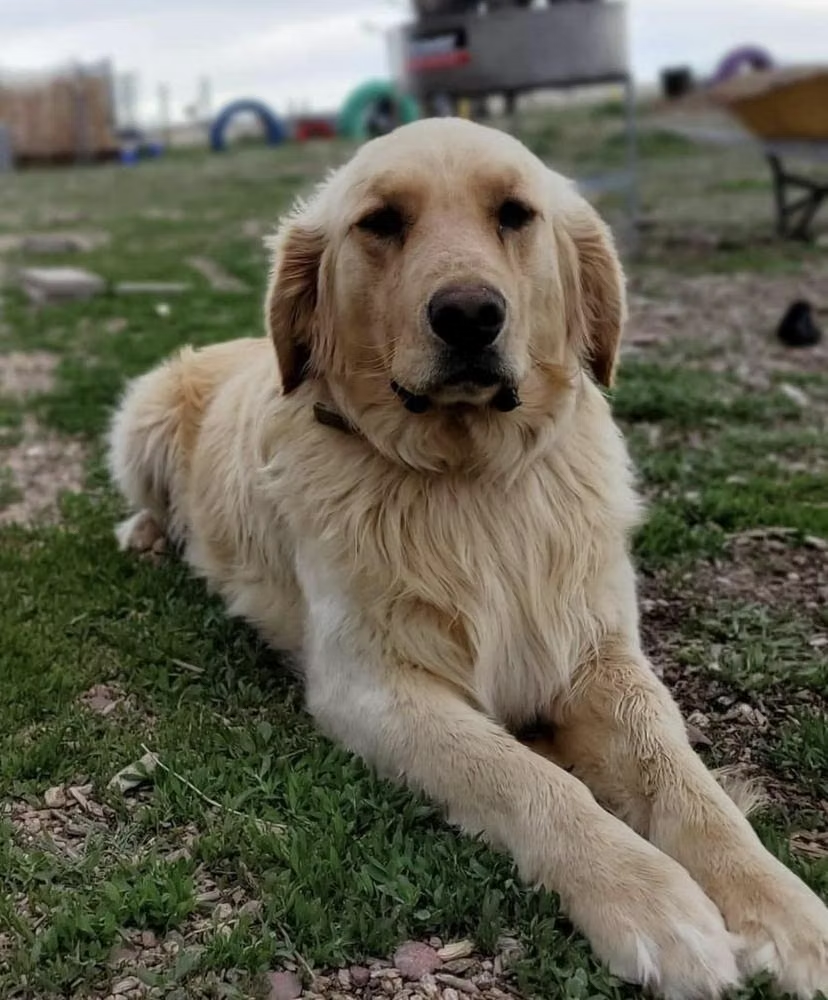
The Golden Retriever is a wonderful breed known for its friendly temperament and devotion to family.
How the Golden Retriever coat is built, and what that means when you groom it.
Critical: A Golden Retriever should not be shaved.
The undercoat keeps heat out as well as in, and the outer coat shields the skin from sun and insect bites. Clipping the whole coat off removes both. It often grows back patchy, soft or a different colour, and in some animals the guard hairs never return properly. Brush the undercoat out instead of cutting it off.
Caution: A Golden Retriever coat mats easily.
Fine or long hair tangles at the base of the coat, out of sight, where the mats tighten and pull on the skin. Brushing has to reach right down to the roots in sections, not just skim the surface.
Information: A Golden Retriever drops its undercoat in heavy bursts.
The undercoat comes out in heavy bursts over a few weeks. An undercoat rake, or a bath followed by a proper blow-dry, clears it far faster than daily brushing. Clipping the coat down is not a shortcut for this.
A few of the Golden Retriever profiles members have added to United Pet Club.
The Golden Retriever is a medium-to-large gun dog from Scotland, bred to retrieve shot waterfowl. Adults weigh 25 to 34 kg, carry a dense golden double coat, and rank among the most trainable breeds registered with the Philippine Canine Club Inc.
In the Philippines, the Golden Retriever is one of the most sought-after large breeds, popular in Metro Manila subdivisions and in provincial homes alike. Bred originally in 19th-century Scotland to retrieve waterfowl, it now serves mainly as a family companion, a guide dog, and an assistance dog. The dense golden or cream double coat, built for wet Scottish terrain, presents a real management challenge in the country's heat and humidity.
Most adults stand between 51 and 61 cm at the shoulder and weigh roughly 25 to 34 kg, around 55 to 75 pounds. The coat is water-repellent with feathering along the chest, legs, underside, and tail. Purebred dogs registered with the Philippine Canine Club Inc (PCCI) fall under the Sporting group.
| Attribute | Detail |
|---|---|
| Origin | Scotland (developed mid-to-late 1800s) |
| Size | Medium to large, 25 to 34 kg |
| Lifespan | 10 to 12 years |
| Group / role | PCCI Sporting Group (retriever) |
| Good with | Children, other dogs, and most household pets |
This is a dog that needs daily outdoor activity, consistent grooming, and near-constant company. It does not do well left in a backyard or garage while the household is out, and can become destructive when bored or lonely. First-time owners can manage the breed if they are ready for heavy shedding, daily brushing during molting periods, and the cost of aircon or cooling arrangements suited to our climate. People who want a low-maintenance pet, or a guard dog, should look elsewhere.
The breed was developed in Scotland in the late 1800s by Dudley Marjoribanks, later Lord Tweedmouth, using a yellow Retriever crossed with the now-extinct Tweed Water Spaniel. Detailed estate breeding records survive from that period.
The records are unusually detailed for a 19th-century breeding program. Dudley Marjoribanks, who later became Lord Tweedmouth, kept stud books at his estate Guisachan in the Scottish Highlands from roughly 1840 to 1890. These documents trace the breed's foundation from a single pairing: a yellow wavy-coated Retriever named Nous and a Tweed Water Spaniel named Belle.
The Tweed Water Spaniel is now extinct. It was a regional water dog from the Scottish Borders that passed on swimming ability and a gentle mouth to the new line. Later crossings added more Tweed Water Spaniel, Irish Setter, and Bloodhound. The target was a dog tough enough for Scottish shooting estates, able to retrieve from both water and rough upland terrain without damaging the game.
The breed first appeared in British dog shows around 1908, and The Kennel Club recognized it as a distinct breed in 1913 under the name Retriever (Golden or Yellow). Recognition spread through the 20th century. By the time the breed reached Asia it was already established as both a working dog and a companion, and it has been registered with the PCCI ever since.
A well-balanced, medium-to-large dog with a dense water-repellent double coat in shades of gold or cream. Males stand 56 to 61 cm and weigh 29 to 34 kg; females are 51 to 56 cm and 25 to 32 kg.
The body is slightly longer than it is tall, with a deep chest, a level topline, and a tail carried level or with a mild upward curve, never curled over the back. The head is broad with a straight muzzle and an open, friendly expression. Medium ears hang close to the cheeks, set roughly at eye level.
Three informal types exist: American, British (English), and Canadian. They are not separate breeds. British-type dogs, which are more common in PCCI-registered lines, tend to be stockier with paler, creamier coats. American-type dogs are often slightly taller with a deeper gold color.
| Trait | Detail |
|---|---|
| Height | Males 56 to 61 cm; females 51 to 56 cm at the withers |
| Weight | Males 29 to 34 kg; females 25 to 32 kg |
| Coat | Dense double coat, water-repellent, with feathering; flat or wavy outer coat |
| Colors | Any shade of gold or cream; some white on the chest is permitted by some standards |
| Eyes | Medium to dark brown, set well apart, with dark rims |
The coat has two layers: a soft, dense undercoat and a firmer outer coat that sheds water. Colors run from pale cream to deep gold. Red or mahogany coats and very pale, near-white coats fall outside the accepted range in most standards, though they still occur. The feathering on the legs and chest is often a shade lighter than the body.
In the Philippine climate, the dense undercoat is the primary care challenge. Goldens shed year-round, and owners in Metro Manila typically notice loose hair on furniture and floors at every season, not just during transitional months.
Friendly, tolerant, and strongly people-oriented, Golden Retrievers get along with children, strangers, and other animals. They are highly trainable but need daily activity and consistent company, and they do not settle well when left alone for long stretches.
The breed's attachment to people is both its defining trait and its main management challenge in a busy household. A Golden left alone in a backyard or utility area while the family is out can develop separation-related behaviors: chewing, digging, or prolonged barking that disturbs neighbors in a closely built subdivision.
With the family present, the temperament is steady and warm. The breed is affectionate with its people and usually patient with children, though supervision is sensible whenever a large, excited dog is around young kids. Goldens greet strangers with enthusiasm rather than suspicion, which makes them poor guard dogs. They generally do well with other dogs and with cats they have grown up alongside.
Intelligence and a genuine drive to cooperate with people make the breed effective as guide and assistance dogs. Goldens keep a playful, juvenile manner through most of their first three years and retain a strong instinct to carry objects. A young Golden without a job or structured activity will find its own entertainment, usually at the expense of your furniture.
| Trait | Rating |
|---|---|
| Affection | 5 |
| Energy | 4 |
| Trainability | 5 |
| Vocalness | 2 |
| Shedding | 5 |
The tropical climate makes heat management and ear care the top priorities for Golden owners in the Philippines. Beyond that, the breed needs regular brushing, one to two hours of daily exercise, and consistent human company.
The dense double coat was designed for cold, wet Scotland. In the Philippines, it means the dog overheats faster than most breeds and needs active cooling. Keep the dog indoors with aircon or good ventilation during the hottest parts of the day, typically late morning to mid-afternoon. Never leave a Golden outside without shade and constant access to fresh water.
Avoid hard exercise between 10 AM and 4 PM. Early morning walks or evening runs after the heat breaks are better timed. During typhoon season from June to November, have a plan for evacuating or securing the dog if you live in a flood-prone area. A large, energetic dog is difficult to manage in an emergency if it has not been crate-trained.
The breed adapts to house living and to a condominium unit if it gets enough outdoor exercise. A fenced yard in a subdivision is useful but not a requirement.
Year-round shedding and the humid climate make routine grooming non-negotiable.
Goldens need substantial daily activity regardless of the weather.
Golden Retrievers do well on a complete, balanced dog food given in measured meals twice a day. The breed gains weight easily, which is a particular concern here where heat can limit outdoor exercise, so portions must be controlled.
A complete and balanced commercial dog food suited to the dog's life stage is the practical baseline for most owners here. Dry kibble, wet food, or a vet-approved fresh diet are all options. Adults are fed twice a day in measured portions. The breed is prone to obesity, and Philippine heat tends to reduce how much outdoor exercise a dog realistically gets during hot months, which compounds the risk. Free-feeding is not recommended.
For puppies, large-breed formulas with controlled calcium and energy density support steady bone growth and reduce strain on developing joints. Local pet stores in Metro Manila and Cebu carry a range of imported and local brands, and a vet can advise on which suits your dog's weight and activity level.
| Life stage | Amount per day | Meals per day |
|---|---|---|
| Puppy (2 to 6 months) | About 1.5 to 3 cups, by weight and food | 3 to 4 |
| Puppy (6 to 12 months) | About 2.5 to 3.5 cups | 2 to 3 |
| Adult (1 to 7 years) | About 2 to 3.5 cups, by activity | 2 |
| Senior (7+ years) | About 2 to 3 cups, often fewer calories | 2 |
Treats should stay at or below 10 percent of the daily calorie total. Small pieces of plain cooked chicken, carrot sticks, or commercial low-calorie dog treats work well. Joint supplements with glucosamine and chondroitin are common among Golden owners, and omega-3 fatty acids are used for coat and joint support. Discuss any supplements with a vet before adding them; a dog eating a complete balanced diet usually does not need extras.
Golden Retrievers typically live 10 to 12 years. Ear infections and skin allergies are more frequent in the Philippine climate than in cooler countries. The breed also has above-average cancer rates and a known predisposition to hip and elbow dysplasia.
The humid tropical environment amplifies two of this breed's existing vulnerabilities: ear infections and skin allergies. Golden Retrievers already have drop ears that trap moisture, and Philippine humidity means the ear canal rarely dries out completely between baths or swims. Skin hot spots can develop quickly in warm, wet conditions. These are manageable with routine care but require more attention here than in a temperate climate.
Beyond the climate-sensitive conditions, cancer rates in the breed are notably higher than in most other breeds. Hemangiosarcoma and lymphoma are the most commonly reported types. Joint problems and eye disease are also inherited predispositions. Buying from PCCI-registered breeders who screen for hip, elbow, eye, and heart conditions reduces the likelihood of some of these problems.
| Condition | Signs | Note |
|---|---|---|
| Hip and elbow dysplasia | Limping, stiffness, reluctance to rise or jump | Inherited; screened by hip and elbow scoring schemes |
| Cancer (including hemangiosarcoma and lymphoma) | Lumps, weakness, weight loss, collapse | Higher incidence than in many breeds |
| Hereditary eye disease (cataracts, PRA) | Cloudy eyes, night blindness, bumping into objects | Detected by routine eye testing |
| Hypothyroidism | Weight gain, lethargy, coat and skin changes | Managed with daily medication |
| Ear infections (otitis) | Head shaking, odor, scratching at ears | Humidity increases risk; weekly ear cleaning is essential in the Philippines |
| Skin allergies (atopy) | Itching, redness, recurrent hot spots | Worsened by heat and humidity; often needs ongoing vet management |
Golden Retrievers are among the most trainable dog breeds. They respond well to reward-based methods, benefit from early socialization across noisy and busy environments, and can reach a high standard of obedience with consistent short sessions.
Few breeds are as straightforward to train as the Golden Retriever. The combination of intelligence, food motivation, and a genuine desire to cooperate with people is why the breed is used extensively as a guide dog and service dog. Philippine owners have the same advantage, though the socialization challenge here is specific: a puppy needs exposure not only to people and other animals but to the conditions of urban Philippine life, including heavy traffic noise, tricycles, and the commotion of a crowded public market.
The main early-training hurdles are puppy excitability, a tendency to mouth everything, and the sheer energy of a young dog. Harsh corrections tend to make Goldens shut down rather than improve. Reward-based methods, using food and enthusiastic praise, work consistently well with this breed.
Golden Retrievers reach sexual maturity around 6 to 12 months but responsible breeders wait until about two years and complete health testing before breeding. Gestation is about 63 days and litters typically contain 6 to 10 puppies.
Sexual maturity arrives at roughly 6 to 12 months, but a dog that young is not ready to breed. Responsible breeders registered with the PCCI wait until around two years of age, when hip, elbow, eye, and heart screening can be completed properly. Females come into season about twice a year.
Gestation lasts approximately 63 days. Litters of 6 to 10 puppies are typical, though smaller and larger litters occur. The mother nurses the pups, with solid food introduction starting around three to four weeks. Puppies leave for their new homes at about eight weeks, after a first vet check, initial vaccinations, and worming.
What happens in those first eight weeks matters for temperament. Breeders who raise the litter inside the home, with regular exposure to people and everyday household sounds, produce puppies better prepared for family life. Ask to see the mother and the rearing environment before committing to a puppy.
| Metric | Value |
|---|---|
| Sexual maturity | About 6 to 12 months |
| Recommended breeding age | Around 2 years, after health testing |
| Seasons per year (female) | About 2 |
| Gestation | About 63 days |
| Average litter size | 6 to 10 puppies |
| Weaning age | Around 3 to 4 weeks (begins) |
| Age puppies leave for new homes | About 8 weeks |
The city vet office handles the RA 9482 paperwork; a free United Pet Club record is what a finder anywhere can actually search for your Golden Retriever.
A Golden Retriever that gets loose during a storm is identified by whatever record answers the scan, not by the barangay it came from. Give it a record that answers: your mobile number, the dog's photo, and his details, free for life with United Pet Club. Register your dog today and it is done for good.
The clinic's part ended with the implant; the tracing part is yours. File your Golden Retriever's 15-digit number with United Pet Club and every scan leads to your phone: free for life, all brands accepted, updates free every time your details change. Microchip registration plus a free account finishes the job.
Open a free United Pet Club account, add your Golden Retriever's details and a photo, then save the profile. It stays free for his whole life and sits alongside the city vet office registration RA 9482 requires.
Type the 15-digit chip number into your free account together with your mobile number and address. The lifetime plan charges nothing for the registration or for any update, whatever brand the clinic used.
Yes, RA 9482 requires dog registration with your city or municipal veterinary office, along with current anti-rabies vaccination. The United Pet Club profile is the searchable half: free, worldwide, and tied to your current mobile.
Nothing. The free lifetime plan covers the profile, the microchip record, and every update, with no renewal fees at all.
Answers to questions Filipino owners often ask about Golden Retriever size, heat tolerance, shedding, suitability with children, lifespan, and what ongoing care costs.
Adult males stand 56 to 61 cm at the shoulder and weigh 29 to 34 kg, roughly 64 to 75 pounds. Females are 51 to 56 cm and 25 to 32 kg. This is a medium-to-large breed and needs enough indoor space to move around comfortably.
Yes, but the dense double coat makes heat management essential. The dog should have access to a cool, ventilated space or aircon during the hottest hours of the day. Exercise is best scheduled for early morning or evening. With proper cooling and care, Goldens manage well here, though owners need to be more attentive to overheating than in cooler countries.
Yes. The double coat sheds continuously, and in the Philippine climate owners typically notice it year-round rather than in distinct seasonal peaks. Brushing two to three times a week is the minimum. Golden Retrievers are not suited to households where dog hair is a serious concern.
Generally yes. The breed is known for patience with children and usually gets along with other dogs and cats it has been raised alongside. Supervision is still important whenever a large, energetic dog is around young children, and both child and dog need to learn appropriate behavior around each other.
Most live 10 to 12 years. Keeping the dog at a healthy weight, staying current on veterinary care, and sourcing from health-tested PCCI-registered parents all reduce the risk of the breed's known conditions.
Purchase price from a PCCI-registered breeder with health-tested parents is higher than from an unregistered source. Ongoing costs include quality dog food for a large breed, regular grooming, veterinary check-ups, flea and tick prevention, and possibly professional grooming salon visits. Budget for these before deciding.
They are easy to train and have a cooperative temperament, but they are not low-maintenance. One to two hours of exercise a day, regular grooming, heat management, and consistent company are all required. A Golden left alone or understimulated for long periods will develop behavioral problems.