
The English Foxhound is a sociable, good-natured pack hound known for its stamina, tolerance, and harmonious nature with other dogs.
How the English Foxhound coat is built, and what that means when you groom it.
A few of the English Foxhound profiles members have added to United Pet Club.
The English Foxhound is a large, sociable English pack hound bred for stamina, and it remains a rare sight in Philippine backyards and show rings alike.
The English Foxhound is a big-boned scent hound that English hunters developed over hundreds of years to run fox in packs across open country. It is one of the oldest recognized hound breeds, built more for hours-long endurance than for working alone. A grown English Foxhound is athletic, well muscled, and clearly made to keep pace with a pack for long stretches at a run.
Temperament sets this breed apart. Life in a pack for generations bred out any tendency toward possessiveness or aggression, leaving a dog that is warm, easygoing, and happiest surrounded by company. An English Foxhound rarely bonds to just one person the way some breeds do; it wants companionship, canine or human, most of the day.
This is not a dog for a small condo unit or a short afternoon walk. The English Foxhound needs real running space and a task for its nose every day. It stays uncommon as a household pet in the Philippines and elsewhere, kept mostly by hunt clubs and working kennels, so anyone hoping to bring one home should expect a long search.
| Attribute | Detail |
|---|---|
| Origin | England |
| Size | Large |
| Lifespan | 10 to 13 years |
| Group / role | Hound, bred for pack hunting |
| Good with | Other dogs and pets, households with room to spare |
The English Foxhound suits owners who are active themselves and who have a securely fenced compound with room to move. It gets along well in multi-dog households, since its pack instinct runs deep. It is a poor match for condo living, for families often away the whole day, or for anyone hoping for a low-key, stay-at-home companion.
English hunters bred the English Foxhound from older hound stock to run fox in organized packs, and it became central to mounted foxhunting in England.
English breeders developed the English Foxhound purely to hunt fox on horseback. It traces back to older British scent hounds used for tracking game long before organized foxhunting became fashionable. As mounted hunts grew popular across the English countryside, breeders favored hounds that could hold a scent line at a full run and stay together as a working pack over open farmland.
Hunt masters logged their breeding lines meticulously, which is why the English Foxhound has one of the longest unbroken pedigree records among dog breeds. Selection favored nose, stamina, voice, and a steady, cooperative nature, since a hound had to work alongside dozens of others and a mounted field at the same time.
Breeders prized cooperation over independence. A foxhound that fought with its pack mates, ran off on its own, or fell behind the group was no use to a hunt, so temperament and physical soundness were bred for together, generation after generation.
British field sports carried the breed abroad and shaped related hounds, the American Foxhound among them. The English Foxhound still belongs mostly to working hunt kennels today, and in a country like the Philippines, where foxhunting has no tradition, the breed remains an import known only to a handful of hound enthusiasts and dog show followers.
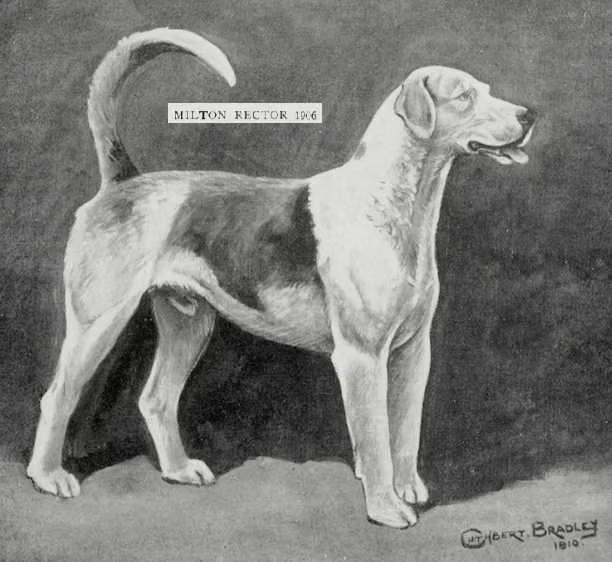
The English Foxhound is a large, athletic scent hound with a short weatherproof coat, straight legs, and the classic hound tricolor pattern.
The English Foxhound carries a clean, balanced build made for going the distance. The chest runs deep, the topline stays level, and the legs are straight and strong, ending in round, cat-like feet. The head is moderate in size with a long muzzle, and the ears hang close to the cheeks in classic hound style. Every line of the dog points to an athlete built to gallop for hours and bounce back quickly.
| Trait | Description |
|---|---|
| Height | About 58 to 64 cm (23 to 25 in) at the shoulder |
| Weight | About 29 to 34 kg (65 to 75 lb) |
| Coat | Short, dense, tough, and built to shrug off rough weather |
| Colors | Usually black, tan, and white (tricolor); tan and white or lemon and white also occur |
| Eyes | Medium sized, brown, with a soft, kind expression |
The coat lies short, dense, and tough enough to hold up in rough brush. It lays flat against the body and asks for little beyond regular brushing. In the Philippine climate this short coat is actually an advantage, since it sheds heat far better than a longer coat would, though owners still need to watch for heat stress during the hottest part of the day. The classic marking is hound tricolor, a mix of black, tan, and white, though tan and white or lemon and white turn up as well. The coat sheds steadily year round but stays easy to manage next to longer-coated breeds.
The English Foxhound is friendly, easygoing, and highly sociable, with a steady temper and strong tolerance for other dogs.
Few hounds match the even keel of the English Foxhound. Centuries spent working in packs bred a dog that is friendly, good natured, and at ease around company. It tends to be gentle with people and patient with kids, and outright aggression is rare.
Around strangers the breed usually stays relaxed instead of watchful, so it will not double as a guard dog. Around other dogs it is remarkably tolerant, a trait that comes straight from generations of pack life. Most English Foxhounds get along fine with other household pets too, though the hunting drive runs strong enough that small animals can set off a chase, and recall often fails the moment the nose takes over.
This is a busy, active dog that does not cope well with boredom or long stretches alone, something worth planning for given how many households leave dogs to themselves during work hours. It can be quite vocal, with the deep, carrying bay typical of pack hounds, which matters in a subdivision with close neighbors. Give it enough exercise and company, though, and the English Foxhound settles into a calm, easygoing housemate.
| Trait | Rating |
|---|---|
| Affection | 4 |
| Energy | 5 |
| Trainability | 3 |
| Vocalness | 4 |
| Shedding | 3 |
The English Foxhound needs heavy daily exercise and a secure yard, though its short coat keeps grooming straightforward.
Caring for an English Foxhound is mostly about exercise, not coat upkeep. The short, tough coat asks for very little, but the breed's stamina and drive call for a lot more than a quick walk around the block.
The English Foxhound thrives in a home with a large, securely fenced compound or provincial property with room to roam. Apartment living and long hours alone do not suit it. As a pack animal it needs steady company, canine or human, and a tall, sturdy fence matters more than almost anything else, because a hound that catches a scent will follow it wherever it leads, typhoon season mud and all.
As a large, active hound, the English Foxhound needs a complete diet matched to its energy output, served in measured meals to prevent bloat.
The English Foxhound is a big, hardworking breed, and its feeding plan should match a high energy output during active periods. Choose a complete, balanced food made for large or active dogs, and adjust portions to the individual dog's workload, age, and body condition. A working hound during hunting season eats considerably more than that same dog resting in the off season. Keep fresh water available at all times, especially given how much a dog can lose to the heat.
| Life stage | Amount per day | Meals |
|---|---|---|
| Puppy (2 to 6 months) | Per product guide for projected adult weight | 3 to 4 |
| Adolescent (6 to 12 months) | Slightly above adult maintenance | 2 to 3 |
| Adult (active) | About 3 to 4 cups of quality dry food | 2 |
| Adult (resting / senior) | Reduced to maintain lean weight | 2 |
Keep treats to around 10 percent of daily calories, and put them to work during training and scent games. Most English Foxhounds on a complete diet do not need extra supplements. Talk to a veterinarian about joint support or any other additions, particularly for working dogs or older hounds. Split the daily ration into two meals, and skip hard exercise right after eating, since this deep-chested breed runs a real risk of bloat.
The English Foxhound is generally hardy, typically living 10 to 13 years, though hip dysplasia and bloat are conditions worth watching.
The English Foxhound comes from working stock and is generally a healthy breed. Its typical lifespan runs 10 to 13 years. Being large and deep chested, it carries some of the same risks common to that build, and responsible breeders screen for the conditions known to affect hounds.
| Condition | Signs | Note |
|---|---|---|
| Hip dysplasia | Stiffness, limping, reluctance to get up | Joint malformation; manage weight and screen breeding stock |
| Bloat (gastric torsion) | Swollen belly, retching, visible distress | An emergency in deep-chested dogs; get to a vet immediately |
| Ear infections | Head shaking, bad smell, scratching | Drooping ears trap moisture, especially in humid weather; clean and check often |
| Renal disease | More thirst than usual, weight loss | Reported in some hound lines; keep an eye on older dogs |
The English Foxhound is bright and willing but independent and scent-driven, and it responds best to patient, consistent, reward-based training.
The English Foxhound is intelligent and was bred to work closely alongside a pack and its handlers, which gives it a genuinely cooperative side. It is not, though, the type to chase ribbons in an obedience ring. Breeders selected it to follow a scent with real persistence, so once a trail turns up it can look stubborn or checked out. Training calls for patience and consistency, and results come fastest when owners start young and keep sessions short and rewarding. Recall is the hardest skill to lock in, because a tracking hound will pick the trail over a command almost every time.
English Foxhound breeding has long been managed by hunt kennels with careful pedigree records, producing moderate litters raised within a pack.
Hunts and working kennels have traditionally controlled English Foxhound breeding, keeping detailed pedigrees and selecting for stamina, nose, voice, and sound temperament. Females reach sexual maturity within the first year, but responsible breeders wait until a bitch is physically mature, usually around two years old, before her first litter, and they confirm health and structural soundness beforehand.
Gestation runs the usual canine span of roughly 63 days. Litters tend to run moderate to large for the dog's size. Puppies are typically raised within a pack setting, which reinforces the breed's strong tolerance of other dogs from a young age. Early handling and exposure to people and ordinary household sights and sounds help puppies destined for companion homes adjust away from kennel life.
Since the breed stays uncommon outside hunting circles, and virtually unknown as a companion breed locally, sourcing a well-bred puppy can take real time. Prospective owners should expect to deal directly with established kennels, most of them abroad, confirm that the breeding stock has been properly health screened, and sort out import and quarantine requirements well in advance.
| Metric | Value |
|---|---|
| Sexual maturity | Within the first year |
| Recommended breeding age (female) | About 2 years |
| Gestation | About 63 days |
| Typical litter size | Around 5 to 9 puppies |
| Weaning | About 6 to 8 weeks |
The city vet office handles the RA 9482 paperwork; a free United Pet Club record is what a finder anywhere can actually search for your English Foxhound.
An English Foxhound that gets loose during a storm is identified by whatever record answers the scan, not by the barangay it came from. Give it a record that answers: your mobile number, the dog's photo, and his details, free for life with United Pet Club. Register your dog today and it is done for good.
The clinic's part ended with the implant; the tracing part is yours. File your English Foxhound's 15-digit number with United Pet Club and every scan leads to your phone: free for life, all brands accepted, updates free every time your details change. Microchip registration plus a free account finishes the job.
Open a free United Pet Club account, add your English Foxhound's details and a photo, then save the profile. It stays free for his whole life and sits alongside the city vet office registration RA 9482 requires.
Type the 15-digit chip number into your free account together with your mobile number and address. The lifetime plan charges nothing for the registration or for any update, whatever brand the clinic used.
Yes, RA 9482 requires dog registration with your city or municipal veterinary office, along with current anti-rabies vaccination. The United Pet Club profile is the searchable half: free, worldwide, and tied to your current mobile.
Nothing. The free lifetime plan covers the profile, the microchip record, and every update, with no renewal fees at all.
Frequent questions dog owners ask about the English Foxhound cover its size, temperament, upkeep, lifespan, and how hard it is to find locally.
It is a large breed, standing about 58 to 64 cm (23 to 25 in) at the shoulder and weighing roughly 29 to 34 kg (65 to 75 lb).
Yes. It is friendly, good natured, and very sociable. Bred for pack life, it tolerates other dogs well and stays gentle with people, though it makes a poor guard dog.
Grooming itself is easy thanks to the short coat, but the breed needs heavy daily exercise and a secure compound, which makes it demanding for owners short on time or space.
The typical lifespan runs 10 to 13 years, and the breed is generally hardy.
It can be, in an active household with space and, ideally, other dogs around. It suits apartments, long working hours alone, or a quiet low-energy setup far less well.
Nowhere easily. The breed is rare as a pet and stays mostly with hunts and working kennels abroad, so getting a companion puppy usually means working directly with an established breeder and sorting out import and quarantine requirements.
Only inside a fully enclosed area. Once it picks up a scent, its recall becomes unreliable, so a secure fence and a leash in open spaces are non-negotiable.



![Willful [Foxhall Keene], a Female English Foxhound registered with United Pet Club](https://media.unitedpetclub.com/m/DN4cWM1Xx1/willful-foxhall-keene-english-foxhound_orig.avif "Willful [Foxhall Keene] — English Foxhound")

![Luddington [English Staghound] Capt. E. A. V. Stanl, a Male English Foxhound registered with United Pet Club](https://media.unitedpetclub.com/m/8nHr9mXXm7/luddington-english-staghound-capt-e-a-v-stanl-english-foxhound_orig.avif "Luddington [English Staghound] Capt. E. A. V. Stanl — English Foxhound")
![Talisman [English Staghound] Capt. E. A. V. Stanley, a Male English Foxhound registered with United Pet Club](https://media.unitedpetclub.com/m/gzkwpO74xy/talisman-english-staghound-capt-e-a-v-stanley-english-foxhound_orig.avif "Talisman [English Staghound] Capt. E. A. V. Stanley — English Foxhound")


