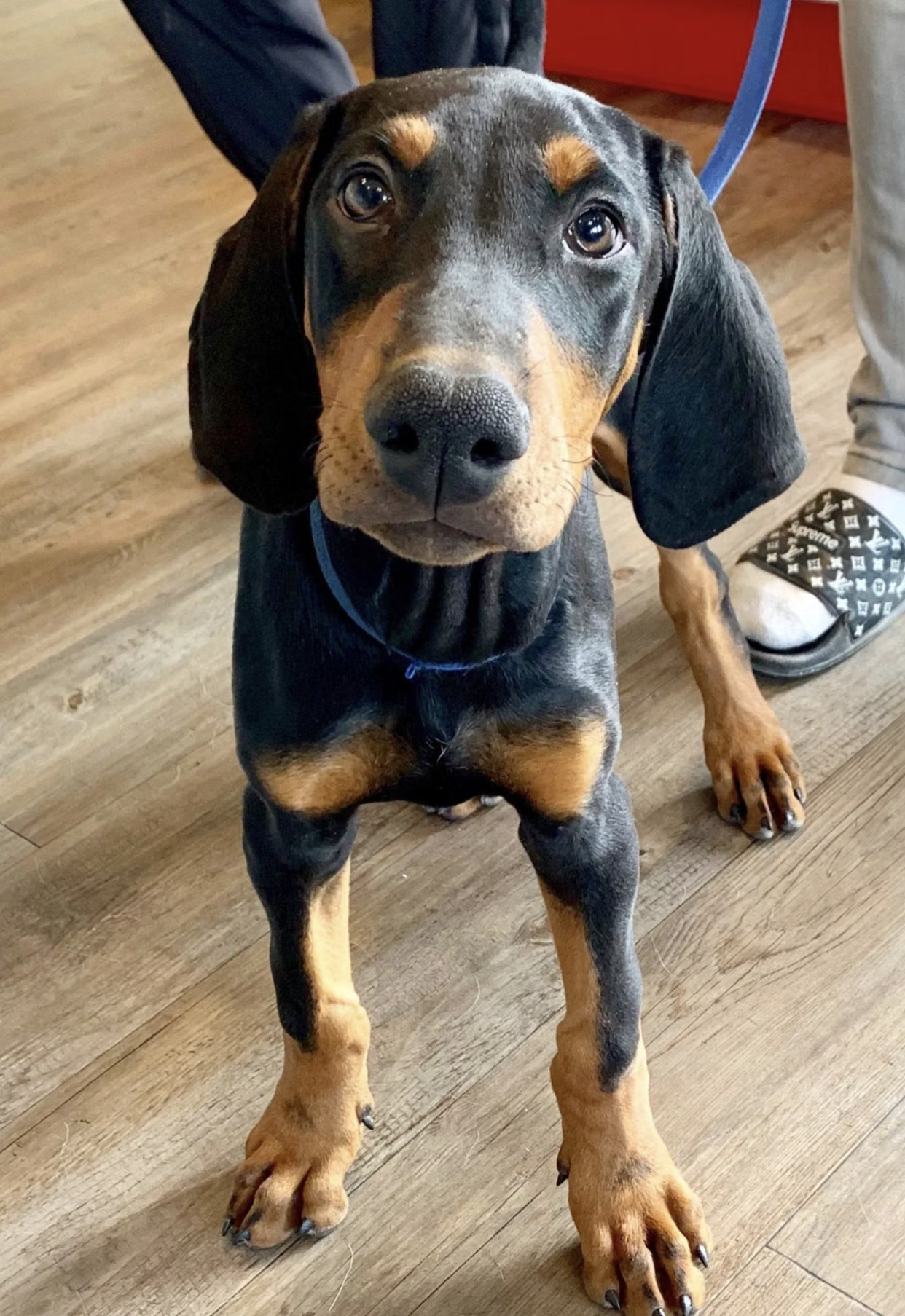
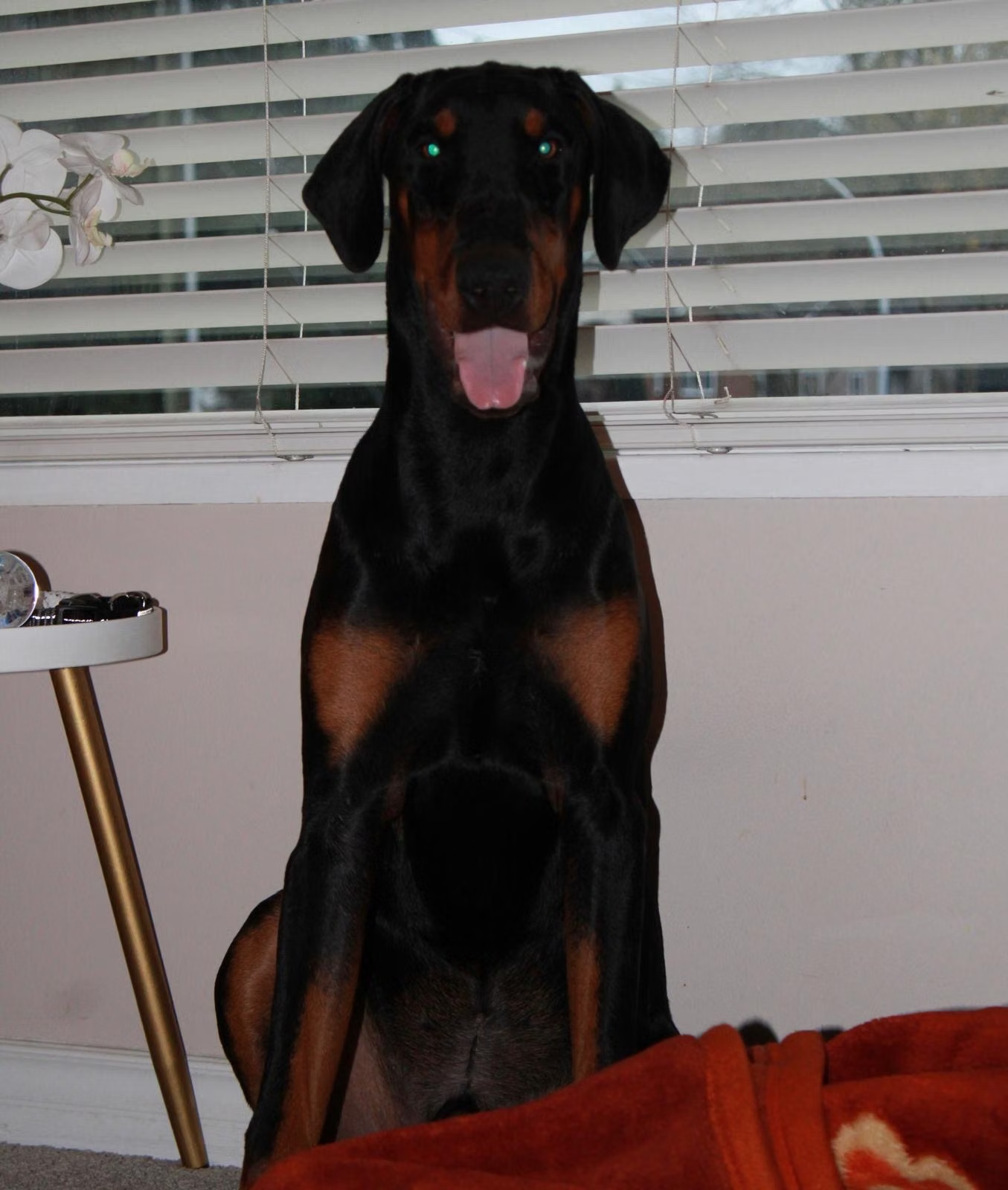
The Doberman Pinscher is a loyal, intelligent breed renowned for its alertness, elegance, and fearless devotion as a guardian.
How the Doberman Pinscher coat is built, and what that means when you groom it.
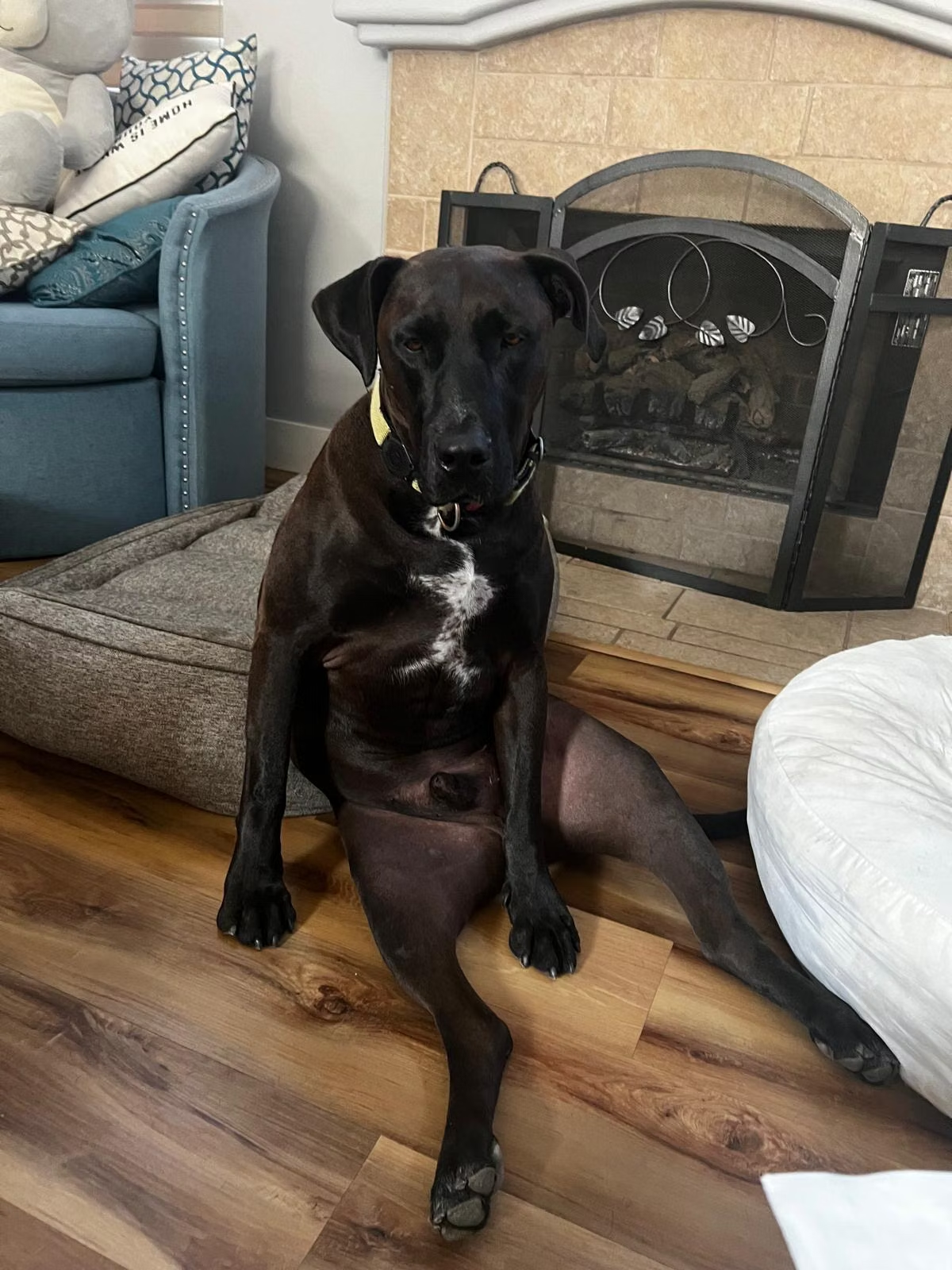
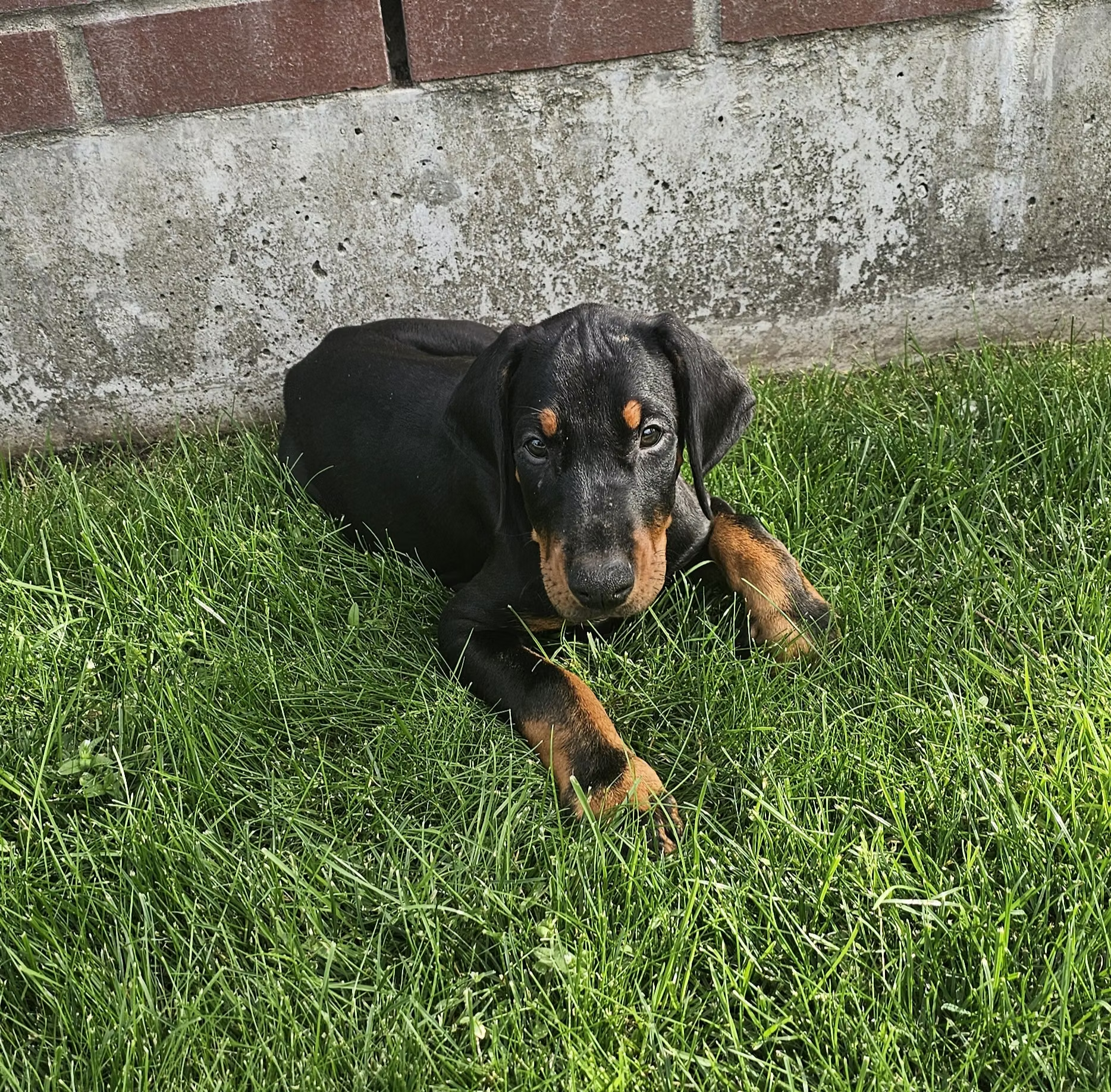
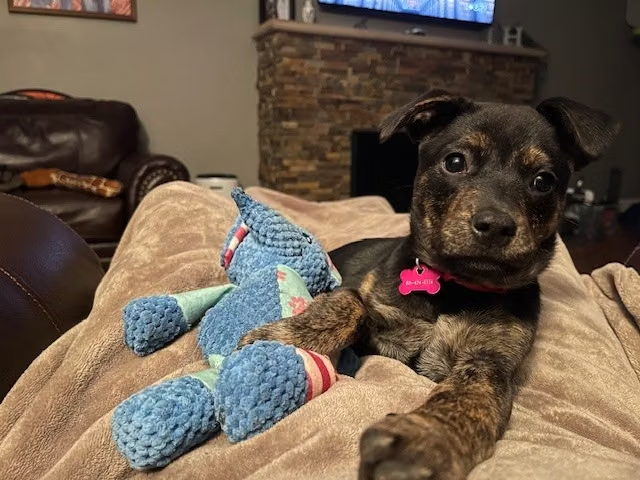
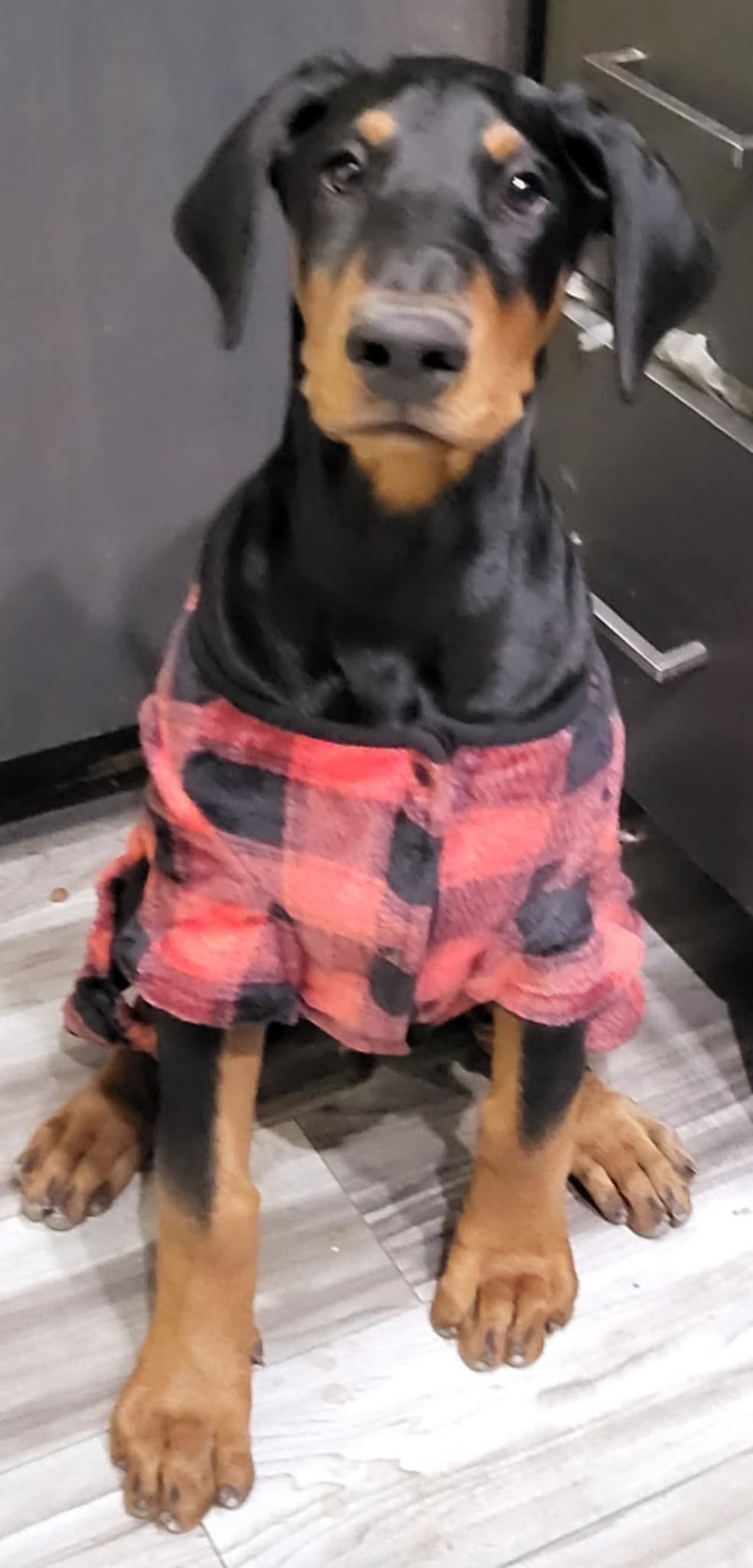
A few of the Doberman Pinscher profiles members have added to United Pet Club.
The Doberman Pinscher is a large, athletic German working breed weighing 27 to 45 kilograms, recognized by the Philippine Canine Club Inc (PCCI), and prized for its trainability, close family loyalty, and natural protective instinct.
In the Philippines, the Doberman Pinscher draws committed owners who want a working dog that is also a close family companion. Adults weigh between 27 and 45 kilograms and stand 61 to 71 centimeters at the shoulder, with males consistently larger than females. The build is compact and muscular, with a confident bearing that reflects a dog bred for sustained physical and mental work.
This breed forms a tight bond with its household. It gravitates toward the people it lives with, stays nearby indoors, and reads cues from its owner closely. That attentiveness is both what makes the Doberman a natural guardian and what makes it poorly suited to long hours alone. Without companionship and daily engagement, the breed's energy and focus turn into problems at home.
Trainability is a genuine strength. The Doberman learns fast, retains what it learns, and maintains concentration through extended sessions. That quality is part of why it performs well in obedience, protection sport, and tracking, and why it needs an owner who takes training seriously from the start.
| Attribute | Detail |
|---|---|
| Origin | Germany |
| Size | Large (27 to 45 kg) |
| Lifespan | 10 to 13 years |
| Group / role | Working breed; guardian and companion |
| Good with | Active, experienced owners; families with older children; other pets when socialized early |
This breed fits someone who is at home consistently, enjoys training, and can commit one to two hours each day to the dog's exercise and mental work. It does poorly in households where it would spend long periods unsupervised, and it is not the right choice for someone who wants a low-maintenance pet. The return on the investment is a steady, highly capable dog.
The Doberman Pinscher was bred in Apolda, Germany, during the 1880s by Karl Friedrich Louis Dobermann, a tax collector who combined dogs from several working breeds to create a capable personal protection dog, with the type refined by later breeders after his death in 1894.
Apolda is a small town in what is now the German state of Thuringia. In the 1880s, Karl Friedrich Louis Dobermann lived and worked there as a tax collector, a job that required him to travel with money and made him a target. He also ran the local dog pound, which gave him direct access to a wide range of working dogs. He used that access to develop a breed suited to his needs: alert, physically capable, and willing to work alongside a person over long hours.
Because Dobermann kept no detailed breeding records, the exact crosses he used are not documented. Historians trace probable contributions from the old German Pinscher, the Rottweiler, the Black and Tan Terrier, and regional herding dogs. His priority was character and working ability, not a stable physical type. After Dobermann's death in 1894, Otto Goeller led efforts to fix the breed's appearance and work toward formal recognition, which was granted in Germany before the century ended.
The breed spread internationally in the early 1900s. Both World Wars drew heavily on Dobermans as messenger dogs, sentries, and scouts. Their service during those conflicts reinforced selection for trainability, calm nerve under pressure, and physical endurance, and also shaped the breed's reputation in countries far beyond Europe.
The Doberman Pinscher is a square, muscular dog with a short coat in black, red, blue, or fawn with rust markings, with males standing 66 to 71 cm and females 61 to 66 cm at the shoulder.
The Doberman's body is square in outline: height at the shoulder roughly equal to body length. The chest is deep, the topline level, and the musculature clearly visible under the coat. The head is long and wedge-shaped, held on an arched neck, and the overall impression is of a powerful animal without heaviness or bulk.
| Trait | Description |
|---|---|
| Height | Males 66 to 71 cm; females 61 to 66 cm |
| Weight | 27 to 45 kg |
| Coat | Short, smooth, hard, close to the body |
| Colors | Black, red, blue, or fawn, each with rust markings |
| Eyes | Almond-shaped; dark in black and red dogs |
The short coat lies flat against the skin and reveals the dog's physical condition clearly. All four recognized colors carry rust-colored markings in fixed positions: above the eyes, on the muzzle, throat, chest, legs, and feet. The contrast between the base color and the markings is typically sharp and well-defined.
Some Dobermans are born with natural floppy ears and a full-length tail. Ear cropping and tail docking are practiced by some Philippine breeders, but neither is required for registration with the Philippine Canine Club Inc. Dogs in the natural form are common and seen regularly at PCCI conformation events.
The Doberman Pinscher is closely attached to its family, watchful and reserved with strangers, and protective by nature, with a steady temperament that depends on quality breeding and early, consistent socialization.
Watchfulness is constant in this breed. The Doberman monitors its environment closely, reads the people around it, and tracks changes with obvious attention. With family it is warm and present, often following household members from room to room. With strangers it tends toward reserve, observing before warming up, and usually takes a cue from its owner about whether the person is welcome.
For Philippine owners who want a dog with practical guardian value, the Doberman's combination of discrimination and reliability is a significant draw. It does not bark at everything or escalate without cause, but it responds clearly when something genuinely requires it. That steadiness comes from genetics and from how the dog is raised. Early socialization with varied people, environments, and other animals is not optional for a stable adult temperament.
With other dogs and pets the Doberman generally does well when introduced young. Some same-sex pairings need management. With children in its own household, the breed is typically patient when raised alongside them, though its size makes supervision necessary with very young children.
| Trait | Rating |
|---|---|
| Affection | 5 |
| Energy | 5 |
| Trainability | 5 |
| Vocalness | 3 |
| Shedding | 2 |
The Doberman needs minimal coat maintenance but significant daily exercise and mental work, and in the Philippine climate its routine must account for heat, humidity, and the practical disruptions of typhoon season.
The Doberman's thin coat and low body fat provide no buffer against heat. In the Philippines, where temperatures are high year-round, this means the dog must live indoors with aircon access during the hottest part of the day. Keeping the dog in an outdoor kennel or yard cage, even with shade and water, carries real risk of heat stress and is unsuitable for this breed.
Brownouts are a practical concern: when the aircon goes down, identify the coolest room in the house and move the dog there with water. Typhoon season runs from June to November and brings elevated humidity on top of the usual heat. Any household evacuation plan should include the dog. Identify in advance where the dog can go if an evacuation order is issued, and prepare a bag with its essentials.
A Doberman needs a complete diet formulated for large, active breeds, with daily portions split into at least two meals to reduce the risk of bloat, and constant access to fresh water.
Choose a complete and balanced food designed for large, active breeds, with quality protein as the primary ingredient to support the breed's muscle mass. Adjust the daily amount to keep the dog lean: you should be able to feel the ribs easily without pressing hard. Because the Doberman is deep-chested and at risk of gastric dilatation-volvulus (bloat), split the daily ration into at least two meals and avoid vigorous exercise for at least an hour on either side of feeding. Fresh water must be available at all times, especially in Philippine heat.
| Life stage | Amount per day | Meals |
|---|---|---|
| Puppy (2 to 6 months) | Per label, growth formula | 3 to 4 |
| Adolescent (6 to 12 months) | Per label, adjust to body condition | 2 to 3 |
| Adult | Roughly 280 to 450 g dry food, by size and activity | 2 |
| Senior | Reduced to maintain healthy body weight | 2 |
Limit treats to roughly 10 percent of daily calories to avoid disrupting the diet balance. Most Dobermans on a complete commercial food do not require supplements. A vet may recommend joint support for older dogs or those in intensive sport work. Introduce any new food over at least a week to prevent digestive upset.
The Doberman Pinscher lives 10 to 13 years on average and carries an above-average inherited risk of dilated cardiomyopathy, the leading cause of premature death in the breed, making annual cardiac screening and health-tested parents both important.
Dilated cardiomyopathy (DCM) is the condition that most directly shortens the Doberman's life. It is a progressive disease of the heart muscle that affects a large proportion of the breed and is the primary reason the typical lifespan of 10 to 13 years is often not reached. Buying a puppy from health-tested parents lowers the risk but does not eliminate it, because DCM can appear even in screened lines.
Cardiac specialists and echocardiogram services are concentrated in Metro Manila and Cebu. Owners in provincial areas may need to plan annual trips to a specialist clinic for proper cardiac monitoring.
| Condition | Signs | Note |
|---|---|---|
| Dilated cardiomyopathy | Weakness, fainting, coughing, sudden collapse | Primary cause of breed mortality; requires echocardiogram and Holter monitoring |
| Von Willebrand disease | Excessive bleeding, slow clotting | Inherited clotting disorder; DNA test available |
| Hip dysplasia | Stiffness, limping, difficulty getting up | Select from hip-tested parents |
| Hypothyroidism | Weight gain, coat changes, low energy | Managed with daily medication |
| Gastric dilatation-volvulus (bloat) | Swollen belly, unproductive retching, distress | Emergency condition; deep-chested dogs at higher risk |
The Doberman is one of the most trainable breeds, learning commands quickly and retaining them, but it needs early socialization, consistent handling, and an engaged owner to channel its energy productively.
The Doberman is frequently placed alongside the German Shepherd Dog and Belgian Malinois as one of the most capable working breeds to train. It picks up commands quickly, applies what it learns across new situations, and stays engaged through sessions that would bore slower breeds. That capacity cuts in both directions: a bored or inconsistently handled Doberman finds its own occupations just as efficiently as it learns what is asked of it.
The breed responds best to a handler who is calm, clear, and consistent. Harsh correction tends to produce anxiety or resistance rather than compliance. Reward-based methods, using food, play, or praise, are both effective and good for the bond. Socialization is part of training: a puppy that meets a wide range of people, environments, sounds, and animals before four months of age becomes an adult that handles those things without excessive reaction.
Responsible Doberman breeders in the Philippines wait until dogs are around two years old and have passed cardiac, von Willebrand, and hip evaluations before mating, with litters typically producing six to eight puppies after a 63-day gestation.
Sexual maturity arrives between 6 and 12 months, but a responsible breeder does not use a dog in a breeding program until it is physically and mentally mature, generally around 2 years old. By that point, the dog can complete the evaluations the breed requires: cardiac screening for dilated cardiomyopathy, DNA testing for von Willebrand disease, and hip assessment. Breeders operating under the Philippine Canine Club Inc framework follow breed standards and are expected to share health clearances with buyers.
Females cycle roughly twice a year. Gestation runs approximately 63 days after mating. Litters of six to eight puppies are typical, though numbers vary. The dam usually whelps without intervention, but the breeder should remain present and have a veterinarian on call if labor stalls or a puppy needs assistance.
Newborns nurse from the dam for the first few weeks. Gradual weaning begins around 3 to 4 weeks. The socialization that happens between birth and 8 weeks, including early handling, exposure to household noise, and contact with people, shapes the adult dog's confidence. Puppies go to new homes at 8 weeks at the earliest.
| Metric | Value |
|---|---|
| Sexual maturity | 6 to 12 months |
| Recommended breeding age | About 2 years |
| Gestation | About 63 days |
| Average litter size | 6 to 8 puppies |
| Weaning | Around 3 to 7 weeks |
| Leave for new home | 8 weeks or later |
The city vet office handles the RA 9482 paperwork; a free United Pet Club record is what a finder anywhere can actually search for your Doberman Pinscher.
A Doberman Pinscher that gets loose during a storm is identified by whatever record answers the scan, not by the barangay it came from. Give it a record that answers: your mobile number, the dog's photo, and his details, free for life with United Pet Club. Register your dog today and it is done for good.
If a vet has already implanted a chip, the number still has to be filed where a scanner can trace it, because an unfiled chip points at nobody. Register the microchip free on the lifetime plan: any brand sold in the Philippines qualifies, updates after you move house or change SIM cost nothing, and the record stays searchable here and abroad. Create your free account and cover both in one go.
Open a free United Pet Club account, add your Doberman Pinscher's details and a photo, then save the profile. It stays free for his whole life and sits alongside the city vet office registration RA 9482 requires.
Type the 15-digit chip number into your free account together with your mobile number and address. The lifetime plan charges nothing for the registration or for any update, whatever brand the clinic used.
Yes, RA 9482 requires dog registration with your city or municipal veterinary office, along with current anti-rabies vaccination. The United Pet Club profile is the searchable half: free, worldwide, and tied to your current mobile.
Nothing. The free lifetime plan covers the profile, the microchip record, and every update, with no renewal fees at all.
Common questions from Philippine owners about the Doberman Pinscher cover its size, suitability in tropical conditions, health risks, training needs, and how to source a puppy responsibly.
It is a large breed. Males typically stand 66 to 71 centimeters at the shoulder and females 61 to 66 centimeters, with weight from 27 to 45 kilograms depending on sex and build.
Yes, with the right setup. The breed has a short coat and very little body fat, so it does not tolerate sustained outdoor heat well. It must have indoor access with aircon during the hottest hours of the day. Outdoor walks should be scheduled early morning or evening.
For a family with experience owning dogs and the time to train and exercise the breed properly, yes. It bonds closely with its household and is generally gentle with children it is raised with. Families with very young children should supervise interactions given the dog's size.
Dilated cardiomyopathy is the most serious concern. It is a progressive heart muscle disease that affects a large proportion of the breed and is the main cause of premature death. Annual cardiac screening, including echocardiogram and Holter monitoring, is recommended starting from around two years of age.
Daily training is not just beneficial but necessary for this breed. Short sessions of five to fifteen minutes, repeated consistently, produce a well-mannered and reliable dog. The Doberman is one of the most trainable breeds, but that intelligence needs direction; without it the dog channels its energy in undesirable ways.
Yes. The Philippine Canine Club Inc (PCCI) is the national kennel club and registers Doberman Pinschers from documented lineage. When buying a puppy, PCCI papers indicate the dog's recorded pedigree. Ask for health testing records alongside papers, because registration and health testing are separate matters.
The dog's indoor living requirement fits condo life, but the exercise requirement takes more planning. A Doberman needs 1 to 2 hours of activity daily, and a condo owner without easy access to a secure outdoor space will need to plan carefully. Committed daily outings at safe times and mental engagement at home can work, but it requires real effort.