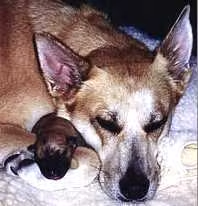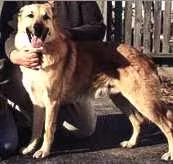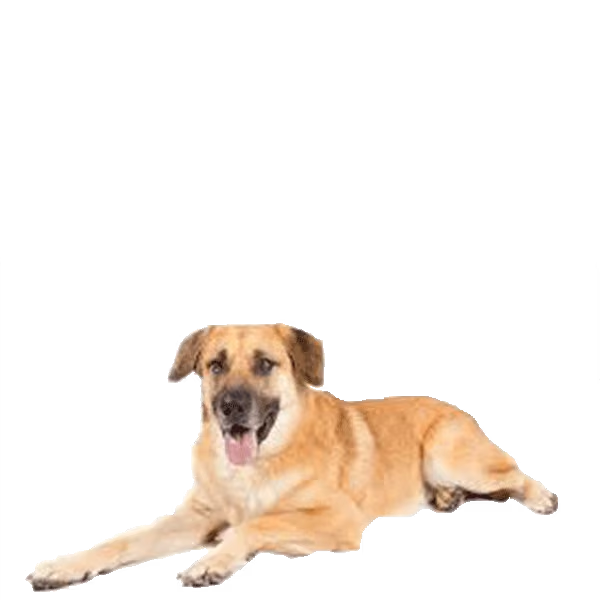
The Chinook is a devoted, hardworking American sled dog known for its gentle temperament and steady, willing nature.
How the Chinook coat is built, and what that means when you groom it.
Critical: A Chinook should not be shaved.
The undercoat keeps heat out as well as in, and the outer coat shields the skin from sun and insect bites. Clipping the whole coat off removes both. It often grows back patchy, soft or a different colour, and in some animals the guard hairs never return properly. Brush the undercoat out instead of cutting it off.
Information: A Chinook drops its undercoat in heavy bursts.
The undercoat comes out in heavy bursts over a few weeks. An undercoat rake, or a bath followed by a proper blow-dry, clears it far faster than daily brushing. Clipping the coat down is not a shortcut for this.
A few of the Chinook profiles members have added to United Pet Club.
The Chinook is a medium-sized sled dog from the United States, calm and devoted, built to pull loads and stay close to its family.
The Chinook is a medium-sized working dog developed in the United States as a sled-pulling and family companion breed. Breeders in New Hampshire created it in the early 1900s, giving it a tawny coat, ears that may drop or stand erect, and a solid, athletic frame. A male Chinook usually stands 58 to 69 cm (23 to 27 in) at the shoulder and weighs 25 to 41 kg (55 to 90 lb); females run a bit smaller.
Pulling power and a gentle nature sit side by side in this breed. Chinooks were bred to haul heavy loads across long distances, so they carry stamina and a steady work ethic. They were also raised close to their handlers and grew attached to people early in the breed's history. The temperament leans calm, friendly, and people-focused rather than sharp or independent.
The Chinook fits an active household that can offer daily exercise and steady company. It gets along well with children and usually mixes easily with other dogs. Fur parents in the Philippines should note that this breed carries a thick double coat built for cold climates, so it needs shade, fresh water, and rest breaks during the hottest hours of the day. It does not do well shut away from the family for long stretches.
| Trait | Details |
|---|---|
| Origin | United States (New Hampshire) |
| Size | Medium |
| Lifespan | 12 to 15 years |
| Type | Working sled dog and companion |
| Best suited for | Children, other dogs, active families |
The Chinook suits owners who want a steady, affectionate working dog and can commit to daily activity. It responds well to consistent training and close contact with its family, and it is not the right fit for a household that is empty most of the day or cannot provide regular exercise. In a hot, humid setting like the Philippines, prospective owners should also weigh the extra grooming and cooling routine this heavy-coated dog needs during summer months.
Arthur Treadwell Walden developed the Chinook in New Hampshire in the early 1900s, naming the breed after his lead sled dog born in 1917.
The Chinook traces back to Wonalancet, New Hampshire, where sled driver and freighter Arthur Treadwell Walden began developing the breed in the early 1900s. Walden wanted a dog that combined the raw pulling strength of heavier freight dogs with speed and an even temper. He named the breed after one of his lead dogs, Chinook, born in 1917.
Walden built his line by crossing a large tawny dog from his foundation stock with other working dogs, then selecting for size, coat color, and a willing, gentle nature over several generations. The dogs that resulted were put to work hauling sleds, freighting cargo, and pulling recreational teams across northern New England.
Chinooks also took part in early Antarctic exploration. Dogs from Walden's kennel supported Admiral Richard Byrd's first Antarctic expedition in the late 1920s, and the original lead dog Chinook was lost during that period, a loss that became part of the breed's story.
Numbers fell sharply in the mid-20th century, and the breed came close to disappearing before a small group of dedicated breeders stepped in to rebuild the population. The American Kennel Club recognized the Chinook in the 21st century, and New Hampshire later named it the state's official dog. The breed remains uncommon worldwide, including in the Philippines, where it is not registered with the Philippine Canine Club, Inc. (PCCI) and would typically be sourced through breeders abroad.
A Chinook has a lean, muscular build, a tawny double coat, and ears that may stand erect, drop, or fall in between.
The Chinook carries a balanced, muscular frame built for endurance rather than raw bulk. Its body runs slightly longer than it is tall, the chest sits deep, and the tail curves gently over the back. The head is broad with a clear stop, and dark eyes give the face an alert, friendly look. Ear carriage varies across the breed: some dogs have drop ears, some stand fully erect, and many fall somewhere in between. Breed standards accept all three forms.
| Feature | Standard |
|---|---|
| Height | Males 61 to 69 cm (24 to 27 in); females 56 to 64 cm (22 to 25 in) |
| Weight | Males 25 to 41 kg (55 to 90 lb); females 23 to 29 kg (50 to 65 lb) |
| Coat | Medium double coat, dense undercoat |
| Colors | Tawny, from pale honey to reddish gold |
| Eyes | Brown to amber, almond shaped |
Tawny is the defining color, ranging from pale honey to a deeper reddish gold. Darker shading commonly appears on the muzzle, ears, and the inner corners of the eyes, and small white or buff patches can show up on the chest, toes, and underside. The double coat pairs a coarser outer layer with a soft, insulating undercoat, a combination built for cold weather. Owners in a tropical setting will notice heavier, more constant shedding as the dog copes with year-round heat rather than a true change of season.
The Chinook bonds closely with its family, stays patient with children, and is usually reserved rather than unfriendly toward strangers.
The Chinook is known for a steady, gentle temperament. It forms a tight bond with its family and prefers to stay close to its people, so it turns affectionate at home but can grow anxious if left alone for long periods. It stays patient and tolerant with children, and it usually gets along with other dogs, a trait rooted in its history as a team sled dog.
Around strangers, the breed tends toward reserved rather than aggressive. Some Chinooks are quietly shy at a first meeting and warm up once they have sized up a new person. Early, regular socialization helps a shy pup grow into a confident, well-adjusted adult.
The Chinook is intelligent and cooperative, working with its handler instead of testing them. It rarely barks and communicates mostly through soft sounds. Because it reads its handler's mood closely, calm and consistent handling brings out its best side.
| Trait | Rating |
|---|---|
| Affection | 5 |
| Energy | 4 |
| Trainability | 4 |
| Barking tendency | 2 |
| Shedding | 4 |
A Chinook needs daily exercise, weekly brushing, and extra heat management to stay comfortable in a hot, humid climate.
The Chinook is a moderate-maintenance breed. Its main needs are regular activity, routine coat care, and steady company. It works best with a job to do and a family to do it alongside.
The Chinook's double coat suits cold weather, so the Philippine climate poses more of a daily challenge than its temperament does. The dog should live indoors with good air movement or air conditioning during the hottest parts of the day, with shade and fresh water on hand whenever it is outside. It adapts better to a home with a yard than to a small unit with little room to move, and it needs regular contact with the household rather than being kept apart.
An active Chinook needs a complete diet matched to its life stage and workload, served in measured meals to keep it lean.
The Chinook does well on a complete and balanced diet made for active medium to large dogs. Because it is a working breed, one dog's needs can differ from another's based on age, size, and activity level, so portions should be adjusted to keep the dog lean, with ribs that can be felt but not seen. A working dog in heavy training may need more food, while a less active pet needs less to avoid gaining weight.
| Life stage | Amount per day | Meals |
|---|---|---|
| Puppy (2 to 6 months) | Per puppy formula label, by weight | 3 to 4 |
| Junior (6 to 12 months) | About 2.5 to 3.5 cups | 2 to 3 |
| Adult | About 2.5 to 3.5 cups | 2 |
| Working adult | Increase to match workload | 2 to 3 |
| Senior | Adjust down for activity | 2 |
Keep treats to roughly 10 percent of daily calories and use them mainly as training rewards. Fresh water should be available at all times, especially given the local heat. A dog on a complete commercial diet usually does not need extra supplements; ask a veterinarian about joint support or other additions, particularly for an active or senior dog.
The Chinook usually lives 12 to 15 years and stays generally healthy, though hip dysplasia, eye conditions, and a breed seizure episode can occur.
The Chinook is a generally sound, long-lived breed, with a typical lifespan of 12 to 15 years. Responsible breeders screen their breeding stock for inherited conditions, a practice that has helped keep the small population healthy overall. As with any breed, knowing the common problems helps an owner catch issues early.
| Condition | Signs | Note |
|---|---|---|
| Hip dysplasia | Stiffness, limping, trouble rising | Screen breeding dogs; keep the dog's weight controlled |
| Eye disorders | Cloudiness, vision changes | Routine eye exams are recommended |
| Cryptorchidism | Undescended testicle in males | Found during a veterinary exam |
| Chinook seizures | Brief episodes of movement difficulty | Breed-specific; often eases with age |
| Skin or allergy issues | Itching, coat changes | Identify triggers with a veterinarian's help |
The Chinook is intelligent and eager to work with its handler, so it trains well with patient, reward-based methods and early socialization.
The Chinook is intelligent, attentive, and willing to work alongside its handler, so it makes a cooperative student overall. It is also sensitive, so harsh corrections tend to backfire and can push a shy dog further into its shell. Calm, consistent, reward-based training draws out the best in this breed. Because some Chinooks stay reserved with strangers, early and ongoing exposure to new people, places, and other dogs matters for raising a confident adult. Given its working background, the breed enjoys having a task, and activities such as carting, agility, and obedience give it a useful outlet.
Chinooks reach breeding maturity around two years, carry litters for about nine weeks, and need careful, well-socialized rearing.
Breeding Chinooks takes care, since the breed carries a small population and a narrow gene pool, so thoughtful pairing and health screening matter. Breeders typically wait until a dog is physically and mentally mature, around two years old, and confirm clear hip and eye results before mating. Females usually come into season about twice a year.
Gestation runs about 63 days. Litter size stays moderate, and because puppies inherit a sensitive, people-oriented temperament, early handling and socialization in the first weeks shape how confident the adult dog becomes. Responsible breeders track the breed's limited bloodlines closely to protect genetic diversity and reduce inherited health problems.
| Metric | Value |
|---|---|
| Breeding maturity | About 2 years |
| Heat cycle | Roughly twice a year |
| Gestation | About 63 days |
| Average litter | About 3 to 6 puppies |
| Weaning age | 6 to 8 weeks |
The city vet office handles the RA 9482 paperwork; a free United Pet Club record is what a finder anywhere can actually search for your Chinook.
The Anti-Rabies Act, Republic Act 9482, tells every dog owner to register with the city or municipal veterinary office and keep the anti-rabies shots current, and that covers the local paperwork for your Chinook. What the city record cannot do is tell a finder two provinces away how to reach you. A free United Pet Club profile fills that gap for life. Registering your dog costs nothing to start and nothing later.
If a vet has already implanted a chip, the number still has to be filed where a scanner can trace it, because an unfiled chip points at nobody. Register the microchip free on the lifetime plan: any brand sold in the Philippines qualifies, updates after you move house or change SIM cost nothing, and the record stays searchable here and abroad. Create your free account and cover both in one go.
Open a free United Pet Club account, add your Chinook's details and a photo, then save the profile. It stays free for his whole life and sits alongside the city vet office registration RA 9482 requires.
Type the 15-digit chip number into your free account together with your mobile number and address. The lifetime plan charges nothing for the registration or for any update, whatever brand the clinic used.
Yes, RA 9482 requires dog registration with your city or municipal veterinary office, along with current anti-rabies vaccination. The United Pet Club profile is the searchable half: free, worldwide, and tied to your current mobile.
Nothing. The free lifetime plan covers the profile, the microchip record, and every update, with no renewal fees at all.
Common questions about the Chinook's size, temperament, care needs, lifespan, suitability, and availability.
The Chinook is a medium-sized dog. A male typically stands 61 to 69 cm (24 to 27 in) and weighs 25 to 41 kg (55 to 90 lb), while a female runs a bit smaller at 56 to 64 cm (22 to 25 in) and 23 to 29 kg (50 to 65 lb).
Chinooks are calm, friendly, and devoted. They bond closely with their families, stay patient with children, and usually get along with other dogs, though they can act reserved with strangers until they warm up.
Care is moderate. The breed needs daily exercise, weekly brushing that increases during heavy shedding, and steady company. Grooming is not demanding, but the dog does not do well left alone for long periods, and Philippine owners should watch for heat stress given its thick coat.
Chinooks typically live 12 to 15 years. Keeping the dog at a healthy weight and choosing a health-tested breeder support a long, sound life.
Yes. The Chinook is gentle, tolerant, and people-oriented. It suits active families who can give it exercise and keep it involved in daily life.
Yes, and not just locally. The Chinook is an uncommon breed worldwide with a small population, so finding a puppy takes time and usually means working with a breeder abroad and joining a waiting list, since there is no established Chinook breeding program in the Philippines yet.
No. The breed stays fairly quiet and relies on soft sounds rather than constant barking. That makes it a calm housemate in close living spaces, apartments included.