The Chinese Crested is an affectionate, playful toy breed known for its elegant looks, devotion, and deep bond with its family.
How the Chinese Crested coat is built, and what that means when you groom it.
Caution: A Chinese Crested needs protection from the sun.
Bare skin burns quickly and offers no insulation against cold either. Time outdoors needs shade, a coat in cool weather, or a sunscreen a vet has approved for animals.
A few of the Chinese Crested profiles members have added to United Pet Club.
The Chinese Crested is a small, affectionate companion dog from China, recognized by two coat types, Hairless and Powderpuff, that can appear in the same litter.
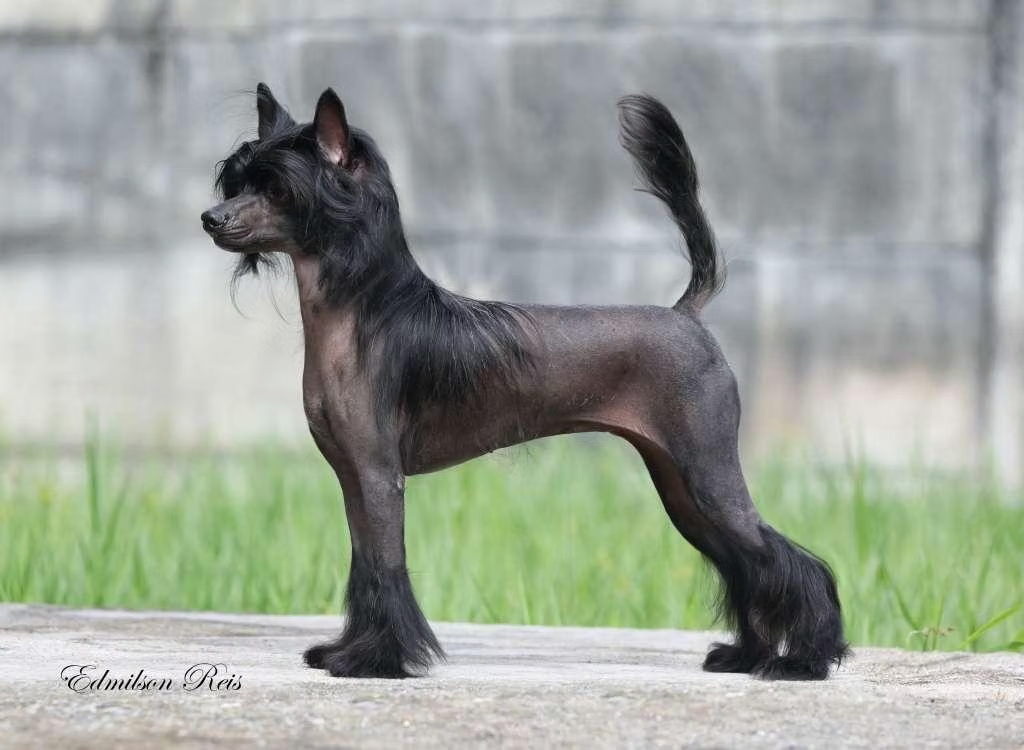
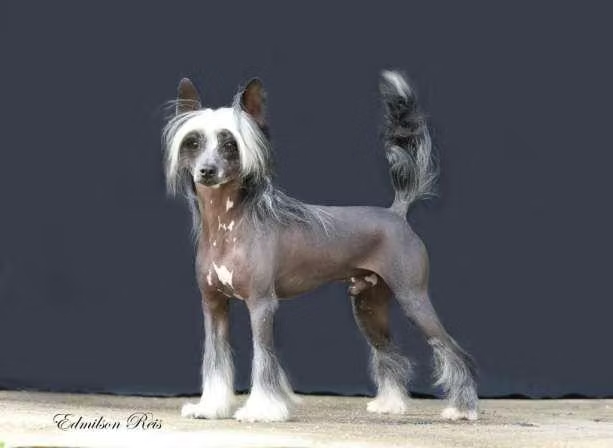
Fur parents describe the Chinese Crested as a toy breed built purely for companionship. A grown dog usually weighs about 3.6 to 5.4 kilograms (roughly 8 to 12 lbs) and measures around 28 to 33 centimeters (11 to 13 inches) at the shoulder. What sets the breed apart is that a single litter can produce two different coat types. The Hairless has bare skin across most of the body, with hair only on the head (the crest), the lower legs (the socks), and the tail (the plume). The Powderpuff, in contrast, grows a full, soft double coat over its entire body.
Despite its name, the breed did not originate from one clearly defined region of China. Its documented history instead links it to Chinese trading ports, where small hairless dogs boarded ships and traveled long distances alongside sailors and traders. The Chinese Crested known today is bred almost exclusively as a house companion, with no working role left in the breed.
The breed is affectionate, playful, and quick to attach to the family it lives with. It usually settles on one household as its primary bond and can stay reserved around new people until it warms up. It notices visitors and sounds at the door and will bark to announce them, but it has neither the size nor the temperament for guard work.
| Attribute | Detail |
|---|---|
| Origin | China |
| Size | Toy breed (about 3.6 to 5.4 kg) |
| Lifespan | 13 to 18 years |
| Group/role | Toy group, companion dog |
| Good with | Families, older children, other pets when properly introduced |
The Chinese Crested does best in a home where someone is around for most of the day, since it craves closeness and can struggle when left alone for long stretches, a common concern in Metro Manila households where family members often keep different schedules. It settles comfortably into condominium units and small homes, since its exercise needs stay modest. The Hairless variety needs extra skin care and protection from the sun and from strong aircon, so it suits fur parents who are willing to manage bathing, sunscreen, and light clothing depending on the weather. Homes with very young or rough-handed children are a weaker match, since the breed is light boned and sensitive to how it is handled.
Hairless dogs became linked to Chinese trading ports and ships by the 1800s. Western breeders later shaped today's Chinese Crested, now recognized in the Philippines through the PCCI.
Hairlessness in dogs occurs naturally and shows up in several dog populations across different parts of the world, not only in China. How the trait became fixed in what is now called the Chinese Crested is not fully documented. What the record does show is that small hairless dogs became associated with Chinese trading ships and were noted in port cities through the 1800s. Sailors reportedly kept these dogs on board, which helped carry them along established trade routes.
By the late nineteenth century, hairless dogs had begun appearing at exhibitions in Europe and North America, often grouped under names that lumped together hairless types from different countries. Written records and illustrations from this era refer to hairless dogs labeled as Chinese, although the naming used at the time was far from consistent.
The modern Chinese Crested, the one recognized today by kennel clubs such as the Philippine Canine Club, Inc. (PCCI), owes much of its current form to breed enthusiasts in the United States and the United Kingdom during the twentieth century. These breeders worked to fix a consistent type and to manage the genetics that produce the Hairless and Powderpuff coats within the same bloodlines.
Formal recognition through national kennel clubs followed over the second half of the twentieth century. The breed is now registered in many countries, including the Philippines through the PCCI, the country's FCI-affiliated national kennel club, and it is kept strictly as a companion animal rather than for any working purpose.
Standing about 28 to 33 cm at the shoulder, the Chinese Crested comes in a Hairless variety with crest, socks, and plume, or a fully coated Powderpuff, per the PCCI standard.
The Chinese Crested is small, fine boned, and graceful in build, with a body slightly longer than it is tall. The head narrows to a wedge shape, the eyes range from dark to medium in tone, and the Hairless variety carries large, erect ears. The tail runs long and lifts up or out while the dog moves, and its gait stays light and unencumbered.
Coat is what truly separates the two forms of this one breed, and both can turn up within a single litter. Apart from coat, the Hairless and the Powderpuff share the same body structure and the same standard, whether judged locally under the PCCI or internationally under FCI rules.
| Trait | Detail |
|---|---|
| Height | About 28 to 33 cm at the shoulder |
| Weight | About 3.6 to 5.4 kg |
| Coat | Hairless (crest, socks, plume) or Powderpuff (full soft double coat) |
| Colors | Any color or combination, including dark, slate, and pink-toned skin on Hairless dogs |
| Eyes | Dark to medium, wide set, almond shaped |
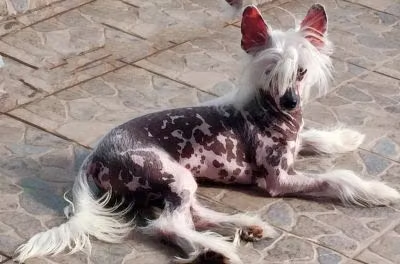
On a Hairless dog, most of the body shows smooth, bare skin, with soft hair growing only on the head, lower legs, and tail. Skin tone can run in any color and often turns up spotted or mottled. The Powderpuff carries a long, soft double coat over its entire body and needs consistent brushing to stay neat and mat-free. Both varieties come in a wide spread of colors and patterns, and the breed standard does not favor one color over another. Some Hairless dogs grow patches of extra body hair, which breeders and groomers manage as part of routine coat care.
The Chinese Crested is affectionate and devoted to its household, reserved with strangers at first, and typically gets along with other pets once properly socialized.
The Chinese Crested lives for closeness with its people. It often climbs onto laps or presses against its favorite family member rather than settling elsewhere in the room. Indoors, it stays playful and enjoys gentle games, and it forms a tight bond with the household, which makes it sensitive to shifts in routine or mood at home.
Around family, the breed shows warmth openly. Around strangers, it usually holds back and needs time before it warms up, though true aggression is rare in this breed. Calm, early socialization, starting with visits from relatives and neighbors, helps keep this natural reserve from turning into excess shyness. The dog stays alert to visitors and unfamiliar sounds and will bark to flag them, though how vocal it gets varies by individual dog.
With other pets, the Chinese Crested usually gets along well, particularly with dogs of similar size and with cats it grows up alongside. Given its small, light frame, supervision matters around larger or more boisterous dogs. The breed reacts poorly to harsh handling or rough correction, so a calm, gentle household suits it best.
| Trait | Rating |
|---|---|
| Affection | 5 |
| Energy | 3 |
| Trainability | 3 |
| Vocalness | 3 |
| Shedding | 1 |
Care in the Philippines centers on skin protection from heat and sun, coat upkeep, modest daily exercise, and an indoor, air-conditioned home suited to the breed.
Grooming needs split sharply along coat type, though both varieties call for a consistent routine. The Hairless variety asks for real skin care, while the Powderpuff asks for real coat care, and neither can skip dental upkeep.
The Chinese Crested lives as an indoor dog and fits well into condominium units and small homes. It reacts strongly to temperature swings: the Hairless variety chills quickly under strong aircon and sunburns just as quickly outdoors, so it needs a warm, draft-free spot indoors and cover when out in the sun. The breed wants company throughout the day and does poorly when left alone for long periods, an important point for fur parents who work long shifts.
The Chinese Crested needs a complete small or toy breed diet in measured portions across two or three meals daily, adjusted for age, weight, and activity level.
Choose a complete and balanced diet formulated for small or toy breeds. Since the dog itself is small, portions run modest, and even a small measuring error can add unwanted weight quickly. Split the daily total into two or three meals to keep energy steady, since very small dogs, puppies especially, can develop low blood sugar when meals are spaced too far apart.
| Life stage | Amount per day | Meals |
|---|---|---|
| Puppy (2 to 6 months) | About 1/4 to 1/2 cup, based on the product and the puppy's weight | 3 to 4 |
| Adult (1 year and up) | About 1/4 to 3/4 cup | 2 |
| Senior / less active | Adjusted downward to maintain a healthy weight | 2 |
Keep treats to a small slice of the daily calorie count so the dog stays at a healthy weight. A diet already labeled complete and balanced usually covers all the nutrients a healthy dog needs, so routine supplements are not necessary on top of it. Keep fresh water available at all times. Before giving any supplement, such as a joint or skin product, fur parents should check with a veterinarian first, particularly for the Hairless variety and its specific skin needs.
The Chinese Crested typically lives 13 to 18 years but can develop dental disease, eye conditions, patellar luxation, and, in Hairless dogs, skin problems.
The Chinese Crested ranks among the longer-lived toy breeds, with a typical lifespan of 13 to 18 years. Most dogs live out full, healthy lives given routine veterinary care, consistent dental hygiene, and steady weight control. A handful of conditions still show up more often in this breed and are worth watching for.
| Condition | Signs | Note |
|---|---|---|
| Dental disease | Tartar buildup, bad breath, loose or missing teeth | Common in toy breeds; Hairless dogs often have incomplete dentition |
| Patellar luxation | Skipping steps or limping on a hind leg | Kneecap slips out of place; severity ranges from mild to needing surgery |
| Progressive retinal atrophy | Night blindness, gradually declining vision | Inherited; screening breeding stock helps lower the risk |
| Skin problems (Hairless) | Dryness, acne, sunburn, irritation | Managed through bathing, moisturizing, and sun protection |
Intelligent but sensitive, the Chinese Crested trains best through short, gentle, reward-based sessions paired with early, consistent socialization.
The Chinese Crested is sharp and genuinely eager to please the people it lives with, which makes it trainable, though it is equally quick to shut down under harsh handling. Sessions should stay short, calm, and upbeat, with food rewards, praise, and play doing most of the work. House-training can take patience, as with most small breeds, so a fixed routine and real consistency matter more than any single method. Early exposure to new people, places, and animals helps ease the natural wariness this breed shows toward strangers.
The Chinese Crested reaches maturity around one to two years and produces small litters; the Hairless gene means most litters mix Hairless and Powderpuff puppies.
Breeding the Chinese Crested is best left to experienced, responsible breeders, given the breed's small size and the genetics that govern its coat. Dogs generally reach full physical and behavioral maturity between one and two years old, and responsible breeding programs wait until a dog clears health testing and reaches that maturity before pairing it. Pre-breeding screening typically covers the eyes and the knees, and prospective buyers in the Philippines should ask to see PCCI registration papers along with these health clearances.
Gestation runs about 63 days, similar to other breeds. Litters stay small, usually two to four puppies, in line with the breed's toy size. Because the Hairless trait rides on a single dominant gene that also affects the embryo, planned pairings commonly include a Powderpuff parent, and both coat types tend to show up within the same litter. Newborn puppies are tiny and need a warm, clean whelping area with close monitoring through the first weeks, and Hairless puppies in particular need extra attention to warmth and skin care as they grow, especially during the cooler amihan months.
| Metric | Value |
|---|---|
| Sexual maturity | About 6 to 12 months (breeding deferred until fully mature) |
| Full maturity | 1 to 2 years |
| Gestation | About 63 days |
| Litter size | Typically 2 to 4 puppies |
| Weaning | About 6 to 8 weeks |
The city vet office handles the RA 9482 paperwork; a free United Pet Club record is what a finder anywhere can actually search for your Chinese Crested.
Type in your Chinese Crested's name, his birth date, and a clear photo, add your mobile number, and save. That is the entire process, and the profile stays free for his whole life. Dog registration works with or without a chip, so the vet visit can come later.
If a vet has already implanted a chip, the number still has to be filed where a scanner can trace it, because an unfiled chip points at nobody. Register the microchip free on the lifetime plan: any brand sold in the Philippines qualifies, updates after you move house or change SIM cost nothing, and the record stays searchable here and abroad. Create your free account and cover both in one go.
Open a free United Pet Club account, add your Chinese Crested's details and a photo, then save the profile. It stays free for his whole life and sits alongside the city vet office registration RA 9482 requires.
Type the 15-digit chip number into your free account together with your mobile number and address. The lifetime plan charges nothing for the registration or for any update, whatever brand the clinic used.
Yes, RA 9482 requires dog registration with your city or municipal veterinary office, along with current anti-rabies vaccination. The United Pet Club profile is the searchable half: free, worldwide, and tied to your current mobile.
Nothing. The free lifetime plan covers the profile, the microchip record, and every update, with no renewal fees at all.
Frequently asked questions about the Chinese Crested cover its size, temperament, upkeep, lifespan, household fit, and availability in the Philippines.
It stays a toy breed for life, standing about 28 to 33 cm (11 to 13 inches) at the shoulder and weighing roughly 3.6 to 5.4 kg (8 to 12 lbs) once fully grown.
It is affectionate, playful, and deeply devoted to its household. It bonds closely with its people, stays reserved around strangers at first, and stays alert without acting as a guard dog.
Care runs moderate overall. The Hairless variety needs regular skin care plus protection from sun and strong aircon, while the Powderpuff needs frequent brushing. Both need consistent dental care and modest daily exercise.
Typically 13 to 18 years with good care, a long run even by small-dog standards.
Yes. It suits condominium units and homes where someone is around often. It does well with older, gentle children and with other pets once socialized, but its light bones mean it is not built for rough handling.
Shedding stays low either way. The Hairless variety has little hair to lose in the first place, and the Powderpuff sheds only modestly, though it still needs regular brushing to prevent mats.
It remains an established, PCCI-registered breed, available through dedicated breeders and breed-specific rescue groups. It is less common locally than mainstream breeds, so finding a puppy may take patience and some searching.