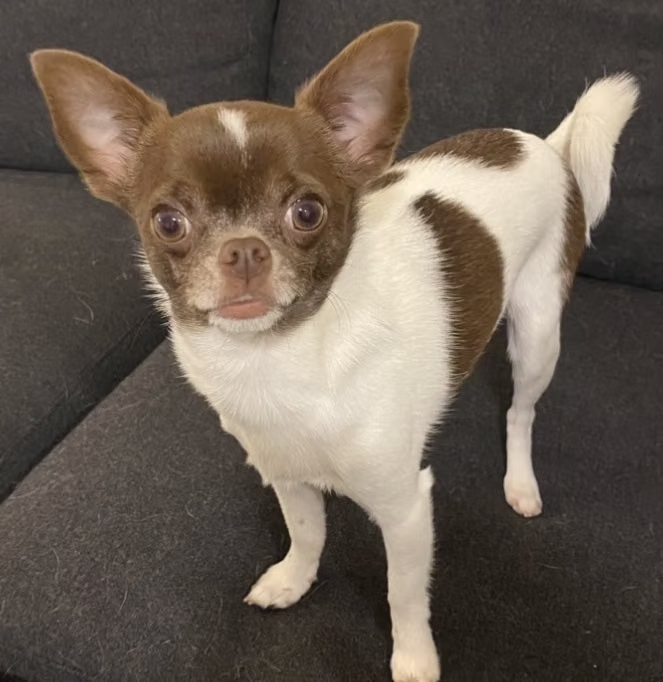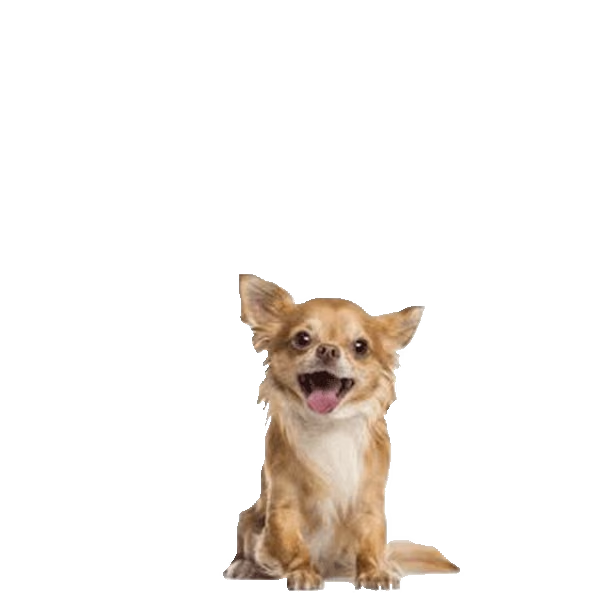
The Chihuahua is a devoted, big-personality toy breed known for its spirited charm, alertness, and intense loyalty to its chosen person.
How the Chihuahua coat is built, and what that means when you groom it.
A few of the Chihuahua profiles members have added to United Pet Club.
The Chihuahua is a toy breed from Mexico known for its small size, bold personality, and close bond with one person. It usually lives 14 to 16 years.
The Chihuahua ranks among the smallest dog breeds anywhere. Most grown dogs weigh under 6 lbs (2.7 kg) and stand only 5 to 8 inches (13 to 20 cm) at the shoulder, yet the breed carries itself with a confidence that catches new owners off guard. People who expect a timid lapdog quickly discover a dog with plenty of nerve.
The breed comes in two coat types, smooth and long, and appears in a wide range of colors. Chihuahuas bond intensely with their families and often pick one favorite person to stay closest to. They are alert by nature and bark readily at anything unfamiliar. That instinct makes them surprisingly good watchdogs despite their size.
Because a Chihuahua takes up so little space, it settles comfortably into condominium units and small apartments, the kind of housing common in Metro Manila and other cities. It needs far less room and exercise than a large breed, though it still needs a daily walk, basic training, and regular company to stay well adjusted.
| Attribute | Detail |
|---|---|
| Origin | Mexico |
| Size | Toy breed, under 6 lbs (2.7 kg) |
| Lifespan | 14 to 16 years |
| Group or role | Toy group, companion and watchdog |
| Good with | Adults, gentle older children, calm households |
A Chihuahua fits an owner who wants a small, easy-to-carry companion and can give it steady attention. It suits condo dwellers, people living alone, and retirees who prefer a dog with modest exercise needs. Households with very young children are less suitable, since the breed is delicate and can get hurt by rough handling.
The Chihuahua traces back to Mexico and takes its name from the state of Chihuahua, where the modern breed type turned up in the mid-1800s.
Most breed historians trace the Chihuahua to the Techichi, a small companion dog kept by peoples of central Mexico long before the Spanish arrived. Pottery and carvings from these early cultures depict small dogs with features close to the Chihuahua seen today.
The dog takes its name from the Mexican state of Chihuahua. American visitors to the region in the mid-1800s reportedly brought small dogs like this back home, and interest in the breed grew from there as the name traveled north with them.
The American Kennel Club registered its first Chihuahua in 1904, a step that helped set the breed standard and lift its popularity across the United States. The earlier registered dogs were mostly smooth coated; the long coat variety was developed and recognized afterward.
The Chihuahua went on to become one of the most popular toy breeds in North America through the 20th century. In the Philippines, the Philippine Canine Club, Inc. (PCCI), the country's national kennel club, registers and shows the breed today. Both coat types are judged against the same standard and differ only in coat length.
The Chihuahua is a tiny, compact dog with an apple-shaped head, large upright ears, and round eyes, in smooth or long coats and many colors.
A Chihuahua's body is small and balanced, slightly longer than it is tall. Its most recognizable trait is the apple-shaped head with a clear stop, set off by large, fully erect ears and round, expressive eyes. The tail sits moderately long and is carried up or curved over the back.
| Trait | Detail |
|---|---|
| Height | 5 to 8 in (13 to 20 cm) |
| Weight | Up to 6 lbs (2.7 kg) |
| Coat | Smooth (short) or long |
| Colors | Any color, solid, marked, or splashed |
| Eyes | Large, round, set well apart |
The smooth coat lies soft, close, and glossy against the skin. The long coat is soft and either flat or slightly wavy, with feathering on the ears, legs, and tail. The breed standard leaves color open, so Chihuahuas turn up in fawn, black, white, chocolate, cream, blue, and combinations of these, including merle in some registries. Coat type is purely cosmetic and has no bearing on temperament, only on how much grooming the dog needs.
The Chihuahua is affectionate and spirited, with a bold, alert streak. It bonds tightly with its owner and can turn reserved or noisy around strangers.
A Chihuahua tends to fix its loyalty on one favorite person and sticks close to that individual whenever it can. Within the family it is playful and affectionate; toward strangers it turns watchful, often barking to announce anyone at the door. That habit keeps it alert, though sometimes noisy.
This confidence runs deep enough that a Chihuahua will sometimes stand up to dogs many times its size. Early socialization tempers that suspicion and cuts down on nervous or snappy reactions later on. Around other household pets, a well-socialized Chihuahua usually gets along fine, though it often gravitates toward other Chihuahuas over other breeds.
With kids, the breed does best around gentle, older children who understand how fragile it is. A sudden grab or rough play can startle it and trigger a defensive nip.
| Trait | Rating |
|---|---|
| Affection | 5 |
| Energy | 3 |
| Trainability | 3 |
| Vocalness | 4 |
| Shedding | 2 |
A Chihuahua needs light grooming, short daily exercise, and protection from the cold. Its small frame means it must be handled gently at all times.
A Chihuahua adapts well to condo living and small homes. The tropical warmth typical across the Philippines is not far off from what the breed's native Mexico offers, so most Chihuahuas tolerate the local climate without trouble. The bigger adjustment tends to be air-conditioned rooms: a sweater and a warm bed indoors help the dog stay comfortable when the aircon runs cold. The breed prefers staying close to its owner and does not do well left alone for long stretches.
A Chihuahua needs a small daily amount of quality food split into several meals to match its fast metabolism and prevent low blood sugar.
A Chihuahua burns through energy fast for its size and can be prone to low blood sugar, particularly as a puppy. Pick a complete food made for small or toy breeds, with kibble small enough to chew easily. Measure every portion carefully, since even a slightly generous scoop adds up to real weight gain on such a tiny frame.
| Life stage | Amount per day | Meals |
|---|---|---|
| Puppy (2 to 6 months) | Small amounts, free access or 4 meals | 3 to 4 |
| Junior (6 to 12 months) | About 1/4 to 1/2 cup | 3 |
| Adult | About 1/4 to 1/2 cup | 2 to 3 |
| Senior | Adjusted for activity, slightly less | 2 |
Keep treats to roughly 10 percent or less of the dog's daily calories. Small training treats or bits of the dog's regular kibble work well for this. Most Chihuahuas eating a complete diet do not need extra supplements, though a vet may recommend dental support or joint care for a particular dog. Keep fresh water available at all times.
The Chihuahua usually lives 14 to 16 years but can develop dental disease, luxating patella, heart problems, and hypoglycemia.
The Chihuahua is generally a healthy, long-lived breed, typically reaching 14 to 16 years of age. Most of its health risks trace back to its small size: crowded teeth, a fragile skeleton, and a tendency toward low blood sugar in puppies and very small adults. Responsible breeding practices and routine vet visits keep most of these risks in check.
| Condition | Signs | Note |
|---|---|---|
| Dental disease | Bad breath, tartar, loose teeth | Toy breeds have crowded teeth; brush and clean regularly |
| Luxating patella | Skipping steps, occasional hind-leg hop | Kneecap slips out of place; mild cases are managed, severe ones may need surgery |
| Heart disease | Coughing, tiring easily, less stamina | Includes valve disease in older dogs |
| Hypoglycemia | Weakness, shaking, collapse | Mainly affects puppies and very small adults; feed frequently |
| Tracheal collapse | Honking cough, especially on a collar | Switch to a harness to ease pressure on the throat |
The Chihuahua is smart and trainable but can be stubborn and slow to toilet-train. Gentle, consistent, reward-based methods work best.
A Chihuahua is sharp enough to pick up a wide range of commands and tricks, though it can also be strong-willed. Toilet training is usually the part owners find slowest, partly because a bladder this small needs frequent breaks throughout the day. Short, consistent sessions and a predictable routine bring the best results. Harsh corrections tend to backfire on this breed, since a Chihuahua that feels pushed too hard often turns timid or snappy rather than obedient.
Breeding Chihuahuas takes care because the breed's small size raises whelping risks. Litters are small, usually one to three puppies.
Breeding a Chihuahua calls for extra caution, since the breed's small size raises the risk of a difficult birth. Females can reach sexual maturity within their first year, but responsible breeders wait until a bitch is fully physically mature and has cleared health screening for patella and heart conditions before allowing any mating.
Gestation runs about 63 days, and litters stay small, usually one to three puppies. Some lines have narrow pelvic dimensions, so cesarean sections happen more often in this breed than in larger dogs, and a vet should be on standby around the due date.
Newborn puppies are tiny and chill or drop in blood sugar easily. They need a warm, draft-free whelping space, frequent nursing, and close tracking of weight gain. Puppies should stay with the dam until at least eight weeks old, with early, gentle handling to support socialization.
| Metric | Value |
|---|---|
| Sexual maturity | Around 6 to 12 months |
| Recommended first breeding | After full physical maturity |
| Gestation | About 63 days |
| Average litter size | 1 to 3 puppies |
| Weaning age | About 4 to 7 weeks |
| Leaves the dam | 8 weeks or later |
The city vet office handles the RA 9482 paperwork; a free United Pet Club record is what a finder anywhere can actually search for your Chihuahua.
A Chihuahua that gets loose during a storm is identified by whatever record answers the scan, not by the barangay it came from. Give it a record that answers: your mobile number, the dog's photo, and his details, free for life with United Pet Club. Register your dog today and it is done for good.
If a vet has already implanted a chip, the number still has to be filed where a scanner can trace it, because an unfiled chip points at nobody. Register the microchip free on the lifetime plan: any brand sold in the Philippines qualifies, updates after you move house or change SIM cost nothing, and the record stays searchable here and abroad. Create your free account and cover both in one go.
Open a free United Pet Club account, add your Chihuahua's details and a photo, then save the profile. It stays free for his whole life and sits alongside the city vet office registration RA 9482 requires.
Type the 15-digit chip number into your free account together with your mobile number and address. The lifetime plan charges nothing for the registration or for any update, whatever brand the clinic used.
Yes, RA 9482 requires dog registration with your city or municipal veterinary office, along with current anti-rabies vaccination. The United Pet Club profile is the searchable half: free, worldwide, and tied to your current mobile.
Nothing. The free lifetime plan covers the profile, the microchip record, and every update, with no renewal fees at all.
Common questions about the Chihuahua cover its size, temperament, care, lifespan, suitability for families, and where to find one.
The Chihuahua is a toy breed. Adults usually weigh under 6 lbs (2.7 kg) and stand about 5 to 8 inches (13 to 20 cm) at the shoulder, making it one of the smallest dog breeds around.
It is affectionate, devoted, and spirited, with a confident, alert nature. The breed bonds closely with its owner and tends to be watchful and vocal around strangers.
Day-to-day care is fairly light. Grooming needs are minimal, exercise requirements are low, and the breed adapts well to small homes and condo units. The main things to watch are dental care, gentle handling, and keeping the dog warm, since it chills quickly.
Chihuahuas are long-lived for their size, typically reaching 14 to 16 years when kept at a healthy weight and given routine vet and dental care.
They do best with gentle, older children, since their small bodies are fragile and rough handling can cause injury or a defensive nip. With early socialization, they can also get along with other pets in the home.
They are intelligent but can be stubborn, and toilet training often takes patience. Short, consistent, reward-based sessions bring the best results.
The Chihuahua is one of the more common toy breeds locally, available through breeders and often found in rescues and shelters. Look for breeders who screen their dogs for patella and heart conditions, and check registration with the Philippine Canine Club, Inc. (PCCI).