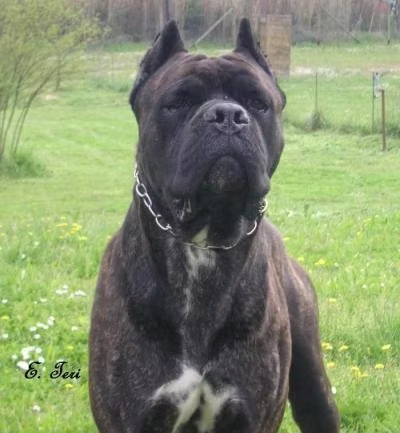
The Cane Corso is a protective, confident Italian mastiff renowned for its imposing presence and deep devotion to its family.
How the Cane Corso coat is built, and what that means when you groom it.
Critical: A Cane Corso should not be shaved.
The undercoat keeps heat out as well as in, and the outer coat shields the skin from sun and insect bites. Clipping the whole coat off removes both. It often grows back patchy, soft or a different colour, and in some animals the guard hairs never return properly. Brush the undercoat out instead of cutting it off.
Information: A Cane Corso drops its undercoat in heavy bursts.
The undercoat comes out in heavy bursts over a few weeks. An undercoat rake, or a bath followed by a proper blow-dry, clears it far faster than daily brushing. Clipping the coat down is not a shortcut for this.
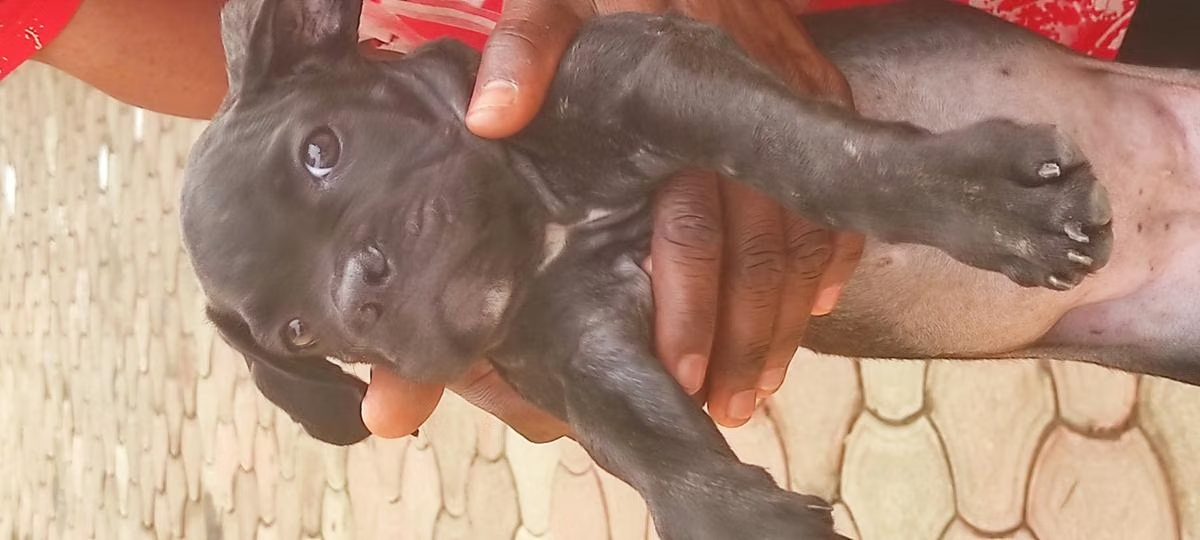
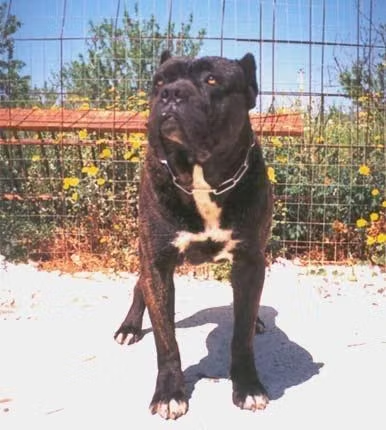
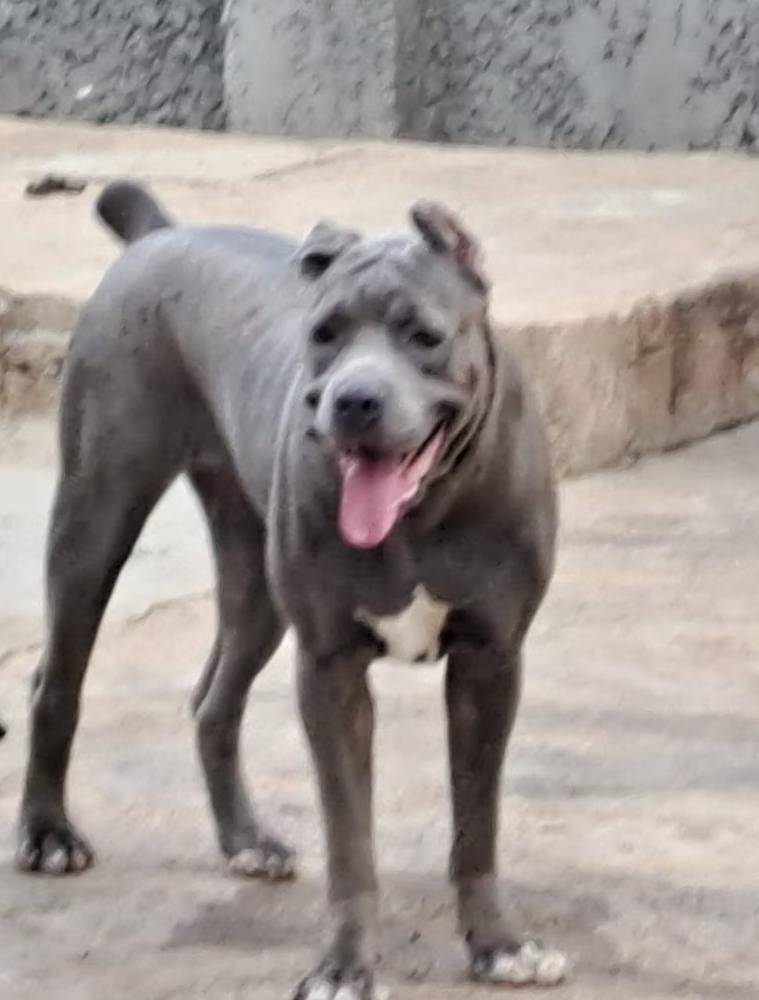
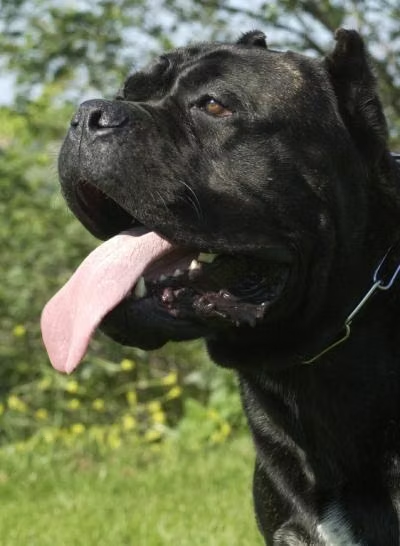
A few of the Cane Corso profiles members have added to United Pet Club.
The Cane Corso is a large Italian mastiff developed as a farm and property guardian, recognized for its muscular build and close bond with its family.
The Cane Corso is a large working breed that originated in Italy, part of a group of mastiff-type dogs native to the Italian peninsula. Its name derives from the Latin word cohors, meaning guardian or protector, and reflects centuries of work on farms and estates in the south of Italy.
An adult male typically stands 25 to 27.5 inches at the shoulder and weighs between 100 and 110 pounds; females run somewhat smaller. The build is muscular rather than bulky, with a broad head, a short and dense coat, and an alert, serious expression.
At home, a Cane Corso is composed and steady, but it stays watchful of anything unusual around the property. It learns quickly and takes well to training, though its size and natural protectiveness call for an owner who provides firm, consistent guidance and early exposure to new people, places, and situations.
| Attribute | Detail |
|---|---|
| Origin | Italy |
| Size | Large (100 to 110 lb for males) |
| Lifespan | 9 to 12 years |
| Group / role | Working dog, guardian |
| Good with | Its own family, and children with proper socialization; new people and unfamiliar dogs need supervision |
The Cane Corso is best suited to an experienced dog owner who can commit to daily exercise, consistent training, and steady leadership. A home with a securely fenced yard and enough room for a large dog to move around is ideal. It is not the right choice for first-time owners or for households that cannot closely supervise the dog around visitors and other pets.
The Cane Corso traces back to the working mastiffs of ancient Italy and was brought back from near extinction by Italian breeders in the late 1900s.
The origins of the Cane Corso go back to the working mastiffs kept in ancient Italy, generally connected to the canis pugnax used by Roman legions and to the wider family of mastiff-type dogs that spread through the Mediterranean. Once the Roman era ended, these dogs took on farm work: guarding property, driving livestock, and helping hunt large game such as wild boar.
For generations the breed stayed a working animal of rural southern Italy, most closely tied to the Puglia region. It had no formal registry to rely on, so it survived purely because it was useful on the farm, which shaped it into a functional guardian rather than a dog bred for the show ring.
The rise of mechanized farming through the 20th century removed much of that role, and the breed's numbers fell sharply; by the 1970s the Cane Corso was on the edge of disappearing. A group of Italian breed enthusiasts, among them Giovanni Bonatti and members of the Society Amorati Cane Corso founded in 1983, tracked down the remaining dogs and started a deliberate recovery program.
Official recognition followed: the Italian kennel club ENCI accepted the breed in 1994, the Federation Cynologique Internationale in 2007, and the American Kennel Club in 2010. In the Philippines, the Cane Corso is recognized by the Philippine Canine Club, Inc. (PCCI), the country's national kennel club. What was once a farm dog on the verge of extinction is now an established breed kept for guarding and companionship alike.
The Cane Corso is a large, muscular mastiff with a broad head, a short dense coat, and colors that range from black and fawn to brindle and gray.
Built for strength rather than sheer bulk, the Cane Corso is a large and athletic mastiff. The body reads slightly longer than tall, set on heavy bone with a deep chest and clearly defined muscle. The head is broad with a pronounced stop and a wide, almost square muzzle, giving the dog a serious, alert expression.
The ears are naturally dropped and lie close to the cheeks. Cropping has traditionally been done in some regions, though the practice is restricted or banned in many countries today. The tail sits high on the body and is sometimes docked where local law still permits it.
| Trait | Standard |
|---|---|
| Height | Males 25 to 27.5 in; females 23.5 to 26 in at the shoulder |
| Weight | Roughly 100 to 110 lb (males); 88 to 99 lb (females) |
| Coat | Short, dense, and stiff, with a light undercoat |
| Colors | Black, fawn, red, gray (blue), and brindle variants |
| Eyes | Medium-sized and oval, dark preferred; shade varies with coat color |
The coat lies close to the body, short and dense, with a light undercoat that fills in during cooler months. Recognized colors include black, several shades of fawn and red, and gray, often called blue; brindle patterning shows up over fawn or gray bases. Fawn and red dogs usually carry a dark mask on the muzzle, and small white markings on the chest, throat, toes, or chin are common and generally accepted.
The Cane Corso is loyal and protective of its family, calm indoors but naturally reserved with strangers, so early socialization matters.
A Cane Corso forms a tight bond with its family and generally prefers to stay close to them. Indoors it tends to be calm and quiet, content to settle nearby rather than demand constant attention, though it stays alert and keeps an unofficial watch over the household without any training to do so.
Strangers get a more guarded reception. The breed does not warm up to unfamiliar people quickly, which is exactly why consistent, ongoing socialization matters: it helps the dog learn to read an ordinary visitor as no threat. With children in its own household, a well-raised Cane Corso is usually gentle and patient, though given its size, time with young kids still calls for supervision.
Other dogs and animals can trigger territorial behavior, and some individuals do not get along with dogs of the same sex. Introducing pets carefully and raising them together from an early age cuts down on conflict. This is a confident, strong-willed dog, and it does best with an owner who holds clear, consistent boundaries.
| Trait | Rating |
|---|---|
| Affection (with family) | 5 |
| Energy | 3 |
| Trainability | 4 |
| Vocalness | 2 |
| Shedding | 3 |
The Cane Corso needs daily exercise and firm handling, though its short coat keeps grooming simple: a weekly brush and routine upkeep.
A Cane Corso does best in a home with a secure fence and enough room to move around. The short coat gives little protection in cold weather, though that rarely matters in the Philippines. The bigger concern locally is heat: the Philippines has a tropical climate that stays hot and humid year round, and this heavy-bodied breed can overheat quickly, so owners need to watch it closely during the hottest hours and keep shade and water within reach. The Cane Corso is closely attached to its people and does not do well left alone for long periods.
The Cane Corso needs a complete large-breed diet fed in measured portions to support muscle without adding excess weight.
A Cane Corso should eat a complete and balanced diet formulated for large or giant breeds. Most adults do well on about 4 to 8 cups of quality dry food a day, split into two meals, though the right amount depends on the dog's age, weight, and activity level. Feeding two smaller meals rather than one large one is generally recommended for deep-chested breeds like this one, since it can help lower the risk of bloat.
Puppies need a large-breed puppy formula built for slow, steady growth; feeding for rapid growth puts unnecessary strain on developing joints and should be avoided. Keep fresh water available at all times, and measure out each meal instead of leaving food out all day, to keep the dog at a lean, healthy weight.
| Life stage | Amount per day | Meals |
|---|---|---|
| Puppy (2 to 6 months) | Per large-breed puppy formula label | 3 to 4 |
| Adolescent (6 to 18 months) | 3 to 6 cups | 2 to 3 |
| Adult | 4 to 8 cups | 2 |
| Senior | Adjusted down for activity | 2 |
Keep treats to around ten percent of daily calories so this large breed does not gain excess weight. Some owners add joint supplements such as glucosamine and chondroitin, given the breed's tendency toward hip and elbow problems, but any supplement should be started only after checking with a veterinarian.
The Cane Corso lives about 9 to 12 years and is generally sturdy, though it is prone to hip dysplasia, bloat, and certain joint and eye conditions.
On the whole the Cane Corso is a sturdy breed, though like most large mastiffs it has a fairly short lifespan of around 9 to 12 years and carries a handful of breed-related health risks. Responsible breeders test their stock for orthopedic and other inherited conditions, and anyone buying a puppy should ask to see the health test results for both parents.
| Condition | Signs | Note |
|---|---|---|
| Hip and elbow dysplasia | Stiffness, limping, reluctance to rise | Confirmed by X-ray; screen breeding stock |
| Gastric dilatation-volvulus (bloat) | Swollen abdomen, retching, restlessness | A medical emergency; act immediately |
| Eyelid disorders (entropion, ectropion, cherry eye) | Irritation, discharge, visible third-eyelid gland | May need surgical correction |
| Heart disease | Tiring easily, coughing, weakness | Detected on veterinary exam |
| Demodectic mange | Patchy hair loss, skin irritation | More common in young dogs |
The Cane Corso is intelligent and trainable but strong-willed, and responds best to consistent, reward-based training started early.
The Cane Corso picks things up quickly, but it is also independent and self-assured, so it needs an owner who trains with consistency and clear expectations. It looks to its owner for steady leadership and can grow difficult to manage if the household rules keep changing. Given its size and protective streak, training and socialization should start in puppyhood and continue well into adulthood.
Expose the dog early to a wide variety of people, places, and other animals so it learns to stay settled in new situations. Keep training sessions short and focused, and get the basic cues solid before moving on to anything more advanced.
Cane Corso breeding relies on health-tested parents, a roughly nine-week gestation, and litters that usually run six to eight puppies.
Cane Corsos mature later, both physically and behaviorally, than smaller breeds, and most breeders wait until a dog is around two years old before breeding it, so hip and elbow evaluations and other health screening can be finished first. Both parents should be tested for the breed's known inherited conditions before any mating takes place.
Gestation runs about 63 days, in line with other dog breeds. Litters typically fall in the range of six to eight puppies, though larger litters do happen. Because the breed is large and the puppies put on weight fast, the dam needs solid nutrition through pregnancy and nursing, and the breeder should be ready to step in and assist at whelping if needed.
Handling and socializing the puppies early matters for a guardian breed. Breeders who do this well start gentle exposure to people, sounds, and different surfaces within the first weeks, then place the puppies only with homes ready for a large, protective dog.
| Metric | Value |
|---|---|
| Breeding maturity | Around 2 years (after health testing) |
| Gestation | Approximately 63 days |
| Average litter size | 6 to 8 puppies |
| Weaning | Around 6 to 8 weeks |
| Recommended health screening | Hips, elbows, heart, eyes |
The city vet office handles the RA 9482 paperwork; a free United Pet Club record is what a finder anywhere can actually search for your Cane Corso.
Type in your Cane Corso's name, his birth date, and a clear photo, add your mobile number, and save. That is the entire process, and the profile stays free for his whole life. Dog registration works with or without a chip, so the vet visit can come later.
The clinic's part ended with the implant; the tracing part is yours. File your Cane Corso's 15-digit number with United Pet Club and every scan leads to your phone: free for life, all brands accepted, updates free every time your details change. Microchip registration plus a free account finishes the job.
Open a free United Pet Club account, add your Cane Corso's details and a photo, then save the profile. It stays free for his whole life and sits alongside the city vet office registration RA 9482 requires.
Type the 15-digit chip number into your free account together with your mobile number and address. The lifetime plan charges nothing for the registration or for any update, whatever brand the clinic used.
Yes, RA 9482 requires dog registration with your city or municipal veterinary office, along with current anti-rabies vaccination. The United Pet Club profile is the searchable half: free, worldwide, and tied to your current mobile.
Nothing. The free lifetime plan covers the profile, the microchip record, and every update, with no renewal fees at all.
Common questions about the Cane Corso, covering size, temperament, care needs, lifespan, suitability, and where to find one.
It is a large breed. Males typically stand 25 to 27.5 inches at the shoulder and weigh about 100 to 110 pounds, while females run somewhat smaller at roughly 88 to 99 pounds.
It can be devoted and gentle with its own family, including children, when it is raised and socialized the right way. Given its size and protective nature, time with young children and with visitors should still be supervised.
Grooming itself is simple because of the short coat, but the breed needs daily exercise, consistent training, and early socialization. It suits an experienced owner better than a first-time dog owner.
The typical lifespan is about 9 to 12 years, which is normal for a large mastiff breed.
It can be territorial, and some individuals do not get along with dogs of the same sex. Early socialization and careful introductions help, but interactions with other animals should still be managed.
The breed is established and recognized by major kennel clubs, so puppies are available from breeders both locally and abroad. Choose a breeder who health-tests the parents for hip, elbow, heart, and eye conditions.
Plan on at least an hour of activity a day, combining walks with play and training. Mental work such as obedience or scent games helps keep this intelligent breed settled at home.