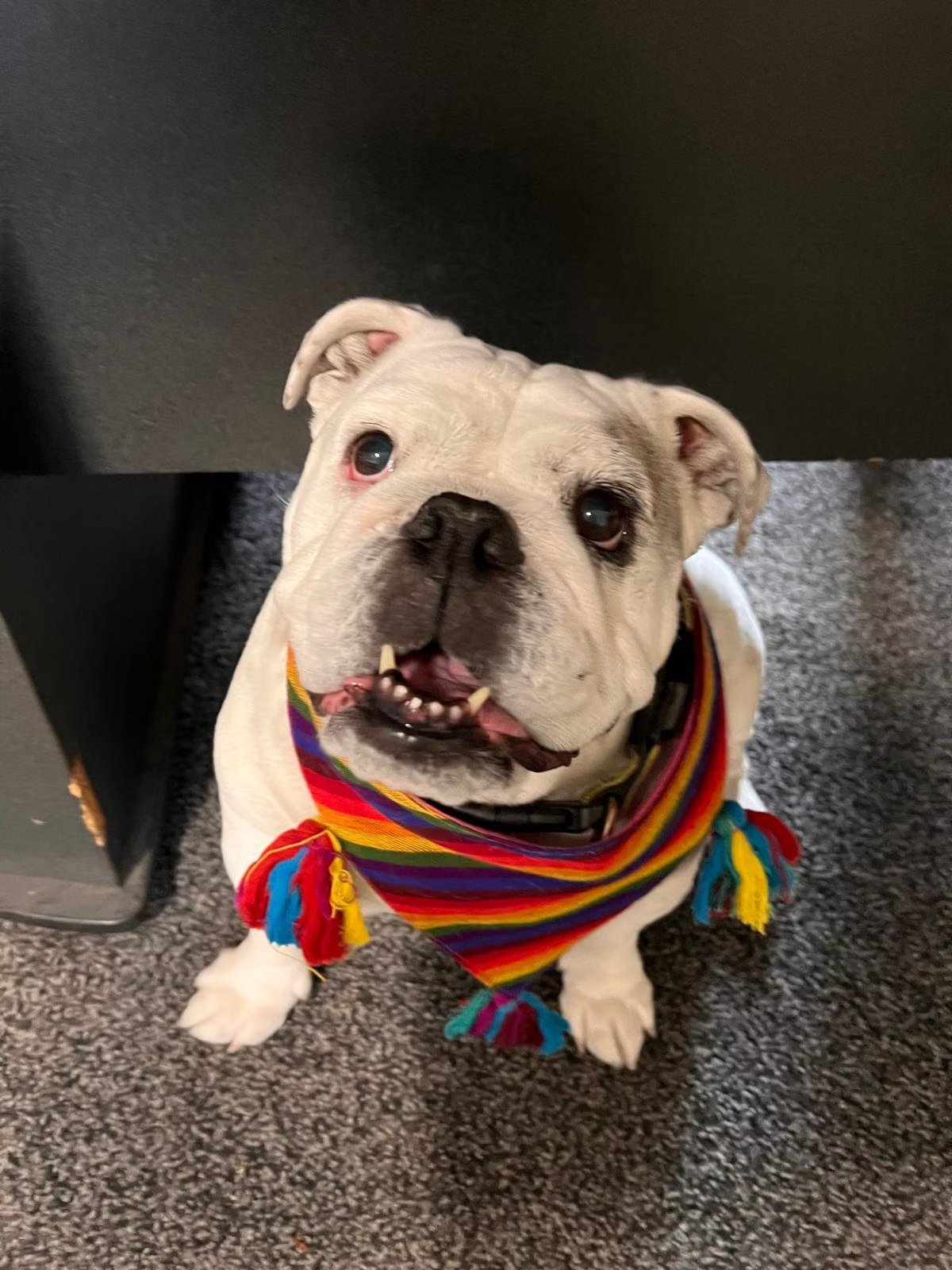
The Bulldog is a calm, courageous English breed with a wrinkled face and gentle, devoted temperament that makes it a steadfast family friend.
How the Bulldog coat is built, and what that means when you groom it.
A few of the Bulldog profiles members have added to United Pet Club.
The Bulldog is a medium-sized English breed with a wrinkled face and an easygoing nature, though Philippine heat and humidity need real planning.
The Bulldog comes from England and is built for a low, wide stance rather than height, which is really what defines the breed. A broad head folds into deep wrinkles, the muzzle is short, and the jaw is undershot, with the lower teeth extending past the upper ones. That build, plus a muscular frame set close to the ground, produces the rolling walk associated with the breed. Adults typically weigh 18 to 23 kg and stand around 31 to 40 cm at the shoulder.
That tough-looking face hides an easygoing dog. Bulldogs settle into indoor life fast, tend to be gentle with kids, and rarely act defensively in a normal household. A short walk and a long nap afterward is about as much as most Bulldogs ask for.
What they do ask for here is protection from the weather. Year-round tropical heat, on top of a long rainy season, is hard on a breed whose short muzzle already limits normal breathing. A home that stays cool through most of the day, a backup plan for brownouts during storms, and dry, well-ventilated space to get away from the humidity are all things to sort out before a Bulldog moves in.
| Attribute | Detail |
|---|---|
| Origin | England |
| Size | Medium (18 to 23 kg) |
| Lifespan | 8 to 10 years |
| Group/role | Companion dog |
| Good with | Children, families, and other household pets |
An owner after a low-energy, affectionate companion, with dependable cooling at home and the patience for regular grooming and vet visits, is the right fit for a Bulldog. Condo living and subdivision houses both work fine, since the breed needs little space and only light exercise. It's the wrong choice for anyone wanting a jogging partner, and it won't do well anywhere without air conditioning or at least strong airflow and shade.
The Bulldog developed in England for bull-baiting before nineteenth-century breeders reshaped it into the gentle companion Filipino owners know today.
The name and original job both trace back to bull-baiting, a blood sport England ran from medieval times into the early 1800s, where dogs were set against a bull tied in place. Breeders favored a low center of gravity, a wide jaw, and enough grit to hold on, and the short, pushed-back muzzle let the dog keep breathing without loosening its bite.
England's Cruelty to Animals Act of 1835 shut the practice down for good. Without a job to do, the Bulldog's numbers dropped for a period afterward.
What brought the breed back was a deliberate push by English breeders through the rest of the century to preserve it while steering its temperament away from aggression. What emerged was the calm, affectionate character the Bulldog is known for today, with the head and body shape largely unchanged. A formal breed standard followed in 1865.
The Bulldog went on to become an established family and show dog through the twentieth century, a status it still holds worldwide. In the Philippines it's recognized by the Philippine Canine Club, Inc. and shows up as a companion in both Metro Manila condos and provincial homes, as well as a mascot for sports teams and schools drawn to its sturdy build and determined look.
The Bulldog has a wide, low body, a large wrinkled head with a short muzzle, and a smooth short coat in a range of colors set out in the breed standard.
Width, not height, defines a Bulldog's outline: the breed is built noticeably wider than it stands tall. A head that's large for the body carries heavy cheeks and deep facial folds above a short, broad muzzle. The lower jaw sits forward of the upper one, which produces the undershot bite that marks the breed. Broad shoulders and a deep chest sit over lighter hindquarters, an imbalance that creates the Bulldog's signature rolling walk.
Small ears set high on the head usually fold into a rose shape. The tail is short, set low, and either straight or screwed.
| Feature | Standard |
|---|---|
| Height | 31 to 40 cm at the shoulder |
| Weight | 18 to 23 kg |
| Coat | Short, smooth, and close-lying |
| Colors | Brindle, white, red, fawn, fallow, and piebald combinations |
| Eyes | Round, dark, and set wide and low on the skull |
A short, fine coat that lies flat against the skin needs very little trimming, one of the more manageable parts of owning this breed. Brindle, solid white, red, fawn, and fallow all count as standard colors, along with piebald patterns pairing white with another shade. Loose skin across the head, neck, and shoulders forms the folds, and here they need daily attention rather than a once-a-week check, since the humidity gives bacteria very little resistance once moisture gets trapped.
The Bulldog is calm, friendly, and devoted, generally gentle with kids and tolerant of other pets, with a steady, courageous nature underneath.
Most Bulldogs are calm and good-natured by disposition. The bond with family runs deep, and it's common for one to trail household members from room to room without being demanding about it. Kids usually get gentle, patient treatment, a big reason the breed works well in family homes, though supervising any dog around young children is still smart.
Strangers tend to get a friendly or mildly indifferent reception rather than suspicion, so this isn't a natural watchdog, since most Bulldogs greet visitors calmly. That said, the solid build and serious expression can still make someone at the gate think twice. Other household pets, cats included, are usually accepted well when introduced early.
Stubbornness balances out the friendliness here. Once a Bulldog digs its heels in, budging it takes real patience rather than sheer repetition. Barking stays low to moderate in most individuals, and given the heat, most would rather rest under an electric fan than keep active through the day.
| Trait | Rating |
|---|---|
| Affection | 5 |
| Energy | 2 |
| Trainability | 2 |
| Vocalness | 2 |
| Shedding | 3 |
Bulldog care in the Philippines means daily fold cleaning against the humidity, walks timed around the heat, and backup cooling during brownouts.
Grooming and training demands stay modest for this breed, but one job needs daily consistency: keeping the facial wrinkles and tail pocket clean and properly dried. Skip it in this climate and skin infections follow fast.
This is strictly an indoor dog, whether home is a condo or a subdivision house, and keeping that indoor space cool is non-negotiable. Overheating sets in quickly because of the short muzzle, so plan on air conditioning or strong fans running most of the day, plus a backup for brownouts when storms roll through. Swimming is another hazard given the heavy front end, so pools, flooded streets, and any other unsupervised water need to stay off-limits.
A Bulldog needs a measured, balanced diet suited to its life stage, since the breed gains weight easily and excess weight worsens its joint and breathing problems.
Free-feeding is the wrong approach for a Bulldog, no matter how good the food is. The breed puts on weight easily, and every extra kilo makes the joints and the already-tight airway work harder. Pick a complete diet suited to the dog's age, measure it out, and split it into two meals a day rather than one large serving.
| Life stage | Amount per day | Meals |
|---|---|---|
| Puppy (2 to 6 months) | Per product label for growth | 3 to 4 |
| Puppy (6 to 12 months) | Per product label for growth | 2 to 3 |
| Adult | About 250 to 400 g of dry food, adjusted to weight | 2 |
| Senior | Reduced calories, vet-guided | 2 |
Daily treats add up quickly on this breed, so keep them to a small slice of total calories rather than an afterthought. Joint supplements like glucosamine and chondroitin come up often for Bulldogs, and omega-3s get mentioned for skin and coat health. Talk to a veterinarian before adding anything new to the diet.
The Bulldog typically lives 8 to 10 years and is prone to breathing, joint, and skin conditions linked to its build, so preventive veterinary care matters.
Expect a Bulldog to live around 8 to 10 years, with some health trade-offs baked into the breed's build. A short muzzle and heavy frame raise the odds of several inherited and structural conditions, and the local heat doesn't do the breathing-related ones any favors. Careful weight management, attentive daily care, and regular veterinary visits keep most of these under control, but line up a veterinarian experienced with brachycephalic breeds before you actually need one.
| Condition | Signs | Note |
|---|---|---|
| Brachycephalic airway syndrome | Noisy breathing, snoring, exercise and heat intolerance | Related to the short muzzle; severe cases may need surgery |
| Hip and elbow dysplasia | Stiffness, limping, reluctance to move | Joint malformation worsened by excess weight |
| Skin fold dermatitis | Redness, odor, irritation in the wrinkles | Prevented by routine fold cleaning and drying |
| Cherry eye | Visible red mass in the corner of the eye | Prolapse of the tear gland; usually corrected surgically |
The Bulldog is intelligent but stubborn, so short, consistent, reward-based sessions kept to the cooler hours of the day work best.
Stubbornness, more than any lack of intelligence, is what makes Bulldog training slow going. Harsh correction backfires, while patient, reward-based repetition gets results. Heat and humidity cut into attention spans fast, so keep sessions short and lean toward early mornings or an air-conditioned room rather than a midday walk. A puppy exposed early to new people, animals, and everyday situations grows into a calmer, friendlier adult.
Bulldog breeding often requires veterinary assistance, since natural mating is commonly difficult and a cesarean delivery is common because of the puppies' large heads.
Anyone breeding Bulldogs should plan on a veterinarian being involved from start to finish, not just for emergencies. Health screening comes first, for both parents, well before mating. Physical maturity typically arrives by 12 to 18 months, and a responsible breeder waits for that plus clean health results before proceeding.
Natural mating frequently doesn't work for this breed's body shape, so many litters start with veterinary help. About 63 days later, the puppies arrive, and because their heads are large relative to the mother's pelvis, a scheduled cesarean is usually the safer, planned route rather than a natural birth attempted and abandoned partway through.
Litters tend to run small, three to four puppies on average. The newborns need warmth, a clean space, and someone watching closely, since a dam can struggle to manage on her own. Puppies are typically weaned and cleared for new homes by around eight weeks, once they've had their first checkup.
| Metric | Value |
|---|---|
| Sexual maturity | About 12 to 18 months |
| Gestation | Around 63 days |
| Average litter size | 3 to 4 puppies |
| Delivery | Often by cesarean section |
| Weaning age | About 8 weeks |
The city vet office handles the RA 9482 paperwork; a free United Pet Club record is what a finder anywhere can actually search for your Bulldog.
The Anti-Rabies Act, Republic Act 9482, tells every dog owner to register with the city or municipal veterinary office and keep the anti-rabies shots current, and that covers the local paperwork for your Bulldog. What the city record cannot do is tell a finder two provinces away how to reach you. A free United Pet Club profile fills that gap for life. Registering your dog costs nothing to start and nothing later.
The clinic's part ended with the implant; the tracing part is yours. File your Bulldog's 15-digit number with United Pet Club and every scan leads to your phone: free for life, all brands accepted, updates free every time your details change. Microchip registration plus a free account finishes the job.
Open a free United Pet Club account, add your Bulldog's details and a photo, then save the profile. It stays free for his whole life and sits alongside the city vet office registration RA 9482 requires.
Type the 15-digit chip number into your free account together with your mobile number and address. The lifetime plan charges nothing for the registration or for any update, whatever brand the clinic used.
Yes, RA 9482 requires dog registration with your city or municipal veterinary office, along with current anti-rabies vaccination. The United Pet Club profile is the searchable half: free, worldwide, and tied to your current mobile.
Nothing. The free lifetime plan covers the profile, the microchip record, and every update, with no renewal fees at all.
Common questions Filipino owners ask about the Bulldog's size, temperament, care, lifespan, and how it copes with local weather.
It's a medium-sized breed. Adults typically weigh 18 to 23 kg and stand about 31 to 40 cm at the shoulder, with a wide, muscular, low-slung build.
Generally, yes. Calm, friendly, and devoted, Bulldogs bond closely with their families and are usually gentle with kids, though they can be stubborn to train.
Only with steady air conditioning. The short muzzle makes overheating easy in constant heat and humidity, so exercise should stay to early morning or evening, with cool indoor space available the rest of the day.
Usually 8 to 10 years. Owners who stay on top of the dog's weight, keep the folds clean and dry, and shield it from serious heat tend to see it live toward the longer end of that range.
Yes, in terms of space and temperament. Low exercise needs suit a condo, and the calm nature works for first-time owners, provided the home stays cool and the owner keeps up with grooming and vet visits.
Not hard, but there's a routine to keep up with. The folds need daily cleaning because of the humidity, the dog's weight needs watching, exercise has to work around the heat, and breathing and joints need regular veterinary attention.