The Boston Terrier is a friendly, dapper American breed known as the 'American Gentleman' for its tuxedo coat and amiable, playful nature.
How the Boston Terrier coat is built, and what that means when you groom it.
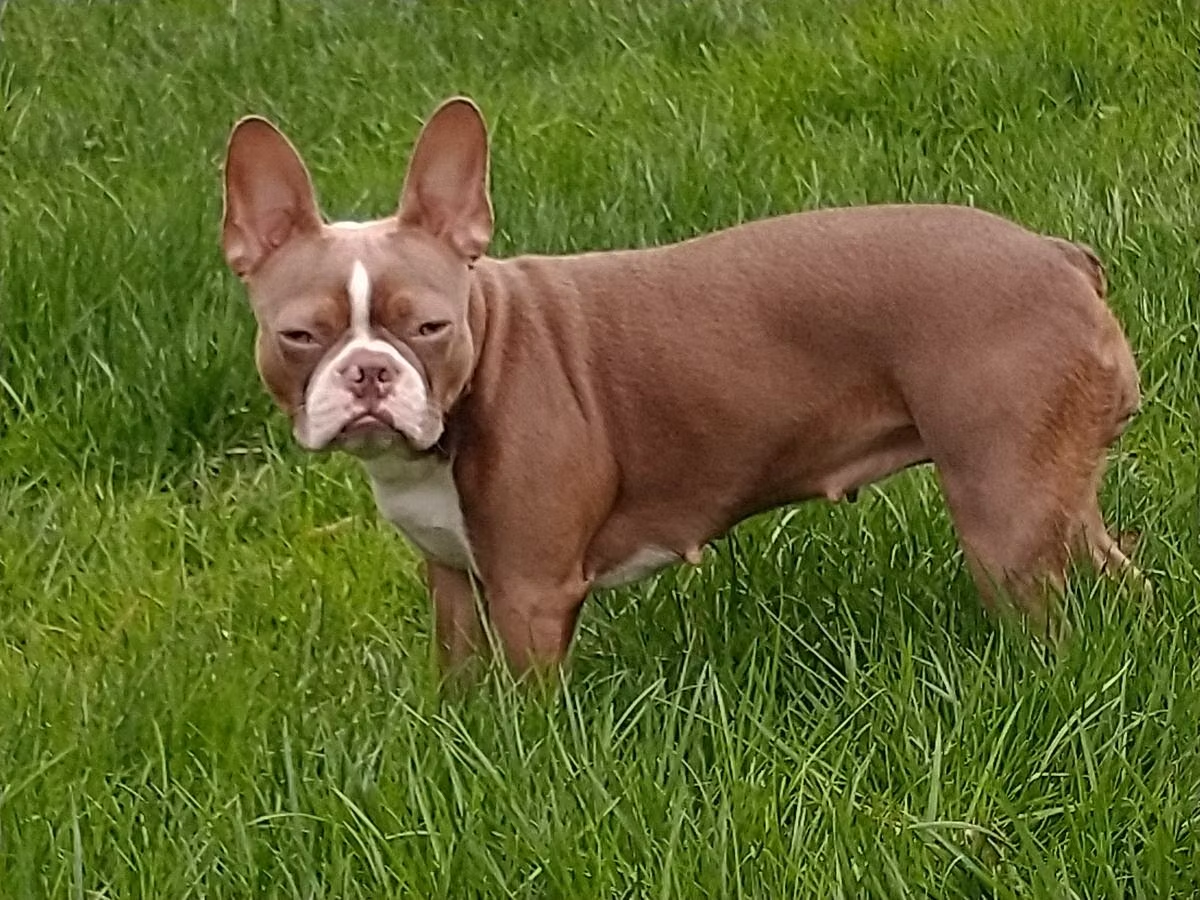
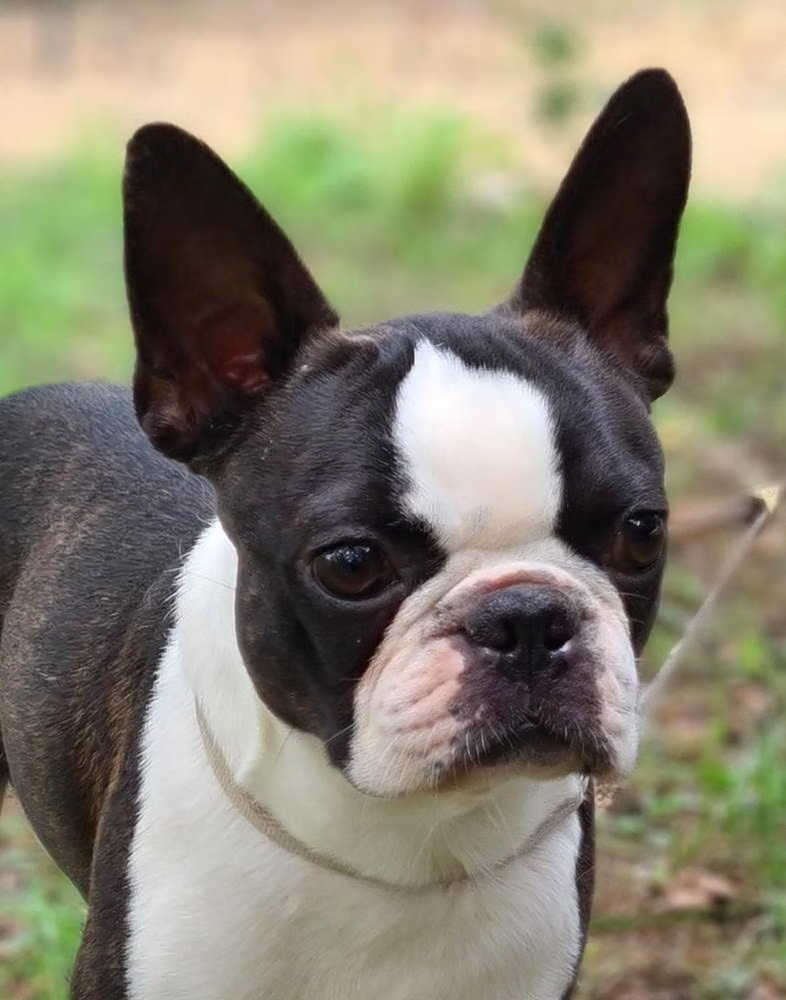
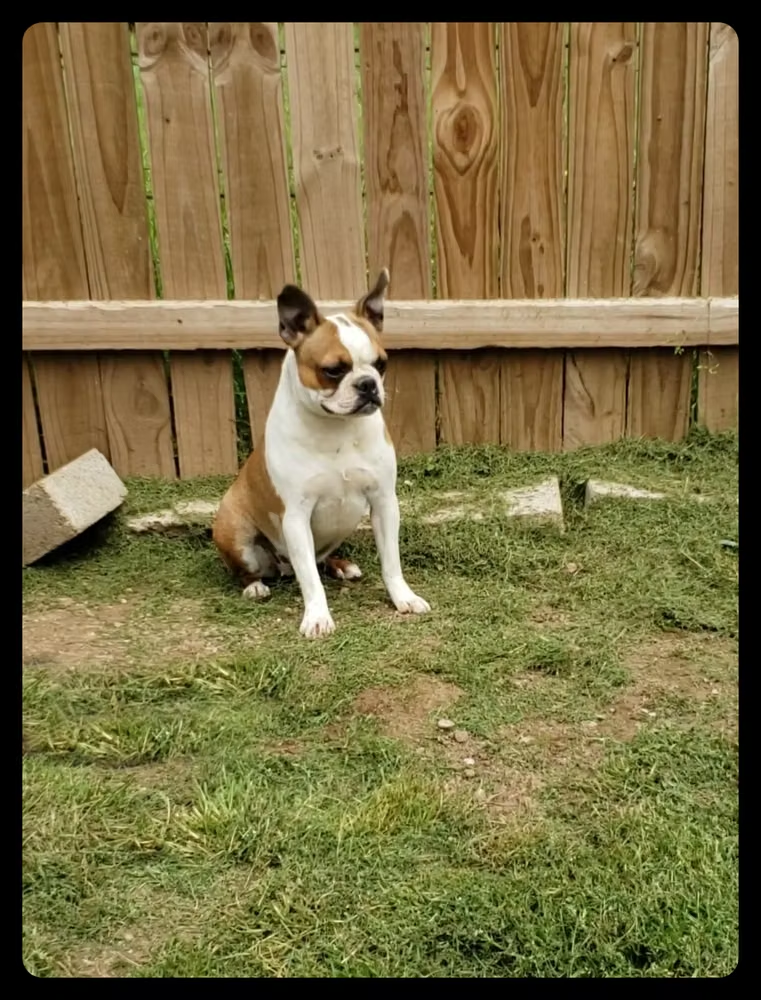
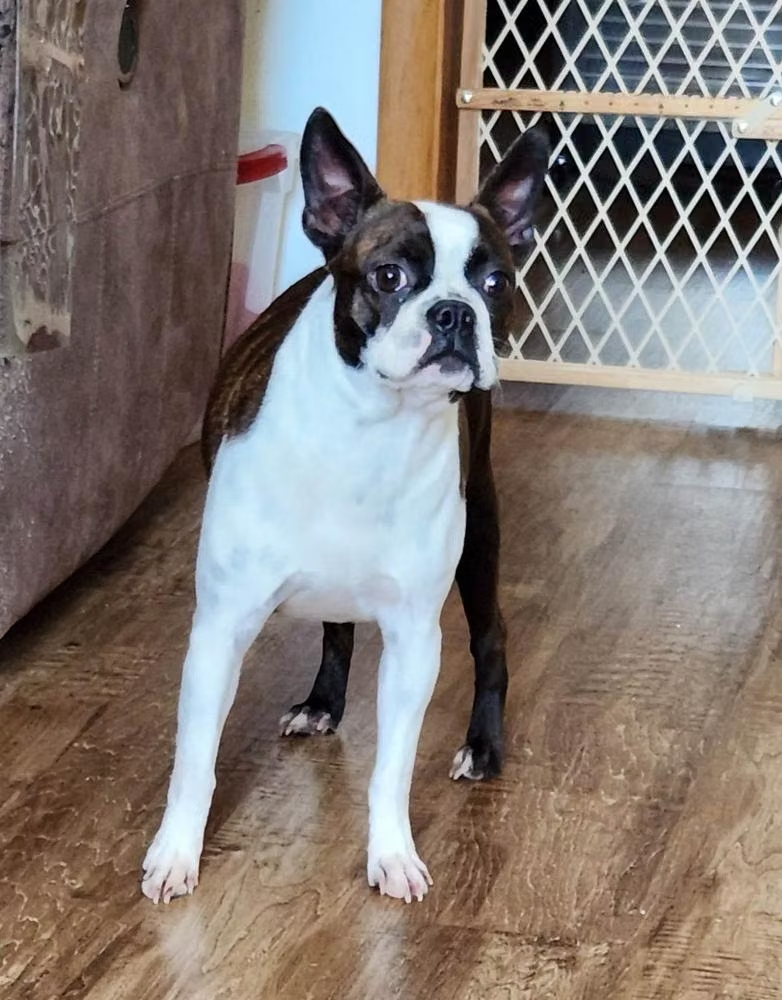
A few of the Boston Terrier profiles members have added to United Pet Club.
The Boston Terrier is a small, affectionate American breed with a tuxedo-patterned coat, often called the 'American Gentleman' for its dapper look and easygoing manners.
The Boston Terrier is a small companion breed that originated in the United States, instantly recognizable for its short muzzle, big round eyes, and sleek coat patterned like a tuxedo. A full-grown Boston Terrier stands 15 to 17 inches at the shoulder and weighs 12 to 25 pounds, with the breed further split into weight classes. Despite that size range, the temperament stays consistent: these dogs are friendly, alert, and genuinely enjoy being around people.
The 'American Gentleman' nickname comes from the tuxedo-like coloring paired with generally polite, easygoing behavior. Bred purely as companions rather than for work, Boston Terriers are happiest indoors with their family close by. They settle comfortably into condo units and houses with a yard alike, since their exercise requirements are modest and most individuals bark only when there is a reason to.
This is a breed that wants company. Left alone for long hours, a Boston Terrier can grow bored or anxious, so it does best in a household where someone is usually around. Its short face also makes it more sensitive to heat and strenuous exercise, something owners need to plan around from the start.
| Attribute | Detail |
|---|---|
| Origin | United States |
| Size | Small (12 to 25 lb) |
| Lifespan | 11 to 13 years |
| Group/role | Companion (non-sporting) |
| Good with | Families, children, other pets, senior citizens |
The Boston Terrier suits first-time owners, condo dwellers, families with kids, and older adults who want a small, affectionate dog without heavy grooming or exercise demands. It's a less natural fit for people who are out of the house all day or who want a running or hiking partner for hot conditions.
The Boston Terrier was developed in Boston, Massachusetts in the late 1800s from a cross between the English Bulldog and the now-extinct white English Terrier.
The Boston Terrier's story begins in Boston, Massachusetts, around 1870, with a dog known as Hooper's Judge, or simply Judge, recorded as the common ancestor. Judge came from a pairing of an English Bulldog and a white English Terrier, a terrier type that has since died out, and he was later bred to a smaller female to start the line that Boston-area fanciers refined over the following decades.
The earliest dogs looked heavier and closer to a bull-and-terrier build than today's breed. Through the 1880s, breeders worked toward a smaller size, a calmer temperament, and the marked coat the breed is known for now. Before settling on the name tied to their home city, these dogs went by names such as Round Heads and Bull Terriers.
The American Kennel Club recognized the Boston Terrier in 1893, one of the earliest breeds developed on American soil to earn that status. Around the same period, a breed club formed to draft a written standard, steering the dogs away from their bull-and-terrier fighting background and toward companionship. In the Philippines, the breed is recognized and registered by the Philippine Canine Club, Inc. (PCCI), the country's national kennel club, and it is bred and shown here much as it is in the United States.
By the early 1900s, the Boston Terrier had become one of the most popular dogs in the country. It remains closely tied to its city of origin and was named the official state dog of Massachusetts in 1979.
The Boston Terrier is a compact, square-built small dog with a short flat face, erect ears, and a smooth tuxedo-pattern coat of brindle, black, or seal with white markings.
The Boston Terrier carries a compact, square outline: a short body, a level back, and a low-set tail that is either straight or screw-shaped and naturally short. The head is square too, with a flat, short muzzle and a clear stop where the muzzle meets the skull. The ears are small and stand erect, while the eyes are large, round, dark, and set wide apart, giving the breed its alert, open expression. The coat is short, smooth, and fine to the touch.
| Trait | Standard |
|---|---|
| Height | 15 to 17 in at the shoulder |
| Weight | 12 to 25 lb (divided into under 15, 15 to under 20, and 20 to 25 lb classes) |
| Coat | Short, smooth, fine textured |
| Colors | Brindle, black, or seal, each with white markings |
| Eyes | Large, round, dark, set wide apart |
The coat is where the breed's tuxedo look comes from. The standard allows brindle, black, or seal as the base color, always paired with white markings. Seal reads as black at first glance but takes on a reddish cast under sunlight. The required white markings are a band around the muzzle, a blaze between the eyes, and a white forechest. Solid colors, along with shades such as liver or gray, fall outside the standard. Because the coat is short and single layered, shedding stays light and upkeep is minimal.
Boston Terriers are friendly, affectionate, playful companions that bond closely with their families and typically get along with children, strangers, and other pets.
Boston Terriers are steady, good-natured companions that form close bonds with their household and like to tag along from room to room. Around children, they are patient and playful, and the small but sturdy build takes the rough-and-tumble of family life better than more delicate toy breeds do.
Around strangers, most Bostons lean friendly rather than wary. They will bark to announce a visitor at the door, but they are not guard dogs by temperament and typically warm up to new people fast. With other dogs and with cats, the breed tends to get along well, particularly if raised together or introduced while still young.
Owners often describe a clownish streak alongside the breed's alertness and intelligence. Boredom and long stretches alone are the main triggers for problem behavior, since these dogs were bred for companionship and cope poorly with being left by themselves for extended periods. Many individuals are naturally quiet and bark only when there is a real reason to.
| Trait | Rating |
|---|---|
| Affection | 5 |
| Energy | 3 |
| Trainability | 4 |
| Vocalness | 2 |
| Shedding | 2 |
The Boston Terrier needs little grooming and moderate daily exercise, but its short face means extra care is needed to prevent overheating and keep facial folds clean.
Caring for a Boston Terrier is straightforward in most respects. The short coat and companionable, mostly indoor temperament keep daily upkeep simple, with the bulk of attention going toward the eyes, the facial folds, and heat management.
A Boston Terrier does well in both condo units and houses and prefers to stay indoors close to its family. It is sensitive to temperature at both extremes: the short coat gives almost no protection from cold, and the flat face raises the risk of overheating once temperatures climb. This matters especially here, where the climate stays hot and humid year round, a genuine hazard for a brachycephalic breed prone to heatstroke. Keep the dog in air-conditioned or well-ventilated space during the hottest stretches of the day, and never leave it in a parked car.
Feed a Boston Terrier a complete diet in measured portions rather than free-feeding: this breed gains weight fast, and extra pounds strain its breathing further.
A Boston Terrier needs a complete and balanced diet suited to its life stage. Because the breed puts on weight easily, portion control matters more than brand loyalty. Extra pounds place additional strain on a respiratory system already limited by the short muzzle, so keeping the dog lean is one of the most useful things an owner can do for its long-term health. Daily amounts vary with the dog's weight, age, and activity level, so treat the figures below as a starting point and adjust until the ribs are easy to feel under a light layer of fat.
| Life stage | Amount per day | Meals |
|---|---|---|
| Puppy (2 to 6 months) | Per product label, by weight | 3 to 4 |
| Puppy (6 to 12 months) | Per product label, by weight | 2 to 3 |
| Adult | About 1 to 1.75 cups | 2 |
| Senior | Adjusted down for lower activity | 2 |
Keep treats to roughly 10 percent or less of daily calories, and count them as part of the day's total rather than extra. A dog eating a complete commercial diet usually does not need supplements; add them only if a veterinarian recommends it. Keep fresh water available at all times, and serve measured meals instead of leaving food out all day, which makes weight much harder to control.
Boston Terriers typically live 11 to 13 years and are generally sturdy, though the flat face and prominent eyes bring breed-specific risks worth monitoring.
The Boston Terrier typically lives 11 to 13 years and is, on the whole, a sturdy small dog. Its build does carry a few predictable concerns, though. The flat face puts it among the brachycephalic breeds, which affects both breathing and heat tolerance, and the large, prominent eyes are exposed to injury and disease more than eyes set deeper in the skull. Responsible breeders screen against known issues, and routine visits to the vet catch most problems while they are still minor.
| Condition | Signs | Note |
|---|---|---|
| Brachycephalic airway issues | Noisy or labored breathing, snoring, heat intolerance | Keep the dog lean and avoid heat and overexertion |
| Eye problems (corneal ulcers, cataracts) | Cloudiness, redness, squinting, discharge | Prominent eyes are easily injured; check often |
| Patellar luxation | Skipping steps, intermittent hind-leg lameness | Ranges from mild to surgical |
| Allergies and skin sensitivity | Itching, ear infections, paw licking | Manageable with veterinary guidance |
| Deafness | Poor response to sound, often in dogs with a lot of white | Tested by BAER screening in pups |
Sharp and eager to please, Boston Terriers respond well to consistent, reward-based training and socialize easily when training starts in puppyhood.
The Boston Terrier is sharp and attentive, and its wish to stay close to its owner gives training a head start. The breed responds well to short, upbeat sessions built around food and praise. A mild stubborn streak shows up in some dogs, but harsh correction backfires, and a sensitive Boston tends to shut down rather than improve under pressure. Early socialization with different people, places, and animals helps the breed grow into the friendly, easygoing adult the standard describes. House-training can take patience, so a consistent schedule from day one pays off.
Breeding Boston Terriers is difficult: their build often requires assisted mating and caesarean delivery, and litters are small, so only experienced breeders should attempt it.
Breeding Boston Terriers takes real care and experience. Females usually reach sexual maturity between roughly 6 and 12 months old, but responsible breeders wait until the dog is fully mature, generally around two years, and confirm health clearances before allowing a mating. The breed's narrow hips, combined with the large heads of the puppies, make natural mating and natural delivery difficult, so artificial insemination is common practice, and many litters arrive by planned caesarean section rather than a natural birth.
Gestation runs about 63 days, the same as in other dogs. Litters tend to be small, often just 1 to 4 puppies, a direct result of the breed's body shape. Because whelping carries real risk, breeders usually coordinate closely with a veterinarian and plan for surgical delivery well ahead of the due date.
Newborn puppies need the same basic care any litter does: warmth, frequent nursing, and a gradual weaning process starting around three to four weeks old. Gentle handling early on, along with exposure to everyday household sounds, supports the friendly temperament the breed is known for. Responsible breeders screen the parents for eye, knee, and hearing problems and only place puppies once they are weaned and have had a start on socialization.
| Metric | Value |
|---|---|
| Sexual maturity | About 6 to 12 months |
| Recommended breeding age | About 2 years, after health clearances |
| Gestation | About 63 days |
| Typical litter size | 1 to 4 puppies |
| Delivery | Often caesarean section |
| Weaning | About 3 to 4 weeks onward |
The city vet office handles the RA 9482 paperwork; a free United Pet Club record is what a finder anywhere can actually search for your Boston Terrier.
Type in your Boston Terrier's name, his birth date, and a clear photo, add your mobile number, and save. That is the entire process, and the profile stays free for his whole life. Dog registration works with or without a chip, so the vet visit can come later.
If a vet has already implanted a chip, the number still has to be filed where a scanner can trace it, because an unfiled chip points at nobody. Register the microchip free on the lifetime plan: any brand sold in the Philippines qualifies, updates after you move house or change SIM cost nothing, and the record stays searchable here and abroad. Create your free account and cover both in one go.
Open a free United Pet Club account, add your Boston Terrier's details and a photo, then save the profile. It stays free for his whole life and sits alongside the city vet office registration RA 9482 requires.
Type the 15-digit chip number into your free account together with your mobile number and address. The lifetime plan charges nothing for the registration or for any update, whatever brand the clinic used.
Yes, RA 9482 requires dog registration with your city or municipal veterinary office, along with current anti-rabies vaccination. The United Pet Club profile is the searchable half: free, worldwide, and tied to your current mobile.
Nothing. The free lifetime plan covers the profile, the microchip record, and every update, with no renewal fees at all.
Common questions about the Boston Terrier's size, temperament, care needs, lifespan, and suitability as a family companion.
Boston Terriers are a small breed, standing about 15 to 17 inches at the shoulder and weighing between 12 and 25 pounds. The breed is split into weight classes: under 15 pounds, 15 to under 20 pounds, and 20 to 25 pounds.
The breed is friendly, affectionate, playful, and alert. Boston Terriers bond closely with their families, usually get along with children and other pets, and are typically welcoming toward strangers.
Yes, for the most part. The short coat needs only weekly brushing, and exercise needs are moderate. The extra care mostly involves protecting the dog from heat, watching the prominent eyes, and keeping its weight lean.
The typical lifespan is 11 to 13 years. Good weight management, dental care, and regular veterinary visits help many dogs reach the higher end of that range.
Yes. Its small size, moderate exercise needs, and generally quiet, sociable nature make it a good fit for condo units, families, and people new to owning a dog.
Because of the short, flat face, the breed can develop brachycephalic airway issues and has limited heat tolerance. Keeping the dog away from heat and hard exercise, and keeping it lean, reduces the strain on its breathing.
Yes. The breed's body shape often calls for assisted mating and caesarean delivery, and litters run small. Breeding is best left to experienced breeders who health-test the parents beforehand.