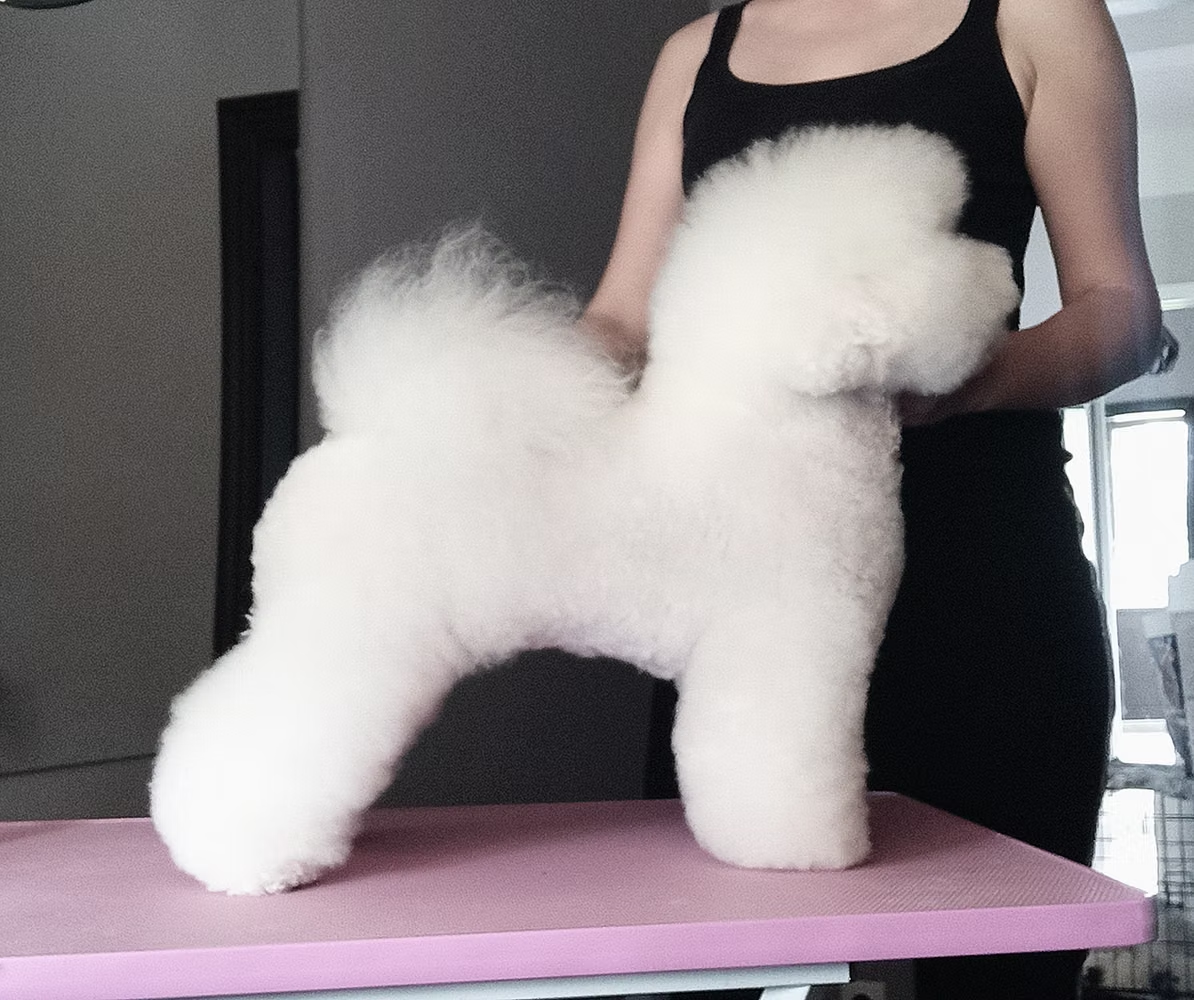
The Bichon Frise is a playful, affectionate breed with a fluffy white coat and a cheerful, sociable disposition that charms everyone it meets.
How the Bichon Frise coat is built, and what that means when you groom it.
Caution: A Bichon Frise coat mats easily.
Fine or long hair tangles at the base of the coat, out of sight, where the mats tighten and pull on the skin. Brushing has to reach right down to the roots in sections, not just skim the surface.
Information: A Bichon Frise needs clipping every few weeks.
This coat keeps growing rather than shedding out, so it has to be trimmed every few weeks. Left to grow it mats down against the skin and traps moisture, dirt and heat.
A few of the Bichon Frise profiles members have added to United Pet Club.
The Bichon Frise is a small, white-coated companion dog from France, well suited to condo living, families, and first-time dog owners in the Philippines.
The Bichon Frise is a compact companion breed best known for its round, powder-puff white coat and cheerful disposition. A full-grown adult stands about 23 to 30 cm (9 to 12 in) at the shoulder and weighs roughly 5 to 8 kg (12 to 18 lb), which puts it solidly in the small or toy category. Its name comes from the French term for a small, curly-coated dog, and for centuries the breed has been kept purely as a companion rather than for hunting or guarding.
Personality is what people notice first. Bichons are affectionate, sociable, and attached to their families, and they keep a playful streak well into their senior years. Most get along easily with kids, visitors, and other household pets. Because the breed was bred to stay close to people, it does not do well left on its own for long stretches, so it fits best in a home where someone is around for most of the day.
The coat takes real upkeep. It sheds very little, which many owners appreciate, but it tangles and mats quickly and needs brushing several times a week along with a professional groom every four to six weeks. Given a typical lifespan of 14 to 15 years, taking on a Bichon Frise is a long-term commitment that suits anyone who wants a small, upbeat dog and is willing to keep up with the grooming routine.
| Attribute | Detail |
|---|---|
| Origin | France |
| Size | Small (about 5 to 8 kg / 12 to 18 lb) |
| Lifespan | 14 to 15 years |
| Group / role | Companion dog |
| Good with | Children, visitors, other pets |
This breed suits anyone who wants a small, people-oriented dog and can offer it daily company. It settles into a condo unit or a house with equal ease, and its modest size and exercise needs make it manageable for retirees and first-time dog owners alike. The real commitment is the coat: owners who cannot commit to frequent brushing and regular trips to the groomer should look at a lower-maintenance breed instead. A household that is out the whole workday is not the best fit, since Bichons tend to get anxious when left alone too long.
The Bichon Frise traces back to small Mediterranean lap dogs favored by French and Spanish nobility, and the breed was formally standardized in France in 1933.
The Bichon Frise comes from an old line of small white lapdogs native to the Mediterranean. Most accounts trace its roots to the Barbet and other small water dogs, which gave rise to the wider bichon family of breeds. Sailors and traders are believed to have carried these dogs from port to port, which is how the type spread across Spain, Italy, and France over the centuries.
By the Renaissance, the small bichon-type dog had won a place at European courts. French and Spanish nobility kept it as a fashionable lapdog, and period paintings show it pampered and well cared for. Interest from the French royal court in particular helped cement the breed's identity as a companion animal rather than a working dog.
Court fashion eventually moved on, and by the 1800s many bichons had ended up as street dogs or performers in traveling circuses, valued for how quickly they picked up tricks. That stint as entertainers is largely what kept the breed going once its aristocratic patrons lost interest.
Organized preservation began after World War I, when breeders in France and Belgium set out to standardize the dog. France adopted an official breed standard in 1933 and settled on the name Bichon a poil frise, French for bichon with the curly coat. Major kennel clubs around the world eventually recognized the breed, and in the Philippines it is registered through the Philippine Canine Club, Inc. (PCCI), the country's national kennel club.
The Bichon Frise is a small white dog with a round, plush double coat, a black nose, dark round eyes, and a tail carried in a curl over its back.
The Bichon Frise carries a sturdy, compact frame under a thick, soft coat. Groomed in the classic rounded style, the head and body take on the puffball look the breed is known for. Dark, round eyes and a black nose stand out against the white coat, and the dark rims around the eyes and lips frame the face. The tail curls up and rests over the back in a plume. The fluffy look aside, the body underneath is well proportioned, and the dog moves with an easy, free gait.
| Trait | Standard |
|---|---|
| Height | About 23 to 30 cm (9 to 12 in) at the shoulder |
| Weight | About 5 to 8 kg (12 to 18 lb) |
| Coat | Double coat: soft, dense undercoat under a coarser, curly outer coat |
| Colors | White; cream, apricot, or buff shading allowed, usually on the ears |
| Eyes | Dark and round, with black or dark brown rims |
The coat is what defines this breed. The plush undercoat combined with the springier outer coat gives that pluck-and-spring-back texture the standard calls for, where the coat gives slightly under the hand and bounces back into place. White is the only accepted color, though puppies and some adults carry cream, apricot, or buff tints, most often around the ears. A small amount of shading is generally accepted, but the dog should still read as white overall. Because the coat keeps growing rather than shedding out on its own, it needs regular clipping and shaping to hold the rounded silhouette.
The Bichon Frise is friendly, affectionate, and playful, gets along with people and other pets, and stays sociable and cheerful throughout its life.
Everything about the Bichon Frise's personality points back to its job as a companion. The breed is warm, affectionate, easygoing, and social, and it generally wants to be wherever its family is. Even fully grown, most Bichons keep a puppyish, clownish energy that owners tend to find endearing.
At home, the breed is gentle and attentive, and it usually handles children well as long as the kids are taught to be gentle in return. Bichons typically greet visitors with enthusiasm rather than suspicion, so they make lively company but poor watchdogs. They also tend to get along with other dogs and with cats, especially when raised together from puppyhood.
The flip side of all that closeness is a low tolerance for being left alone. Some Bichons develop separation anxiety, which can show up as barking or accidents indoors when they are kept apart from their family too long. Early socialization and slowly building up time alone help prevent this. The breed can also be quick to bark at noise or movement outside, so consistent training keeps that habit from getting out of hand.
| Trait | Rating |
|---|---|
| Affection | 5 |
| Energy | 3 |
| Trainability | 4 |
| Vocalness | 3 |
| Shedding | 1 |
The Bichon Frise needs frequent brushing, regular professional grooming, moderate daily exercise, and an indoor home with company, since it mats easily and dislikes being alone.
The Bichon Frise is not a demanding breed overall, but its coat asks for real, ongoing effort. Because the coat keeps growing and mats close to the skin if it is neglected, a steady grooming routine matters far more here than it does for most small breeds.
The Bichon Frise does equally well in a condo or a house, since it is an indoor dog through and through. It is not built to live outdoors and struggles in extreme heat or cold. In the Philippines' hot, humid climate, the breed manages fine as long as it gets regular grooming to keep the coat from trapping heat and has access to a cool, shaded spot to rest. Because the breed bonds so closely with its family and dislikes being isolated, it is happiest in a household where someone is home for most of the day, or where time alone is kept short.
Feed the Bichon Frise a complete small-breed diet in measured meals, watch portions to prevent weight gain, and avoid foods that are toxic to dogs.
A complete, balanced dog food suited to the Bichon Frise's life stage works well for this breed. Small-breed formulas use kibble sized for small mouths and pack an energy density that matches a small, moderately active dog. Because the dog itself is small, portions are modest, and even a small measuring error adds up to real weight gain over time. Use a measuring cup or a kitchen scale instead of eyeballing it, and adjust the amount to keep the dog lean, with a visible waist when viewed from above.
| Life stage | Amount per day | Meals |
|---|---|---|
| Puppy (2 to 6 months) | About 0.5 to 1 cup, per label | 3 to 4 |
| Puppy (6 to 12 months) | About 0.5 to 1 cup | 2 to 3 |
| Adult | About 0.5 to 1 cup | 2 |
| Senior | Adjust down for lower activity | 2 |
Keep treats to around 10 percent of the dog's daily calories so the main diet stays balanced, and subtract whatever treats you give from the regular meal portions. A complete diet usually covers all nutritional needs on its own; add vitamins, joint supplements, or anything else only if a vet recommends it. Keep fresh water available at all times.
The Bichon Frise is generally healthy with a 14 to 15 year lifespan, but can be prone to allergies, dental disease, bladder stones, luxating patella, and eye problems.
The Bichon Frise is, on the whole, a healthy breed that commonly lives 14 to 15 years. Like most small breeds, though, a handful of conditions turn up often enough that owners should know what to watch for. Responsible breeding, regular vet visits, dental care, and keeping the dog at a healthy weight all lower the risk and severity of most of these issues.
| Condition | Signs | Note |
|---|---|---|
| Allergies / skin issues | Itching, ear infections, paw licking | Common; often food or environmental triggers |
| Dental disease | Bad breath, tartar, loose teeth | Small jaw crowds teeth; brush regularly |
| Bladder stones | Straining, frequent or bloody urine | Diet and prompt vet care help manage |
| Luxating patella | Skipping gait, intermittent hind-leg lameness | Kneecap slips; mild to surgical cases |
| Cataracts / eye problems | Cloudy eyes, reduced vision | Screened by eye exams in breeding stock |
The Bichon Frise is intelligent and eager to please, responds well to short reward-based sessions, and needs early focus on house training and time alone.
The Bichon Frise is smart and genuinely eager to please, which makes it an easy dog to teach. Its history as a circus and performing dog is no accident; it has a real knack for tricks and routines. The breed responds best to short, upbeat sessions built around rewards rather than corrections, since it tends to shut down under harsh handling. Two things deserve early attention: house training, which some small breeds pick up more slowly, and gradual practice with being left alone to head off separation anxiety before it starts.
Bichon Frise females typically have small litters of about four to six puppies after a roughly 63-day pregnancy, and responsible breeding starts with health screening.
Breeding a Bichon Frise is not something to take on lightly, and it should be based on health and temperament, not just looks. Dogs reach sexual maturity within their first year, but responsible breeders wait until a female is physically mature, usually around two years old, before her first litter, and they breed only adults that have been health screened. Eye exams and a patella (knee) evaluation are recommended checks before breeding, given the conditions that turn up in this breed.
A female typically comes into heat about twice a year. Pregnancy runs roughly 63 days from conception. Litters tend to be small, usually four to six puppies, which fits the breed's size. Whelping in small breeds can carry added risk, so having a vet on standby before and during birth matters.
Puppies are weaned over several weeks and should stay with their mother and littermates until at least eight weeks old, since that time supports healthy social development. Gentle handling and early exposure during this window lay the groundwork for the friendly, sociable adult the breed is known for.
| Metric | Value |
|---|---|
| Sexual maturity | Within first year; breed later when mature |
| Recommended first litter | Around 2 years for the female |
| Heat cycle | About twice a year |
| Gestation | About 63 days |
| Litter size | About 4 to 6 puppies |
| Weaning / homing age | Weaned by ~6 to 8 weeks; home from 8 weeks |
The city vet office handles the RA 9482 paperwork; a free United Pet Club record is what a finder anywhere can actually search for your Bichon Frise.
A Bichon Frise that gets loose during a storm is identified by whatever record answers the scan, not by the barangay it came from. Give it a record that answers: your mobile number, the dog's photo, and his details, free for life with United Pet Club. Register your dog today and it is done for good.
If a vet has already implanted a chip, the number still has to be filed where a scanner can trace it, because an unfiled chip points at nobody. Register the microchip free on the lifetime plan: any brand sold in the Philippines qualifies, updates after you move house or change SIM cost nothing, and the record stays searchable here and abroad. Create your free account and cover both in one go.
Open a free United Pet Club account, add your Bichon Frise's details and a photo, then save the profile. It stays free for his whole life and sits alongside the city vet office registration RA 9482 requires.
Type the 15-digit chip number into your free account together with your mobile number and address. The lifetime plan charges nothing for the registration or for any update, whatever brand the clinic used.
Yes, RA 9482 requires dog registration with your city or municipal veterinary office, along with current anti-rabies vaccination. The United Pet Club profile is the searchable half: free, worldwide, and tied to your current mobile.
Nothing. The free lifetime plan covers the profile, the microchip record, and every update, with no renewal fees at all.
Common questions about the Bichon Frise cover its size, temperament, grooming needs, lifespan, fit for condos and first-time owners, and availability in the Philippines.
It's a small breed, standing around 23 to 30 cm (9 to 12 in) at the shoulder and weighing about 5 to 8 kg (12 to 18 lb) once fully grown.
Friendly, affectionate, playful, and easygoing. It bonds closely with its family and usually gets along well with kids, visitors, and other pets.
Not really, apart from the coat. The non-shedding coat mats easily and needs brushing several times a week plus a professional trim every four to six weeks, which is the main thing to plan around.
Usually 14 to 15 years with good care: routine vet checkups, dental hygiene, and a healthy weight.
Yes. Its small size and moderate exercise needs suit condo or apartment living, and its trainable, easygoing nature makes it a reasonable pick for first-time dog owners who are ready to handle the grooming.
It's not ideal. This is a companion breed that can develop separation anxiety and barking when left alone for long stretches, so it does best with company for most of the day.
Yes, the breed is well established and fairly easy to find through reputable breeders, with adults sometimes available through breed rescue groups. Look for breeders who screen the parents for eye and knee conditions, and check that the litter is registered with the Philippine Canine Club, Inc. (PCCI).