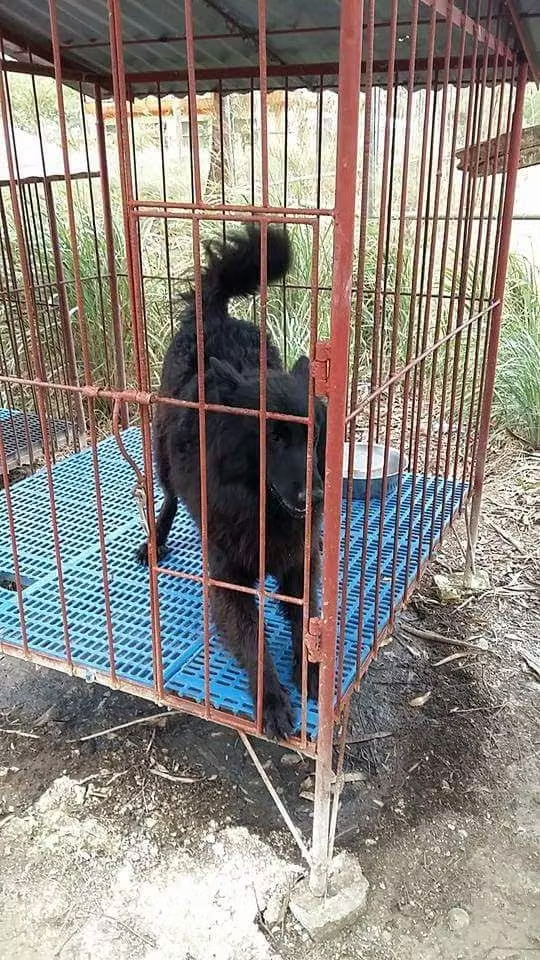
The Belgian Tervuren is an intelligent, elegant herding dog known for its alert vigilance and deep devotion to its family.
How the Belgian Tervuren coat is built, and what that means when you groom it.
Critical: A Belgian Tervuren should not be shaved.
The undercoat keeps heat out as well as in, and the outer coat shields the skin from sun and insect bites. Clipping the whole coat off removes both. It often grows back patchy, soft or a different colour, and in some animals the guard hairs never return properly. Brush the undercoat out instead of cutting it off.
Caution: A Belgian Tervuren coat mats easily.
Fine or long hair tangles at the base of the coat, out of sight, where the mats tighten and pull on the skin. Brushing has to reach right down to the roots in sections, not just skim the surface.
Information: A Belgian Tervuren drops its undercoat in heavy bursts.
The undercoat comes out in heavy bursts over a few weeks. An undercoat rake, or a bath followed by a proper blow-dry, clears it far faster than daily brushing. Clipping the coat down is not a shortcut for this.
A few of the Belgian Tervuren profiles members have added to United Pet Club.
The Belgian Tervuren is a large herding dog from Belgium, known for its intelligence, sharp watchfulness, and close bond with its family.
The Belgian Tervuren is one of four closely related herding breeds developed in Belgium in the late 1800s. What sets it apart from its relatives is its long, fawn to mahogany coat with black overlay. Built to work a full day in the field, it pairs strong stamina with a watchful, thinking temperament.
The breed bonds closely with the people it lives with and tends to stay near them rather than wander off on its own. It notices changes in its surroundings quickly and will bark to announce visitors, which makes it a dependable watchdog. Within its own household it is affectionate and playful, though it tends to hold back around strangers until it decides they can be trusted.
A Tervuren needs a job to do. Without daily physical exercise and mental work, the same drive that makes it excel at herding and dog sports can turn into pacing, excessive barking, or destructive habits at home. This is a working breed at heart, and it does best with fur parents who treat it as one.
The Belgian Tervuren suits an active fur parent who has time for daily training and exercise. It fits well with people who want a partner for dog sports, hiking, or herding work, and who can provide consistent structure at home. It is not the right match for a household that's away for long hours or wants a low-maintenance pet.
| Attribute | Detail |
|---|---|
| Origin | Belgium |
| Size | Large |
| Lifespan | 12 to 14 years |
| Group/role | Herding dog |
| Good with | Active households that can commit to daily exercise and training |
The Belgian Tervuren took shape in Belgium in the late 1800s as the long-haired fawn variety of the Belgian Shepherd, named after the village of Tervuren.
Belgium in the 1880s had a large population of working farm and herding dogs that varied widely in coat and color. In 1891, a group of breeders together with veterinarian Adolphe Reul began studying and standardizing these dogs, work that led to the Belgian Shepherd in its several coat varieties.
The Tervuren variety is the long-haired dog with a fawn to mahogany coat. It takes its name from the village of Tervuren, near Brussels, home to early breeders associated with this type. A breeder named Corbeel and his dogs are commonly linked to the variety's foundation.
In its home country, the four Belgian Shepherd varieties (Tervuren, Groenendael, Malinois, and Laekenois) are treated as one breed separated by coat and color. Several other registries record them as separate breeds instead. This is why the Tervuren is sometimes described as a variety and sometimes as a breed of its own, depending on where you are.
The Tervuren was originally bred to herd and guard livestock, and those same qualities later carried it into police, military, search, and competitive dog sport work. Its history as a working dog still shapes the energy and drive seen in the breed today.
The Belgian Tervuren is a large, square-built dog with a long fawn to mahogany double coat, black overlay, and a black mask.
The Belgian Tervuren is a medium to large dog with a square outline, meaning its body length is close to its height at the shoulder. Its build is balanced rather than heavy, giving an impression of strength without bulkiness. The head sits high, the ears are triangular and erect, and the expression is alert, almost quizzical.
Its most distinctive feature is the coat. It is long, straight, and full, with a thicker collarette of hair around the neck and longer feathering on the legs and tail. The base color ranges from warm fawn to deep mahogany, with black-tipped hairs that give the coat a shaded, overlaid look.
| Trait | Detail |
|---|---|
| Height | Males about 61 to 66 cm (24 to 26 in); females about 56 to 61 cm (22 to 24 in) |
| Weight | About 20 to 34 kg (45 to 75 lb) |
| Coat | Long, straight double coat with a collarette and feathered legs |
| Colors | Fawn to mahogany with black overlay and a black mask |
| Eyes | Medium, almond shaped, dark brown |
The outer coat feels firm to the touch, while the undercoat is dense, which helps the breed handle varied weather. In many dogs, the black overlay deepens with age, and the face carries a black mask. Color depth can vary from dog to dog, but the fawn-to-mahogany range with black shading is the recognized pattern. The coat sheds steadily all year, with heavier shedding during seasonal changes. In the Philippines' warm, humid climate, that dense undercoat means regular brushing matters even more to keep the dog comfortable.
The Belgian Tervuren is loyal, intelligent, and alert. It is devoted to its family, reserved with strangers, and watchful by nature.
The Belgian Tervuren is intelligent and highly attentive to its people. It tends to attach itself closely to the household and prefers being part of the daily routine rather than left on its own. With family members, it is affectionate, playful, and sensitive to mood and routine changes.
With strangers, the breed is usually reserved and observant. It is not typically aggressive without reason, but it watches new people and situations closely and will alert the household when something feels off. This vigilance makes it a capable watchdog, though it also means early and ongoing socialization matters a great deal.
Around other pets, a well-socialized Tervuren can live peacefully, but its herding instinct may lead it to chase or circle smaller animals, and even children who run around. Supervision and training help manage this drive. The breed is energetic and needs an outlet for both body and mind, or its sharp attention can turn into nuisance behavior at home.
| Trait | Rating |
|---|---|
| Affection | 5 |
| Energy | 5 |
| Trainability | 5 |
| Vocalness | 4 |
| Shedding | 4 |
The Belgian Tervuren needs regular coat care, plenty of daily exercise, and an environment with enough space and mental stimulation to stay balanced.
A home with a securely fenced yard suits the breed well, though a Tervuren can adapt to a condo or a smaller space in the city as long as its exercise needs are met. It does best where it can stay close to its family rather than being left outdoors on its own. Its dense double coat is built more for cool to moderate climates, so in the Philippines' year-round heat and humidity, generous shade, fresh water, and a cool spot indoors (even just an electric fan or aircon during the hottest months) go a long way in keeping this breed comfortable.
The Belgian Tervuren needs a complete and balanced diet portioned to its activity level, fed across two meals a day once it reaches adulthood.
The Belgian Tervuren does well on complete, balanced dog food suited to its life stage and activity level. As an active working breed, it may need more energy than a sedentary dog of the same size, but portions still need to match the individual dog to avoid weight gain. Measure out food rather than leaving it out all day, and adjust the amount based on body condition.
Fresh water should be available at all times, especially given the Philippines' warm climate. The amounts below are general guidance; follow the feeding chart on the food packaging and the advice of a veterinarian for the specific dog.
| Life stage | Amount per day | Meals |
|---|---|---|
| Puppy (2 to 6 months) | Per the product's feeding chart, divided | 3 to 4 |
| Junior (6 to 12 months) | About 2 to 3 cups | 2 to 3 |
| Adult | About 2 to 3.5 cups | 2 |
| Senior | About 2 to 3 cups, adjusted as needed | 2 |
Keep treats to no more than about ten percent of daily calories so the main diet stays balanced. Most dogs on a complete diet do not need extra supplements; add them only on a veterinarian's advice. Since this is a deep-chested, active breed, avoid heavy exercise right before and after large meals.
The Belgian Tervuren is generally healthy with a lifespan of 12 to 14 years, though it can be prone to hip and elbow problems and certain inherited conditions.
The Belgian Tervuren is generally a hardy breed with a typical lifespan of 12 to 14 years. Responsible breeders screen their breeding stock for known inherited problems, which lowers the risk in well-bred puppies. As with many active large breeds, joint health and weight management matter throughout the dog's life.
| Condition | Signs | Note |
|---|---|---|
| Hip dysplasia | Limping, stiffness, difficulty rising | Screen breeding dogs; keep weight under control |
| Elbow dysplasia | Foreleg lameness, reduced activity | Inherited joint malformation |
| Epilepsy | Seizures | Manageable with veterinary care in many cases |
| Progressive retinal atrophy | Night blindness, vision loss | Inherited eye disease; eye screening helps |
| Thyroid issues | Weight changes, coat changes, low energy | Diagnosed through a blood test, treatable |
The Belgian Tervuren is highly trainable and eager to work, and it responds best to consistent, reward-based training that starts early.
The Belgian Tervuren is one of the more trainable breeds, with strong intelligence and a real desire to work with its handler. It learns quickly and retains training well, which suits it to obedience, herding, agility, tracking, and protection sports. That same sharpness means it gets bored with repetition fast, and it easily picks up on an inconsistent or harsh handler.
The breed is sensitive and works best with patient, positive methods. Harsh correction can damage the bond and create avoidance instead of cooperation. Early socialization to people, animals, and different settings is especially important, given the breed's natural caution around strangers.
Belgian Tervurens reach breeding maturity at about two years old, carry litters of roughly six to ten puppies, and need careful health screening of both parents.
Responsible breeding of the Belgian Tervuren focuses on temperament, working ability, and health. Although the dogs reach sexual maturity earlier, breeders generally wait until about two years of age so that health screening, including hip, elbow, and eye evaluations, can be completed and the dog is physically and mentally mature enough for breeding.
Gestation lasts roughly 63 days, and litters typically range from six to ten puppies. The dam usually whelps and raises the litter under close monitoring. Puppies stay with their mother and littermates through the early weeks for nursing and social development, and they generally go to new homes at around eight weeks old. Early handling and exposure to everyday household life help set up the well-socialized, confident adult this breed is known for.
| Metric | Value |
|---|---|
| Breeding maturity | About 2 years old |
| Cycle (female) | Roughly twice a year |
| Gestation | About 63 days |
| Average litter size | 6 to 10 puppies |
| Weaning age | About 6 to 8 weeks |
| Homing age | Around 8 weeks old |
The city vet office handles the RA 9482 paperwork; a free United Pet Club record is what a finder anywhere can actually search for your Belgian Tervuren.
A Belgian Tervuren that gets loose during a storm is identified by whatever record answers the scan, not by the barangay it came from. Give it a record that answers: your mobile number, the dog's photo, and his details, free for life with United Pet Club. Register your dog today and it is done for good.
If a vet has already implanted a chip, the number still has to be filed where a scanner can trace it, because an unfiled chip points at nobody. Register the microchip free on the lifetime plan: any brand sold in the Philippines qualifies, updates after you move house or change SIM cost nothing, and the record stays searchable here and abroad. Create your free account and cover both in one go.
Open a free United Pet Club account, add your Belgian Tervuren's details and a photo, then save the profile. It stays free for his whole life and sits alongside the city vet office registration RA 9482 requires.
Type the 15-digit chip number into your free account together with your mobile number and address. The lifetime plan charges nothing for the registration or for any update, whatever brand the clinic used.
Yes, RA 9482 requires dog registration with your city or municipal veterinary office, along with current anti-rabies vaccination. The United Pet Club profile is the searchable half: free, worldwide, and tied to your current mobile.
Nothing. The free lifetime plan covers the profile, the microchip record, and every update, with no renewal fees at all.
Common questions about the Belgian Tervuren cover its size, temperament, care needs, lifespan, suitability as a family dog, and availability in the Philippines.
It is a large dog. Males stand about 61 to 66 cm (24 to 26 in) at the shoulder and females about 56 to 61 cm (22 to 24 in), with weight generally between 20 and 34 kg (45 to 75 lb).
It is loyal, intelligent, energetic, and alert. It bonds closely with its family, tends to be reserved with strangers, and is naturally watchful of its surroundings.
It is a high-maintenance breed when it comes to exercise and mental engagement. It needs daily physical activity and mental work, plus regular brushing of its long double coat, especially given our hot and humid weather.
The typical lifespan is 12 to 14 years with good care, proper nutrition, and regular veterinary attention.
It can be an excellent family dog for active households that provide training, exercise, and quality time together. Its herding drive means it should be supervised around very young children and small animals.
Yes. It sheds steadily all year with heavier shedding during seasonal changes, so expect regular brushing and loose hair around the house.
They are less common here than many popular breeds. Finding one usually means working with a dedicated breeder, whether local or based abroad, or watching for a breed-specific rescue, and a long wait is common.