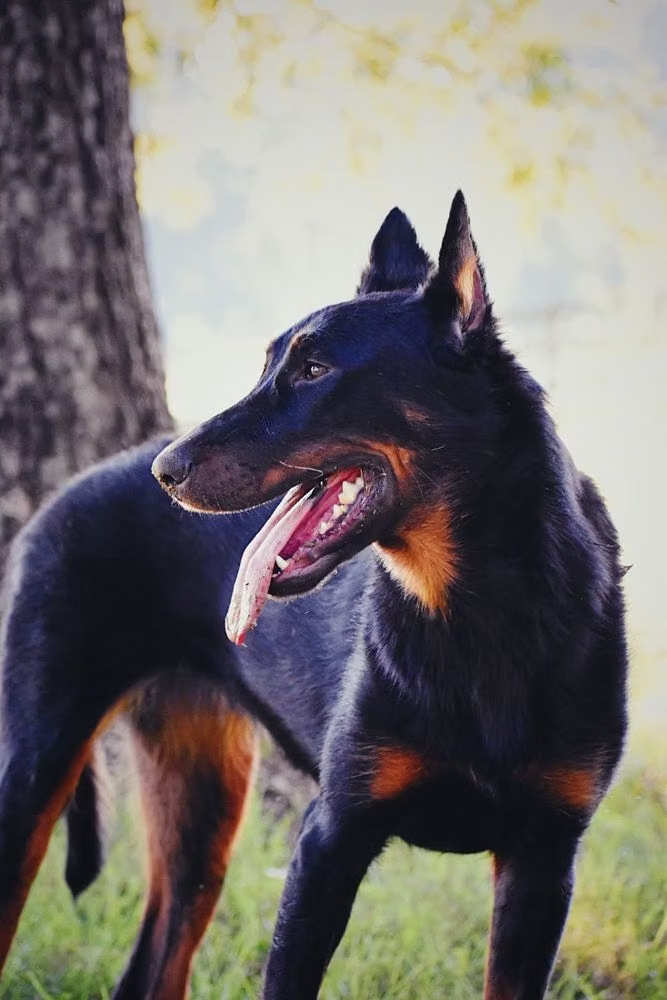
The Beauceron is a loyal, powerful French herding dog prized for its intelligence, courage, and steadfast guarding instinct.
How the Beauceron coat is built, and what that means when you groom it.
Critical: A Beauceron should not be shaved.
The undercoat keeps heat out as well as in, and the outer coat shields the skin from sun and insect bites. Clipping the whole coat off removes both. It often grows back patchy, soft or a different colour, and in some animals the guard hairs never return properly. Brush the undercoat out instead of cutting it off.
Information: A Beauceron drops its undercoat in heavy bursts.
The undercoat comes out in heavy bursts over a few weeks. An undercoat rake, or a bath followed by a proper blow-dry, clears it far faster than daily brushing. Clipping the coat down is not a shortcut for this.
A few of the Beauceron profiles members have added to United Pet Club.
The Beauceron is a large French herding and guard dog known for loyalty and intelligence. It suits active, experienced owners who can meet its training and exercise needs.
The Beauceron is a large working dog from France, bred to herd sheep and cattle and to guard livestock and property. A full-grown Beauceron stands about 61 to 70 cm (24 to 27.5 in) at the shoulder and weighs between 32 and 50 kg (70 to 110 lb), with a deep chest, solid bone, and an athletic build. Filipino dog owners may also come across the breed's other names, Berger de Beauce or Bas Rouge, the second name referring to the tan markings on its legs.
This is a confident, intelligent dog with a strong sense of duty. The Beauceron forms a tight bond with its family and stays reserved around strangers, watching quietly before it warms up. Its herding background shows in how alert it stays, how it tries to control the movement of people and animals around it, and how willingly it puts in long hours of work.
The coat lies short and dense over the body, with slightly longer hair under the tail and at the back of the legs. Most Beaucerons carry a black and tan coat, though a gray, black, and tan pattern called harlequin also appears in the breed. One trait that sets the Beauceron apart is the double dewclaws on each hind leg, a feature the breed standard specifically calls for.
| Attribute | Detail |
|---|---|
| Origin | France |
| Size | Large (about 32 to 50 kg) |
| Lifespan | 10 to 12 years |
| Group or role | Herding and guarding |
| Good with | Family and older children when raised and trained properly; needs early exposure to other household pets |
The Beauceron fits owners who can commit to steady training, daily physical work, and clear leadership at home. It thrives with people who keep an active routine, whether that means long walks, jogging, herding trials, tracking, or protection sport. First-time dog owners often find the breed a handful because of its size, intelligence, and guarding drive. A securely fenced yard or compound, plus real time spent with the family, suits this breed far better than being left alone for long stretches. Owners interested in showing or working trials can check with the Philippine Canine Club, Inc. (PCCI), the country's kennel club, for breed registration and event information.
The Beauceron took shape on the open farmland of northern France as a herding and guard dog, and breeders gave it a formal description by the late 1800s.
The name Beauceron comes from Beauce, a farming plain southwest of Paris. The breed grew out of French farm dogs kept to move and guard flocks of sheep and herds of cattle. Those dogs needed the stamina to cover wide open fields, the sense to manage livestock, and the nerve to stand up to predators and thieves.
A priest named Abbe Rozier gave the breed its first detailed description in 1809, in writing that covered French herding dogs and set apart the short-coated plains dog from its long-coated mountain cousin. The long-coated dog eventually became the Briard, and the short-coated one became the Beauceron. Kennel clubs recognized the two as separate breeds only toward the end of the nineteenth century.
In 1893, veterinarian Pierre Megnin laid out a clear description of the breed. France's first breed club, the Club des Amis du Beauceron, followed in 1922, and a written standard soon fixed traits such as the black and tan coat, the double hind dewclaws, and the herding build.
Through both World Wars, the Beauceron served as a military and messenger dog, carrying communications, sniffing out mines, and tracking on the battlefield. In France today the breed still works, taking on herding, police and military duties, and protection sport, on top of its role as a family companion.
The Beauceron is a large, muscular dog with a short black and tan coat, double dewclaws on each hind leg, and a balanced, powerful build.
The Beauceron carries a substantial, rectangular frame, well-muscled and set on an upright, confident stance. Its head runs long and in proportion to the body, with a flat to slightly rounded skull, a strong muzzle, and dark brown eyes spaced a fair distance apart. Owners may leave the ears natural, folding close to the head, though in some places breeders once cropped them to stand erect. The chest sits deep, the legs run straight and strong, and together these traits give the breed an easy gait that covers ground without wasted effort.
| Trait | Standard |
|---|---|
| Height | Males about 65 to 70 cm (25.5 to 27.5 in); females about 61 to 67 cm (24 to 26.5 in) |
| Weight | About 32 to 50 kg (70 to 110 lb) |
| Coat | Short, dense, and coarse on the body; slightly longer on the tail and rear legs |
| Colors | Black and tan; gray, black, and tan (harlequin) |
| Eyes | Dark brown; one wall eye allowed in harlequins |
The outer coat runs short, about 4 cm (1.5 in) on the body, lying flat and dense over a thick undercoat that helps the dog handle cold, wet conditions back in its native France. The black and tan pattern shows up most often, with rich tan markings on the legs, chest, eyebrows, muzzle, and underside of the tail. Those leg markings gave rise to the nickname Bas Rouge, French for red stockings.
The harlequin pattern mixes gray patches with the black and tan, and the standard calls for a balanced spread of color rather than too much gray. A defining trait of the breed is the double dewclaws on each hind leg, set low and separated enough to look like extra toes. Judges treat a single hind dewclaw, or the absence of one, as a fault in the show ring.
The Beauceron is loyal, intelligent, and protective. It stays devoted to its family, watchful with strangers, and needs an outlet for its strong drive to work.
The Beauceron carries itself with confidence and a level head, and it forms a deep attachment to its family. Once it matures, it tends to settle into a calm, steady presence at home, though its guarding instinct keeps it alert to whatever goes on around it. With its own people, it shows affection readily and cooperates well, often trailing family members from room to room just to stay close.
Around strangers, the Beauceron holds back by nature. It sizes up new people before it accepts them and rarely greets visitors with instant warmth. Socialization that starts early and continues matters here, so that caution does not turn into suspicion. The breed stays patient with children it grows up with, though its size and energy mean an adult should supervise time with very young kids.
With other animals, the Beauceron can live comfortably with pets it is raised alongside, though its herding instinct may push it to chase or try to control their movement, and some individuals act dominant toward other dogs. Gradual introductions and rules the whole household sticks to help it settle into a home with several pets. This is a working breed at heart, one that needs a job to do, and a Beauceron left without enough to occupy its mind and body can turn bored and hard to manage.
| Trait | Rating |
|---|---|
| Affection | 4 |
| Energy | 5 |
| Trainability | 5 |
| Vocalness | 2 |
| Shedding | 3 |
The Beauceron needs daily exercise, regular brushing, and a home with enough space and structure to channel its working energy.
Grooming a Beauceron takes little effort, but keeping up with its activity and engagement needs takes a lot more. Its care revolves around meeting its physical and mental needs rather than maintaining its coat.
The Beauceron does best in a home with a securely fenced yard or compound and an active household to match its energy. Its dense undercoat, built for the cold of its native France, works against it in the warm, humid Philippine climate, so owners need to manage heat rather than cold: plenty of shade, fresh water on hand at all times, and exercise scheduled for early morning or evening rather than the heat of midday. The breed is not suited to long hours shut away alone or to condo living, unless the owner can commit to substantial daily exercise and company.
The Beauceron needs a balanced diet built for a large, active dog, served in measured portions that support its working frame and protect its joints.
A Beauceron should eat a complete and balanced diet formulated for large, active dogs. How much it needs each day depends on its age, weight, and activity level, with dogs putting in hard physical work needing more food than companions kept to a moderate routine. Because the breed carries a deep chest, splitting the daily ration into two meals rather than one large sitting is common practice and helps lower the risk of bloat.
| Life stage | Amount per day | Meals |
|---|---|---|
| Puppy (2 to 6 months) | About 3 to 5 cups, split across meals | 3 to 4 |
| Adolescent (6 to 12 months) | About 3 to 4 cups | 2 to 3 |
| Adult | About 3 to 5 cups, based on size and activity | 2 |
| Senior | Adjusted down for reduced activity | 2 |
Keep treats to roughly 10 percent of daily calories so the main diet stays balanced. For a large, athletic breed, some owners and veterinarians add joint support such as glucosamine, though any supplement is worth discussing with a vet first. Keep fresh water available at all times, especially around exercise. Skip heavy meals right before or after strenuous activity to lower the risk of an upset stomach and bloat.
The Beauceron is generally healthy and typically lives 10 to 12 years, though as a large, deep-chested breed it can face joint problems and bloat.
The Beauceron is a hardy working breed with a typical lifespan of 10 to 12 years. Responsible breeding and routine veterinary care keep the breed sound overall, but its size and deep chest bring a handful of conditions owners should watch for. Choosing a breeder who screens breeding stock for hip and heart issues lowers the odds of inherited disease in a puppy.
| Condition | Signs | Note |
|---|---|---|
| Hip dysplasia | Stiffness, limping, trouble getting up | Screen breeding dogs; keep the dog at a lean weight |
| Gastric dilatation-volvulus (bloat) | Swollen belly, retching without vomiting, visible distress | An emergency; deep-chested breeds face higher risk |
| Dilated cardiomyopathy | Tiredness, coughing, fainting | Picked up through cardiac screening |
| Osteochondritis dissecans | Lameness in a young, growing dog | Linked to rapid growth and joint stress |
The Beauceron is highly intelligent and easy to train. It responds best to consistent, fair handling and early socialization from a confident owner.
The Beauceron ranks among the more trainable working breeds, quick to pick things up and eager to work alongside a handler it respects. That intelligence comes paired with independence, so the breed does best with an owner who stays consistent, calm, and clear about the rules. Harsh handling tends to backfire and chips away at trust, while fair, structured training builds a dog you can rely on. Since the breed matures slowly, often not settling mentally until around two to three years old, patience over the long haul pays off.
Socialization should start in puppyhood and continue through the dog's whole life. Introducing a young Beauceron to plenty of people, places, sounds, and other animals tempers its natural wariness and supports a well-balanced adult temperament.
The Beauceron reaches breeding maturity slowly, produces litters of average size for a large breed, and benefits from health screening in both parents.
The Beauceron matures slowly, both in body and in mind, and responsible breeders wait until a dog is fully grown and health-tested before breeding it. Females usually are not bred before they turn two, by which point hip and heart screening results are already on hand. Mating follows the female's heat cycle, and pregnancy in dogs runs about 63 days on average.
Litters in the Beauceron tend to run moderate to large, commonly six to eight puppies, though bigger litters do happen. Newborn puppies already carry the hind dewclaws that mark the breed, and breeders check these along with coat color and structure. Puppies wean at around 6 to 8 weeks, with handling and socialization starting within the litter to support the calm, confident temperament the breed is known for. Given the breed's working background and guarding drive, choosing breeding stock for sound temperament matters just as much as physical health.
| Metric | Value |
|---|---|
| Female breeding age | Usually from about 2 years old |
| Gestation | About 63 days |
| Average litter size | About 6 to 8 puppies |
| Weaning age | About 6 to 8 weeks |
| Recommended screening | Hip evaluation and cardiac check for both parents |
The city vet office handles the RA 9482 paperwork; a free United Pet Club record is what a finder anywhere can actually search for your Beauceron.
A Beauceron that gets loose during a storm is identified by whatever record answers the scan, not by the barangay it came from. Give it a record that answers: your mobile number, the dog's photo, and his details, free for life with United Pet Club. Register your dog today and it is done for good.
The clinic's part ended with the implant; the tracing part is yours. File your Beauceron's 15-digit number with United Pet Club and every scan leads to your phone: free for life, all brands accepted, updates free every time your details change. Microchip registration plus a free account finishes the job.
Open a free United Pet Club account, add your Beauceron's details and a photo, then save the profile. It stays free for his whole life and sits alongside the city vet office registration RA 9482 requires.
Type the 15-digit chip number into your free account together with your mobile number and address. The lifetime plan charges nothing for the registration or for any update, whatever brand the clinic used.
Yes, RA 9482 requires dog registration with your city or municipal veterinary office, along with current anti-rabies vaccination. The United Pet Club profile is the searchable half: free, worldwide, and tied to your current mobile.
Nothing. The free lifetime plan covers the profile, the microchip record, and every update, with no renewal fees at all.
Common questions about the Beauceron cover its size, temperament, care demands, lifespan, fit for first-time owners, and how easy it is to find locally.
The Beauceron is a large breed. Males stand about 65 to 70 cm (25.5 to 27.5 in) at the shoulder and females about 61 to 67 cm (24 to 26.5 in), with weight running roughly 32 to 50 kg (70 to 110 lb) depending on size and sex.
It can make a devoted family dog for households ready to meet its needs. It bonds closely with its people and stays patient with children it grows up with, though its size and guarding instinct mean young kids need supervision and the dog needs early socialization.
Grooming takes little effort, but the breed is demanding in exercise and training. It needs 1 to 2 hours of activity a day plus mental work, and it does best with an experienced, active owner who gives it structure.
A Beauceron typically lives 10 to 12 years. Keeping the dog lean, scheduling routine veterinary care, and choosing health-screened breeding lines all support a long, healthy life.
It usually is not recommended as a first dog. Its intelligence, working drive, and protective nature call for confident, consistent handling, which suits owners with prior experience better.
The breed is well established in France and present in many countries, but it remains far less common than popular companion breeds, and Beauceron puppies are hard to find locally. Getting one often means reaching out to a dedicated breeder overseas, coordinating with the Philippine Canine Club, Inc. on import and registration, and waiting for a planned litter.
Double dewclaws on each hind leg are a long-standing trait of the breed and a requirement in the breed standard. Breeders and judges treat them as an identifying trait of the Beauceron, not a flaw.