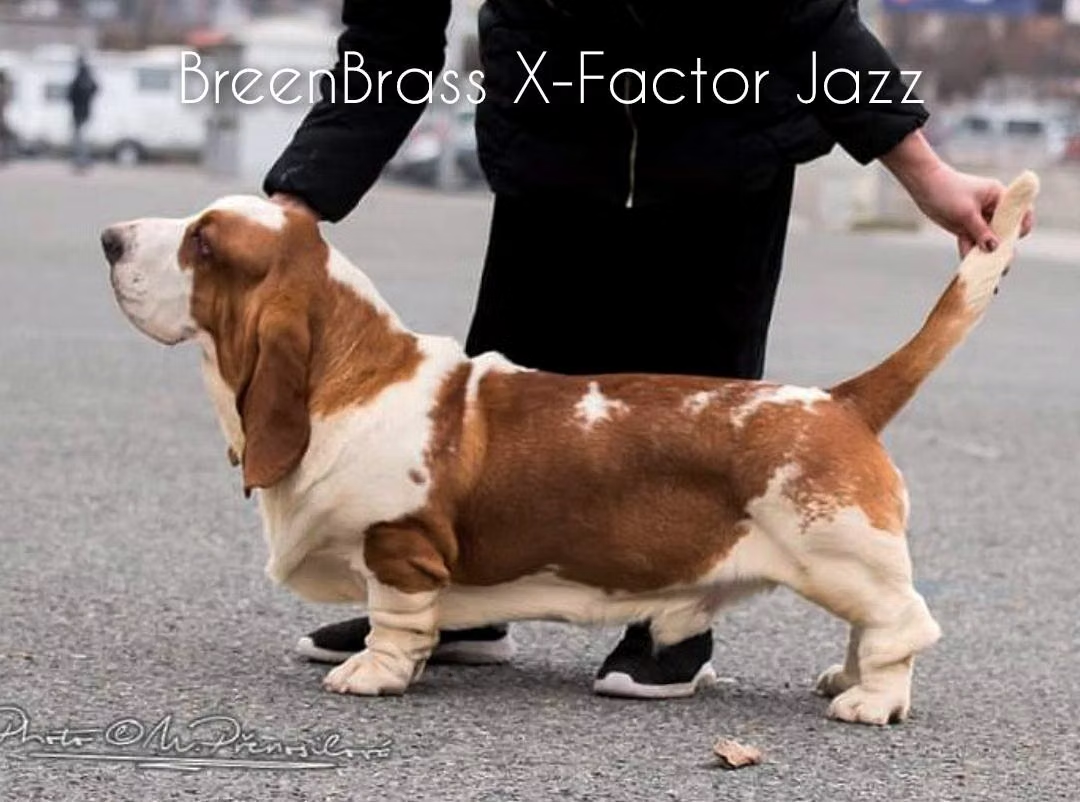
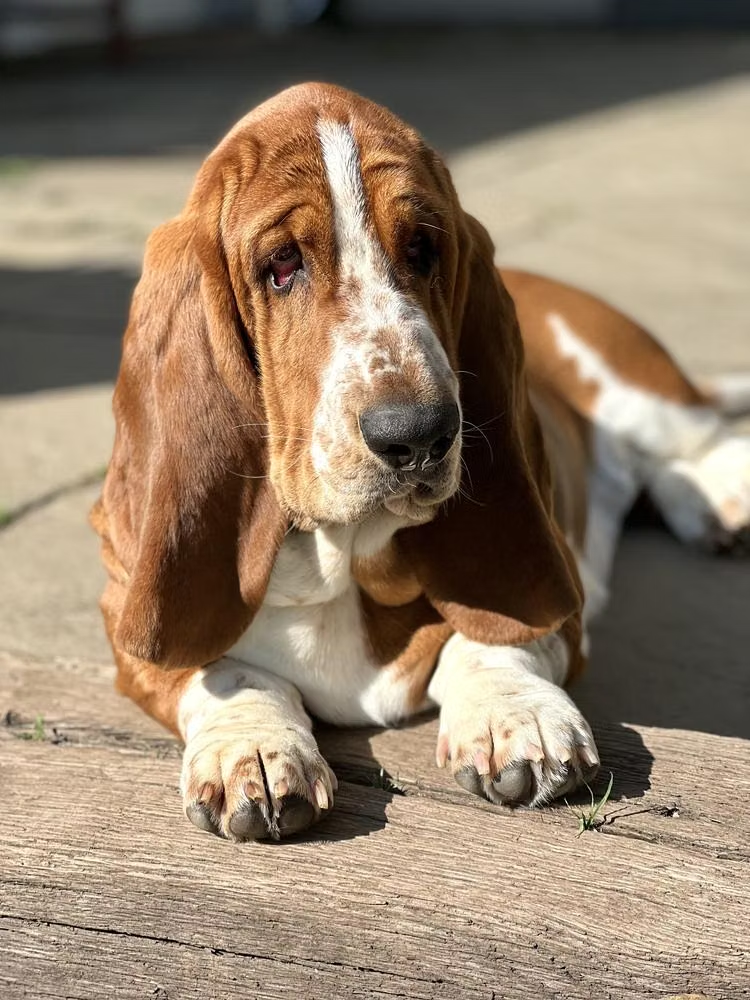
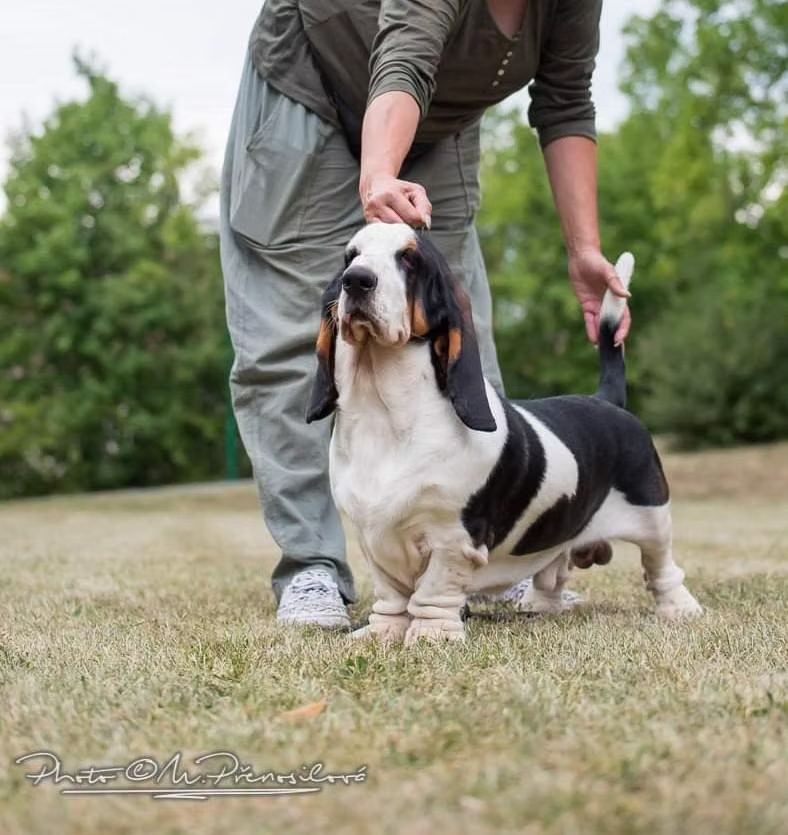
The Basset Hound is a gentle, good-natured scenthound known for its long ears, soulful eyes, and easygoing charm.
How the Basset Hound coat is built, and what that means when you groom it.
A few of the Basset Hound profiles members have added to United Pet Club.
The Basset Hound is a gentle, easygoing scenthound from France, known for its long ears, soulful eyes, and calm nature around family and other pets.
The Basset Hound is a short-legged scenthound bred in France to track game on foot, moving slowly enough for a hunter to keep pace without a horse. It stands no taller than 15 inches at the shoulder, yet the heavy, dense body means most adults weigh 40 to 65 pounds. The trademark long ears, loose skin, and drooping eyes give the breed a mournful expression that has little to do with its actual temperament, which is calm and friendly.
Among scenthounds, the Basset has one of the sharpest noses in the dog world, ranking just behind the Bloodhound. Breeders believe the long ears and loose facial skin help sweep scent particles up toward the nose while the dog works a trail. Most Basset Hounds today live as house pets rather than hunting dogs, but the instincts bred into them for generations still surface: they follow a scent before they follow a command, set their own pace, and are not always quick to come when called.
The breed's patience and tolerance make it a dependable presence in a busy home, though the same independent streak that once served it well in the field can look like plain stubbornness indoors. Training this dog calls for consistency more than firmness.
| Attribute | Detail |
|---|---|
| Origin | France |
| Size | Medium (up to 15 in tall, 40 to 65 lb) |
| Lifespan | 12 to 13 years |
| Group/role | Scenthound, companion |
| Good with | Children, other dogs, families |
This breed suits owners who want an affectionate, low-key dog and do not mind a slower pace of life. Bassets get along well with children and other household pets, and they can settle into apartment or condominium living as long as they get a walk every day. They are a poor match for anyone hoping for quick off-leash recall or a jogging companion: the short legs, heavy frame, and powerful nose keep this dog's attention on the ground. New owners should also expect some drooling, regular shedding, and a deep bark or bay that carries.
The Basset Hound was developed in France as a short-legged scenthound for hunting on foot, then refined in Britain into the breed recognized today.
France produced the short-legged hounds that became the Basset, developed for hunters who tracked game on foot instead of on horseback. The word basset comes from the French bas, meaning low, and describes exactly what set the breed apart: a body built close to the ground that could push through thick brush while the hunter kept up without a mount.
Records of short-legged French hounds go back to the sixteenth century, with the type closely tied to hunting kept by monasteries and rural estates. These dogs tracked rabbit, hare, and similar small game at a pace slow enough for a hunter on foot to follow the whole way.
British breeders took up the Basset Hound in the latter half of the nineteenth century and worked to fix its type and temperament, crossing French and British lines. The breed found favor with both sporting hunters and show exhibitors, and it soon crossed the Atlantic to the United States as well.
By the twentieth century the Basset Hound had settled into its modern role as a family companion rather than a working hound, a shift owed largely to its calm disposition and unmistakable look. The breed is still recognized as a scenthound today and continues to compete in field trials. In the Philippines, the breed is recognized through the Philippine Canine Club, Inc. (PCCI), the country's national kennel club, which registers Basset Hounds and sanctions the shows where the breed is exhibited.
A Basset Hound is long, low, and heavy boned, with very long ears, loose wrinkled skin, drooping eyes, and a short, dense coat in classic hound colors.
A Basset Hound is noticeably longer than it is tall, with a deep chest, heavy bone, and short legs built for stamina rather than speed. The modest height is deceiving. Between the dense body and thick bone, this is a genuinely heavy dog for its size. The head is broad and domed, set off by long ears that hang past the tip of the muzzle and loose skin that wrinkles across the brow. Slightly drooping eyes give the face its familiar soulful look, and the tail sits high with a gentle curve, usually the last part of the dog visible when it disappears into tall grass.
| Trait | Standard |
|---|---|
| Height | Up to 15 in (38 cm) at the shoulder |
| Weight | 40 to 65 lb (18 to 29 kg) |
| Coat | Short, smooth, dense, weather-resistant |
| Colors | Tricolor, black and white, lemon and white, red and white |
| Eyes | Brown, soft and slightly sunken, mild drooping lower lids |
The coat lies short, smooth, and dense against the body, tough enough to shrug off rain and brambles during a day in the field. It needs almost no trimming. The classic pattern is the tricolor of black, white, and tan, though black and white, lemon and white, and red and white all appear regularly and are equally accepted. What stands out more than color is the skin itself: loose and elastic, it folds and wrinkles around the head, neck, and legs and is a defining part of the breed's look.
The Basset Hound is gentle, affectionate, and good natured with people and other pets, though its independent streak often shows up as stubbornness.
A Basset Hound is calm, affectionate, and easygoing by nature. It forms a close bond with its family and shows real patience around children, which is part of why the breed works so well in a busy household. Strangers usually get a friendly welcome rather than suspicion, so this is not a dog that will guard the gate, though its deep bark or bay will certainly let the household know someone has arrived.
Bassets were bred to hunt in packs, and that history shows in how they behave at home: most get along well with other dogs and, if raised alongside them, with cats too. Because pack life is part of their makeup, they dislike being left alone for long stretches and can grow bored or anxious when isolated.
The same independence that made the breed effective in the field can look like stubbornness on the living room floor. A Basset following a scent may tune out every command until the trail goes cold, and its attention wanders easily once something interesting catches its nose. Owners tend to describe the breed as good natured but opinionated, and patience paired with a steady routine works far better than any attempt to push the dog into compliance.
| Trait | Rating |
|---|---|
| Affection | 5 |
| Energy | 2 |
| Trainability | 2 |
| Vocalness | 4 |
| Shedding | 3 |
A Basset Hound needs regular ear and skin fold cleaning, moderate daily exercise, and careful weight control, with an easy, low-effort coat.
Caring for a Basset Hound falls in the moderate range of effort, but the long ears and skin folds need consistent attention to avoid infection, especially in a country like the Philippines, where year-round heat and humidity make ear infections a real and recurring risk for a long-eared breed. The short coat sheds steadily through the year and brushes out easily with a weekly session.
A Basset Hound settles comfortably into an apartment or a house as long as it gets its daily walk and does not spend long stretches alone. The short legs and long back make stairs and jumping on and off furniture risky, so ramps or pet steps are worth having around to protect the spine. The breed tolerates a range of climates but struggles in extreme heat, which makes shade, water, and cooler times of day important for outdoor time. Because Bassets are scent driven rather than fast, a secure yard or leash is essential so the dog does not wander off chasing a trail.
A Basset Hound needs measured, balanced meals and strict portion control, since the breed gains weight easily and extra weight strains its back and joints.
A Basset Hound should be fed a complete and balanced dog food matched to its life stage and size. This is a breed that gains weight easily, partly because it is highly food motivated and partly because its energy needs are modest, and any extra weight puts real strain on the long back and short legs. Measure every meal instead of leaving food out, and adjust the amount to keep a visible, lean waistline. Clean water should be available at all times.
| Life stage | Amount per day | Meals |
|---|---|---|
| Puppy (2 to 6 months) | 1.5 to 2.5 cups | 3 to 4 |
| Puppy (6 to 12 months) | 2 to 3 cups | 2 to 3 |
| Adult | 1.5 to 2.5 cups | 2 |
| Senior | 1.5 to 2 cups | 2 |
Keep treats to roughly 10 percent of daily calories at most, and deduct them from the regular meal portion so the dog does not creep up in weight. Small, low-calorie treats work best for training. Joint supplements containing glucosamine and omega-3 fatty acids may help support the spine and joints, but check with a veterinarian before adding any supplement to the diet.
A Basset Hound lives about 12 to 13 years and is prone to ear infections, back and joint problems, bloat, and weight-related health issues.
A Basset Hound typically lives 12 to 13 years and is a generally hardy breed, but its distinctive build brings a handful of specific risks. The long back and heavy frame put pressure on the spine, the deep chest raises the risk of bloat, and the long ears and skin folds are prone to infection. Keeping the dog at a healthy weight is one of the most effective ways to lower the odds of these problems.
| Condition | Signs | Note |
|---|---|---|
| Ear infections | Head shaking, odor, scratching, discharge | Long ears trap moisture and need weekly cleaning |
| Intervertebral disc disease | Back pain, weakness, reluctance to move | Linked to the long back, so limit jumping |
| Bloat (gastric torsion) | Swollen abdomen, retching, restlessness | Common in deep-chested breeds and a medical emergency |
| Hip and elbow dysplasia | Limping, stiffness, reduced activity | Inherited joint malformation |
| Obesity | Excess weight, no visible waist | Worsens back and joint strain |
| Glaucoma and eye issues | Cloudiness, redness, squinting | Droopy lids can trap irritants |
The Basset Hound is intelligent but independent and stubborn, so training works best with patience, short sessions, and food-based positive reinforcement.
A Basset Hound is intelligent, but it was bred to work on its own judgment out in the field, so it does not take direction as readily as a more handler-focused breed. It can be stubborn and gets distracted easily by scents, and heavy-handed correction tends to make it withdraw rather than cooperate. Short, upbeat sessions built around food rewards work best, since this breed responds strongly to treats. Recall is a common sticking point: once a Basset locks onto a scent, commands can go completely unheard, so leash work and a securely fenced yard matter a great deal. Early and ongoing socialization keeps the dog confident and friendly as it grows.
Basset Hounds mature at around one to two years, carry a litter for about 63 days, and typically produce litters of 6 to 8 puppies.
Basset Hounds reach sexual maturity somewhere between 6 and 12 months old, though responsible breeders wait until the dog is fully grown, both physically and mentally, usually around 18 to 24 months, before breeding. Health screening beforehand matters a great deal given the breed's known risks around the spine, hips, and eyes, so breeding stock should be cleared for hip and elbow dysplasia and eye conditions before mating.
Pregnancy lasts about 63 days. Litters tend to run moderate to large, commonly 6 to 8 puppies, though the number varies from litter to litter. Given the breed's heavy build and large heads, whelping needs close monitoring, and a veterinarian should be reachable in case of complications.
Newborn puppies arrive blind, deaf, and entirely dependent on their mother for the first weeks of life. Their eyes open at around two weeks, and weaning starts near the four-week mark. Gentle, early exposure to different sights, sounds, and people helps build the calm, friendly temperament the breed is known for. Puppies are usually ready to go to new homes at eight weeks or older, once they are weaned and socialization is underway.
| Metric | Value |
|---|---|
| Sexual maturity | 6 to 12 months |
| Recommended breeding age | 18 to 24 months |
| Gestation | About 63 days |
| Average litter size | 6 to 8 puppies |
| Eyes open | About 14 days |
| Weaning | About 4 to 7 weeks |
| Go-home age | 8 weeks or later |
The city vet office handles the RA 9482 paperwork; a free United Pet Club record is what a finder anywhere can actually search for your Basset Hound.
Type in your Basset Hound's name, his birth date, and a clear photo, add your mobile number, and save. That is the entire process, and the profile stays free for his whole life. Dog registration works with or without a chip, so the vet visit can come later.
If a vet has already implanted a chip, the number still has to be filed where a scanner can trace it, because an unfiled chip points at nobody. Register the microchip free on the lifetime plan: any brand sold in the Philippines qualifies, updates after you move house or change SIM cost nothing, and the record stays searchable here and abroad. Create your free account and cover both in one go.
Open a free United Pet Club account, add your Basset Hound's details and a photo, then save the profile. It stays free for his whole life and sits alongside the city vet office registration RA 9482 requires.
Type the 15-digit chip number into your free account together with your mobile number and address. The lifetime plan charges nothing for the registration or for any update, whatever brand the clinic used.
Yes, RA 9482 requires dog registration with your city or municipal veterinary office, along with current anti-rabies vaccination. The United Pet Club profile is the searchable half: free, worldwide, and tied to your current mobile.
Nothing. The free lifetime plan covers the profile, the microchip record, and every update, with no renewal fees at all.
Answers to common questions about Basset Hound size, temperament, care needs, lifespan, family suitability, and where to find one in the Philippines.
Basset Hounds are a medium-sized breed. They stand up to about 15 inches at the shoulder, but the heavy bone structure means adults usually weigh between 40 and 65 pounds despite the short legs.
The breed is gentle, devoted, and good natured. Bassets are affectionate with their family, friendly toward strangers and other pets, and easygoing at home, though their independent streak makes them stubborn at times.
Care is moderate overall. The coat needs little upkeep, but the long ears and skin folds require weekly cleaning to prevent infection, and owners need to control portions strictly since the breed gains weight easily.
A Basset Hound typically lives around 12 to 13 years. Keeping the dog lean and protecting its long back from jumping both help support a full, healthy lifespan.
Yes. The breed is patient and tolerant with children, and thanks to its pack hunting background, it generally gets along well with other dogs and with cats it is raised alongside.
They are intelligent but independent and easily pulled away by scents, so training takes more patience than with many other breeds. Short sessions built around food rewards work best, and recall remains a known weak point.
Basset Hounds are available through reputable breeders who health test their dogs, and the breed also turns up in breed-specific rescue groups and shelters. Ask to see hip, elbow, and eye clearances before committing to a puppy.