The Australian Cattle Dog is an intelligent, tireless herder renowned for its work ethic, agility, and devotion to its handler.
How the Australian Cattle Dog coat is built, and what that means when you groom it.
Critical: A Australian Cattle Dog should not be shaved.
The undercoat keeps heat out as well as in, and the outer coat shields the skin from sun and insect bites. Clipping the whole coat off removes both. It often grows back patchy, soft or a different colour, and in some animals the guard hairs never return properly. Brush the undercoat out instead of cutting it off.
Information: A Australian Cattle Dog drops its undercoat in heavy bursts.
The undercoat comes out in heavy bursts over a few weeks. An undercoat rake, or a bath followed by a proper blow-dry, clears it far faster than daily brushing. Clipping the coat down is not a shortcut for this.
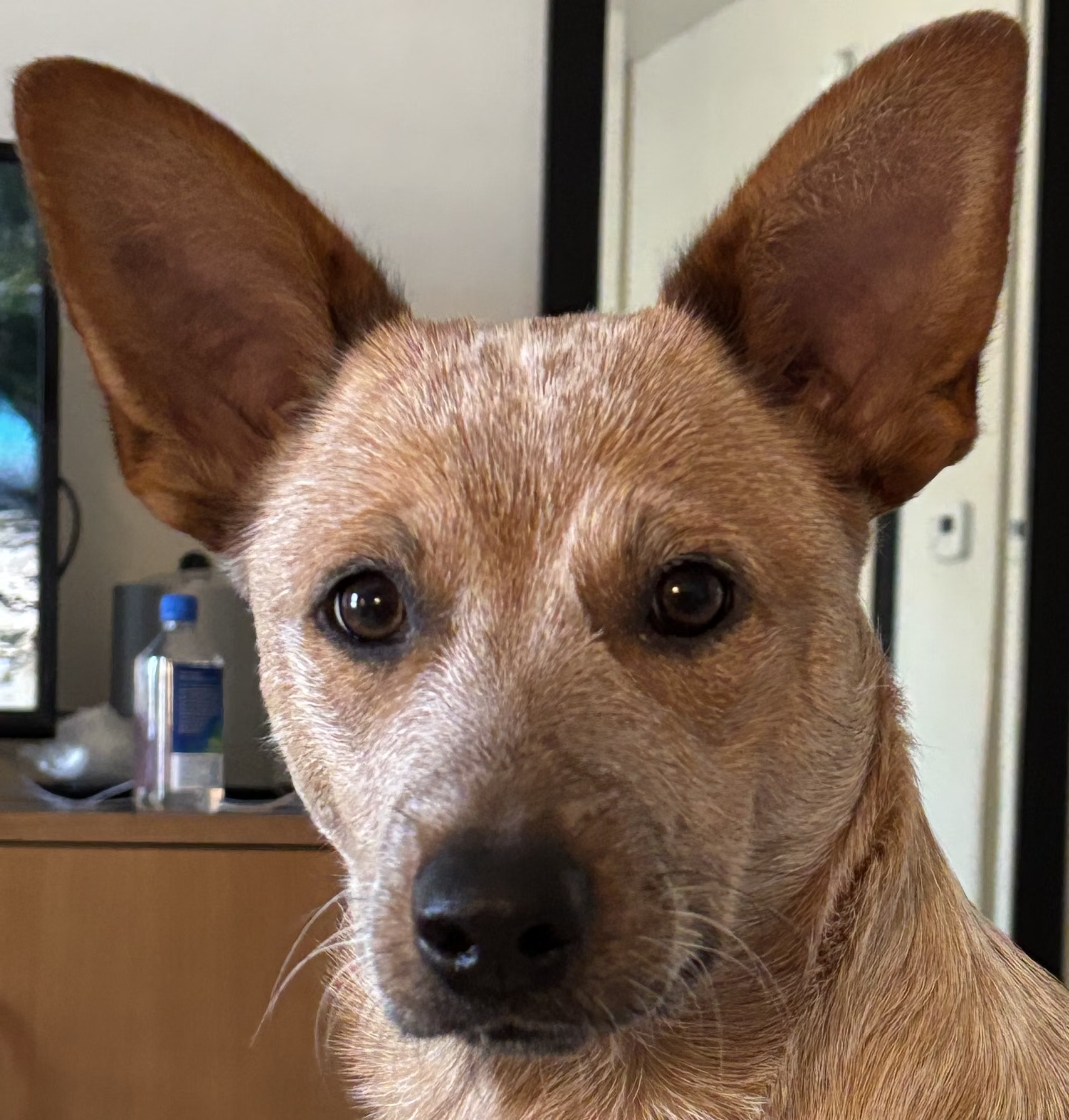
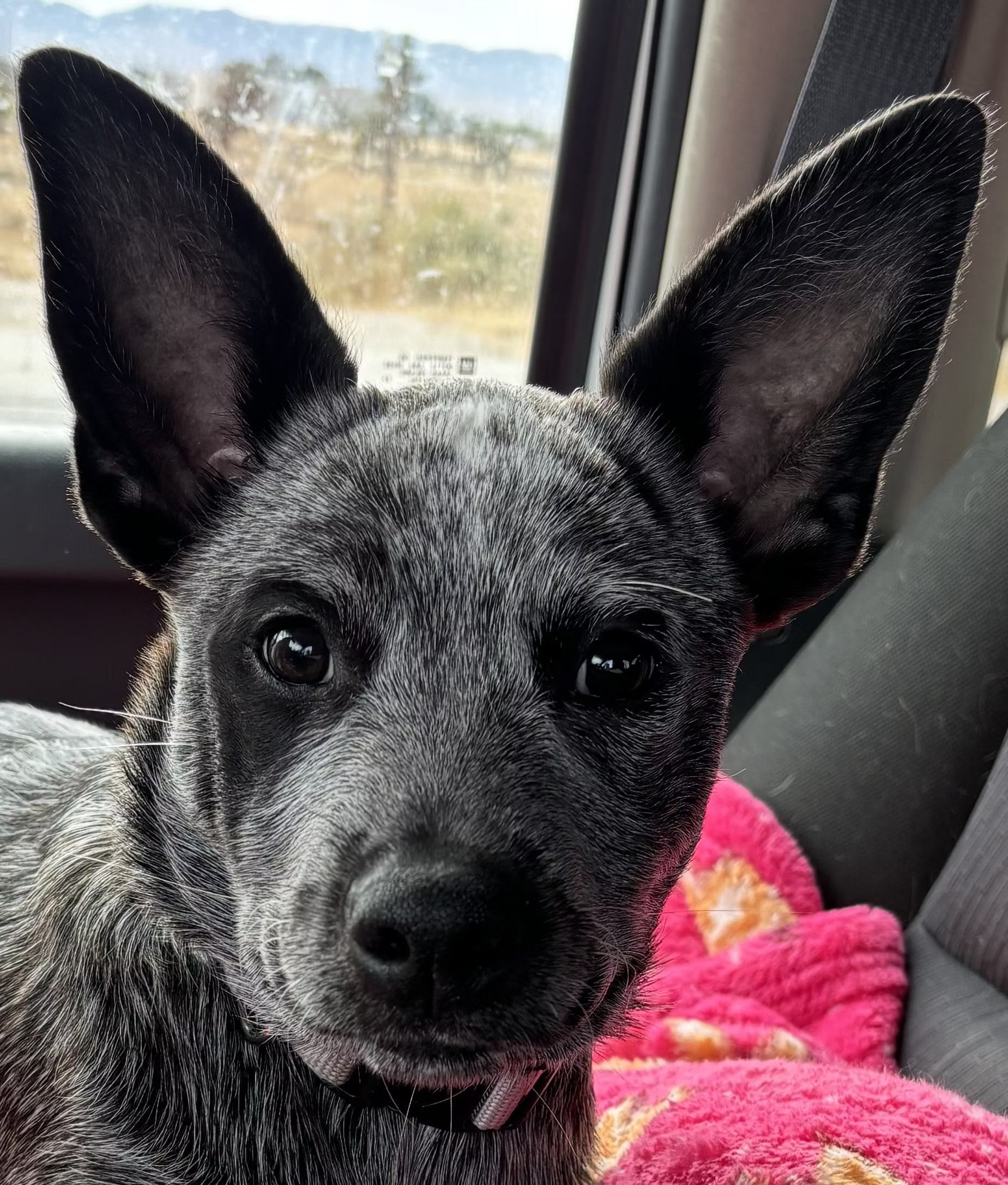
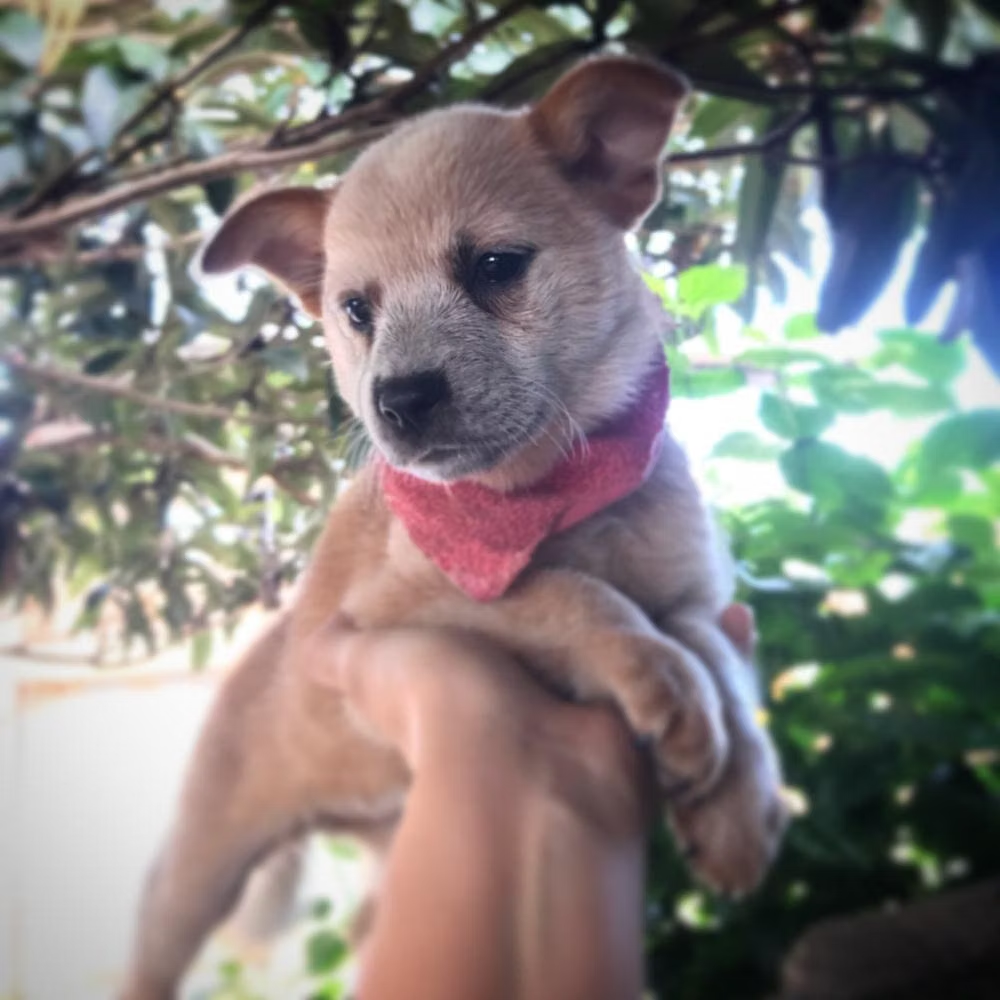
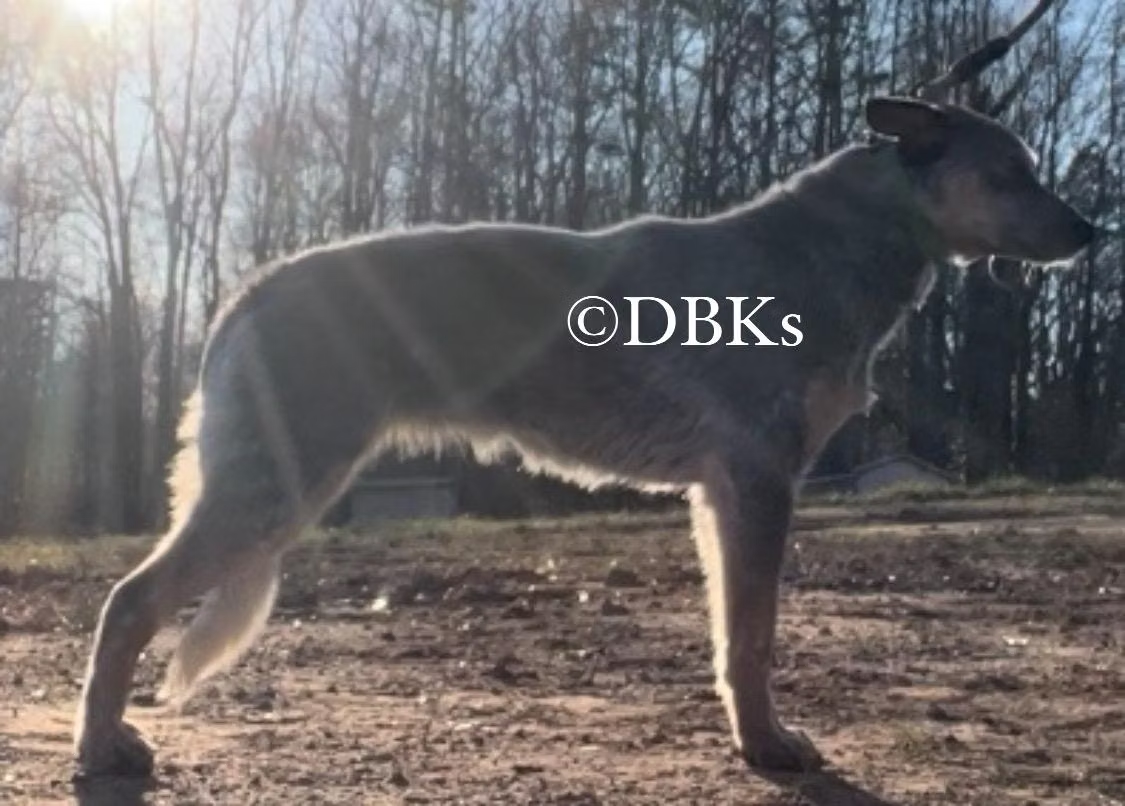
A few of the Australian Cattle Dog profiles members have added to United Pet Club.
The Australian Cattle Dog is a medium-sized Australian herding breed known for high intelligence, endurance, and a strong bond with its handler.
The Australian Cattle Dog is a compact, muscular working dog bred to move cattle over long distances across rough, sun-baked terrain. Many owners know it better by its nicknames, Blue Heeler or Red Heeler, names that come from its two main coat colors and its habit of nipping at the heels of cattle to keep them moving.
This is a breed built for stamina rather than raw speed. It has the agility to sidestep a kicking cow and the persistence to work a full day under heat and dust. Owners often describe a dog that misses nothing, picks up new commands quickly, and attaches itself closely to one or two people in the household.
The Australian Cattle Dog fits best with active families who can give it real work to do. Left without daily physical and mental exercise, it tends to invent its own activities, which can mean herding kids around the yard, chasing motorcycles or bicycles, or chewing through furniture. Adult dogs stand between 43 and 51 centimeters at the shoulder and weigh roughly 15 to 22 kilograms.
| Attribute | Detail |
|---|---|
| Origin | Australia |
| Size | Medium (15 to 22 kg) |
| Lifespan | 12 to 16 years |
| Group/role | Herding, cattle droving |
| Good with | Experienced, active owners; older children; working households |
This breed suits people who run, hike, bike, or join dog sports, and who want a companion that stays close and stays busy. It is not a good fit for condo or apartment living with no real outlet, for owners who are out of the house for long stretches, or for first-time dog owners unprepared for a strong-willed, high-energy dog. Early socialization with children and other pets matters, since the herding instinct and a wariness of strangers show up while the dog is still young.
Bred in 19th-century Australia by crossing droving dogs with the native dingo, the Australian Cattle Dog was built to survive the punishing cattle trade.
The breed goes back to the cattle stations of New South Wales in the 1800s. Settlers needed a dog tough enough to drive half-wild cattle over vast distances to market, often through extreme heat. The herding dogs brought over from Britain could not handle the climate or the rough work, so stockmen began crossing their dogs with the dingo, Australia's native wild dog already suited to the conditions.
A landowner named Thomas Hall is credited with one of the foundational crosses in the 1840s, pairing drovers' dogs with tamed dingoes to produce a working strain that later became known as Hall's Heelers. These dogs worked quietly and controlled cattle by biting at the heels, a style that matched the temperament of the stock they handled.
After Hall died, his dogs passed to other breeders, who added further crosses. Dalmatian blood was introduced to build tolerance around horses and deepen the dog's loyalty to its handler, and Kelpie ancestry is also part of the recorded background. By the 1890s, the type had settled into a fairly consistent look and working style.
Robert Kaleski drew up an early breed standard, publishing it in 1903. The breed gained recognition in Australia and later abroad, including American Kennel Club recognition in 1980. In the Philippines, the Australian Cattle Dog can be registered with the Philippine Canine Club, Inc. (PCCI), the country's national kennel club. The mottled blue and red coats, along with the heeling work style, still trace directly back to the original station dogs.
A sturdy, medium-sized dog with a short, weather-resistant coat in mottled blue or red, upright ears, and a muscular build made for hard work.
The Australian Cattle Dog is slightly longer than it is tall, with a broad skull, muscular cheeks, and a strong jaw. Its body is compact and powerful, built for agility and endurance rather than bulk. The ears stand upright and the eyes are oval and dark, giving the dog an alert, watchful look. The tail sits low and carries a slight curve when the dog is at rest.
| Trait | Standard |
|---|---|
| Height | 43 to 51 cm at the withers |
| Weight | 15 to 22 kg |
| Coat | Short, straight, dense double coat with weather-resistant outer guard hairs |
| Colors | Blue, blue mottled, or blue speckled; red speckled |
| Eyes | Oval, dark brown, alert |
The coat comes in two recognized base patterns. Blue dogs can be solid blue, blue mottled, or blue speckled, often with tan, black, or white markings on the head and legs. Red dogs are speckled red evenly across the body, sometimes with darker red markings on the head. Puppies are born white and develop their adult color over the first few weeks, a trait passed down from the Dalmatian cross. The double coat sheds dirt and water easily and needs little trimming, though it sheds heavily during seasonal coat blow.
Loyal, intelligent, and highly energetic, the Australian Cattle Dog bonds closely with its handler, stays wary of strangers, and has a strong herding drive.
This is a dog with a strong personality. It attaches itself firmly to its owner and prefers to stay within sight, which has earned it a reputation as a shadow that follows its person from room to room. Around family it is affectionate and playful, but it stays naturally reserved with strangers and will size up newcomers before warming up to them.
The herding drive runs deep. Without guidance, the dog may try to control movement by circling and nipping, including at people on bikes or kids running around. Early, consistent socialization helps curb this. With other dogs it can be assertive, and conflict between same-sex dogs is possible if introductions aren't managed carefully. Its prey drive also means small pets need a careful, supervised introduction or a separate space altogether.
Intelligence runs high, and that cuts both ways. A bored Australian Cattle Dog will solve problems on its own terms, whether that means working open gate latches, escaping the yard, or destroying whatever's within reach. Given real work, though, it is one of the most responsive and trainable breeds around.
| Trait | Rating |
|---|---|
| Affection | 4 |
| Energy | 5 |
| Trainability | 5 |
| Vocalness | 2 |
| Shedding | 3 |
The Australian Cattle Dog needs heavy daily exercise and mental stimulation, though its short coat keeps grooming easy and low upkeep.
This breed does best with a securely fenced yard and room to move, though it can live indoors if its exercise needs are fully met. Its origins make it tolerant of heat, which suits the Philippines' hot, humid tropical climate well, but it still needs shade and fresh water during the hottest parts of the day. It is not suited to being left alone for long stretches or to a sedentary household.
A working-breed diet built around quality protein suits the Australian Cattle Dog, with portions adjusted to activity level to prevent weight gain.
The Australian Cattle Dog burns through a lot of energy and needs a complete diet with enough protein and fat to support muscle and stamina. Look for food formulated for active or working medium breeds. A dog in heavy work needs more calories than one kept at a lighter activity level, so feeding amounts should be adjusted to keep the dog lean and muscular rather than heavy.
| Life stage | Amount per day | Meals |
|---|---|---|
| Puppy (2 to 6 months) | Per growth formula, by weight | 3 to 4 |
| Junior (6 to 12 months) | 1.5 to 2 cups | 2 to 3 |
| Adult (active) | 1.75 to 2.5 cups | 2 |
| Senior | 1.25 to 2 cups, reduced fat | 2 |
Use small, low-calorie treats for training, and keep them to under about 10 percent of daily calories to avoid weight gain. Fresh water should be available at all times, especially after exercise. Most dogs on a complete commercial diet don't need supplements; joint supplements such as glucosamine may help older or hard-working dogs, but check with a veterinarian before adding anything.
The Australian Cattle Dog is generally hardy with a 12 to 16 year lifespan, but the breed carries known risks for deafness, eye disease, and joint problems.
This is a hardy, long-lived breed, and many dogs stay active well into old age. A typical lifespan runs 12 to 16 years. Responsible breeding and regular veterinary care reduce the impact of the inherited conditions known in the breed. Because the breed is so active, owners should also watch for exercise-related injuries and keep the dog at a lean weight to protect the joints.
| Condition | Signs | Note |
|---|---|---|
| Congenital deafness | No response to sound, gets startled when approached | Linked to coat color genetics; breeders should BAER test puppies |
| Progressive retinal atrophy | Night blindness, dilated pupils, bumping into objects | Inherited eye disease; DNA testing is available |
| Hip dysplasia | Stiffness, limping, reluctance to jump | Screen breeding dogs; keep weight controlled |
| Elbow dysplasia | Front-leg lameness, especially after rest | Managed with weight control and veterinary care |
| Primary lens luxation | Eye pain, redness, cloudiness | Can lead to glaucoma; DNA test available |
Highly intelligent and eager to work, the Australian Cattle Dog trains fast with consistent, reward-based methods and needs early socialization to manage its instincts.
Few breeds pick things up as fast as the Australian Cattle Dog. It thrives on structure and responds well to clear, consistent handling. That same intelligence means it gets bored with repetition and will test its limits, so training sessions should stay varied and engaging. Channeling the dog into a sport such as agility, obedience, herding trials, or flyball gives it the outlet it needs.
Start socialization early. Expose the puppy to people, other animals, traffic, and busy environments so its natural wariness and herding drive don't harden into reactivity later on. Teach a reliable recall and a leave-it cue from the start, since the urge to chase and heel can easily override a young dog's attention.
Australian Cattle Dogs reach breeding maturity around one to two years, average about five puppies per litter, and need health testing beforehand.
Responsible breeding of Australian Cattle Dogs centers on health screening. Since deafness and several eye and joint conditions run in the breed, breeding dogs should have hearing (BAER) tests, eye exams, hip and elbow scoring, and the relevant DNA tests done before mating. Female dogs are usually bred no earlier than their second heat, once they are physically mature, and a veterinarian can advise on the right timing.
Pregnancy lasts roughly 63 days. Puppies are born white and start developing their adult blue or red coloring within a couple of weeks. The mother usually manages whelping well on her own, but the breeder should still provide a quiet, warm whelping area and watch for complications. Early handling, gentle exposure to household sounds, and starting socialization while the litter is still with the mother set the puppies up for stable temperaments.
| Metric | Value |
|---|---|
| Sexual maturity | 6 to 12 months (breed later) |
| Recommended breeding age | From second heat / about 2 years |
| Gestation | Approximately 63 days |
| Average litter size | About 5 puppies (range roughly 1 to 7) |
| Weaning age | 6 to 8 weeks |
| Recommended health tests | Hearing, eyes, hips, elbows, relevant DNA tests |
The city vet office handles the RA 9482 paperwork; a free United Pet Club record is what a finder anywhere can actually search for your Australian Cattle Dog.
An Australian Cattle Dog that gets loose during a storm is identified by whatever record answers the scan, not by the barangay it came from. Give it a record that answers: your mobile number, the dog's photo, and his details, free for life with United Pet Club. Register your dog today and it is done for good.
If a vet has already implanted a chip, the number still has to be filed where a scanner can trace it, because an unfiled chip points at nobody. Register the microchip free on the lifetime plan: any brand sold in the Philippines qualifies, updates after you move house or change SIM cost nothing, and the record stays searchable here and abroad. Create your free account and cover both in one go.
Open a free United Pet Club account, add your Australian Cattle Dog's details and a photo, then save the profile. It stays free for his whole life and sits alongside the city vet office registration RA 9482 requires.
Type the 15-digit chip number into your free account together with your mobile number and address. The lifetime plan charges nothing for the registration or for any update, whatever brand the clinic used.
Yes, RA 9482 requires dog registration with your city or municipal veterinary office, along with current anti-rabies vaccination. The United Pet Club profile is the searchable half: free, worldwide, and tied to your current mobile.
Nothing. The free lifetime plan covers the profile, the microchip record, and every update, with no renewal fees at all.
Common questions about the Australian Cattle Dog cover its size, temperament, exercise needs, lifespan, and fit for different types of homes.
It is a medium-sized breed. Adults stand 43 to 51 centimeters at the shoulder and weigh roughly 15 to 22 kilograms, with males usually bigger than females.
It can be, in an active household. It is loyal and protective and does well with older children who know how to behave around dogs, but its herding instinct can lead it to nip at kids who run around, so early training and supervision matter.
Grooming is easy thanks to the short coat, but the exercise and mental needs are demanding. They need 1 to 2 hours of activity plus a job to do every day, which makes them a challenge for inactive or first-time owners.
They are a long-lived breed, typically reaching 12 to 16 years with good care, and some live even longer.
They are not heavy barkers by nature and were bred to work cattle quietly, but they will alert to strangers and can get vocal if bored or under-exercised.
They can adapt to smaller homes only if their high exercise and mental needs are fully met every day. A home with a securely fenced yard and an active owner suits them best.
They are available from health-testing breeders and through breed-specific rescue groups. Ask for hearing, eye, and joint test results on the parents before committing to a puppy.