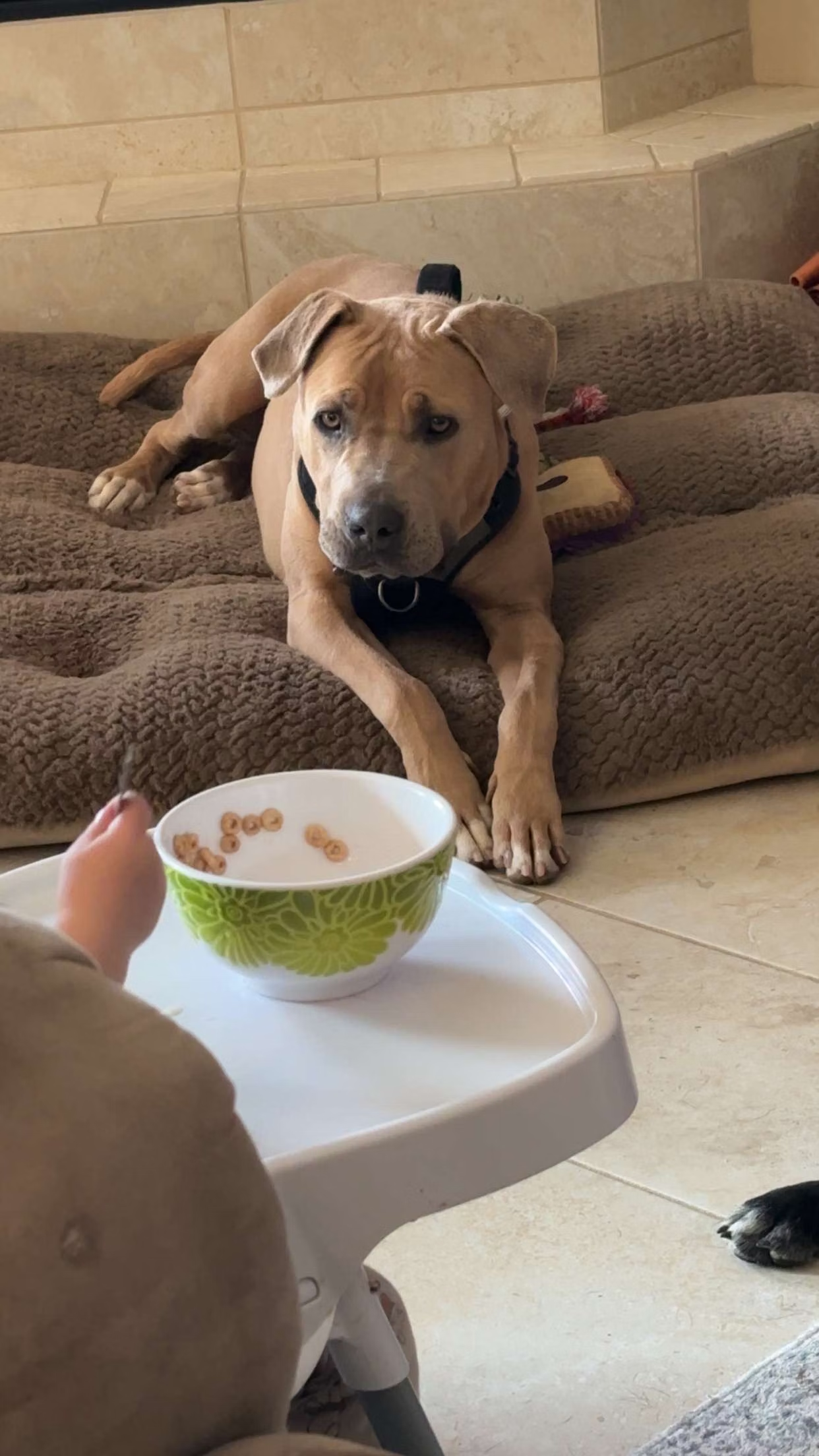
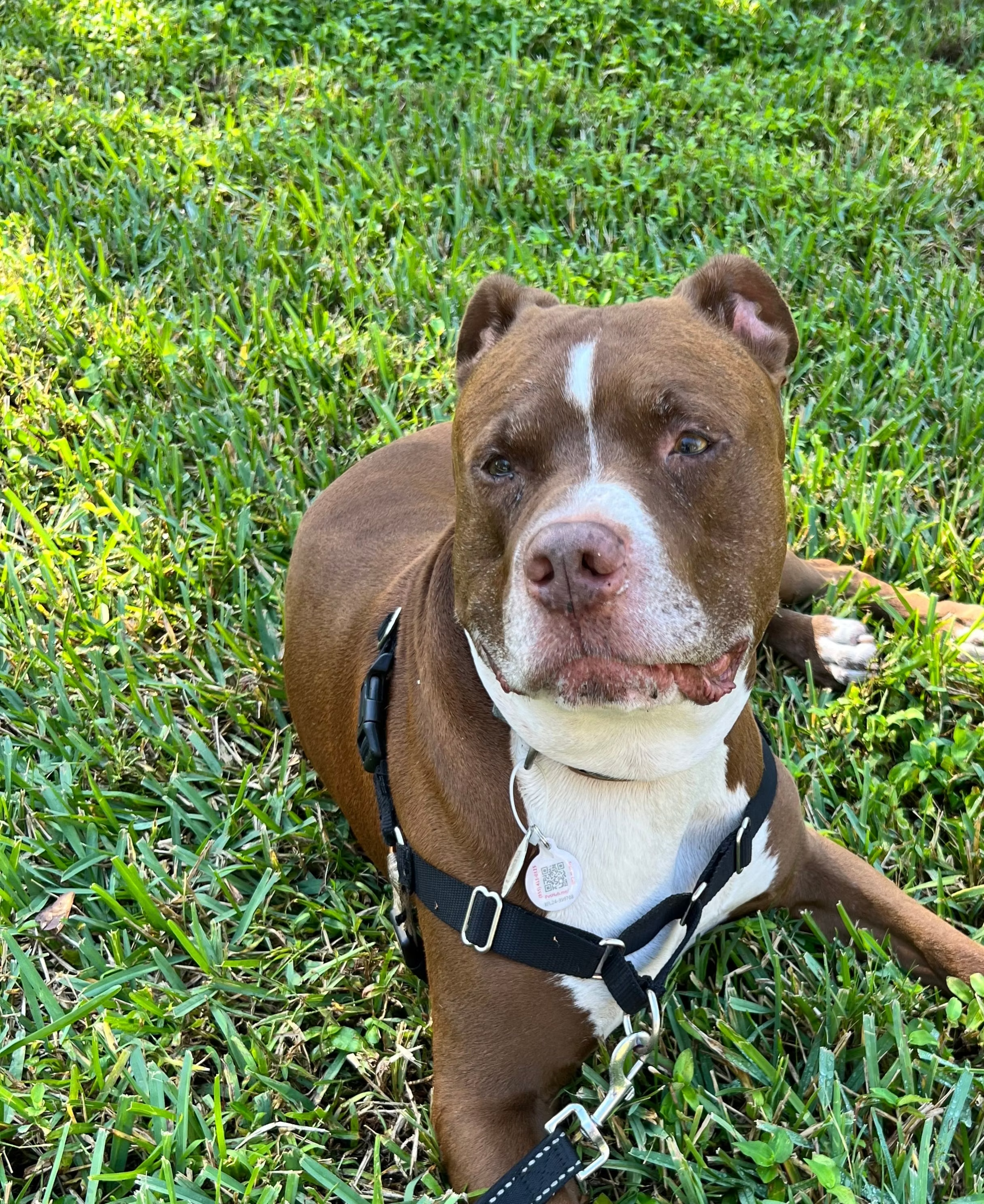
The American Staffordshire Terrier is a confident, loyal breed known for its courage, strength, and deep affection for its family.
How the American Staffordshire Terrier coat is built, and what that means when you groom it.
A few of the American Staffordshire Terrier profiles members have added to United Pet Club.
In the Philippines, this medium, muscular terrier is prized for loyalty and a close bond with its family, though a number of cities restrict the breed, so check local ordinances first.
The American Staffordshire Terrier, called AmStaff by most Filipino owners, is a medium dog built low and solid, with a broad head, strong jaw muscles, and a compact, athletic body. It looks tough, but the breed has a reputation as a devoted, home-loving companion once it settles into a household.
An AmStaff is bold and self-assured, not the type to pick fights without reason. Dogs that get proper exposure to people early on turn out sociable, and many treat the kids in their own compound like family. This is not a breed that tolerates being left alone in the backyard all day; it wants to be where the people are, whether that is a subdivision house or a condo unit in the metro.
Daily exercise and mental stimulation matter here, more so given our year-round heat. With patient, consistent training from puppyhood, the AmStaff can settle into a provincial farm, a gated subdivision, or a smaller city home, provided the owner has the time to walk and train it regularly.
| Attribute | Detail |
|---|---|
| Origin | United States |
| Size | Medium |
| Lifespan | 12 to 16 years |
| Group/role | Terrier, companion and guardian (PCCI: Terrier Group) |
| Good with | Family members and children when socialized early |
The AmStaff fits an owner ready to put in the work: early socialization, firm and calm-handed training, and exercise every single day, rain or shine, typhoon season or not. It rewards owners who want a dog that sticks close and works well as both companion and home guardian. A first-time dog owner can manage the breed, but a session or two with a professional trainer helps get things started right. Before bringing one home, check your city or barangay ordinance, since a number of local governments in the Philippines classify the AmStaff alongside other muscular terrier breeds and set rules on registration, leashing, or muzzling in public.
The AmStaff's line began in 19th-century England and took shape in the United States, where the American Kennel Club recognized it in 1936 and renamed it in 1972.
The AmStaff's story starts in 19th-century England, where breeders crossed bulldogs with terriers to get a dog that combined muscle with quickness. Immigrants carried these bull-and-terrier types across the Atlantic to North America through the 1800s.
Once in the United States, breeders pushed for a bigger, heavier dog than the English original. That selection over generations produced a distinctly American line, noticeably different in build from its English cousins.
The American Kennel Club recognized the breed in 1936, first calling it the Staffordshire Terrier. The name changed to American Staffordshire Terrier in 1972, marking it apart from the smaller Staffordshire Bull Terrier, which the AKC lists as its own separate breed.
Across the 20th century the AmStaff moved away from its fighting-dog past and into life as a companion and show dog. Breeders today select for a steady, people-oriented temperament while keeping the athletic build that defines the breed.
A compact, heavily muscled terrier with a broad head and a short, low-maintenance coat that comes in a wide range of solid and brindle colors.
The AmStaff looks strong for its size, with a broad skull, defined cheek muscles, and a medium muzzle with a clear stop. The body is short-coupled and well-muscled, standing on straight, sturdy legs, and the dog moves with visible power in every stride.
| Trait | Detail |
|---|---|
| Height | Males 46 to 48 cm (18 to 19 in); females 43 to 46 cm (17 to 18 in) |
| Weight | 18 to 32 kg (40 to 70 lb) |
| Coat | Short, stiff, close, glossy |
| Colors | Many solid and parti-colors, including black, blue, fawn, brown, and brindle |
| Eyes | Dark, round, set low and wide apart |
The AmStaff's coat is short, close to the body, and easy to keep looking sharp, a real advantage given the heat and humidity here. The breed comes in a wide spread of colors and patterns. The standard discourages coats that are more than 80 percent white, along with black-and-tan and liver coloring, though a dog with either pattern can still be a perfectly sound pet. Ears may be cropped or left natural, and natural, uncropped ears are now the more common look.
Confident and affectionate with its own household, the AmStaff needs early socialization, steady leadership, and supervision around unfamiliar dogs.
The AmStaff bonds hard with its household and shows real loyalty once settled in. Most are outgoing around people, and many are patient with children they have grown up alongside. The breed carries itself with confidence, and some dogs show a natural instinct to look out for home and family, useful in a country where many households value a dog that doubles as an alert companion.
Around strangers, a properly socialized AmStaff tends to stay calm and accepting rather than nervous or hostile. Regular, early exposure to different people and situations builds that steadiness. The breed is sharp and keen to please, which makes it responsive in training.
Behavior with other animals varies more. Some AmStaffs live fine alongside other pets, including the neighborhood cats and dogs common in most subdivisions, while others show reactivity toward unfamiliar dogs, a trait linked to the breed's history. Careful, supervised introductions and sensible management around strange dogs are worth the effort. Given its strength and drive, the AmStaff needs an owner who sets clear rules and stays consistent.
| Trait | Rating |
|---|---|
| Affection | 5 |
| Energy | 4 |
| Trainability | 4 |
| Vocalness | 2 |
| Shedding | 3 |
Grooming takes little effort, but daily exercise and cool, shaded rest periods matter most for this breed in the Philippines' heat and humidity.
The AmStaff adjusts to houses, townhouses, and condo living as long as it gets daily exercise and time with its people. It does not handle temperature extremes well and should live indoors with the family rather than tied up outside. A solidly fenced yard helps, since this is a strong, athletic dog, and during typhoon season it should never be left in an outdoor kennel exposed to wind and flooding.
A balanced diet matched to life stage and activity, split into two daily meals, with portions watched closely to keep the AmStaff at a healthy weight.
Feed a complete, balanced dog food matched to the AmStaff's age, size, and activity level. Active adults need enough protein to support muscle, while less active dogs need fewer calories to keep from gaining weight. Split the daily ration into two meals for steadier digestion, and always keep fresh water available, something that needs extra attention during hot, humid stretches.
| Life stage | Amount per day | Meals |
|---|---|---|
| Puppy (2 to 6 months) | Follow the food label, growth formula | 3 to 4 |
| Junior (6 to 12 months) | Follow the food label, adjust as the dog grows | 2 to 3 |
| Adult | About 2 to 3 cups of dry food, based on weight and activity | 2 |
| Senior | Slightly reduced, watch the body condition | 2 |
Keep treats to about 10 percent of daily calories, and cut back on meal portions on days when treats add up. Most adult AmStaffs do fine on standard balanced food without extras. Joint supplements such as glucosamine can help some dogs as they age, but check with a veterinarian before adding any supplement.
Generally hardy with a 12 to 16 year lifespan, though hip dysplasia, cerebellar ataxia, allergies, and heart issues are worth screening for early.
The AmStaff is a hardy breed with a typical lifespan of 12 to 16 years. Responsible breeders test breeding stock for known hereditary conditions, which cuts the risk in puppies. Regular vet visits, solid nutrition, and weight control all add up to a longer, healthier life.
| Condition | Signs | Note |
|---|---|---|
| Hip dysplasia | Stiffness, limping, trouble getting up | Screen breeding dogs; manage weight |
| Cerebellar ataxia (NCL-A) | Loss of coordination, balance problems | Genetic test available for carriers |
| Skin and contact allergies | Itching, redness, recurring ear issues | Identify triggers with a vet; watch for flare-ups in humid weather |
| Hypothyroidism | Weight gain, low energy, coat changes | Diagnosed with a blood test, managed with medication |
| Heart conditions | Tires quickly, cough, weakness | Detected on veterinary exam |
A quick, food-motivated learner that does best with early socialization, reward-based methods, and firm, consistent leash and recall training.
The AmStaff is smart, food-driven, and genuinely wants to work with its owner, which makes it a fast learner. The breed responds far better to calm, steady guidance than to harsh correction. Early socialization is the single best investment an owner can make, since exposure to people, dogs, and everyday situations during puppyhood shapes a stable, well-adjusted adult. Because the breed is strong, leash manners and a reliable recall deserve attention from the start.
Breeding maturity arrives around 18 to 24 months, with litters averaging five to ten puppies and both parents screened for hereditary conditions first.
Responsible AmStaff breeding puts temperament and health first. Both parents should be fully mature and screened for known hereditary conditions, including a hip evaluation and the genetic test for cerebellar ataxia. Most breeders wait until a female is at least two years old before her first litter, giving her body time to finish developing.
Gestation runs about 63 days. Litter size varies, averaging around five to ten puppies. The dam usually manages whelping without much trouble, though a quiet, clean space and a veterinarian on standby are worth arranging in advance.
Puppies should stay with their dam and littermates until roughly eight weeks old, which supports healthy social development. Gentle early handling, along with exposure to household sounds and different people, gives puppies a strong start before they move to new homes.
| Metric | Value |
|---|---|
| Breeding maturity | About 18 to 24 months |
| Gestation | About 63 days |
| Average litter size | 5 to 10 puppies |
| Weaning age | About 6 to 8 weeks |
| Recommended go-home age | About 8 weeks or later |
The city vet office handles the RA 9482 paperwork; a free United Pet Club record is what a finder anywhere can actually search for your American Staffordshire Terrier.
An American Staffordshire Terrier that gets loose during a storm is identified by whatever record answers the scan, not by the barangay it came from. Give it a record that answers: your mobile number, the dog's photo, and his details, free for life with United Pet Club. Register your dog today and it is done for good.
If a vet has already implanted a chip, the number still has to be filed where a scanner can trace it, because an unfiled chip points at nobody. Register the microchip free on the lifetime plan: any brand sold in the Philippines qualifies, updates after you move house or change SIM cost nothing, and the record stays searchable here and abroad. Create your free account and cover both in one go.
Open a free United Pet Club account, add your American Staffordshire Terrier's details and a photo, then save the profile. It stays free for his whole life and sits alongside the city vet office registration RA 9482 requires.
Type the 15-digit chip number into your free account together with your mobile number and address. The lifetime plan charges nothing for the registration or for any update, whatever brand the clinic used.
Yes, RA 9482 requires dog registration with your city or municipal veterinary office, along with current anti-rabies vaccination. The United Pet Club profile is the searchable half: free, worldwide, and tied to your current mobile.
Nothing. The free lifetime plan covers the profile, the microchip record, and every update, with no renewal fees at all.
Answers to common questions Filipino owners ask about the AmStaff's size, temperament, upkeep, lifespan, compatibility with other pets, and where to find one.
It is a medium-sized dog. Males stand about 46 to 48 cm (18 to 19 in) at the shoulder and females about 43 to 46 cm (17 to 18 in), with weight usually between 18 and 32 kg (40 to 70 lb).
Yes. A well-socialized AmStaff is loyal and affectionate, and many are gentle and patient with the children in their own household. As with any dog, supervise interactions with young kids.
Grooming is easy because of the short coat, but the breed needs plenty of daily exercise, early socialization, and steady training. Expect moderate to demanding effort overall, mostly because of its energy and strength.
The typical lifespan runs 12 to 16 years, helped along by good nutrition, regular veterinary care, and a healthy weight.
It depends on the individual dog. Some live comfortably with other pets, while others show reactivity toward unfamiliar dogs. Supervised, careful introductions are the safer approach.
The breed turns up through PCCI-registered breeders and the occasional breed-specific rescue, though it is less common here than in the United States. Some cities and barangays set restrictions or extra requirements for the breed, so check local ordinances before bringing one home.