

American Cocker Spaniel
The American Cocker Spaniel is a merry, affectionate companion with a flowing coat and a cheerful, people-loving disposition.
- Size
- Small
- Lifespan
- 10–14 years
- Origin
- United States
- Temperament
- Affectionate
- Standard colors
- Black, White, and Blue and 7 more
Characteristics
Coat and grooming
How the American Cocker Spaniel coat is built, and what that means when you groom it.
- Coat layers
- Double coat
- Coat texture
- Silky
- Coat length
- Long
- Shedding
- Moderate shedding
Grooming guidance
Critical: A American Cocker Spaniel should not be shaved.
The undercoat keeps heat out as well as in, and the outer coat shields the skin from sun and insect bites. Clipping the whole coat off removes both. It often grows back patchy, soft or a different colour, and in some animals the guard hairs never return properly. Brush the undercoat out instead of cutting it off.
Caution: A American Cocker Spaniel coat mats easily.
Fine or long hair tangles at the base of the coat, out of sight, where the mats tighten and pull on the skin. Brushing has to reach right down to the roots in sections, not just skim the surface.
American Cocker Spaniel colors and patterns
What each club's breed standard says about every American Cocker Spaniel color and pattern. Point at a ruling to see the club's own wording.
Breed standards describe the American Cocker Spaniel in Black, White, Blue, Silver, Brown, Tan, Red, Gold, Buff, and Cream. Standard patterns: Solid, Tricolor, Parti-color, Roan, Sable, and Tan point.
| Color or pattern | FCI | AKC | UKC | KC | KUSA |
|---|---|---|---|---|---|
| Black | Standard (“Black variety: Solid colour black”) | Standard (“Black”) | Standard (“Black, to include the Black and Tan”) | Standard (“Jet black”) | Standard (“Black Variety: Solid colour black”) |
| White | Standard (“Two or more solid, well broken colours, one of which must be white”) | Standard (“Black & White”) | Standard (“Two or more definite well-broken colors, one of which must be white”) | Standard (“Black & White”) | Standard (“Two or more solid, well-broken colours, one of which must be white”) |
| Blue | Standard (“Roans are classified as Parti-Colours and may be of any of the usual roaning patterns”) | Standard (“Blue Roan”) | Standard (“Any of the usual roaning patterns are acceptable”) | Standard (“Roans are classified as parti-colours and may be of any usual roaning patterns”) | Standard (“Roans are classified as parti-colours and may be of any of the usual roaning patterns”) |
| Silver | Standard (“Any solid colour other than black”) | Standard (“Silver”) | Standard (“Any solid color other than black (ASCOB)”) | Standard (“Silver Buff”) | Standard (“Any solid colour other than black”) |
| Brown | Standard (“including brown and brown with tan points”) | Standard (“Brown”) | Standard (“Any solid color other than black (ASCOB)”) | Standard (“Chocolate”) | Standard (“including brown and brown with tan points”) |
| Tan | Standard (“The colour of the tan may be from the lightest cream to the darkest red”) | Standard (“Black & Tan”) | Standard (“The color of the tan points range from light cream to dark red”) | Standard (“colour of tan may be from lightest cream to darkest red colour”) | Standard (“The colour of the tan may be from the lightest cream to the darkest red”) |
| Red | Standard (“ranging from the lightest cream to darkest red”) | Standard (“Red”) | Standard (“Any solid color other than black (ASCOB)”) | Standard (“Red”) | Standard (“ranging from lightest cream to darkest red”) |
| Gold | Standard (“Any solid colour other than black”) | Standard (“Golden”) | Standard (“Any solid color other than black (ASCOB)”) | Standard (“Any solid colour other than black of uniform shades”) | Standard (“Any solid colour other than black”) |
| Buff | Standard (“Any solid colour other than black”) | Standard (“Buff”) | Standard (“Any solid color other than black (ASCOB)”) | Standard (“Buff”) | Standard (“Any solid colour other than black”) |
| Cream | Standard (“ranging from the lightest cream to darkest red”) | Standard (“ranging from lightest cream to darkest red”) | Standard (“Any solid color other than black (ASCOB)”) | Standard (“Any solid colour other than black of uniform shades”) | Standard (“ranging from lightest cream to darkest red”) |
| Albino | Disqualifying | Disqualifying | Disqualifying (“Albinism”) | Not recognized | Disqualifying |
| Patterns | |||||
| Solid | Standard (“Black variety: Solid colour black”) | Standard (“Black Variety-Solid color black”) | Standard (“Any solid color other than black (ASCOB)”) | Standard (“Any solid colour other than black of uniform shades”) | Standard (“Black Variety: Solid colour black”) |
| Tricolor | Standard (“to include any such colour combination with tan points”) | Standard (“Black White & Tan”) | Standard (“Tan points are acceptable”) | Standard (“Tricolours, any of above colours combined with tan markings”) | Standard (“to include any such colour combination with tan points”) |
| Parti-color | Standard (“Parti-Colour variety”) | Standard (“Parti-Color Variety”) | Standard (“Parti-Color”) | Standard (“Parti-colours”) | Standard (“Parti-Colour Variety”) |
| Roan | Standard (“Roans are classified as Parti-Colours”) | Standard (“Roan”) | Standard (“Roans are classified as Parti-Colors”) | Standard (“Roans are classified as parti-colours”) | Standard (“Roans are classified as parti-colours”) |
| Sable | Disqualifying | Disqualifying (“Sable”) | Standard (“A lacing of black hairs over a lighter background color”) | Standard (“Sable”) | Disqualifying |
| Tan point | Standard (“black with tan points”) | Standard (“Black & Tan”) | Standard (“the Black and Tan (black with tan points)”) | Standard (“Black and tan and brown and tan”) | Standard (“black with tan points”) |
| Merle | Disqualifying | Disqualifying (“Merle Markings”) | Disqualifying (“Merle color”) | Not recognized | Disqualifying |
| Double merle | Disqualifying | No ruling | No ruling | Not recognized | Disqualifying |


| Color or pattern | FCI | AKC | UKC | KC | KUSA |
|---|---|---|---|---|---|
| Black | No ruling | No ruling | No ruling | Standard (“dark brown to black in blacks, black and tans, buffs and creams”) | No ruling |
| Dark brown | Standard (“The colour of the iris is dark brown”) | Standard (“The color of the iris is dark brown”) | Standard (“The color of the iris is dark brown, the darker the better”) | Standard (“dark brown to black in blacks, black and tans, buffs and creams”) | Standard (“The colour of the iris is dark brown”) |
| Hazel | No ruling | No ruling | No ruling | Standard (“In reds and browns, dark hazel”) | No ruling |
| Blue | Disqualifying (“Eyes: blue, blue marbled, blue flecked”) | Disqualifying (“Eye(s) blue, blue marbled, blue flecked”) | No ruling | No ruling | Disqualifying (“Eye(s) blue, blue-marbled, blue-flecked”) |
| Patterns | |||||
| Marbled | Disqualifying (“blue marbled, blue flecked”) | Disqualifying (“blue marbled, blue flecked”) | No ruling | No ruling | Disqualifying (“blue-marbled, blue-flecked”) |

| Color or pattern | FCI | AKC | UKC | KC | KUSA |
|---|---|---|---|---|---|
| Black | Standard (“black in colour in the blacks, black and tans and black and whites”) | Standard (“black in color in the blacks, black and tans, and black and whites”) | Standard (“The nose is black in the Black and Black and Tan dogs”) | Standard (“Nostrils black in black and tans”) | Standard (“black in colour in the blacks, black and tans and black and whites”) |
| Liver | Standard (“in other colours it may be brown, liver or black”) | Standard (“in other colors it may be brown, liver or black”) | Standard (“In other colors it may be brown, liver or black”) | Standard (“black or brown in buffs, browns, brown and tans, roans and parti-colours”) | Standard (“in other colours it may be brown, liver or black”) |
ASCOB
| Color or pattern | FCI | AKC | UKC | KC | KUSA |
|---|---|---|---|---|---|
| Silver | Standard (“Any solid colour other than black”) | Standard (“Silver”) | Standard (“Any solid color other than black (ASCOB)”) | Standard (“Silver Buff”) | Standard (“Any solid colour other than black”) |
| Brown | Standard (“including brown and brown with tan points”) | Standard (“Brown”) | Standard (“Any solid color other than black (ASCOB)”) | Standard (“Chocolate”) | Standard (“including brown and brown with tan points”) |
| Tan | Standard (“brown with tan points”) | Standard (“Brown & Tan”) | Standard (“Also includes tan points”) | Standard (“Chocolate & Tan”) | Standard (“brown with tan points”) |
| Red | Standard (“ranging from the lightest cream to darkest red”) | Standard (“Red”) | Standard (“Any solid color other than black (ASCOB)”) | Standard (“Red”) | Standard (“ranging from lightest cream to darkest red”) |
| Gold | Standard (“Any solid colour other than black”) | Standard (“Golden”) | Standard (“Any solid color other than black (ASCOB)”) | Standard (“Any solid colour other than black of uniform shades”) | Standard (“Any solid colour other than black”) |
| Buff | Standard (“Any solid colour other than black”) | Standard (“Buff”) | Standard (“Any solid color other than black (ASCOB)”) | Standard (“Buff”) | Standard (“Any solid colour other than black”) |
| Cream | Standard (“ranging from the lightest cream to darkest red”) | Standard (“ranging from lightest cream to darkest red”) | Standard (“Any solid color other than black (ASCOB)”) | Standard (“Any solid colour other than black of uniform shades”) | Standard (“ranging from lightest cream to darkest red”) |
| Patterns | |||||
| Solid | Standard (“Any solid colour other than black”) | Standard (“Any solid color other than black”) | Standard (“Any solid color other than black (ASCOB)”) | Standard (“Any solid colour other than black of uniform shades”) | Standard (“Any solid colour other than black”) |
| Sable | Disqualifying | Disqualifying (“Sable”) | Standard (“Sables may be solid or parti-colored”) | Standard (“Sable”) | Disqualifying |
| Tan point | Standard (“brown with tan points”) | Standard (“Brown & Tan”) | Standard (“Also includes tan points”) | Standard (“Chocolate & Tan”) | Standard (“brown with tan points”) |
| Double merle | Disqualifying | No ruling | No ruling | No ruling | Disqualifying |
Black
| Color or pattern | FCI | AKC | UKC | KC | KUSA |
|---|---|---|---|---|---|
| Black | Standard (“Black variety: Solid colour black”) | Standard (“Black”) | Standard (“Black, to include the Black and Tan”) | Standard (“Jet black”) | Standard (“Black Variety: Solid colour black”) |
| Tan | Standard (“to include black with tan points”) | Standard (“Black & Tan”) | Standard (“the Black and Tan (black with tan points)”) | Standard (“definite tan markings on jet black or brown body”) | Standard (“to include black with tan points”) |
| Patterns | |||||
| Solid | Standard (“Black variety: Solid colour black”) | Standard (“Black Variety-Solid color black”) | Standard (“Black, to include the Black and Tan”) | Standard (“Blacks: Jet black”) | Standard (“Black Variety: Solid colour black”) |
| Tan point | Standard (“to include black with tan points”) | Standard (“Black & Tan”) | Standard (“the Black and Tan (black with tan points)”) | Standard (“definite tan markings on jet black or brown body”) | Standard (“to include black with tan points”) |
| Double merle | No ruling | No ruling | No ruling | No ruling | No ruling |
Particolor
| Color or pattern | FCI | AKC | UKC | KC | KUSA |
|---|---|---|---|---|---|
| Black | Standard (“black and white”) | Standard (“Black & White”) | Standard (“Two or more definite well-broken colors, one of which must be white”) | Standard (“Black & White Particolour”) | Standard (“black and white”) |
| White | Standard (“Two or more solid, well broken colours, one of which must be white”) | Standard (“Black & White”) | Standard (“Two or more definite well-broken colors, one of which must be white”) | Standard (“Black & White”) | Standard (“Two or more solid, well-broken colours, one of which must be white”) |
| Blue | Standard (“Roans are classified as Parti-Colours and may be of any of the usual roaning patterns”) | Standard (“Blue Roan”) | Standard (“Any of the usual roaning patterns are acceptable”) | Standard (“Roans are classified as parti-colours and may be of any usual roaning patterns”) | Standard (“Roans are classified as parti-colours and may be of any of the usual roaning patterns”) |
| Brown | Standard (“brown and white”) | Standard (“Brown & White”) | Standard (“Two or more definite well-broken colors, one of which must be white”) | Standard (“Chocolate & White Particolour”) | Standard (“brown and white”) |
| Tan | Standard (“to include any such colour combination with tan points”) | Standard (“Black White & Tan”) | Standard (“Tan points are acceptable”) | Standard (“Tricolours, any of above colours combined with tan markings”) | Standard (“to include any such colour combination with tan points”) |
| Red | Standard (“red and white (the red may range from lightest cream to darkest red)”) | Standard (“Red & White”) | Standard (“Two or more definite well-broken colors, one of which must be white”) | Standard (“Red & White Particolour”) | Standard (“red and white (the red may range from lightest cream to darkest red)”) |
| Buff | Standard (“red and white (the red may range from lightest cream to darkest red)”) | Standard (“Buff & White”) | Standard (“Two or more definite well-broken colors, one of which must be white”) | Standard (“Two or more definite colours appearing in clearly defined markings”) | Standard (“red and white (the red may range from lightest cream to darkest red)”) |
| Patterns | |||||
| Tricolor | Standard (“to include any such colour combination with tan points”) | Standard (“Black White & Tan”) | Standard (“Tan points are acceptable”) | Standard (“Tricolours, any of above colours combined with tan markings”) | Standard (“to include any such colour combination with tan points”) |
| Parti-color | Standard (“Parti-Colour variety”) | Standard (“Parti-Color Variety”) | Standard (“Parti-Color”) | Standard (“Parti-colours”) | Standard (“Parti-Colour Variety”) |
| Roan | Standard (“Roans are classified as Parti-Colours”) | Standard (“Roan”) | Standard (“Roans are classified as Parti-Colors”) | Standard (“Roans are classified as parti-colours”) | Standard (“Roans are classified as parti-colours”) |
| Sable | Disqualifying | Disqualifying (“Sable & White”) | Standard (“Sables may be solid or parti-colored”) | Standard (“Sable & White”) | Disqualifying |
| Tan point | Standard (“to include any such colour combination with tan points”) | Standard (“Black White & Tan”) | Standard (“Tan points are acceptable”) | Standard (“Tricolours, any of above colours combined with tan markings”) | Standard (“to include any such colour combination with tan points”) |
| Double merle | Disqualifying | No ruling | No ruling | No ruling | Disqualifying |
What the rulings mean
- Standard
- Described by the club's breed standard.
- Disqualifying
- The club's breed standard disqualifies an animal of this color or pattern.
- Not recognized
- The club does not accept this color or pattern for the breed.
Color changes
How a American Cocker Spaniel's colors can change over its life.
Blackchanges toRust
Coat · With body condition · can change back
Blackchanges toGray
Coat · Progressive
Blackchanges toBrown
Coat · In the sun · can change back
Whitechanges toRoan
Coat · With age · from 2 weeks
Tan pointchanges toSaddle
Coat · With age · from 6 to 156 weeks
Blackchanges toSnow nose
Nose · With the season · can change back
Blackchanges toPink
Nose · With the season · can change back


Sources
Each ruling comes from the club's published breed standard or color list.
Health
Conditions recorded as more common in the American Cocker Spaniel than in its species as a whole. A higher risk is not a diagnosis: many never develop any of them, and your vet can say which screening tests are worth doing.
High risk
- Eyes & vision
Glaucoma
Strong evidenceHereditaryInheritance: Complex / multifactorial
This content is for educational purposes and is not a substitute for professional veterinary advice. If you are worried about your pet, contact your veterinarian.
All health conditionsMeet some of our American Cocker Spaniel
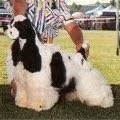
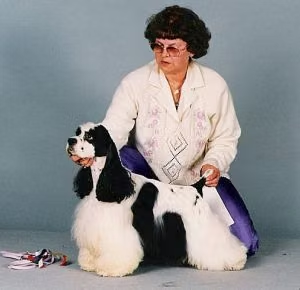
A few of the American Cocker Spaniel profiles members have added to United Pet Club.


About the American Cocker Spaniel
The American Cocker Spaniel is a small, friendly companion dog from the United States, known for its flowing coat and cheerful, people-oriented temperament.
The American Cocker Spaniel is a small sporting dog developed in the United States from spaniels brought over from England. It is the smaller of the two cocker spaniel breeds, the other being the English Cocker Spaniel. The breed is recognized by its rounded head, long low-set ears, and a long silky coat that often reaches the ground.
The American Cocker is bred mainly as a companion and show dog, though its origins are in flushing and retrieving game birds. Adults typically stand around 34 to 39 centimeters at the shoulder and weigh roughly 7 to 14 kilograms. The breed has a steady, affectionate nature and tends to bond closely with the people it lives with.
Its coat needs regular care, and the long ears and folded skin need routine cleaning. With consistent grooming and moderate daily activity, the breed adapts well to a range of living situations, including condos and apartments.
| Attribute | Detail |
|---|---|
| Origin | United States |
| Size | Small |
| Lifespan | 10 to 14 years |
| Group/role | Sporting (gun dog), now mainly companion and show |
| Good with | Children, families, and other pets when socialized |
Who the breed suits
The American Cocker Spaniel suits families, couples, and individuals who can give it daily company and time for grooming. It does well with children and generally gets along with other dogs and cats. People who want a small, gentle dog and can commit to weekly coat care and regular ear cleaning are a good match. Owners who travel often or are away for long hours may find the breed's need for company a drawback.
History and origin
The American Cocker Spaniel developed in the United States during the late 19th and early 20th centuries from English cocker spaniels, and was recognized as a separate breed in 1946.
Spaniels have a long history in Europe as hunting dogs used to flush and retrieve birds. The word "cocker" comes from the breed's use in hunting woodcock. Smaller spaniels were brought from England to North America during the 19th century, where breeders began selecting for a smaller, rounder type.
One early influential dog was a black cocker named Obo II, born in the United States in the 1880s, often cited as a foundation for the American line. Over the following decades, American breeders selected for a shorter back, a domed skull, and a fuller coat, which gradually separated the American type from its English relatives.
The American Kennel Club registered cocker spaniels from its early years, but the English and American types were shown together until the differences in size and head shape grew too large. In 1946 the AKC recognized the English Cocker Spaniel and the American Cocker Spaniel as two distinct breeds.
Through the mid-20th century the American Cocker became one of the most popular dogs in the United States, helped in part by its appearance as a household companion. Its popularity has risen and fallen over the years, but it remains a steady presence in the show ring and as a family dog.
Appearance and breed standard
The American Cocker Spaniel is a small, compact dog with a rounded head, long feathered ears, and a long silky coat that comes in many colors.
The American Cocker Spaniel has a sturdy, compact body that is slightly longer than it is tall. The head is rounded with a defined stop, a square muzzle, and large dark eyes that give the breed a soft expression. The ears are long, set low, and covered in long hair. The coat is short and fine on the head and longer on the body, legs, ears, and chest, where it often hangs in feathering.
| Trait | Detail |
|---|---|
| Height | Roughly 34 to 39 cm at the shoulder; females slightly smaller than males |
| Weight | About 7 to 14 kg |
| Coat | Silky, flat or slightly wavy, short on the head and longer with feathering on the body and legs |
| Colors | Black, black and tan, buff, brown, red, and parti-color combinations with white |
| Eyes | Large, round, dark brown, set to look forward |
Coat and colors
The coat comes in solid colors such as black, buff, brown, and red, in black and tan, and in parti-colors that combine white with one or more other colors. Solid colors should be even, with limited white allowed in some patterns. The long coat needs regular brushing to prevent mats, and many companion owners keep the body coat trimmed shorter to reduce upkeep. The feathering on the ears and legs picks up dirt easily and needs frequent attention.
Temperament and personality
The American Cocker Spaniel is friendly, affectionate, and gentle, bonding closely with its family and usually getting along well with children, strangers, and other pets.
The American Cocker Spaniel has a cheerful, even temper and likes to be near its people. It is affectionate with family members and tends to form strong attachments, which can lead to clingy behavior or distress if left alone for long periods. The breed is gentle and patient, qualities that make it a common choice for households with children.
With strangers the breed is usually welcoming rather than guarded, though early socialization helps prevent shyness. American Cockers generally get along with other dogs and with cats, especially when raised alongside them. Some individuals can be sensitive or timid, so calm, consistent handling works better than harsh correction.
The breed is playful and enjoys games and walks, but it is not a high-drive working dog in most homes. It can be vocal, and some dogs bark at visitors or unfamiliar sounds. Steady routines and gentle training help keep barking and separation-related behavior in check.
| Trait | Rating |
|---|---|
| Affection | 5 |
| Energy | 3 |
| Trainability | 4 |
| Vocalness | 3 |
| Shedding | 3 |
Care and grooming
The American Cocker Spaniel needs regular coat grooming, routine ear cleaning, and moderate daily exercise, and it does best in a home where it has regular company.
Grooming
- Brush the coat several times a week to prevent mats and tangles, especially in the feathering on the ears, legs, and belly.
- Bathe every few weeks, and dry the coat fully to avoid skin problems, which matter in a humid climate.
- Trim the body coat every six to eight weeks; many owners use a professional groomer.
- Clean the long ears regularly and check for redness, odor, or wax buildup.
- Trim nails and check the eyes, which can produce tear staining.
Exercise
- Provide one or two walks a day plus active play.
- Aim for roughly 30 to 60 minutes of activity daily.
- Offer fetch, scent games, or short training sessions for mental stimulation.
- Avoid overexertion in hot weather because the coat holds heat; walk during the cooler parts of the day.
Environment
The American Cocker Spaniel adapts to condos, apartments, or houses as long as it gets daily exercise and company. It is an indoor dog that should live with the family rather than being left outside. Because it dislikes being alone for long stretches, a home where someone is present for much of the day suits it best.
Nutrition and feeding
The American Cocker Spaniel does well on a complete, balanced dog food fed in measured portions, with care taken to avoid overfeeding since the breed gains weight easily.
Feed the American Cocker Spaniel a complete and balanced dog food suited to its life stage and size. The breed can gain weight easily, so portion control and regular weighing matter. Amounts depend on the dog's weight, age, and activity level, and the figures below are general guides. Fresh water should always be available.
| Life stage | Amount per day | Meals per day |
|---|---|---|
| Puppy (2 to 6 months) | Per product guide, divided into smaller portions | 3 to 4 |
| Junior (6 to 12 months) | Roughly 1 to 1.5 cups of dry food | 2 to 3 |
| Adult | Roughly 1 to 2 cups of dry food | 2 |
| Senior | Adjust down for lower activity | 2 |
Treats and supplements
Keep treats to about 10 percent of daily calories to avoid weight gain. Use small, low-fat treats during training. Most dogs on a complete commercial diet do not need supplements; talk to a veterinarian before adding any, including joint or skin supplements, since needs vary by individual.
Health and common conditions
The American Cocker Spaniel typically lives 10 to 14 years and is prone to ear infections and several eye and skin conditions, which routine care and veterinary checks help manage.
The American Cocker Spaniel generally lives 10 to 14 years. It is an overall healthy breed, but its build and coat make it prone to certain problems, especially ear infections and eye conditions. Buying from breeders who screen their dogs and keeping up with routine care reduce the risk of several inherited and acquired issues.
| Condition | Signs | Note |
|---|---|---|
| Ear infections | Head shaking, scratching, odor, discharge | Common due to long, heavy ears; routine cleaning helps prevent |
| Cataracts | Cloudy eyes, vision loss | Can develop with age or be inherited; treatable with surgery in some cases |
| Progressive retinal atrophy | Night blindness, gradual vision loss | Inherited; genetic testing of breeding dogs reduces risk |
| Glaucoma | Red, painful eye, squinting, vision loss | Needs prompt veterinary care |
| Skin and coat problems | Itching, hot spots, infections | Linked to allergies and to moisture trapped in the coat |
| Hip dysplasia | Stiffness, limping, trouble rising | Joint condition; weight control and screening help |
Preventive care
- Schedule annual veterinary checkups and keep vaccinations and parasite control up to date.
- Clean the ears weekly and dry them after baths and swimming.
- Have the eyes checked regularly and watch for cloudiness or redness.
- Keep the dog at a healthy weight to protect the joints.
- Brush the teeth and maintain dental care.
Training and socialization
The American Cocker Spaniel is intelligent and eager to please, and it responds best to gentle, consistent training based on rewards rather than correction.
The American Cocker Spaniel is a quick learner that wants to please its handler, which makes it fairly easy to train. The breed is sensitive, so harsh methods can make it anxious or withdrawn. Short, upbeat sessions with food and praise work best. Early socialization with people, other animals, and everyday situations helps prevent shyness and excessive barking.
Basics
- Start socialization and gentle handling in puppyhood, introducing new people, dogs, and places.
- Teach name recognition and basic cues such as sit, stay, and come using small treats.
- Begin house training with a consistent routine and frequent outdoor trips.
- Practice calm greetings to limit jumping and barking at visitors.
- Build short periods of alone time gradually to reduce separation distress.
- Add leash training and recall practice as the dog matures.
Breeding and raising young
Female American Cocker Spaniels usually reach maturity within their first year, carry litters for about 63 days, and produce an average of three to seven puppies.
Female American Cocker Spaniels generally reach sexual maturity around 6 to 12 months, though responsible breeders wait until a bitch is physically mature, often around two years, before breeding. Health screening of both parents for eye and hip conditions is standard practice. Mating is timed to the female's heat cycle.
Gestation lasts about 63 days. Litters usually number three to seven puppies, with variation between individuals. Most births are uncomplicated, but the breeder should be prepared to assist and to involve a veterinarian if problems arise.
Newborn puppies depend fully on the mother for the first weeks. Weaning begins around three to four weeks, and puppies are usually ready to leave for new homes at about eight weeks, after early socialization, a first veterinary check, and initial vaccinations. Early gentle handling helps produce well-adjusted adults.
| Metric | Value |
|---|---|
| Sexual maturity | About 6 to 12 months |
| Recommended breeding age (female) | Around 2 years, after health testing |
| Gestation | About 63 days |
| Average litter size | 3 to 7 puppies |
| Weaning | About 3 to 4 weeks |
| Ready for new homes | About 8 weeks |
Registering your American Cocker Spaniel and its microchip in the Philippines
The city vet office handles the RA 9482 paperwork; a free United Pet Club record is what a finder anywhere can actually search for your American Cocker Spaniel.
How to register an American Cocker Spaniel in the Philippines
An American Cocker Spaniel that gets loose during a storm is identified by whatever record answers the scan, not by the barangay it came from. Give it a record that answers: your mobile number, the dog's photo, and his details, free for life with United Pet Club. Register your dog today and it is done for good.
If a vet has already implanted a chip, the number still has to be filed where a scanner can trace it, because an unfiled chip points at nobody. Register the microchip free on the lifetime plan: any brand sold in the Philippines qualifies, updates after you move house or change SIM cost nothing, and the record stays searchable here and abroad. Create your free account and cover both in one go.
How do I register my American Cocker Spaniel in the Philippines?
Open a free United Pet Club account, add your American Cocker Spaniel's details and a photo, then save the profile. It stays free for his whole life and sits alongside the city vet office registration RA 9482 requires.
How do I register my American Cocker Spaniel's microchip?
Type the 15-digit chip number into your free account together with your mobile number and address. The lifetime plan charges nothing for the registration or for any update, whatever brand the clinic used.
Is registration required for an American Cocker Spaniel in the Philippines?
Yes, RA 9482 requires dog registration with your city or municipal veterinary office, along with current anti-rabies vaccination. The United Pet Club profile is the searchable half: free, worldwide, and tied to your current mobile.
How much does it cost to register an American Cocker Spaniel?
Nothing. The free lifetime plan covers the profile, the microchip record, and every update, with no renewal fees at all.
Frequently asked questions
Common questions about the American Cocker Spaniel cover its size, temperament, grooming needs, lifespan, suitability for families, and availability.
How big does an American Cocker Spaniel get?
It is a small breed. Adults stand roughly 34 to 39 centimeters at the shoulder and weigh about 7 to 14 kilograms, with males slightly larger than females.
Are American Cocker Spaniels good with children and other pets?
Yes. The breed is gentle, affectionate, and playful, and it usually does well with children and with other dogs and cats, especially when socialized early. Supervise interactions with very young children, as with any dog.
Are they hard to take care of?
The main commitment is grooming. The long coat needs brushing several times a week and trimming every six to eight weeks, and the ears need weekly cleaning. Exercise needs are moderate, so the breed is otherwise straightforward for most owners.
How long do American Cocker Spaniels live?
They typically live 10 to 14 years with good care, a healthy weight, and regular veterinary checkups.
Do they bark a lot?
They can be vocal and may bark at visitors or unfamiliar sounds. Early training and socialization help keep barking at a manageable level, which matters in a condo or apartment.
Can they be left alone during the day?
They bond closely with their people and can become distressed when alone for long periods. They suit homes where someone is around for much of the day, and alone time should be built up gradually.
Are American Cocker Spaniels easy to find?
Yes. The breed is well established in the United States and is available from registered breeders and through breed rescue groups. Choosing a breeder who screens for eye and hip conditions is recommended.
From the community
Ask about the American Cocker SpanielNo questions about the American Cocker Spaniel yet. Be the first to ask.
Browse Dog breeds