
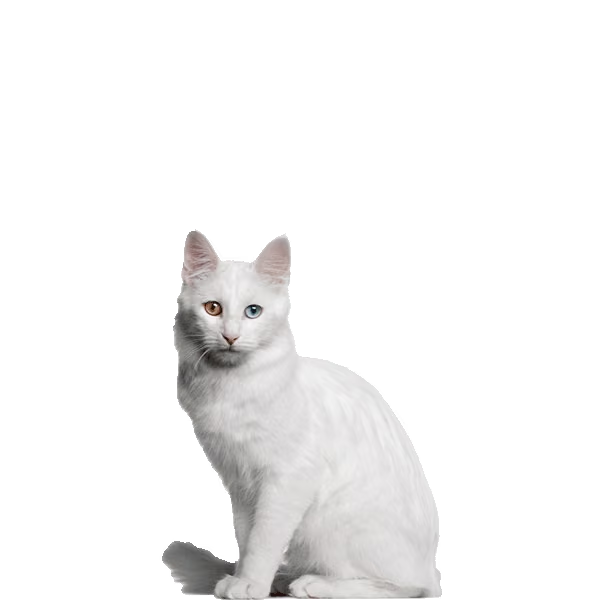
Turkish Vankedisi
The Turkish Vankedisi is the pure-white Van variety, prized for its active, affectionate temperament and loyal bond with its people.
- Size
- Large
- Lifespan
- 12–17 years
- Origin
- Turkey
- Temperament
- Active
- Standard colors
- White
Characteristics
Coat and grooming
How the Turkish Vankedisi coat is built, and what that means when you groom it.
- Coat layers
- Single coat
- Coat texture
- Silky
- Coat length
- Medium
- Shedding
- Seasonal shedding
Grooming guidance
Caution: A Turkish Vankedisi coat mats easily.
Fine or long hair tangles at the base of the coat, out of sight, where the mats tighten and pull on the skin. Brushing has to reach right down to the roots in sections, not just skim the surface.
Information: A Turkish Vankedisi drops its undercoat in heavy bursts.
The undercoat comes out in heavy bursts over a few weeks. An undercoat rake, or a bath followed by a proper blow-dry, clears it far faster than daily brushing. Clipping the coat down is not a shortcut for this.
Turkish Vankedisi colors and patterns
What each club's breed standard says about every Turkish Vankedisi color and pattern. Point at a ruling to see the club's own wording.
Breed standards describe the Turkish Vankedisi in White. Standard patterns: Solid.
| Color or pattern | TICA | GCCF |
|---|---|---|
| White | Standard (“Solid white”) | Standard (“Chalk white”) |
| Patterns | ||
| Solid | Standard (“Solid”) | No ruling |

| Color or pattern | TICA | GCCF |
|---|---|---|
| Blue | Standard (“blue”) | Standard (“Blue-eyed”) |
| Amber | Standard (“amber”) | Standard (“Light to medium amber”) |
| Orange | No ruling | Disqualifying (“Orange”) |
| Copper | No ruling | Disqualifying (“copper”) |
| Patterns | ||
| Odd-eyed | Standard (“odd eyed”) | Standard (“Odd-eyed”) |
%22%3E%3Ccircle%20cx%3D%2216%22%20cy%3D%2232%22%20r%3D%228%22%20fill%3D%22%23D9C3A0%22%2F%3E%3Ccircle%20cx%3D%2216%22%20cy%3D%2232%22%20r%3D%223.4%22%20fill%3D%22%231C1C1C%22%2F%3E%3Ccircle%20cx%3D%2213.6%22%20cy%3D%2229.6%22%20r%3D%221.3%22%20fill%3D%22%23F5F5F0%22%2F%3E%3C%2Fg%3E%3Cpath%20d%3D%22M3%2032Q16%2017%2029%2032Q16%2047%203%2032Z%22%20fill%3D%22none%22%20stroke%3D%22%233B2A20%22%20stroke-opacity%3D%220.75%22%20stroke-width%3D%221.4%22%20stroke-linejoin%3D%22round%22%2F%3E%3Cpath%20d%3D%22M35%2032Q48%2017%2061%2032Q48%2047%2035%2032Z%22%20fill%3D%22%23F5F5F0%22%2F%3E%3Cg%20clip-path%3D%22url(%23e1)%22%3E%3Ccircle%20cx%3D%2248%22%20cy%3D%2232%22%20r%3D%228%22%20fill%3D%22%23847865%22%2F%3E%3Ccircle%20cx%3D%2248%22%20cy%3D%2232%22%20r%3D%223.4%22%20fill%3D%22%231C1C1C%22%2F%3E%3Ccircle%20cx%3D%2245.6%22%20cy%3D%2229.6%22%20r%3D%221.3%22%20fill%3D%22%23F5F5F0%22%2F%3E%3C%2Fg%3E%3Cpath%20d%3D%22M35%2032Q48%2017%2061%2032Q48%2047%2035%2032Z%22%20fill%3D%22none%22%20stroke%3D%22%233B2A20%22%20stroke-opacity%3D%220.75%22%20stroke-width%3D%221.4%22%20stroke-linejoin%3D%22round%22%2F%3E%3C%2Fsvg%3E)
| Color or pattern | TICA | GCCF |
|---|---|---|
| Pink | Standard (“pink”) | Standard (“pink”) |
| Color or pattern | TICA | GCCF |
|---|---|---|
| Pink | Standard (“pink”) | Standard (“pink”) |
What the rulings mean
- Standard
- Described by the club's breed standard.
- Disqualifying
- The club's breed standard disqualifies an animal of this color or pattern.
Color changes
How a Turkish Vankedisi's colors can change over its life.
Whitechanges toShaded
Coat · With age
Whitechanges toChinchilla
Coat · With age
Whitechanges toPointed
Coat · With age · from 1 to 52 weeks
Solidchanges toSmoke
Coat · With age · from 3 to 104 weeks
Bluechanges toGreen
Eyes · With age · from 4 to 17 weeks
Bluechanges toYellow
Eyes · With age · from 4 to 17 weeks
Bluechanges toGold
Eyes · With age · from 4 to 17 weeks
Bluechanges toCopper
Eyes · With age · from 4 to 17 weeks
Bluechanges toOrange
Eyes · With age · from 4 to 17 weeks
Bluechanges toHazel
Eyes · With age · from 4 to 17 weeks
Bluechanges toAmber
Eyes · With age · from 4 to 17 weeks
Pinkchanges toSeal
Nose · With age · from 1 to 52 weeks
Pinkchanges toBlue
Nose · With age · from 1 to 52 weeks
Pinkchanges toChocolate
Nose · With age · from 1 to 52 weeks
Pinkchanges toLilac
Nose · With age · from 1 to 52 weeks
Pinkchanges toSeal
Paw pads · With age · from 1 to 52 weeks
Pinkchanges toBlue
Paw pads · With age · from 1 to 52 weeks
Pinkchanges toChocolate
Paw pads · With age · from 1 to 52 weeks
Pinkchanges toLilac
Paw pads · With age · from 1 to 52 weeks
%22%3E%3Crect%20x%3D%220%22%20y%3D%220%22%20width%3D%2264%22%20height%3D%2264%22%20fill%3D%22url(%23g)%22%2F%3E%3Cg%20fill%3D%22none%22%20stroke%3D%22%231C1C1C%22%20stroke-width%3D%221%22%20stroke-opacity%3D%220.85%22%20stroke-linecap%3D%22round%22%20stroke-linejoin%3D%22round%22%3E%3Cpath%20d%3D%22M18.9%2025.7l0.2%202.1M42.7%2033.1l1%202.1M12.6%2020.7l0.9%201.7M17.3%2012.7l1%201.7M25.9%2022.4l0.4%201.6M50.2%2029l0.1%201.6M29.2%2028l0.5%202.1M43.2%2022.9l1%202.2M42.4%2029.9l0.2%202.2M8.4%2023.4l1%202.1M7.8%2018.4l0.4%202M35%2027.9l0.5%202.2M35.9%2038.5l0.6%201.6M29.3%2032.6l0.5%201.4M34.8%2022l0.7%202.2M37.6%2020.6l0.7%202.2M18.2%2037.7l0.4%202.1M9.9%2029l0%201.5M9.9%2014l0.1%202M37%2030.4l0.5%202.3M13%2028.5l0.6%202M38.3%2049.6l0.6%201.9M18.4%2047.4l0.7%201.4M40%2026.9l0.2%201.6M57.5%2010.7l0.4%201.4M39.6%2030.3l0.3%202.1M54.9%2018.7l0.7%201.5M48%2028.3l0.4%202M23%2050.3l0.1%202.3M28.2%2036.1l0.5%202.1M57.9%2014.4l0.6%201.4M10.6%2023.3l1%202.1M17.5%2042.7l0.8%201.4M52.1%2026l0.1%201.6M38.6%2032.2l0.1%202.2M30.9%2037.8l0.7%201.7M56.6%2017l0.9%201.9M42.5%2028.7l1%201.8M24.4%2048.9l0%201.7M8.7%2022.3l0.4%201.4M16.6%2039.9l0.5%201.4M7.1%2021.8l0.8%202.2M34.1%2034.2l0.3%201.7M9.9%2025.5l0%201.6M43.1%2035.1l0%202M37.7%2051.3l0.3%201.7M31.7%2031.3l0.3%202.3M23.8%2036.6l0.9%201.8M16.6%2053.5l0.4%202.3M24.4%2041.2l0.6%201.8M39.9%2046.6l0.4%201.8M10.4%2021.8l0.1%202.1M47.2%2051l0.7%202.3M42.9%2027.4l0.1%202M20.5%2022.8l0.4%202.1M49.2%2032.2l0.6%201.3M15.8%2030.1l0.4%202.1M46.2%2053.6l0.6%201.4M15.1%2020.1l0.7%202M23.4%2043.9l0.4%201.6M38.8%2029.4l0.4%202.1M36.8%2034.7l0.4%201.9M48.3%2028.4l0.6%202M26.9%2029.6l0.4%201.6M28.4%2036.5l0.4%201.4M19.2%2034.3l0.5%202.1M7.2%2028.1l0.1%201.6M15.9%2019.7l0.6%201.3M23.4%2022.8l0.9%201.8M16.3%2019.8l0.2%202.1M21.9%2053l0.4%202M48.5%2028.5l0.7%201.8M16.9%2012.9l0.6%202.3M26.8%2033.1l0%201.7M46.2%2044.1l0.2%202.1M30.5%2025.1l0.1%201.7M42.1%2032.2l0.1%201.6M8.7%2021.9l0.6%202.2M29.2%2024.5l0.6%202M22.1%2040.7l1.1%201.9M24.3%2033.3l0.7%201.8M53.9%2026.4l0.1%202.4M21.4%2026.6l0.9%202M39.2%2025.3l0.1%201.9M32.4%2035.3l1%202M48.9%2031.4l0%201.6M24.8%2022.1l0.4%202.2M46.4%2054.6l0.7%201.8M25.1%2031.7l0.5%202.1M24.7%2043.5l0%201.4M23.1%2033.3l0.9%201.6M37.9%2039.5l0.5%201.3M45.7%2041.2l0.9%201.8M50.1%2029.5l0.4%201.8M46.6%2049.6l0.5%202.2M54%2024.3l0.5%202.3M5.9%2025.6l0.1%201.5M15.5%2022.8l0.9%202M26.3%2027.8l0%202.1M30.1%2020.3l0.1%202.3M18.1%2016.7l0.5%201.8M19.1%2024.1l0.9%201.8M12.7%2018.8l0.7%201.4M20.8%2031.1l0.6%201.5M16.9%2025.9l0.1%201.5M11.6%2014.8l0.1%202.3M10.8%2018.5l0.8%201.8M33.5%2038l0.6%201.4M30.6%2028.8l0.3%202.1M39.1%2031.7l0.9%201.9M34.6%2021.3l0.3%202%22%2F%3E%3Cpath%20d%3D%22M17.6%2040.5l0.7%202.1M46.2%2038.1l0.4%201.7M5.1%2020.5l0.2%201.6M21.8%2022.3l0.3%201.4M26.3%2021l0.9%201.6M32.6%2037.5l0.5%201.4M33.5%2031.6l0.6%201.6M39.2%2039l0.9%201.6M11.4%2022.8l0.7%201.8%22%2F%3E%3C%2Fg%3E%3C%2Fg%3E%3Cuse%20href%3D%22%23s%22%20fill%3D%22none%22%20stroke%3D%22%233B2A20%22%20stroke-opacity%3D%220.6%22%20stroke-width%3D%221%22%20stroke-linejoin%3D%22round%22%2F%3E%3Cpath%20d%3D%22M3.4%2022.3L5.4%2022.5L4.3%2024Z%22%20fill%3D%22%23E8A0B4%22%2F%3E%3Ccircle%20cx%3D%229.6%22%20cy%3D%2221.2%22%20r%3D%221.1%22%20fill%3D%22%231C1C1C%22%2F%3E%3C%2Fsvg%3E)
%22%3E%3Cg%20fill%3D%22none%22%20stroke%3D%22%231C1C1C%22%20stroke-width%3D%221.1%22%20stroke-opacity%3D%220.9%22%20stroke-linecap%3D%22round%22%20stroke-linejoin%3D%22round%22%3E%3Cpath%20d%3D%22M37.4%2030.7l0.7%201.3M18.9%2028.6l0.1%201.1M46.5%2033.6l0.3%201.3M35.8%2023.2l0.1%201.4M19.6%2045.1l0%201.2M34.4%2037.4l0%200.9M48.4%2037.9l0.2%201.2M29.8%2023.5l0.4%201.4M9.3%2013.8l0.2%201.1M45.6%2044.2l0.3%200.8M24.4%2028.2l0.1%200.8M41.2%2035l0.1%200.9M41%2030.9l0.1%201.2M40.9%2025.1l0.3%201.4M28.4%2034.5l0.6%201.1M26.7%2024.1l0.1%200.8M47.3%2050.1l0.3%201.4M17.7%2049.5l0.5%201.3M29%2024.1l0.4%201.1M38.6%2038.1l0%201M33.4%2026.9l0.6%201M25.7%2028.1l0.1%200.9M18.3%2038.1l0.6%201.2M47.5%2028.1l0.4%201.1M25.6%2022l0.1%200.9M29.5%2027l0.5%201.1M39.5%2021.4l0.1%201.2M40.9%2048.2l0.2%201.1M17.8%2013.2l0.5%201.2M27.3%2031.6l0%201M21.3%2023.5l0.2%200.9M40.9%2054.1l0.3%200.9M20.9%2028.2l0.7%201.2M26.2%2022.2l0.1%200.8M40.9%2050.9l0.3%201.4M35.2%2030.2l0.2%200.8M50.4%2031.3l0.1%201.3M43.6%2036l0.3%200.9M33.7%2039.1l0.3%200.9M48.6%2049.9l0.3%201.1M44.4%2021.9l0.2%200.9M40.3%2040.9l0.4%201M51.8%2031.5l0.1%201.4M42%2038l0.3%201M41.3%2027.1l0.6%201.1M27.2%2032.2l0.3%201.3M28%2024.6l0%201.2M29%2038.5l0.1%201.1M56%2014.4l0.6%201.3M51%2031.2l0.3%200.8M49%2024.2l0.6%201.1M39.1%2029l0.5%201.2M38.7%2037.6l0.2%201.4M24.3%2046.6l0.4%200.8M23.1%2037.4l0.2%200.8M43%2035.9l0%201M35.4%2027l0.5%201M29.7%2039.1l0.2%201.4M32.8%2037.2l0%201M7.4%2022.7l0.1%201.1M31.3%2020.3l0.6%201.1M21.7%2033.3l0.5%201.1M16.5%2043.9l0.2%201.1M22.7%2024l0%201.4M41.6%2034.2l0.7%201.3M27.1%2036.9l0.2%201.1M49.4%2029.1l0.4%200.9M34.4%2020.6l0.3%201.1M21.6%2037.3l0%201.4M47.1%2029.2l0.7%201.3M50.6%2024.8l0.3%201M49.7%2029.2l0.7%201.2M19.4%2045.4l0.2%201.5M48.6%2026.5l0.6%201.2M23%2022.5l0.4%201M39.9%2051.5l0.2%201.1M6.7%2020.5l0.2%200.9M44.8%2033l0.2%201.4M37.7%2045.6l0.4%201.2M29.9%2037.9l0.2%200.9M24%2020.8l0.4%201M42.7%2021l0.4%201M42%2030.3l0.4%201.1M21.6%2045l0.4%201.1M18.5%2017l0.1%201M9.6%2016.4l0.1%201.3M19.5%2045.9l0.1%201M46.9%2049.9l0.4%201.3M18.6%2020.1l0.1%200.9M38.5%2038.8l0.1%201.4M46.9%2032.3l0.5%201.1M49.4%2031.7l0.3%200.9M48.5%2040.7l0.2%201.4M30.5%2033.5l0.4%201.3M46.3%2041.6l0.3%200.9M23.1%2044.7l0.2%201.1M16.7%2027.5l0%201M37.8%2029.3l0.1%201.2M42.9%2036.9l0.2%201.1M31%2025.3l0.2%201.1M17.5%2052.8l0.6%201.1M11%2021.5l0.4%201M22.5%2029.1l0.5%201.1M27.5%2032.1l0.4%200.9M39.6%2023.3l0.1%201.2M52.1%2027l0.6%201.3M28.8%2029.6l0%201.5M37.9%2025.5l0.5%200.8M33.2%2022.6l0.1%201.2M15.7%2015.4l0.3%200.8M47.7%2053.4l0.1%200.9%22%2F%3E%3Cpath%20d%3D%22M20.7%2023.3l0.6%201.1M6.7%2027.8l0.5%201.3M17%2012.8l0.2%201.2M21.7%2036.2l0%201.3M12.3%2019.9l0.2%200.8M17.2%2025.6l0.4%201.2M42.3%2022.6l0%201.2M24.7%2028.4l0.3%201.4M44.5%2038.7l0%201.4%22%2F%3E%3C%2Fg%3E%3Cpath%20d%3D%22M3.5%2022.6L5.4%2022.6%22%20fill%3D%22none%22%20stroke%3D%22%231C1C1C%22%20stroke-width%3D%221%22%20stroke-linecap%3D%22round%22%20stroke-linejoin%3D%22round%22%2F%3E%3C%2Fg%3E%3Cuse%20href%3D%22%23s%22%20fill%3D%22none%22%20stroke%3D%22%233B2A20%22%20stroke-opacity%3D%220.6%22%20stroke-width%3D%221%22%20stroke-linejoin%3D%22round%22%2F%3E%3Cpath%20d%3D%22M3.4%2022.3L5.4%2022.5L4.3%2024Z%22%20fill%3D%22%23E8A0B4%22%2F%3E%3Ccircle%20cx%3D%229.6%22%20cy%3D%2221.2%22%20r%3D%221.1%22%20fill%3D%22%231C1C1C%22%2F%3E%3C%2Fsvg%3E)
%22%3E%3Cpath%20d%3D%22M5.5%2017L7.5%207L12%2015ZM14%2015L17.5%207L20%2018.5Z%22%20fill%3D%22%23847865%22%2F%3E%3Cellipse%20cx%3D%227.6%22%20cy%3D%2223.6%22%20rx%3D%225%22%20ry%3D%225.2%22%20fill%3D%22%23847865%22%2F%3E%3Crect%20x%3D%220%22%20y%3D%2244%22%20width%3D%2264%22%20height%3D%2220%22%20fill%3D%22%23847865%22%2F%3E%3Cpath%20d%3D%22M50%2027L53.5%205L64%203L64%2013L59%2024L53%2033Z%22%20fill%3D%22%23847865%22%2F%3E%3C%2Fg%3E%3Cuse%20href%3D%22%23s%22%20fill%3D%22none%22%20stroke%3D%22%233B2A20%22%20stroke-opacity%3D%220.6%22%20stroke-width%3D%221%22%20stroke-linejoin%3D%22round%22%2F%3E%3Cpath%20d%3D%22M3.4%2022.3L5.4%2022.5L4.3%2024Z%22%20fill%3D%22%23E8A0B4%22%2F%3E%3Ccircle%20cx%3D%229.6%22%20cy%3D%2221.2%22%20r%3D%221.1%22%20fill%3D%22%231C1C1C%22%2F%3E%3C%2Fsvg%3E)
%22%3E%3Crect%20x%3D%220%22%20y%3D%220%22%20width%3D%2264%22%20height%3D%2264%22%20fill%3D%22%231C1C1C%22%2F%3E%3Crect%20x%3D%220%22%20y%3D%220%22%20width%3D%2264%22%20height%3D%2264%22%20fill%3D%22url(%23g)%22%2F%3E%3Cpath%20d%3D%22M17.5%2030.4l0.2%203.7M48.5%2036.2l-0.3%203.1M40.1%2038.4l0.7%202.8M21.3%2029.4l0.3%202.9M38.5%2024l-0.7%202.7M19.4%2041l0.9%203.8M47.2%2026.3l0.3%203M28.1%2031.1l-0.4%202.6M21%2027l-0.7%203.4M20.1%2035l0.7%202.8M27.4%2035.9l1.2%203.6M31.5%2032.2l0.5%202.5M43.7%2038.4l0.2%202.9M15.5%2027.6l0.2%203M33.5%2029.7l0%203.8M50%2028l0.5%203.8M50.1%2029.5l-0.2%203.3M39.4%2037.1l0.8%203M31.1%2025l1%203.1M19.5%2028.3l0.3%203.1M29.5%2034.2l-0.3%203.8M50.4%2033.8l-0.5%202.6M39.3%2028.8l1.2%203.8M36.6%2037.2l-0.3%202.8M41.6%2026.3l-0.7%202.7M24.2%2038.3l-0.2%203.3M20.5%2033.1l0.7%203M24%2032.2l-0.7%203.3M42.7%2038.5l-0.6%203.8M20.4%2038.2l0.2%203.3M37.5%2036.9l-0.8%202.4M36%2035.3l-0.7%202.9M46.2%2033.2l-0.8%203.8M38.1%2030.5l-0.6%203.6M29%2038.9l-0.7%203.7M42.8%2031.3l0.1%203.1M22.5%2025.1l0.4%202.9M47.4%2025l0.2%203M24.7%2032l-0.8%203.2M14.8%2024.5l1.1%203.3%22%20fill%3D%22none%22%20stroke%3D%22%23F5F5F0%22%20stroke-width%3D%221%22%20stroke-opacity%3D%220.85%22%20stroke-linecap%3D%22round%22%20stroke-linejoin%3D%22round%22%2F%3E%3C%2Fg%3E%3Cuse%20href%3D%22%23s%22%20fill%3D%22none%22%20stroke%3D%22%233B2A20%22%20stroke-opacity%3D%220.6%22%20stroke-width%3D%221%22%20stroke-linejoin%3D%22round%22%2F%3E%3Cpath%20d%3D%22M3.4%2022.3L5.4%2022.5L4.3%2024Z%22%20fill%3D%22%23E8A0B4%22%2F%3E%3Ccircle%20cx%3D%229.6%22%20cy%3D%2221.2%22%20r%3D%221.1%22%20fill%3D%22%231C1C1C%22%2F%3E%3C%2Fsvg%3E)
Sources
Each ruling comes from the club's published breed standard or color list.
Turkish Vankedisi: the all-white rarity almost never seen at Philippine cat shows
The Turkish Vankedisi is an all-white, odd-eyed cat breed preserved as a national treasure in Turkey and virtually unknown in the Philippines. This semi-longhaired breed from eastern Turkey's Lake Van region is distinct from the Turkish Van and presents unique care challenges in the Philippine tropical climate.
Walk through any Philippine Cat Club show and you will find Persian faces, Siamese voices, and Ragdoll size drawing the crowds. The Turkish Vankedisi will not be among them. This is one of the rarest breeds on earth, and in the Philippines it is essentially unheard of even among experienced cat fanciers. That rarity is not accidental. Turkey treats the Vankedisi as a living national heritage animal, and export has historically been tightly controlled, making the breed a collector's cat that few Philippine enthusiasts will ever encounter outside of photographs.
What makes the Vankedisi stand apart from every other white cat is that whiteness is the entire point of the breed. This is not a color variant of another breed. The Vankedisi is defined by its pure, all-white coat, its large semi-longhaired body, and its famously expressive eyes, which frequently display heterochromia. One eye gold, one eye blue: a combination Turkish culture considers lucky and that makes every Vankedisi face instantly striking.
| Characteristic | Detail |
|---|---|
| Origin | Eastern Turkey (Lake Van region) |
| Coat | All-white, semi-longhaired, single-layered, water-resistant |
| Eye color | Gold, blue, or odd-eyed (heterochromia) |
| Body type | Large, muscular, semi-foreign |
| Temperament | Active, affectionate, curious, moderately vocal |
The Vankedisi is sometimes confused with the Turkish Van, but the two are separate breeds. The Turkish Van has color on its head and tail with a white body. The Vankedisi has no color at all: entirely white from nose to tail tip. Turkish universities, particularly the University of Van and Ankara University, have led the formal preservation programs that keep the Vankedisi genetically distinct and phenotypically consistent. For Philippine cat lovers drawn to rare breeds, the Vankedisi represents a genuinely singular opportunity, provided the owner is prepared for the import requirements and the tropical climate considerations that come with bringing a cold-climate, white-coated cat to the archipelago.
History of the Turkish Vankedisi and its preservation as a Turkish national treasure
The Turkish Vankedisi descends from naturally occurring all-white cats in the Lake Van region of eastern Turkey. Turkish universities formalized its preservation in the twentieth century, and the breed remains rare and carefully managed.
The Lake Van region of eastern Turkey sits at high altitude with cold winters, a harsh continental climate, and the mineral-rich waters of Lake Van itself. The cats that developed naturally in this environment are large-bodied, physically tough, and carry a distinctive semi-longhaired coat with a texture unlike most other longhaired breeds: minimal undercoat, low tendency to mat, and a water-resistant quality that local legend links to the cats' supposed love of swimming.
Within this Lake Van cat population, the all-white individuals with odd eyes were always present, always noticed, and always considered special. Turkish culture assigned meaning to the odd-eyed white cat long before any formal breed registry existed. The combination of one gold eye and one blue eye appears in Ottoman-era art and poetry, and the cats themselves were kept by families in the Van province for generations.
The formal distinction between the Turkish Van and the Turkish Vankedisi as separate breeds came through academic and governmental effort. Ankara University began working with the all-white cats in the 1960s and 1970s, and the University of Van later expanded preservation programs. The Turkish government designated both the Van cat and the Vankedisi as protected animals of national significance, restricting export in ways that have kept the population largely within Turkey to this day.
International cat fancy organizations have been slow to grant the Vankedisi full independent breed status, partly because of its extreme rarity outside Turkey and partly because of the ongoing debate about how closely it relates to the Turkish Van. For Philippine Cat Club members seeking to register a Vankedisi, working through the Turkish registry systems and discussing recognition pathways with Philippine Cat Club officers directly is the most practical starting point.
For Philippine cat history, the Vankedisi represents a complete blank. No established breeding programs exist in the archipelago, and any Vankedisi present in the Philippines today would be the result of private import arranged by an individual enthusiast willing to navigate the Bureau of Animal Industry permit process and the considerable cost of sourcing a kitten from a verified Turkish cattery.
Turkish Vankedisi appearance: all-white coat, large build, and heterochromia
The Turkish Vankedisi is a large, muscular, semi-longhaired cat with a pure white coat, no markings, and eyes that are frequently odd-colored. The coat's single-layer structure differs from most longhaired breeds and requires less intensive maintenance.
The first impression the Turkish Vankedisi makes is one of size and whiteness. This is a large cat by any standard, with males reaching 6 to 9 kilograms in full adult condition and females proportionally substantial. The body is long, muscular, and broad-chested without being cobby. The bone structure is substantial rather than delicate, reflecting the cold-climate ancestry of a cat bred for physical resilience rather than ornamental refinement.
The coat is the defining feature. Pure white, always white, with no accepted markings, no tabby ghosts, no colored tipping of any kind. Kittens sometimes show faint shadow markings that disappear as the adult coat comes in, but an adult Vankedisi showing any color has failed the breed standard. The texture of the coat is a genuine distinguishing factor from other white longhaired cats: the Vankedisi carries a single coat layer with minimal undercoat, giving the fur a silky, almost cashmere quality that lies flat against the body rather than puffing out. In the Lake Van region this coat evolved as practical waterproofing rather than insulation, which is why it handles moisture differently than the dense double coats of Persians or Maine Coons.
| Feature | Standard |
|---|---|
| Weight | 4.5-9 kg (males larger, females lighter) |
| Coat length | Semi-long, single layer, minimal undercoat |
| Coat color | Pure white only, no markings accepted |
| Eye colors | Amber/gold, blue, or odd-eyed (one of each) |
| Head shape | Moderately wedge-shaped with broad forehead |
The eyes draw immediate attention. Amber or gold eyes appear in some individuals, blue in others, but the signature look of the Vankedisi is heterochromia: one eye gold, one eye blue. This trait is genetically linked to the white coat gene and appears at higher frequency in the Vankedisi than in most other breeds. The eyes are large, oval, and set at a gentle angle that gives the face an alert, open expression.
The ears are medium-sized, set high and slightly forward, and tufted at the tips in fully coated adults. The tail is long, plumed, and carried with a slight upward curve. In Philippine humidity and heat, prospective owners should expect the coat to lie flatter and carry less volume than photographs from Turkish catteries show, because the single-layer structure responds to moisture and temperature differently than thick undercoated breeds. The whiteness itself does not change, but the dramatic plume of the tail may appear less full in a tropical climate than in the dry, cold air of eastern Turkey.
Turkish Vankedisi temperament: active, affectionate, and territorially curious
The Turkish Vankedisi is an active, playful, and affectionate cat that forms strong bonds with its household. It is moderately independent, highly curious, and needs sufficient environmental enrichment to stay mentally satisfied.
The Turkish Vankedisi is not a decorative lap cat content to sit still on a cushion. This is an active breed with a working-cat background, and it brings curiosity and physical energy to every room it occupies. Vankedisi cats investigate their environment thoroughly, learn household routines quickly, and tend to develop preferences for high perches where they can observe activity below. Philippine cat owners accustomed to the placid, floor-level presence of a Persian will find the Vankedisi considerably more engaged with its surroundings.
Affection is real but tends to be expressed on the cat's own schedule. Vankedisi cats bond genuinely with their people and will seek proximity and contact, but they also value the option to leave and return rather than being held continuously. This makes them a good fit for households where people are present during the day but not hovering constantly. They adapt reasonably well to children and other cats when introduced properly, though their size and energy mean they can easily overpower smaller pets during play.
Vocalization is moderate. The Vankedisi communicates clearly but is not as insistent or piercing as a Siamese. It will let you know when it wants attention or food, but it does not fill the apartment with continuous commentary.
| Trait | Level |
|---|---|
| Activity level | High -- needs daily active play |
| Affection with family | High -- bonds closely but not clingily |
| Adaptability | Moderate -- adjusts to new environments with time |
| Vocalization | Low to moderate |
| Compatibility with children and other pets | Good with proper introduction |
Caring for a Turkish Vankedisi in the Philippine climate
The Turkish Vankedisi requires regular grooming, daily play, and careful environmental management in the Philippines. The white coat, tropical heat, and UV exposure create specific challenges that differ from caring for this breed in its native Turkey.
Grooming a Turkish Vankedisi
The Vankedisi's single-layer coat is considerably easier to maintain than the dense double coats of Persians or Maine Coons. The minimal undercoat means mats are rare, and the silky texture does not tangle as readily as coarser longhaired coats. Philippine humidity can cause the coat to pick up more debris and feel slightly heavier than it would in a dry climate, so grooming frequency needs to account for local conditions.
- Brush two to three times per week with a soft slicker brush or wide-tooth comb to remove loose hair and prevent any tangles that humidity encourages
- Bathe monthly or as needed using a gentle, whitening cat shampoo that keeps the coat bright without stripping natural oils; rinse fully in lukewarm water and dry indoors away from fans blowing cold air
- Check ears weekly for wax buildup, which can be more pronounced in humid conditions; clean gently with a vet-approved ear cleaner
- Trim nails every two to three weeks; indoor Philippine cats tend to need more frequent nail attention than outdoor cats
- Wipe the face around the eyes regularly, particularly if the cat has blue eyes, as blue-eyed white cats sometimes show slight tear staining on white fur
Exercise and play for the Turkish Vankedisi
The Vankedisi is a genuinely active breed that needs structured daily play rather than access to a garden or balcony. In the Philippine context, outdoor access is not appropriate for a white-coated cat at elevated squamous cell carcinoma risk, which means all exercise needs to happen indoors.
- Schedule two dedicated play sessions daily of at least 15 minutes each, using wand toys, feather teasers, or battery-operated prey-simulation toys that engage the hunting drive
- Provide a cat tree tall enough for the cat's size, ideally positioned near a window for visual stimulation without direct sun exposure
- Rotate toys regularly to prevent boredom; the Vankedisi is intelligent enough to lose interest in the same toy presented repeatedly without variation
- Puzzle feeders and food-dispensing toys extend mental engagement during the hours when household activity is low
- A second cat as a companion can substantially reduce the demand on the owner to provide stimulation, provided the introduction is done gradually
Environment and tropical climate considerations for the Turkish Vankedisi in the Philippines
The Turkish Vankedisi evolved in the cool, dry highlands of eastern Turkey, and the Philippine climate sits at the opposite end of the environmental spectrum. Metro Manila temperatures regularly reach 33 to 36 degrees Celsius in summer, and humidity stays high year-round. Managing this thermal gap is the central environmental challenge for Philippine Vankedisi owners.
Keep the cat in air-conditioned indoor space during the hottest parts of the day, particularly from late morning through mid-afternoon. A consistent indoor temperature between 22 and 26 degrees Celsius is appropriate. The cat should have access to fresh cool water at all times and multiple resting spots that allow airflow underneath the body.
Direct sunlight through windows poses a specific risk for white-coated cats. The white coat provides no melanin-based UV protection to the skin underneath, and ears, nose, and eyelid margins are the sites where squamous cell carcinoma most commonly develops in white cats with chronic sun exposure. Window film that blocks UV transmission is a practical and inexpensive modification for Philippine households where large windows face the afternoon sun.
During typhoon season from June through November, Philippine households experience sudden barometric pressure changes, heavy rain, and occasionally extended power outages. Cats generally sense pressure drops before storms arrive and may show restlessness or hiding behavior. Having a designated secure area for the cat during typhoons, separate from windows and external walls, reduces stress. Battery-powered fans and pre-charged portable cooling devices are worth maintaining as backup for power-outage situations given the cat's sensitivity to heat.
Nutrition for the Turkish Vankedisi: feeding a large active breed in the Philippines
The Turkish Vankedisi needs a high-protein diet calibrated to its large body size and activity level. Philippine owners should account for heat-related reduced appetite and ensure consistent hydration.
The Turkish Vankedisi is a large-framed, muscular breed with genuine energy demands. A diet built on high-quality animal protein is essential for maintaining muscle mass and coat condition. Philippine cat owners have access to a reasonable range of premium imported cat foods through pet stores and online retailers, though prices are considerably higher than in North America or Europe due to import costs and taxes.
In hot Philippine weather, cats of all breeds tend to reduce voluntary food intake, particularly dry food. The Vankedisi, coming from a cold-climate ancestry, may show more pronounced heat-related appetite suppression than breeds developed in warmer environments. Incorporating wet food as a significant portion of the diet helps maintain caloric intake during hot months while simultaneously improving hydration.
| Life stage | Daily food approach | Key consideration |
|---|---|---|
| Kitten (under 12 months) | High-protein kitten formula, 3 to 4 small meals daily | Support rapid muscle and bone development |
| Adult (1 to 7 years) | Premium adult formula, wet and dry combination, 2 meals daily | Monitor weight; adjust for Philippine heat-driven appetite changes |
| Senior (over 7 years) | Senior or digestive-support formula with joint supplement if indicated | Joint health and kidney support become priorities |
Avoid feeding the Vankedisi a diet based primarily on fish, despite the abundance and low cost of fish in the Philippines. High-fish diets in cats have been associated with thiamine deficiency and urinary pH imbalances over time. Fish as an occasional treat or minor dietary component is acceptable, but the foundation of the diet should be chicken, turkey, or other poultry protein with a certified complete-and-balanced formulation. When purchasing imported cat foods in the Philippines, check the manufacturing date carefully and buy from stores with good stock turnover, as heat and humidity during shipping and storage can degrade food quality faster than in temperate markets.
Turkish Vankedisi health: genetic concerns, deafness, and tropical disease risks
The Turkish Vankedisi faces breed-specific health risks including congenital deafness linked to the white coat gene and elevated skin cancer risk in tropical sun. Philippine owners must also address regional disease prevention through vaccination and parasite control.
The Turkish Vankedisi's white coat and blue-eye genetics carry a well-documented health risk that every prospective owner must understand before acquiring the breed. The gene responsible for the white coat (the dominant white gene, W) is associated with cochlear degeneration in cats with blue eyes. White cats with two blue eyes have a substantially elevated rate of congenital deafness, which may be unilateral (one ear) or bilateral (both ears). Odd-eyed white cats have an intermediate risk, with deafness more likely in the ear on the blue-eye side. Gold-eyed white cats have the lowest risk but are not entirely immune.
This is not a correctable condition. A Vankedisi born deaf will remain deaf. For Philippine owners, this means requesting documentation of a BAER (brainstem auditory evoked response) test from the breeder before purchase. Responsible Turkish catteries test kittens at 5 to 6 weeks of age when the auditory system has matured enough for reliable results.
| Health concern | Risk level | Action |
|---|---|---|
| Congenital deafness (blue-eyed) | High in blue-eyed individuals | Request BAER test certificate from breeder |
| Squamous cell carcinoma on ears/nose | Elevated in tropical UV exposure | Strict indoor management, UV window film |
| Heat stress | Moderate to high in Metro Manila climate | Air-conditioned indoor environment, hydration monitoring |
| Feline panleukopenia, herpesvirus, calicivirus | Standard Philippine risk | Core vaccinations on schedule recommended by local vet |
Beyond the breed-specific concerns, the Philippine disease environment requires attention to core vaccinations and parasite prevention. Feline panleukopenia, herpesvirus, and calicivirus are present in the Philippines and vaccination against all three is standard. If the Vankedisi will have any potential exposure to other cats, feline leukemia virus vaccination is also worth discussing with a veterinarian.
Parasite control is more demanding in the Philippines than in Turkey or most of Europe. Fleas are present year-round in the Philippine climate rather than seasonally, which means consistent monthly flea prevention is appropriate even for fully indoor cats, particularly in lower-floor apartments or houses with garden access by other animals. Intestinal parasites are endemic, and deworming on a schedule recommended by a local veterinarian is advisable.
The Vankedisi's large body size means that any weight gain becomes visible relatively late, as the cat's frame can carry extra mass without looking obviously overweight. Weighing the cat monthly and tracking against breed-appropriate ranges helps catch weight creep before it reaches the point of clinical obesity.
Training the Turkish Vankedisi: working with an intelligent and independent cat
The Turkish Vankedisi responds well to positive reinforcement training and can learn household rules, tricks, and harness walking. Consistency and short sessions produce the best results.
The Turkish Vankedisi is intelligent enough to learn quickly and independent enough to ignore training it finds unrewarding. This combination means that the approach matters as much as the content. Positive reinforcement with high-value food treats works reliably when sessions are kept short, usually no more than 5 to 10 minutes, and practiced at the same time each day so the cat builds anticipatory engagement.
Basic household rules, including scratch post use, litter box expectations, and counter boundaries, can all be shaped through consistent reinforcement. The Vankedisi is not a cat that submits to rules through fear of correction; attempting punishment-based methods will produce avoidance and mistrust rather than compliance. Redirect unwanted behavior toward acceptable alternatives and reward the alternative behavior immediately.
For Philippine Vankedisi owners who want to provide the cat with outdoor stimulation without the UV and safety risks of free outdoor access, harness and leash training is a viable option. The process requires patience and should begin with acclimating the cat to the harness indoors for several weeks before any outdoor exposure. A well-fitted H-style harness rather than a collar or figure-eight harness provides the most secure and comfortable fit for a large-bodied cat.
Outdoor time on harness in the Philippines should be scheduled for early morning before 8 a.m. or after 5 p.m. when UV index and ambient temperature are lower. Avoid concrete or asphalt surfaces that absorb heat, and keep sessions brief in warm weather. Any outdoor session should use sun-protected areas such as covered walkways or shaded gardens rather than open sun.
If the cat is deaf or partially deaf, training adapts straightforwardly to visual signals. Hand signals used consistently in place of verbal cues work well, and a deaf Vankedisi can learn a full repertoire of cues through visual-based positive reinforcement with no disadvantage relative to a hearing cat.
Breeding Turkish Vankedisi cats: rarity, genetics, and responsible practice
The Turkish Vankedisi is extremely rare outside Turkey. Responsible breeding requires understanding the genetics of the white coat and deafness, and any Philippine breeding program would face significant challenges sourcing genetically diverse, health-tested stock.
Breeding the Turkish Vankedisi responsibly requires working through several layers of genetic complexity that do not apply to most other breeds. The all-white coat is produced by the dominant white gene (W), which suppresses all other color expression in the coat. This same gene is pleiotropically linked to cochlear development, which is why blue-eyed and odd-eyed white cats in this and related breeds show elevated deafness rates. Responsible Vankedisi breeding programs in Turkey prioritize BAER testing of all breeding animals and track hearing status across generations.
For a Philippine breeder considering establishing a Vankedisi program, the first and most significant challenge is sourcing a genetically diverse, health-tested foundation pair from verified Turkish catteries. This is not simply a matter of finding a seller willing to export. Turkish government restrictions on the export of Van-region cats have been in place for decades, and any reputable Turkish cattery will conduct extensive due diligence on prospective international buyers. Beyond the source cattery's requirements, Philippine Bureau of Animal Industry import permits are mandatory for all live animal imports, and the permit process requires health certification, microchipping, and quarantine documentation from the country of origin.
Once foundation animals are in place, maintaining genetic diversity in a Philippine program presents ongoing challenges given the near-zero local population. Breeding programs in established Vankedisi countries such as Germany and Italy operate under the oversight of cat fancy organizations with registries tracking lineage. A Philippine program would need to affiliate with one of these registries to access studbook data and avoid the inbreeding that invariably degrades health and vigor in a closed micro-population.
Given these realities, the realistic expectation for Philippine cat fanciers interested in the Vankedisi is acquisition of a pet-quality kitten from a verified international source rather than establishment of a local breeding program.
| Factor | Philippine context |
|---|---|
| Local breeding stock availability | Essentially zero -- no established Philippine population |
| Import pathway | BAI import permit required; Turkish export restrictions apply |
| Deafness testing | BAER test mandatory for all breeding animals |
| Registry affiliation | No TICA/CFA championship status; Turkish registry or European affiliates |
| Litter size | Typically 3 to 5 kittens; odd-eyed kittens most sought after |
Registering a Turkish Vankedisi in the Philippines, chip included
No law licenses cats here, so your Turkish Vankedisi's only paper trail is the one you create: free for life with United Pet Club.
Turkish Vankedisi registration and microchip registration in the Philippines
The profile takes five minutes and zero pesos: name, markings, photo, contact details, save. From then on any vet or shelter scan of your Turkish Vankedisi has somewhere to land. Cat registration works chip or no chip, condo cat or free-roamer.
Fifteen digits under her skin mean nothing until a registry says whose Turkish Vankedisi she is. Say it free with United Pet Club: every chip brand accepted, every update free, the record live day and night, here and abroad. Microchip registration plus a free account, and she is covered.
How do I register my Turkish Vankedisi in the Philippines?
Sign up for a free United Pet Club account, add your Turkish Vankedisi's name, markings, and a photo, and save. The profile is free for life, no microchip required, and you can add the chip number after the vet visit.
How do I register my Turkish Vankedisi's microchip?
Add the 15-digit number from the clinic's paperwork to your free account along with your current mobile number. The lifetime plan never charges for the registration or the updates, whatever the chip brand.
Do cats need to be registered in the Philippines?
No law requires it; RA 9482 covers dogs. That is exactly why a Turkish Vankedisi's record matters: unless you create one, a found cat has no trail at all. United Pet Club keeps that trail free for life.
What does it cost to register a Turkish Vankedisi?
Zero pesos. Profile, microchip registration, and unlimited updates are all free on the lifetime plan, with no renewal ever.
Turkish Vankedisi frequently asked questions from Philippine cat owners
Answers to the questions Philippine cat enthusiasts most commonly ask about the Turkish Vankedisi, including import permits, Philippine Cat Club registration, cost in PHP, and tropical care.
Can I register a Turkish Vankedisi with the Philippine Cat Club?
The Philippine Cat Club (PhilCatClub) registers cats according to the standards of the international bodies it affiliates with, primarily TICA and CFA. Because neither TICA nor CFA currently grants the Turkish Vankedisi full championship breed status as a breed separate from the Turkish Van, registration options are limited. Contact the PhilCatClub directly with your cat's breeder documentation and Turkish registry papers to discuss what registration category, if any, applies. Some clubs allow registration in experimental or household pet categories for documentation purposes even when full championship recognition is not available.
What BAI import permit do I need to bring a Turkish Vankedisi to the Philippines?
The Bureau of Animal Industry requires a Veterinary Quarantine Clearance Certificate (VQCC) for all live animal imports. To obtain this, the cat must have a health certificate from an accredited veterinarian in the country of origin issued within 10 days of travel, proof of current core vaccinations including rabies, and a microchip matching the documentation. The Turkish cattery will typically coordinate the Turkish export documentation. Philippine customs will direct the shipment to the BAI quarantine facility upon arrival, where the animal is inspected before release to the owner. Processing times vary, so beginning the permit application at least 60 days before your intended import date is advisable. Check the current BAI requirements directly, as regulations are updated periodically.
How much does a Turkish Vankedisi kitten cost in the Philippines?
No domestic PHP price exists because there are no established Philippine breeders. An imported Vankedisi kitten from a reputable Turkish or European cattery typically costs between USD 800 and USD 2,000 depending on the cattery's reputation, the kitten's BAER test results, and eye color. Adding Philippine import costs including BAI permit fees, airline cargo or courier charges, and the possible quarantine fee, the total landed cost in the Philippines easily reaches PHP 60,000 to PHP 130,000 or more at current exchange rates. Ongoing costs including premium imported cat food, annual veterinary care, and air conditioning for climate control add substantially to the total cost of ownership.
What is the difference between a Turkish Van and a Turkish Vankedisi?
The Turkish Van has a white body with colored markings on the head and tail, a pattern called the Van pattern. The Turkish Vankedisi is entirely white with no markings of any kind. Both breeds come from the same Lake Van region of eastern Turkey and share some physical characteristics including body size and semi-longhaired coat texture, but they are genetically and phenotypically distinct. Turkish universities and the Turkish government recognize them as separate breeds. In international cat fancy, the Vankedisi has not yet achieved universal separate recognition, which is part of why it remains much less known than the Turkish Van.
How do I care for a white-coated cat in the Philippine sun?
White-coated cats have no melanin pigment in the skin under their fur, which means UV radiation reaches the skin without protection. In the high-UV Philippine environment, this creates a real risk of squamous cell carcinoma developing on the ears, nose, and eyelid margins with repeated sun exposure. The most effective protection is strict indoor management with no direct sun access. Install UV-blocking window film on sun-facing windows. Do not allow the cat on balconies or near open windows during peak sun hours from 10 a.m. to 4 p.m. Regular veterinary skin checks, especially of the ear tips and nose, allow early detection of any developing lesions when they are most treatable.
My Vankedisi has one blue eye and one gold eye. Is something wrong with its vision?
No. Heterochromia, the technical term for two differently colored eyes, is a normal and highly characteristic feature of the Turkish Vankedisi. The blue eye has reduced melanin in the iris and carries a somewhat higher risk of being on the deaf side in cats with unilateral deafness, but the eye itself sees normally. Odd-eyed Vankedisi cats are not vision-impaired. Turkish culture considers this eye combination a sign of good fortune, and in the breed it is considered the most aesthetically prized expression of the eye color trait. If you notice cloudiness, discharge, or changes in pupil response in either eye, those are reasons to see a veterinarian, but the color difference alone requires no treatment or concern.
Are Vankedisi cats common at Philippine cat shows?
The Turkish Vankedisi is effectively absent from Philippine cat shows. The breed is extremely rare outside Turkey even in countries with large cat fancy communities like the United States and Germany. In the Philippines, the dominant show breeds are Persians, Siamese, British Shorthairs, Ragdolls, and Scottish Folds, all of which have established local breeding communities. A Vankedisi appearing at a PhilCatClub show would be a genuinely unusual event and would likely attract significant interest from judges and exhibitors unfamiliar with the breed. If you are considering showing a Vankedisi in the Philippines, contact the PhilCatClub well in advance to discuss which judging category would apply given the breed's current international recognition status.