
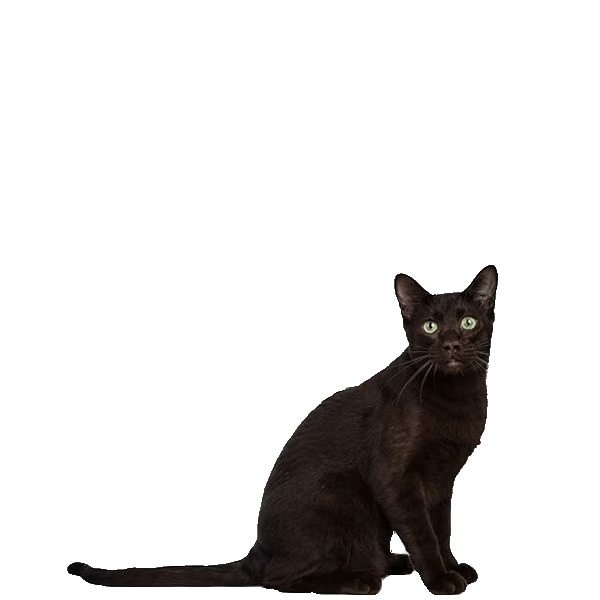
Suphalak
The Suphalak is a rare solid-copper Thai breed treasured for its affectionate, intelligent nature and devotion to its people.
- Size
- Medium
- Lifespan
- 12–16 years
- Origin
- Thailand
- Temperament
- Affectionate
- Standard colors
- Chocolate
Characteristics
Coat and grooming
How the Suphalak coat is built, and what that means when you groom it.
- Coat layers
- Single coat
- Coat texture
- Smooth
- Coat length
- Short
- Shedding
- Low shedding
Suphalak colors and patterns
What each club's breed standard says about every Suphalak color and pattern. Point at a ruling to see the club's own wording.
Breed standards describe the Suphalak in Chocolate.
| Color or pattern | WCF |
|---|---|
| Chocolate | Standard (“Chocolate”) |
| Color or pattern | WCF |
|---|---|
| Yellow | Standard (“light yellow / Golden yellow”) |
| Gold | Standard (“rich golden / intense gold”) |
| Green | Standard (“slightly green shade”) |
| Color or pattern | WCF |
|---|---|
| Chocolate | Standard (“chocolate brown”) |
| Color or pattern | WCF |
|---|---|
| Cinnamon | Standard (“cinnamon”) |
What the rulings mean
- Standard
- Described by the club's breed standard.
Sources
Each ruling comes from the club's published breed standard or color list.
About the Suphalak
The Suphalak is a rare golden-copper cat from Thailand, a natural breed steeped in Southeast Asian tradition and valued for its deep affection and extraordinary rarity.
Among cat lovers in the Philippines who follow Southeast Asian breeds, the Suphalak holds a special place as one of the rarest and most culturally significant cats in the region. This natural breed from Thailand carries an even, solid copper-to-brown coat with no markings, no shading, and no pattern. Its name translates roughly as "good fortune" or "of golden complexion," reflecting the auspicious status it has held in Thailand for centuries.
The Philippine Cat Fanciers' Association (PCFA) community has long appreciated breeds with strong Asian heritage, and the Suphalak connects directly to the rich cat traditions of Thailand, a neighbouring culture with deep historical ties to the Philippines through Southeast Asian trade and shared cultural influences. Most Suphalaks weigh between 3.5 and 5.5 kilograms, with a muscular, medium build.
Philippine families who encounter the Suphalak are drawn first to its temperament: this is a warm, people-attached companion that follows its owners, seeks daily involvement, and forms loyal bonds that reflect the Filipino value of close family connection.
| Attribute | Detail |
|---|---|
| Origin | Thailand |
| Size | Medium (3.5-5.5 kg) |
| Lifespan | 12-16 years |
| Group/role | Natural Thai companion breed |
| Good with | Families, attentive owners, other cats |
Who it suits
The Suphalak fits households where someone is home for much of the day and wants an interactive, affectionate companion. It does well with families, including those with older, considerate children, and typically accepts other cats and calm dogs. It is a poor match for homes that are frequently empty, as the breed seeks company and can grow restless when left alone for extended periods.
History and origin
The Suphalak is a native Thai cat documented in ancient illustrated manuscripts and carefully revived through dedicated breeding efforts in modern Thailand.
The Suphalak belongs to the group of native Thai cats recorded in the Tamra Maew, a body of illustrated cat-poem manuscripts that catalogued Thailand's prized cats and associated auspicious qualities with certain coat colours. A uniform copper-brown cat matching the Suphalak description appears among them, forming the historical foundation for the breed's long place in Thai culture.
For much of the modern era the solid copper cat was not formally separated from other Thai cats in Western breeding programmes. Cats of similar appearance sometimes arose from Burmese and related Thai lines, which complicated efforts to establish a distinct recognised population.
In recent decades, breeders in Thailand worked deliberately to re-establish the solid copper cat as a recognised native breed, selecting for deep single colour and the traditional moderate body type. Numbers have remained small and concentrated within Thailand.
For Filipino enthusiasts, the Suphalak represents a rare opportunity to connect with a Southeast Asian breed tradition that has strong parallels with the Philippines' own appreciation for culturally rooted animals and auspicious symbolism.
Appearance
The Suphalak is a medium, muscular cat with a short, glossy coat in an even solid copper-to-brown colour and no markings.
The Suphalak has a balanced, moderately muscular body of medium size, neither cobby nor extreme in any direction. The head is rounded with a gentle profile, medium-large ears, and expressive eyes. The legs are in proportion to the body, and the tail tapers slightly to the tip. The overall impression is of an athletic, well-knit cat.
The coat is short, fine, and lies close to the body with a smooth shine. The single most important feature is colour: an even, solid copper-brown across the entire coat, without tabby markings, shading, ticking, or white patches.
| Feature | Description |
|---|---|
| Height | Approx. 23-28 cm at shoulder |
| Weight | 3.5-5.5 kg |
| Coat | Short, fine, close-lying, glossy |
| Colours | Solid copper to brown, no markings |
| Eyes | Rounded, amber to golden |
Coat and colours
The defining trait is a uniform copper-brown coat with no pattern. Colour should run evenly from root to tip, and the same shade should carry across the body, legs, and tail. Any tabby ghost markings, paler shading, or white spotting is considered a fault against the breed's solid-colour standard. The short coat shows the underlying muscle and gives the cat a sleek, warm-toned outline.
Temperament
The Suphalak is affectionate, playful, and loyal, staying close to its people and engaging readily with family members and other pets.
The Suphalak is a people-oriented cat that forms strong bonds with its household. It tends to stay near its owners, join in daily activity, and ask for attention through following, vocalising, and seeking laps. Many owners describe it as a cat that wants to be part of whatever is going on.
With family the breed is gentle and affectionate, and it usually tolerates handling well, making it suitable for households with considerate children. With strangers it is generally friendly but may take a short while to warm up. With other pets it commonly accepts other cats and calm dogs, especially when introduced gradually.
The Suphalak is intelligent and playful into adulthood. It enjoys interactive toys, puzzle feeders, and games that involve its owner. Without enough stimulation or company it can grow bored, so steady interaction matters more for this breed than for more independent cats.
| Trait | Rating |
|---|---|
| Affection | 5 |
| Energy | 4 |
| Trainability | 4 |
| Vocalness | 3 |
| Shedding | 2 |
Care and grooming
The Suphalak is low-maintenance to groom but needs daily interaction, play, and an enriched indoor environment to stay content.
Grooming
- Brush the short coat once a week to remove loose hair and maintain the copper shine.
- Check and clean the ears as needed, and watch for wax buildup.
- Trim claws every few weeks.
- Brush the teeth regularly and provide dental care to reduce tartar.
- Bathing is rarely needed; the short coat stays clean on its own.
Exercise
- Schedule one or two daily play sessions with wand or chase toys.
- Offer puzzle feeders and rotating toys to keep the mind engaged.
- Provide a cat tree or shelves for climbing and elevated resting spots.
- Use short training games to channel the breed's intelligence constructively.
Environment
The Suphalak does best as an indoor cat with company for much of the day. Philippine households, whether in Metro Manila or provincial settings, can suit the breed well when vertical space, scratching surfaces, and reliable access to people are provided. Keeping the cat indoors also protects it in the Philippine climate. A second compatible pet can help on busy days when the family is away from home.
Nutrition and feeding
The Suphalak needs a complete, protein-forward cat diet portioned to its activity level, with measured meals and fresh water always available.
The Suphalak should eat a complete and balanced cat food appropriate to its life stage. As an obligate carnivore, it does best on diets where animal protein is the main ingredient. Portion to maintain a lean body where the ribs can be felt but not seen, since the breed can gain weight if overfed and underexercised. Fresh water should always be available, and wet food is particularly valuable for hydration in the Philippine climate.
| Life stage | Amount per day | Meals |
|---|---|---|
| Kitten (2-6 months) | Per package, free-fed or 3-4 portions | 3-4 |
| Junior (6-12 months) | Approx. 60-80 g dry equivalent | 3 |
| Adult (1-7 years) | Approx. 50-70 g dry equivalent | 2 |
| Senior (8+ years) | Adjust to weight and activity | 2 |
Treats and supplements
Keep treats to roughly ten percent of daily calories and account for them in the overall ration. A cat on a complete commercial diet usually needs no extra supplements. Discuss any supplement, such as joint or coat support for older cats, with a veterinarian before adding it.
Health
The Suphalak is generally a healthy natural breed with a 12 to 16 year lifespan, helped by routine veterinary care and weight management.
As a natural breed from a broad native population, the Suphalak is generally robust and not associated with a long list of breed-specific disorders. Typical lifespan is 12 to 16 years with good care. Day-to-day risks are the same as for most domestic cats: dental disease, obesity, and the urinary and kidney problems common in ageing cats. In the Philippine climate, good hydration and indoor living help prevent heat stress. Owners should keep health records to support population-level tracking for this rare breed.
| Condition | Signs | Note |
|---|---|---|
| Dental disease | Bad breath, drooling, reduced eating | Regular brushing and checkups help |
| Obesity | Weight gain, low activity | Measure food and keep play routine |
| Chronic kidney disease | Increased thirst, weight loss | More common in senior cats |
| Lower urinary tract issues | Straining, blood in urine | Seek prompt care; can be urgent |
Preventive care
- Annual veterinary exam, more often for senior cats.
- Keep core vaccinations and parasite prevention current.
- Maintain dental hygiene with brushing and checks.
- Monitor weight and adjust food before excess accumulates.
- Provide fresh water and a clean litter box to support urinary health.
Training
The Suphalak is intelligent and trainable, responding well to short, reward-based sessions for litter use, handling, and simple tricks.
The Suphalak is an intelligent, people-focused cat that takes well to training. Its desire to interact with its owner makes it responsive to games that reward cooperation. Keep sessions short, end on a success, and use food rewards or play the cat values. The breed can learn to come when called, accept handling and grooming, use a scratching post, and perform simple tricks such as sit or target touch.
Basics
- Introduce a clean litter box early and keep it in a quiet, accessible spot.
- Reward calm handling of paws, ears, and mouth to make grooming and vet visits easier.
- Redirect scratching to a post and reward its use.
- Teach a recall by pairing a sound or word with a treat.
- Add target or trick training in short daily sessions to use the cat's intelligence.
Breeding
The Suphalak is a rare breed bred to preserve its even solid copper colour and friendly type, with typical feline maturity, gestation, and litter size.
Suphalak breeding centres on preserving the even solid copper-brown coat and the friendly, balanced type while keeping the small population healthy. For Philippine breeders, establishing a Suphalak programme means working with Thai breeders or established contacts in Southeast Asia. Genetic diversity is a primary concern given the small global population, and health screening for all breeding cats is essential.
Cats reach sexual maturity in the same range as other domestic cats, though responsible breeders wait until a queen is fully mature before her first litter. Mating, pregnancy, and the raising of kittens follow normal feline patterns. Gestation runs about nine weeks, and litters are typically small to moderate in size.
Kittens stay with the mother and littermates through weaning and early socialisation, which is important for a breed prized for its sociable nature. Early gentle handling produces the confident, people-oriented adult the Suphalak is known for. Kittens should not go to new homes until they are weaned, litter-trained, and well socialised.
| Metric | Value |
|---|---|
| Sexual maturity | Around 5-10 months |
| Recommended first breeding | After full maturity (12+ months) |
| Gestation | Approx. 63-67 days |
| Average litter size | 3-5 kittens |
| Weaning age | Approx. 8-10 weeks |
| Earliest rehoming | 12+ weeks, fully socialised |
Registering a Suphalak in the Philippines, chip included
No law licenses cats here, so your Suphalak's only paper trail is the one you create: free for life with United Pet Club.
Suphalak registration and microchip registration in the Philippines
A Suphalak does not carry an ID; her record carries it for her. Set it up free: her name, her markings, a photo, and your mobile number, saved with United Pet Club for life. Register your cat now, while she is asleep on the sofa rather than out the window.
Fifteen digits under her skin mean nothing until a registry says whose Suphalak she is. Say it free with United Pet Club: every chip brand accepted, every update free, the record live day and night, here and abroad. Microchip registration plus a free account, and she is covered.
How do I register my Suphalak in the Philippines?
Sign up for a free United Pet Club account, add your Suphalak's name, markings, and a photo, and save. The profile is free for life, no microchip required, and you can add the chip number after the vet visit.
How do I register my Suphalak's microchip?
Add the 15-digit number from the clinic's paperwork to your free account along with your current mobile number. The lifetime plan never charges for the registration or the updates, whatever the chip brand.
Do cats need to be registered in the Philippines?
No law requires it; RA 9482 covers dogs. That is exactly why a Suphalak's record matters: unless you create one, a found cat has no trail at all. United Pet Club keeps that trail free for life.
What does it cost to register a Suphalak?
Zero pesos. Profile, microchip registration, and unlimited updates are all free on the lifetime plan, with no renewal ever.
Frequently asked questions
Common questions about the Suphalak cover its size, temperament, care needs, lifespan, suitability, and availability in the Philippines.
How big does a Suphalak get?
It is a medium-sized cat, with most adults weighing about 3.5 to 5.5 kilograms. Males are usually heavier than females, and the body is muscular and athletic rather than large.
What is the Suphalak's temperament like?
It is affectionate, playful, loyal, and people-oriented. Suphalaks tend to follow their owners, seek attention, and stay engaged with family activity, and they generally get along with other cats and calm dogs.
Is the Suphalak connected to Southeast Asian culture?
Yes. The Suphalak is one of Thailand's most ancient and auspicious native cat breeds, documented in historical manuscripts that attributed good fortune to its golden-copper colour. Thailand and the Philippines share deep Southeast Asian cultural ties, which makes this breed particularly meaningful for Filipino enthusiasts.
How long do Suphalaks live?
Typical lifespan is 12 to 16 years with good nutrition, weight management, and routine veterinary care.
Is the Suphalak good for families?
Yes. Its gentle, affectionate nature suits Filipino family life, including households with older, considerate children, provided someone is home enough to give it the company it needs.
Can I find a Suphalak in the Philippines?
They are extremely rare outside Thailand. Philippine availability is very limited, and sourcing one requires specialist contacts, likely through PCFA connections or direct engagement with Thai breeders.
What colour is a Suphalak?
A solid, even copper-to-brown coat with no tabby markings, shading, or white patches. The depth and uniformity of this single colour is the breed's defining feature.
From the community
Ask about the SuphalakNo questions about the Suphalak yet. Be the first to ask.
Browse Cat breeds