
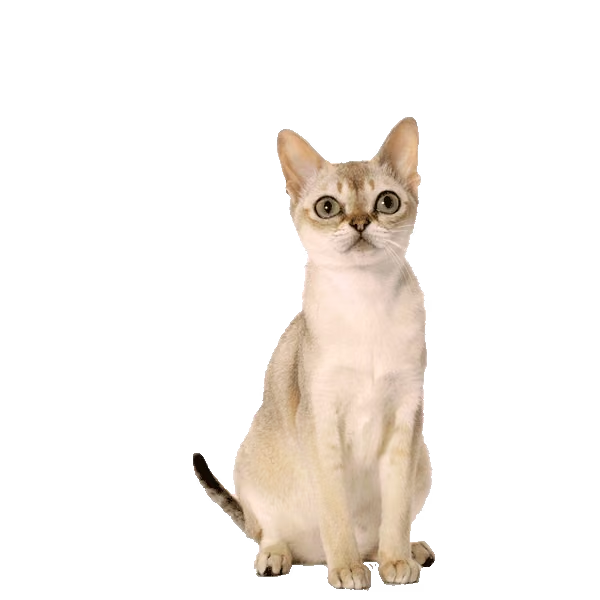
Singapura
The Singapura is one of the smallest cat breeds, prized for its curious, affectionate personality and big-eyed, pixie-like charm.
- Size
- Small
- Lifespan
- 11–15 years
- Origin
- Unknown
- Temperament
- Curious
- Standard colors
- Sable
Characteristics
Coat and grooming
How the Singapura coat is built, and what that means when you groom it.
- Coat layers
- Single coat
- Coat texture
- Smooth
- Coat length
- Short
- Shedding
- Low shedding
Singapura colors and patterns
What each club's breed standard says about every Singapura color and pattern. Point at a ruling to see the club's own wording.
Breed standards describe the Singapura in Sable. Standard patterns: Ticked tabby and Sepia.
| Color or pattern | TICA | CFA | FIFE | GCCF |
|---|---|---|---|---|
| Sable | Standard (“Sable Ticked”) | Standard (“Sepia agouti”) | Standard (“Seal sepia”) | Standard (“sepia brown”) |
| Patterns | ||||
| Ticked tabby | Standard (“Ticked tabby”) | Standard (“agouti”) | Standard (“ticked”) | Standard (“ticked”) |
| Sepia | Standard (“Sepia”) | Standard (“Sepia”) | Standard (“sepia”) | Standard (“sepia”) |
%22%3E%3Cg%20fill%3D%22none%22%20stroke%3D%22%231C1C1C%22%20stroke-width%3D%221.25%22%20stroke-linecap%3D%22round%22%20stroke-linejoin%3D%22round%22%3E%3Cpath%20d%3D%22M55.8%2023.1l-0.3%201.9M7.5%2020.6l0.6%201.7M43.9%2028.2l-0.3%201.7M39.2%2031.8l0.6%201.1M9.8%2028l-0.3%201.8M20.7%2029.6l0.1%202M39.9%2031.8l0.2%201.3M17.1%2022.1l0.7%201.1M38.7%2052.5l0.9%201.4M45.2%2051l0.6%201.2M50.4%2024.5l0.1%201.9M18.8%2054.3l0%202.1M17.3%2036l0.3%201.2M25.9%2029.2l0.2%201.6M49.4%2036.5l0.7%201.3M40.1%2025l-0.6%202.1M27.5%2025.6l0.4%201.2M8.8%2024.9l0.1%201.8M47.9%2022.8l0.5%201.3M32.8%2031.8l0.8%201.9M23.4%2050.6l-0.2%202.2M28.4%2023.9l-0.5%201.6M24.9%2040.6l0.4%201.7M58.1%2015.3l-0.5%201.7M29.6%2021.6l1.1%201.9M49.8%2029.3l0.4%202M5.8%2019.1l0%201.3M13.1%2025.3l0.6%201.5M52%2027l0.6%201.7M8%2022.4l0.5%201.1M18.4%2031.3l-0.1%201.6M24.8%2021.5l-0.6%202.1M53.6%2021.9l0.2%201.5M53.2%2022.7l0.3%201.6M33.5%2028.3l-0.6%201.7M22.9%2020.9l-0.4%201.3M57.4%2010.8l-0.2%202M48%2053.3l-0.6%201.8M17%2015.6l0.6%201.1M25.7%2031.6l0.9%201.1M22.6%2053.7l0.1%201.6M17.5%2017.5l-0.4%201.7M19.4%2046.5l0.1%201.8M27.3%2037.2l-0.6%202M12.9%2024.8l0.5%201.8M28.5%2030.1l0.3%201.5M17.7%2021.4l-0.4%201.2M18%2052.8l-0.3%201.8M9.1%2021.6l1.3%201.8M38.4%2043.5l0.1%201.9M32.1%2021.8l1.1%201.6M32%2034.5l0%201.9M53.8%2022.7l0.1%202M18.2%2028.8l0.4%201.8M19.3%2019.5l-0.2%201.3M40.4%2028.1l0.8%201.1M46.7%2037.8l-0.2%201.3M51.2%2029.1l-0.6%201.8M20.7%2031l0.1%201.9M30.6%2035.4l0.9%201.9M36.3%2021.9l-0.5%201.9M45.9%2039.6l0.1%201.8M35.5%2035.5l-0.3%201.3M43.2%2024.8l-0.2%201.9M42.8%2023.2l0.8%201.8M15.8%2026l0.8%201.5M38.2%2048.8l-0.4%201.3M35.2%2029.3l-0.6%202M42.9%2029.6l-0.1%201.2M30%2034.8l1%201.4M30.1%2027l0.6%202M45.5%2033.7l0.7%201.1M49.1%2028.9l0.5%201.4M52%2029.1l-0.6%202M29.5%2027.2l-0.6%202M55.9%2016.3l-0.5%201.7M29%2022.9l0.6%201.7M34.3%2029.2l0.4%202.1M29.4%2024.1l0.1%201.5M21.6%2040.3l-0.1%201.6M43.5%2034l0.8%201.8M46.1%2048.7l0.4%201.9M40.8%2052.9l0.4%201.5M45.9%2039.5l-0.1%202.1M7.6%2028.3l0.2%201.7M16.7%2054.8l0.7%201.2M24.8%2033.3l-0.3%201.2M25.6%2038.4l-0.1%201.9M24.4%2052.5l0.6%201.4M40.7%2047.1l0.2%202.1M37.8%2047.4l0.6%201.3M10.2%2022l0.2%202.1M7.3%2017.6l0.8%201.9M44.8%2042.9l0.4%201.1M38.2%2029l-0.1%201.9M56.6%2015.8l-0.2%201.5M38.1%2033.9l1.1%201.6M42.9%2027.2l-0.3%201.2M6%2020.9l0.7%201.1M55.5%2013.2l-0.2%201.3M19.6%2028.9l0.3%202M35.9%2034l-0.2%202.1M12.8%2016l0.2%202.1M45.9%2038.9l-0.2%201.2M46.5%2029.8l-0.3%201.7M31.1%2037l0.7%201.6M37.7%2030.8l0.8%201.6M20.5%2024.7l1.2%201.5%22%2F%3E%3Cpath%20d%3D%22M21.8%2031.8l0.7%202M12.1%2027.4l0.1%202.1M6.5%2020.9l-0.3%201.3M37.6%2048l1%201.6M47.8%2039.2l0.7%201.3M47.3%2050l-0.5%201.5M43.9%2033.6l-0.4%202.1M39.8%2032.3l-0.1%201.3M18.2%2018.3l0.1%201.5M25.1%2038.2l0.7%201.4M42.9%2028.2l0.9%201.9M17.3%2029.8l0.9%201.9M50.6%2028.2l0.5%201.9M40.1%2025.6l0%201.2M29.6%2023.7l0%201.8M57.7%2013.6l0.5%201.5M22.7%2030.1l-0.1%202.2M46.8%2049.4l0.6%201.1M47.8%2052.5l-0.4%201.6M31.5%2020.6l0.6%202M20.5%2030.6l0.6%201.6M37.3%2027.1l-0.2%201.8M36.4%2037.5l0.9%201.1M21.7%2042.2l-0.2%201.2M42.8%2022.6l0.4%201.8M37.9%2040.4l0.5%201.5M52.6%2023.4l0.4%202M34.2%2027.8l0.8%201.4M16.1%2023l1.1%201.5M55.6%2021.9l0.4%201.6M17.6%2053.4l0.9%201.5M41.9%2030l1%201.7M16.8%2054.6l0.4%202.2M40.3%2030.9l0.6%201.4M18.9%2034.3l1.3%201.6M34.5%2021.7l0.5%201.8M42.4%2036.5l1%201.8M23.3%2040.2l-0.3%201.7M21.1%2029.8l0.5%201.4M58%2010.8l0%202M41.7%2035.4l0.8%202M10.3%2021.9l-0.2%201.7%22%2F%3E%3C%2Fg%3E%3Cpath%20d%3D%22M15%2047H50M15%2051H50%22%20fill%3D%22none%22%20stroke%3D%22%231C1C1C%22%20stroke-width%3D%221.6%22%20stroke-linecap%3D%22round%22%20stroke-linejoin%3D%22round%22%2F%3E%3Ccircle%20cx%3D%2259.8%22%20cy%3D%227.8%22%20r%3D%222%22%20fill%3D%22%231C1C1C%22%2F%3E%3Cpath%20d%3D%22M12.6%2015.5l.6%204.2M15%2015.5l-.2%204.2%22%20fill%3D%22none%22%20stroke%3D%22%231C1C1C%22%20stroke-width%3D%221%22%20stroke-linecap%3D%22round%22%20stroke-linejoin%3D%22round%22%2F%3E%3C%2Fg%3E%3Cuse%20href%3D%22%23s%22%20fill%3D%22none%22%20stroke%3D%22%233B2A20%22%20stroke-opacity%3D%220.6%22%20stroke-width%3D%221%22%20stroke-linejoin%3D%22round%22%2F%3E%3Cpath%20d%3D%22M3.4%2022.3L5.4%2022.5L4.3%2024Z%22%20fill%3D%22%23E8A0B4%22%2F%3E%3Ccircle%20cx%3D%229.6%22%20cy%3D%2221.2%22%20r%3D%221.1%22%20fill%3D%22%231C1C1C%22%2F%3E%3C%2Fsvg%3E)
%22%3E%3Crect%20x%3D%220%22%20y%3D%220%22%20width%3D%2264%22%20height%3D%2264%22%20fill%3D%22%23847865%22%20fill-opacity%3D%220.7%22%2F%3E%3Cpath%20d%3D%22M5.5%2017L7.5%207L12%2015ZM14%2015L17.5%207L20%2018.5Z%22%20fill%3D%22%23847865%22%2F%3E%3Cellipse%20cx%3D%227.6%22%20cy%3D%2223.6%22%20rx%3D%225%22%20ry%3D%225.2%22%20fill%3D%22%23847865%22%2F%3E%3Crect%20x%3D%220%22%20y%3D%2244%22%20width%3D%2264%22%20height%3D%2220%22%20fill%3D%22%23847865%22%2F%3E%3Cpath%20d%3D%22M50%2027L53.5%205L64%203L64%2013L59%2024L53%2033Z%22%20fill%3D%22%23847865%22%2F%3E%3C%2Fg%3E%3Cuse%20href%3D%22%23s%22%20fill%3D%22none%22%20stroke%3D%22%233B2A20%22%20stroke-opacity%3D%220.6%22%20stroke-width%3D%221%22%20stroke-linejoin%3D%22round%22%2F%3E%3Cpath%20d%3D%22M3.4%2022.3L5.4%2022.5L4.3%2024Z%22%20fill%3D%22%23E8A0B4%22%2F%3E%3Ccircle%20cx%3D%229.6%22%20cy%3D%2221.2%22%20r%3D%221.1%22%20fill%3D%22%231C1C1C%22%2F%3E%3C%2Fsvg%3E)
| Color or pattern | TICA | CFA | FIFE | GCCF |
|---|---|---|---|---|
| Hazel | Standard (“hazel”) | Standard (“hazel”) | Standard (“hazel”) | Standard (“hazel”) |
| Copper | Standard (“copper”) | No ruling | No ruling | No ruling |
| Yellow | No ruling | Standard (“yellow”) | No ruling | Standard (“yellow”) |
| Gold | Standard (“gold”) | No ruling | No ruling | No ruling |
| Green | Standard (“Celadon green, green”) | Standard (“green”) | Standard (“brilliant green”) | Standard (“green”) |
| Blue | Disqualifying (“definite blue”) | Disqualifying (“blue”) | No ruling | No ruling |
| Aqua | Disqualifying (“aqua”) | No ruling | No ruling | No ruling |
| Color or pattern | TICA | CFA | FIFE |
|---|---|---|---|
| Pink | Standard (“pale to dark salmon”) | Standard (“pale to dark salmon”) | Standard (“pale to dark salmon”) |
What the rulings mean
- Standard
- Described by the club's breed standard.
- Disqualifying
- The club's breed standard disqualifies an animal of this color or pattern.
Color changes
How a Singapura's colors can change over its life.
Pinkchanges toSeal
Nose · With age · from 1 to 52 weeks
Pinkchanges toBlue
Nose · With age · from 1 to 52 weeks
Pinkchanges toChocolate
Nose · With age · from 1 to 52 weeks
Pinkchanges toLilac
Nose · With age · from 1 to 52 weeks
Sources
Each ruling comes from the club's published breed standard or color list.
About the Singapura
The Philippines' tropical warmth mirrors Singapore's climate, and the Singapura, small, affectionate, and built for warm indoor living, suits Filipino households from Metro Manila condominiums to Cebu family homes.
When Filipinos talk about their pets, they talk about them the way they talk about family. Alagang hayop is not a casual phrase; it implies genuine dedication, daily presence, and the kind of warm attention that companion animals thrive on. The Singapura is perhaps the ideal recipient of that care.
This is a small, shorthaired cat, one of the smallest in the pedigreed world at 4 to 8 pounds as an adult, with a warm, ticked coat in the single recognised colour of sepia agouti: ivory base, brown banding on each hair, a naturally earthy and beautiful overall tone. The large almond-shaped eyes and generous ears give the face a wide-awake, engaged look that does not soften with age. This cat looks like it is paying attention, and it is.
The Philippines' warm, tropical climate is close to what Singapore itself provides, and the Singapura wears it comfortably. In a Metro Manila condominium or a Cebu family home, this small cat's preference for indoor life and human company maps well onto the realities of Philippine urban living. The Philippine Cat Fanciers Association (PCFA) and local cat clubs in Manila and Cebu are the starting points for connecting with registered breeders in the country.
| Attribute | Detail |
|---|---|
| Origin | Unknown (Singapore street cat lineage disputed) |
| Size | Small (4 to 8 pounds) |
| Lifespan | 11 to 15 years |
| Group / role | Shorthaired companion cat |
| Good with | Families, individuals, other cats and calm dogs |
Who it suits
The Singapura suits Philippine households where someone is home for a good part of each day or where another cat is available for company during working hours. It thrives in the compact living spaces typical of Metro Manila, does not require garden access, and adapts readily to condominium life on any floor. Households that are empty all day without any companion animal may find this breed restless or bored.
History and origin
Named after Singapore's Malay identity, the Singapura was developed from cats reportedly brought from Singapore to the United States in the 1970s, though the founding history is disputed.
Small ticked cats have moved through Singapore's streets, drains, and back alleys for generations, known informally as drain cats or by their affectionate Malay nickname kucinta. In the 1970s, American breeders brought cats reportedly sourced from Singapore to the United States and began a formal breeding programme. The breed was named Singapura, after Singapore's name in the Malay language.
The early history drew scrutiny. Documentation of the original imports was challenged, and accounts emerged suggesting some founding cats may have been living in North America before any Singapore-based story was established. International registries, including those recognised by the PCFA, settled on listing the verified origin as unknown, which reflects the genuine uncertainty rather than any problem with the breed itself.
The Singapura reached the Philippines through importation from established programmes. The Philippine cat fancy scene, centred on shows in Manila and Cebu, is growing, and interest in Southeast Asian-linked breeds has a natural resonance here. Finding a PCFA-registered Singapura breeder in the Philippines requires early contact, as the total number of breeders active with this variety is small.
Appearance
The Singapura is small and fine-boned in appearance but solidly muscular when held, with one coat color and eyes that dominate the rounded face.
The Singapura presents as a dainty cat, but that impression changes when you pick one up. The body is compact and dense, noticeably firm for a cat of this size. The head is round, the muzzle short, and the ears wide and open, giving the face its characteristic alert expression. The eyes are the most immediately striking feature: large, almond-shaped, and expressive. The tail tapers to a blunt, rounded tip.
| Feature | Standard |
|---|---|
| Height | About 6 to 8 inches at the shoulder |
| Weight | 4 to 8 pounds |
| Coat | Short, fine, close-lying, ticked |
| Color | Sepia agouti (warm ivory ground with dark brown ticking) |
| Eyes | Large, almond-shaped; hazel, green, or yellow |
Coat and color
One color, one pattern: the sepia agouti ticking is what makes a Singapura immediately identifiable. Each hair carries bands of ivory and brown, creating a warm, layered coat tone that photographs beautifully. Faint tabby lines mark the forehead, and the belly and inner limbs are lighter. The coat lies flat, sheds very little, and needs only a weekly brush. In the Philippines' humid tropical conditions, this low-maintenance, close-lying coat is a practical advantage: no matting, no heavy shedding, and no significant grooming overhead.
Temperament
Warm, sociable, and curious, the Singapura bonds deeply with its household and keeps its playful, engaged character throughout its life.
Filipino families who have welcomed a Singapura often say the same thing: you forget how small it is because the personality fills the room. This is a cat that makes itself known not through noise but through presence. It follows people, inserts itself into activities, and settles wherever the human action is. It is affectionate without being needy, curious without being destructive, and playful without being hyper.
With the extended family situations common in many Philippine households, the Singapura is a natural. It is not a one-person cat: it distributes its affection across whoever is present, greeting grandparents and children with equal interest. With other cats it is generally cooperative. With calm dogs it tends to hold its ground with curiosity rather than alarm.
The breed is quiet, a point worth noting in condominium buildings where thin walls carry sound. A Singapura will murmur and trill; it will not yowl. That restraint is one of the qualities that makes it a polite guest in Philippine urban living situations.
| Trait | Rating |
|---|---|
| Affection | 5 |
| Energy | 4 |
| Trainability | 4 |
| Vocalness | 2 |
| Shedding | 2 |
Care and grooming
Grooming the Singapura is simple, but ear health requires attention in humid Philippine conditions, and the breed needs daily play and company to thrive.
Grooming
- Brush the short coat once a week to remove shed hairs and maintain a healthy shine.
- Trim claws every two to three weeks.
- Check ears weekly: the Philippines' high humidity can encourage moisture buildup in the ear canal, raising the risk of yeast or bacterial infections if not caught early.
- Start tooth brushing in kittenhood and arrange professional dental checks as your vet recommends.
- Bathing is rarely necessary given the coat's short, self-maintaining nature.
Exercise
- Plan at least two interactive play sessions each day using a wand toy, a feather teaser, or a small thrown ball.
- Install a cat tree or wall-mounted platforms so the cat can climb and survey the room from height.
- Rotate the toy selection every week or two to hold the attention of a quick, inquisitive mind.
- During the hottest months, keep play sessions in air-conditioned rooms and avoid prolonged activity in poorly ventilated spaces.
Environment
The Singapura is a natural fit for Philippine condominium living. It does not need a garden, does not push against indoor containment, and occupies small spaces comfortably. In the Philippines' tropical heat, ensure good air circulation or air conditioning, provide shade from direct afternoon sun streaming through windows, and make fresh water readily available at all times. A perch near a window gives the cat passive enrichment throughout the day without any outdoor exposure.
Nutrition and feeding
Precise portioning and a protein-rich complete diet suit the Singapura's small frame, with wet food particularly valuable for hydration in the Philippine climate.
The Singapura's small size means a very small calorie buffer between correct and excess. Weigh portions rather than estimating, choose a complete commercial cat food with a named protein as the first ingredient, and review body condition monthly. Good quality cat food is increasingly available in Philippine specialty pet stores and through online platforms serving Manila, Cebu, and other major cities.
Wet food is particularly relevant in the Philippines' year-round warmth: it adds meaningfully to daily fluid intake, supporting kidney and urinary tract health through the cat's life. A water fountain placed away from the food station encourages additional drinking. In households with multiple cats, individual bowls help you track how much each cat is consuming.
| Life stage | Amount per day | Meals |
|---|---|---|
| Kitten (to 12 months) | Per label, fed to appetite | 3 to 4 |
| Adult (1 to 7 years) | About 100 to 140 g wet, or label amount dry | 2 |
| Senior (7 years and older) | Adjust to body condition and energy level | 2 |
Treats and supplements
Limit treats to roughly ten percent of the day's calorie total. A cat eating a nutritionally complete diet does not require supplementation under normal circumstances. Discuss any additions, including fish oil or taurine supplements, with a veterinarian before starting them, particularly given the breed's small body weight.
Health and lifespan
The Singapura typically lives 11 to 15 years and benefits from DNA screening, routine veterinary care, and attention to the specific conditions of Philippine tropical ownership.
The Singapura is a healthy breed when sourced from a responsibly tested programme. The narrow founding gene pool means certain inherited conditions are present in the breed, and screening is an expected part of any reputable breeding programme. Philippine veterinary care has improved significantly in recent years, with well-equipped clinics operating in Metro Manila and Cebu in particular.
Owners in provincial areas may find specialist feline care less accessible and should identify a good general practitioner vet and build a relationship before any health issue arises. Veterinary costs in the Philippines are generally lower than in Western countries, but pet insurance for pedigreed animals is a growing market worth exploring.
| Condition | Signs | Note |
|---|---|---|
| Pyruvate kinase deficiency (PKDef) | Lethargy, pale gums, weakness from anaemia | Inherited; DNA test available; verify both breeding parents are tested |
| Uterine inertia | Labor stalls in queens | Associated with small body size; veterinary attendance at whelping is essential |
| Dental disease | Odour, drooling, reluctance to eat | Managed with consistent tooth brushing and professional cleanings |
Preventive care
- Follow the vaccination schedule appropriate for the Philippines, covering feline distemper, herpesvirus, calicivirus, and rabies.
- Maintain year-round flea and tick prevention given the tropical environment.
- Schedule annual health checks; from age seven, twice-yearly visits are advisable.
- Include dental assessment in all routine veterinary visits.
- Request PKDef DNA test certificates for both parents before purchasing a kitten.
Training
Alert and people-focused, the Singapura learns household rules and simple commands readily when training is positive, short, and consistent.
The Singapura is more trainable than the average cat, which is good news in a Philippine household where multiple family members may have different habits around the pet. The breed pays attention to patterns, remembers what produces rewards, and responds reliably to consistent cues. Teaching it to come when called, accept a carrier without drama, and use a scratching post exclusively are all achievable within a few weeks of a kitten arriving in the home.
For families who take their cat to shows with the PCFA in Manila or Cebu, a well-socialised, carrier-habituated Singapura is a significantly more composed and cooperative show cat. Training from kitten age makes that process straightforward.
Basics
- Set up a clean litter box in a quiet, accessible location before the kitten's first evening.
- Redirect scratching to an appropriate post each time it happens and reward the cat immediately when it uses the post.
- Say the cat's name before every positive interaction until the name produces a reliable, consistent response.
- Introduce one new behaviour at a time in sessions of five to ten minutes.
- Leave the carrier accessible with familiar bedding inside between journeys to build a neutral or positive association with it.
Breeding
Small litters, a compact queen prone to whelping difficulty, and a narrow gene pool make Singapura breeding in the Philippines a careful and well-supported undertaking.
Singapuras reach sexual maturity at 7 to 12 months, but responsible Philippine breeders registered with the PCFA delay mating until physical maturity is established, typically around 18 months for a female. Gestation runs 63 to 67 days. Litters of two to three kittens are typical. Given the small number of breeding pairs active in the Philippines, this modest output per litter keeps the breed genuinely rare in the country.
The queen's small frame creates a documented risk of uterine inertia, where labour commences but fails to progress. Philippine breeders need reliable access to a veterinary clinic with feline obstetric experience, particularly in Manila and Cebu where specialist facilities exist. A caesarean delivery may be required, and planning for this before the due date is responsible management.
DNA testing for pyruvate kinase deficiency must be completed for both cats in any breeding pair. Kittens stay with their mother for at least 12 weeks before rehoming to ensure proper socialisation. PCFA-registered breeders can provide guidance on the standards expected of responsible breeders within the Philippine cat fancy community.
| Metric | Value |
|---|---|
| Sexual maturity | About 7 to 12 months |
| Gestation | 63 to 67 days |
| Average litter size | 2 to 3 kittens |
| Weaning age | About 8 weeks |
| Recommended rehoming age | 12 weeks or older |
Registering a Singapura in the Philippines, chip included
No law licenses cats here, so your Singapura's only paper trail is the one you create: free for life with United Pet Club.
Singapura registration and microchip registration in the Philippines
The profile takes five minutes and zero pesos: name, markings, photo, contact details, save. From then on any vet or shelter scan of your Singapura has somewhere to land. Cat registration works chip or no chip, condo cat or free-roamer.
Fifteen digits under her skin mean nothing until a registry says whose Singapura she is. Say it free with United Pet Club: every chip brand accepted, every update free, the record live day and night, here and abroad. Microchip registration plus a free account, and she is covered.
How do I register my Singapura in the Philippines?
Sign up for a free United Pet Club account, add your Singapura's name, markings, and a photo, and save. The profile is free for life, no microchip required, and you can add the chip number after the vet visit.
How do I register my Singapura's microchip?
Add the 15-digit number from the clinic's paperwork to your free account along with your current mobile number. The lifetime plan never charges for the registration or the updates, whatever the chip brand.
Do cats need to be registered in the Philippines?
No law requires it; RA 9482 covers dogs. That is exactly why a Singapura's record matters: unless you create one, a found cat has no trail at all. United Pet Club keeps that trail free for life.
What does it cost to register a Singapura?
Zero pesos. Profile, microchip registration, and unlimited updates are all free on the lifetime plan, with no renewal ever.
Frequently asked questions
Questions from Philippine owners about the Singapura's character, care in tropical conditions, availability, and suitability for Manila condominium life.
How big does a Singapura get?
Adults weigh 4 to 8 pounds and stand about 6 to 8 inches at the shoulder. The body is compact and solidly muscular, noticeably denser in the hand than the small size suggests.
Does the Singapura cope with Philippine heat and humidity?
The breed originates from a tropical city and is comfortable in warm conditions. In the Philippines, ensure good ventilation or air conditioning, provide shade from intense afternoon sun, and keep fresh water available at all times. Ear health needs a weekly check given the year-round humidity.
Is the Singapura a good choice for a Manila condominium?
Among the best choices available. Its small size, quiet temperament, minimal shedding, and genuine contentment indoors make it well suited to condominium living in Makati, BGC, or anywhere in Metro Manila.
How do I find a registered Singapura breeder in the Philippines?
Contact the Philippine Cat Fanciers Association (PCFA) or attend cat shows in Manila and Cebu to meet breeders in person. The breed is uncommon, and you may need to source from an international breeder and arrange proper import documentation.
Is the Singapura good for Filipino families with children?
Yes, with children who are gentle and calm. The breed is sociable and warm-natured, adapts well to busy household environments, and distributes its affection broadly across all household members rather than bonding exclusively with one person.
Are Singapuras rare in the Philippines?
Yes, genuinely uncommon. The breed produces small litters, the number of active breeders in the Philippines is very small, and waiting periods or international sourcing are often the reality for prospective owners.