
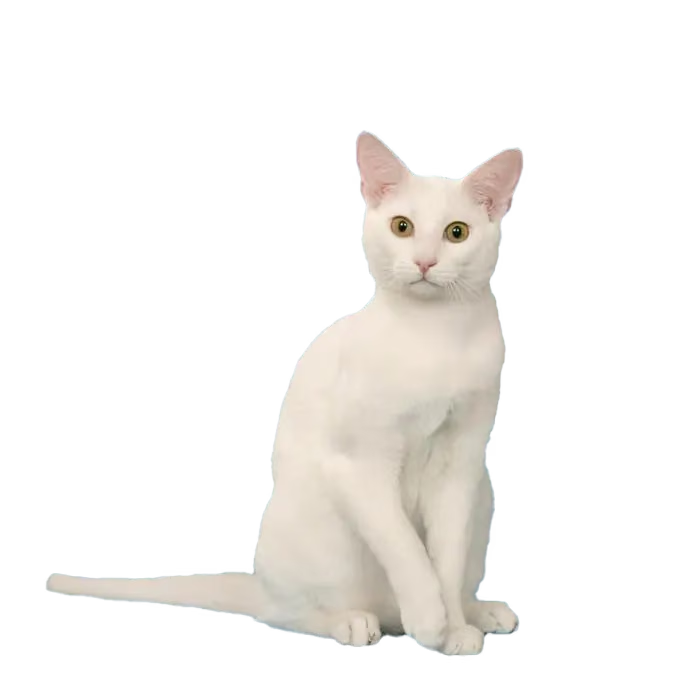
Russian White, Russian Black, Russian Tabby
The Russian White, Black, and Tabby are elegant relatives of the Russian Blue, sharing the same gentle, devoted, and intelligent temperament.
- Size
- Medium
- Lifespan
- 15–20 years
- Origin
- Russia
- Temperament
- Gentle
- Standard colors
- Black and White
Characteristics
Coat and grooming
How the Russian White, Russian Black, Russian Tabby coat is built, and what that means when you groom it.
- Coat layers
- Double coat
- Coat texture
- Plush
- Coat length
- Short
- Shedding
- Seasonal shedding
Grooming guidance
Critical: A Russian White, Russian Black, Russian Tabby should not be shaved.
The undercoat keeps heat out as well as in, and the outer coat shields the skin from sun and insect bites. Clipping the whole coat off removes both. It often grows back patchy, soft or a different colour, and in some animals the guard hairs never return properly. Brush the undercoat out instead of cutting it off.
Information: A Russian White, Russian Black, Russian Tabby drops its undercoat in heavy bursts.
The undercoat comes out in heavy bursts over a few weeks. An undercoat rake, or a bath followed by a proper blow-dry, clears it far faster than daily brushing. Clipping the coat down is not a shortcut for this.
Russian White, Russian Black, Russian Tabby colors and patterns
What each club's breed standard says about every Russian White, Russian Black, Russian Tabby color and pattern. Point at a ruling to see the club's own wording.
Breed standards describe the Russian White, Russian Black, Russian Tabby in Black and White. Standard patterns: Solid.
| Color or pattern | GCCF | WCF | ACFA | LOOF |
|---|---|---|---|---|
| Black | Standard (“Russian Black”) | Standard (“Black”) | Standard (“Black”) | Standard (“noir”) |
| White | Standard (“Russian White”) | Standard (“White”) | Standard (“White”) | Standard (“blanc”) |
| Patterns | ||||
| Solid | No ruling | No ruling | Standard (“Solid Colors”) | Standard (“solide”) |
| Pointed | Not recognized (“colourpoint”) | No ruling | No ruling | No ruling |

%22%3E%3Cpath%20d%3D%22M5.5%2017L7.5%207L12%2015ZM14%2015L17.5%207L20%2018.5Z%22%20fill%3D%22%23847865%22%2F%3E%3Cellipse%20cx%3D%227.6%22%20cy%3D%2223.6%22%20rx%3D%225%22%20ry%3D%225.2%22%20fill%3D%22%23847865%22%2F%3E%3Crect%20x%3D%220%22%20y%3D%2244%22%20width%3D%2264%22%20height%3D%2220%22%20fill%3D%22%23847865%22%2F%3E%3Cpath%20d%3D%22M50%2027L53.5%205L64%203L64%2013L59%2024L53%2033Z%22%20fill%3D%22%23847865%22%2F%3E%3C%2Fg%3E%3Cuse%20href%3D%22%23s%22%20fill%3D%22none%22%20stroke%3D%22%233B2A20%22%20stroke-opacity%3D%220.6%22%20stroke-width%3D%221%22%20stroke-linejoin%3D%22round%22%2F%3E%3Cpath%20d%3D%22M3.4%2022.3L5.4%2022.5L4.3%2024Z%22%20fill%3D%22%23E8A0B4%22%2F%3E%3Ccircle%20cx%3D%229.6%22%20cy%3D%2221.2%22%20r%3D%221.1%22%20fill%3D%22%231C1C1C%22%2F%3E%3C%2Fsvg%3E)
| Color or pattern | GCCF | WCF | ACFA | LOOF |
|---|---|---|---|---|
| Green | Standard (“Vivid green”) | Standard (“intense green”) | Standard (“green”) | Standard (“vert”) |
| Blue | Not recognized (“blue”) | No ruling | No ruling | No ruling |
| Patterns | ||||
| Odd-eyed | Not recognized (“odd-eyed”) | No ruling | No ruling | No ruling |
%22%3E%3Ccircle%20cx%3D%2216%22%20cy%3D%2232%22%20r%3D%228%22%20fill%3D%22%23D9C3A0%22%2F%3E%3Ccircle%20cx%3D%2216%22%20cy%3D%2232%22%20r%3D%223.4%22%20fill%3D%22%231C1C1C%22%2F%3E%3Ccircle%20cx%3D%2213.6%22%20cy%3D%2229.6%22%20r%3D%221.3%22%20fill%3D%22%23F5F5F0%22%2F%3E%3C%2Fg%3E%3Cpath%20d%3D%22M3%2032Q16%2017%2029%2032Q16%2047%203%2032Z%22%20fill%3D%22none%22%20stroke%3D%22%233B2A20%22%20stroke-opacity%3D%220.75%22%20stroke-width%3D%221.4%22%20stroke-linejoin%3D%22round%22%2F%3E%3Cpath%20d%3D%22M35%2032Q48%2017%2061%2032Q48%2047%2035%2032Z%22%20fill%3D%22%23F5F5F0%22%2F%3E%3Cg%20clip-path%3D%22url(%23e1)%22%3E%3Ccircle%20cx%3D%2248%22%20cy%3D%2232%22%20r%3D%228%22%20fill%3D%22%23847865%22%2F%3E%3Ccircle%20cx%3D%2248%22%20cy%3D%2232%22%20r%3D%223.4%22%20fill%3D%22%231C1C1C%22%2F%3E%3Ccircle%20cx%3D%2245.6%22%20cy%3D%2229.6%22%20r%3D%221.3%22%20fill%3D%22%23F5F5F0%22%2F%3E%3C%2Fg%3E%3Cpath%20d%3D%22M35%2032Q48%2017%2061%2032Q48%2047%2035%2032Z%22%20fill%3D%22none%22%20stroke%3D%22%233B2A20%22%20stroke-opacity%3D%220.75%22%20stroke-width%3D%221.4%22%20stroke-linejoin%3D%22round%22%2F%3E%3C%2Fsvg%3E)
What the rulings mean
- Standard
- Described by the club's breed standard.
- Not recognized
- The club does not accept this color or pattern for the breed.
Color changes
How a Russian White, Russian Black, Russian Tabby's colors can change over its life.
Blackchanges toRusset
Coat · Progressive
Whitechanges toShaded
Coat · With age
Whitechanges toChinchilla
Coat · With age
Blackchanges toBrown
Coat · With body condition · can change back
Blackchanges toBrown
Coat · In the sun · can change back
Blackchanges toBrown
Coat · Progressive
Whitechanges toPointed
Coat · With age · from 1 to 52 weeks
Solidchanges toSmoke
Coat · With age · from 3 to 104 weeks
Pinkchanges toSeal
Nose · With age · from 1 to 52 weeks
Pinkchanges toBlue
Nose · With age · from 1 to 52 weeks
Pinkchanges toChocolate
Nose · With age · from 1 to 52 weeks
Pinkchanges toLilac
Nose · With age · from 1 to 52 weeks
Pinkchanges toSeal
Paw pads · With age · from 1 to 52 weeks
Pinkchanges toBlue
Paw pads · With age · from 1 to 52 weeks
Pinkchanges toChocolate
Paw pads · With age · from 1 to 52 weeks
Pinkchanges toLilac
Paw pads · With age · from 1 to 52 weeks
%22%3E%3Crect%20x%3D%220%22%20y%3D%220%22%20width%3D%2264%22%20height%3D%2264%22%20fill%3D%22url(%23g)%22%2F%3E%3Cg%20fill%3D%22none%22%20stroke%3D%22%231C1C1C%22%20stroke-width%3D%221%22%20stroke-opacity%3D%220.85%22%20stroke-linecap%3D%22round%22%20stroke-linejoin%3D%22round%22%3E%3Cpath%20d%3D%22M18.9%2025.7l0.2%202.1M42.7%2033.1l1%202.1M12.6%2020.7l0.9%201.7M17.3%2012.7l1%201.7M25.9%2022.4l0.4%201.6M50.2%2029l0.1%201.6M29.2%2028l0.5%202.1M43.2%2022.9l1%202.2M42.4%2029.9l0.2%202.2M8.4%2023.4l1%202.1M7.8%2018.4l0.4%202M35%2027.9l0.5%202.2M35.9%2038.5l0.6%201.6M29.3%2032.6l0.5%201.4M34.8%2022l0.7%202.2M37.6%2020.6l0.7%202.2M18.2%2037.7l0.4%202.1M9.9%2029l0%201.5M9.9%2014l0.1%202M37%2030.4l0.5%202.3M13%2028.5l0.6%202M38.3%2049.6l0.6%201.9M18.4%2047.4l0.7%201.4M40%2026.9l0.2%201.6M57.5%2010.7l0.4%201.4M39.6%2030.3l0.3%202.1M54.9%2018.7l0.7%201.5M48%2028.3l0.4%202M23%2050.3l0.1%202.3M28.2%2036.1l0.5%202.1M57.9%2014.4l0.6%201.4M10.6%2023.3l1%202.1M17.5%2042.7l0.8%201.4M52.1%2026l0.1%201.6M38.6%2032.2l0.1%202.2M30.9%2037.8l0.7%201.7M56.6%2017l0.9%201.9M42.5%2028.7l1%201.8M24.4%2048.9l0%201.7M8.7%2022.3l0.4%201.4M16.6%2039.9l0.5%201.4M7.1%2021.8l0.8%202.2M34.1%2034.2l0.3%201.7M9.9%2025.5l0%201.6M43.1%2035.1l0%202M37.7%2051.3l0.3%201.7M31.7%2031.3l0.3%202.3M23.8%2036.6l0.9%201.8M16.6%2053.5l0.4%202.3M24.4%2041.2l0.6%201.8M39.9%2046.6l0.4%201.8M10.4%2021.8l0.1%202.1M47.2%2051l0.7%202.3M42.9%2027.4l0.1%202M20.5%2022.8l0.4%202.1M49.2%2032.2l0.6%201.3M15.8%2030.1l0.4%202.1M46.2%2053.6l0.6%201.4M15.1%2020.1l0.7%202M23.4%2043.9l0.4%201.6M38.8%2029.4l0.4%202.1M36.8%2034.7l0.4%201.9M48.3%2028.4l0.6%202M26.9%2029.6l0.4%201.6M28.4%2036.5l0.4%201.4M19.2%2034.3l0.5%202.1M7.2%2028.1l0.1%201.6M15.9%2019.7l0.6%201.3M23.4%2022.8l0.9%201.8M16.3%2019.8l0.2%202.1M21.9%2053l0.4%202M48.5%2028.5l0.7%201.8M16.9%2012.9l0.6%202.3M26.8%2033.1l0%201.7M46.2%2044.1l0.2%202.1M30.5%2025.1l0.1%201.7M42.1%2032.2l0.1%201.6M8.7%2021.9l0.6%202.2M29.2%2024.5l0.6%202M22.1%2040.7l1.1%201.9M24.3%2033.3l0.7%201.8M53.9%2026.4l0.1%202.4M21.4%2026.6l0.9%202M39.2%2025.3l0.1%201.9M32.4%2035.3l1%202M48.9%2031.4l0%201.6M24.8%2022.1l0.4%202.2M46.4%2054.6l0.7%201.8M25.1%2031.7l0.5%202.1M24.7%2043.5l0%201.4M23.1%2033.3l0.9%201.6M37.9%2039.5l0.5%201.3M45.7%2041.2l0.9%201.8M50.1%2029.5l0.4%201.8M46.6%2049.6l0.5%202.2M54%2024.3l0.5%202.3M5.9%2025.6l0.1%201.5M15.5%2022.8l0.9%202M26.3%2027.8l0%202.1M30.1%2020.3l0.1%202.3M18.1%2016.7l0.5%201.8M19.1%2024.1l0.9%201.8M12.7%2018.8l0.7%201.4M20.8%2031.1l0.6%201.5M16.9%2025.9l0.1%201.5M11.6%2014.8l0.1%202.3M10.8%2018.5l0.8%201.8M33.5%2038l0.6%201.4M30.6%2028.8l0.3%202.1M39.1%2031.7l0.9%201.9M34.6%2021.3l0.3%202%22%2F%3E%3Cpath%20d%3D%22M17.6%2040.5l0.7%202.1M46.2%2038.1l0.4%201.7M5.1%2020.5l0.2%201.6M21.8%2022.3l0.3%201.4M26.3%2021l0.9%201.6M32.6%2037.5l0.5%201.4M33.5%2031.6l0.6%201.6M39.2%2039l0.9%201.6M11.4%2022.8l0.7%201.8%22%2F%3E%3C%2Fg%3E%3C%2Fg%3E%3Cuse%20href%3D%22%23s%22%20fill%3D%22none%22%20stroke%3D%22%233B2A20%22%20stroke-opacity%3D%220.6%22%20stroke-width%3D%221%22%20stroke-linejoin%3D%22round%22%2F%3E%3Cpath%20d%3D%22M3.4%2022.3L5.4%2022.5L4.3%2024Z%22%20fill%3D%22%23E8A0B4%22%2F%3E%3Ccircle%20cx%3D%229.6%22%20cy%3D%2221.2%22%20r%3D%221.1%22%20fill%3D%22%231C1C1C%22%2F%3E%3C%2Fsvg%3E)
%22%3E%3Cg%20fill%3D%22none%22%20stroke%3D%22%231C1C1C%22%20stroke-width%3D%221.1%22%20stroke-opacity%3D%220.9%22%20stroke-linecap%3D%22round%22%20stroke-linejoin%3D%22round%22%3E%3Cpath%20d%3D%22M37.4%2030.7l0.7%201.3M18.9%2028.6l0.1%201.1M46.5%2033.6l0.3%201.3M35.8%2023.2l0.1%201.4M19.6%2045.1l0%201.2M34.4%2037.4l0%200.9M48.4%2037.9l0.2%201.2M29.8%2023.5l0.4%201.4M9.3%2013.8l0.2%201.1M45.6%2044.2l0.3%200.8M24.4%2028.2l0.1%200.8M41.2%2035l0.1%200.9M41%2030.9l0.1%201.2M40.9%2025.1l0.3%201.4M28.4%2034.5l0.6%201.1M26.7%2024.1l0.1%200.8M47.3%2050.1l0.3%201.4M17.7%2049.5l0.5%201.3M29%2024.1l0.4%201.1M38.6%2038.1l0%201M33.4%2026.9l0.6%201M25.7%2028.1l0.1%200.9M18.3%2038.1l0.6%201.2M47.5%2028.1l0.4%201.1M25.6%2022l0.1%200.9M29.5%2027l0.5%201.1M39.5%2021.4l0.1%201.2M40.9%2048.2l0.2%201.1M17.8%2013.2l0.5%201.2M27.3%2031.6l0%201M21.3%2023.5l0.2%200.9M40.9%2054.1l0.3%200.9M20.9%2028.2l0.7%201.2M26.2%2022.2l0.1%200.8M40.9%2050.9l0.3%201.4M35.2%2030.2l0.2%200.8M50.4%2031.3l0.1%201.3M43.6%2036l0.3%200.9M33.7%2039.1l0.3%200.9M48.6%2049.9l0.3%201.1M44.4%2021.9l0.2%200.9M40.3%2040.9l0.4%201M51.8%2031.5l0.1%201.4M42%2038l0.3%201M41.3%2027.1l0.6%201.1M27.2%2032.2l0.3%201.3M28%2024.6l0%201.2M29%2038.5l0.1%201.1M56%2014.4l0.6%201.3M51%2031.2l0.3%200.8M49%2024.2l0.6%201.1M39.1%2029l0.5%201.2M38.7%2037.6l0.2%201.4M24.3%2046.6l0.4%200.8M23.1%2037.4l0.2%200.8M43%2035.9l0%201M35.4%2027l0.5%201M29.7%2039.1l0.2%201.4M32.8%2037.2l0%201M7.4%2022.7l0.1%201.1M31.3%2020.3l0.6%201.1M21.7%2033.3l0.5%201.1M16.5%2043.9l0.2%201.1M22.7%2024l0%201.4M41.6%2034.2l0.7%201.3M27.1%2036.9l0.2%201.1M49.4%2029.1l0.4%200.9M34.4%2020.6l0.3%201.1M21.6%2037.3l0%201.4M47.1%2029.2l0.7%201.3M50.6%2024.8l0.3%201M49.7%2029.2l0.7%201.2M19.4%2045.4l0.2%201.5M48.6%2026.5l0.6%201.2M23%2022.5l0.4%201M39.9%2051.5l0.2%201.1M6.7%2020.5l0.2%200.9M44.8%2033l0.2%201.4M37.7%2045.6l0.4%201.2M29.9%2037.9l0.2%200.9M24%2020.8l0.4%201M42.7%2021l0.4%201M42%2030.3l0.4%201.1M21.6%2045l0.4%201.1M18.5%2017l0.1%201M9.6%2016.4l0.1%201.3M19.5%2045.9l0.1%201M46.9%2049.9l0.4%201.3M18.6%2020.1l0.1%200.9M38.5%2038.8l0.1%201.4M46.9%2032.3l0.5%201.1M49.4%2031.7l0.3%200.9M48.5%2040.7l0.2%201.4M30.5%2033.5l0.4%201.3M46.3%2041.6l0.3%200.9M23.1%2044.7l0.2%201.1M16.7%2027.5l0%201M37.8%2029.3l0.1%201.2M42.9%2036.9l0.2%201.1M31%2025.3l0.2%201.1M17.5%2052.8l0.6%201.1M11%2021.5l0.4%201M22.5%2029.1l0.5%201.1M27.5%2032.1l0.4%200.9M39.6%2023.3l0.1%201.2M52.1%2027l0.6%201.3M28.8%2029.6l0%201.5M37.9%2025.5l0.5%200.8M33.2%2022.6l0.1%201.2M15.7%2015.4l0.3%200.8M47.7%2053.4l0.1%200.9%22%2F%3E%3Cpath%20d%3D%22M20.7%2023.3l0.6%201.1M6.7%2027.8l0.5%201.3M17%2012.8l0.2%201.2M21.7%2036.2l0%201.3M12.3%2019.9l0.2%200.8M17.2%2025.6l0.4%201.2M42.3%2022.6l0%201.2M24.7%2028.4l0.3%201.4M44.5%2038.7l0%201.4%22%2F%3E%3C%2Fg%3E%3Cpath%20d%3D%22M3.5%2022.6L5.4%2022.6%22%20fill%3D%22none%22%20stroke%3D%22%231C1C1C%22%20stroke-width%3D%221%22%20stroke-linecap%3D%22round%22%20stroke-linejoin%3D%22round%22%2F%3E%3C%2Fg%3E%3Cuse%20href%3D%22%23s%22%20fill%3D%22none%22%20stroke%3D%22%233B2A20%22%20stroke-opacity%3D%220.6%22%20stroke-width%3D%221%22%20stroke-linejoin%3D%22round%22%2F%3E%3Cpath%20d%3D%22M3.4%2022.3L5.4%2022.5L4.3%2024Z%22%20fill%3D%22%23E8A0B4%22%2F%3E%3Ccircle%20cx%3D%229.6%22%20cy%3D%2221.2%22%20r%3D%221.1%22%20fill%3D%22%231C1C1C%22%2F%3E%3C%2Fsvg%3E)
%22%3E%3Crect%20x%3D%220%22%20y%3D%220%22%20width%3D%2264%22%20height%3D%2264%22%20fill%3D%22%231C1C1C%22%2F%3E%3Crect%20x%3D%220%22%20y%3D%220%22%20width%3D%2264%22%20height%3D%2264%22%20fill%3D%22url(%23g)%22%2F%3E%3Cpath%20d%3D%22M17.5%2030.4l0.2%203.7M48.5%2036.2l-0.3%203.1M40.1%2038.4l0.7%202.8M21.3%2029.4l0.3%202.9M38.5%2024l-0.7%202.7M19.4%2041l0.9%203.8M47.2%2026.3l0.3%203M28.1%2031.1l-0.4%202.6M21%2027l-0.7%203.4M20.1%2035l0.7%202.8M27.4%2035.9l1.2%203.6M31.5%2032.2l0.5%202.5M43.7%2038.4l0.2%202.9M15.5%2027.6l0.2%203M33.5%2029.7l0%203.8M50%2028l0.5%203.8M50.1%2029.5l-0.2%203.3M39.4%2037.1l0.8%203M31.1%2025l1%203.1M19.5%2028.3l0.3%203.1M29.5%2034.2l-0.3%203.8M50.4%2033.8l-0.5%202.6M39.3%2028.8l1.2%203.8M36.6%2037.2l-0.3%202.8M41.6%2026.3l-0.7%202.7M24.2%2038.3l-0.2%203.3M20.5%2033.1l0.7%203M24%2032.2l-0.7%203.3M42.7%2038.5l-0.6%203.8M20.4%2038.2l0.2%203.3M37.5%2036.9l-0.8%202.4M36%2035.3l-0.7%202.9M46.2%2033.2l-0.8%203.8M38.1%2030.5l-0.6%203.6M29%2038.9l-0.7%203.7M42.8%2031.3l0.1%203.1M22.5%2025.1l0.4%202.9M47.4%2025l0.2%203M24.7%2032l-0.8%203.2M14.8%2024.5l1.1%203.3%22%20fill%3D%22none%22%20stroke%3D%22%23F5F5F0%22%20stroke-width%3D%221%22%20stroke-opacity%3D%220.85%22%20stroke-linecap%3D%22round%22%20stroke-linejoin%3D%22round%22%2F%3E%3C%2Fg%3E%3Cuse%20href%3D%22%23s%22%20fill%3D%22none%22%20stroke%3D%22%233B2A20%22%20stroke-opacity%3D%220.6%22%20stroke-width%3D%221%22%20stroke-linejoin%3D%22round%22%2F%3E%3Cpath%20d%3D%22M3.4%2022.3L5.4%2022.5L4.3%2024Z%22%20fill%3D%22%23E8A0B4%22%2F%3E%3Ccircle%20cx%3D%229.6%22%20cy%3D%2221.2%22%20r%3D%221.1%22%20fill%3D%22%231C1C1C%22%2F%3E%3C%2Fsvg%3E)
Sources
Each ruling comes from the club's published breed standard or color list.
About the Russian White, Russian Black, and Russian Tabby
The Russian White, Black, and Tabby are medium shorthaired cats tied closely to the Russian Blue, valued for a gentle, loyal, and reserved nature.
The Russian White, Russian Black, and Russian Tabby are colour variants that grew out of the Russian Blue, a shorthaired breed with roots in Russia. They keep the same overall type as the Russian Blue, but their coats come in white, black, or tabby markings instead of the well-known blue-grey. A number of registries place these cats under one breed standard together with the Russian Blue, treating colour as the chief difference between them.
These cats are medium in size, with a fine-boned and graceful frame. Quiet and watchful, they usually attach themselves to one or two people in the home while staying wary of strangers and unfamiliar situations. Owners tend to describe them as steady companions that favour routine and a settled household over nonstop activity.
Intelligence stands out across the group. They pick up household patterns fast, react to voices they know, and can learn simple games and signals. Their reserved streak means they give affection in their own way, often as quiet closeness rather than a demand for notice.
| Attribute | Detail |
|---|---|
| Origin | Russia |
| Size | Medium |
| Lifespan | 15 to 20 years |
| Group/role | Shorthaired companion cat |
| Good with | Quiet families, singles, and considerate older children |
Who it suits
These cats fit people who want a calm, low-demand companion and can give a stable, foreseeable setting. They thrive in quiet households, with single owners, and in families with older children who grasp that a reserved cat needs room. A home with a slower pace and steady routines tends to draw out their loyal side.
History and origin
The white, black, and tabby Russians come from the Russian Blue, a natural shorthaired breed from Russia, with the other colours worked up by breeders during the twentieth century.
The founding breed, the Russian Blue, is a natural breed linked to northern Russia and the port of Arkhangelsk on the White Sea. Cats of this type lived in the region for generations before anyone recorded them as a separate breed, and they were later shipped to Britain and other parts of Europe over the nineteenth century.
The Russian Blue took hold in Western cat fancy circles across the late nineteenth and early twentieth centuries. Two World Wars cut down cat populations throughout Europe, and afterward breeders rebuilt the Russian Blue from what stock remained, at times crossing to other shorthaired cats to keep numbers up.
The white, black, and tabby variants came along later. Breeders working with Russian Blue lines raised cats of the same type but in these extra colours, and breed clubs in several countries started to recognise them as accepted colour variants of the Russian group. Recognition rules are not the same everywhere: some registries fold white, black, and tabby in beside the blue under one standard, while others hold back or decline them.
Since acceptance is uneven, the availability and show standing of these colours hinge on the registry and the country. The cats are broadly rarer than the standard Russian Blue, and breeding programmes for the other colours stay fairly small.
Appearance
These are medium, fine-boned shorthaired cats with a short double coat, shown in solid white, solid black, or tabby patterns, and usually green eyes once mature.
These cats carry the elegant, fine-boned frame of the Russian Blue. The body is medium in size, long and supple, set on slim legs with small, rounded paws. The head forms a smooth wedge with large, wide-set, pointed ears, and the whole look reads as a refined, graceful cat rather than a heavy or cobby one.
The standout feature is the coat. It is short, dense, and stands a little away from the body, giving a soft, plush feel often called double-coated. This same coat type carries across the white, black, and tabby variants.
| Trait | Description |
|---|---|
| Height | About 23 to 28 cm at the shoulder |
| Weight | 3 to 5.5 kg, males larger than females |
| Coat | Short, dense, plush double coat standing away from the body |
| Colors | Solid white, solid black, or tabby patterns |
| Eyes | Usually green in the mature cat |
Coat and colours
The white variant wears a clean, even white coat. The black variant shows a dense, solid black coat, ideally clear of rust or shading. The tabby variant displays patterned markings that may run in classic, mackerel, or spotted form depending on the cat. Across all three, the short double coat delivers the same plush feel seen in the Russian Blue. Eye colour is usually green at maturity, though kittens often start with yellow or amber tones that deepen as they grow.
Temperament and personality
These cats are gentle, calm, and deeply attached to their people, yet stay reserved and cautious with strangers and shifts in their routine.
The temperament of the white, black, and tabby Russians tracks the Russian Blue closely. They are gentle and calm, forming a strong bond with the people they live with and often trailing a favourite person quietly from room to room. Affection comes on their own terms, usually as quiet company rather than pushy lap-sitting.
Around strangers they hold back and may slip away until they feel at ease, sometimes needing a while to warm to visitors. Abrupt changes, loud settings, and broken routines put them on edge, so a steady home suits them best. They are not noisy cats and tend to speak in a soft voice.
They are intelligent and curious in a measured way, taking to puzzle feeders, light training, and interactive play. With other cats and calm dogs they can get along once introductions go slowly. With considerate older children they show patience, though they favour gentle handling over rough play.
| Trait | Rating |
|---|---|
| Affection | 4 |
| Energy | 3 |
| Trainability | 4 |
| Vocalness | 2 |
| Shedding | 3 |
Care and grooming
These cats need only modest grooming for the short double coat, moderate daily play, and a calm, stable home to feel secure.
Everyday care is uncomplicated. The short double coat asks for little upkeep, and these cats are clean by nature. What they need most are gentle, consistent routines and enough interaction to keep them engaged without pushing past their reserved nature.
Grooming
- Brush once a week to lift loose hair and keep the plush coat in good shape.
- Step up brushing during seasonal shedding stretches.
- Check ears weekly and clean only when there is a need.
- Trim nails every few weeks.
- Start regular tooth brushing to look after dental health.
Exercise
- Give two short interactive play sessions a day.
- Use wand toys, balls, and puzzle feeders to add mental work.
- Set out a cat tree or shelf for climbing and watching.
- Rotate toys to keep their curiosity alive.
Environment
A quiet, foreseeable home suits these cats best. Give them raised resting spots, hiding places where they can duck away from visitors, and a steady feeding and play schedule. Sudden noise and frequent upset stress them, so a calm setting helps them settle and reveal their loyal side.
Nutrition and feeding
These cats need a complete, protein-rich diet in measured daily portions, with fresh water always on hand and portion control to hold off weight gain.
As obligate carnivores, these cats need a complete and balanced diet built on animal protein. Pick a quality commercial food matched to life stage, and keep fresh water out at all times. A mix of wet and dry food can help with hydration while keeping portions in check. Feeding on a set schedule helps hold off the weight gain that a calm, less active cat leans toward.
| Life stage | Amount per day | Meals |
|---|---|---|
| Kitten (2 to 12 months) | Per package guidance, fed to appetite | 3 to 4 |
| Adult (1 to 7 years) | Roughly 200 to 300 kcal depending on weight and activity | 2 |
| Senior (7 years and older) | Adjusted to hold a healthy weight | 2 |
Treats and supplements
Hold treats to no more than about ten percent of daily calories and count them within the overall ration. A cat on a complete commercial diet usually needs no extra supplements. Talk over any supplement, such as a joint or skin support product, with a veterinarian before adding it, above all for senior cats.
Health and lifespan
These are generally healthy, long-lived cats with a lifespan of 15 to 20 years, backed by routine veterinary care, weight control, and dental attention.
Cats of the Russian group are broadly hardy and long-lived, with a usual lifespan of 15 to 20 years. They carry no long list of breed-specific disorders, but like all cats they gain from preventive care and a close watch on weight. Their calm manner can hide early signs of illness, so regular check-ups count.
| Condition | Signs | Note |
|---|---|---|
| Obesity | Weight gain, less activity, trouble grooming | Common in calm indoor cats; handled with portion control and play |
| Dental disease | Bad breath, drooling, reluctance to eat | Held off with regular tooth brushing and dental checks |
| Urinary tract issues | Straining, frequent litter trips, blood in urine | Encourage hydration; get prompt veterinary care |
| General feline illness | Changes in appetite, energy, or litter habits | Annual exams help catch problems early |
Preventive care
- Book annual veterinary exams, with twice-yearly visits for seniors.
- Keep vaccinations and parasite prevention current.
- Hold a healthy weight through measured feeding and daily play.
- Brush teeth regularly and set up dental checks.
- Watch litter box habits, appetite, and water intake.
Training
These intelligent, food-motivated cats take well to short, gentle training sessions using positive reinforcement, picking up litter habits, cues, and games readily.
These cats are intelligent and quick to learn, which makes them more trainable than many people expect from a reserved breed. They respond to patient, reward-based methods and enjoy the mental work of simple tricks, recall, and puzzle games. Since they dislike pressure, training goes best in short sessions that close on a success.
Basics
- Set out a clean, quiet litter box in a low-traffic spot; most cats use it readily.
- Use a clicker or a marker word paired with a small treat to mark correct behaviour.
- Teach one cue at a time, such as coming when called or sitting.
- Keep sessions to a few minutes and stop before the cat loses interest.
- Redirect scratching to a post rather than scolding the cat.
Breeding
Breeding these cats calls for a grasp of Russian colour genetics and registry rules, with queens maturing around one year and raising small litters after a roughly nine-week pregnancy.
Breeding the white, black, and tabby Russians asks for a grasp of both the breed type and the genetics behind the colours, since these variants are less common than the standard blue and registry acceptance differs by country. Responsible breeders health-screen their cats, follow the relevant breed standard, and keep careful pedigree records.
Queens generally reach sexual maturity around ten to twelve months, though many breeders hold off until the cat is physically mature before a first mating. Pregnancy runs roughly 63 to 67 days. Litters tend to be small, commonly three to five kittens.
Kittens are born helpless and lean fully on the queen through the first weeks. Eyes open around one to two weeks, weaning starts near four to five weeks, and kittens are usually set to leave for new homes from about twelve to fourteen weeks, after socialisation and first vaccinations. Eye colour and final coat look keep developing over the early months.
| Metric | Value |
|---|---|
| Sexual maturity | About 10 to 12 months |
| Gestation | Approximately 63 to 67 days |
| Average litter size | 3 to 5 kittens |
| Eyes open | 1 to 2 weeks |
| Weaning | 4 to 5 weeks |
| Ready for new homes | 12 to 14 weeks |
Registering a Russian White, Russian Black, Russian Tabby in the Philippines, chip included
No law licenses cats here, so your Russian White, Russian Black, Russian Tabby's only paper trail is the one you create: free for life with United Pet Club.
Russian White, Russian Black, Russian Tabby registration and microchip registration in the Philippines
The profile takes five minutes and zero pesos: name, markings, photo, contact details, save. From then on any vet or shelter scan of your Russian White, Russian Black, Russian Tabby has somewhere to land. Cat registration works chip or no chip, condo cat or free-roamer.
A microchip makes your Russian White, Russian Black, Russian Tabby much harder to lose track of, but only after the number is registered, and the clinic that implants it does not do that part for you. Register the microchip free on the lifetime plan: any brand works, updating after you move or change SIM costs nothing, and the record can be searched from anywhere. Create your free account and be done with both.
How do I register my Russian White, Russian Black, Russian Tabby in the Philippines?
Sign up for a free United Pet Club account, add your Russian White, Russian Black, Russian Tabby's name, markings, and a photo, and save. The profile is free for life, no microchip required, and you can add the chip number after the vet visit.
How do I register my Russian White, Russian Black, Russian Tabby's microchip?
Add the 15-digit number from the clinic's paperwork to your free account along with your current mobile number. The lifetime plan never charges for the registration or the updates, whatever the chip brand.
Do cats need to be registered in the Philippines?
No law requires it; RA 9482 covers dogs. That is exactly why a Russian White, Russian Black, Russian Tabby's record matters: unless you create one, a found cat has no trail at all. United Pet Club keeps that trail free for life.
What does it cost to register a Russian White, Russian Black, Russian Tabby?
Zero pesos. Profile, microchip registration, and unlimited updates are all free on the lifetime plan, with no renewal ever.
Frequently asked questions
Common questions about the size, temperament, care, lifespan, suitability, and availability of the Russian White, Russian Black, and Russian Tabby.
How big do these cats get?
They are medium-sized cats. Most weigh between 3 and 5.5 kg, with males larger than females, and they stand about 23 to 28 cm at the shoulder. The build is fine-boned and elegant rather than heavy.
What is their temperament like?
They are gentle, calm, and loyal to their people, while reserved with strangers. They bond closely with one or two household members, speak in a soft voice, and prefer a quiet, foreseeable home.
Are they easy to care for?
Yes. The short double coat needs only weekly brushing, and the cats are naturally clean. Their main needs are a stable routine, daily play, and weight management, which keeps them manageable for many owners.
How long do they live?
These cats are long-lived, usually reaching 15 to 20 years with good preventive care, a balanced diet, and a healthy weight.
Are they good for families?
They suit quiet families, single owners, and homes with considerate older children. They can live with other calm cats and dogs when introductions go slowly, but they dislike noise and rough handling.
Are they hard to find?
They are rarer than the standard Russian Blue, and not every registry recognises the white, black, and tabby colours. Availability depends on the country and on the small number of breeders working with these variants.