
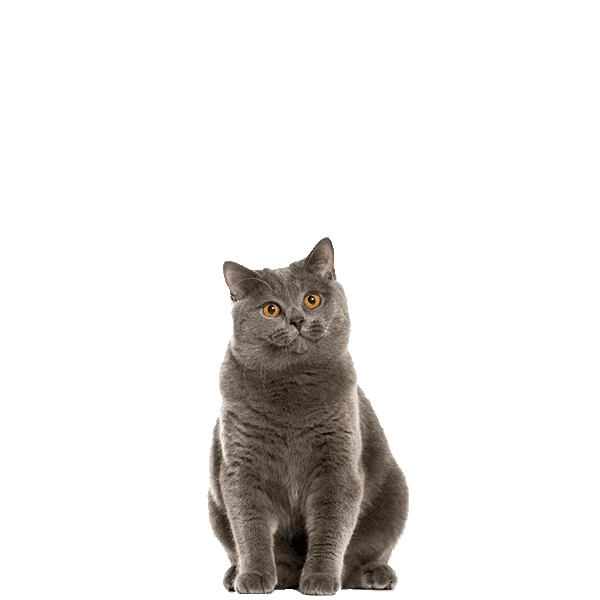
Kinkalow
The Kinkalow is a playful, affectionate dwarf breed charming for its short legs and curled ears paired with a curious, kittenish spirit.
- Size
- Small
- Lifespan
- 12–15 years
- Origin
- United States
- Temperament
- Playful
Characteristics
Coat and grooming
How the Kinkalow coat is built, and what that means when you groom it.
- Coat layers
- Single coat
- Coat texture
- Silky
- Coat length
- Medium
- Shedding
- Low shedding
Grooming guidance
Caution: A Kinkalow coat mats easily.
Fine or long hair tangles at the base of the coat, out of sight, where the mats tighten and pull on the skin. Brushing has to reach right down to the roots in sections, not just skim the surface.
About the Kinkalow cat
The Kinkalow is a small American dwarf cat with short legs and backward-curling ears. Affectionate and playful, it usually lives 12 to 15 years.
The Kinkalow is a dwarf cat breed developed in the United States by crossing the Munchkin, which carries the gene for short legs, with the American Curl, which carries the gene for backward-curling ears. The cross gives a small cat that pairs the low-slung body of the Munchkin with the curled ear tips of the Curl.
Most Kinkalows weigh between 3 and 7 pounds, which puts them at the smaller end of the domestic cat range. The short legs are not much of a limit. The cat gets around easily and stays active, climbing and jumping by using its hindquarters for leverage. How far the ears curl differs from one cat to the next, because the curl gene does not always express fully.
The breed is affectionate and people-oriented. Kinkalows stay playful into adulthood and keep a kittenish, curious manner well past the kitten stage. They fit households that can give them regular attention and interaction.
| Attribute | Detail |
|---|---|
| Origin | United States |
| Size | Small (about 3 to 7 lb) |
| Lifespan | 12 to 15 years |
| Group / role | Companion / dwarf breed |
| Good with | Families, children, other pets when socialized |
Who it suits
The Kinkalow fits homes that want a small, interactive companion and can give daily play and company. It does well with attentive families, including those with children who handle cats gently, and with other pets when introductions happen gradually. Since the breed is sociable and dislikes long stretches on its own, it is not a good match for a home left empty for most of the day.
History and origin of the Kinkalow
The Kinkalow is a recent American dwarf breed made by crossing the Munchkin with the American Curl, joining short legs with curled ears. It stays rare and is still developing.
The Kinkalow started in the United States during the 1990s. Breeder Terri Harris is credited with the early crosses that defined the breed, pairing the short-legged Munchkin with the American Curl, a cat known for ears that curl backward. The goal was a small cat that carried both traits together.
The Munchkin, which supplies the short-leg gene, was itself recognized as a breed only in the 1990s. The American Curl, which supplies the curled-ear gene, traces back to a single stray cat found in California in 1981. The Kinkalow draws directly on both of these foundation breeds.
The name puts "kink," for the curled ears, together with "low," for the short stature. Major cat registries still treat the breed as experimental, and it is bred in small numbers. It has not received full championship recognition from the larger associations, and breeding programs keep working toward a consistent type.
Since the population is small and both parent traits are dominant but variable in how they show, litters can include kittens with long legs, straight ears, or both. Responsible breeders track these outcomes and keep outcrossing to protect health and genetic diversity.
Kinkalow appearance and coat
The Kinkalow is a small cat with short legs, a long body, and backward-curling ears. Coats vary in length and come in a wide range of colors and patterns.
The Kinkalow carries the short legs of its Munchkin parent on a body that looks long against its low height. The head is rounded with a short muzzle, and the eyes are large and set wide apart. The signature feature is the ear, which curls back from the face. The degree of curl runs from a slight bend to a firm backward arc.
| Trait | Description |
|---|---|
| Height | About 3 to 7 inches at the shoulder |
| Weight | About 3 to 7 lb |
| Coat | Short to medium length, soft and fine |
| Colors | Most colors and patterns, including solid, tabby, tortoiseshell, and bicolor |
| Eyes | Large, round, color varies with coat |
Coat and colors
The coat is soft and comes short or medium in length, depending on the parent cats. No single color is standard for the breed, so Kinkalows show up across a broad range of solid shades, tabby markings, tortoiseshell, and two-color patterns. Short-haired cats need little coat care, while medium-haired cats do better with more frequent brushing. In the local heat and humidity, regular brushing also keeps the coat cool and free of loose hair. Whatever the curl, the ears should feel firm at the base rather than floppy.
Kinkalow temperament and personality
The Kinkalow is affectionate, playful, and curious, keeping a kitten-like manner into adulthood. It is sociable at home and usually friendly with children and other pets.
The Kinkalow is an affectionate breed that forms close bonds with the people it lives with. It is playful and curious, and many cats keep a kittenish manner throughout life, chasing toys and checking out new objects well into adulthood.
With family the breed is sociable and seeks attention, often following people from room to room and settling on laps. With strangers it is usually confident rather than shy, though early socialization helps. Kinkalows generally get along with children who handle them gently and with other cats and cat-friendly dogs when introductions are managed slowly.
The short legs do not slow the cat down much. Kinkalows climb and jump, using their back legs to reach favorite perches, and they stay active indoors. They do not tolerate long periods alone, and they are happiest in homes where someone is usually around or where a second pet gives company.
| Trait | Rating |
|---|---|
| Affection | 5 |
| Energy | 4 |
| Trainability | 3 |
| Vocalness | 2 |
| Shedding | 2 |
Kinkalow care and grooming
The Kinkalow needs routine grooming, daily play, and an indoor home with low perches within reach. The curled ears need gentle, careful cleaning.
Grooming
- Brush short-haired cats once a week and medium-haired cats two or three times a week to remove loose hair.
- Clean the curled ears gently with a vet-approved solution, since the curl can trap wax and debris.
- Trim the nails every couple of weeks.
- Brush the teeth regularly to reduce dental disease.
Exercise
- Provide daily interactive play with wand toys, balls, and puzzle feeders.
- Offer low cat trees, steps, and ramps so the cat can climb without large jumps.
- Rotate the toys to keep a curious cat engaged.
- Aim for two or more short play sessions a day.
Environment
The Kinkalow is an indoor cat. Its small size and short legs leave it exposed outdoors, and the curled ears injure easily. Keep the home cool and well ventilated during hot weather, and screen the windows so the cat cannot slip out or fall from a condo unit. Set out resting spots at low and medium heights, with climbing options within reach so the cat can perch without straining.
Kinkalow nutrition and feeding
The Kinkalow needs a complete, protein-rich cat food in measured portions to avoid weight gain on its small frame. Fresh water should always be available.
The Kinkalow does best on a complete, balanced cat food with animal protein as the main ingredient. Because the breed is small, portion control matters more than for a larger cat, since even a little extra weight adds strain to the spine and joints. Choose a food formulated for the cat's life stage and feed by weight rather than leaving the bowl on free choice.
| Life stage | Amount per day | Meals |
|---|---|---|
| Kitten (to 12 months) | Per package guidance for body weight, fed to appetite | 3 to 4 |
| Adult (1 to 7 years) | About 1/4 to 1/2 cup dry, or equivalent wet | 2 |
| Senior (7+ years) | Adjusted to maintain a lean body condition | 2 |
Treats and supplements
Keep treats to no more than about 10 percent of daily calories so the cat stays at a healthy weight. A cat on a complete commercial diet usually needs no supplements. Discuss any joint or other supplement with a veterinarian first, especially given the breed's short-legged build. Always keep fresh water available, and offer wet food to support hydration, which matters more in a hot climate.
Kinkalow health and common conditions
The Kinkalow generally lives 12 to 15 years but can inherit spinal and joint issues linked to its short legs. Routine veterinary care supports a healthy life.
The Kinkalow generally lives 12 to 15 years with good care. As a dwarf breed, it can be prone to skeletal problems connected to the short-leg gene, and the curled ears need monitoring. Buying from a breeder who screens the parent cats lowers the risk of inherited conditions.
| Condition | Signs | Note |
|---|---|---|
| Lordosis (spinal curvature) | Dip in the spine, reduced mobility | Linked to the dwarfism gene; severity varies |
| Pectus excavatum (sunken chest) | Breathing difficulty, poor growth | Seen in some dwarf kittens |
| Joint and limb strain | Stiffness, reluctance to jump | Short legs add load to the joints |
| Ear infection | Head shaking, odor, discharge | Curled ears can trap debris |
Preventive care
- Schedule annual veterinary checkups and keep vaccinations current.
- Keep the cat lean to reduce strain on the spine and joints.
- Clean and inspect the ears regularly.
- Maintain parasite control and dental care.
- Buy from breeders who health-screen their breeding cats.
Training a Kinkalow
The Kinkalow is curious and food-motivated, so it learns tricks, recall, and harness use through short, reward-based sessions.
The Kinkalow is intelligent and curious, which makes it responsive to training when sessions stay short and rewarding. The breed enjoys mental challenges, and clicker training, puzzle feeders, and simple tricks all work well. Litter training is usually straightforward; provide a low-sided box that the short-legged cat can step into easily.
Basics
- Start with one behavior at a time, such as coming when called.
- Reward the correct action right away with a small treat or praise.
- Keep sessions to a few minutes and end on a success.
- Repeat daily and add new behaviors only once the first is reliable.
- Introduce a harness gradually if you plan supervised outdoor time.
Breeding the Kinkalow
Kinkalow breeding needs care because both the short-leg and curled-ear genes are variable, and pairing two short-legged cats is avoided for health reasons.
Breeding the Kinkalow takes planning, since both defining traits pass down in ways that do not always express fully. The short-leg gene is dominant but can be lethal when a kitten inherits two copies, so two short-legged cats are never bred together. Breeders pair a short-legged cat with a standard-legged or American Curl cat to keep litters healthy.
Females reach sexual maturity at a few months of age, but responsible breeders wait until a queen is physically mature before mating. Gestation lasts about 63 to 67 days. Litters are usually small, and a single litter can include kittens with short or long legs and with curled or straight ears, since neither trait passes to every kitten.
Kittens are born with straight ears that begin to curl in the first weeks of life, then settle into their final shape over several months. Queens raise their kittens with normal maternal care. Breeders should screen for spinal and chest conditions and place only healthy kittens, ideally once the ear curl and limb development have become clear.
| Metric | Value |
|---|---|
| Sexual maturity | Around 5 to 9 months |
| Gestation | About 63 to 67 days |
| Average litter size | 2 to 4 kittens |
| Ears at birth | Straight, begin curling within weeks |
| Weaning age | Around 8 to 10 weeks |
Registering a Kinkalow in the Philippines, chip included
No law licenses cats here, so your Kinkalow's only paper trail is the one you create: free for life with United Pet Club.
Kinkalow registration and microchip registration in the Philippines
A Kinkalow does not carry an ID; her record carries it for her. Set it up free: her name, her markings, a photo, and your mobile number, saved with United Pet Club for life. Register your cat now, while she is asleep on the sofa rather than out the window.
A microchip makes your Kinkalow much harder to lose track of, but only after the number is registered, and the clinic that implants it does not do that part for you. Register the microchip free on the lifetime plan: any brand works, updating after you move or change SIM costs nothing, and the record can be searched from anywhere. Create your free account and be done with both.
How do I register my Kinkalow in the Philippines?
Sign up for a free United Pet Club account, add your Kinkalow's name, markings, and a photo, and save. The profile is free for life, no microchip required, and you can add the chip number after the vet visit.
How do I register my Kinkalow's microchip?
Add the 15-digit number from the clinic's paperwork to your free account along with your current mobile number. The lifetime plan never charges for the registration or the updates, whatever the chip brand.
Do cats need to be registered in the Philippines?
No law requires it; RA 9482 covers dogs. That is exactly why a Kinkalow's record matters: unless you create one, a found cat has no trail at all. United Pet Club keeps that trail free for life.
What does it cost to register a Kinkalow?
Zero pesos. Profile, microchip registration, and unlimited updates are all free on the lifetime plan, with no renewal ever.
Kinkalow frequently asked questions
Common questions about the Kinkalow cover its size, temperament, care needs, lifespan, suitability for families, and availability in the Philippines.
How big does a Kinkalow get?
The Kinkalow is a small breed, usually weighing about 3 to 7 pounds, with short legs that keep it close to the ground.
What is the Kinkalow's temperament like?
It is affectionate, playful, curious, and sociable. Many Kinkalows keep a kittenish manner into adulthood and enjoy close contact with their people.
Is the Kinkalow hard to take care of?
Day-to-day care is moderate. The cat needs routine grooming, gentle ear cleaning, daily play, and weight control, plus regular vet checks for its spine and joints.
How long does a Kinkalow live?
With good care, a Kinkalow typically lives 12 to 15 years.
Is the Kinkalow good for families?
Yes. It suits attentive families, including those with gentle children and other pets, but it does not like being left alone for long periods.
Are Kinkalows available in the Philippines?
They are very rare. The breed is recent and still developing, and TICA lists it as experimental. Very few breeders produce it, so kittens are hard to find here and often imported. Where papers matter, ask for a pedigree recognized by TICA or a local Philippine cat club before buying.
Why do the Kinkalow's ears curl?
The curled ears come from the American Curl parent. Kittens are born with straight ears that begin to curl backward within the first weeks of life.