
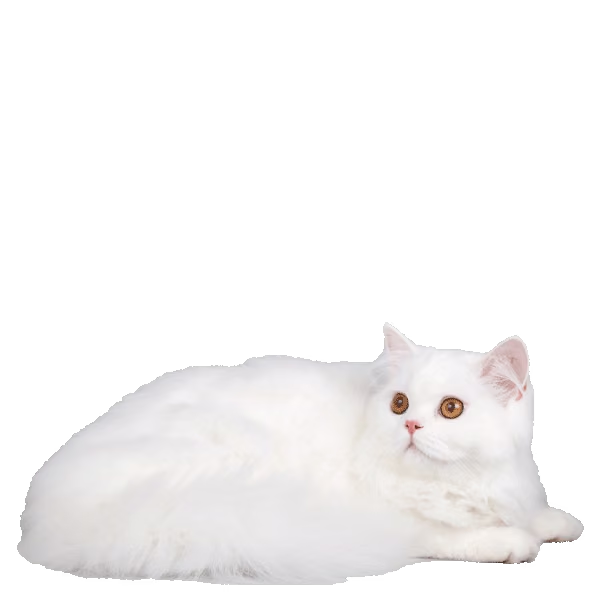
Khao Manee
The Khao Manee is an affectionate, sociable breed revered in Thailand for its pure white coat and jewel-like eyes.
- Size
- Medium
- Lifespan
- 10–14 years
- Origin
- Thailand
- Temperament
- Affectionate
- Standard colors
- White
Characteristics
Coat and grooming
How the Khao Manee coat is built, and what that means when you groom it.
- Coat layers
- Single coat
- Coat texture
- Smooth
- Coat length
- Short
- Shedding
- Low shedding
Khao Manee colors and patterns
What each club's breed standard says about every Khao Manee color and pattern. Point at a ruling to see the club's own wording.
Breed standards describe the Khao Manee in White. Standard patterns: Solid.
| Color or pattern | TICA | CFA | GCCF | WCF | ACFA | CCA |
|---|---|---|---|---|---|---|
| White | Standard (“White”) | Standard (“White”) | Standard (“solid white”) | Standard (“white”) | Standard (“snowy white”) | Standard (“snowy white”) |
| Patterns | ||||||
| Solid | Standard (“Solid”) | No ruling | Standard (“solid white”) | No ruling | Standard (“completely white”) | Standard (“snowy white”) |

| Color or pattern | TICA | CFA | GCCF | WCF | ACFA | CCA |
|---|---|---|---|---|---|---|
| Blue | Standard (“blue”) | Standard (“blue”) | Standard (“Blue”) | Standard (“blue”) | Standard (“blue”) | Standard (“Blue”) |
| Brown | No ruling | Standard (“shades of brown”) | No ruling | Standard (“shades of brown”) | No ruling | No ruling |
| Hazel | No ruling | Standard (“hazel”) | No ruling | Standard (“hazel”) | No ruling | No ruling |
| Copper | No ruling | Standard (“copper”) | No ruling | Standard (“copper”) | No ruling | No ruling |
| Amber | No ruling | Standard (“amber”) | Standard (“Amber”) | Standard (“amber”) | No ruling | No ruling |
| Yellow | Standard (“yellow”) | Standard (“yellow”) | Standard (“Yellow”) | Standard (“yellow”) | Standard (“yellow”) | No ruling |
| Gold | No ruling | No ruling | No ruling | Standard (“golden”) | No ruling | Standard (“gold”) |
| Green | Standard (“green”) | Standard (“green”) | Standard (“Green”) | Standard (“green”) | Standard (“green”) | Standard (“green”) |
| Aqua | No ruling | Standard (“aqua”) | No ruling | Standard (“aqua”) | No ruling | No ruling |
| Patterns | ||||||
| Odd-eyed | Standard (“odd”) | Standard (“multiple colors between”) | Standard (“Odd-eyed”) | Standard (“odd-eye”) | Standard (“odd-colored”) | Standard (“odd”) |
| Sectoral | Standard (“pigmented with both blue and another color”) | Standard (“multiple colors within an eye”) | Standard (“Bicoloured”) | Standard (“multiple colors or shades ... within an eye”) | Standard (“pigmented with both blue and another color”) | No ruling |
%22%3E%3Ccircle%20cx%3D%2216%22%20cy%3D%2232%22%20r%3D%228%22%20fill%3D%22%23D9C3A0%22%2F%3E%3Ccircle%20cx%3D%2216%22%20cy%3D%2232%22%20r%3D%223.4%22%20fill%3D%22%231C1C1C%22%2F%3E%3Ccircle%20cx%3D%2213.6%22%20cy%3D%2229.6%22%20r%3D%221.3%22%20fill%3D%22%23F5F5F0%22%2F%3E%3C%2Fg%3E%3Cpath%20d%3D%22M3%2032Q16%2017%2029%2032Q16%2047%203%2032Z%22%20fill%3D%22none%22%20stroke%3D%22%233B2A20%22%20stroke-opacity%3D%220.75%22%20stroke-width%3D%221.4%22%20stroke-linejoin%3D%22round%22%2F%3E%3Cpath%20d%3D%22M35%2032Q48%2017%2061%2032Q48%2047%2035%2032Z%22%20fill%3D%22%23F5F5F0%22%2F%3E%3Cg%20clip-path%3D%22url(%23e1)%22%3E%3Ccircle%20cx%3D%2248%22%20cy%3D%2232%22%20r%3D%228%22%20fill%3D%22%23847865%22%2F%3E%3Ccircle%20cx%3D%2248%22%20cy%3D%2232%22%20r%3D%223.4%22%20fill%3D%22%231C1C1C%22%2F%3E%3Ccircle%20cx%3D%2245.6%22%20cy%3D%2229.6%22%20r%3D%221.3%22%20fill%3D%22%23F5F5F0%22%2F%3E%3C%2Fg%3E%3Cpath%20d%3D%22M35%2032Q48%2017%2061%2032Q48%2047%2035%2032Z%22%20fill%3D%22none%22%20stroke%3D%22%233B2A20%22%20stroke-opacity%3D%220.75%22%20stroke-width%3D%221.4%22%20stroke-linejoin%3D%22round%22%2F%3E%3C%2Fsvg%3E)
%22%3E%3Ccircle%20cx%3D%2232%22%20cy%3D%2232%22%20r%3D%2213%22%20fill%3D%22%23D9C3A0%22%2F%3E%3Cpath%20d%3D%22M32%2032L42%2023.6A13%2013%200%200%201%2042%2040.4Z%22%20fill%3D%22%236E7B8B%22%2F%3E%3Ccircle%20cx%3D%2232%22%20cy%3D%2232%22%20r%3D%225%22%20fill%3D%22%231C1C1C%22%2F%3E%3Ccircle%20cx%3D%2228%22%20cy%3D%2228%22%20r%3D%222%22%20fill%3D%22%23F5F5F0%22%2F%3E%3C%2Fg%3E%3Cpath%20d%3D%22M4%2032Q32%208%2060%2032Q32%2056%204%2032Z%22%20fill%3D%22none%22%20stroke%3D%22%233B2A20%22%20stroke-opacity%3D%220.75%22%20stroke-width%3D%221.4%22%20stroke-linejoin%3D%22round%22%2F%3E%3C%2Fsvg%3E)
| Color or pattern | TICA | CFA | GCCF | WCF | ACFA | CCA |
|---|---|---|---|---|---|---|
| Pink | Standard (“pink”) | Standard (“pink”) | Standard (“pink”) | Standard (“pink”) | Standard (“pink”) | Standard (“pink”) |
| Color or pattern | TICA | CFA | GCCF | WCF | ACFA | CCA |
|---|---|---|---|---|---|---|
| Pink | Standard (“pink”) | Standard (“pink”) | Standard (“pink”) | Standard (“pink”) | Standard (“pink”) | Standard (“pink”) |
What the rulings mean
- Standard
- Described by the club's breed standard.
Color changes
How a Khao Manee's colors can change over its life.
Whitechanges toShaded
Coat · With age
Whitechanges toChinchilla
Coat · With age
Whitechanges toPointed
Coat · With age · from 1 to 52 weeks
Solidchanges toSmoke
Coat · With age · from 3 to 104 weeks
Bluechanges toGreen
Eyes · With age · from 4 to 17 weeks
Bluechanges toYellow
Eyes · With age · from 4 to 17 weeks
Bluechanges toGold
Eyes · With age · from 4 to 17 weeks
Bluechanges toCopper
Eyes · With age · from 4 to 17 weeks
Bluechanges toOrange
Eyes · With age · from 4 to 17 weeks
Bluechanges toHazel
Eyes · With age · from 4 to 17 weeks
Bluechanges toAmber
Eyes · With age · from 4 to 17 weeks
Pinkchanges toSeal
Nose · With age · from 1 to 52 weeks
Pinkchanges toBlue
Nose · With age · from 1 to 52 weeks
Pinkchanges toChocolate
Nose · With age · from 1 to 52 weeks
Pinkchanges toLilac
Nose · With age · from 1 to 52 weeks
Pinkchanges toSeal
Paw pads · With age · from 1 to 52 weeks
Pinkchanges toBlue
Paw pads · With age · from 1 to 52 weeks
Pinkchanges toChocolate
Paw pads · With age · from 1 to 52 weeks
Pinkchanges toLilac
Paw pads · With age · from 1 to 52 weeks
%22%3E%3Crect%20x%3D%220%22%20y%3D%220%22%20width%3D%2264%22%20height%3D%2264%22%20fill%3D%22url(%23g)%22%2F%3E%3Cg%20fill%3D%22none%22%20stroke%3D%22%231C1C1C%22%20stroke-width%3D%221%22%20stroke-opacity%3D%220.85%22%20stroke-linecap%3D%22round%22%20stroke-linejoin%3D%22round%22%3E%3Cpath%20d%3D%22M18.9%2025.7l0.2%202.1M42.7%2033.1l1%202.1M12.6%2020.7l0.9%201.7M17.3%2012.7l1%201.7M25.9%2022.4l0.4%201.6M50.2%2029l0.1%201.6M29.2%2028l0.5%202.1M43.2%2022.9l1%202.2M42.4%2029.9l0.2%202.2M8.4%2023.4l1%202.1M7.8%2018.4l0.4%202M35%2027.9l0.5%202.2M35.9%2038.5l0.6%201.6M29.3%2032.6l0.5%201.4M34.8%2022l0.7%202.2M37.6%2020.6l0.7%202.2M18.2%2037.7l0.4%202.1M9.9%2029l0%201.5M9.9%2014l0.1%202M37%2030.4l0.5%202.3M13%2028.5l0.6%202M38.3%2049.6l0.6%201.9M18.4%2047.4l0.7%201.4M40%2026.9l0.2%201.6M57.5%2010.7l0.4%201.4M39.6%2030.3l0.3%202.1M54.9%2018.7l0.7%201.5M48%2028.3l0.4%202M23%2050.3l0.1%202.3M28.2%2036.1l0.5%202.1M57.9%2014.4l0.6%201.4M10.6%2023.3l1%202.1M17.5%2042.7l0.8%201.4M52.1%2026l0.1%201.6M38.6%2032.2l0.1%202.2M30.9%2037.8l0.7%201.7M56.6%2017l0.9%201.9M42.5%2028.7l1%201.8M24.4%2048.9l0%201.7M8.7%2022.3l0.4%201.4M16.6%2039.9l0.5%201.4M7.1%2021.8l0.8%202.2M34.1%2034.2l0.3%201.7M9.9%2025.5l0%201.6M43.1%2035.1l0%202M37.7%2051.3l0.3%201.7M31.7%2031.3l0.3%202.3M23.8%2036.6l0.9%201.8M16.6%2053.5l0.4%202.3M24.4%2041.2l0.6%201.8M39.9%2046.6l0.4%201.8M10.4%2021.8l0.1%202.1M47.2%2051l0.7%202.3M42.9%2027.4l0.1%202M20.5%2022.8l0.4%202.1M49.2%2032.2l0.6%201.3M15.8%2030.1l0.4%202.1M46.2%2053.6l0.6%201.4M15.1%2020.1l0.7%202M23.4%2043.9l0.4%201.6M38.8%2029.4l0.4%202.1M36.8%2034.7l0.4%201.9M48.3%2028.4l0.6%202M26.9%2029.6l0.4%201.6M28.4%2036.5l0.4%201.4M19.2%2034.3l0.5%202.1M7.2%2028.1l0.1%201.6M15.9%2019.7l0.6%201.3M23.4%2022.8l0.9%201.8M16.3%2019.8l0.2%202.1M21.9%2053l0.4%202M48.5%2028.5l0.7%201.8M16.9%2012.9l0.6%202.3M26.8%2033.1l0%201.7M46.2%2044.1l0.2%202.1M30.5%2025.1l0.1%201.7M42.1%2032.2l0.1%201.6M8.7%2021.9l0.6%202.2M29.2%2024.5l0.6%202M22.1%2040.7l1.1%201.9M24.3%2033.3l0.7%201.8M53.9%2026.4l0.1%202.4M21.4%2026.6l0.9%202M39.2%2025.3l0.1%201.9M32.4%2035.3l1%202M48.9%2031.4l0%201.6M24.8%2022.1l0.4%202.2M46.4%2054.6l0.7%201.8M25.1%2031.7l0.5%202.1M24.7%2043.5l0%201.4M23.1%2033.3l0.9%201.6M37.9%2039.5l0.5%201.3M45.7%2041.2l0.9%201.8M50.1%2029.5l0.4%201.8M46.6%2049.6l0.5%202.2M54%2024.3l0.5%202.3M5.9%2025.6l0.1%201.5M15.5%2022.8l0.9%202M26.3%2027.8l0%202.1M30.1%2020.3l0.1%202.3M18.1%2016.7l0.5%201.8M19.1%2024.1l0.9%201.8M12.7%2018.8l0.7%201.4M20.8%2031.1l0.6%201.5M16.9%2025.9l0.1%201.5M11.6%2014.8l0.1%202.3M10.8%2018.5l0.8%201.8M33.5%2038l0.6%201.4M30.6%2028.8l0.3%202.1M39.1%2031.7l0.9%201.9M34.6%2021.3l0.3%202%22%2F%3E%3Cpath%20d%3D%22M17.6%2040.5l0.7%202.1M46.2%2038.1l0.4%201.7M5.1%2020.5l0.2%201.6M21.8%2022.3l0.3%201.4M26.3%2021l0.9%201.6M32.6%2037.5l0.5%201.4M33.5%2031.6l0.6%201.6M39.2%2039l0.9%201.6M11.4%2022.8l0.7%201.8%22%2F%3E%3C%2Fg%3E%3C%2Fg%3E%3Cuse%20href%3D%22%23s%22%20fill%3D%22none%22%20stroke%3D%22%233B2A20%22%20stroke-opacity%3D%220.6%22%20stroke-width%3D%221%22%20stroke-linejoin%3D%22round%22%2F%3E%3Cpath%20d%3D%22M3.4%2022.3L5.4%2022.5L4.3%2024Z%22%20fill%3D%22%23E8A0B4%22%2F%3E%3Ccircle%20cx%3D%229.6%22%20cy%3D%2221.2%22%20r%3D%221.1%22%20fill%3D%22%231C1C1C%22%2F%3E%3C%2Fsvg%3E)
%22%3E%3Cg%20fill%3D%22none%22%20stroke%3D%22%231C1C1C%22%20stroke-width%3D%221.1%22%20stroke-opacity%3D%220.9%22%20stroke-linecap%3D%22round%22%20stroke-linejoin%3D%22round%22%3E%3Cpath%20d%3D%22M37.4%2030.7l0.7%201.3M18.9%2028.6l0.1%201.1M46.5%2033.6l0.3%201.3M35.8%2023.2l0.1%201.4M19.6%2045.1l0%201.2M34.4%2037.4l0%200.9M48.4%2037.9l0.2%201.2M29.8%2023.5l0.4%201.4M9.3%2013.8l0.2%201.1M45.6%2044.2l0.3%200.8M24.4%2028.2l0.1%200.8M41.2%2035l0.1%200.9M41%2030.9l0.1%201.2M40.9%2025.1l0.3%201.4M28.4%2034.5l0.6%201.1M26.7%2024.1l0.1%200.8M47.3%2050.1l0.3%201.4M17.7%2049.5l0.5%201.3M29%2024.1l0.4%201.1M38.6%2038.1l0%201M33.4%2026.9l0.6%201M25.7%2028.1l0.1%200.9M18.3%2038.1l0.6%201.2M47.5%2028.1l0.4%201.1M25.6%2022l0.1%200.9M29.5%2027l0.5%201.1M39.5%2021.4l0.1%201.2M40.9%2048.2l0.2%201.1M17.8%2013.2l0.5%201.2M27.3%2031.6l0%201M21.3%2023.5l0.2%200.9M40.9%2054.1l0.3%200.9M20.9%2028.2l0.7%201.2M26.2%2022.2l0.1%200.8M40.9%2050.9l0.3%201.4M35.2%2030.2l0.2%200.8M50.4%2031.3l0.1%201.3M43.6%2036l0.3%200.9M33.7%2039.1l0.3%200.9M48.6%2049.9l0.3%201.1M44.4%2021.9l0.2%200.9M40.3%2040.9l0.4%201M51.8%2031.5l0.1%201.4M42%2038l0.3%201M41.3%2027.1l0.6%201.1M27.2%2032.2l0.3%201.3M28%2024.6l0%201.2M29%2038.5l0.1%201.1M56%2014.4l0.6%201.3M51%2031.2l0.3%200.8M49%2024.2l0.6%201.1M39.1%2029l0.5%201.2M38.7%2037.6l0.2%201.4M24.3%2046.6l0.4%200.8M23.1%2037.4l0.2%200.8M43%2035.9l0%201M35.4%2027l0.5%201M29.7%2039.1l0.2%201.4M32.8%2037.2l0%201M7.4%2022.7l0.1%201.1M31.3%2020.3l0.6%201.1M21.7%2033.3l0.5%201.1M16.5%2043.9l0.2%201.1M22.7%2024l0%201.4M41.6%2034.2l0.7%201.3M27.1%2036.9l0.2%201.1M49.4%2029.1l0.4%200.9M34.4%2020.6l0.3%201.1M21.6%2037.3l0%201.4M47.1%2029.2l0.7%201.3M50.6%2024.8l0.3%201M49.7%2029.2l0.7%201.2M19.4%2045.4l0.2%201.5M48.6%2026.5l0.6%201.2M23%2022.5l0.4%201M39.9%2051.5l0.2%201.1M6.7%2020.5l0.2%200.9M44.8%2033l0.2%201.4M37.7%2045.6l0.4%201.2M29.9%2037.9l0.2%200.9M24%2020.8l0.4%201M42.7%2021l0.4%201M42%2030.3l0.4%201.1M21.6%2045l0.4%201.1M18.5%2017l0.1%201M9.6%2016.4l0.1%201.3M19.5%2045.9l0.1%201M46.9%2049.9l0.4%201.3M18.6%2020.1l0.1%200.9M38.5%2038.8l0.1%201.4M46.9%2032.3l0.5%201.1M49.4%2031.7l0.3%200.9M48.5%2040.7l0.2%201.4M30.5%2033.5l0.4%201.3M46.3%2041.6l0.3%200.9M23.1%2044.7l0.2%201.1M16.7%2027.5l0%201M37.8%2029.3l0.1%201.2M42.9%2036.9l0.2%201.1M31%2025.3l0.2%201.1M17.5%2052.8l0.6%201.1M11%2021.5l0.4%201M22.5%2029.1l0.5%201.1M27.5%2032.1l0.4%200.9M39.6%2023.3l0.1%201.2M52.1%2027l0.6%201.3M28.8%2029.6l0%201.5M37.9%2025.5l0.5%200.8M33.2%2022.6l0.1%201.2M15.7%2015.4l0.3%200.8M47.7%2053.4l0.1%200.9%22%2F%3E%3Cpath%20d%3D%22M20.7%2023.3l0.6%201.1M6.7%2027.8l0.5%201.3M17%2012.8l0.2%201.2M21.7%2036.2l0%201.3M12.3%2019.9l0.2%200.8M17.2%2025.6l0.4%201.2M42.3%2022.6l0%201.2M24.7%2028.4l0.3%201.4M44.5%2038.7l0%201.4%22%2F%3E%3C%2Fg%3E%3Cpath%20d%3D%22M3.5%2022.6L5.4%2022.6%22%20fill%3D%22none%22%20stroke%3D%22%231C1C1C%22%20stroke-width%3D%221%22%20stroke-linecap%3D%22round%22%20stroke-linejoin%3D%22round%22%2F%3E%3C%2Fg%3E%3Cuse%20href%3D%22%23s%22%20fill%3D%22none%22%20stroke%3D%22%233B2A20%22%20stroke-opacity%3D%220.6%22%20stroke-width%3D%221%22%20stroke-linejoin%3D%22round%22%2F%3E%3Cpath%20d%3D%22M3.4%2022.3L5.4%2022.5L4.3%2024Z%22%20fill%3D%22%23E8A0B4%22%2F%3E%3Ccircle%20cx%3D%229.6%22%20cy%3D%2221.2%22%20r%3D%221.1%22%20fill%3D%22%231C1C1C%22%2F%3E%3C%2Fsvg%3E)
%22%3E%3Cpath%20d%3D%22M5.5%2017L7.5%207L12%2015ZM14%2015L17.5%207L20%2018.5Z%22%20fill%3D%22%23847865%22%2F%3E%3Cellipse%20cx%3D%227.6%22%20cy%3D%2223.6%22%20rx%3D%225%22%20ry%3D%225.2%22%20fill%3D%22%23847865%22%2F%3E%3Crect%20x%3D%220%22%20y%3D%2244%22%20width%3D%2264%22%20height%3D%2220%22%20fill%3D%22%23847865%22%2F%3E%3Cpath%20d%3D%22M50%2027L53.5%205L64%203L64%2013L59%2024L53%2033Z%22%20fill%3D%22%23847865%22%2F%3E%3C%2Fg%3E%3Cuse%20href%3D%22%23s%22%20fill%3D%22none%22%20stroke%3D%22%233B2A20%22%20stroke-opacity%3D%220.6%22%20stroke-width%3D%221%22%20stroke-linejoin%3D%22round%22%2F%3E%3Cpath%20d%3D%22M3.4%2022.3L5.4%2022.5L4.3%2024Z%22%20fill%3D%22%23E8A0B4%22%2F%3E%3Ccircle%20cx%3D%229.6%22%20cy%3D%2221.2%22%20r%3D%221.1%22%20fill%3D%22%231C1C1C%22%2F%3E%3C%2Fsvg%3E)
%22%3E%3Crect%20x%3D%220%22%20y%3D%220%22%20width%3D%2264%22%20height%3D%2264%22%20fill%3D%22%231C1C1C%22%2F%3E%3Crect%20x%3D%220%22%20y%3D%220%22%20width%3D%2264%22%20height%3D%2264%22%20fill%3D%22url(%23g)%22%2F%3E%3Cpath%20d%3D%22M17.5%2030.4l0.2%203.7M48.5%2036.2l-0.3%203.1M40.1%2038.4l0.7%202.8M21.3%2029.4l0.3%202.9M38.5%2024l-0.7%202.7M19.4%2041l0.9%203.8M47.2%2026.3l0.3%203M28.1%2031.1l-0.4%202.6M21%2027l-0.7%203.4M20.1%2035l0.7%202.8M27.4%2035.9l1.2%203.6M31.5%2032.2l0.5%202.5M43.7%2038.4l0.2%202.9M15.5%2027.6l0.2%203M33.5%2029.7l0%203.8M50%2028l0.5%203.8M50.1%2029.5l-0.2%203.3M39.4%2037.1l0.8%203M31.1%2025l1%203.1M19.5%2028.3l0.3%203.1M29.5%2034.2l-0.3%203.8M50.4%2033.8l-0.5%202.6M39.3%2028.8l1.2%203.8M36.6%2037.2l-0.3%202.8M41.6%2026.3l-0.7%202.7M24.2%2038.3l-0.2%203.3M20.5%2033.1l0.7%203M24%2032.2l-0.7%203.3M42.7%2038.5l-0.6%203.8M20.4%2038.2l0.2%203.3M37.5%2036.9l-0.8%202.4M36%2035.3l-0.7%202.9M46.2%2033.2l-0.8%203.8M38.1%2030.5l-0.6%203.6M29%2038.9l-0.7%203.7M42.8%2031.3l0.1%203.1M22.5%2025.1l0.4%202.9M47.4%2025l0.2%203M24.7%2032l-0.8%203.2M14.8%2024.5l1.1%203.3%22%20fill%3D%22none%22%20stroke%3D%22%23F5F5F0%22%20stroke-width%3D%221%22%20stroke-opacity%3D%220.85%22%20stroke-linecap%3D%22round%22%20stroke-linejoin%3D%22round%22%2F%3E%3C%2Fg%3E%3Cuse%20href%3D%22%23s%22%20fill%3D%22none%22%20stroke%3D%22%233B2A20%22%20stroke-opacity%3D%220.6%22%20stroke-width%3D%221%22%20stroke-linejoin%3D%22round%22%2F%3E%3Cpath%20d%3D%22M3.4%2022.3L5.4%2022.5L4.3%2024Z%22%20fill%3D%22%23E8A0B4%22%2F%3E%3Ccircle%20cx%3D%229.6%22%20cy%3D%2221.2%22%20r%3D%221.1%22%20fill%3D%22%231C1C1C%22%2F%3E%3C%2Fsvg%3E)
Sources
Each ruling comes from the club's published breed standard or color list.
About the Khao Manee
The Khao Manee is a medium-sized, short-haired cat from Thailand, known for its pure white coat and jewel-like eyes. Rare in the Philippines, it resonates with Filipino-Chinese auspicious traditions and draws strong interest for its striking odd-eyed look.
The Khao Manee is a short-haired cat from Thailand. Its name translates loosely as "white gem," a reference to the breed's solid white coat and clear, luminous eyes. It is a medium-sized cat with a muscular but elegant build and a smooth coat that lies close to the body.
The breed is best known for its eye color. Many Khao Manee have two eyes of the same shade, but the cat prized most in its homeland is odd-eyed, one eye blue and the other gold, green, or amber. Set against the white coat, that contrast is the breed's defining feature.
In personality, the Khao Manee is sociable and closely bonded to its people. It follows family members from room to room, enjoys interactive play well into adulthood, and is generally curious and vocal. For Filipino cat enthusiasts, the breed holds a distinct cultural resonance: in Filipino-Chinese (Tsinoy) tradition, white animals are considered auspicious, a belief that connects naturally to the Khao Manee's role in Thai royal culture, where white cats were revered as bringers of good luck. The breed is rare in the Philippines, and importing from Thailand requires BAI (Bureau of Animal Industry) health certification. Its striking odd-eyed appearance has made it a popular subject among Filipino cat enthusiasts on social media.
| Attribute | Detail |
|---|---|
| Origin | Thailand |
| Size | Medium |
| Lifespan | 10 to 14 years |
| Group / role | Companion / domestic short-hair |
| Good with | Families, children, other cats, and dogs when socialized |
Who it suits
The Khao Manee fits an active household where someone is home often. It does well with families, including children who handle cats gently, and it usually accepts other pets. Because it seeks attention and dislikes long stretches alone, it is less suited to homes where it would be left by itself for most of the day. A second pet can help keep it company.
History and origin
An ancient white cat of Thailand, recorded in Thai cat literature for centuries and developed into a recognized breed in the West from the late twentieth century onward.
The Khao Manee is a natural breed from Thailand, where solid white cats have been kept and admired for a long time. White cats show up in the old Thai cat manuscripts, the painted and written records that cataloged the cats of the region, which places the type in Thai history well before modern breeding programs existed.
For much of its history, the white cat of Thailand was a local treasure rather than an internationally traded breed. These accounts link prized white cats with Thai households of high standing, and the cats were rarely exported, so the population stayed concentrated in the country of origin.
Organized breeding outside Thailand is recent. Khao Manee were brought to the United States and Europe from the late 1990s into the 2000s, and breeders worked to establish the type abroad while keeping ties to Thai foundation cats. Registries such as TICA later recognized the breed for showing and pedigree registration, and Filipino enthusiasts can also turn to local cat clubs.
Because the founding population was small and geographically limited, breeders have put weight on maintaining genetic diversity along with the breed's signature traits: an all-white coat and clear, well-pigmented eyes, including the odd-eyed pattern.
Appearance and breed standard
The Khao Manee is a medium-sized, muscular short-haired cat with a pure white coat and striking eyes that may be blue, gold, green, or odd-colored.
The Khao Manee has a medium build that is muscular and athletic without being heavy. The body is moderately long, the legs are in proportion, and the overall outline is smooth and balanced. The head is a modified wedge with a moderate muzzle, and the ears are medium to large, set fairly upright.
The coat is short, smooth, and close to the body, with little undercoat. This single, fine coat gives the breed a sleek look and keeps grooming demands low, a plus in the country's warm, humid climate.
| Trait | Standard |
|---|---|
| Height | Around 23 to 25 cm at the shoulder |
| Weight | Around 3.5 to 5 kg |
| Coat | Short, smooth, single, close-lying |
| Colors | Pure white only |
| Eyes | Blue, gold, green, or odd-eyed (one blue, one gold or green) |
Coat and colors
The Khao Manee is recognized in a single color: pure white. The accepted standard allows no markings, shading, or patches, though a kitten may occasionally show a small spot of color on the head that usually fades as it matures.
Eye color carries particular importance in this breed. Eyes may be blue, gold, or green, and the odd-eyed combination of one blue eye with a gold or green eye is especially valued. Whatever the color, the standard calls for eyes that are clear and well defined against the white coat.
Temperament and personality
The Khao Manee is affectionate, sociable, and intelligent, bonding closely with its household and staying playful and interactive throughout its life.
The Khao Manee is an outgoing, people-oriented cat. It forms strong attachments to its family and likes to be where the activity is, often following household members from room to room and settling nearby. It tends to greet visitors rather than hide from them.
With children it is generally patient and playful, as long as handling is gentle. It usually gets along with other cats and with dogs used to cats, and a companion animal can help when the household is away during the day. Intelligent and curious, it investigates new objects, opens cupboards, and learns household routines quickly.
This is a fairly vocal breed. The Khao Manee uses a range of sounds to communicate and will let its owners know when it wants attention, food, or play. Owners who prefer a quiet, hands-off cat may find it demanding, while those who want an interactive companion tend to value the constant engagement.
| Trait | Rating |
|---|---|
| Affection | 5 |
| Energy | 4 |
| Trainability | 4 |
| Vocalness | 4 |
| Shedding | 2 |
Care and grooming
The Khao Manee is low-maintenance to groom thanks to its short single coat, but it needs daily interaction and play to stay content.
Grooming
The short, single coat needs little upkeep. A weekly routine keeps the cat clean and the coat in good condition.
- Brush once a week with a soft brush or grooming glove to remove loose hair
- Wipe the white coat with a damp cloth if it picks up dirt or stains
- Check the ears weekly and clean only the outer area if needed
- Trim the nails every two to three weeks
- Brush the teeth regularly to support dental health
Exercise
This is an active cat that needs daily play to burn energy and stay mentally occupied.
- Provide two or more interactive play sessions each day
- Offer wand toys, balls, and puzzle feeders
- Add a cat tree or shelves for climbing and high perches
- Rotate the toys to keep the cat interested
Environment
The Khao Manee is suited to indoor life and wants company and stimulation. Its white coat offers little protection from strong sun, so an indoor setup or supervised time outdoors makes sense, especially under the tropical sun. Provide window perches, scratching posts, and quiet resting spots. Because the breed dislikes long isolation, it does best with a companion pet or in a home where someone is often around.
Nutrition and feeding
The Khao Manee does well on a complete, meat-based cat food matched to its life stage, fed in measured portions across one or two meals a day.
As an obligate carnivore, the Khao Manee needs a diet built around animal protein. Choose a complete and balanced commercial cat food matched to the cat's age and activity level, with a named meat as the main ingredient. Both wet and dry foods can work, and many owners combine the two to support hydration while keeping dry food available. Fresh water should always be on hand.
| Life stage | Amount per day | Meals |
|---|---|---|
| Kitten (2 to 12 months) | Per package guidance, fed to appetite | 3 to 4 |
| Adult (1 to 7 years) | Around 200 to 300 kcal | 2 |
| Senior (7+ years) | Adjusted to weight and activity | 2 |
Treats and supplements
Keep treats to no more than about ten percent of daily calories to prevent weight gain. A cat on a complete commercial diet usually needs no extra supplements. Discuss any supplement, such as joint support for an older cat, with a veterinarian before adding it, and weigh the cat regularly so portions can be adjusted as needed.
Health and lifespan
The Khao Manee is generally healthy with a lifespan of 10 to 14 years, though its white coat and blue eyes call for attention to sun exposure and deafness.
The Khao Manee is considered a generally healthy, hardy breed, with a typical lifespan of 10 to 14 years. As a natural breed drawn from a relatively small founding population, responsible breeding for genetic diversity helps keep it sound. The main breed-specific concerns relate to its white coat and eye pigmentation.
| Condition | Signs | Note |
|---|---|---|
| Congenital deafness | No response to sound, in one or both ears | Linked to the dominant white gene, more often in blue-eyed cats; can be screened by a hearing test |
| Sunburn and skin damage | Reddened or sore skin on ears and nose | White coat offers little UV protection; limit strong sun exposure |
| Dental disease | Bad breath, drooling, reluctance to eat | Common across domestic cats; prevented with dental care |
| Obesity | Weight gain, reduced activity | Manage with measured portions and daily play |
Preventive care
- Keep core vaccinations and parasite control up to date
- Schedule annual veterinary checkups, more often for senior cats
- Have kittens hearing-tested where deafness is a concern
- Brush the teeth and schedule dental checks
- Monitor weight and adjust food accordingly
- Limit exposure to strong midday sun
Training and enrichment
The Khao Manee is intelligent and people-focused, which makes it quick to learn cues, tricks, and household routines through reward-based training.
The Khao Manee learns readily. Its intelligence and desire to interact with people make it one of the more trainable cats, and it can pick up its name, simple commands, and even tricks such as fetch. Clicker training works well because the breed responds to clear feedback paired with a reward. Short, regular sessions hold its attention better than long ones, and the training also gives the cat the mental exercise it needs.
Basics
- Start with litter training, which most kittens learn quickly with a clean, accessible box
- Introduce a scratching post early and reward its use to protect furniture
- Teach the cat to come to its name using treats and a consistent cue
- Add simple tricks such as sit or high-five once the basics are reliable
- Use a carrier with the door open and treats inside to make vet visits easier
Breeding
The Khao Manee reaches breeding maturity in its first year, with pregnancies of around 63 to 67 days and small to average litters, and breeders manage the white-coat gene carefully.
Female Khao Manee usually reach sexual maturity between five and ten months, though responsible breeders wait until a cat is physically mature, generally past its first year, before breeding. Pregnancy lasts about 63 to 67 days. Litters are typically small to average for a cat, and queens are generally attentive mothers. Kittens are weaned at around eight weeks but are usually kept with the mother and littermates until twelve to fourteen weeks for proper socialization before going to new homes.
Because the all-white coat is tied to a dominant white gene associated with congenital deafness, breeding programs pay close attention to pairings and to hearing screening. Maintaining genetic diversity is also a priority given the breed's small foundation, so outcrossing to approved Thai foundation cats is part of some programs. Breeding should be left to experienced, registered breeders working under registry guidelines and veterinary oversight.
| Metric | Value |
|---|---|
| Sexual maturity | 5 to 10 months |
| Recommended first breeding | After 12 months |
| Gestation | About 63 to 67 days |
| Typical litter size | 3 to 5 kittens |
| Weaning age | Around 8 weeks |
| Ready for new home | 12 to 14 weeks |
Registering a Khao Manee in the Philippines, chip included
No law licenses cats here, so your Khao Manee's only paper trail is the one you create: free for life with United Pet Club.
Khao Manee registration and microchip registration in the Philippines
No Philippine law asks you to license a cat, so when a Khao Manee slips out during a brownout there is nothing on paper pointing back to you unless you put it there yourself. A free United Pet Club profile is that paper trail: your contact details, tied to your cat, readable the moment someone looks her up. Registering your cat takes a few minutes and stays free for her whole life.
A microchip makes your Khao Manee much harder to lose track of, but only after the number is registered, and the clinic that implants it does not do that part for you. Register the microchip free on the lifetime plan: any brand works, updating after you move or change SIM costs nothing, and the record can be searched from anywhere. Create your free account and be done with both.
How do I register my Khao Manee in the Philippines?
Sign up for a free United Pet Club account, add your Khao Manee's name, markings, and a photo, and save. The profile is free for life, no microchip required, and you can add the chip number after the vet visit.
How do I register my Khao Manee's microchip?
Add the 15-digit number from the clinic's paperwork to your free account along with your current mobile number. The lifetime plan never charges for the registration or the updates, whatever the chip brand.
Do cats need to be registered in the Philippines?
No law requires it; RA 9482 covers dogs. That is exactly why a Khao Manee's record matters: unless you create one, a found cat has no trail at all. United Pet Club keeps that trail free for life.
What does it cost to register a Khao Manee?
Zero pesos. Profile, microchip registration, and unlimited updates are all free on the lifetime plan, with no renewal ever.
Frequently asked questions
Common questions about the Khao Manee cover its size, temperament, care, lifespan, family suitability, and how to find one in the Philippines.
How big does a Khao Manee get?
The Khao Manee is a medium-sized cat. Adults usually weigh around 3.5 to 5 kg and stand about 23 to 25 cm at the shoulder, with a muscular but elegant build.
What is the Khao Manee's temperament like?
It is affectionate, sociable, and intelligent. The breed bonds closely with its people, stays playful into adulthood, and tends to be vocal and attention-seeking.
Is the Khao Manee easy to care for?
Grooming is easy because of the short single coat, which needs only a weekly brushing. The bigger commitment is time and attention, since the breed wants daily play and dislikes being left alone for long.
How long does a Khao Manee live?
A typical lifespan is 10 to 14 years. Routine veterinary care, dental hygiene, and a healthy weight help the cat reach the upper end of that range.
Is the Khao Manee good for families?
Yes. It generally does well with children who handle it gently and gets along with other cats and cat-friendly dogs, which makes it a good fit for active, sociable households.
Are Khao Manee cats prone to deafness?
The all-white coat is linked to a gene associated with congenital deafness, which is more common in blue-eyed cats. Reputable breeders hearing-test their kittens, and an affected cat can still live a full life indoors.
Where can I find a Khao Manee in the Philippines?
The Khao Manee is extremely rare in the Philippines. The most likely route is importing from Thailand or the United States, which involves BAI (Bureau of Animal Industry) health certification and import permits. Contact PFCI or a TICA-affiliated club for breeder referrals. The breed's striking odd-eyed white coat has attracted a growing following among Filipino cat enthusiasts on social media, so local cat community groups can also point you toward breeders and importers.
From the community
Ask about the Khao ManeeNo questions about the Khao Manee yet. Be the first to ask.
Browse Cat breeds