
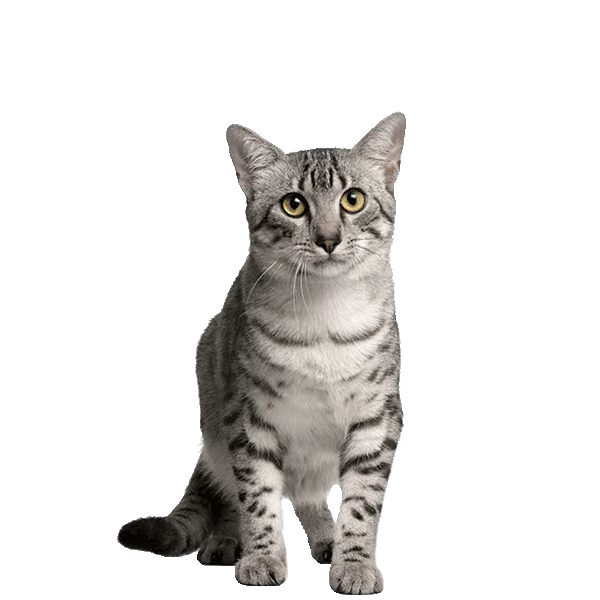
Kanaani
The Kanaani is an active, independent breed developed in Israel for its wild spotted appearance and athletic, curious nature.
- Size
- Medium
- Lifespan
- 12–15 years
- Origin
- Israel
- Temperament
- Active
- Standard colors
- Brown, Chocolate, and Cinnamon
Characteristics
Coat and grooming
How the Kanaani coat is built, and what that means when you groom it.
- Coat layers
- Single coat
- Coat texture
- Smooth
- Coat length
- Short
- Shedding
- Moderate shedding
Kanaani colors and patterns
What each club's breed standard says about every Kanaani color and pattern. Point at a ruling to see the club's own wording.
Breed standards describe the Kanaani in Brown, Chocolate, and Cinnamon. Standard patterns: Spotted tabby and Marbled.
%22%3E%3Cpath%20d%3D%22M20%2021Q34%2018.8%2048%2022%22%20fill%3D%22none%22%20stroke%3D%22%231C1C1C%22%20stroke-width%3D%222.2%22%20stroke-linecap%3D%22round%22%20stroke-linejoin%3D%22round%22%2F%3E%3Cellipse%20cx%3D%2223.8%22%20cy%3D%2226%22%20rx%3D%221.8%22%20ry%3D%221.2%22%20fill%3D%22%231C1C1C%22%2F%3E%3Cellipse%20cx%3D%2229%22%20cy%3D%2226%22%20rx%3D%221.8%22%20ry%3D%221.2%22%20fill%3D%22%231C1C1C%22%2F%3E%3Cellipse%20cx%3D%2233.8%22%20cy%3D%2226%22%20rx%3D%221.8%22%20ry%3D%221.2%22%20fill%3D%22%231C1C1C%22%2F%3E%3Cellipse%20cx%3D%2239%22%20cy%3D%2226%22%20rx%3D%221.8%22%20ry%3D%221.2%22%20fill%3D%22%231C1C1C%22%2F%3E%3Cellipse%20cx%3D%2243.6%22%20cy%3D%2226%22%20rx%3D%221.8%22%20ry%3D%221.2%22%20fill%3D%22%231C1C1C%22%2F%3E%3Cellipse%20cx%3D%2225.8%22%20cy%3D%2231.5%22%20rx%3D%221.8%22%20ry%3D%221.2%22%20fill%3D%22%231C1C1C%22%2F%3E%3Cellipse%20cx%3D%2231%22%20cy%3D%2231.5%22%20rx%3D%221.8%22%20ry%3D%221.2%22%20fill%3D%22%231C1C1C%22%2F%3E%3Cellipse%20cx%3D%2235.6%22%20cy%3D%2231.5%22%20rx%3D%221.8%22%20ry%3D%221.2%22%20fill%3D%22%231C1C1C%22%2F%3E%3Cellipse%20cx%3D%2240.7%22%20cy%3D%2231.5%22%20rx%3D%221.8%22%20ry%3D%221.2%22%20fill%3D%22%231C1C1C%22%2F%3E%3Cellipse%20cx%3D%2246.3%22%20cy%3D%2231.5%22%20rx%3D%221.8%22%20ry%3D%221.2%22%20fill%3D%22%231C1C1C%22%2F%3E%3Cellipse%20cx%3D%2222.1%22%20cy%3D%2236%22%20rx%3D%221.8%22%20ry%3D%221.2%22%20fill%3D%22%231C1C1C%22%2F%3E%3Cellipse%20cx%3D%2228.6%22%20cy%3D%2236%22%20rx%3D%221.8%22%20ry%3D%221.2%22%20fill%3D%22%231C1C1C%22%2F%3E%3Cellipse%20cx%3D%2233.7%22%20cy%3D%2236%22%20rx%3D%221.8%22%20ry%3D%221.2%22%20fill%3D%22%231C1C1C%22%2F%3E%3Cellipse%20cx%3D%2239.5%22%20cy%3D%2236%22%20rx%3D%221.8%22%20ry%3D%221.2%22%20fill%3D%22%231C1C1C%22%2F%3E%3Cpath%20d%3D%22M15%2044H50M15%2048H50%22%20fill%3D%22none%22%20stroke%3D%22%231C1C1C%22%20stroke-width%3D%221.8%22%20stroke-linecap%3D%22round%22%20stroke-linejoin%3D%22round%22%2F%3E%3Cpath%20d%3D%22M50%2022H62M51%2017H62M52%2012H63%22%20fill%3D%22none%22%20stroke%3D%22%231C1C1C%22%20stroke-width%3D%221.8%22%20stroke-linecap%3D%22round%22%20stroke-linejoin%3D%22round%22%2F%3E%3Ccircle%20cx%3D%2259.8%22%20cy%3D%227.8%22%20r%3D%222%22%20fill%3D%22%231C1C1C%22%2F%3E%3Cpath%20d%3D%22M12.6%2015.5l.6%204.2M15%2015.5l-.2%204.2M9%2025.2l4.6%201M9.6%2027.4l4%20.2%22%20fill%3D%22none%22%20stroke%3D%22%231C1C1C%22%20stroke-width%3D%221.1%22%20stroke-linecap%3D%22round%22%20stroke-linejoin%3D%22round%22%2F%3E%3C%2Fg%3E%3Cuse%20href%3D%22%23s%22%20fill%3D%22none%22%20stroke%3D%22%233B2A20%22%20stroke-opacity%3D%220.6%22%20stroke-width%3D%221%22%20stroke-linejoin%3D%22round%22%2F%3E%3Cpath%20d%3D%22M3.4%2022.3L5.4%2022.5L4.3%2024Z%22%20fill%3D%22%23E8A0B4%22%2F%3E%3Ccircle%20cx%3D%229.6%22%20cy%3D%2221.2%22%20r%3D%221.1%22%20fill%3D%22%231C1C1C%22%2F%3E%3C%2Fsvg%3E)
%22%3E%3Cpath%20d%3D%22M40.1%2024.3C39.5%2025%2037.9%2025.5%2036.3%2025.9C34.8%2026.4%2032.6%2027%2030.9%2026.9C29.2%2026.7%2027.1%2025.7%2026.3%2025C25.4%2024.4%2025.9%2023.6%2026%2023C26%2022.3%2025.4%2021.1%2026.7%2020.9C27.9%2020.6%2031.4%2021.2%2033.6%2021.4C35.8%2021.6%2038.8%2021.3%2039.9%2021.8C41%2022.3%2040.7%2023.7%2040.1%2024.3Z%22%20fill%3D%22%23847865%22%20fill-opacity%3D%220.45%22%20stroke%3D%22%23847865%22%20stroke-width%3D%221.5%22%2F%3E%3Cpath%20d%3D%22M28.3%2033.7C28.3%2034.7%2028.3%2035.8%2027.7%2036.3C27.1%2036.9%2026%2036.6%2024.8%2036.9C23.6%2037.2%2021.4%2038.5%2020.5%2038.2C19.6%2037.8%2019.6%2035.6%2019.3%2034.9C19.1%2034.1%2018.2%2034.1%2018.8%2033.5C19.4%2032.9%2021.2%2031.7%2022.7%2031.3C24.2%2030.8%2026.9%2030.5%2027.8%2030.9C28.8%2031.3%2028.3%2032.8%2028.3%2033.7Z%22%20fill%3D%22%23847865%22%20fill-opacity%3D%220.45%22%20stroke%3D%22%23847865%22%20stroke-width%3D%221.5%22%2F%3E%3Cpath%20d%3D%22M26.8%2024.7C26.4%2025.4%2027.6%2026.5%2026.2%2027C24.7%2027.6%2019.7%2028%2018.1%2027.8C16.5%2027.7%2017.5%2026.8%2016.8%2026.2C16.1%2025.6%2013.6%2024.7%2013.8%2024C14%2023.3%2016.6%2022.5%2017.9%2022.2C19.2%2021.9%2019.9%2021.9%2021.6%2022C23.3%2022.2%2027.5%2022.7%2028.3%2023.2C29.2%2023.6%2027.1%2024.1%2026.8%2024.7Z%22%20fill%3D%22%23847865%22%20fill-opacity%3D%220.45%22%20stroke%3D%22%23847865%22%20stroke-width%3D%221.5%22%2F%3E%3Cpath%20d%3D%22M55.3%2027.5C54.8%2028.1%2051.9%2029.4%2050.3%2029.8C48.7%2030.2%2047.1%2029.9%2045.6%2029.8C44.1%2029.6%2042.2%2029.6%2041.3%2029.1C40.4%2028.6%2040.2%2027.7%2040.2%2026.8C40.2%2026%2039.8%2024.2%2041.4%2023.8C43%2023.3%2047.9%2023.6%2049.9%2023.9C52%2024.3%2052.6%2025.4%2053.5%2026C54.4%2026.6%2055.8%2026.8%2055.3%2027.5Z%22%20fill%3D%22%23847865%22%20fill-opacity%3D%220.45%22%20stroke%3D%22%23847865%22%20stroke-width%3D%221.5%22%2F%3E%3Cpath%20d%3D%22M44.6%2033.8C45.2%2034.4%2043.7%2035.7%2042.6%2036.5C41.5%2037.2%2040%2037.9%2038.1%2038.2C36.3%2038.4%2033%2038.3%2031.3%2037.9C29.7%2037.5%2028.5%2036.6%2028.2%2035.7C27.8%2034.8%2027.9%2033.4%2029.1%2032.8C30.4%2032.2%2034%2032.1%2035.7%2032.2C37.4%2032.2%2038%2032.6%2039.5%2032.9C40.9%2033.2%2044.1%2033.2%2044.6%2033.8Z%22%20fill%3D%22%23847865%22%20fill-opacity%3D%220.45%22%20stroke%3D%22%23847865%22%20stroke-width%3D%221.5%22%2F%3E%3Cpath%20d%3D%22M53.2%2038.8C53.2%2039.6%2051.4%2041.3%2050.2%2041.9C49%2042.4%2047.4%2042%2045.8%2042C44.1%2042%2041.2%2042.2%2040.3%2042C39.3%2041.7%2040.3%2040.9%2040%2040.3C39.7%2039.7%2037.9%2038.8%2038.7%2038.3C39.5%2037.7%2042.9%2037.1%2044.8%2036.9C46.7%2036.8%2048.7%2037%2050.1%2037.3C51.5%2037.7%2053.1%2038.1%2053.2%2038.8Z%22%20fill%3D%22%23847865%22%20fill-opacity%3D%220.45%22%20stroke%3D%22%23847865%22%20stroke-width%3D%221.5%22%2F%3E%3Cpath%20d%3D%22M15%2044H50M15%2048H50%22%20fill%3D%22none%22%20stroke%3D%22%23847865%22%20stroke-width%3D%221.6%22%20stroke-linecap%3D%22round%22%20stroke-linejoin%3D%22round%22%2F%3E%3Cpath%20d%3D%22M50%2022H62M51%2017H62M52%2012H63%22%20fill%3D%22none%22%20stroke%3D%22%23847865%22%20stroke-width%3D%221.6%22%20stroke-linecap%3D%22round%22%20stroke-linejoin%3D%22round%22%2F%3E%3C%2Fg%3E%3Cuse%20href%3D%22%23s%22%20fill%3D%22none%22%20stroke%3D%22%233B2A20%22%20stroke-opacity%3D%220.6%22%20stroke-width%3D%221%22%20stroke-linejoin%3D%22round%22%2F%3E%3Cpath%20d%3D%22M3.4%2022.3L5.4%2022.5L4.3%2024Z%22%20fill%3D%22%23E8A0B4%22%2F%3E%3Ccircle%20cx%3D%229.6%22%20cy%3D%2221.2%22%20r%3D%221.1%22%20fill%3D%22%231C1C1C%22%2F%3E%3C%2Fsvg%3E)
What the rulings mean
- Standard
- Described by the club's breed standard.
- Not recognized
- The club does not accept this color or pattern for the breed.
Color changes
How a Kanaani's colors can change over its life.
Brownchanges toCopal
Coat · With age · from 0 to 52 weeks
Sources
Each ruling comes from the club's published breed standard or color list.
About the Kanaani cat breed
The Kanaani is a medium-sized cat developed in Israel for a wild spotted coat and an athletic, independent temperament.
The Kanaani is a medium-sized domestic cat whose spotted coat recalls the wild cats of the Middle East. The breed was developed in Israel, and its name comes from the historical region of Canaan. Breeders wanted a cat that looked like a desert wildcat while keeping the manageable behavior of a house pet.
This is an active, curious animal. A Kanaani spends most of its waking hours exploring, climbing, and watching whatever goes on around it. It leans toward independence rather than clinginess, happy to keep itself busy yet quick to join in when something new shows up. Owners often describe the breed as intelligent and observant.
The coat is short and marked with spots, and the build is lean and athletic. The breed stays uncommon outside its country of origin, so in the Philippines it is rarely seen and availability is limited.
| Attribute | Detail |
|---|---|
| Origin | Israel |
| Size | Medium |
| Lifespan | 12 to 15 years |
| Role | Active companion cat |
| Good with | Older children and homes that can offer space and activity |
Who it suits
The Kanaani suits an owner who wants an interactive but self-reliant cat. It does well in a home with room to climb and explore, and it values company that respects its independence. Anyone looking for a quiet lap cat that sits still for long periods may find this breed too busy for their taste.
History and origin of the Kanaani
The Kanaani was developed in Israel from the 1990s to combine a wild spotted look with a domestic temperament.
The Kanaani is a relatively new breed. Development began in Israel during the 1990s under breeder Doris Pollatschek. The goal was a cat that looked like the wild cats native to the Middle East yet behaved as a domestic companion.
The breeding program drew on domestic shorthaired cats selected for a spotted pattern and a lean, wild type. The name Kanaani refers to the land of Canaan, the historical region that includes present-day Israel, tying the breed to the place where it was created.
The breed gained recognition from cat registries in Europe, and a written standard was set down to guide consistent type and pattern. Outside Europe and Israel the Kanaani stayed scarce, and its numbers held low compared with long-established breeds.
Today the Kanaani is still considered rare. Breeding stock is limited, and most catteries that work with it are based in or near its country of origin. In the Philippines, anyone interested in the breed should expect very few local sources and may need to work with TICA-registered lines from abroad.
Appearance of the Kanaani
The Kanaani is a lean, medium to large cat with a short spotted coat and an athletic build that suggests a desert wildcat.
The Kanaani has a long, athletic body on tall legs, giving it a poised and alert outline. The head is a modified wedge with large, upright ears and almond-shaped eyes. The overall impression is of a lean wild cat rather than a heavy or rounded house cat.
The defining feature is the spotted coat. Spots spread across a ticked background, and the pattern is meant to look natural rather than uniform. The tail is moderately long and usually ends in a darker tip.
| Trait | Description |
|---|---|
| Height | Roughly 25 to 30 cm at the shoulder |
| Weight | About 4 to 6 kg |
| Coat | Short, fine, lying close to the body |
| Colors | Spotted patterns on a ticked ground, often warm sandy or gray tones |
| Eyes | Almond-shaped, typically green |
Coat and colors
The coat is short and sits close to the skin, which keeps grooming simple. Accepted colors center on spotted tabby patterns in sandy, fawn, and gray shades, with the spots showing clearly against a ticked background. A faint pattern on the legs and a darker tail tip are common. Because the breed is built around its pattern, the clarity and contrast of the spots are central to the standard.
Kanaani temperament and personality
The Kanaani is independent, curious, and active, friendly on its own terms and happiest with room to explore.
The Kanaani is an independent cat with a strong drive to explore. It investigates new objects, climbs to high vantage points, and keeps track of household activity. The breed is intelligent and learns routines quickly, which can make it good at opening cabinets or finding hidden spaces.
With family, the Kanaani is affectionate but on its own schedule. It often prefers to sit near people rather than on them, and it chooses when to seek attention. With strangers it tends to be cautious at first and warms up once it has read the situation.
With other pets, a Kanaani can coexist well when introductions are gradual, though its high energy and territorial streak mean it does better with confident animals than with timid ones. Its active nature also means it benefits from a companion or plenty of stimulation when left alone.
| Trait | Rating |
|---|---|
| Affection | 3 |
| Energy | 5 |
| Trainability | 4 |
| Vocalness | 2 |
| Shedding | 2 |
Caring for a Kanaani
The Kanaani needs little grooming but plenty of exercise and mental stimulation to stay content.
Grooming
- Brush the short coat once a week to remove loose hair
- Check ears weekly and clean gently if needed
- Trim claws every few weeks
- Brush teeth regularly to support dental health
Exercise
- Provide daily active play with chase and pounce toys
- Offer tall climbing structures and shelves
- Rotate puzzle feeders and foraging toys to keep the mind busy
- Allow safe outdoor access or a secure enclosure where possible
Environment
The Kanaani does best in a home with vertical space and places to perch and hide. A cat that cannot climb or explore may grow bored and restless. Window views, secure enclosures, and a steady routine all help this active breed settle. In the Philippine climate, shaded cool spots and constant fresh water matter through the hot, humid months.
Kanaani feeding and nutrition
The Kanaani needs a complete cat diet built around animal protein, portioned to its activity level to avoid weight gain.
The Kanaani is an obligate carnivore like all cats, so its diet should center on animal protein. A complete and balanced commercial cat food, wet or dry, meets its core needs. Active individuals burn a fair amount of energy, but portions still need to match the cat's weight and activity to prevent excess gain.
| Life stage | Amount per day | Meals |
|---|---|---|
| Kitten (2 to 12 months) | Follow food label, fed to appetite | 3 to 4 |
| Adult (1 to 7 years) | About 50 to 70 g dry or equivalent wet | 2 |
| Senior (7+ years) | Adjusted to activity and body condition | 2 |
Treats and supplements
Keep treats to a small share of daily calories, no more than about ten percent. A cat on a complete diet usually needs no extra supplements. Fresh water should be available at all times, and a water fountain can encourage active cats to drink more, which helps in the Philippine heat.
Kanaani health and lifespan
The Kanaani is generally a healthy breed with a typical lifespan of 12 to 15 years and no widely documented breed-specific disorders.
The Kanaani is a robust breed with no large catalog of inherited problems on record, partly because it is young and built from domestic shorthaired stock. The typical lifespan is 12 to 15 years with good care. As with any cat, the conditions below are general feline concerns to watch for rather than disorders unique to the breed.
| Condition | Signs | Note |
|---|---|---|
| Dental disease | Bad breath, drooling, reduced eating | Common in all cats; regular cleaning helps |
| Obesity | Weight gain, low activity | Manage portions in an active but indoor cat |
| Urinary tract issues | Straining, frequent or bloody urination | Seek prompt veterinary care |
| Parasites | Itching, weight loss, digestive upset | Routine prevention recommended |
Preventive care
- Annual veterinary check, more often for senior cats
- Keep core vaccinations up to date
- Maintain flea, tick, and worm control
- Monitor weight and body condition
- Provide regular dental care
Training a Kanaani
The Kanaani is intelligent and responsive to reward-based training, which channels its energy and curiosity into useful behavior.
The Kanaani is quick to learn and responds well to training once it sees a reason to cooperate. Its intelligence and food motivation make it a good candidate for clicker training, leash walking, and trick work. Because the breed is independent, training works best as short, positive sessions rather than long drills.
Basics
- Establish reliable litter box use early with a clean, accessible tray
- Use a clicker or marker word paired with a small food reward
- Teach the cat to come to its name with consistent rewards
- Redirect climbing and scratching to approved posts and shelves
- Build up to leash and harness work gradually if outdoor access is a goal
Kanaani breeding and kittens
The Kanaani reaches maturity within the first year, carries a litter for about nine weeks, and produces an average of four to five kittens.
The Kanaani reaches sexual maturity within the first year, though responsible breeders wait until the cat is physically and behaviorally mature before mating. Gestation lasts roughly 63 to 67 days, similar to other domestic cats. Litters commonly contain four to five kittens.
Queens raise their young in the usual feline pattern: kittens nurse for several weeks, open their eyes around day ten, and begin weaning by four to five weeks. Early handling and socialization help kittens grow into the confident adults the breed standard favors. Because the Kanaani is rare, breeding programs work with a small gene pool, so careful selection and outcrossing where permitted are part of keeping the breed healthy.
| Metric | Value |
|---|---|
| Sexual maturity | Within the first year |
| Gestation | About 63 to 67 days |
| Average litter size | 4 to 5 kittens |
| Weaning age | 4 to 5 weeks |
| Eyes open | About 10 days |
Registering a Kanaani in the Philippines, chip included
No law licenses cats here, so your Kanaani's only paper trail is the one you create: free for life with United Pet Club.
Kanaani registration and microchip registration in the Philippines
The profile takes five minutes and zero pesos: name, markings, photo, contact details, save. From then on any vet or shelter scan of your Kanaani has somewhere to land. Cat registration works chip or no chip, condo cat or free-roamer.
Fifteen digits under her skin mean nothing until a registry says whose Kanaani she is. Say it free with United Pet Club: every chip brand accepted, every update free, the record live day and night, here and abroad. Microchip registration plus a free account, and she is covered.
How do I register my Kanaani in the Philippines?
Sign up for a free United Pet Club account, add your Kanaani's name, markings, and a photo, and save. The profile is free for life, no microchip required, and you can add the chip number after the vet visit.
How do I register my Kanaani's microchip?
Add the 15-digit number from the clinic's paperwork to your free account along with your current mobile number. The lifetime plan never charges for the registration or the updates, whatever the chip brand.
Do cats need to be registered in the Philippines?
No law requires it; RA 9482 covers dogs. That is exactly why a Kanaani's record matters: unless you create one, a found cat has no trail at all. United Pet Club keeps that trail free for life.
What does it cost to register a Kanaani?
Zero pesos. Profile, microchip registration, and unlimited updates are all free on the lifetime plan, with no renewal ever.
Frequently asked questions about the Kanaani
Common questions about the Kanaani cover its size, temperament, care needs, lifespan, suitability, and availability.
How big does a Kanaani cat get?
The Kanaani is a medium-sized cat, usually about 4 to 6 kg with a lean, long-legged build that can make it look larger than it weighs.
What is the Kanaani's temperament like?
It is independent, curious, intelligent, and active. The breed is friendly on its own terms and prefers exploring and climbing to long periods on a lap.
Is the Kanaani hard to care for?
Grooming is easy thanks to the short coat, but the breed needs plenty of exercise and mental stimulation. The main effort is keeping an active, intelligent cat occupied.
How long does a Kanaani cat live?
With good care, a Kanaani typically lives 12 to 15 years.
Is the Kanaani a good family cat?
It suits active households with older children and space to climb and explore. It is less ideal for owners who want a calm, constant lap cat.
Are Kanaani cats easy to find in the Philippines?
No. The breed is rare and was developed in Israel, so local availability is very limited. Prospective owners often join waiting lists or look to TICA-registered lines and local cat clubs for guidance.