
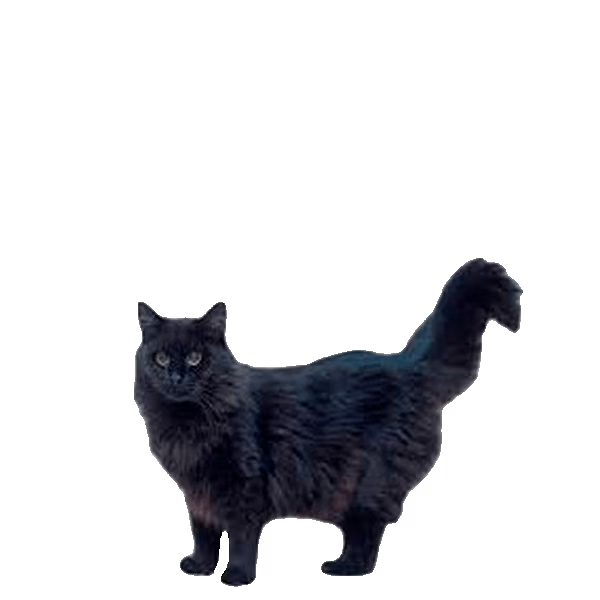
Chantilly-Tiffany
The Chantilly-Tiffany is a devoted, affectionate breed beloved for its silky semi-long coat and gentle, people-loving nature.
- Size
- Medium
- Lifespan
- 12–16 years
- Origin
- United States
- Temperament
- Affectionate
Characteristics
Coat and grooming
How the Chantilly-Tiffany coat is built, and what that means when you groom it.
- Coat layers
- Single coat
- Coat texture
- Silky
- Coat length
- Long
- Shedding
- Low shedding
Grooming guidance
Caution: A Chantilly-Tiffany coat mats easily.
Fine or long hair tangles at the base of the coat, out of sight, where the mats tighten and pull on the skin. Brushing has to reach right down to the roots in sections, not just skim the surface.
Chantilly-Tiffany colors and patterns
What each club's breed standard says about every Chantilly-Tiffany color and pattern. Point at a ruling to see the club's own wording.

%22%3E%3Cpath%20d%3D%22M20%2021Q34%2018.8%2048%2022%22%20fill%3D%22none%22%20stroke%3D%22%231C1C1C%22%20stroke-width%3D%222.2%22%20stroke-linecap%3D%22round%22%20stroke-linejoin%3D%22round%22%2F%3E%3Cpath%20d%3D%22M25%2021.5q3%206%20-.5%2016M31.5%2020.8q3%207%20-.5%2016.6M38%2021q3%207%20-.5%2016.6M44.5%2022q2.6%206%20-.5%2014%22%20fill%3D%22none%22%20stroke%3D%22%231C1C1C%22%20stroke-width%3D%222.6%22%20stroke-linecap%3D%22round%22%20stroke-linejoin%3D%22round%22%2F%3E%3Cpath%20d%3D%22M15%2044H50M15%2048H50%22%20fill%3D%22none%22%20stroke%3D%22%231C1C1C%22%20stroke-width%3D%221.8%22%20stroke-linecap%3D%22round%22%20stroke-linejoin%3D%22round%22%2F%3E%3Cpath%20d%3D%22M50%2022H62M51%2017H62M52%2012H63%22%20fill%3D%22none%22%20stroke%3D%22%231C1C1C%22%20stroke-width%3D%221.8%22%20stroke-linecap%3D%22round%22%20stroke-linejoin%3D%22round%22%2F%3E%3Ccircle%20cx%3D%2259.8%22%20cy%3D%227.8%22%20r%3D%222%22%20fill%3D%22%231C1C1C%22%2F%3E%3Cpath%20d%3D%22M12.6%2015.5l.6%204.2M15%2015.5l-.2%204.2M9%2025.2l4.6%201M9.6%2027.4l4%20.2%22%20fill%3D%22none%22%20stroke%3D%22%231C1C1C%22%20stroke-width%3D%221.1%22%20stroke-linecap%3D%22round%22%20stroke-linejoin%3D%22round%22%2F%3E%3C%2Fg%3E%3Cuse%20href%3D%22%23s%22%20fill%3D%22none%22%20stroke%3D%22%233B2A20%22%20stroke-opacity%3D%220.6%22%20stroke-width%3D%221%22%20stroke-linejoin%3D%22round%22%2F%3E%3Cpath%20d%3D%22M3.4%2022.3L5.4%2022.5L4.3%2024Z%22%20fill%3D%22%23E8A0B4%22%2F%3E%3Ccircle%20cx%3D%229.6%22%20cy%3D%2221.2%22%20r%3D%221.1%22%20fill%3D%22%231C1C1C%22%2F%3E%3C%2Fsvg%3E)
What the rulings mean
- Standard
- Described by the club's breed standard.
- Fault
- Named by the club's breed standard as a fault: the animal can be shown but is penalized.
- Disqualifying
- The club's breed standard disqualifies an animal of this color or pattern.
Sources
Each ruling comes from the club's published breed standard or color list.
About the Chantilly-Tiffany
The Chantilly-Tiffany is a medium, semi-longhaired cat from the United States, known for a silky coat and a gentle, people-oriented nature.
The Chantilly-Tiffany is a medium-sized domestic cat with a silky semi-long coat and a calm, devoted nature. It forms tight bonds with the people it lives with and will trail them from one room to the next. Owners often call the breed gentle and low-key, and it speaks in a soft chirp instead of a loud meow.
Males usually outweigh females, and most cats settle into their adult size only during the second year. The coat lies flat against the body without much undercoat, so the cat keeps a sleek shape and skips the dense fluff found in some other longhaired breeds.
The breed stays rare. It draws owners who want a quiet companion that keeps up with family life. Those who travel a lot or stay away from home for long hours may find the Chantilly-Tiffany a poor match, since the cat prefers steady company.
| Attribute | Detail |
|---|---|
| Origin | United States |
| Size | Medium |
| Lifespan | 12 to 16 years |
| Group/role | Companion cat |
| Good with | Families, attentive single owners, calm households |
Who it suits
This breed works for households that can give regular attention and a stable routine. It settles in with adults, considerate children, and other calm pets. Anyone who wants an independent cat that ignores them for most of the day may prefer a different breed, since the Chantilly-Tiffany seeks interaction throughout the day.
History and origin
The Chantilly-Tiffany developed in the United States from semi-longhaired cats and has stayed a rare breed throughout its history.
The Chantilly-Tiffany traces back to the United States, where breeders worked with semi-longhaired cats that produced kittens with a silky coat and a gentle disposition. The early animals were linked to a warm chocolate coat color, and that shade turned into one of the features people connected with the breed.
The breed carried more than one name over the years, which blurred its identity and its parentage. The combined name Chantilly-Tiffany came into use to clear up part of the confusion and to separate the breed from other cats that shared a similar label.
Numbers stayed low across the decades. With only a few breeders involved and a limited gene pool, the population never grew large, and the breed counts as uncommon even now.
Because the early records are thin and sometimes contradictory, some details of the breed's exact ancestry are not firmly settled. What runs through every account is the focus on a semi-long silky coat and a quiet, people-oriented temperament, the two traits breeders set out to keep. In the Philippines the breed is very rarely seen, and interested owners may need to reach out to TICA-registered breeders overseas or check with local Philippine cat clubs.
Appearance and breed standard
The Chantilly-Tiffany is a medium cat with a silky semi-long coat, a moderate build, and expressive eyes.
The Chantilly-Tiffany has a balanced, medium build that is neither slim nor heavy. The body runs moderately long on legs of medium length, capped by a plumed tail with longer fur. The overall impression is of a smooth, well-proportioned cat rather than an extreme type.
The coat is what people notice first. It is semi-long and silky, lying close to the body with little undercoat. A ruff may appear around the neck, while the tail and ear furnishings usually carry the longest hair.
| Trait | Description |
|---|---|
| Height | Roughly 23 to 30 cm at the shoulder |
| Weight | About 3 to 5.5 kg, males larger than females |
| Coat | Semi-long, silky, single coat with little undercoat |
| Colors | Chocolate is traditional; other shades occur |
| Eyes | Rounded, gold to amber, expressive |
Coat and colors
The traditional color is a warm chocolate, tied closely to the breed's early history. Other colors and patterns show up too. Being a single, silky coat, it asks for less upkeep than a dense double coat, though regular grooming keeps it smooth and tangle-free, which helps in a warm, humid climate. Eye color usually sits between gold and amber and deepens as the cat matures.
Temperament and personality
The Chantilly-Tiffany is affectionate, gentle, and devoted, with a soft voice and a strong attachment to its people.
The Chantilly-Tiffany is a people-oriented cat that keeps close to its household. It hunts out laps, follows family members between rooms, and settles in beside quiet daily activities. Affection comes freely, and many owners describe the breed as devoted rather than aloof.
With strangers the cat tends to hold back at first and warms up once it feels settled. It is gentle with children who handle it calmly and generally tolerant of other cats and friendly dogs when introductions go slowly. Its voice is soft, often a chirp or trill, so the breed gets its point across without being loud.
This attachment has a practical side. A Chantilly-Tiffany left alone for long hours can grow lonely, so the breed suits homes where someone is around for much of the day or where a second compatible pet gives it company.
| Trait | Rating |
|---|---|
| Affection | 5 |
| Energy | 3 |
| Trainability | 3 |
| Vocalness | 3 |
| Shedding | 3 |
Care and grooming
The Chantilly-Tiffany needs regular coat brushing, moderate play, and a stable indoor home with steady company.
Grooming
- Brush the coat two to three times a week to keep mats away and hold it smooth
- Check behind the ears and around the ruff, where tangles start most often
- Trim the nails every few weeks
- Brush the teeth regularly and set up dental checks
- Wipe the eyes and ears gently as needed
Exercise
- Offer short daily play with wand toys or chase toys
- Provide a scratching post and a few climbing spots
- Use puzzle feeders to keep the cat busy between play
- Match activity to the breed's moderate energy rather than expecting constant motion
Environment
The Chantilly-Tiffany takes well to indoor life and a calm, predictable home. It values the company of its people and settles nicely when the routine holds steady. Set out a quiet resting spot, easy access to a clean litter box, and perches near windows for watching the outdoors. In the local heat, keep the space well ventilated or cooled.
Nutrition and feeding
The Chantilly-Tiffany does well on a complete cat food matched to its life stage, fed in measured portions to hold a healthy weight.
Feed a complete and balanced cat food suited to the cat's age and activity level. As an obligate carnivore, the Chantilly-Tiffany needs a diet built around animal protein. Fresh water should always be on hand, and many cats do better with some wet food to support hydration, which matters in a warm climate.
| Life stage | Amount per day | Meals |
|---|---|---|
| Kitten | Follow product label for growth; free-feeding common | 3 to 4 |
| Adult | About 50 to 70 g dry, or per label for body weight | 2 |
| Senior | Adjusted to activity and weight; vet-guided | 2 |
Treats and supplements
Keep treats to a small share of daily calories so the cat holds a healthy weight. Most cats on a complete diet need no extra supplements. Talk over any supplement, joint or coat products included, with a veterinarian before adding it, and bring in diet changes gradually to avoid stomach upset.
Health and lifespan
The Chantilly-Tiffany generally lives 12 to 16 years and benefits from routine veterinary care, dental attention, and weight management.
The Chantilly-Tiffany is generally a healthy breed with a typical lifespan of 12 to 16 years. As with any cat, an individual's health rests on genetics, diet, weight, and regular veterinary care. Because the breed is rare and its gene pool limited, sourcing kittens from a careful breeder counts for a lot.
| Condition | Signs | Note |
|---|---|---|
| Dental disease | Bad breath, drooling, reduced eating | Common in cats; routine dental care helps |
| Obesity | Weight gain, low activity | Manage with portions and play |
| Hairball or coat issues | Coughing up hair, matting | Regular brushing reduces ingested hair |
Preventive care
- Set up annual veterinary check-ups, more often for seniors
- Keep vaccinations and parasite control up to date
- Maintain dental hygiene with brushing and professional cleaning
- Monitor weight and adjust food as needed
- Keep grooming consistent to limit hairballs and matting
Training and enrichment
The Chantilly-Tiffany responds to gentle, reward-based training and picks up basic routines, simple cues, and litter habits readily.
The Chantilly-Tiffany is attentive and bonded to its people, and that leaves it open to gentle training. It learns household routines, comes when called, and can pick up simple cues with patience. Short, calm sessions work better than long ones, and the breed responds poorly to harsh handling.
Basics
- Set up the litter box early and keep it clean to encourage good habits
- Reward wanted behavior right away with a treat or praise
- Redirect scratching to a post rather than punishing the cat
- Introduce a carrier slowly so vet trips stay low-stress
- Keep sessions short and end on a success
Breeding
The Chantilly-Tiffany is a rare breed; responsible breeding focuses on health, temperament, and managing a limited gene pool.
Cats generally reach sexual maturity within their first year, though responsible breeders wait until a cat is fully grown and health-screened before mating. Queens carry a litter for roughly 63 to 67 days, and litters run small, often just a few kittens.
Kittens are born helpless, with eyes closed, and depend on the mother through the first weeks. Weaning begins from around four weeks, and the move to solid food happens gradually. Early gentle handling supports the breed's people-oriented nature.
Since the Chantilly-Tiffany is rare with a limited gene pool, careful breeding matters. Ethical breeders screen for health, steer clear of close inbreeding, and put first the gentle temperament that defines the breed. Anyone after a kitten should expect waiting lists, given how few are bred.
| Metric | Value |
|---|---|
| Sexual maturity | Around 6 to 12 months |
| Gestation | About 63 to 67 days |
| Litter size | Typically 2 to 4 kittens |
| Weaning | From around 4 weeks |
| Availability | Rare; limited breeders |
Registering a Chantilly-Tiffany in the Philippines, chip included
No law licenses cats here, so your Chantilly-Tiffany's only paper trail is the one you create: free for life with United Pet Club.
Chantilly-Tiffany registration and microchip registration in the Philippines
No Philippine law asks you to license a cat, so when a Chantilly-Tiffany slips out during a brownout there is nothing on paper pointing back to you unless you put it there yourself. A free United Pet Club profile is that paper trail: your contact details, tied to your cat, readable the moment someone looks her up. Registering your cat takes a few minutes and stays free for her whole life.
A microchip makes your Chantilly-Tiffany much harder to lose track of, but only after the number is registered, and the clinic that implants it does not do that part for you. Register the microchip free on the lifetime plan: any brand works, updating after you move or change SIM costs nothing, and the record can be searched from anywhere. Create your free account and be done with both.
How do I register my Chantilly-Tiffany in the Philippines?
Sign up for a free United Pet Club account, add your Chantilly-Tiffany's name, markings, and a photo, and save. The profile is free for life, no microchip required, and you can add the chip number after the vet visit.
How do I register my Chantilly-Tiffany's microchip?
Add the 15-digit number from the clinic's paperwork to your free account along with your current mobile number. The lifetime plan never charges for the registration or the updates, whatever the chip brand.
Do cats need to be registered in the Philippines?
No law requires it; RA 9482 covers dogs. That is exactly why a Chantilly-Tiffany's record matters: unless you create one, a found cat has no trail at all. United Pet Club keeps that trail free for life.
What does it cost to register a Chantilly-Tiffany?
Zero pesos. Profile, microchip registration, and unlimited updates are all free on the lifetime plan, with no renewal ever.
Frequently asked questions
Common questions about the Chantilly-Tiffany cover its size, temperament, care needs, lifespan, suitability, and availability.
How big does a Chantilly-Tiffany get?
It is a medium-sized cat. Most weigh about 3 to 5.5 kg, with males larger than females, and they reach full size by the second year.
What is the Chantilly-Tiffany's temperament like?
It is affectionate, gentle, and devoted. The breed bonds closely with its people, stays involved in family life, and has a soft, chirping voice.
Is the Chantilly-Tiffany hard to care for?
Care is moderate. The silky coat needs brushing two to three times a week, and the cat needs regular play and company. It is not a high-maintenance breed, but it does not do well left alone for long hours.
How long do Chantilly-Tiffany cats live?
They typically live 12 to 16 years with a good diet, weight management, and routine veterinary care.
Is the Chantilly-Tiffany good for families?
Yes, for households that offer steady attention. It is gentle with considerate children and tolerant of calm pets when introductions are gradual.
Are Chantilly-Tiffany cats easy to find in the Philippines?
No. The breed is rare with few breeders, so kittens can be hard to find. Interested owners may need to reach out to TICA-registered breeders abroad or check with local Philippine cat clubs, and waiting lists are common.