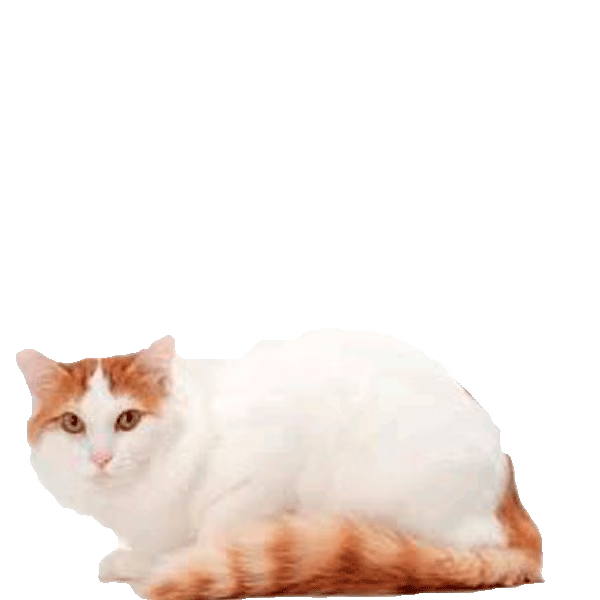
The Turkish Van is a powerful, water-loving breed known for its active, playful nature and famously affectionate devotion to family.
How the Turkish Van coat is built, and what that means when you groom it.
Caution: A Turkish Van coat mats easily.
Fine or long hair tangles at the base of the coat, out of sight, where the mats tighten and pull on the skin. Brushing has to reach right down to the roots in sections, not just skim the surface.
Information: A Turkish Van drops its undercoat in heavy bursts.
The undercoat comes out in heavy bursts over a few weeks. An undercoat rake, or a bath followed by a proper blow-dry, clears it far faster than daily brushing. Clipping the coat down is not a shortcut for this.
The Turkish Van is a large, water-loving cat from the cold highlands of eastern Turkey, and one of the more rewarding breeds to keep in a Philippine household with the right setup.
The Turkish Van developed in the semi-arid highlands around Lake Van in eastern Anatolia, at elevations above 1,600 meters where winters are harsh and summers are dry. Manila sits at sea level in the tropical belt, averaging 28 degrees Celsius year-round with humidity regularly above 70 percent. That contrast is the first thing a Filipino cat owner should understand about this breed: it did not evolve for heat.
Despite its origins, the Turkish Van adapts to Philippine households when kept indoors with proper climate management. It is a large, muscular, semi-longhaired cat that matures slowly, often taking three to five years to reach full size. It is recognized by the Philippine Cat Club (PCC) and registered by international bodies including the Cat Fanciers Association (CFA), making it verifiable as a pedigree cat in the local show scene.
The breed is best known internationally for its fondness for water and its distinctive color pattern: a chalk-white body with colored markings only on the head and the tail. In the Philippines, where cat culture is warm and family-oriented, the Turkish Van fits naturally into households that treat pets as full members of the family.
| Attribute | Detail |
|---|---|
| Origin | Turkey (Lake Van region) |
| Size | Large, slow-maturing |
| Lifespan | 12 to 17 years |
| Coat color | White body with head and tail markings |
| Good with | Active families, older children, engaged owners |
The Turkish Van suits Filipino families who can provide air-conditioned indoor living, daily play, and consistent company. It thrives in family homes in the provinces with space and in high-rise condos in Makati or BGC as long as balconies are secured and the cat has climbing structures and cool areas to rest. It is a confident, affectionate cat that gets along with older children and adapts to the extended-family setup common in Filipino homes. It is not suited to people who are away all day without enrichment, or to households that cannot manage the heat challenge for a longhaired breed.
The Turkish Van originated in eastern Turkey and was formally recognized in the West in the mid-20th century, arriving in the Philippines through imports from the United States and Europe as local pedigree cat culture grew.
The Turkish Van takes its name from the Lake Van basin in eastern Turkey, a remote highland region where cats of this type lived for centuries alongside the local population. The extreme climate of the area, cold and snowy in winter and dry in summer, shaped the breed's coat and its physical constitution. Because the region was isolated, the type remained consistent without formal human-directed breeding.
Western documentation began in the 1950s when British visitors brought examples of the breed back from Turkey and began breeding them systematically in the United Kingdom. The breed was recognized in Britain first, and later by registries in the United States, including the Cat Fanciers Association. By the latter decades of the 20th century, breeders in North America had established breeding programs that helped expand the breed's presence outside Europe.
The Philippines' pedigree cat community grew significantly from the 1990s onward, driven partly by Filipinos returning from work or study abroad and by the influence of international cat shows in the region. The Turkish Van entered the Philippines primarily through imports from the United States and, to a lesser degree, Europe. Today the Philippine Cat Club (PCC) provides the main registry framework for pedigree cats in the country, including recognized foreign breeds. Turkish Vans remain uncommon here, which means buyers must typically work with breeders abroad or locate one of the small number of local breeders with active programs.
The Turkish Van is a large, white-bodied cat with colored markings on the head and tail, a soft semi-long coat, and a muscular, slow-developing physique.
The Turkish Van is one of the larger domestic cat breeds. Adults are long-bodied and muscular, with broad shoulders, a solid feel when held, and a full brush tail that distinguishes it immediately from shorthaired breeds. The head is a broad wedge shape with moderately large ears set wide apart. Eyes are large and expressive.
The coat is semi-long and has a cashmere-like softness. Unlike many longhaired breeds, the Turkish Van has no heavy woolly undercoat, which means it tends to lie flat, feels light, and is somewhat easier to manage than breeds with dense double coats. The full adult coat and complete color development take several years to appear, so a young Turkish Van may look leaner and less marked than a mature specimen.
| Feature | Standard |
|---|---|
| Height | Approximately 25 to 35 cm at the shoulder |
| Weight | Males 5 to 9 kg, females 3 to 6 kg |
| Coat | Semi-long, soft, no heavy undercoat |
| Body color | Chalk white |
| Eye color | Amber, blue, or odd-eyed (one of each) |
The Turkish Van's characteristic color pattern is called the Van pattern: the body is chalk white and color appears only on the head and the tail, typically with a small patch between the ears. The most common marking color is auburn (red), but registries also accept cream, black, blue, and tabby variations depending on the standard. The white areas should be clean and bright. In the Philippines, the auburn and white combination is the most widely recognized, though any acceptable pattern meets PCC show criteria when properly registered.
The Turkish Van is a high-energy, curious, and affectionate cat that bonds closely with its family, enjoys water, and stays playful well into adulthood.
The Turkish Van is an active, intelligent cat with a personality that stands out in a household. It attaches strongly to its people, often choosing one or two favorites, and expresses affection by following them from room to room and joining in daily activities rather than sitting quietly. It is not a lap cat in the traditional sense but is consistently present and engaged.
The breed is vocal and uses a range of sounds to communicate. Its interest in water is genuine: many Turkish Vans will investigate a dripping faucet, dip paws into bowls, and show interest in full baths or sinks. In a Philippine household where water is accessible in multiple forms, owners should expect some level of splashing as normal behavior.
The Turkish Van is confident with new people after a brief assessment period and can coexist with other pets when introductions are done gradually. Its energy level stays high into adulthood, which means daily engagement is not optional. In Filipino family settings where there are multiple people home through the day, this breed tends to thrive because there is always someone to interact with.
| Trait | Rating |
|---|---|
| Affection toward family | 4 |
| Energy and activity | 5 |
| Ease of training | 4 |
| Vocalness | 4 |
| Coat maintenance | 3 |
Turkish Van care in the Philippines centers on managing tropical heat for a longhaired breed, with consistent grooming, active play sessions, and a well-secured indoor environment.
The primary care challenge for a Turkish Van in the Philippines is heat and humidity. The breed evolved at high altitude in a dry, cold climate, and its semi-long coat, though not as dense as some longhaired breeds, retains heat in a way that requires active management in a tropical setting. Air conditioning during the hottest parts of the day, cool resting spots, and good air circulation are not optional comforts for this breed in Metro Manila or other low-elevation Philippine locations. Beyond temperature, the Turkish Van has the typical needs of a high-energy, intelligent cat: regular grooming, daily play, and a stimulating environment.
Indoor living is strongly recommended for Turkish Vans in the Philippines, both for safety and for temperature control. In high-rise condos, balcony netting is essential: this is an athletic cat that climbs and jumps to high points and can fall from an unsecured balcony. Air conditioning should be available during the hottest hours, and a cool tile floor or ceramic resting surface gives the cat somewhere to lower body temperature without relying entirely on AC. In larger family homes common in the provinces or in suburban areas around Manila, the breed adapts well to a multi-person household as long as one or more family members engage it daily. Keep toilet lids closed and supervise access to full sinks or baths, since the breed's interest in water is genuine and can lead to accidents.
The Turkish Van needs a protein-rich, complete cat food in measured portions matched to its large size and high activity level, with fresh water always available.
The Turkish Van is an obligate carnivore and needs a complete commercial cat food with animal protein as the main ingredient. The breed is large and active, so adults may need somewhat larger portions than an average-sized cat, but portions should still be measured against the product label and the individual cat's body condition. In the Philippines, quality wet and dry cat food from brands such as Royal Canin, Hills Science Diet, Purina Pro Plan, and local options available in major pet chains like Bow and Wow or The Pet Express provide suitable complete nutrition. Fresh water should always be accessible, and a running water fountain works especially well for this breed given its natural interest in moving water.
| Life stage | Daily amount (approximate) | Meals per day |
|---|---|---|
| Kitten (2 to 6 months) | Fed to appetite per label | 3 to 4 |
| Junior (6 to 12 months) | Per label for growth stage | 3 |
| Adult (1 to 7 years) | 60 to 90 g dry or wet equivalent | 2 |
| Senior (7 years and older) | Adjusted for weight and activity | 2 |
Limit treats to no more than 10 percent of daily caloric intake. A properly balanced commercial food covers all required nutrients, so supplements are only needed when a veterinarian recommends them for a specific reason such as joint support or coat health. Check body condition every few weeks: you should be able to feel the ribs without pressing hard, but they should not be visibly prominent. The breed's slow maturity means gradual weight gain can be easy to miss in a young cat that still appears to be developing.
The Turkish Van is a generally robust breed with a lifespan of 12 to 17 years, and regular veterinary care in the Philippines helps prevent or manage the conditions most likely to affect the breed.
The Turkish Van is considered a hardy breed with a lifespan of 12 to 17 years when kept healthy. Like all cats, individuals can develop heritable or age-related conditions, and routine checkups are the most reliable way to catch problems early. In the Philippines, feline veterinary services are available in Metro Manila, Cebu, and Davao through both private clinics and hospital-grade facilities. The Philippine Animal Welfare Act (Republic Act 8485 and its amendments) sets basic standards for animal care, and registered breeders are expected to follow Bureau of Animal Industry (BAI) guidelines for animal health certification.
| Condition | Signs to watch for | Management |
|---|---|---|
| Hypertrophic cardiomyopathy (HCM) | Lethargy, labored breathing, sudden weakness | Ask about cardiac screening of breeding cats; annual vet checkup |
| Dental disease | Bad breath, drooling, reduced appetite for hard food | Routine dental checkups and at-home cleaning where tolerated |
| Heat stress | Open-mouth breathing, drooling, lethargy in hot weather | Keep cool spaces available; fresh cool water at all times |
The Turkish Van is intelligent and reward-responsive, and can learn tricks, leash walking, and good household habits through consistent positive training.
The Turkish Van responds well to training because it is intelligent, curious, and motivated by interaction with its owner. It can learn name recognition, recall, simple tricks, and leash walking with a harness. Because the breed is highly active, training sessions also serve as mental exercise that reduces boredom-driven behavior. Sessions should be short, consistent, and always end on a positive note. In a Philippine household with multiple family members, it helps to agree on a single set of cues so the cat is not confused by different signals from different people.
For Turkish Van owners in Makati or BGC high-rise units, enrichment is essential because outdoor access is limited. A tall multi-level cat tree near a window, a window perch with a view of traffic or greenery, and a rotating selection of puzzle feeders keep an intelligent cat occupied between play sessions. Food puzzles are widely available in Philippine pet stores and can replace part of a meal to slow eating and add mental challenge.
Turkish Van breeding requires patience because the breed matures slowly, with queens producing litters of three to five kittens after a pregnancy of roughly nine weeks, and full development taking up to five years.
The Turkish Van is a slow-maturing breed. While cats can reach sexual maturity within the first year of life, responsible breeders wait until a cat is physically and behaviorally mature before breeding, typically not before 18 months for a female. Queens cycle seasonally, and pregnancy lasts approximately 63 to 67 days. Litters typically contain three to five kittens, though individual variation is normal.
Newborn kittens are blind and fully dependent. Eyes open within one to two weeks, and weaning begins around four weeks and completes by about eight weeks. Experienced breeders in the Philippines keep kittens with the mother until at least twelve to sixteen weeks to ensure they are fully weaned, litter trained, socialized, and started on a vaccination program before moving to new homes.
For those considering breeding in the Philippines, registering with the Philippine Cat Club (PCC) and following BAI regulations for animal movement and health certification is part of responsible practice. Health screening of breeding cats, particularly for cardiac conditions, should be completed and documented. Because Turkish Vans are rare locally, breeding stock may need to be imported, which requires BAI import permits and compliance with quarantine and health certificate requirements.
| Metric | Value |
|---|---|
| Minimum age to breed (female) | 18 months recommended |
| Gestation | 63 to 67 days |
| Typical litter size | 3 to 5 kittens |
| Eyes open | 1 to 2 weeks after birth |
| Weaning complete | Around 8 weeks |
| Full physical maturity | 3 to 5 years |
No law licenses cats here, so your Turkish Van's only paper trail is the one you create: free for life with United Pet Club.
A Turkish Van does not carry an ID; her record carries it for her. Set it up free: her name, her markings, a photo, and your mobile number, saved with United Pet Club for life. Register your cat now, while she is asleep on the sofa rather than out the window.
Fifteen digits under her skin mean nothing until a registry says whose Turkish Van she is. Say it free with United Pet Club: every chip brand accepted, every update free, the record live day and night, here and abroad. Microchip registration plus a free account, and she is covered.
Sign up for a free United Pet Club account, add your Turkish Van's name, markings, and a photo, and save. The profile is free for life, no microchip required, and you can add the chip number after the vet visit.
Add the 15-digit number from the clinic's paperwork to your free account along with your current mobile number. The lifetime plan never charges for the registration or the updates, whatever the chip brand.
No law requires it; RA 9482 covers dogs. That is exactly why a Turkish Van's record matters: unless you create one, a found cat has no trail at all. United Pet Club keeps that trail free for life.
Zero pesos. Profile, microchip registration, and unlimited updates are all free on the lifetime plan, with no renewal ever.
Answers to the questions Filipino cat owners most commonly ask about buying, importing, registering, feeding, and living with a Turkish Van in the Philippines.
You need to apply to the Bureau of Animal Industry (BAI) under the Department of Agriculture for an import permit before the cat travels. The process requires a health certificate issued by an accredited veterinarian in the country of origin, proof of current vaccinations including rabies, and a rabies titer test result in some cases. The BAI website lists current requirements, and processing time varies, so begin the application at least four to six weeks before the intended travel date. The cat will also go through inspection on arrival.
Yes. The Philippine Cat Club recognizes pedigree cats from international registries including the Cat Fanciers Association (CFA) and FIFE-affiliated bodies. To register an imported Turkish Van, you will need the original registration papers from the country of origin, proof of pedigree, and the cat's health documentation. Contact the PCC directly for the current registration process and fees, as these are updated periodically.
Because Turkish Vans are rare in the Philippines, prices vary widely depending on whether the kitten is locally bred or imported. Locally bred kittens from registered breeders, when available, typically range from 30,000 to 80,000 Philippine Peso depending on pedigree and show potential. Imported kittens or adults from established foreign breeders can cost significantly more when you factor in the purchase price in the country of origin, international shipping, veterinary health certificates, and BAI import costs.
Air conditioning during the hottest part of the day is the most effective measure, particularly from March through May when Manila temperatures regularly reach 35 to 38 degrees Celsius. Provide a cool tile or ceramic resting surface in addition to the cat's regular bed. Keep fresh, cool water available at all times, and consider a water fountain since Turkish Vans are naturally drawn to moving water. Avoid intense play during midday heat and schedule exercise sessions in the cooler morning or evening hours.
Turkish Vans are uncommon in the Philippines. The Philippine Cat Club (PCC) is the best starting point: its membership includes registered breeders and it can connect prospective buyers with reputable sources. Online cat communities on Facebook, including Philippine Cat Enthusiasts groups, sometimes have leads on available kittens or upcoming litters. Be cautious of sellers without pedigree papers or health documentation, as the rarity of the breed makes it a target for misrepresentation.
Most major international cat food brands are available through pet chains such as Bow and Wow, The Pet Express, Petplus, and online retailers including Lazada and Shopee. Royal Canin, Hills Science Diet, Purina Pro Plan, and Orijen are consistently stocked and provide complete nutrition suitable for a large, active breed like the Turkish Van. For kittens, choose a food formulated specifically for growth. Avoid generic or unbranded cat food, which may not meet the complete nutrition standards a Turkish Van requires.
Yes, with the right setup. The Turkish Van is adaptable to condo living as long as several conditions are met: the balcony must be fully netted or secured because this is an athletic cat that climbs to high points; air conditioning must be available since the breed does not tolerate sustained tropical heat; and the cat must have a tall cat tree, multiple play sessions per day, and regular owner interaction. A Turkish Van kept in a well-equipped condo with an engaged owner will do well. One left alone all day in a small, hot unit will struggle.
