The Welsh Springer Spaniel is an affectionate, loyal flushing spaniel with a striking red-and-white coat and a tireless work ethic.
How the Welsh Springer Spaniel coat is built, and what that means when you groom it.
Critical: A Welsh Springer Spaniel should not be shaved.
The undercoat keeps heat out as well as in, and the outer coat shields the skin from sun and insect bites. Clipping the whole coat off removes both. It often grows back patchy, soft or a different colour, and in some animals the guard hairs never return properly. Brush the undercoat out instead of cutting it off.
Caution: A Welsh Springer Spaniel coat mats easily.
Fine or long hair tangles at the base of the coat, out of sight, where the mats tighten and pull on the skin. Brushing has to reach right down to the roots in sections, not just skim the surface.
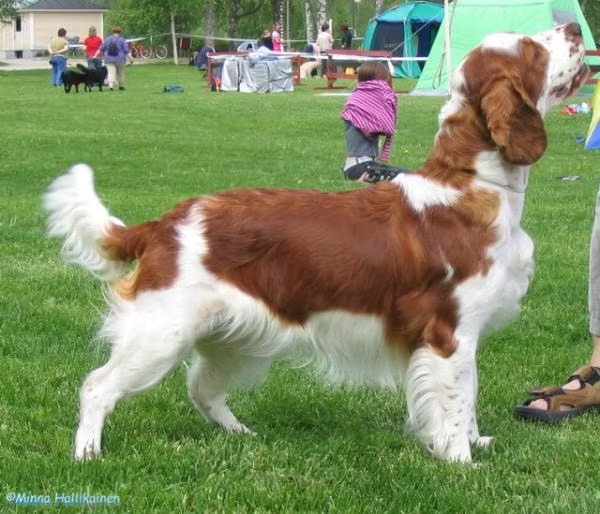
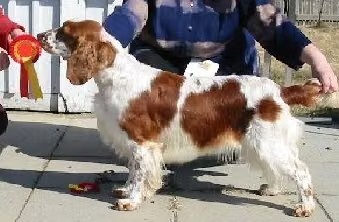
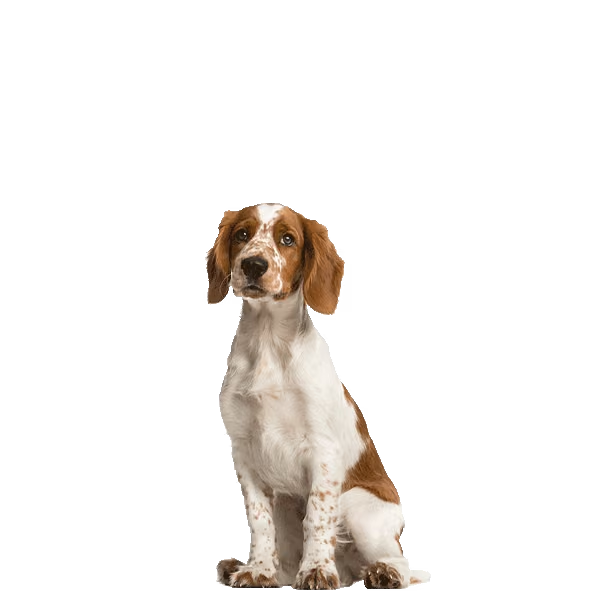
A few of the Welsh Springer Spaniel profiles members have added to United Pet Club.
The Welsh Springer Spaniel is a medium-sized flushing spaniel native to Wales, celebrated for its rich red-and-white coat, steadfast loyalty, and exceptional stamina across the British countryside.
The Welsh Springer Spaniel is a medium-sized gundog with deep roots in Wales, bred to flush and retrieve game across rough, moorland, and upland terrain. It is distinct from the larger English Springer Spaniel by virtue of its consistent dark red and white coat and its slightly more compact, workmanlike frame. Those who know the breed describe a dog that is warmly affectionate and steadfast at home and tireless in the shooting field.
This is an active, working breed with genuine drive. A Welsh Springer needs daily exercise and mental engagement, and it forms close bonds with its family. Adults typically weigh between 16 and 25 kilograms and live for 12 to 15 years.
The breed is sociable with familiar people but characteristically reserved with strangers, a long-standing breed trait rather than a behavioural fault. Early, consistent socialisation produces a settled, confident companion well suited to British country and rural life.
| Attribute | Detail |
|---|---|
| Origin | Wales, United Kingdom |
| Size | Medium (16–25 kg) |
| Lifespan | 12–15 years |
| Group/role | Gundog (flushing and retrieving spaniel) |
| Good with | Families, older children, other dogs with socialisation |
The Welsh Springer Spaniel suits active households in Britain and Ireland that can provide an hour or more of daily exercise alongside regular training, gundog work, or scent activities. A house with a securely fenced garden is ideal; the breed dislikes long periods alone and fares poorly as a kennel-only dog. It is a natural choice for shooting families, spaniel field trial enthusiasts, and active owners who want a breed with genuine working heritage. It is less suited to sedentary owners or those seeking an independent, low-maintenance dog.
The Welsh Springer Spaniel descends from red-and-white land spaniels used in Wales for centuries and received separate Kennel Club recognition in 1902.
Red-and-white spaniels have been associated with Wales for several centuries. Working land spaniels of this colouring feature in Welsh records and in portrait and sporting art long before formal breed standards existed, employed to spring game birds for hunters using nets, falcons, and later fowling pieces.
Throughout the nineteenth century these Welsh spaniels were selected purely for working qualities: stamina, a reliable nose, and the ability to work at close range in thick cover and across hilly ground. For a period they were classified with other land spaniels and were sometimes shown in the same classes as the English Springer.
The breed achieved separate recognition at the turn of the twentieth century. The Kennel Club recognised the Welsh Springer Spaniel as a distinct breed in 1902, formally separating it from the English Springer Spaniel. The American Kennel Club followed in 1906.
Registrations fell sharply after both World Wars, and dedicated breed enthusiasts rebuilt the population from a limited founding stock. Today the Welsh Springer Spaniel remains less numerous than the English Springer but holds a steady and devoted following among gundog enthusiasts, Field Spaniel trial competitors, and active families throughout Wales, England, Scotland, and Ireland. The Welsh Springer Spaniel Club maintains health and breed records in the UK.
The Welsh Springer Spaniel is a compact, balanced gundog with a flat, silky red-and-white coat, a gently domed head, and a soft, oval eye of kind expression.
The Welsh Springer Spaniel is constructed for endurance over rough British country rather than sheer speed. The body is slightly longer than tall, with a deep chest, well-sprung ribs, and strong, muscular hindquarters. The head is well-proportioned with a slightly domed skull, a straight muzzle, and long, low-set ears of a distinctive vine-leaf shape. The overall impression is of a sound, active, hard-working dog of medium substance.
| Trait | Standard |
|---|---|
| Height | Males 46–48 cm, females 43–46 cm at the withers |
| Weight | 16–25 kg |
| Coat | Straight or flat, soft and silky, with feathering on ears, chest, legs, and underside |
| Colours | Rich red and white only |
| Eyes | Medium, oval, hazel to dark brown, with a kind expression |
The Welsh Springer carries precisely one colour pattern: rich red and white. The red ranges from deep mahogany to a lighter, vivid shade, occurring in patches or roan upon a white base. The coat is straight and silky, never wiry or curly, with moderate feathering on the ears, chest, backs of the legs, and tail. This single colour combination is the hallmark of the breed and immediately distinguishes it from the more variably marked English Springer Spaniel.
The Welsh Springer Spaniel is affectionate, loyal, and gentle with its family, characteristically reserved with strangers, and generally excellent with children and other dogs when properly socialised.
The Welsh Springer Spaniel forms deep attachments to its household and prefers to remain close, often accompanying its owner from room to room. With family it is affectionate, gentle, and playful, and it generally gets on well with children who handle it with consideration. The breed is active and purposeful by nature, thriving when given a job: shooting, gundog training, fetch, or scent work.
With strangers the Welsh Springer is typically reserved rather than effusive. This is a recognised breed characteristic rather than a fault, and it lends the dog a degree of natural watchfulness. Varied early socialisation is important to produce a confident, well-adjusted adult that greets the world with equanimity rather than wariness.
Most Welsh Springers live well alongside other dogs and can coexist with cats when raised together, though the innate flushing instinct may lead to chasing small fleeing animals. The breed is sensitive and does not respond well to harsh handling or heavy-handed corrections. It can develop separation-related behaviours when left alone for long periods, making it most suitable for households where company is regularly available.
| Trait | Rating |
|---|---|
| Affection | 5 |
| Energy | 4 |
| Trainability | 4 |
| Vocalness | 3 |
| Shedding | 3 |
The Welsh Springer Spaniel requires weekly brushing, careful ear maintenance to prevent infections, and at least an hour of vigorous daily exercise supplemented with mental work.
The Welsh Springer adapts to most British homes that provide regular outdoor activity. A house with a securely fenced garden is ideal, but the breed can manage in smaller accommodation if daily exercise needs are reliably met. It should be with its family rather than kennelled alone, and it is not suited to being left for long working days without company.
An active Welsh Springer Spaniel requires a complete, balanced diet matched to its life stage, served in measured portions to maintain a lean, healthy body condition.
The Welsh Springer Spaniel does well on a complete, balanced diet formulated for medium-sized active dogs. Select food appropriate to the dog's life stage, with sufficient protein and fat to support an active metabolism. Because the breed has a healthy appetite and can gain weight when under-exercised, weigh portions and adjust to the dog's activity level and body condition rather than feeding ad libitum.
| Life stage | Amount per day | Meals |
|---|---|---|
| Puppy (2–6 months) | Per product guide for growth, divided | 3–4 |
| Junior (6–12 months) | Per product guide, gradually tapered | 2–3 |
| Adult (1–7 years) | Roughly 200–300 g of quality dry food | 2 |
| Senior (7+ years) | Slightly reduced; monitor body condition | 2 |
Keep treats to roughly 10 per cent of daily caloric intake and account for them in the overall ration, particularly during training when food rewards are given frequently. Most Welsh Springers on a complete commercial diet have no need of additional supplements. Consult your veterinary surgeon before introducing any joint, skin, or coat supplements, and ensure fresh drinking water is always available.
The Welsh Springer Spaniel is a generally healthy breed with a lifespan of 12 to 15 years; hip dysplasia, glaucoma, hypothyroidism, and ear infections are the key conditions to monitor.
The Welsh Springer Spaniel is a hardy, generally healthy gundog with a typical lifespan of 12 to 15 years. Like most pedigree breeds it has a small number of heritable conditions that conscientious breeders screen for. Routine veterinary care, including annual health checks and prompt attention to any concerns, helps detect problems early. Keeping the dog at a healthy weight and in regular work supports joint health and overall longevity.
| Condition | Signs | Note |
|---|---|---|
| Hip dysplasia | Stiffness, limping, reluctance to jump | Source from BVA/KC hip-scored parents; maintain healthy weight |
| Glaucoma | Red or cloudy eye, apparent pain, vision loss | An urgent condition; DNA screening recommended by the breed club |
| Hypothyroidism | Weight gain, lethargy, coat changes | Diagnosed by blood test; managed with daily medication |
| Ear infections | Head shaking, odour, scratching at ears | Predisposed by drop ears; prevent with regular cleaning and drying |
The Welsh Springer Spaniel is intelligent and eager to please, responding best to thorough early socialisation and consistent, reward-based training.
The Welsh Springer Spaniel is an intelligent, willing, and responsive dog to train, traits that reflect its gundog heritage. It is also notably sensitive, meaning that firm but gentle methods achieve far more than harsh corrections. The breed's characteristic reserve with strangers makes early and varied socialisation important: introduce puppies to new people, dogs, environments, and sounds during the first months to build genuine confidence.
Channelling the natural flushing and retrieving instincts into structured activities (formal gundog training, field trial work, fetch, or scent games) produces a calmer, more balanced companion and harnesses the breed's considerable drive constructively.
Welsh Springer Spaniels reach maturity at around two years, produce litters of approximately 6 to 10 puppies after a 63-day gestation, and benefit greatly from thorough early socialisation.
Welsh Springer Spaniels reach physical and mental maturity at approximately 18 months to 2 years. Responsible breeders delay a bitch's first litter until she is fully mature and has passed appropriate health tests; both parents should be screened for hip and eye conditions in line with Kennel Club and breed club recommendations. Mating is timed to the bitch's season, and gestation lasts roughly 63 days from conception.
Litters typically range from about 6 to 10 puppies. The dam generally manages whelping and early rearing with little intervention, though a clean, quiet whelping box and close monitoring in the first days are sensible precautions. Weaning usually begins at three to four weeks.
From three weeks, gentle handling and deliberate exposure to everyday sights, surfaces, and sounds are essential to producing confident, well-adjusted adults. Given the breed's characteristic reserve with unfamiliar people, thorough early socialisation from the breeder is a significant advantage. Puppies are normally ready for their new homes at approximately eight weeks.
| Metric | Value |
|---|---|
| Sexual maturity | About 18–24 months for breeding |
| Gestation | Approximately 63 days |
| Average litter size | 6–10 puppies |
| Weaning age | 3–4 weeks |
| Homing age | About 8 weeks |
Your Welsh Springer Spaniel's details on a record that satisfies UK microchip law: free with United Pet Club, for life, with nothing to renew.
Microchipping has been compulsory for dogs in England, Scotland and Wales since 2016, and the rules are strict about keeping the details behind the chip current. A free United Pet Club profile holds your Welsh Springer Spaniel's record for the whole of its life, with your phone number and address sitting where a scan can reach them. Registering your dog is done in minutes and costs nothing, now or later.
The implant happens at the vet surgery; the record is your half of the bargain, and the 2016 regulations expect it kept up to date. Register the microchip free on the lifetime plan: any brand a British vet implants is accepted, amendments after moving house cost nothing, and the record stays searchable through the lookups rescue centres and wardens turn to first. Create your free account and square it away this evening.
Set up a free United Pet Club account, add your Welsh Springer Spaniel's details and a photo, and save. The profile stays live for the whole of the dog's life at no charge, and the chip number can be added the moment you have it.
Key the fifteen digit number into your free United Pet Club account with your current address and phone number. The lifetime plan accepts any brand a British vet implants, and amendments after a house move are free.
Yes. Dogs in England, Scotland and Wales have had to be chipped since 2016, with the keeper's details kept current. The law covers the chip; keeping the record pointing at a live phone number is what United Pet Club handles, free.
Nothing at all. The United Pet Club lifetime plan covers the profile, the microchip record and every amendment without a fee, so there is no renewal to remember.
Common questions about the Welsh Springer Spaniel's size, character, care, lifespan, compatibility, and availability in the UK.
It is a medium-sized dog. Males stand approximately 46 to 48 cm at the shoulder and females approximately 43 to 46 cm, with most adults weighing between 16 and 25 kilograms.
Yes. They are affectionate and loyal with their family and generally good with children who treat them kindly. They tend to be reserved with strangers, so thorough early socialisation is important.
Care is moderate. They need at least an hour of vigorous daily exercise, mental stimulation, weekly brushing, and regular ear cleaning to prevent infections in the drop ears.
The typical lifespan is 12 to 15 years. Good nutrition, a healthy weight, regular exercise, and routine veterinary care all support a long and healthy life.
Most live happily with other dogs and can coexist with cats when raised alongside them. Their flushing instinct means small fleeing animals may trigger a chase, so introductions should be supervised.
No. The breed bonds closely with its household and is prone to separation-related behaviours if left alone for extended periods. It suits homes where company is available for much of the day.
They are less numerous than the English Springer Spaniel but are bred by dedicated KC-registered breeders and are supported by an active Welsh Springer Spaniel Club. Expect to be placed on a waiting list.