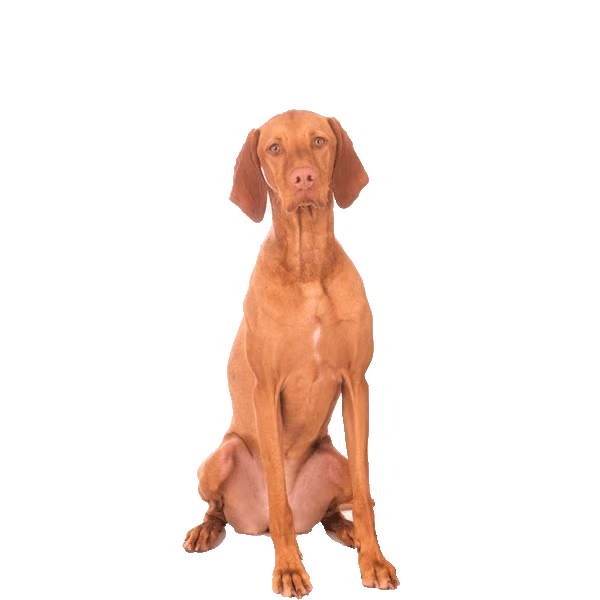
The Vizsla is an affectionate, energetic Hungarian pointer famous for its golden-rust coat and velcro-like devotion to its people.
How the Vizsla coat is built, and what that means when you groom it.
A few of the Vizsla profiles members have added to United Pet Club.
The Vizsla is a medium-sized Hungarian pointer with a golden-rust coat, increasingly popular in the UK for its devoted nature and versatility as both a working gundog and a family companion.
The Vizsla is a medium-sized sporting dog originating in Hungary, where it was developed to point and retrieve game for hunters travelling on foot and horseback. It has a short golden-rust coat, an athletic build, and a self-coloured nose that blends precisely with the coat. Adults typically stand 21 to 24 inches at the shoulder and weigh 44 to 60 pounds.
The breed has earned the affectionate label of velcro dog because of how insistently it remains close to its people. A Vizsla wants to share the same space as its family and will follow household members from room to room throughout the day. This strong attachment makes it unsuitable for households where the dog would regularly be left alone for extended periods.
Energy is the breed's defining practical trait. A Vizsla requires a purpose and hard daily exercise. Without adequate physical and mental outlet it can become restless and destructive. With a committed, active owner it is calm and gentle indoors and settles well after a full and varied day.
| Attribute | Detail |
|---|---|
| Origin | Hungary |
| Size | Medium (44 to 60 lb) |
| Lifespan | 12 to 14 years |
| Group / role | Gundog / pointer-retriever |
| Good with | Active families, older children, other dogs |
The Vizsla is well matched to runners, hikers, hunters, and active families who can provide one to two hours of vigorous exercise each day and who are at home for much of the time. It is poorly suited to flat-dwellers with sedentary lifestyles or to owners who travel frequently and leave the dog alone during working hours. The breed's popularity has grown steadily in the UK, where it is recognised by the Kennel Club within the Gundog Group.
The Vizsla developed in Hungary as a versatile hunting dog and came close to extinction after the world wars before being carefully rebuilt from a small surviving population.
The Vizsla is one of the older European pointing breeds and is deeply linked to Hungary and the Magyar people who settled the Carpathian Basin centuries ago. Dogs resembling the modern Vizsla appear in Hungarian art and historical records, kept by landowners and hunters for locating and retrieving game birds and hares.
The breed was valued as an all-round gundog able to point, hold, and retrieve, working at close range to a hunter on foot. Selection emphasised stamina, an excellent nose, and a biddable temperament, together with the striking golden-rust colouration that distinguishes it from other continental pointers.
Both world wars proved catastrophic for the breed's numbers. By the end of the Second World War the Vizsla had been reduced to very few dogs, and surviving animals were taken out of Hungary by people fleeing the country. Breeders working in several countries rebuilt the breed from this narrow foundation.
The Vizsla arrived in the United States during the mid-twentieth century, receiving American Kennel Club recognition in 1960. In the United Kingdom the Kennel Club has long recognised the breed, and its popularity has grown appreciably in recent decades as both a working gundog and a devoted household companion.
The Vizsla is a lean, athletic dog with a short golden-rust coat, a matching self-coloured nose, and eyes that harmonise with the coat colour.
The Vizsla presents a clean, muscular outline built for sustained work in the field without unnecessary bulk. The body is slightly longer than tall, the chest is deep, and the legs are straight and well-boned. The head is lean with a moderate stop, and the ears are thin, rounded at the tips, and lie close to the cheeks. The overall impression is of a balanced, efficient running dog rather than a heavy or coarse hunter.
| Trait | Standard |
|---|---|
| Height | 21 to 24 in (males 22 to 24, females 21 to 23) |
| Weight | 44 to 60 lb |
| Coat | Short, smooth, dense, single (no undercoat) |
| Colours | Golden rust, in shades from light to deep |
| Eyes | Medium, harmonising with coat colour |
The coat is short, smooth, and lies close to the skin with no undercoat, offering little protection against cold or wet conditions, a relevant consideration in British weather. Colour ranges across shades of golden rust. Small white marks on the chest or toes are accepted in many standards, though solid coats are preferred. The nose, eye rims, lips, and nails are self-coloured, blending with the coat rather than presenting the contrasting black seen in many other breeds.
The Vizsla is affectionate, loyal, and people-oriented, with high energy and sensitivity that respond best to gentle handling and plentiful human company.
The Vizsla is gentle, affectionate, and profoundly attached to its family. It thrives on close contact and is at its happiest when included fully in daily household life. With children it is generally patient and playful, though its energy and size are better matched to older children than to toddlers. With strangers it tends to be friendly rather than suspicious, so it functions as only a limited watchdog.
The breed is sensitive and reacts poorly to harsh corrections, shutting down or sulking when handled roughly. It typically gets on well with other dogs and can live alongside cats when raised with them, although its pointing and chasing instincts present a risk to small pets and birds.
Separation is the principal behavioural challenge. A Vizsla left alone too frequently or insufficiently exercised can bark, chew, dig, and pace. The same dog, given adequate company and exercise, is calm, quiet, and thoroughly agreeable to live with indoors.
| Trait | Rating |
|---|---|
| Affection | 5 |
| Energy | 5 |
| Trainability | 4 |
| Vocalness | 3 |
| Shedding | 2 |
The Vizsla is low-maintenance to groom but demands considerable daily exercise and close human company to remain well-balanced.
The Vizsla is best suited to a home with a secure, fenced garden and an owner who is present for much of the day. The thin single coat provides little insulation, so the dog feels the cold quickly and should wear a coat in cold or wet weather. It must live indoors as a house dog and should never be kennelled outside. It can adapt to smaller homes only if its exercise requirements are consistently met elsewhere.
An active Vizsla needs a complete, protein-rich diet matched to its workload, fed in two meals a day to support its high energy demands.
The Vizsla has high energy requirements, and a working or very active dog needs more food than a less active companion of the same weight. Feed a complete diet formulated for active or sporting dogs, with sufficient protein and fat to support muscle condition and stamina. Match portions to the dog's body condition rather than relying solely on the manufacturer's guide, keeping the ribs easy to feel but not visible.
| Life stage | Amount per day | Meals |
|---|---|---|
| Puppy (2 to 6 months) | Per puppy-food guide, growth formula | 3 to 4 |
| Puppy (6 to 12 months) | Per guide, growth formula | 2 to 3 |
| Adult (active) | About 2 to 3 cups | 2 |
| Senior / less active | Reduced to maintain condition | 2 |
Keep treats to approximately ten percent of daily calories and account for them when measuring meals. Most Vizslas on a complete diet require no supplements; add joint, skin, or other supplements only on veterinary advice. Always provide fresh water, particularly around periods of hard exercise, and avoid heavy meals immediately before or after intense activity to reduce the risk of bloat.
The Vizsla is a generally healthy breed with a lifespan of 12 to 14 years, with several inherited and activity-related conditions worth screening for.
The Vizsla is a robust, long-lived breed with a typical lifespan of 12 to 14 years. As an active, deep-chested dog it carries some susceptibility to joint problems, eye conditions, and bloat, and the breed has a higher-than-average reported incidence of certain immune-mediated and oncological conditions. Sourcing a puppy from breeders who health-test their breeding stock substantially reduces the risk of inherited disease.
| Condition | Signs | Note |
|---|---|---|
| Hip dysplasia | Stiffness, limping, difficulty rising | Screen breeding dogs; maintain lean weight |
| Epilepsy | Seizures | Manageable with veterinary treatment |
| Gastric dilatation-volvulus (bloat) | Swollen abdomen, retching, distress | Emergency; deep-chested breeds at risk |
| Eye disorders | Cloudiness, changes in vision | Includes entropion and cataracts |
| Hypothyroidism | Weight gain, coat and skin changes | Diagnosed by blood test, treatable |
The Vizsla is intelligent and eager to please, learning readily under patient, reward-based training but responding badly to harsh treatment.
The Vizsla is bright, biddable, and strongly motivated to collaborate with its handler, making it one of the more trainable gundog breeds. It performs well in obedience, field work, agility, and scent sports. The breed's sensitivity demands respect: it learns swiftly from praise, food rewards, and play, and loses confidence quickly under shouting or rough corrections. Early, consistent socialisation and a clear daily routine prevent the majority of behavioural problems.
Vizslas reach breeding maturity at one to two years, carry litters for approximately nine weeks, and produce medium-sized litters requiring attentive early socialisation.
Responsible Vizsla breeding is founded on health testing and sound temperament. Breeding stock should be assessed for hip status, eyes, and known inherited conditions before mating, and pairs selected for correct structure and stable, people-oriented character. Dogs reach physical maturity at around one to two years, and most responsible breeders prefer to wait until the second season or later before breeding a bitch.
Gestation lasts approximately 63 days. Litters commonly comprise six to eight puppies, though sizes vary. The dam typically whelps and rears the litter with normal maternal behaviour, and most births are straightforward, but a veterinary examination before and around the time of whelping is advisable given the breed's deep-chested conformation.
Puppies benefit greatly from rich early experience. Because the breed is so closely bonded to people, thorough handling, gradual exposure to varied sights and sounds, and contact with calm adults and children from the first weeks help produce a confident adult. Puppies normally leave for new homes from around eight weeks of age, with initial vaccinations and worming already in progress.
| Metric | Value |
|---|---|
| Breeding maturity | About 1 to 2 years |
| Gestation | About 63 days |
| Typical litter size | 6 to 8 puppies |
| Weaning | About 6 to 8 weeks |
| Go-home age | From about 8 weeks |
Your Vizsla's details on a record that satisfies UK microchip law: free with United Pet Club, for life, with nothing to renew.
When a dog warden or rescue centre picks up a stray Vizsla, the chip scan is the first move, and the record behind it decides how the story ends. Keep yours pointing home with a free United Pet Club profile. Register your dog once, and the record stands for life without a renewal letter ever landing on the mat.
A chip without a registration is a serial number and nothing more. File your Vizsla's fifteen digit number with United Pet Club and it becomes a route back to you: free for life, open to every chip brand sold in Britain, and searchable whenever a scanner finds it. Microchip registration takes less time than the kettle, and a free account covers the profile too.
Set up a free United Pet Club account, add your Vizsla's details and a photo, and save. The profile stays live for the whole of the dog's life at no charge, and the chip number can be added the moment you have it.
Key the fifteen digit number into your free United Pet Club account with your current address and phone number. The lifetime plan accepts any brand a British vet implants, and amendments after a house move are free.
Yes. Dogs in England, Scotland and Wales have had to be chipped since 2016, with the keeper's details kept current. The law covers the chip; keeping the record pointing at a live phone number is what United Pet Club handles, free.
Nothing at all. The United Pet Club lifetime plan covers the profile, the microchip record and every amendment without a fee, so there is no renewal to remember.
Common questions about the Vizsla cover its size, temperament, care requirements, lifespan, suitability, and how to find one.
It is a medium-sized breed. Adults stand about 21 to 24 inches at the shoulder and weigh roughly 44 to 60 pounds, with males larger than females.
Affectionate, loyal, and deeply people-oriented, commonly called a velcro dog for how closely it remains attached to its family. It is gentle and quiet indoors but requires company and vigorous daily activity to stay settled.
Grooming is straightforward given the short coat, but the exercise and companionship demands are substantial. It is not a low-maintenance breed for a busy household where the dog would regularly be left alone.
Most Vizslas live 12 to 14 years. Health-tested parents, a lean body weight, and consistent veterinary care all help support a long and healthy life.
Yes, for active families. It is patient and playful with older children and usually sociable with other dogs, so long as it receives daily vigorous exercise and is not left alone for extended periods.
Not particularly. It is generally friendly towards strangers and will alert by barking, but it is far too sociable by nature to act as a guard or protection dog.
The breed is well established in the United Kingdom and available through the Kennel Club's Find a Puppy service and registered breeders, though quality litters from health-tested parents often have waiting lists.



