
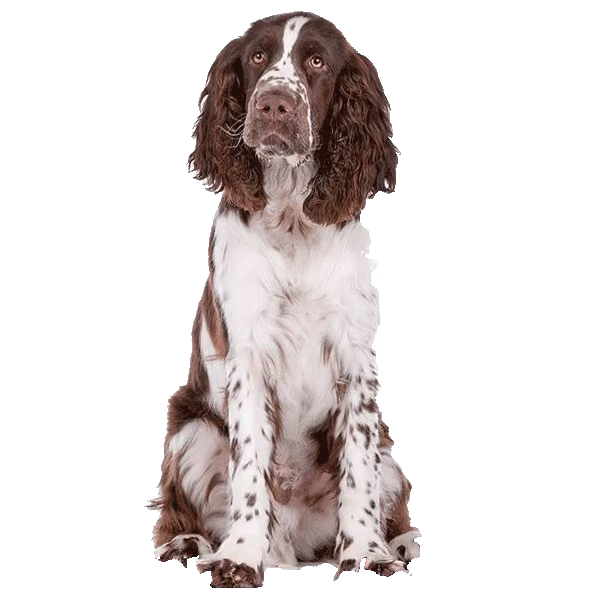
Small Munsterlander Pointer
The Small Munsterlander Pointer is an intelligent, affectionate versatile gundog that excels at pointing and retrieving.
- Size
- Medium
- Lifespan
- 12–14 years
- Origin
- Germany
- Temperament
- Intelligent
- Standard colors
- White, Brown and Tan
Characteristics
Coat and grooming
How the Small Munsterlander Pointer coat is built, and what that means when you groom it.
- Coat layers
- Single coat
- Coat texture
- Silky
- Coat length
- Medium
- Shedding
- Moderate shedding
Grooming guidance
Caution: A Small Munsterlander Pointer coat mats easily.
Fine or long hair tangles at the base of the coat, out of sight, where the mats tighten and pull on the skin. Brushing has to reach right down to the roots in sections, not just skim the surface.
Small Munsterlander Pointer colors and patterns
What each club's breed standard says about every Small Munsterlander Pointer color and pattern. Point at a ruling to see the club's own wording.
Breed standards describe the Small Munsterlander Pointer in White, Brown and Tan. Standard patterns: Bicolour, Roan, Mantle and Tan point.
| Color or pattern | FCI | AKC | UKC | KC | KUSA |
|---|---|---|---|---|---|
| White | Standard (“Brown-white”) | Standard (“Brown & White”) | Standard (“Brown and white”) | Standard (“Brown & white”) | Standard (“Brown-white”) |
| Brown | Standard (“Brown-white and brown roan”) | Standard (“Brown & White”) | Standard (“Brown and white”) | Standard (“Brown & white”) | Standard (“Brown-white or brown roan”) |
| Tan | Standard (“Tan coloured markings on the muzzle, the eyes and around the anus, and on the ears, tail and legs are permissible”) | Standard (“Tan Markings”) | Standard (“Tan points on cheeks, above eyes and around anus acceptable”) | Standard (“Tan coloured markings on the muzzle, the eyes, ears, tail, around the vent, and legs permissible”) | Standard (“Tan coloured markings on the muzzle, the eyes and around the anus, and on the ears, tail and legs are permissible”) |
| Albino | Not recognised | Not recognised | Disqualifying (“Albinism”) | Not recognised | Not recognised |
| Patterns | |||||
| Bicolour | Standard (“Brown-white”) | Standard (“Brown & White”) | Standard (“Brown and white”) | Standard (“Brown & white”) | Standard (“Brown-white”) |
| Roan | Standard (“brown roan”) | Standard (“Brown Roan”) | Standard (“Brown roan”) | Standard (“Brown roan”) | Standard (“brown roan”) |
| Mantle | Standard (“brown mantle”) | Standard (“brown mantle”) | Standard (“Brown mantle”) | Standard (“brown mantle”) | Standard (“brown mantle”) |
| Tan point | Standard (“Tan coloured markings”) | Standard (“Tan Markings”) | Standard (“Tan points on cheeks, above eyes and around anus acceptable”) | Standard (“Tan coloured markings”) | Standard (“Tan coloured markings”) |
| Solid | Disqualifying (“Wholecoloured dogs”) | Disqualifying (“Solid colored dog is disqualifying”) | No ruling | No ruling | Disqualifying (“Whole-coloured dogs”) |
%22%3E%3Cpath%20d%3D%22M0%2023L9.5%2020.4L14%2025.4L19%2029.6Q21%2035%2023.5%2035.5Q36%2033%2050%2036L56%2040V64H0Z%22%20fill%3D%22%23F5F5F0%22%2F%3E%3C%2Fg%3E%3Cuse%20href%3D%22%23s%22%20fill%3D%22none%22%20stroke%3D%22%233B2A20%22%20stroke-opacity%3D%220.6%22%20stroke-width%3D%221%22%20stroke-linejoin%3D%22round%22%2F%3E%3Cellipse%20cx%3D%223.2%22%20cy%3D%2221.7%22%20rx%3D%221.3%22%20ry%3D%221.2%22%20fill%3D%22%231C1C1C%22%2F%3E%3Ccircle%20cx%3D%2210.8%22%20cy%3D%2219.3%22%20r%3D%221.1%22%20fill%3D%22%231C1C1C%22%2F%3E%3C%2Fsvg%3E)
%22%3E%3Cg%20fill%3D%22none%22%20stroke%3D%22%23F5F5F0%22%20stroke-width%3D%221.15%22%20stroke-linecap%3D%22round%22%20stroke-linejoin%3D%22round%22%3E%3Cpath%20d%3D%22M28.6%2025h.1M51.3%2028.8h.1M34.7%2024.3h.1M34.2%2041.6h.1M51%2044.2h.1M55.9%2024.7h.1M27.5%2026.3h.1M18.5%2028.6h.1M25.2%2028.9h.1M24.2%2019.3h.1M20.6%2017.6h.1M34.1%2030.6h.1M57.3%2023.3h.1M23.5%2030.7h.1M26.5%2023.1h.1M40%2031.5h.1M51.7%2038.6h.1M20.2%2022.1h.1M40.4%2037.8h.1M35%2043.1h.1M20.6%2031.7h.1M27.8%2031.9h.1M17.2%2021.1h.1M38.1%2037.7h.1M25.3%2040.5h.1M32%2029.3h.1M41.6%2039.5h.1M23.6%2024h.1M26.4%2018.6h.1M30.3%2031.9h.1M31.2%2035.2h.1M36.5%2043.7h.1M35.2%2026.3h.1M55.6%2019.1h.1M22.4%2036.8h.1M39.2%2020h.1M49.5%2039.1h.1M33.6%2033.5h.1M36.4%2032.4h.1M56.3%2042.4h.1M54.8%2031.2h.1M36.9%2023.2h.1M52.7%2019.1h.1M21.5%2033.8h.1M48.6%2028h.1M36.6%2017.5h.1M45.6%2031.3h.1M37.9%2030.5h.1M17%2031.8h.1M21.1%2043.1h.1M55.7%2021.1h.1M30.8%2041.9h.1M57.4%2038.4h.1M54.8%2026.9h.1M29.1%2017.5h.1M24.3%2037.7h.1M26%2032h.1M39.3%2022.8h.1M53.5%2029h.1M53.3%2023.3h.1M20%2038.4h.1M28.3%2044.7h.1M28.6%2039.8h.1M51.9%2041.1h.1M52.3%2033.7h.1M19.6%2042.2h.1M19%2033h.1M47.8%2021.7h.1M45.7%2024.8h.1M24.6%2035.5h.1M29.8%2036.8h.1M50.7%2032h.1M29.5%2043.5h.1M28.2%2041.5h.1M47.4%2034.8h.1M25.4%2033.7h.1M50.2%2041.2h.1M27.7%2029.5h.1M21.5%2024.8h.1M55.5%2017.5h.1M41.2%2044.3h.1M39.2%2018.4h.1M41.1%2042.5h.1M54.7%2035.3h.1M42.8%2034.5h.1M30.1%2023h.1M42.6%2025.1h.1M32.9%2024.4h.1M42.4%2032.4h.1M49.7%2022.2h.1M49.1%2043.1h.1M38%2035.2h.1M47.7%2043.8h.1M43.1%2022.4h.1M22.4%2040.4h.1M44.4%2019.8h.1M53.3%2040.1h.1M20.7%2029.3h.1M55.6%2043.9h.1M17.6%2039.2h.1M41.7%2028.9h.1M44.1%2036.3h.1M24.3%2043.6h.1M26.4%2038.1h.1M30.3%2029.2h.1M31.5%2030.8h.1M32.1%2023h.1M18.3%2040.9h.1M48%2033.4h.1M36.4%2038.7h.1M31.9%2020.8h.1M32.6%2026.2h.1M22%2031.2h.1M53.4%2021.7h.1M41.9%2017.7h.1M53.3%2037.3h.1M47.7%2040.3h.1M54.4%2033.7h.1M33.6%2037.5h.1M25.3%2017.2h.1M37.6%2019.7h.1M31.6%2019h.1M29.2%2019.6h.1M50.7%2027.3h.1M22%2022.1h.1M31%2037.8h.1M56.5%2026.6h.1M34.7%2039.5h.1M56.5%2040.8h.1M47.6%2038h.1M48.6%2026.1h.1M49.7%2034.2h.1M45.4%2027.4h.1M22.6%2038.9h.1M56.5%2035.3h.1M35.1%2021h.1M41.9%2020.1h.1M37.6%2040h.1M32.6%2044.4h.1M37.9%2025.2h.1M26.6%2043h.1M18.9%2036.7h.1M47.2%2028.9h.1M30.5%2026.2h.1M17.4%2027.3h.1M47.1%2017.2h.1M22.3%2044.3h.1M32.5%2042.4h.1M23.6%2025.7h.1M31.4%2024.9h.1%22%2F%3E%3Cpath%20d%3D%22M26%2020.9h.1M41.2%2023.8h.1M39.9%2026.4h.1M28.5%2033.4h.1M42.8%2043.8h.1M17.6%2034.3h.1M34%2017.1h.1M31.2%2017.2h.1M46.5%2036.1h.1M25.1%2022.1h.1M50.3%2023.7h.1M20.2%2026.6h.1M20.8%2020.4h.1M50.9%2017.3h.1M49.5%2020.2h.1M52.9%2044.1h.1M23.9%2017.8h.1M43.2%2028.1h.1M57.6%2030h.1M52%2025.6h.1M19.2%2019.1h.1M19.5%2024.4h.1M32.8%2040.1h.1M36.1%2027.7h.1M39.6%2029.5h.1M38.4%2041.5h.1M47.9%2019.4h.1M49.1%2031.7h.1M55.9%2036.9h.1M29.2%2027.2h.1M46%2043.5h.1M44.6%2028.8h.1M47.5%2031.5h.1M22.8%2020h.1M27.6%2017.1h.1M43.1%2018.6h.1M54.3%2020h.1M57.2%2033.8h.1M44.5%2043.8h.1M27.1%2035.5h.1M45.3%2041.8h.1M56.7%2028.8h.1M36.7%2021.4h.1M43.3%2042.3h.1M17.3%2022.9h.1M32.7%2035.5h.1M30.5%2039.8h.1M29.1%2021.2h.1M34.5%2018.8h.1M25.8%2027h.1%22%2F%3E%3C%2Fg%3E%3Cpath%20d%3D%22M56.3%2038.4l0%201.2M40%2027.2l-0.3%201.3M32.6%2043.6l-0.4%201.5M29%2023.3l0.8%201.5M55.1%2044l0.4%201.1M47.5%2022.5l-0.2%201.6M42.9%2038.6l0.7%201.2M35.2%2041.8l-0.5%201.7M26.9%2040l-0.1%201.2M41%2042.8l-0.1%201.6M18.4%2021.2l0.7%201.3M49.4%2019.3l-0.5%201.4M50.1%2041.7l0%201.8M28.2%2041.8l-0.6%201.2M55.5%2027.1l0.2%201.2M44.7%2019.3l0.5%201.7M48.6%2020.5l-0.8%201.4M43.7%2039.6l0.3%201.1M22.1%2033.8l-0.6%201.6M50.1%2038.1l-0.5%201.3M51.8%2044.1l-0.1%201.8M39%2017.5l0%201.4M30.2%2026.7l0.2%201.4M25.8%2031.2l0.2%201.6M29.6%2043.5l0.1%201M43.7%2018.3l0.1%201.5M29.6%2018.2l0.3%201.6M24.4%2017.6l0.3%201.1M22%2028.2l-0.6%201.6M25.9%2043.3l-0.3%201.4M22.2%2024.3l0.3%201.3M47.3%2029.2l-0.2%201.4M21.8%2033.2l0.5%200.9M32.9%2037l0.4%201M40%2029.9l0.8%201.4M17.4%2038.3l0.2%201.3M31%2039.2l0%201.2M37.3%2033.7l0.3%201.5M48.1%2040.5l0%201.6M33.9%2031.2l0.1%201.2M29.8%2035.2l-0.4%201M25.1%2037.3l-0.2%201.5M30.2%2039.8l0.5%201M44.6%2034.8l0.4%200.9M55.3%2034.2l0%201.7M50.6%2017.9l0.4%201M30.2%2034.9l-0.4%201.4M19.5%2035.7l-0.5%201.7M40.7%2028.7l0.8%201.4M23.3%2029l-0.4%201.4M17%2040.5l-0.2%201M48.4%2023.2l-0.3%201M37.3%2025.1l-0.4%201.3M23%2021.4l-0.4%201.3M20.4%2017.2l-0.1%201.3M42.3%2020.4l0.6%201.4M41%2031.8l0.6%201.2M45.4%2034.3l-0.1%201.2M32.5%2018l0%201.3M46.2%2021.6l0.1%201.4M30.5%2022.3l0.5%201.1M58%2044.6l0.3%201.5M57.1%2033.9l0.8%201.4M18.3%2042.6l0.3%201M40.5%2035.1l-0.6%201.4M38.8%2044.3l-0.3%201.1%22%20fill%3D%22none%22%20stroke%3D%22%23F5F5F0%22%20stroke-width%3D%220.8%22%20stroke-linecap%3D%22round%22%20stroke-linejoin%3D%22round%22%2F%3E%3C%2Fg%3E%3Cuse%20href%3D%22%23s%22%20fill%3D%22none%22%20stroke%3D%22%233B2A20%22%20stroke-opacity%3D%220.6%22%20stroke-width%3D%221%22%20stroke-linejoin%3D%22round%22%2F%3E%3Crect%20x%3D%2220%22%20y%3D%2258%22%20width%3D%223.6%22%20height%3D%222%22%20fill%3D%22%234A4038%22%2F%3E%3Crect%20x%3D%2226%22%20y%3D%2258%22%20width%3D%223.6%22%20height%3D%222%22%20fill%3D%22%234A4038%22%2F%3E%3Crect%20x%3D%2244%22%20y%3D%2258%22%20width%3D%223.6%22%20height%3D%222%22%20fill%3D%22%234A4038%22%2F%3E%3Crect%20x%3D%2250%22%20y%3D%2258%22%20width%3D%223.6%22%20height%3D%222%22%20fill%3D%22%234A4038%22%2F%3E%3Ccircle%20cx%3D%229.5%22%20cy%3D%2211.5%22%20r%3D%221.1%22%20fill%3D%22%231C1C1C%22%2F%3E%3C%2Fsvg%3E)
%22%3E%3Cpath%20d%3D%22M0%200H19L19.5%2019Q15%2021%2012.5%2023L9.5%2019.5L2%2022L0%2021Z%22%20fill%3D%22%231C1C1C%22%2F%3E%3Cpath%20d%3D%22M22.5%2018H52L55%2028Q53%2036%2047%2037Q36%2034%2026%2036L22%2032Z%22%20fill%3D%22%231C1C1C%22%2F%3E%3Cpath%20d%3D%22M51%2024L56%209L63%209L61%2019L54.5%2028Z%22%20fill%3D%22%231C1C1C%22%2F%3E%3Ccircle%20cx%3D%2258.4%22%20cy%3D%2212.8%22%20r%3D%222.6%22%20fill%3D%22%23F5F5F0%22%2F%3E%3C%2Fg%3E%3Cuse%20href%3D%22%23s%22%20fill%3D%22none%22%20stroke%3D%22%233B2A20%22%20stroke-opacity%3D%220.6%22%20stroke-width%3D%221%22%20stroke-linejoin%3D%22round%22%2F%3E%3Cellipse%20cx%3D%223.2%22%20cy%3D%2221.7%22%20rx%3D%221.3%22%20ry%3D%221.2%22%20fill%3D%22%231C1C1C%22%2F%3E%3Ccircle%20cx%3D%2210.8%22%20cy%3D%2219.3%22%20r%3D%221.1%22%20fill%3D%22%231C1C1C%22%2F%3E%3C%2Fsvg%3E)
%22%3E%3Ccircle%20cx%3D%2212%22%20cy%3D%2217.2%22%20r%3D%221.25%22%20fill%3D%22%23C4996A%22%2F%3E%3Cpath%20d%3D%22M1.5%2021.2L9%2018.6L12.6%2021L12.2%2026.2L3.5%2024.4Z%22%20fill%3D%22%23C4996A%22%2F%3E%3Cpath%20d%3D%22M10%2026L14.5%2026.4L18.2%2029.2L13.5%2029.8Z%22%20fill%3D%22%23C4996A%22%2F%3E%3Cellipse%20cx%3D%2221.2%22%20cy%3D%2230.6%22%20rx%3D%221.6%22%20ry%3D%222.3%22%20fill%3D%22%23C4996A%22%2F%3E%3Crect%20x%3D%220%22%20y%3D%2247%22%20width%3D%2264%22%20height%3D%2217%22%20fill%3D%22%23C4996A%22%2F%3E%3Cpath%20d%3D%22M51.5%2024.5L55%2027L54.2%2032L50.5%2028.5Z%22%20fill%3D%22%23C4996A%22%2F%3E%3Cpath%20d%3D%22M45%2038.5L48%2039L48.5%2047L45.5%2047Z%22%20fill%3D%22%23C4996A%22%2F%3E%3C%2Fg%3E%3Cuse%20href%3D%22%23s%22%20fill%3D%22none%22%20stroke%3D%22%233B2A20%22%20stroke-opacity%3D%220.6%22%20stroke-width%3D%221%22%20stroke-linejoin%3D%22round%22%2F%3E%3Cellipse%20cx%3D%223.2%22%20cy%3D%2221.7%22%20rx%3D%221.3%22%20ry%3D%221.2%22%20fill%3D%22%231C1C1C%22%2F%3E%3Ccircle%20cx%3D%2210.8%22%20cy%3D%2219.3%22%20r%3D%221.1%22%20fill%3D%22%231C1C1C%22%2F%3E%3C%2Fsvg%3E)

| Color or pattern | FCI | AKC | UKC | KC | KUSA |
|---|---|---|---|---|---|
| Dark brown | Standard (“As dark brown as possible”) | Standard (“As dark brown as possible”) | Standard (“Dark brown in color”) | Standard (“dark brown”) | Standard (“as dark brown as possible”) |
| Light brown | Fault (“Eyes too light”) | Fault (“Eyes too light or light-yellow hawk eyes are severe faults”) | Fault (“Light eyes”) | No ruling | Fault (“Eyes too light”) |
| Yellow | Disqualifying (“Bird’s eye”) | Fault (“Eyes too light or light-yellow hawk eyes are severe faults”) | Disqualifying (“bird of prey eyes”) | No ruling | Disqualifying (“Bird’s eye”) |
| Color or pattern | FCI | AKC | UKC | KC | KUSA |
|---|---|---|---|---|---|
| Liver | Standard (“Whole coloured brown”) | Standard (“Nose is solid brown”) | Standard (“Brown in color, fully pigmented”) | Standard (“Nose solid brown”) | Standard (“Whole-coloured brown”) |
| Pink | Disqualifying (“Completely depigmented nose”) | Disqualifying (“Completely depigmented nose”) | Disqualifying (“Nose completely lacking in pigmentation”) | No ruling | Disqualifying (“Completely unpigmented nose”) |
| Patterns | |||||
| Butterfly nose | Fault (“More than 50 % of the nose flesh-coloured or spotted”) | Fault (“More than 50 percent of the nose flesh-colored or spotted is a severe fault”) | Fault (“Butterfly nose”) | No ruling | Fault (“More than 50% of the nose flesh-coloured or spotted”) |
%22%3E%3Cpath%20d%3D%22M28.4%2019.1C29.9%2017.7%2032.2%2016.4%2034%2016C35.8%2015.6%2037.4%2016%2039.2%2016.6C41.1%2017.2%2044.4%2018.5%2045.1%2019.5C45.8%2020.6%2044.3%2021.9%2043.3%2023.1C42.2%2024.3%2040.9%2025.9%2039%2026.6C37.1%2027.2%2034.3%2027.3%2032%2026.9C29.6%2026.4%2025.6%2025.3%2025%2024C24.4%2022.7%2026.9%2020.4%2028.4%2019.1Z%22%20fill%3D%22%23E8A0B4%22%2F%3E%3Cpath%20d%3D%22M23.8%2037.7C24.6%2037.5%2026.2%2037.9%2027.4%2038.1C28.5%2038.2%2030.2%2037.9%2030.8%2038.4C31.4%2039%2031.2%2040.7%2030.9%2041.5C30.7%2042.3%2029.9%2042.9%2029.1%2043.3C28.4%2043.8%2027.4%2044.6%2026.4%2044.4C25.4%2044.2%2023.8%2042.9%2023.1%2042.1C22.4%2041.3%2022.2%2040.2%2022.3%2039.5C22.4%2038.8%2022.9%2038%2023.8%2037.7Z%22%20fill%3D%22%23E8A0B4%22%2F%3E%3Cpath%20d%3D%22M10.5%2027.2C10.4%2026.7%2010.4%2025.4%2011%2025C11.5%2024.6%2013%2024.6%2013.9%2024.6C14.8%2024.6%2015.6%2024.5%2016.1%2024.9C16.6%2025.3%2017%2026.2%2017%2026.9C17.1%2027.7%2016.8%2028.8%2016.4%2029.4C15.9%2029.9%2014.9%2030.4%2014.2%2030.3C13.4%2030.1%2012.3%2028.8%2011.7%2028.3C11.1%2027.8%2010.6%2027.8%2010.5%2027.2Z%22%20fill%3D%22%23E8A0B4%22%2F%3E%3C%2Fg%3E%3Cuse%20href%3D%22%23s%22%20fill%3D%22none%22%20stroke%3D%22%233B2A20%22%20stroke-opacity%3D%220.6%22%20stroke-width%3D%221%22%20stroke-linejoin%3D%22round%22%2F%3E%3Cpath%20d%3D%22M12.5%2037Q13%2032%2018.5%2032Q23.5%2032.5%2023.5%2036.5Q20.5%2035.5%2018.8%2037Q17.4%2038.6%2018%2041.5Q13.6%2040.4%2012.5%2037Z%22%20fill%3D%22%231C1C1C%22%20fill-opacity%3D%220.8%22%20stroke%3D%22%23F5F5F0%22%20stroke-opacity%3D%220.4%22%20stroke-width%3D%220.9%22%2F%3E%3Cpath%20d%3D%22M51.5%2037Q51%2032%2045.5%2032Q40.5%2032.5%2040.5%2036.5Q43.5%2035.5%2045.2%2037Q46.6%2038.6%2046%2041.5Q50.4%2040.4%2051.5%2037Z%22%20fill%3D%22%231C1C1C%22%20fill-opacity%3D%220.8%22%20stroke%3D%22%23F5F5F0%22%20stroke-opacity%3D%220.4%22%20stroke-width%3D%220.9%22%2F%3E%3Cpath%20d%3D%22M32%2040V50%22%20fill%3D%22none%22%20stroke%3D%22%231C1C1C%22%20stroke-width%3D%221.3%22%20stroke-opacity%3D%220.5%22%20stroke-linecap%3D%22round%22%20stroke-linejoin%3D%22round%22%2F%3E%3Cellipse%20cx%3D%2232%22%20cy%3D%2221%22%20rx%3D%2212%22%20ry%3D%223.5%22%20fill%3D%22%23F5F5F0%22%20fill-opacity%3D%220.18%22%2F%3E%3C%2Fsvg%3E)
What the rulings mean
- Standard
- Described by the club's breed standard.
- Fault
- Named by the club's breed standard as a fault: the animal can be shown but is penalised.
- Disqualifying
- The club's breed standard disqualifies an animal of this colour or pattern.
- Not recognised
- The club does not accept this colour or pattern for the breed.
Color changes
How a Small Munsterlander Pointer's colors can change over its life.
Whitechanges toRoan
Coat · With age · from 2 weeks
Tan pointchanges toSaddle
Coat · With age · from 6 to 156 weeks
%22%3E%3Cpath%20d%3D%22M22.5%2018.5Q24%2021%2025%2021.5L47%2022.5Q50%2022.5%2051.5%2023.5L54%2026Q55%2032%2053%2034Q46%2031.5%2038%2033Q30%2034.5%2025.5%2032Q22.5%2026%2022.5%2018.5Z%22%20fill%3D%22%231C1C1C%22%2F%3E%3Cpath%20d%3D%22M51%2024L56%209L63%209L61%2019L54.5%2028Z%22%20fill%3D%22%231C1C1C%22%2F%3E%3Cpath%20d%3D%22M2%2021.2L7.5%2019.2L8.5%2023.6L3.5%2024.2Z%22%20fill%3D%22%231C1C1C%22%20fill-opacity%3D%220.85%22%2F%3E%3C%2Fg%3E%3Cuse%20href%3D%22%23s%22%20fill%3D%22none%22%20stroke%3D%22%233B2A20%22%20stroke-opacity%3D%220.6%22%20stroke-width%3D%221%22%20stroke-linejoin%3D%22round%22%2F%3E%3Cellipse%20cx%3D%223.2%22%20cy%3D%2221.7%22%20rx%3D%221.3%22%20ry%3D%221.2%22%20fill%3D%22%231C1C1C%22%2F%3E%3Ccircle%20cx%3D%2210.8%22%20cy%3D%2219.3%22%20r%3D%221.1%22%20fill%3D%22%231C1C1C%22%2F%3E%3C%2Fsvg%3E)
Sources
Each ruling comes from the club's published breed standard or color list.
Meet some of our Small Munsterlander Pointer
A few of the Small Munsterlander Pointer profiles members have added to United Pet Club.
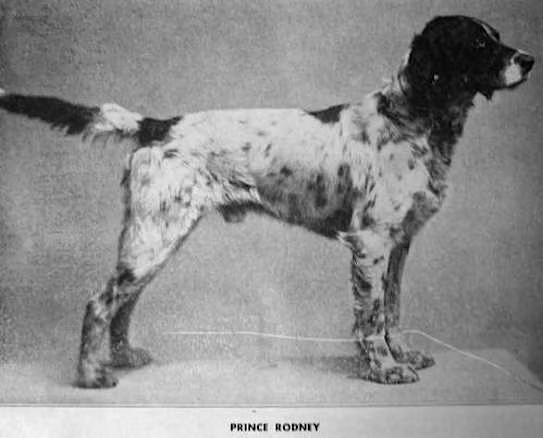
About the Small Munsterlander Pointer
The Small Munsterlander Pointer is a medium-sized German gundog known for intelligence and affection, bred to point and retrieve on land and in water.
The Small Munsterlander Pointer is a medium-sized hunting dog from Germany. It belongs to the versatile gundog group, which means it was developed to find, point and retrieve game across fields, woodland and water rather than to specialise in a single task. Owners describe it as a working partner that stays closely connected to its handler in the field and at home.
The breed combines a steady pointing instinct with a strong drive to retrieve. It is energetic and needs daily activity, yet it is also affectionate and forms close bonds with the people it lives with. Adults usually weigh roughly 18 to 27 kg and stand around 50 to 56 cm at the shoulder, which places them at the smaller end of the pointing breeds.
Its coat is medium-length and feathered, set in brown and white with roan and ticked patterns. The build is balanced and athletic without being heavy, which suits long days of work and active family life.
| Attribute | Detail |
|---|---|
| Origin | Germany |
| Size | Medium (about 18 to 27 kg) |
| Lifespan | 12 to 14 years |
| Group/role | Versatile gundog (pointing and retrieving) |
| Good with | Families, older children, other dogs with training and exercise |
Who it suits
This breed fits active households that can give it consistent daily exercise and mental work. It does well with hunters, dog-sport handlers and families who walk, run or train often. It is less suited to homes with long periods alone or little time outdoors, because an under-exercised dog of this type can become restless and hard to settle.
History and origin
The Small Munsterlander Pointer comes from the Munster region of Germany, where versatile pointing and retrieving dogs were refined into a distinct breed in the early twentieth century.
The breed takes its name from Munster in north-western Germany, the area where its modern form was settled. Dogs of this general type, smaller feathered pointers that could work close to a hunter on foot, had existed in German farming and hunting communities for a long time before formal breeding records.
Interest in standardising the breed grew in the late nineteenth and early twentieth centuries, as German hunters sought versatile dogs that could point, track and retrieve from both land and water. Local populations of small long-haired pointing dogs were gathered and bred towards a consistent type during this period.
A breed club formed in Germany in the early twentieth century to record pedigrees and set a written standard, which fixed the brown-and-white coat and the versatile working role. The breed remained primarily a hunter's dog rather than a show or companion animal, and selection stayed focused on field ability.
From Germany the breed spread to other parts of Europe and later to North America, kept mainly by hunters who valued its all-round skills. It remains less common than many sporting breeds, and breeding in many regions continues to emphasise working aptitude alongside conformation.
Appearance and breed standard
The Small Munsterlander Pointer is a balanced medium-sized dog with a medium-length brown-and-white feathered coat, an athletic outline and dark eyes.
The Small Munsterlander Pointer has an athletic, well-proportioned build that reads as a working dog rather than a heavy one. The body is slightly longer than tall, the chest is deep, and the legs are straight and sound. The head is moderate with a defined stop, and the ears hang flat against the head with feathering along the edges. The tail is carried roughly level with feathering on the underside.
| Trait | Standard |
|---|---|
| Height | Roughly 50 to 56 cm at the shoulder |
| Weight | About 18 to 27 kg |
| Coat | Medium-length, dense, with feathering on ears, legs and tail |
| Colours | Brown and white, including brown roan, ticked and patched patterns |
| Eyes | Dark brown, medium-sized, alert expression |
Coat and colours
The coat is medium in length, lying close to the body and slightly wavy in places, with longer feathering on the ears, the backs of the legs and the underside of the tail. The standard colour is brown and white. This appears as solid brown patches over white, brown roan where the two colours mix, and ticking where small brown flecks scatter across white areas. A brown head with white markings or a blaze is common. The texture is weather-resistant, which suits work in cold water and rough cover.
Temperament and personality
The Small Munsterlander Pointer is affectionate, intelligent and energetic, bonding closely with its family while staying biddable and responsive to training.
This is an affectionate breed that stays closely attached to its people. It tends to follow family members from room to room and prefers company to being left alone. With children it is usually gentle and playful, and it generally does well with older children who respect a dog's space.
With strangers it is typically friendly or politely reserved rather than sharp. It is alert and will notice visitors, but it is not bred as a guard dog. Around other dogs it is usually sociable, especially when raised with them, though its strong prey drive means small pets such as birds and rabbits can trigger chasing.
The breed is intelligent and eager to work, which makes it responsive to training but also quick to find its own entertainment if bored. A dog that does not get enough physical and mental activity may bark, dig or chew. Given regular exercise and a job to do, it settles into a calm and easy household companion.
| Trait | Rating |
|---|---|
| Affection | 5 |
| Energy | 5 |
| Trainability | 5 |
| Vocalness | 3 |
| Shedding | 3 |
Care and daily needs
The Small Munsterlander Pointer needs substantial daily exercise, regular coat care to manage feathering, and a home that keeps it physically and mentally engaged.
Grooming
- Brush the coat once or twice a week to remove loose hair and prevent mats in the feathering.
- Check the feathering on ears, legs and tail after walks in cover and remove burrs or debris.
- Clean the ears regularly, since the drop ears can hold moisture after swimming.
- Trim nails every few weeks and brush teeth several times a week.
- Bathe only as needed, when the dog is genuinely dirty.
Exercise
- Provide at least 1 to 2 hours of activity daily, including off-lead running where it is safe.
- Mix physical exercise with scent work, retrieving games or training to use the dog's mind.
- Swimming suits the breed well and gives low-impact exercise.
- Vary the routine so the dog stays interested and tired in a healthy way.
Environment
The breed does best in a home with secure outdoor space and an active routine. A house with a fenced garden is ideal, though flat life can work if the dog is exercised thoroughly every day. It tolerates cool and wet weather well thanks to its coat, but it should not be left outside alone for long stretches, because it needs human contact to stay content.
Nutrition and feeding
The Small Munsterlander Pointer needs a complete, balanced diet suited to an active medium-sized dog, with portions adjusted for workload, age and body condition.
Feed a complete, balanced food formulated for an active medium-sized dog. Working dogs and those exercised hard may need more calories than the packet guideline suggests, while less active pets need less to avoid weight gain. Adjust portions to keep a visible waist and easily felt ribs, and split the daily amount into meals rather than feeding once a day. Fresh water should always be available, especially around exercise and swimming.
| Life stage | Amount per day | Meals |
|---|---|---|
| Puppy (2 to 6 months) | Per puppy food guideline, growth amounts | 3 to 4 |
| Adolescent (6 to 12 months) | Gradually shifting towards adult portions | 2 to 3 |
| Adult (1 to 7 years) | About 200 to 350 g dry food, by weight and activity | 2 |
| Senior (8 years and older) | Slightly reduced, watch weight | 2 |
Treats and supplements
Keep treats to roughly 10 per cent of daily calories and reduce meals to account for them. Small training treats work well for a food-motivated breed. A dog on a complete diet usually needs no supplements; discuss any joint, skin or coat supplement with a vet before adding it, particularly for growing puppies and senior dogs.
Health and common conditions
The Small Munsterlander Pointer is generally healthy with a lifespan of 12 to 14 years, though it can be prone to hip dysplasia and ear infections that benefit from preventive care.
The Small Munsterlander Pointer is generally a hardy, healthy breed, helped by its history of selection for working ability rather than extreme physical features. Typical lifespan is 12 to 14 years. As with most breeds, a few conditions appear often enough to watch for, and responsible breeders screen breeding stock for inherited joint problems.
| Condition | Signs | Note |
|---|---|---|
| Hip dysplasia | Stiffness, limping, reluctance to jump or run | Inherited joint laxity; screen breeding dogs |
| Ear infections | Head shaking, odour, scratching at the ear | Drop ears trap moisture, common after swimming |
| Eye conditions | Cloudiness, redness, vision changes | Periodic eye checks help with early detection |
| Skin irritation | Itching, redness in feathered areas | Often linked to debris or allergies |
Preventive care
- Keep vaccinations and parasite control up to date.
- Dry and check the ears after swimming or wet work.
- Maintain a healthy weight to reduce strain on joints.
- Schedule annual veterinary exams, with more frequent checks for seniors.
- Brush teeth regularly and arrange dental care as advised.
Training and socialisation
The Small Munsterlander Pointer is intelligent and eager to please, which makes it highly trainable when given consistent, reward-based guidance from puppyhood.
This breed learns quickly and wants to work with its handler, which makes training rewarding. Its intelligence cuts both ways: it picks up good habits fast but also learns unwanted ones if rules are inconsistent. Start training and socialisation early, keep sessions short and varied, and give the dog regular jobs to channel its drive. Because it bonds closely with its people, harsh handling damages the relationship and is rarely needed; clear, calm direction works better.
Basics
- Begin socialisation in puppyhood, introducing new people, dogs, places and sounds.
- Teach name recognition and a reliable recall early, before prey drive strengthens.
- Build core obedience: sit, down, stay and loose-lead walking.
- Add crate training and calm settling to help the dog relax indoors.
- Introduce scent games, retrieving or field work to use the breed's natural talents.
- Practise short sessions daily and keep reinforcing recall in distracting settings.
Breeding and raising puppies
Breeding the Small Munsterlander Pointer responsibly means waiting for full maturity, screening for inherited conditions, and carefully raising and socialising the litter.
Females are usually bred only after they reach full physical maturity, generally around two years of age, so that body and temperament are well developed. Responsible breeders screen both parents for inherited problems such as hip dysplasia and eye conditions, and select for sound working temperament as well as health. Pregnancy lasts roughly 63 days. Litters commonly contain about 6 to 8 puppies, though individual litters vary.
Puppies need careful early care: a warm, clean whelping area, monitoring of weight gain, and gradual weaning onto solid food from around three to four weeks. Early handling and exposure to household sights and sounds lay the groundwork for the breed's friendly, biddable adult temperament. Puppies usually go to new homes from about eight weeks of age, after a first vaccination and veterinary check.
| Metric | Value |
|---|---|
| Female breeding maturity | Around 2 years |
| Gestation | About 63 days |
| Average litter size | About 6 to 8 puppies |
| Weaning | Begins around 3 to 4 weeks |
| Weaning complete / homing | From about 8 weeks |
Small Munsterlander Pointer registration and microchipping in the UK
Your Small Munsterlander Pointer's details on a record that satisfies UK microchip law: free with United Pet Club, for life, with nothing to renew.
Registering a Small Munsterlander Pointer in the United Kingdom
Microchipping has been compulsory for dogs in England, Scotland and Wales since 2016, and the rules are strict about keeping the details behind the chip current. A free United Pet Club profile holds your Small Munsterlander Pointer's record for the whole of its life, with your phone number and address sitting where a scan can reach them. Registering your dog is done in minutes and costs nothing, now or later.
A chip without a registration is a serial number and nothing more. File your Small Munsterlander Pointer's fifteen digit number with United Pet Club and it becomes a route back to you: free for life, open to every chip brand sold in Britain, and searchable whenever a scanner finds it. Microchip registration takes less time than the kettle, and a free account covers the profile too.
How do I register my Small Munsterlander Pointer in the UK?
Set up a free United Pet Club account, add your Small Munsterlander Pointer's details and a photo, and save. The profile stays live for the whole of the dog's life at no charge, and the chip number can be added the moment you have it.
How do I register my Small Munsterlander Pointer's microchip?
Key the fifteen digit number into your free United Pet Club account with your current address and phone number. The lifetime plan accepts any brand a British vet implants, and amendments after a house move are free.
Is microchipping a Small Munsterlander Pointer required by law in the UK?
Yes. Dogs in England, Scotland and Wales have had to be chipped since 2016, with the keeper's details kept current. The law covers the chip; keeping the record pointing at a live phone number is what United Pet Club handles, free.
How much does it cost to register a Small Munsterlander Pointer in the UK?
Nothing at all. The United Pet Club lifetime plan covers the profile, the microchip record and every amendment without a fee, so there is no renewal to remember.
Frequently asked questions
Common questions about the Small Munsterlander Pointer cover its size, temperament, care needs, lifespan, suitability and availability.
How big does a Small Munsterlander Pointer get?
It is a medium-sized dog, standing roughly 50 to 56 cm at the shoulder and weighing about 18 to 27 kg, with males usually larger than females.
Is the Small Munsterlander Pointer good with families?
Yes. It is affectionate and bonds closely with its people, and it is generally gentle with older children. It does best in active families that can meet its exercise needs.
Is this breed easy to care for?
Grooming is moderate, needing a brush once or twice a week. The bigger commitment is exercise: it needs 1 to 2 hours of activity daily plus mental work, so it suits active owners more than sedentary homes.
How long does a Small Munsterlander Pointer live?
Typical lifespan is 12 to 14 years. Regular veterinary care, a healthy weight and good exercise help support a long, sound life.
Does it get along with other pets?
It is usually sociable with other dogs, especially when raised together. Its strong prey drive means small pets such as birds and rabbits may be chased, so introductions and supervision are important.
Is the Small Munsterlander Pointer easy to find?
It is less common than many sporting breeds and is kept mainly by hunters and active owners. Finding a puppy can take patience and may involve a waiting list with a dedicated breeder.
Can it live in a flat?
It can adapt to flat life if it receives thorough daily exercise and mental stimulation, but a home with secure outdoor space suits it better.
From the community
Ask about the Small Munsterlander PointerNo questions about the Small Munsterlander Pointer yet. Be the first to ask.
Browse Dog breeds