
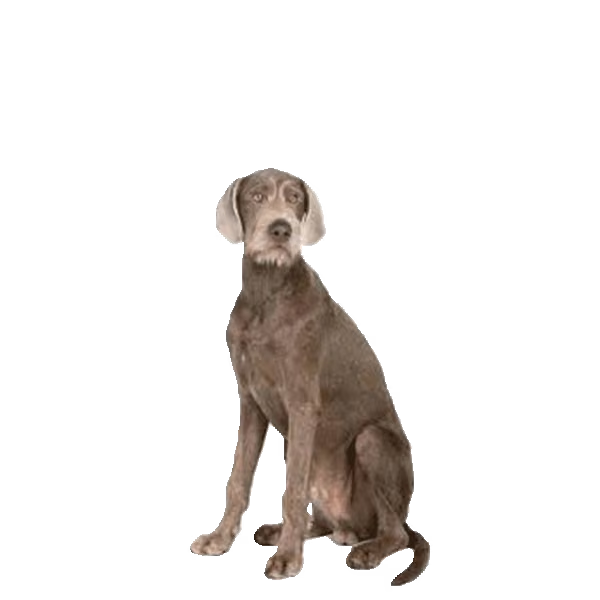
Slovakian Wirehaired Pointer
The Slovakian Wirehaired Pointer is a versatile, intelligent gundog known for its tireless work ethic in field and water.
- Size
- Medium
- Lifespan
- 12–14 years
- Origin
- Slovakia
- Temperament
- Intelligent
- Standard colors
- Grey and Silver
Characteristics
Coat and grooming
How the Slovakian Wirehaired Pointer coat is built, and what that means when you groom it.
- Coat layers
- Double coat
- Coat texture
- Wire
- Coat length
- Medium
- Shedding
- Low shedding
Grooming guidance
Caution: A Slovakian Wirehaired Pointer coat should be hand-stripped rather than clipped.
A wire coat is meant to be pulled out at the root once the hair is ready to release. Clippers cut it off part way instead, leaving the soft undercoat behind. The result is a coat that grows back limp and faded, and the weatherproof texture only returns after the hair is stripped out again.
Slovakian Wirehaired Pointer colors and patterns
What each club's breed standard says about every Slovakian Wirehaired Pointer color and pattern. Point at a ruling to see the club's own wording.
Breed standards describe the Slovakian Wirehaired Pointer in Grey and Silver. Standard patterns: Solid, Roan and Sable.
| Color or pattern | FCI | AKC | KC | KUSA |
|---|---|---|---|---|
| Grey | Standard (“brown shaded sable (said “grey”)”) | Standard (“Gray”) | Standard (“grey of any shade”) | Standard (“brown-shaded sable (said “grey”)”) |
| Silver | Standard (“with varying lighter and darker shadings”) | Standard (“Silver Gray”) | Standard (“grey of any shade”) | Standard (“with varying lighter and darker shadings”) |
| Cream | Fault (“Colour much too light going to nearly white”) | Fault (“Cream”) | Not recognised | Fault (“Colour much too light, going to nearly white”) |
| Patterns | ||||
| Solid | No ruling | Standard (“Gray”) | Standard (“Grey”) | No ruling |
| Roan | Standard (“eventually speckled”) | Standard (“eventually speckled”) | Standard (“Evenly speckled grey roan is acceptable”) | Standard (“eventually speckled”) |
| Sable | Standard (“brown shaded sable”) | Standard (“Gray Sable”) | No ruling | Standard (“brown-shaded sable”) |

%22%3E%3Cg%20fill%3D%22none%22%20stroke%3D%22%23F5F5F0%22%20stroke-width%3D%221.15%22%20stroke-linecap%3D%22round%22%20stroke-linejoin%3D%22round%22%3E%3Cpath%20d%3D%22M28.6%2025h.1M51.3%2028.8h.1M34.7%2024.3h.1M34.2%2041.6h.1M51%2044.2h.1M55.9%2024.7h.1M27.5%2026.3h.1M18.5%2028.6h.1M25.2%2028.9h.1M24.2%2019.3h.1M20.6%2017.6h.1M34.1%2030.6h.1M57.3%2023.3h.1M23.5%2030.7h.1M26.5%2023.1h.1M40%2031.5h.1M51.7%2038.6h.1M20.2%2022.1h.1M40.4%2037.8h.1M35%2043.1h.1M20.6%2031.7h.1M27.8%2031.9h.1M17.2%2021.1h.1M38.1%2037.7h.1M25.3%2040.5h.1M32%2029.3h.1M41.6%2039.5h.1M23.6%2024h.1M26.4%2018.6h.1M30.3%2031.9h.1M31.2%2035.2h.1M36.5%2043.7h.1M35.2%2026.3h.1M55.6%2019.1h.1M22.4%2036.8h.1M39.2%2020h.1M49.5%2039.1h.1M33.6%2033.5h.1M36.4%2032.4h.1M56.3%2042.4h.1M54.8%2031.2h.1M36.9%2023.2h.1M52.7%2019.1h.1M21.5%2033.8h.1M48.6%2028h.1M36.6%2017.5h.1M45.6%2031.3h.1M37.9%2030.5h.1M17%2031.8h.1M21.1%2043.1h.1M55.7%2021.1h.1M30.8%2041.9h.1M57.4%2038.4h.1M54.8%2026.9h.1M29.1%2017.5h.1M24.3%2037.7h.1M26%2032h.1M39.3%2022.8h.1M53.5%2029h.1M53.3%2023.3h.1M20%2038.4h.1M28.3%2044.7h.1M28.6%2039.8h.1M51.9%2041.1h.1M52.3%2033.7h.1M19.6%2042.2h.1M19%2033h.1M47.8%2021.7h.1M45.7%2024.8h.1M24.6%2035.5h.1M29.8%2036.8h.1M50.7%2032h.1M29.5%2043.5h.1M28.2%2041.5h.1M47.4%2034.8h.1M25.4%2033.7h.1M50.2%2041.2h.1M27.7%2029.5h.1M21.5%2024.8h.1M55.5%2017.5h.1M41.2%2044.3h.1M39.2%2018.4h.1M41.1%2042.5h.1M54.7%2035.3h.1M42.8%2034.5h.1M30.1%2023h.1M42.6%2025.1h.1M32.9%2024.4h.1M42.4%2032.4h.1M49.7%2022.2h.1M49.1%2043.1h.1M38%2035.2h.1M47.7%2043.8h.1M43.1%2022.4h.1M22.4%2040.4h.1M44.4%2019.8h.1M53.3%2040.1h.1M20.7%2029.3h.1M55.6%2043.9h.1M17.6%2039.2h.1M41.7%2028.9h.1M44.1%2036.3h.1M24.3%2043.6h.1M26.4%2038.1h.1M30.3%2029.2h.1M31.5%2030.8h.1M32.1%2023h.1M18.3%2040.9h.1M48%2033.4h.1M36.4%2038.7h.1M31.9%2020.8h.1M32.6%2026.2h.1M22%2031.2h.1M53.4%2021.7h.1M41.9%2017.7h.1M53.3%2037.3h.1M47.7%2040.3h.1M54.4%2033.7h.1M33.6%2037.5h.1M25.3%2017.2h.1M37.6%2019.7h.1M31.6%2019h.1M29.2%2019.6h.1M50.7%2027.3h.1M22%2022.1h.1M31%2037.8h.1M56.5%2026.6h.1M34.7%2039.5h.1M56.5%2040.8h.1M47.6%2038h.1M48.6%2026.1h.1M49.7%2034.2h.1M45.4%2027.4h.1M22.6%2038.9h.1M56.5%2035.3h.1M35.1%2021h.1M41.9%2020.1h.1M37.6%2040h.1M32.6%2044.4h.1M37.9%2025.2h.1M26.6%2043h.1M18.9%2036.7h.1M47.2%2028.9h.1M30.5%2026.2h.1M17.4%2027.3h.1M47.1%2017.2h.1M22.3%2044.3h.1M32.5%2042.4h.1M23.6%2025.7h.1M31.4%2024.9h.1%22%2F%3E%3Cpath%20d%3D%22M26%2020.9h.1M41.2%2023.8h.1M39.9%2026.4h.1M28.5%2033.4h.1M42.8%2043.8h.1M17.6%2034.3h.1M34%2017.1h.1M31.2%2017.2h.1M46.5%2036.1h.1M25.1%2022.1h.1M50.3%2023.7h.1M20.2%2026.6h.1M20.8%2020.4h.1M50.9%2017.3h.1M49.5%2020.2h.1M52.9%2044.1h.1M23.9%2017.8h.1M43.2%2028.1h.1M57.6%2030h.1M52%2025.6h.1M19.2%2019.1h.1M19.5%2024.4h.1M32.8%2040.1h.1M36.1%2027.7h.1M39.6%2029.5h.1M38.4%2041.5h.1M47.9%2019.4h.1M49.1%2031.7h.1M55.9%2036.9h.1M29.2%2027.2h.1M46%2043.5h.1M44.6%2028.8h.1M47.5%2031.5h.1M22.8%2020h.1M27.6%2017.1h.1M43.1%2018.6h.1M54.3%2020h.1M57.2%2033.8h.1M44.5%2043.8h.1M27.1%2035.5h.1M45.3%2041.8h.1M56.7%2028.8h.1M36.7%2021.4h.1M43.3%2042.3h.1M17.3%2022.9h.1M32.7%2035.5h.1M30.5%2039.8h.1M29.1%2021.2h.1M34.5%2018.8h.1M25.8%2027h.1%22%2F%3E%3C%2Fg%3E%3Cpath%20d%3D%22M56.3%2038.4l0%201.2M40%2027.2l-0.3%201.3M32.6%2043.6l-0.4%201.5M29%2023.3l0.8%201.5M55.1%2044l0.4%201.1M47.5%2022.5l-0.2%201.6M42.9%2038.6l0.7%201.2M35.2%2041.8l-0.5%201.7M26.9%2040l-0.1%201.2M41%2042.8l-0.1%201.6M18.4%2021.2l0.7%201.3M49.4%2019.3l-0.5%201.4M50.1%2041.7l0%201.8M28.2%2041.8l-0.6%201.2M55.5%2027.1l0.2%201.2M44.7%2019.3l0.5%201.7M48.6%2020.5l-0.8%201.4M43.7%2039.6l0.3%201.1M22.1%2033.8l-0.6%201.6M50.1%2038.1l-0.5%201.3M51.8%2044.1l-0.1%201.8M39%2017.5l0%201.4M30.2%2026.7l0.2%201.4M25.8%2031.2l0.2%201.6M29.6%2043.5l0.1%201M43.7%2018.3l0.1%201.5M29.6%2018.2l0.3%201.6M24.4%2017.6l0.3%201.1M22%2028.2l-0.6%201.6M25.9%2043.3l-0.3%201.4M22.2%2024.3l0.3%201.3M47.3%2029.2l-0.2%201.4M21.8%2033.2l0.5%200.9M32.9%2037l0.4%201M40%2029.9l0.8%201.4M17.4%2038.3l0.2%201.3M31%2039.2l0%201.2M37.3%2033.7l0.3%201.5M48.1%2040.5l0%201.6M33.9%2031.2l0.1%201.2M29.8%2035.2l-0.4%201M25.1%2037.3l-0.2%201.5M30.2%2039.8l0.5%201M44.6%2034.8l0.4%200.9M55.3%2034.2l0%201.7M50.6%2017.9l0.4%201M30.2%2034.9l-0.4%201.4M19.5%2035.7l-0.5%201.7M40.7%2028.7l0.8%201.4M23.3%2029l-0.4%201.4M17%2040.5l-0.2%201M48.4%2023.2l-0.3%201M37.3%2025.1l-0.4%201.3M23%2021.4l-0.4%201.3M20.4%2017.2l-0.1%201.3M42.3%2020.4l0.6%201.4M41%2031.8l0.6%201.2M45.4%2034.3l-0.1%201.2M32.5%2018l0%201.3M46.2%2021.6l0.1%201.4M30.5%2022.3l0.5%201.1M58%2044.6l0.3%201.5M57.1%2033.9l0.8%201.4M18.3%2042.6l0.3%201M40.5%2035.1l-0.6%201.4M38.8%2044.3l-0.3%201.1%22%20fill%3D%22none%22%20stroke%3D%22%23F5F5F0%22%20stroke-width%3D%220.8%22%20stroke-linecap%3D%22round%22%20stroke-linejoin%3D%22round%22%2F%3E%3C%2Fg%3E%3Cuse%20href%3D%22%23s%22%20fill%3D%22none%22%20stroke%3D%22%233B2A20%22%20stroke-opacity%3D%220.6%22%20stroke-width%3D%221%22%20stroke-linejoin%3D%22round%22%2F%3E%3Crect%20x%3D%2220%22%20y%3D%2258%22%20width%3D%223.6%22%20height%3D%222%22%20fill%3D%22%234A4038%22%2F%3E%3Crect%20x%3D%2226%22%20y%3D%2258%22%20width%3D%223.6%22%20height%3D%222%22%20fill%3D%22%234A4038%22%2F%3E%3Crect%20x%3D%2244%22%20y%3D%2258%22%20width%3D%223.6%22%20height%3D%222%22%20fill%3D%22%234A4038%22%2F%3E%3Crect%20x%3D%2250%22%20y%3D%2258%22%20width%3D%223.6%22%20height%3D%222%22%20fill%3D%22%234A4038%22%2F%3E%3Ccircle%20cx%3D%229.5%22%20cy%3D%2211.5%22%20r%3D%221.1%22%20fill%3D%22%231C1C1C%22%2F%3E%3C%2Fsvg%3E)
%22%3E%3Crect%20x%3D%220%22%20y%3D%220%22%20width%3D%2264%22%20height%3D%2264%22%20fill%3D%22url(%23g)%22%2F%3E%3Cg%20fill%3D%22none%22%20stroke%3D%22%231C1C1C%22%20stroke-width%3D%221%22%20stroke-linecap%3D%22round%22%20stroke-linejoin%3D%22round%22%3E%3Cpath%20d%3D%22M15.7%2014.8l1.9%203.6M26.4%2024.1l1.2%204.1M42.7%2029.5l0.1%203.3M35.9%2025l1.6%203.2M31.3%2028.1l0.7%203.7M15.5%2011.1l1.6%203.6M41.1%2023.8l0.6%203.2M12.1%2020.7l1.2%203M15.4%2011.2l0.8%203.8M42.9%2027.3l0.7%202.9M48.2%2033.2l0.5%204.1M23.1%2024.7l1.4%203.4M51.9%2036.1l0.3%204.3M18.7%2023.9l1.2%203.7M50.4%2027.4l0.5%204.1M18.4%2020.4l0.1%203.1M55.6%2021.4l1.1%203.9M18.6%2024.9l1.7%203.8M8.3%2023.2l1.7%202.9M18.7%2024.2l0.2%203.1M46.4%2022.7l0.6%202.6M14.3%207l0.9%203.5M50.5%2024.9l0.5%203.7M23.2%2024.7l1.2%204.3M10.5%2022.3l1.6%203.4M56.9%2018.2l1.1%202.5M20.8%2021.7l1.1%203.5M10.9%2020.2l0.2%203.9M6.6%2023.3l1%202.4M54.5%2021.7l0.9%203.8M13.3%2021l0.4%203M11.7%2019.5l0.3%204M39%2023.2l0.7%202.5M20.8%2016.7l0%202.6M18.4%2016l0.2%202.6M46.4%2038.2l1.4%203.2M12.9%2022.6l0.6%203.3M13%2020.9l0.3%204.3M35.3%2024.9l1.3%202.3M29.5%2022.1l0.5%202.8M36.6%2023.4l0.2%204.3M20.5%2017.6l0.7%204.1M18.3%2020.6l0.6%203M20.5%2025.8l0.5%203.8M23.5%2040.2l1.1%202.9M22.8%2024.9l1.5%203M25.5%2023.1l0.5%203.3M47.7%2024.7l1.5%203.7M12.9%2018.4l1.9%203.8M29.5%2023.7l0.5%204.1M37.7%2026.5l0%202.9M16.8%2016.4l0.1%203.3M49.8%2028l1.7%203.8M29.4%2025.5l0.5%203.6M9.3%2023l1.3%203.1M47.4%2025.6l0.5%203.5M48.1%2023.8l1.6%203.2M9.9%2018.3l1.3%202.5M12.2%2016.6l0.4%203.2M22%2022.1l1.4%202.7M43.9%2024.7l1.4%203.9M14.3%2020l1.8%203.2M46.3%2040.1l0.3%203.6M14.9%207l0.3%204M17.5%2016.7l1.2%202.4M54.6%2040l1%203.5M13.3%2013.9l1.6%204.2M15.3%2016.5l1.2%202.9M23.8%2038.5l0.2%203.8M18.2%2019l0.6%203M11.2%2023.6l0.7%204.1M33.1%2023.2l0.9%204.3M13.6%2019.9l0.4%204.5M19.7%2023.1l1.9%203.7M50.5%2027.1l0.3%204.1M28.2%2028.5l0.2%203.8M29%2028.4l0.1%204M47.7%2024.5l0.6%202.5M10.7%2017.2l1.4%202.7M25.5%2040.3l0.6%204.1M37.6%2022.8l0.7%204.4M57%2018.6l0.2%203.4M16.9%2022.2l1.7%203.8M43.5%2024.7l1.8%203.4M49.2%2026l1.5%203.6M47.7%2032.3l0.4%203.7M35.4%2030.8l0.5%202.7M47%2026.1l1%203.9M24.3%2028.1l1.5%204.2M50.5%2023.8l1.3%203.4M58.1%2014.1l0.3%202.6M13.9%2018.2l0.7%202.5M8.2%2021l0.7%202.9M41.4%2026.4l0.4%202.7M16.3%2020.4l0.5%204.3M43.4%2025.9l1.2%203.2M32.3%2022.4l0.3%203.9M43.6%2025.9l2.1%203.8M33.5%2026.3l1.5%203M48.3%2030.6l1.4%203.4M44.2%2024.7l0.9%203.2M12.3%2017.7l0.9%203.7M46.2%2032l1.9%203.4M51%2028.3l0.1%203.7M30.4%2023.1l1.1%203.2M52.6%2022.6l0.9%204.3M16.6%2015.4l0.9%203.1M58.4%2012.8l0.3%202.8M42.8%2032.5l1.8%203.2%22%2F%3E%3Cpath%20d%3D%22M16.4%2026.1l0.1%204.3M14%2017.1l1.3%202.8M36.9%2027.2l1.3%202.6M38.6%2025.8l0.4%203.6M57.6%2014.3l0.3%203.9M14.7%208.2l1%204.3M53.4%2023l1.9%203.4M51.5%2030.3l0.8%202.7M56.2%2020l1.9%203.5M15.9%2010l0.2%202.8M15.8%2022.6l1.8%203.9%22%2F%3E%3C%2Fg%3E%3C%2Fg%3E%3Cuse%20href%3D%22%23s%22%20fill%3D%22none%22%20stroke%3D%22%233B2A20%22%20stroke-opacity%3D%220.6%22%20stroke-width%3D%221%22%20stroke-linejoin%3D%22round%22%2F%3E%3Cellipse%20cx%3D%223.2%22%20cy%3D%2221.7%22%20rx%3D%221.3%22%20ry%3D%221.2%22%20fill%3D%22%231C1C1C%22%2F%3E%3Ccircle%20cx%3D%2210.8%22%20cy%3D%2219.3%22%20r%3D%221.1%22%20fill%3D%22%231C1C1C%22%2F%3E%3C%2Fsvg%3E)
| Color or pattern | FCI | AKC | KC | KUSA |
|---|---|---|---|---|
| Blue | Standard (“In the puppies and the young dogs, they are bluish (azure)”) | Standard (“In the puppies and the young dogs, they are bluish (azure)”) | Standard (“In young dogs the eyes may be blue”) | Standard (“In puppies and young dogs, they are bluish (azure)”) |
| Amber | Standard (“of amber colour”) | Standard (“of amber colour”) | Standard (“Amber coloured in adults”) | Standard (“of amber colour”) |
What the rulings mean
- Standard
- Described by the club's breed standard.
- Fault
- Named by the club's breed standard as a fault: the animal can be shown but is penalised.
- Not recognised
- The club does not accept this colour or pattern for the breed.
Color changes
How a Slovakian Wirehaired Pointer's colors can change over its life.
Bluechanges toDark brown
Eyes · With age · from 2 weeks
Bluechanges toBrown
Eyes · With age · from 2 weeks
Bluechanges toLight brown
Eyes · With age · from 2 weeks
Bluechanges toAmber
Eyes · With age · from 2 weeks
Bluechanges toHazel
Eyes · With age · from 2 weeks
Bluechanges toYellow
Eyes · With age · from 2 weeks
Sources
Each ruling comes from the club's published breed standard or color list.
About the Slovakian Wirehaired Pointer
The Slovakian Wirehaired Pointer is a medium-sized versatile gundog from Slovakia, bred to point, retrieve and track on land and in water, with a tireless work ethic and steady temperament.
The Slovakian Wirehaired Pointer is a medium-sized hunting dog developed in Slovakia as an all-round gundog. It works as a pointer, a retriever and a tracker, and copes with dense cover, open field and cold water. The breed is built for endurance rather than speed, with a wiry, weatherproof coat that protects it during long days afield.
Dogs of this breed are loyal and closely bonded to their handler. They are intelligent and learn quickly, which suits the wide range of tasks a versatile gundog is expected to perform. Owners describe them as calm in the home once their daily exercise needs are met, though they stay alert and ready to work.
The breed carries the traits typical of continental versatile pointers: a methodical hunting style, a strong nose and a willingness to keep going in difficult conditions. It is uncommon outside hunting circles and central Europe, so most examples are owned by people who hunt or who can provide demanding physical and mental activity.
| Attribute | Detail |
|---|---|
| Origin | Slovakia |
| Size | Medium |
| Lifespan | 12 to 14 years |
| Group / role | Versatile gundog (pointer, retriever, tracker) |
| Good with | Active families and experienced hunters who provide daily work |
Who it suits
This breed suits an active owner who can give it a job and several hours of exercise each day. It does best with people who hunt or who train in field sports, tracking or other working disciplines. It is not a good match for sedentary households or for owners away from home for long stretches, because an under-exercised dog of this type can become restless and difficult to settle.
History and origin
The Slovakian Wirehaired Pointer was developed in Slovakia in the mid-20th century by crossing established versatile pointers to produce a single wirehaired, water-capable gundog.
The breed originates in Slovakia, where it was developed during the middle of the 20th century. Breeders set out to create one versatile gundog that could point game, retrieve from land and water, and follow a blood trail, all in a single dog with a wiry, protective coat.
The foundation drew on established continental versatile breeds. Records and breed histories commonly cite the use of the German Wirehaired Pointer, the Wirehaired Vizsla and the Czesky Fousek (Bohemian Wirehaired Pointing Griffon) in the early matings. Selection focused on a hard, weatherproof coat and a steady, biddable working temperament.
Breeding work continued through the second half of the 20th century, with selection for consistent type and reliable field performance. The breed gained recognition in its home region and was later accepted by the Fédération Cynologique Internationale, which classifies it among the continental pointing breeds.
The breed remains closely tied to hunting and is far less common than the more widespread continental pointers. Numbers outside central Europe are small, and most dogs are kept by working homes that value its all-round field ability over wide popularity.
Appearance
The Slovakian Wirehaired Pointer is a medium-sized, lean gundog with a harsh wiry coat in shades of grey, a beard and bushy eyebrows, and a balanced, athletic build.
The Slovakian Wirehaired Pointer is a lean, athletic dog of medium size with a rectangular, well-proportioned outline. The build is functional rather than heavy, with enough bone and muscle for sustained work without bulk. The head carries a distinct beard and bushy eyebrows, which are characteristic of the wirehaired continental pointers.
| Trait | Standard |
|---|---|
| Height | Males about 62 to 68 cm; females about 57 to 64 cm at the withers |
| Weight | About 25 to 35 kg, in proportion to height |
| Coat | Harsh, wiry topcoat about 4 cm long with a dense undercoat; beard and eyebrows on the face |
| Colours | Shades of grey, including grey roan and darker grey; white markings may appear |
| Eyes | Almond shaped, amber in colour, with an alert expression |
Coat and colours
The coat is the defining feature. The topcoat is harsh and wiry, lying close enough to protect the dog in thorny cover and cold water, while the undercoat adds insulation. The face carries a pronounced beard and prominent eyebrows. Colour is grey in its various tones, often described as grey roan, and the overall impression is of a uniform greyish dog. The wiry texture needs regular hand attention to keep it functional, and it sheds less heavily than a smooth coat.
Temperament
The Slovakian Wirehaired Pointer is loyal, intelligent and even-tempered, devoted to its handler, reserved with strangers, and generally sociable with other dogs when well socialised.
The breed is even-tempered and strongly attached to its handler. It is intelligent and quick to learn, traits that come from its background as a versatile gundog expected to read a range of situations in the field. At home, a well-exercised dog is calm and settled, but it stays alert to its surroundings.
With its own family the breed is affectionate and cooperative. It tends to be reserved with strangers rather than aggressive, and early socialisation helps it greet new people with confidence. Around other dogs it is usually sociable, and its hunting heritage means it is used to working alongside people and, in some contexts, other dogs.
Its prey drive is high, which is expected in a pointing and retrieving breed. Households with small pets such as rabbits or birds should manage introductions carefully. The breed does well when it has a clear purpose and consistent handling, and it can become restless or develop unwanted habits if left without enough physical and mental activity.
| Trait | Rating |
|---|---|
| Affection | 4 |
| Energy | 5 |
| Trainability | 5 |
| Vocalness | 2 |
| Shedding | 2 |
Care and grooming
The Slovakian Wirehaired Pointer needs regular hand-stripping of its wiry coat, several hours of daily exercise, and space to work, making it best suited to an active, often rural home.
Grooming
- Brush the wiry coat once or twice a week to remove dead hair and prevent matting.
- Hand-strip the coat a few times a year to maintain the harsh, weatherproof texture; clipping softens the coat and reduces its protective quality.
- Clean the beard after meals and water work, since it can trap food and dirt.
- Check and clean the ears regularly, as the drop ears can hold moisture after water work.
- Trim nails every few weeks and brush teeth several times a week.
Exercise
- Provide at least two hours of vigorous activity each day, more on working days.
- Combine physical exercise with scent work, retrieving games or field training to meet mental needs.
- Give safe off-lead running in secure areas, since this is a high-energy working breed.
- Avoid relying on short lead walks alone, which will not satisfy the breed.
Environment
The breed does best in a home with a large secure garden and easy access to open space. It tolerates cold and wet weather well thanks to its coat, which suits outdoor work. It is poorly suited to small flats or to owners who cannot commit to daily, demanding exercise.
Nutrition and feeding
The Slovakian Wirehaired Pointer needs a balanced, protein-adequate diet matched to its high activity level, with portions adjusted upward on working days and split across two meals.
As an active medium-sized working dog, this breed needs a complete and balanced diet with enough protein and fat to support sustained energy. Daily amounts depend on weight, age and how hard the dog is working; a dog hunting all day needs noticeably more than one resting at home. Feed a quality food formulated for active or working dogs and adjust portions to keep the dog lean.
| Life stage | Amount per day | Meals |
|---|---|---|
| Puppy (2 to 6 months) | Per food label, divided through the day | 3 to 4 |
| Junior (6 to 12 months) | Per food label for growing dogs | 2 to 3 |
| Adult (maintenance) | About 300 to 450 g of dry food, by weight and activity | 2 |
| Adult (working days) | Increase above maintenance to match output | 2 |
| Senior | Reduce slightly if activity drops; maintain protein | 2 |
Treats and supplements
Keep treats to roughly ten percent of daily calories so they do not unbalance the diet. A dog fed a complete commercial food usually needs no supplements. Because this is a deep-chested breed type, feed measured meals rather than one large meal and avoid hard exercise immediately before or after eating to reduce bloat risk. Always provide fresh water, especially around water work and hot weather.
Health
The Slovakian Wirehaired Pointer is generally robust with a lifespan of 12 to 14 years, though owners should watch for hip dysplasia, ear infections and bloat common to its build.
The Slovakian Wirehaired Pointer is generally a hardy, healthy breed, helped by its working background and relatively modest popularity. Typical lifespan is 12 to 14 years. As with most active medium-to-large dogs, a few conditions warrant attention, and responsible breeders screen breeding stock for inherited problems.
| Condition | Signs | Note |
|---|---|---|
| Hip dysplasia | Stiffness, limping, reluctance to rise or jump | Choose breeders who hip-score their stock |
| Elbow dysplasia | Foreleg lameness, especially after exercise | Screening is available |
| Ear infections | Head shaking, odour, scratching at the ear | Drop ears can trap moisture after water work |
| Bloat (gastric torsion) | Swollen abdomen, retching without result, distress | Emergency; deep-chested dogs are at higher risk |
Preventive care
- Keep vaccinations and parasite control up to date.
- Maintain a lean body condition to protect joints.
- Check ears after every session in water or dense cover.
- Provide annual veterinary exams and screen breeding dogs for hip and elbow scores.
- Brush teeth regularly to limit dental disease.
Training
The Slovakian Wirehaired Pointer is highly trainable and eager to work with its handler, responding best to consistent, reward-based methods that channel its energy into structured tasks.
This is one of the more trainable gundogs. It is intelligent, attentive to its handler and motivated to work, which makes it responsive in obedience and field training alike. The same intelligence means it needs consistent direction and regular mental challenge; without it, the dog may invent its own activities. Start training early, keep sessions varied, and build on the breed's natural drive to point and retrieve.
Basics
- Socialise the puppy widely with people, places and other dogs from an early age.
- Teach name response and reliable recall before introducing field distractions.
- Establish sit, stay and steadiness, which underpin gundog work.
- Introduce retrieving and scent games to engage the breed's instincts.
- Layer in field or tracking work gradually as control becomes reliable.
- Keep sessions short, frequent and consistent across all handlers in the home.
Breeding
Breeding the Slovakian Wirehaired Pointer should follow a roughly 63-day canine gestation, with health-screened parents and litters of about six to eight puppies raised with early socialisation.
Breeding should be undertaken only with health-screened parents that show sound temperament and good working ability. Females reach physical maturity before they should be bred, and most responsible programmes wait until at least the second season and after hip and elbow screening. Mating, gestation and whelping follow the normal canine pattern, with gestation lasting around 63 days.
Litters typically number about six to eight puppies, though this varies. The dam usually whelps without difficulty given her medium build. Puppies benefit from early neurological stimulation and broad socialisation, since the breed's working role demands a confident, people-focused adult. Breeders commonly place puppies with hunting or active homes that can meet the breed's exercise and training needs, and good programmes provide ongoing support to new owners.
| Metric | Value |
|---|---|
| Breeding maturity | Typically from the second season for females; after health screening |
| Gestation | About 63 days |
| Average litter size | About 6 to 8 puppies |
| Weaning | Around 6 to 8 weeks |
| Recommended screening | Hip and elbow scores; temperament assessment |
Slovakian Wirehaired Pointer registration and microchipping in the UK
Your Slovakian Wirehaired Pointer's details on a record that satisfies UK microchip law: free with United Pet Club, for life, with nothing to renew.
Registering a Slovakian Wirehaired Pointer in the United Kingdom
Microchipping has been compulsory for dogs in England, Scotland and Wales since 2016, and the rules are strict about keeping the details behind the chip current. A free United Pet Club profile holds your Slovakian Wirehaired Pointer's record for the whole of its life, with your phone number and address sitting where a scan can reach them. Registering your dog is done in minutes and costs nothing, now or later.
The implant happens at the vet surgery; the record is your half of the bargain, and the 2016 regulations expect it kept up to date. Register the microchip free on the lifetime plan: any brand a British vet implants is accepted, amendments after moving house cost nothing, and the record stays searchable through the lookups rescue centres and wardens turn to first. Create your free account and square it away this evening.
How do I register my Slovakian Wirehaired Pointer in the UK?
Set up a free United Pet Club account, add your Slovakian Wirehaired Pointer's details and a photo, and save. The profile stays live for the whole of the dog's life at no charge, and the chip number can be added the moment you have it.
How do I register my Slovakian Wirehaired Pointer's microchip?
Key the fifteen digit number into your free United Pet Club account with your current address and phone number. The lifetime plan accepts any brand a British vet implants, and amendments after a house move are free.
Is microchipping a Slovakian Wirehaired Pointer required by law in the UK?
Yes. Dogs in England, Scotland and Wales have had to be chipped since 2016, with the keeper's details kept current. The law covers the chip; keeping the record pointing at a live phone number is what United Pet Club handles, free.
How much does it cost to register a Slovakian Wirehaired Pointer in the UK?
Nothing at all. The United Pet Club lifetime plan covers the profile, the microchip record and every amendment without a fee, so there is no renewal to remember.
Frequently asked questions
Common questions about the Slovakian Wirehaired Pointer cover its size, temperament, care needs, lifespan, suitability as a pet, and how readily it can be found.
How big does a Slovakian Wirehaired Pointer get?
It is a medium-sized breed. Males stand about 62 to 68 cm at the withers and females about 57 to 64 cm, with weight roughly 25 to 35 kg depending on size and condition.
What is its temperament like?
It is loyal, intelligent and even-tempered. It bonds closely with its family, is reserved rather than aggressive with strangers, and is generally sociable with other dogs when well socialised. It has a high prey drive typical of a gundog.
Is it hard to care for?
It is demanding on time rather than difficult by nature. It needs at least two hours of exercise daily plus mental work, and its wiry coat needs weekly brushing and occasional hand-stripping. With those needs met, it is a manageable and calm companion.
How long do they live?
The typical lifespan is 12 to 14 years. Good nutrition, a lean weight, regular veterinary care and health-screened parentage all support a long, healthy life.
Does it make a good family pet?
It can suit an active, often rural family that can give it a job and daily exercise. It is affectionate with its people, but it is not well suited to sedentary households or owners who are away for long periods.
Is the breed easy to find?
No. It is uncommon outside central Europe and hunting circles, so waiting lists are likely and most puppies go to working or very active homes. Expect to seek out a specialist breeder.
Does it shed a lot?
Shedding is relatively low compared with smooth-coated breeds. The wiry coat still needs regular brushing and periodic hand-stripping to stay in good condition and to keep loose hair under control.
From the community
Ask about the Slovakian Wirehaired PointerNo questions about the Slovakian Wirehaired Pointer yet. Be the first to ask.
Browse Dog breeds