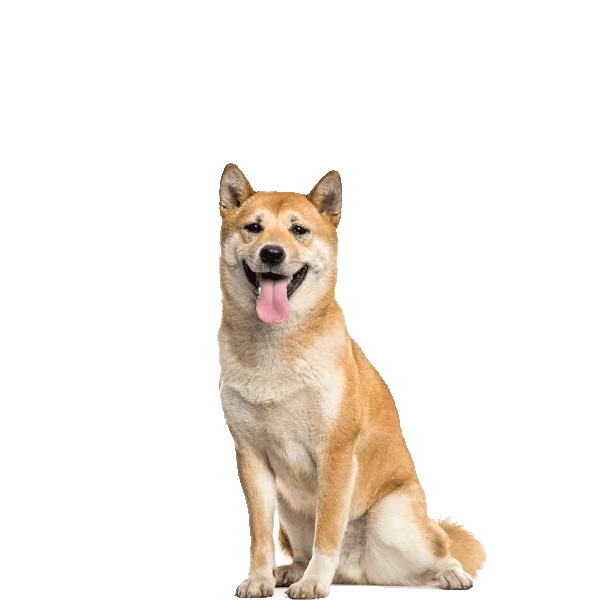
The Shiba Inu is a spirited, independent Japanese breed known for its bold confidence, fox-like good looks, and cat-like cleanliness.
How the Shiba Inu coat is built, and what that means when you groom it.
Critical: A Shiba Inu should not be shaved.
The undercoat keeps heat out as well as in, and the outer coat shields the skin from sun and insect bites. Clipping the whole coat off removes both. It often grows back patchy, soft or a different colour, and in some animals the guard hairs never return properly. Brush the undercoat out instead of cutting it off.
Information: A Shiba Inu drops its undercoat in heavy bursts.
The undercoat comes out in heavy bursts over a few weeks. An undercoat rake, or a bath followed by a proper blow-dry, clears it far faster than daily brushing. Clipping the coat down is not a shortcut for this.
A few of the Shiba Inu profiles members have added to United Pet Club.
The Shiba Inu is a small, independent Japanese breed known for bold confidence, a fox-like appearance, and unusually clean habits.
The Shiba Inu is a small spitz-type dog from Japan, where it is one of the oldest native breeds. Adults stand roughly 34 to 42 centimetres at the shoulder and weigh about 8 to 10 kilograms, with a compact, well-muscled frame, a curled tail, and prick ears. The breed carries itself with an alert, self-assured bearing that owners often describe as dignified.
Temperament is the trait most associated with the Shiba. The breed is independent and confident, attentive to its surroundings, and often aloof with strangers. Many Shibas keep themselves remarkably clean, grooming in a way that draws frequent comparison to cats. They form strong bonds with their own families while remaining reserved with people they do not know.
This is a breed that thinks for itself. A Shiba will weigh whether a request is worth following, which makes early socialisation and consistent handling important from puppyhood. With the right guidance, the Shiba is a loyal, tidy, and long-lived companion.
| Attribute | Detail |
|---|---|
| Origin | Japan |
| Size | Small (about 8 to 10 kg) |
| Lifespan | 13 to 16 years |
| Group / role | Companion and small-game hunting dog (spitz type) |
| Good with | Families who can provide firm, patient training; better with respectful older children |
The Shiba fits owners who appreciate an independent dog and do not expect constant obedience or affection on demand. People who enjoy a clean, low-odour housemate and can commit to early socialisation tend to do well with the breed. It is less suited to first-time owners who want an eager-to-please dog, or to households that cannot supervise the Shiba around small pets, given its hunting background.
The Shiba Inu developed in the mountainous regions of Japan as a small hunting dog and was rebuilt from a handful of survivors after near-extinction in the mid-twentieth century.
The Shiba Inu is an ancient Japanese breed used for centuries to hunt small game and birds in the brush-covered hills and mountains of central Japan. Its build, sharp senses, and agility suited it to flushing and tracking quarry in dense terrain. Several regional types existed across different parts of the country, each adapted to local conditions.
By the early twentieth century, imported Western breeds and crossbreeding had reduced the number of pure native Shibas. Concern over the loss of Japan's indigenous dogs grew during the 1920s and 1930s. In 1936 the Shiba Inu was designated a natural monument of Japan, part of a broader effort to preserve the country's native breeds.
The Second World War nearly ended the breed. Bombing, food shortages, and a postwar distemper epidemic killed most remaining dogs. The modern Shiba was rebuilt from a small number of survivors drawn from the remaining regional lines, which were then combined into the single breed recognised today.
The Shiba reached the United States in the mid-twentieth century, with the breed becoming established there over the following decades. It is now kept widely as a companion both in Japan and abroad, while retaining the alert, independent character shaped by its hunting origins.
The Shiba Inu is a small, compact spitz with prick ears, a curled tail, a double coat, and a fox-like face.
The Shiba Inu is a small, sturdy dog with a balanced, slightly rectangular outline and a confident stance. The head is broad with a moderate stop, the muzzle tapers cleanly, and the small triangular eyes are deep-set, giving the breed its characteristic fox-like expression. The ears are small, triangular, and held erect. A thick tail curls or sickles over the back. The overall impression is one of agility, alertness, and good muscle for the dog's size.
| Trait | Description |
|---|---|
| Height | Males about 37 to 42 cm; females about 34 to 39 cm at the shoulder |
| Weight | Males about 10 kg; females about 8 kg |
| Coat | Double coat: stiff, straight outer coat with a soft, dense undercoat |
| Colours | Red, black and tan, sesame, and cream, usually with urajiro (cream to white markings) |
| Eyes | Small, dark brown, deep-set, slightly triangular |
The Shiba carries a double coat. The outer coat is stiff and straight, while the undercoat is soft and thick, which insulates the dog and gives the coat its plush stand-off look. Most Shibas show urajiro, the cream to white shading on the cheeks, throat, chest, underside, and legs.
Red is the most common colour, followed by black and tan and sesame, a red coat with even black tipping. Cream also occurs but is generally not preferred in the show ring because the urajiro pattern is difficult to see against a pale coat. The breed sheds steadily year-round and blows its undercoat heavily once or twice a year.
The Shiba Inu is independent, confident, and alert, devoted to its family but typically aloof with strangers and prone to a strong prey drive.
The Shiba Inu has a strong, self-contained personality. It is independent and dignified, often choosing when and whether to engage rather than seeking constant attention. With its own family the breed is loyal and affectionate on its own terms, while it tends to remain reserved or aloof around strangers until it has decided they are acceptable.
Alertness makes the Shiba a capable watchdog. It notices changes in its environment and will announce visitors, though it is not a heavy barker in everyday situations. Some individuals are vocal in particular moments and may produce the high-pitched sound owners call the Shiba scream when very upset or excited.
With other pets the picture is mixed. Many Shibas can live alongside another dog, but the breed's hunting heritage gives it a notable prey drive, so cats and small animals require careful introductions and supervision. Same-sex tension can occur between dogs in the same household. Early, ongoing socialisation and respectful handling, especially around food and toys, help the Shiba live comfortably with children and other animals.
| Trait | Rating |
|---|---|
| Affection | 3 |
| Energy | 4 |
| Trainability | 2 |
| Vocalness | 3 |
| Shedding | 4 |
Shiba Inu care centres on managing heavy seasonal shedding, providing daily exercise and mental stimulation, and keeping the dog secure given its prey drive.
The Shiba is a relatively low-maintenance breed in daily terms, kept clean by its own grooming habits, but it has clear needs around coat care, activity, and containment.
The Shiba adapts to flats or houses as long as its exercise needs are met. The double coat handles cold well, while hot weather calls for shade, water, and limits on midday exertion. A secure garden fence is important because the breed will explore, climb, or dig if given the opportunity, and its prey drive can send it after passing animals.
A Shiba Inu does well on a complete, life-stage-appropriate diet fed in measured portions, since the breed gains weight easily if overfed.
The Shiba does well on a complete, balanced dog food suited to its life stage and activity level. Because it is a small, easily satisfied breed that can gain weight when overfed, portion control matters more than any single ingredient. Feed measured meals rather than leaving food out, and adjust amounts to keep the dog lean with a visible waist and easily felt ribs. Fresh water should always be available.
| Life stage | Amount per day | Meals |
|---|---|---|
| Puppy (2 to 6 months) | About 250 to 375 ml (per food label) | 3 to 4 |
| Puppy (6 to 12 months) | About 250 to 310 ml | 2 to 3 |
| Adult | About 190 to 375 ml | 2 |
| Senior / less active | Reduce to maintain healthy weight | 2 |
Keep treats to no more than about 10 per cent of daily calories and subtract them from meal portions to prevent weight gain. Small, low-calorie treats work well for training a food-motivated Shiba. A healthy dog on a complete diet usually needs no supplements; consult a vet before adding anything, including joint or skin and coat products.
The Shiba Inu is a generally hardy breed that lives about 13 to 16 years, with a few inherited eye, joint, and allergy conditions to watch for.
The Shiba Inu is a generally healthy and hardy breed, with a typical lifespan of 13 to 16 years. Most live long, active lives, but like all breeds the Shiba has some conditions that appear more often than average. Buying from breeders who screen their breeding dogs, and keeping up with routine veterinary care, reduces the risk of inherited problems.
| Condition | Signs | Note |
|---|---|---|
| Patellar luxation | Skipping steps, intermittent hind-leg lameness | Kneecap slips out of place; ranges from mild to surgical |
| Hip dysplasia | Stiffness, reduced activity, trouble rising | Joint malformation; screening of breeding stock helps |
| Allergies / atopy | Itching, ear infections, skin irritation | Common in the breed; managed with diet and veterinary care |
| Eye disorders (glaucoma, PRA) | Cloudiness, vision loss, eye pain | Some are inherited; eye testing of parents is advised |
| Hypothyroidism | Weight gain, coat changes, low energy | Diagnosed by blood test, managed with daily medication |
Shiba Inu training calls for patience and consistency, because the breed is intelligent but independent and will not work simply to please.
The Shiba is intelligent and quick to understand what is being asked, but it is also independent and will decide for itself whether a command is worth obeying. This makes it a challenging breed to train and a poor match for owners expecting instant compliance. Short, varied sessions hold a Shiba's interest better than long, repetitive drills. Food motivates most individuals, so reward-based methods that make co-operation worthwhile tend to succeed where pressure and force do not.
Recall is the hardest skill to instil, since a Shiba off the lead may follow its nose or chase prey and ignore calls entirely. For this reason many owners never trust recall fully and keep the dog on a lead or behind a fence. Early, broad socialisation to people, places, and other animals is essential and shapes how confident and manageable the adult dog becomes.
Shiba Inu breeding should follow health screening of both parents, with bitches usually producing small litters after a roughly two-month pregnancy.
Responsible Shiba breeding begins with health-tested parents. Dogs used for breeding should be screened for hip and patella problems and have current eye examinations, since several inherited conditions occur in the breed. Breeders also consider temperament, because the Shiba's independent character is strongly shaped by both genetics and early handling.
Females typically reach sexual maturity within the first year, but most reputable breeders wait until a bitch is physically and mentally mature, around two years, before her first litter. After mating, pregnancy lasts roughly 63 days. Litters are usually small, commonly around three puppies, though they vary.
Raising the young requires attention from birth. Newborns are nursed by the dam, weaned gradually from about three to four weeks, and given structured socialisation from the early weeks onward. This early exposure to handling, sounds, and gentle new experiences is especially important in a breed prone to aloofness, and it lays the groundwork for a confident, manageable adult. Puppies normally go to new homes at about eight weeks or later.
| Metric | Value |
|---|---|
| Sexual maturity | Within the first year (breeding usually delayed to about 2 years) |
| Gestation | About 63 days |
| Average litter size | About 3 puppies |
| Weaning age | About 3 to 4 weeks, completed by around 7 to 8 weeks |
| Age to new homes | About 8 weeks or older |
Your Shiba Inu's details on a record that satisfies UK microchip law: free with United Pet Club, for life, with nothing to renew.
Give your Shiba Inu five minutes of paperwork before it needs rescuing. The free profile takes a name, a date of birth, a photo and your contact details, and it lives on a registry that never charges for the privilege. Dog registration works whether the chip is already in or still on the to-do list.
A chip without a registration is a serial number and nothing more. File your Shiba Inu's fifteen digit number with United Pet Club and it becomes a route back to you: free for life, open to every chip brand sold in Britain, and searchable whenever a scanner finds it. Microchip registration takes less time than the kettle, and a free account covers the profile too.
Set up a free United Pet Club account, add your Shiba Inu's details and a photo, and save. The profile stays live for the whole of the dog's life at no charge, and the chip number can be added the moment you have it.
Key the fifteen digit number into your free United Pet Club account with your current address and phone number. The lifetime plan accepts any brand a British vet implants, and amendments after a house move are free.
Yes. Dogs in England, Scotland and Wales have had to be chipped since 2016, with the keeper's details kept current. The law covers the chip; keeping the record pointing at a live phone number is what United Pet Club handles, free.
Nothing at all. The United Pet Club lifetime plan covers the profile, the microchip record and every amendment without a fee, so there is no renewal to remember.
Common questions about the Shiba Inu cover its size, temperament, care difficulty, lifespan, family suitability, and availability.
The Shiba is a small breed. Adults stand roughly 34 to 42 centimetres at the shoulder and weigh about 8 to 10 kilograms, with males larger than females.
Shibas are independent, confident, and alert. They are loyal to their families but often aloof with strangers, and they have a strong prey drive shaped by their hunting background.
Daily care is fairly straightforward because the breed is clean and low-odour, but grooming during the twice-yearly coat blow is demanding, and training requires patience given the dog's independent nature.
Most Shiba Inus live about 13 to 16 years. Keeping the dog lean and up to date with veterinary care supports a long, healthy life.
They can suit families who provide firm, consistent training and early socialisation. They do better with respectful older children and need supervision around small pets.
Yes. The double coat sheds steadily throughout the year and blows heavily once or twice annually, when daily brushing is needed to manage the loose undercoat.
The breed is available from breeders and breed-specific rescue organisations in the UK, though puppies from health-tested parents can involve waiting lists.



