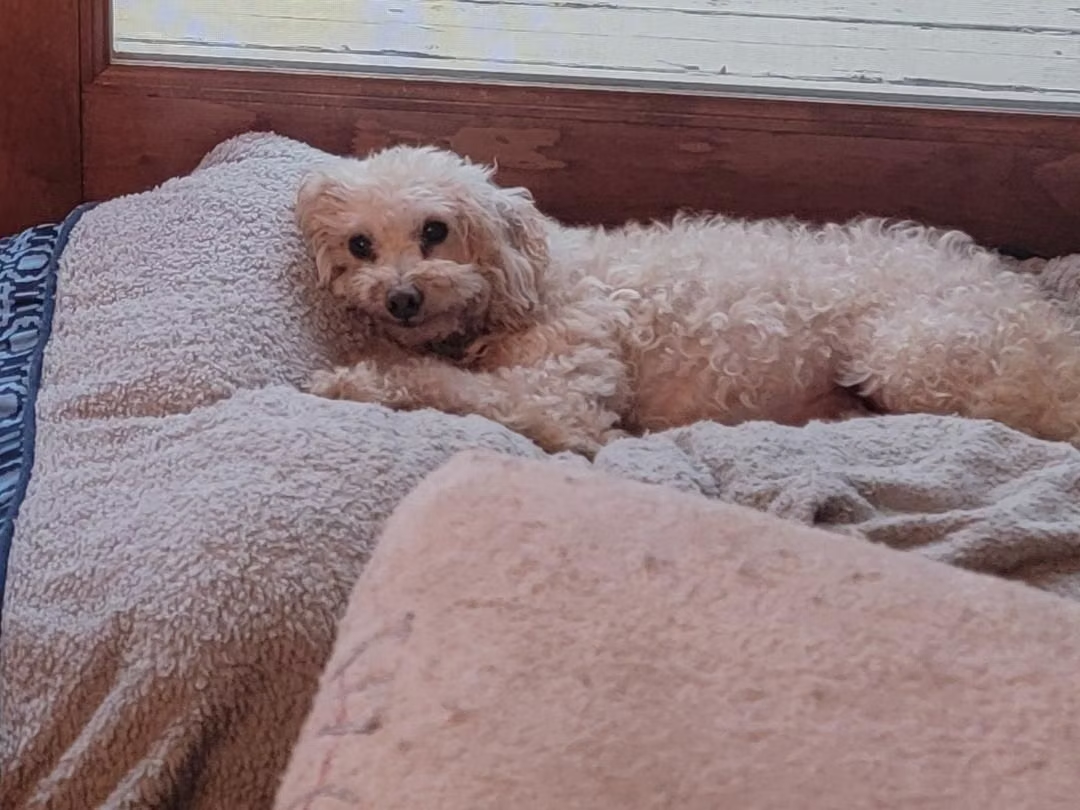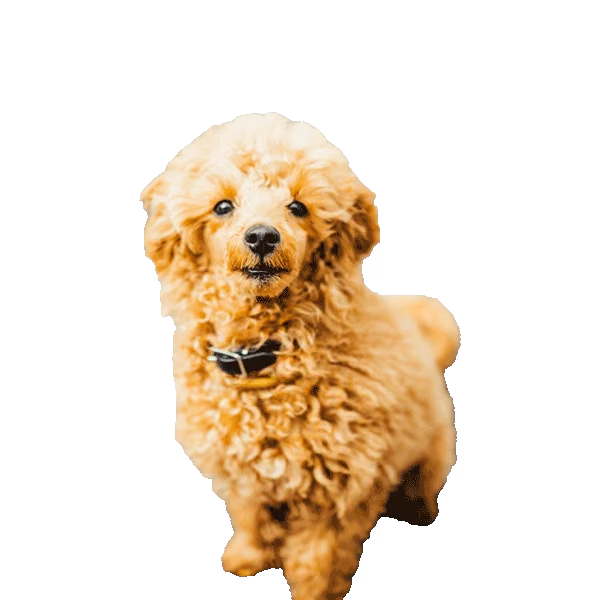
The Toy Poodle is a highly intelligent, elegant companion known for its trainability and playful, affectionate nature.
How the Poodle (Toy) coat is built, and what that means when you groom it.
Caution: A Poodle (Toy) coat mats easily.
Fine or long hair tangles at the base of the coat, out of sight, where the mats tighten and pull on the skin. Brushing has to reach right down to the roots in sections, not just skim the surface.
Information: A Poodle (Toy) needs clipping every few weeks.
This coat keeps growing rather than shedding out, so it has to be trimmed every few weeks. Left to grow it mats down against the skin and traps moisture, dirt and heat.
A few of the Poodle (Toy) profiles members have added to United Pet Club.
The Toy Poodle is a small, highly intelligent companion dog from France, known for its trainability and affectionate nature. It stands no more than 10 inches at the shoulder and typically lives 12 to 15 years.
The Toy Poodle is the smallest of the three Poodle varieties recognised by most kennel clubs, the others being the Standard and the Miniature. Despite its size, it shares the same build, coat type, and keen intelligence as its larger relatives. The breed originated in France, where the Poodle is the national dog, though its earliest ancestors are tied to water-retrieving dogs across continental Europe.
Toy Poodles are companion animals first. They form close bonds with their owners and tend to stay near the household rather than range widely. The breed is consistently ranked among the most trainable dogs, a trait that made it a fixture in performing acts and that today suits it to obedience and trick training at home.
The coat is curly and grows continuously rather than shedding in seasonal cycles. Regular grooming is therefore part of ownership, but it also makes the breed appealing to households sensitive to loose hair.
| Attribute | Detail |
|---|---|
| Origin | France |
| Size | Toy |
| Lifespan | 12 to 15 years |
| Group / role | Companion dog (toy group) |
| Good with | Adults, considerate older children, other dogs |
The Toy Poodle suits people who want a small, alert, highly trainable dog and who can commit to routine grooming. It fits flats and houses alike given its size, but it needs daily mental engagement and human company. It is less suited to homes where it would be left alone for long stretches or handled roughly by very young children.
The Poodle developed in continental Europe as a water-retrieving dog and became closely associated with France, where the Toy variety was bred down in size for companionship and was popular among city dwellers and in performing acts.
The Poodle's name traces to the German word 'pudel', meaning to splash in water, which points to the breed's early work as a water retriever. The familiar clipped coat began as a practical pattern: hair was trimmed to reduce drag in water while leaving cover over the joints and vital organs.
France adopted the breed and is the country most associated with it, which is why the Poodle is often called the French Poodle. Over time the Poodle split into size varieties. The full-size dog served as a retriever and worker, while smaller versions were bred for companionship.
The Toy Poodle was bred down further from the smaller Poodles to produce a lap-sized companion. Small Poodles were popular among urban residents and were a common sight in travelling performances and circuses, where their intelligence and willingness to learn made them reliable performers.
The Kennel Club and kennel clubs in North America later formalised the three size divisions, Standard, Miniature, and Toy, judged to the same breed standard apart from height. The Toy Poodle remains a popular companion worldwide.
The Toy Poodle is a small, squarely built dog standing no more than about 10 inches tall, with a dense curly coat that comes in many solid colours and dark, oval, alert eyes.
The Toy Poodle is built to the same proportions as the larger Poodle varieties, presenting a squarely proportioned dog whose height at the shoulder roughly equals its body length. It carries itself with an upright, alert posture. The head is refined, the muzzle long and straight, and the ears hang close to the head.
| Trait | Standard |
|---|---|
| Height | Up to about 10 inches (25 cm) at the shoulder |
| Weight | About 4 to 6 pounds (2 to 3 kg) |
| Coat | Dense, curly, single coat that grows continuously |
| Colours | Solid colours including white, black, apricot, brown, cream, silver, blue, red |
| Eyes | Dark, oval, alert expression |
The coat is the breed's defining feature. It is curly and harsh to the touch when in natural condition, and it grows rather than sheds, so loose hair tends to stay in the coat rather than fall around the home. The Kennel Club standard recognises solid colours only; common shades include white, black, apricot, brown, cream, silver, blue, and red. Coats may be clipped into several recognised patterns for show or kept in a shorter, lower-maintenance trim for pets.
The Toy Poodle is affectionate, playful, and exceptionally intelligent, bonding closely with its family and generally getting along with other dogs, though it can be reserved with strangers and prone to barking.
Toy Poodles are people-oriented dogs that thrive on close contact with their owners. They are quick to learn, eager to please, and responsive to attention, which is part of why they train so readily. The breed is playful well into adulthood and enjoys games and interactive activity.
With family, the Toy Poodle is affectionate and often forms a strong attachment to one or two people. With strangers it can be reserved or cautious at first, and it will often announce visitors with barking, so early socialisation helps. The breed generally coexists well with other dogs and can live with cats it has been raised alongside.
Because of its small size and fine bones, the Toy Poodle is better matched with adults and older children who handle it gently than with very young children. Its sensitivity also means it responds poorly to harsh handling.
| Trait | Rating |
|---|---|
| Affection | 5 |
| Energy | 3 |
| Trainability | 5 |
| Vocalness | 4 |
| Shedding | 1 |
The Toy Poodle needs regular coat grooming to prevent matting, modest daily exercise, and plenty of mental stimulation, and it adapts well to flat living when given company and activity.
The Toy Poodle adapts well to flats and small houses because of its size and moderate exercise needs. It does best indoors as a close companion and should not be left alone for long periods, as it can become anxious or develop nuisance barking. Provide a warm, draught-free resting spot, since small dogs lose body heat quickly.
The Toy Poodle needs a complete diet formulated for small breeds, fed in small measured portions across two or more meals a day to maintain steady energy and avoid low blood sugar in young puppies.
Feed a complete, balanced dog food appropriate to the dog's life stage. Small-breed formulas use smaller kibble sized for tiny mouths and provide the higher calorie density that small, active dogs need per kilogram of body weight. Measure portions rather than free-feeding, because the breed can gain weight easily and excess weight strains small joints.
| Life stage | Amount per day | Meals |
|---|---|---|
| Puppy (under 6 months) | Per food label, divided | 3 to 4 |
| Puppy (6 to 12 months) | About 1/4 to 1/2 cup | 3 |
| Adult | About 1/4 to 1/2 cup | 2 |
| Senior | Adjusted for lower activity | 2 |
Keep treats to a small share of daily calories to prevent weight gain, and use part of the regular meal allowance for training rewards. Toy Poodle puppies can be prone to low blood sugar, so frequent small meals help in the early months. Discuss any supplements with a veterinary surgeon rather than adding them on your own.
The Toy Poodle is generally long-lived at 12 to 15 years but is prone to several inherited conditions including patellar luxation, eye disease, dental problems, and orthopaedic issues affecting small breeds.
The Toy Poodle is a generally healthy, long-lived breed, with a typical lifespan of 12 to 15 years and many dogs living longer with good care. Like all pedigree dogs it carries some risk of inherited conditions, and its small size brings particular concerns around joints, teeth, and bones. Buying from breeders who screen their stock reduces the chance of several of these problems.
| Condition | Signs | Note |
|---|---|---|
| Patellar luxation | Skipping gait, intermittent lameness in a hind leg | Common in toy breeds; ranges from mild to surgical |
| Progressive retinal atrophy | Night blindness, declining vision | Inherited eye disease; DNA tests exist |
| Dental disease | Bad breath, tartar, loose teeth | Frequent in small breeds; managed with dental care |
| Legg-Calve-Perthes disease | Hind-limb lameness, pain in young dogs | Hip-joint condition affecting small breeds |
| Tracheal collapse | Honking cough, especially with excitement | Use a harness rather than a neck collar |
The Toy Poodle is one of the most trainable dog breeds, learning quickly and responding well to consistent, reward-based training, with early socialisation important to curb wariness and barking.
Few breeds learn as readily as the Poodle. The Toy Poodle picks up commands and tricks quickly and enjoys the mental work, which makes training a good outlet for its intelligence. It responds best to short, upbeat sessions and to handlers who are consistent. Because the breed is sensitive, harsh corrections tend to backfire and can make a dog timid.
Early socialisation matters. Exposing the puppy to a range of people, places, and other animals reduces the wariness towards strangers that the breed can show and helps prevent excessive barking. House training can take patience with any small breed, so a consistent routine helps.
Toy Poodles reach maturity within their first year, carry small litters of about three puppies after a roughly 63-day gestation, and the tiny size of the breed makes responsible, health-screened breeding important.
Toy Poodles reach sexual maturity in the first year, though responsible breeders wait until a dog is physically mature and has passed health screening before breeding. Females are usually bred only after testing clear of inherited conditions common in the breed, such as eye disease and patellar problems.
Gestation in dogs lasts about 63 days. Toy Poodle litters are small, often around three puppies, reflecting the breed's tiny size. The small size also means whelping can carry more risk than in larger breeds, and some litters may need veterinary support during birth.
Newborn puppies are fully dependent and are nursed by the dam for the first weeks. Breeders begin gentle handling and socialisation early, and puppies are typically weaned and ready to go to new homes at around eight to twelve weeks. Toy Poodle puppies can be prone to low blood sugar, so frequent feeding and careful monitoring are important in the early period.
| Metric | Value |
|---|---|
| Sexual maturity | Within the first year |
| Gestation | About 63 days |
| Average litter size | About 3 puppies |
| Weaning age | About 6 to 8 weeks |
| Typical age to new home | 8 to 12 weeks |
Your Poodle (Toy)'s details on a record that satisfies UK microchip law: free with United Pet Club, for life, with nothing to renew.
When a dog warden or rescue centre picks up a stray Poodle (Toy), the chip scan is the first move, and the record behind it decides how the story ends. Keep yours pointing home with a free United Pet Club profile. Register your dog once, and the record stands for life without a renewal letter ever landing on the mat.
The implant happens at the vet surgery; the record is your half of the bargain, and the 2016 regulations expect it kept up to date. Register the microchip free on the lifetime plan: any brand a British vet implants is accepted, amendments after moving house cost nothing, and the record stays searchable through the lookups rescue centres and wardens turn to first. Create your free account and square it away this evening.
Set up a free United Pet Club account, add your Poodle (Toy)'s details and a photo, and save. The profile stays live for the whole of the dog's life at no charge, and the chip number can be added the moment you have it.
Key the fifteen digit number into your free United Pet Club account with your current address and phone number. The lifetime plan accepts any brand a British vet implants, and amendments after a house move are free.
Yes. Dogs in England, Scotland and Wales have had to be chipped since 2016, with the keeper's details kept current. The law covers the chip; keeping the record pointing at a live phone number is what United Pet Club handles, free.
Nothing at all. The United Pet Club lifetime plan covers the profile, the microchip record and every amendment without a fee, so there is no renewal to remember.
Common questions about the Toy Poodle cover its size, temperament, grooming demands, lifespan, suitability for families and flats, and where to find one.
A Toy Poodle stands up to about 10 inches (25 cm) at the shoulder and usually weighs around 4 to 6 pounds (2 to 3 kg). It is the smallest of the three Poodle size varieties.
It is affectionate, playful, and highly intelligent. The breed bonds closely with its family, gets along with other dogs, and tends to be reserved with strangers. It can bark to announce visitors.
Their exercise needs are modest, but the curly coat requires regular brushing and professional clipping every 4 to 6 weeks. They also need plenty of mental stimulation and human company, so grooming and engagement are the main commitments.
The typical lifespan is 12 to 15 years, and many dogs live longer with good nutrition, dental care, and regular veterinary check-ups.
Yes for flats, given their small size and moderate exercise needs. They suit adults and older children who handle them gently; their fine bones make them less ideal around very young children.
No. The coat grows continuously rather than shedding seasonally, so loose hair tends to stay in the coat. This makes regular grooming necessary but keeps loose hair around the home to a minimum.
Toy Poodles are widely available from breeders, and Poodles also appear in breed-specific rescues and shelters. Choose breeders who health-screen their dogs for inherited eye and joint conditions. The Kennel Club's Find a Puppy service lists assured breeders in the UK.