The Pharaoh Hound is a sleek, affectionate sighthound known for its ancient lineage and its endearing habit of blushing when happy.
How the Pharaoh Hound coat is built, and what that means when you groom it.
A few of the Pharaoh Hound profiles members have added to United Pet Club.
The Pharaoh Hound is a medium-sized sighthound from Malta, where it is called Kelb tal-Fenek. It is affectionate with its family, athletic and known for blushing when excited.
The Pharaoh Hound is a medium sighthound from the island of Malta, where it has long been used to hunt rabbits over rocky ground. The Maltese name, Kelb tal-Fenek, translates as "dog of the rabbit". It hunts by a combination of sight, scent and sound, which sets it apart from many other sighthounds that rely mainly on vision.
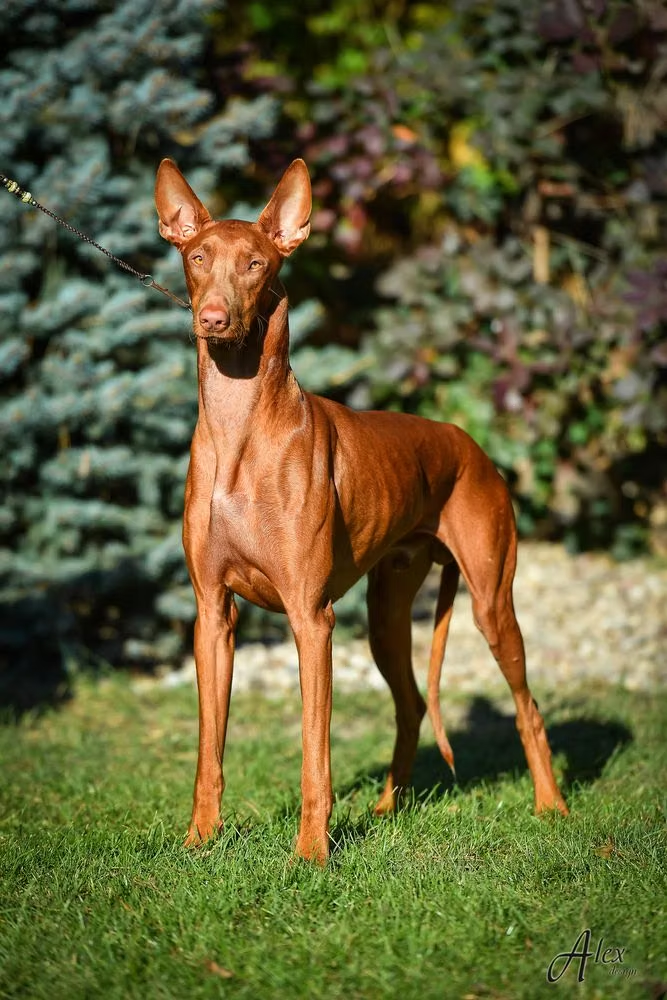
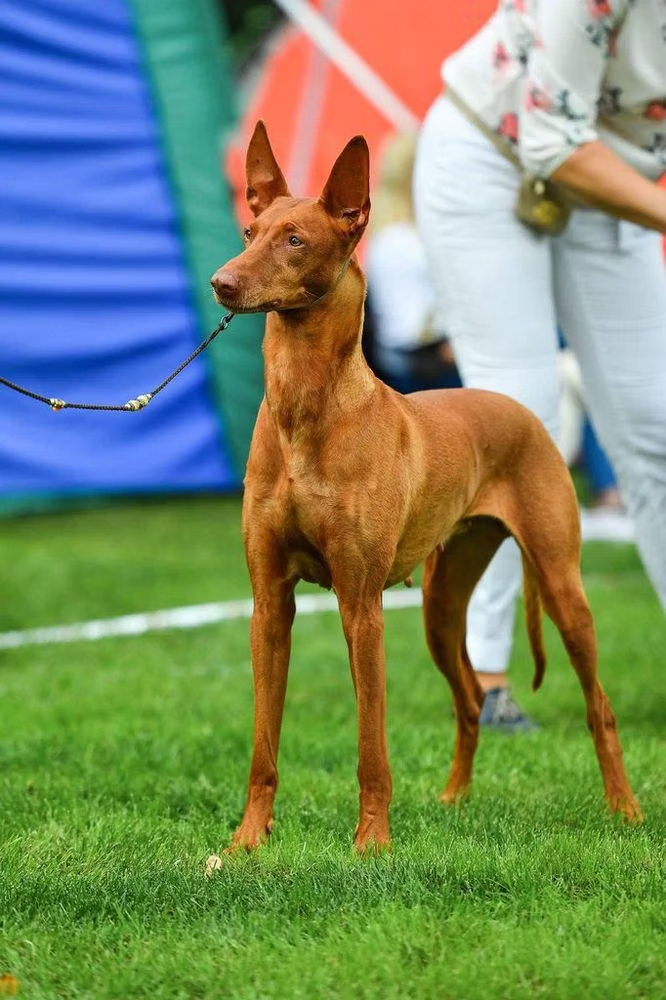
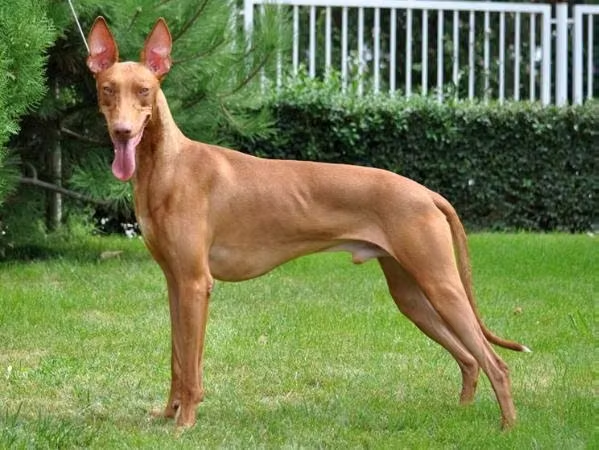
The breed has a tan to chestnut coat, large upright ears and an athletic build that suits fast pursuit across uneven terrain. Adults usually stand around 21 to 25 inches at the shoulder and weigh roughly 45 to 55 pounds. One trait owners mention often is the "blush": when the dog is happy or excited, its nose and the area around its ears flush a deeper rose colour.
Indoors the Pharaoh Hound tends to be calm and affectionate. It bonds closely with its household and is generally friendly with people it knows. The independent streak common to hunting hounds means it does not always do exactly as asked, though it responds well to patient, reward-based handling.
| Attribute | Detail |
|---|---|
| Origin | Malta |
| Size | Medium (about 45 to 55 lb) |
| Lifespan | 12 to 14 years |
| Group/role | Sighthound, originally a rabbit hunter |
| Good with | Family members and children when raised together; supervise around small pets |
This breed fits active households that can provide daily exercise and a securely fenced area to run. It is well matched to owners who enjoy a clean, low-grooming dog and who do not mind a strong chase instinct around small animals. People who want instant, military-style obedience may find the independent temperament frustrating. Homes with cats or small pets should introduce them carefully, since the hunting drive is strong.
The Pharaoh Hound developed on Malta as a rabbit-hunting dog known as the Kelb tal-Fenek. It came to Britain in the 1920s to 1930s and was recognised by major registries in the late twentieth century.
The Pharaoh Hound is the national hound of Malta, where it has been kept for centuries as a hunting dog under the local name Kelb tal-Fenek. On Malta and the neighbouring island of Gozo, hunters used it to find and flush rabbits among stone walls and rough ground, often working with ferrets and at night.
The modern breed name and an older popular theory linked the dog to ancient Egypt, drawing on its resemblance to dogs depicted in Egyptian tomb art. Later genetic studies did not support a direct unbroken line from ancient Egyptian dogs, and the breed is best understood as a long-established Maltese type rather than a literal survivor of the pharaohs.
The breed was brought to Britain around the 1920s and 1930s, and breeding programmes there were established more firmly from the 1960s onwards. British and American kennel clubs recognised the Pharaoh Hound in the late twentieth century, which helped standardise its appearance and spread it to new countries.
Despite international recognition, the Pharaoh Hound remains relatively uncommon outside Malta. It is still associated strongly with its home island, where the working rabbit-hunting tradition has continued alongside its life as a companion dog.
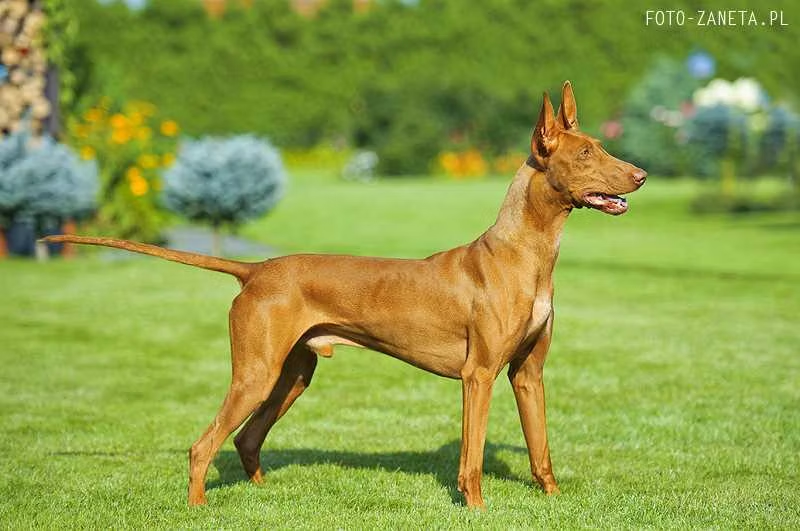
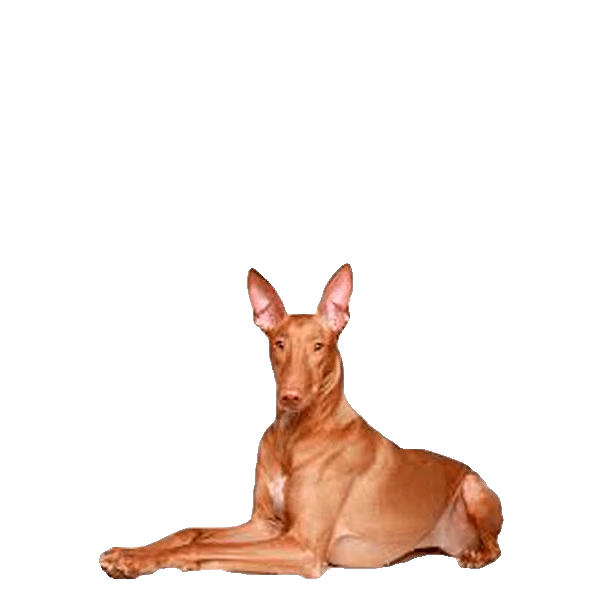
The Pharaoh Hound is a lean, medium sighthound with a short tan to chestnut coat, large upright ears and amber eyes. It typically stands 21 to 25 inches tall and weighs 45 to 55 pounds.
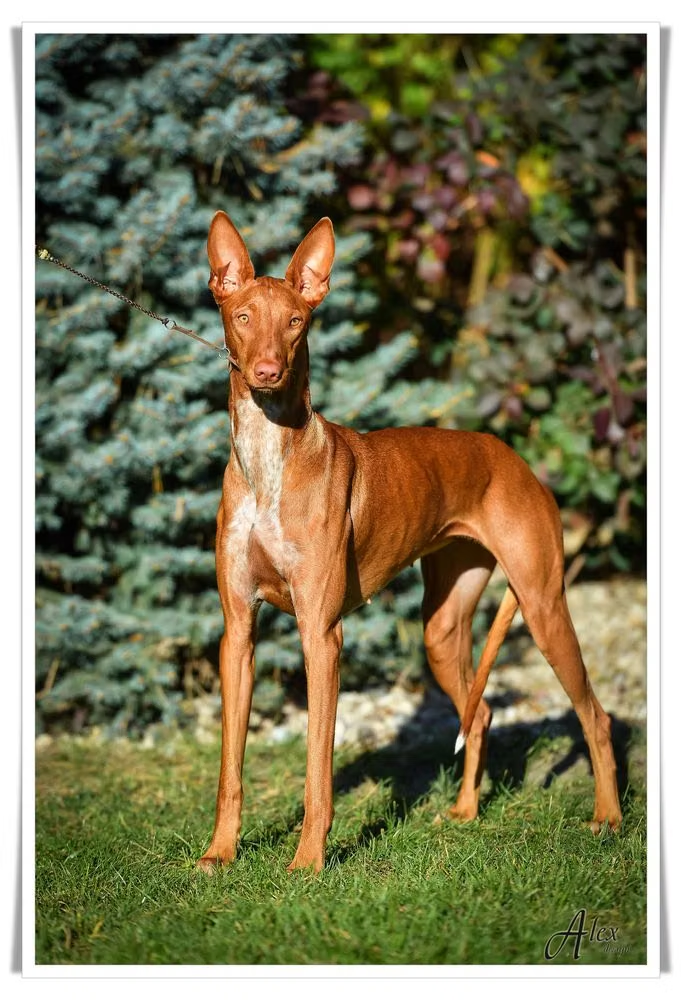
The Pharaoh Hound has the lean, graceful outline typical of sighthounds. The body is slightly longer than it is tall, with a deep chest, tucked-up belly and long clean legs built for speed. The head is long and chiselled, the muzzle tapers, and the large ears stand erect and turn forward when the dog is alert.
| Trait | Standard |
|---|---|
| Height | Males about 23 to 25 in; females about 21 to 24 in at the shoulder |
| Weight | About 45 to 55 lb |
| Coat | Short, fine and glossy; close-lying |
| Colours | Tan to chestnut, often with white markings on chest, toes, tail tip and a thin blaze |
| Eyes | Amber, blending with the coat colour; oval and moderately deep set |
The coat is short, fine and lies flat against the skin, with no undercoat. The accepted colour range runs from a light tan through richer chestnut and red-gold shades. White markings are permitted in defined places: a white tip on the tail (sometimes called the "flag"), white on the chest, white toes and a slim white blaze on the centre of the face. Heavy white spotting or flecking on the back of the neck, shoulders or body is considered a fault under most standards. The thin coat does little to insulate the dog, so it feels the cold and is best protected in chilly weather.
The Pharaoh Hound is affectionate and playful with its family, friendly but sometimes reserved with strangers, and driven to chase small animals. It is intelligent and sensitive, with an independent streak.
At home the Pharaoh Hound is affectionate, playful and often closely attached to its people. Many enjoy human company so much that they like to lean against or curl up next to family members. The breed tends to be good with children it has grown up with, though its energy and speed mean play with very young children should be supervised.
With strangers, reactions vary from openly friendly to politely reserved. Early socialisation helps the dog stay relaxed around new people and situations. The breed is alert and will often bark to announce visitors, but it is not built for guard work and rarely shows aggression.
The strong prey drive shapes much of its behaviour outdoors. A Pharaoh Hound may bolt after a rabbit, squirrel or cat, so a secure fence and lead discipline matter. Around other dogs it is usually sociable. With cats and small pets, success depends on careful introductions and supervision, and some individuals never become safe companions for small animals.
| Trait | Rating |
|---|---|
| Affection | 5 |
| Energy | 4 |
| Trainability | 3 |
| Vocalness | 3 |
| Shedding | 2 |
The Pharaoh Hound needs little grooming thanks to its short coat, but it requires daily exercise, secure containment and protection from cold weather.
The Pharaoh Hound suits a home with access to a safe, fenced garden, though it can live in smaller spaces if exercised well. The thin coat and lack of undercoat mean it dislikes cold and damp conditions. A warm, soft bed indoors is important, and a coat or jumper helps on cold walks. This is an indoor dog that should not be kept outside in low temperatures.
Feed the Pharaoh Hound a complete diet matched to its life stage and activity level, split into two meals a day, and keep it lean to protect its joints.
The Pharaoh Hound does well on a complete, balanced dog food appropriate to its life stage and activity level. As a lean, athletic breed it should be fed to keep the ribs easily felt but not seen and a visible waist when viewed from above. Exact amounts depend on the food, the dog's weight, age and how much it exercises, so use the product guidelines as a starting point and adjust based on body condition. Fresh water should always be available.
| Life stage | Amount per day | Meals |
|---|---|---|
| Puppy (2 to 6 months) | Per puppy-food label, divided across the day | 3 to 4 |
| Junior (6 to 12 months) | Per label, slightly reduced as growth slows | 2 to 3 |
| Adult (1 to 7 years) | About 1.5 to 2.5 cups of quality dry food | 2 |
| Senior (7 years and older) | Reduced calories to match lower activity | 2 |
Keep treats to no more than about 10 per cent of daily calories so the dog stays lean. Small pieces of plain cooked meat or commercial low-calorie treats work well as training rewards. Most Pharaoh Hounds on a complete diet need no extra supplements; discuss any joint or skin supplements with a vet before adding them, since unneeded supplements can do harm.
The Pharaoh Hound is generally healthy with a lifespan of 12 to 14 years. Owners should watch for sensitivity to anaesthesia and certain drugs, joint issues and the usual sighthound risks.
The Pharaoh Hound is considered a relatively healthy and hardy breed, with a typical lifespan of 12 to 14 years. It has fewer inherited disorders than many breeds, partly because of its long history as a working hunting dog. As with all sighthounds, its low body fat affects how it handles certain medications and anaesthesia, so the veterinary team should be aware of the breed before any procedure.
| Condition | Signs | Note |
|---|---|---|
| Anaesthesia and drug sensitivity | Slow recovery, exaggerated response to sedatives | Lean sighthound build alters drug handling; tell the vet the breed |
| Hip or elbow issues | Stiffness, limping, reluctance to jump | Less common than in many breeds but possible; keep the dog lean |
| Patellar luxation | Skipping gait, intermittent hind-leg lameness | Kneecap slips out of place; ranges from mild to surgical |
| Skin trauma and cold sensitivity | Cuts, scrapes, shivering in cold | Thin coat offers little protection; protect in cold weather |
| Dental disease | Bad breath, tartar, sore gums | Regular brushing and check-ups reduce risk |
The Pharaoh Hound is intelligent but independent and sensitive. It learns well with short, positive sessions and early socialisation, though its prey drive makes reliable off-lead recall difficult.
The Pharaoh Hound is intelligent and capable of learning a wide range of commands, but its hound independence means it weighs whether a request is worth obeying. It is also sensitive and does not respond well to harsh corrections, which tend to make it shut down or avoid the handler. Short, upbeat sessions with food and play rewards work best. Recall is the hardest skill to make reliable, because a moving rabbit or cat can override training, so most owners keep the dog on the lead or in a fenced area when off-lead is risky.
Pharaoh Hounds reach breeding maturity at around 18 to 24 months. Litters average six to eight puppies after a gestation of about 63 days, and responsible breeders screen health and temperament.
Responsible breeding of Pharaoh Hounds focuses on health, sound temperament and adherence to the breed standard rather than on volume. Although dogs can reproduce earlier, breeders generally wait until full maturity, around 18 to 24 months, before a first litter so that the dog is physically and mentally developed and health screening is complete. Mating is timed to the female's heat cycle, and pregnancy lasts roughly 63 days from conception.
Litters typically number six to eight puppies, though smaller and larger litters occur. Newborns are helpless and depend on the mother for warmth and milk, which makes a clean, warm whelping area important. Puppies open their eyes at around two weeks and begin weaning between four and six weeks. Early handling and gentle exposure to household sights and sounds during the first weeks help produce confident, well-adjusted adults.
Puppies usually go to new homes from about eight weeks of age, after first vaccinations and veterinary checks. Because the breed is uncommon, prospective owners often join a waiting list with a reputable breeder.
| Metric | Value |
|---|---|
| Breeding maturity | About 18 to 24 months |
| Heat cycle | Roughly twice a year |
| Gestation | About 63 days |
| Average litter size | 6 to 8 puppies |
| Eyes open | Around 14 days |
| Weaning | About 4 to 6 weeks |
| Typical homing age | From about 8 weeks |
Your Pharaoh Hound's details on a record that satisfies UK microchip law: free with United Pet Club, for life, with nothing to renew.
When a dog warden or rescue centre picks up a stray Pharaoh Hound, the chip scan is the first move, and the record behind it decides how the story ends. Keep yours pointing home with a free United Pet Club profile. Register your dog once, and the record stands for life without a renewal letter ever landing on the mat.
The implant happens at the vet surgery; the record is your half of the bargain, and the 2016 regulations expect it kept up to date. Register the microchip free on the lifetime plan: any brand a British vet implants is accepted, amendments after moving house cost nothing, and the record stays searchable through the lookups rescue centres and wardens turn to first. Create your free account and square it away this evening.
Set up a free United Pet Club account, add your Pharaoh Hound's details and a photo, and save. The profile stays live for the whole of the dog's life at no charge, and the chip number can be added the moment you have it.
Key the fifteen digit number into your free United Pet Club account with your current address and phone number. The lifetime plan accepts any brand a British vet implants, and amendments after a house move are free.
Yes. Dogs in England, Scotland and Wales have had to be chipped since 2016, with the keeper's details kept current. The law covers the chip; keeping the record pointing at a live phone number is what United Pet Club handles, free.
Nothing at all. The United Pet Club lifetime plan covers the profile, the microchip record and every amendment without a fee, so there is no renewal to remember.
Common questions about the Pharaoh Hound cover its size, temperament, care needs, lifespan, suitability as a family dog and how easy it is to find.
It is a medium sighthound. Males stand about 23 to 25 inches at the shoulder and females about 21 to 24 inches, with weights of roughly 45 to 55 pounds.
It is affectionate and playful with its family, alert and intelligent, with an independent streak from its hunting background. It is usually friendly with people it knows and sometimes reserved with strangers.
Grooming is easy because of the short coat, but the breed needs daily exercise, a secure fence and protection from cold weather. Recall can be unreliable due to a strong prey drive, so training and containment take effort.
The typical lifespan is 12 to 14 years. The breed is generally healthy, though it has a sighthound sensitivity to certain drugs and anaesthesia.
Yes, in an active home. It bonds closely with its people and is good with children it is raised with. Households with cats or small pets should introduce them carefully because of the chase instinct.
Yes. When happy or excited, the nose and the skin around the ears flush a deeper rose colour, an effect owners often call the blush.
They are relatively uncommon outside Malta. Prospective owners often wait for a litter from a reputable breeder, so finding a puppy can take time.