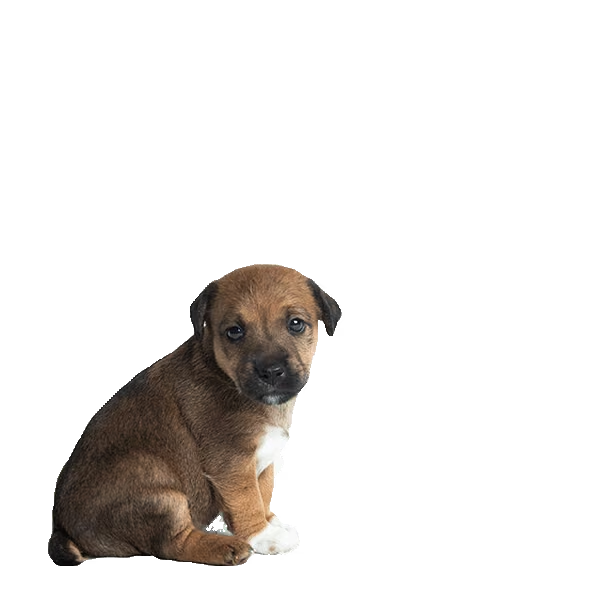
The Parson Russell Terrier is an athletic, spirited working terrier bred for fox hunting and brimming with energy and intelligence.
How the Parson Russell Terrier coat is built, and what that means when you groom it.
Critical: A Parson Russell Terrier should not be shaved.
The undercoat keeps heat out as well as in, and the outer coat shields the skin from sun and insect bites. Clipping the whole coat off removes both. It often grows back patchy, soft or a different colour, and in some animals the guard hairs never return properly. Brush the undercoat out instead of cutting it off.
A few of the Parson Russell Terrier profiles members have added to United Pet Club.
The Parson Russell Terrier is a small, athletic working terrier from England, bred for fox hunting and known for its spirited, intelligent, and energetic character.
The Parson Russell Terrier is a small working terrier developed in England for fox hunting. It stands roughly square in build, with a balanced, athletic frame that lets it run with hounds above ground and follow quarry below it. Despite its modest size, this is a dog built for stamina and work rather than the lap.
The breed is spirited, intelligent, and alert. It reads its surroundings quickly, responds to new sights and sounds, and rarely sits still for long. Owners often describe a dog that wants a task, whether that is a training session, a game, or a long walk with plenty to investigate.
This temperament makes the Parson Russell Terrier rewarding for active people and a poor match for a quiet, sedentary home. The same drive that suits the field can turn into digging, barking, or escape attempts when the dog is bored or under-exercised.
| Attribute | Detail |
|---|---|
| Origin | England |
| Size | Small |
| Lifespan | 13 to 15 years |
| Group/role | Terrier, working fox hunter |
| Good with | Active families, experienced terrier owners |
The Parson Russell Terrier fits households that can give it daily exercise and consistent training. It does well with people who enjoy dog sports, hiking, or other outdoor activity. It can live with children who understand how to handle an energetic dog, though its prey drive means small pets such as rabbits or rodents are a concern. First-time owners should be ready for a smart, wilful terrier that benefits from clear structure.
The Parson Russell Terrier traces to 19th-century England and the fox-hunting terriers bred by the Reverend John Russell, later separated from the shorter-legged Jack Russell type.
The breed originates in England during the first half of the 19th century. Its development is tied to the Reverend John Russell, a clergyman and hunting enthusiast from Devon who bred working terriers for fox hunting. His goal was a dog that could run with the foxhound pack and then go to ground after a fox without killing it.
The terriers Russell favoured were predominantly white, with enough length of leg to keep pace in the field and a body narrow enough to enter a fox earth. The white coat helped hunters tell the dog apart from the fox in low light and dense cover.
Through the 20th century, working Russell-type terriers split into different body shapes. Taller, more square dogs were eventually recognised under the Parson Russell Terrier name, while shorter-legged dogs were associated with the Jack Russell Terrier. The Kennel Club and its counterparts later set separate breed standards that formalised the Parson type around its taller, leggier conformation.
The breed is still valued as a working terrier today, and many examples retain strong hunting instincts even when kept primarily as companions.
The Parson Russell Terrier is a small, square, predominantly white terrier with a flat skull, dark almond eyes, and a smooth, broken, or rough coat.
The Parson Russell Terrier has a roughly square outline, meaning its height at the shoulder is close to its body length. The build is athletic and balanced rather than heavy, with a deep but narrow chest that an adult can span with two hands. The flat skull, moderate stop, and dark almond-shaped eyes give the breed an alert, keen expression. The ears are small V-shapes that fold forward.
| Trait | Detail |
|---|---|
| Height | About 33 to 36 cm (13 to 14 in) at the shoulder |
| Weight | About 6 to 8 kg (13 to 17 lb) |
| Coat | Smooth, broken, or rough; weatherproof and dense |
| Colours | Predominantly white with black, tan, or lemon markings |
| Eyes | Dark, almond-shaped |
The breed comes in three coat types: smooth, broken, and rough. All three are dense and weatherproof, suited to a dog that works in cold and wet conditions. The coat is predominantly white, which is the breed's defining feature, with markings usually limited to black, tan, or lemon, often around the head and at the base of the tail. The white ground colour is functional in origin, since it let hunters distinguish the dog from the quarry.
The Parson Russell Terrier is bold, intelligent, and high-energy, affectionate with its family but driven by strong hunting instincts that affect how it treats small animals.
The Parson Russell Terrier is confident and outgoing. With its own family it is affectionate and playful, and it usually wants to be part of whatever is happening. It bonds closely with people and dislikes being left alone for long stretches.
With strangers the breed is typically friendly but alert, and it will often bark to announce visitors. Early socialisation helps it greet new people calmly. With other dogs it can be assertive, and same-sex pairings sometimes need careful management.
The trait that defines daily life with this breed is prey drive. Bred to hunt, it will chase cats, rabbits, rodents, and other small animals, and it can dig and dart after scent. It is not naturally suited to homes with small pets unless raised with them and supervised. Bored or under-stimulated dogs tend to bark, dig, and find their own entertainment, so mental work matters as much as physical exercise.
| Trait | Rating |
|---|---|
| Affection | 4 |
| Energy | 5 |
| Trainability | 4 |
| Vocalness | 4 |
| Shedding | 3 |
The Parson Russell Terrier needs substantial daily exercise, regular but modest grooming, and a secure environment that contains its drive to dig and chase.
The Parson Russell Terrier adapts to houses with secure gardens and can live in flats if its exercise needs are met, though its barking may challenge close neighbours. Fencing must be solid and dug-proof, because the breed both jumps and tunnels. A dog left alone in a bare garden with little to do is likely to escape or dig.
The Parson Russell Terrier does well on a complete, balanced diet portioned to its small size and high activity level, fed in measured meals to prevent weight gain.
The Parson Russell Terrier needs a complete and balanced diet formulated for its life stage and activity level. As an active small breed, it burns energy quickly, but it can still gain weight if overfed or given too many treats. Feed measured portions rather than leaving food out, and adjust amounts based on the dog's body condition and how much it works or exercises. Fresh water should always be available.
| Life stage | Amount per day | Meals |
|---|---|---|
| Puppy (2 to 6 months) | Per product guidance, fed often | 3 to 4 |
| Puppy (6 to 12 months) | About 1 to 1.25 cups | 2 to 3 |
| Adult | About 0.75 to 1.25 cups | 2 |
| Senior | Adult amount, reduced for lower activity | 2 |
Keep treats to about 10 per cent of daily calories and use small pieces for training rewards. Most dogs on a complete commercial diet do not need supplements. Discuss any joint, skin, or coat supplement with a vet before adding it, and confirm portion sizes if the dog competes in sports.
The Parson Russell Terrier is generally hardy with a lifespan of 13 to 15 years, though it can be prone to eye conditions, patellar luxation, and a few inherited disorders.
The Parson Russell Terrier is a hardy, long-lived breed, with a typical lifespan of 13 to 15 years. Most dogs stay sound and active well into their senior years when kept fit and at a healthy weight. As with any breed, certain inherited conditions appear more often, and responsible breeders screen for them.
| Condition | Signs | Note |
|---|---|---|
| Patellar luxation | Skipping gait, intermittent hind-leg lameness | Kneecap slips out of place; ranges from mild to surgical |
| Primary lens luxation | Cloudiness, redness, sudden pain in the eye | Inherited; DNA testing available for breeding stock |
| Other eye disorders | Vision changes, cataracts | Routine eye examinations help with early detection |
| Deafness | Poor response to sound, often from birth | Linked to the white coat; can be tested in puppies |
| Ataxia (late-onset) | Loss of coordination, wobbling | Rare inherited neurological condition |
The Parson Russell Terrier is intelligent and quick to learn, but its independence and prey drive call for consistent, reward-based training and early socialisation.
The Parson Russell Terrier learns fast and enjoys having a job, which makes it capable in obedience and dog sports. The challenge is not intelligence but independence. Bred to make decisions alone underground, it can be wilful and easily distracted by scent and movement. Short, varied, reward-based sessions hold its attention better than long repetitive drills. Recall takes patience, because a dog in chase mode is hard to call off, so training around distractions and using a secure area for off-lead work both matter.
Parson Russell Terriers reach maturity at around one to two years, carry litters of about four to six puppies, and should be bred only from health-tested parents.
Breeding a Parson Russell Terrier is a responsibility best left to people committed to the breed's health and working ability. Dogs reach sexual maturity by about six to twelve months, but breeders usually wait until physical and mental maturity at one to two years before a first mating. Females cycle roughly twice a year.
After a successful mating, gestation lasts about 63 days. Litters are typically four to six puppies. The dam normally whelps without difficulty given the breed's moderate build, though a quiet, clean whelping area and veterinary support on standby are sensible.
Puppies are born blind and deaf and depend fully on the dam for the first weeks. Because deafness is associated with the white coat, breeders often test litters for hearing. Early handling and socialisation between about three and twelve weeks shape adult temperament, so puppies should meet varied people, sounds, and surfaces before going to new homes. Responsible breeders screen both parents for eye conditions and hearing and place puppies no earlier than eight weeks.
| Metric | Value |
|---|---|
| Sexual maturity | About 6 to 12 months |
| Recommended first breeding | 1 to 2 years |
| Heat cycles | About twice a year |
| Gestation | About 63 days |
| Average litter size | 4 to 6 puppies |
| Weaning age | About 6 to 8 weeks |
Your Parson Russell Terrier's details on a record that satisfies UK microchip law: free with United Pet Club, for life, with nothing to renew.
Microchipping has been compulsory for dogs in England, Scotland and Wales since 2016, and the rules are strict about keeping the details behind the chip current. A free United Pet Club profile holds your Parson Russell Terrier's record for the whole of its life, with your phone number and address sitting where a scan can reach them. Registering your dog is done in minutes and costs nothing, now or later.
The implant happens at the vet surgery; the record is your half of the bargain, and the 2016 regulations expect it kept up to date. Register the microchip free on the lifetime plan: any brand a British vet implants is accepted, amendments after moving house cost nothing, and the record stays searchable through the lookups rescue centres and wardens turn to first. Create your free account and square it away this evening.
Set up a free United Pet Club account, add your Parson Russell Terrier's details and a photo, and save. The profile stays live for the whole of the dog's life at no charge, and the chip number can be added the moment you have it.
Key the fifteen digit number into your free United Pet Club account with your current address and phone number. The lifetime plan accepts any brand a British vet implants, and amendments after a house move are free.
Yes. Dogs in England, Scotland and Wales have had to be chipped since 2016, with the keeper's details kept current. The law covers the chip; keeping the record pointing at a live phone number is what United Pet Club handles, free.
Nothing at all. The United Pet Club lifetime plan covers the profile, the microchip record and every amendment without a fee, so there is no renewal to remember.
Common questions about the Parson Russell Terrier cover its size, temperament, care needs, lifespan, suitability, and availability.
It is a small breed, standing about 33 to 36 cm (13 to 14 in) at the shoulder and weighing roughly 6 to 8 kg (13 to 17 lb). Its build is square and athletic rather than stocky.
It is spirited, intelligent, and high-energy. The breed is affectionate with its family and alert with strangers, but it has a strong prey drive and will chase small animals.
Grooming is straightforward, but the breed needs at least an hour of vigorous exercise daily plus mental work. Without enough activity it tends to bark, dig, and become destructive, so it suits active owners.
The typical lifespan is 13 to 15 years. With good care, a healthy weight, and routine veterinary attention, many stay active into their senior years.
It can do well with children who handle it appropriately. Its hunting instinct makes it risky around small pets such as rabbits and rodents, and it can be assertive with other dogs.
They are smart and learn quickly but also independent and easily distracted. Short, consistent, reward-based sessions and early socialisation produce the best results.
Look for breeders who health-test parents for eye conditions and hearing, or contact breed-specific and terrier rescue organisations. Availability varies, so expect a possible waiting list for a well-bred litter.


