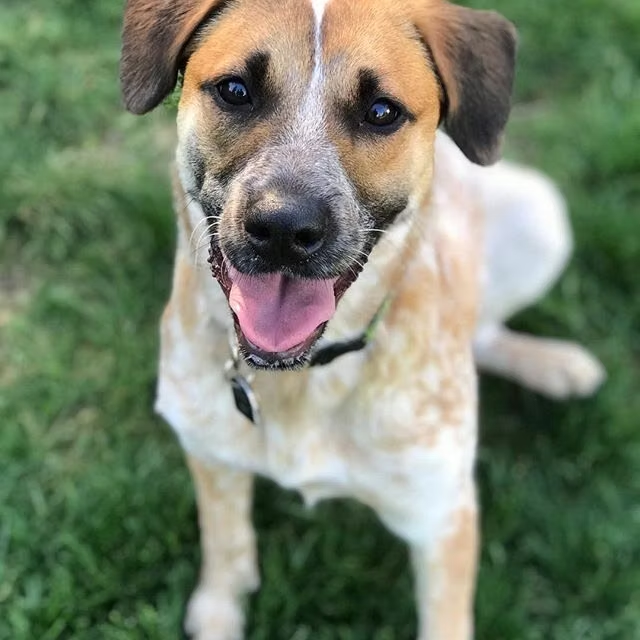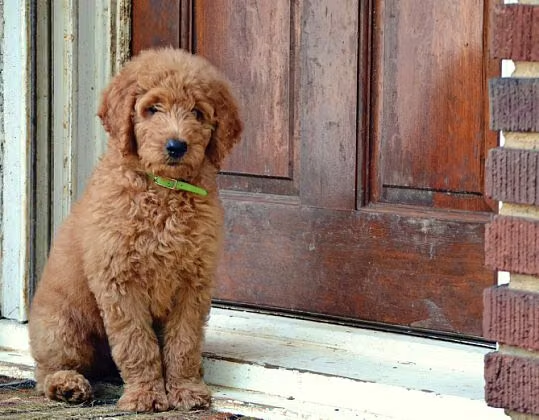
Mixed Breed Dogs blend the best of many backgrounds, offering wonderfully unique, good-natured, and loyal companions of every shape and size.
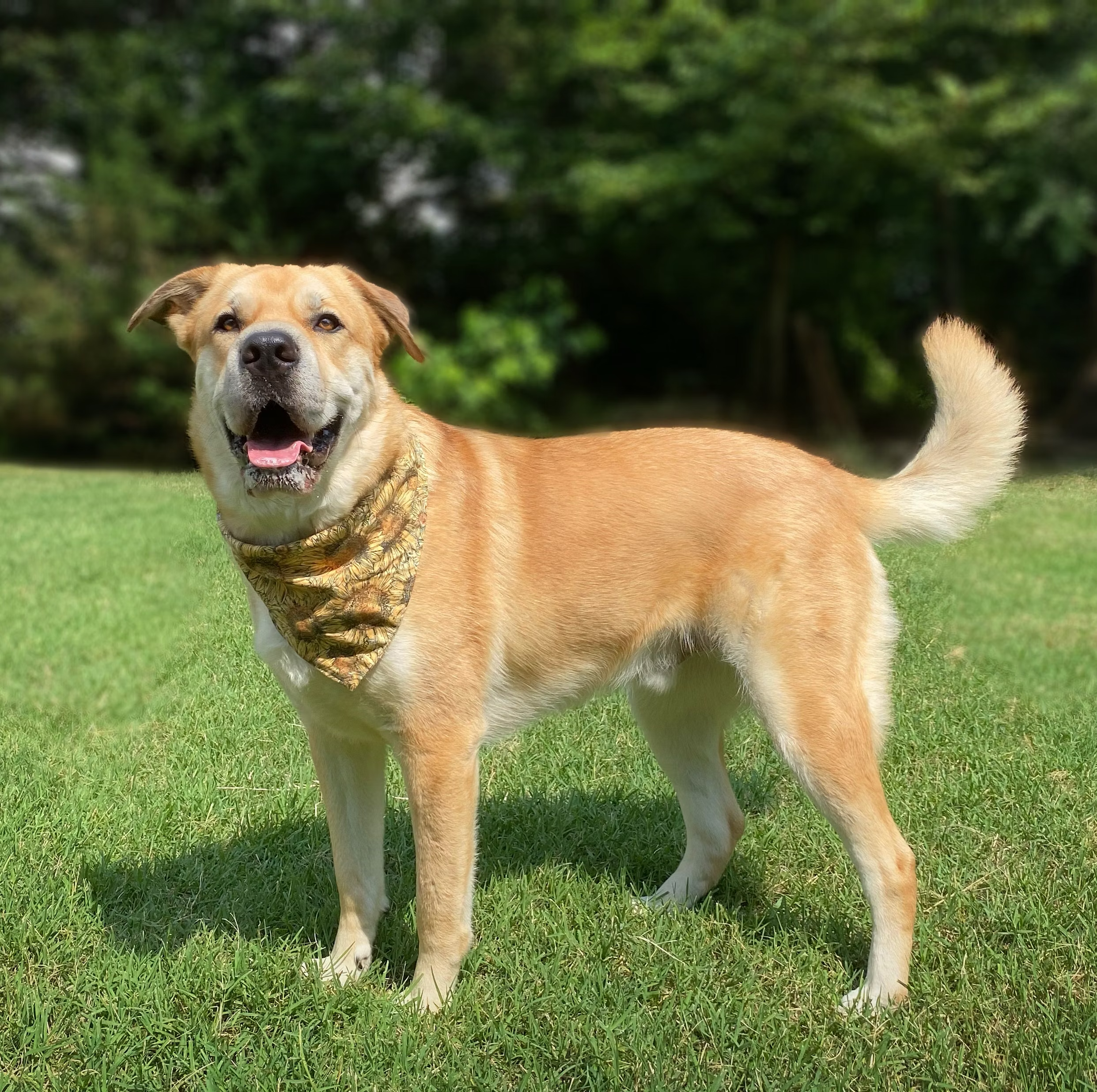
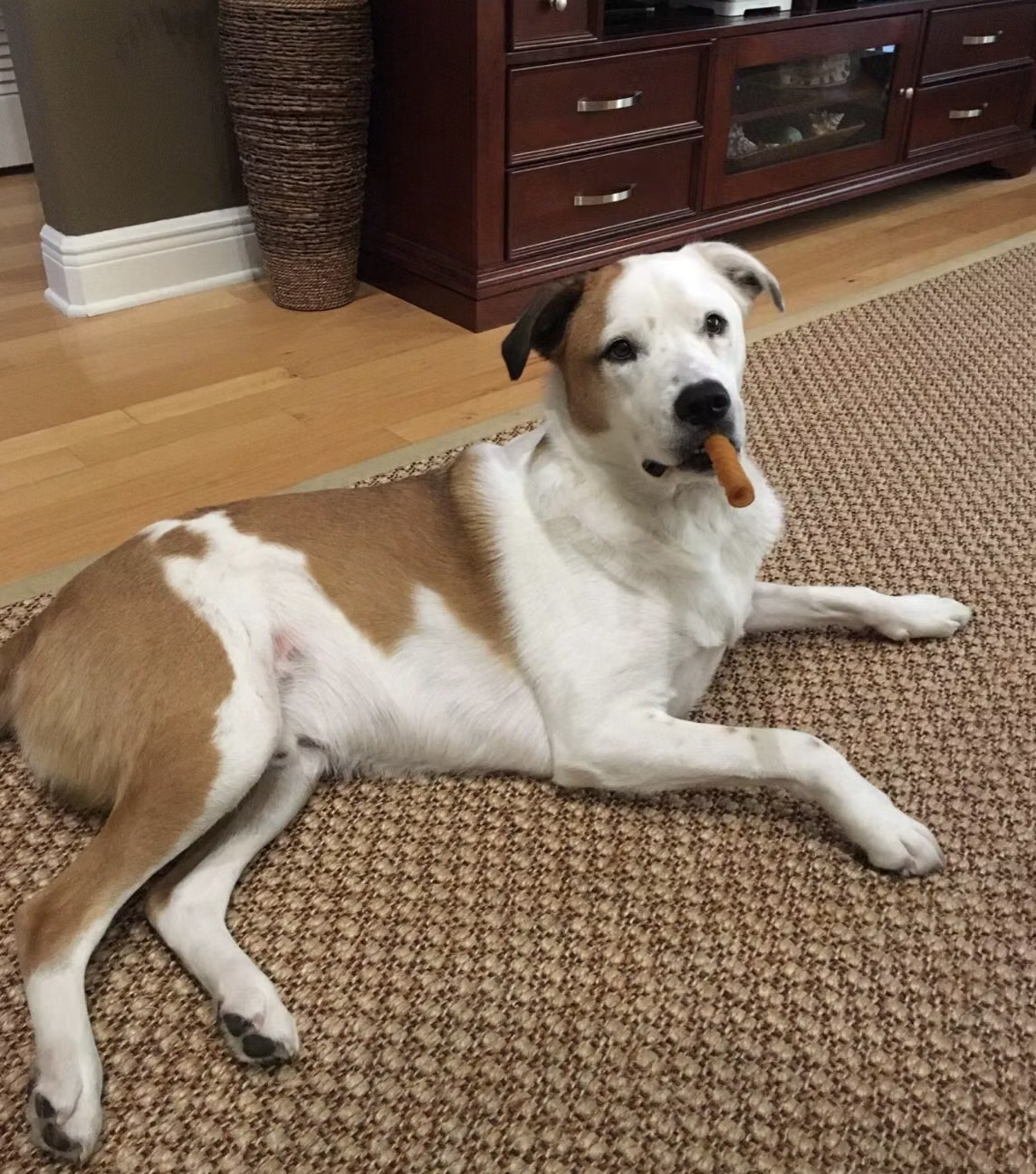
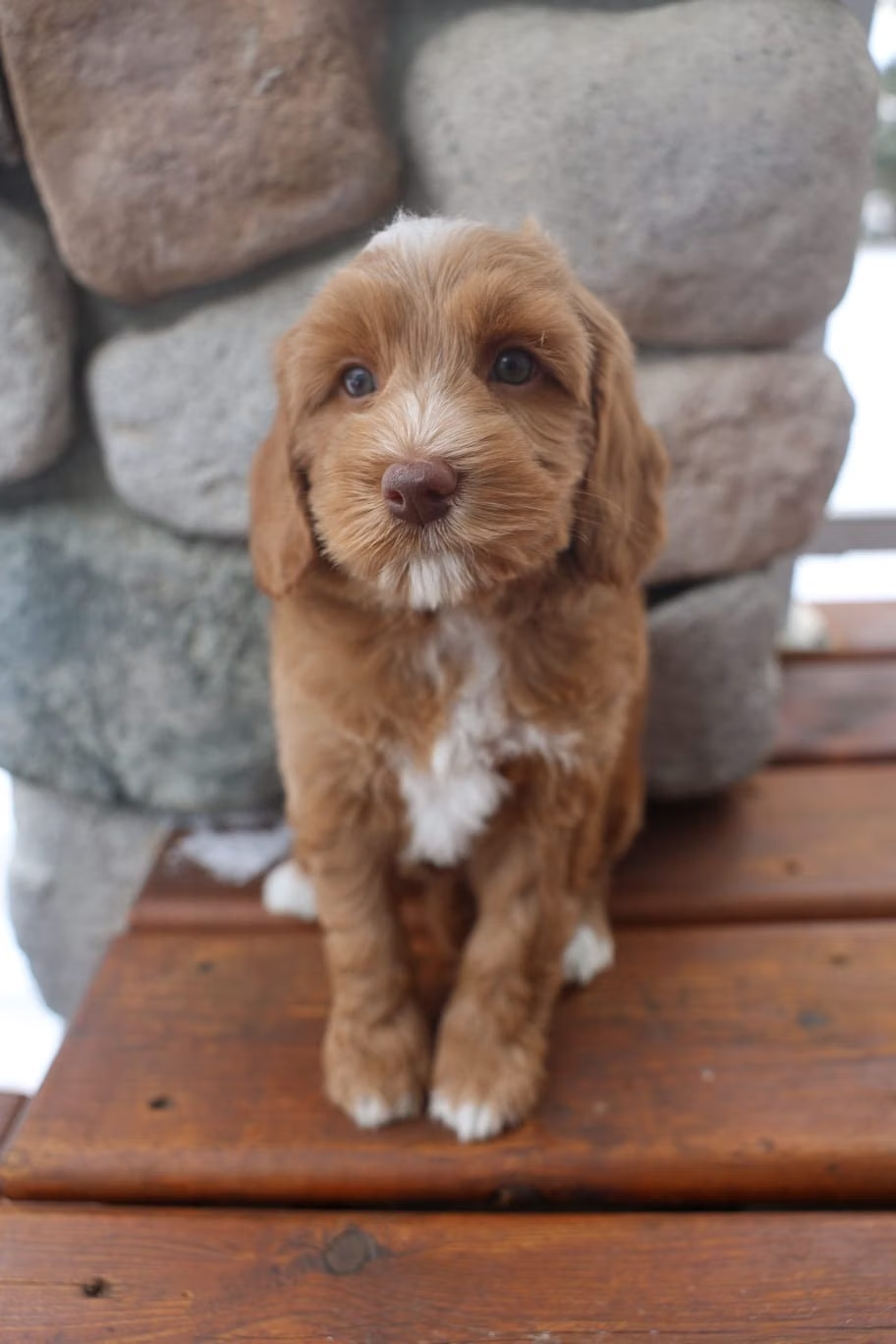
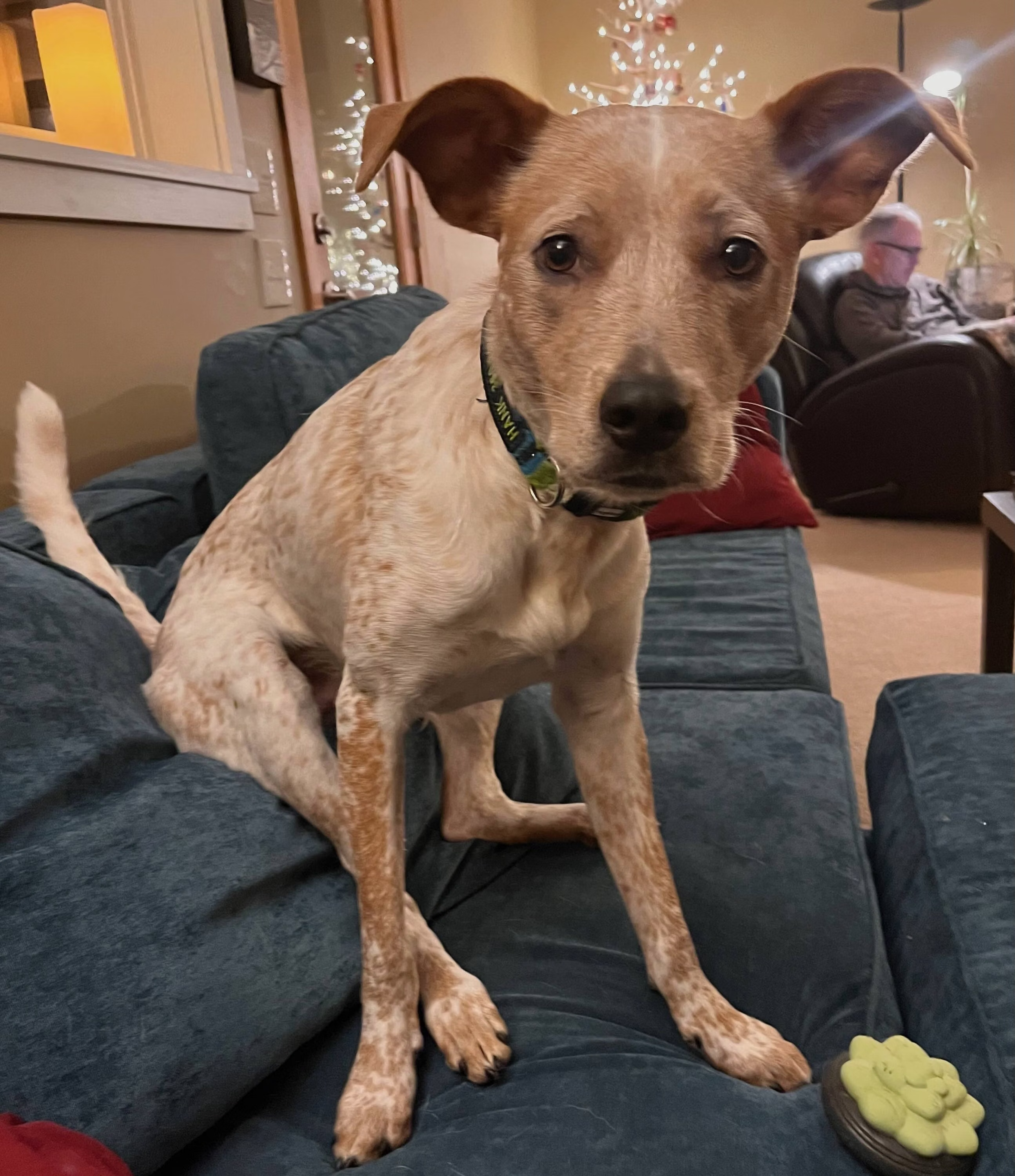
A few of the Mixed Breed Dog profiles members have added to United Pet Club.
Mixed breed dogs descend from two or more breeds, or from generations of free-breeding dogs. They are friendly, loyal, and adaptable companions that come in every size, coat, and temperament.
A mixed breed dog has ancestry from more than one breed, or from generations of dogs that bred without human-directed selection. The category covers everything from a planned cross of two known breeds to a rescue dog of unknown parentage. Because the gene pool is wide, individuals vary far more than dogs within a single recognised breed.
Most mixed breed dogs fall into the medium size range, though weight, build, and coat depend entirely on the lineage behind a given dog. Common temperament traits include a friendly, good-natured disposition and strong loyalty to the household. Many are sociable with people and other animals, and the group as a whole is versatile enough to suit a wide range of homes and activity levels.
Mixed breed dogs make up a large share of the world's pet dog population and a majority of dogs in rescue centres. Adopting one is often less expensive than buying a purebred puppy, and the broad genetic background can reduce the frequency of some inherited disorders tied to narrow breeding.
| Attribute | Detail |
|---|---|
| Origin | Unknown (worldwide) |
| Size | Medium (varies by lineage) |
| Lifespan | 10 to 15 years |
| Group/role | Companion (varies) |
| Good with | Families, other pets, single owners |
A mixed breed dog suits owners who value temperament and fit over predictable looks. Because traits vary, meeting an adult dog or learning its observed behaviour is more reliable than guessing from appearance. The group works for first-time owners, families, and active households alike, provided the individual dog's energy and size match the home.
Mixed breed dogs have no single origin. They arise wherever dogs of different ancestry breed, a pattern that predates the formal breed registries created in the 1800s.
Mixed breed dogs have no documented point of origin. Dogs were domesticated from wolves thousands of years ago, and for most of that history they bred with limited human control over which dogs paired. The result was a population of working and village dogs whose appearance and behaviour reflected local conditions rather than a written standard.
The modern distinction between purebred and mixed breed dogs is recent. Formal breed clubs and stud books appeared mainly in the nineteenth century, when registries such as The Kennel Club (founded 1873) began recording closed pedigrees. A dog counted as purebred only if both parents belonged to the same registered breed. Every dog outside that system became, by definition, a mixed breed.
Throughout the twentieth century, mixed breed dogs remained the most common type of dog worldwide. In many regions they live as free-ranging or community dogs, while in others they are family pets sourced from rescue centres and rehoming organisations. Terms such as mongrel, mutt, and crossbreed all describe dogs of mixed ancestry, though 'crossbreed' usually refers to a deliberate cross of two known breeds.
More recently, intentional crosses marketed under blended names have become common. These are still mixed breed dogs in genetic terms, even when bred on purpose. The broader population continues to be defined by variety rather than by any fixed history.
Mixed breed dogs vary widely in size, coat, and colour because they carry genes from multiple breeds. Most adults fall in the medium range, but no single look defines the group.
There is no breed standard for a mixed breed dog. Appearance depends on the breeds in a dog's background and on how those traits combine. Two puppies from the same litter can differ in size, coat length, ear set, and colour. A dog's adult look is easiest to predict when the parents are known.
Many mixed breed dogs settle into a medium build, with proportions that fall between the heavier and lighter breeds in their ancestry. Heads, muzzles, ears, and tails all vary. Some dogs resemble one parent strongly, while others show a balanced blend.
| Trait | Range |
|---|---|
| Height | Roughly 25 to 60 cm at the shoulder |
| Weight | Roughly 10 to 30 kg in the medium range |
| Coat | Short, medium, long, wiry, or curly |
| Colours | Any: black, brown, tan, white, brindle, merle, mixed |
| Eyes | Brown most common; amber or blue possible |
Coat type follows ancestry. A dog from short-coated breeds usually sheds a sleek coat, while one with herding or terrier lines may have longer or wiry hair. Colour and pattern can be solid, parti-colour, brindle, ticked, or patched. Because pigment genes recombine freely, colour combinations that are rare within fixed breeds appear often in mixed breed dogs.
Mixed breed dogs are generally friendly, loyal, and good-natured, though individual personality depends on lineage and upbringing. Many are sociable with people and other pets.
Temperament in a mixed breed dog reflects its ancestry, early socialisation, and training rather than a fixed breed profile. As a group, mixed breed dogs are often described as friendly, loyal, and good-natured, and many are sociable with both people and other animals.
With family, most form strong attachments and enjoy being part of daily life. Behaviour towards strangers ranges from openly welcoming to reserved, depending on the breeds involved and on how the dog was raised. Dogs with guarding or herding ancestry may be more watchful, while those from sporting or companion lines tend to greet new people easily.
With other pets, outcomes again vary. Early, positive exposure to other dogs, cats, and small animals shapes how well an adult dog shares space. Because the genetic background is broad, the most reliable guide is the individual dog's observed behaviour, which is one reason adopting an adult can be easier than predicting a puppy's adult character.
| Trait | Rating |
|---|---|
| Affection | 4 |
| Energy | 3 |
| Trainability | 3 |
| Vocalness | 3 |
| Shedding | 3 |
Care needs for a mixed breed dog depend on coat type, size, and energy level. Most do well with routine grooming, daily exercise, and a stable home environment.
Day-to-day care for a mixed breed dog follows the same principles as for any dog, adjusted to the individual. Coat type sets grooming demands, while size and ancestry set exercise needs. Knowing the breeds behind a dog helps tailor a routine.
Most mixed breed dogs adapt to houses or flats as long as their exercise needs are met. A securely fenced garden helps but is not required. Provide a quiet resting spot, fresh water, and protection from extreme heat and cold, particularly for thin-coated or very young and old dogs.
Mixed breed dogs thrive on a complete, life-stage-appropriate diet portioned to body size and activity. Daily amounts vary with weight, so feed to maintain a healthy condition.
A mixed breed dog needs a complete and balanced diet suited to its life stage and size. Choose a food labelled for the dog's stage, such as puppy, adult, or senior, and confirm it meets a recognised nutritional standard. Because the group spans many sizes, portion to the individual dog rather than to a single fixed amount.
Feed measured meals on a routine, and adjust the quantity to keep the dog at a healthy weight where the ribs can be felt but not seen. Always provide fresh water.
| Life stage | Amount per day | Meals |
|---|---|---|
| Puppy (2 to 6 months) | Per label, by expected adult weight | 3 to 4 |
| Puppy (6 to 12 months) | Per label, by expected adult weight | 2 to 3 |
| Adult (medium) | About 1.5 to 2.5 cups of dry food | 2 |
| Senior | Adult amount, often reduced for lower activity | 2 |
Keep treats to roughly 10 per cent of daily calories so they do not unbalance the diet. Healthy options include small pieces of plain cooked meat or some dog-safe vegetables. Most dogs on a complete commercial diet do not need supplements; add joint, skin, or other supplements only on a veterinary surgeon's advice.
Mixed breed dogs often benefit from a broad gene pool, which can lower the rate of some inherited disorders. Typical lifespan is 10 to 15 years with good care.
Mixed breed dogs are frequently healthy, and their wide genetic background can reduce the frequency of some inherited conditions that concentrate in narrowly bred lines. This is sometimes called hybrid vigour, though it does not make any dog immune to disease. A dog can still inherit disorders carried by the breeds in its ancestry.
Typical lifespan is 10 to 15 years. Smaller individuals often live towards the longer end of that range, while larger dogs tend towards the shorter end. Routine veterinary care, a healthy weight, and dental hygiene all support a long life.
| Condition | Signs | Note |
|---|---|---|
| Dental disease | Bad breath, tartar, sore gums | Very common; reduced by tooth brushing |
| Obesity | Excess weight, low stamina | Manage with diet and exercise |
| Hip or joint problems | Stiffness, limping, trouble rising | More likely in larger dogs |
| Ear infections | Head shaking, odour, scratching | More common in floppy-eared dogs |
| Skin allergies | Itching, redness, hair loss | Triggers vary by individual |
Most mixed breed dogs train well with consistent, reward-based methods. Trainability varies with ancestry, so match the approach to the individual dog's drive and attention.
Trainability in a mixed breed dog depends on its ancestry and on early experience. Dogs with working, herding, or sporting lines often learn quickly and want a job, while others may be more independent. Across the group, consistency and positive reinforcement produce reliable results.
Start socialisation and basic training early. Short, frequent sessions hold attention better than long ones, and ending on a success keeps the dog motivated. Because individual drive varies, read the dog in front of you and adjust pace and reward accordingly.
Mixed breed dogs follow the same reproductive pattern as all dogs, with a gestation of around 63 days and variable litter sizes. Outcomes in coat, size, and temperament are hard to predict.
Mixed breed dogs reproduce like all domestic dogs. Females usually reach sexual maturity between 6 and 12 months, though responsible breeding waits until a dog is physically and mentally mature, often after the first year or two. Many veterinary and animal welfare organisations recommend spaying or neutering pet dogs not intended for planned breeding, given the large number of dogs already in rescue centres.
Gestation lasts about 63 days from conception. Litter size varies widely with the size and ancestry of the parents, commonly ranging from a few puppies to a dozen. Because the genetic background is mixed, puppies in one litter can differ markedly in size, coat, colour, and temperament, and adult outcomes are difficult to predict.
Newborn puppies are born blind and deaf and depend fully on the mother for warmth and milk. Eyes open at around two weeks. Weaning begins near three to four weeks and is usually complete by about eight weeks, when socialisation with people and littermates becomes important for healthy development.
| Metric | Value |
|---|---|
| Sexual maturity | 6 to 12 months |
| Gestation | About 63 days |
| Litter size | Variable, commonly 1 to 12 |
| Eyes open | Around 14 days |
| Weaning | About 6 to 8 weeks |
Crossbreeds are covered by the same UK microchip law as pedigrees, and United Pet Club keeps their record free for life.
The 2016 microchipping rules make no distinction between a champion-line pedigree and a lurcher of mysterious ancestry: every dog in England, Scotland and Wales must be chipped, with the keeper's details kept current. A free United Pet Club profile does that for your crossbreed for the whole of its life. Register your dog in minutes, with nothing to renew.
Rescue crossbreeds usually arrive already chipped, and the record behind that chip is yours to claim and keep current. Register the microchip free on the lifetime plan: any brand a British vet implants is accepted, amendments after a move cost nothing, and the record stays searchable by rescue centres and wardens. Create your free account and square it away.
Set up a free United Pet Club account, add the dog's details and a photo, and save. No pedigree is needed, the profile is free for life, and the 2016 chip rules are satisfied by keeping the record current.
Key the fifteen digit number into your free account with your address and phone number so the record points at you rather than the rescue. Amendments are free, whatever the chip brand.
No. Kennel Club papers matter for showing and breeding, not for registration. United Pet Club records every dog free for life, pedigree or otherwise.
Common questions about mixed breed dogs cover their size, temperament, care needs, lifespan, suitability, and where to find one.
Size depends entirely on ancestry. Many mixed breed dogs fall in the medium range, roughly 10 to 30 kg, but individuals can be much smaller or larger. If the parents are known, adult size is easier to estimate.
As a group they are often friendly, loyal, good-natured, and sociable, but personality varies with lineage and upbringing. The best guide is the individual dog's observed behaviour.
Care needs depend on coat, size, and energy rather than on a single profile. Most do well with routine grooming, daily exercise, a balanced diet, and regular veterinary care.
Typical lifespan is 10 to 15 years. Smaller dogs often live longer than larger ones, and good weight management and dental care help extend healthy years.
A broad gene pool can lower the rate of some inherited disorders, but it does not guarantee health. A mixed breed dog can still inherit conditions carried by the breeds in its background.
Many are, provided the individual dog's size and energy match the home. Meeting an adult dog and learning its behaviour helps match it to a family or a first-time owner.
Most come from animal rescue centres and rehoming organisations, where adoption is common and often less costly than buying a puppy. Some intentional crosses are also available from breeders.