

Leonberger
The Leonberger is a gentle giant known for its friendly, patient nature and devoted companionship, making it a wonderful family guardian.
- Size
- Giant
- Lifespan
- 8–9 years
- Origin
- Germany
- Temperament
- Gentle
- Standard colors
- White, Brown and Red and 2 more
Characteristics
Coat and grooming
How the Leonberger coat is built, and what that means when you groom it.
- Coat layers
- Double coat
- Coat texture
- Wavy, Rough
- Coat length
- Long
- Shedding
- Seasonal shedding
Grooming guidance
Critical: A Leonberger should not be shaved.
The undercoat keeps heat out as well as in, and the outer coat shields the skin from sun and insect bites. Clipping the whole coat off removes both. It often grows back patchy, soft or a different colour, and in some animals the guard hairs never return properly. Brush the undercoat out instead of cutting it off.
Caution: A Leonberger coat mats easily.
Fine or long hair tangles at the base of the coat, out of sight, where the mats tighten and pull on the skin. Brushing has to reach right down to the roots in sections, not just skim the surface.
Information: A Leonberger drops its undercoat in heavy bursts.
The undercoat comes out in heavy bursts over a few weeks. An undercoat rake, or a bath followed by a proper blow-dry, clears it far faster than daily brushing. Clipping the coat down is not a shortcut for this.
Leonberger colors and patterns
What each club's breed standard says about every Leonberger color and pattern. Point at a ruling to see the club's own wording.
Breed standards describe the Leonberger in White, Brown, Red, Yellow and Sandy. Standard patterns: Sable.
| Color or pattern | FCI | AKC | UKC | KC | KUSA |
|---|---|---|---|---|---|
| White | Standard (“A small white patch or stripe on the chest and white hairs on the toes are tolerated”) | Standard (“A small, unobtrusive stripe or white patch on the chest ... is tolerated”) | Standard (“A small white patch or stripe on the chest, and white hairs on the toes, are permitted”) | Standard (“A small white patch or stripe on the chest and white hair on the toes tolerated”) | Standard (“A small white patch or stripe on the chest and white hairs on the toes are tolerated”) |
| Brown | Standard (“reddish brown”) | Standard (“Reddish Brown”) | Standard (“reddish brown”) | Standard (“reddish brown”) | Standard (“reddish brown”) |
| Red | Standard (“red”) | Standard (“Red”) | Standard (“red”) | Standard (“red”) | Standard (“red”) |
| Yellow | Standard (“Lion yellow”) | Standard (“Yellow”) | Standard (“Lion yellow”) | Standard (“Lion gold”) | Standard (“Lion yellow”) |
| Sandy | Standard (“sandy (pale yellow, cream coloured)”) | Standard (“Sandy”) | Standard (“sandy”) | Standard (“sandy (fawn or cream)”) | Standard (“sandy (pale yellow, cream coloured)”) |
| Black | Disqualifying (“Faulty colours (... black and tan; black ...)”) | Disqualifying (“black must not be the basic color”) | Disqualifying (“Off colors, such as ... black and tan”) | Not recognised (“Black must not dominate basic colour”) | Disqualifying (“Faulty colours (... black and tan; black ...)”) |
| Silver | Disqualifying (“Faulty colours (... silver ...)”) | Disqualifying | Disqualifying (“Off colors, such as ... silver”) | Not recognised | Disqualifying (“Faulty colours (... silver ...)”) |
| Liver | Disqualifying (“Faulty colours (brown with brown nose and brown pads ...)”) | Disqualifying | Disqualifying (“Off colors, such as brown (liver) with brown nose and foot pads”) | Not recognised | Disqualifying (“Faulty colours (brown with brown nose and brown pads ...)”) |
| Patterns | |||||
| Sable | Standard (“Black hair tips are permitted”) | Standard (“All colors may have black tips (some with long black tips)”) | Standard (“Black hair tips are permitted”) | Standard (“Black hair tips are permitted”) | Standard (“Black hair tips are permitted”) |
| Agouti | Disqualifying (“Faulty colours (... wild-coat colour)”) | No ruling | No ruling | Not recognised | Disqualifying (“Faulty colours (... wild-coat colour)”) |
| Tan point | Disqualifying (“Faulty colours (... black and tan ...)”) | No ruling | Disqualifying (“Off colors, such as ... black and tan”) | Not recognised | Disqualifying (“Faulty colours (... black and tan ...)”) |
%22%3E%3Crect%20x%3D%220%22%20y%3D%220%22%20width%3D%2264%22%20height%3D%2264%22%20fill%3D%22url(%23g)%22%2F%3E%3Cg%20fill%3D%22none%22%20stroke%3D%22%231C1C1C%22%20stroke-width%3D%221%22%20stroke-linecap%3D%22round%22%20stroke-linejoin%3D%22round%22%3E%3Cpath%20d%3D%22M15.7%2014.8l1.9%203.6M26.4%2024.1l1.2%204.1M42.7%2029.5l0.1%203.3M35.9%2025l1.6%203.2M31.3%2028.1l0.7%203.7M15.5%2011.1l1.6%203.6M41.1%2023.8l0.6%203.2M12.1%2020.7l1.2%203M15.4%2011.2l0.8%203.8M42.9%2027.3l0.7%202.9M48.2%2033.2l0.5%204.1M23.1%2024.7l1.4%203.4M51.9%2036.1l0.3%204.3M18.7%2023.9l1.2%203.7M50.4%2027.4l0.5%204.1M18.4%2020.4l0.1%203.1M55.6%2021.4l1.1%203.9M18.6%2024.9l1.7%203.8M8.3%2023.2l1.7%202.9M18.7%2024.2l0.2%203.1M46.4%2022.7l0.6%202.6M14.3%207l0.9%203.5M50.5%2024.9l0.5%203.7M23.2%2024.7l1.2%204.3M10.5%2022.3l1.6%203.4M56.9%2018.2l1.1%202.5M20.8%2021.7l1.1%203.5M10.9%2020.2l0.2%203.9M6.6%2023.3l1%202.4M54.5%2021.7l0.9%203.8M13.3%2021l0.4%203M11.7%2019.5l0.3%204M39%2023.2l0.7%202.5M20.8%2016.7l0%202.6M18.4%2016l0.2%202.6M46.4%2038.2l1.4%203.2M12.9%2022.6l0.6%203.3M13%2020.9l0.3%204.3M35.3%2024.9l1.3%202.3M29.5%2022.1l0.5%202.8M36.6%2023.4l0.2%204.3M20.5%2017.6l0.7%204.1M18.3%2020.6l0.6%203M20.5%2025.8l0.5%203.8M23.5%2040.2l1.1%202.9M22.8%2024.9l1.5%203M25.5%2023.1l0.5%203.3M47.7%2024.7l1.5%203.7M12.9%2018.4l1.9%203.8M29.5%2023.7l0.5%204.1M37.7%2026.5l0%202.9M16.8%2016.4l0.1%203.3M49.8%2028l1.7%203.8M29.4%2025.5l0.5%203.6M9.3%2023l1.3%203.1M47.4%2025.6l0.5%203.5M48.1%2023.8l1.6%203.2M9.9%2018.3l1.3%202.5M12.2%2016.6l0.4%203.2M22%2022.1l1.4%202.7M43.9%2024.7l1.4%203.9M14.3%2020l1.8%203.2M46.3%2040.1l0.3%203.6M14.9%207l0.3%204M17.5%2016.7l1.2%202.4M54.6%2040l1%203.5M13.3%2013.9l1.6%204.2M15.3%2016.5l1.2%202.9M23.8%2038.5l0.2%203.8M18.2%2019l0.6%203M11.2%2023.6l0.7%204.1M33.1%2023.2l0.9%204.3M13.6%2019.9l0.4%204.5M19.7%2023.1l1.9%203.7M50.5%2027.1l0.3%204.1M28.2%2028.5l0.2%203.8M29%2028.4l0.1%204M47.7%2024.5l0.6%202.5M10.7%2017.2l1.4%202.7M25.5%2040.3l0.6%204.1M37.6%2022.8l0.7%204.4M57%2018.6l0.2%203.4M16.9%2022.2l1.7%203.8M43.5%2024.7l1.8%203.4M49.2%2026l1.5%203.6M47.7%2032.3l0.4%203.7M35.4%2030.8l0.5%202.7M47%2026.1l1%203.9M24.3%2028.1l1.5%204.2M50.5%2023.8l1.3%203.4M58.1%2014.1l0.3%202.6M13.9%2018.2l0.7%202.5M8.2%2021l0.7%202.9M41.4%2026.4l0.4%202.7M16.3%2020.4l0.5%204.3M43.4%2025.9l1.2%203.2M32.3%2022.4l0.3%203.9M43.6%2025.9l2.1%203.8M33.5%2026.3l1.5%203M48.3%2030.6l1.4%203.4M44.2%2024.7l0.9%203.2M12.3%2017.7l0.9%203.7M46.2%2032l1.9%203.4M51%2028.3l0.1%203.7M30.4%2023.1l1.1%203.2M52.6%2022.6l0.9%204.3M16.6%2015.4l0.9%203.1M58.4%2012.8l0.3%202.8M42.8%2032.5l1.8%203.2%22%2F%3E%3Cpath%20d%3D%22M16.4%2026.1l0.1%204.3M14%2017.1l1.3%202.8M36.9%2027.2l1.3%202.6M38.6%2025.8l0.4%203.6M57.6%2014.3l0.3%203.9M14.7%208.2l1%204.3M53.4%2023l1.9%203.4M51.5%2030.3l0.8%202.7M56.2%2020l1.9%203.5M15.9%2010l0.2%202.8M15.8%2022.6l1.8%203.9%22%2F%3E%3C%2Fg%3E%3C%2Fg%3E%3Cuse%20href%3D%22%23s%22%20fill%3D%22none%22%20stroke%3D%22%233B2A20%22%20stroke-opacity%3D%220.6%22%20stroke-width%3D%221%22%20stroke-linejoin%3D%22round%22%2F%3E%3Cellipse%20cx%3D%223.2%22%20cy%3D%2221.7%22%20rx%3D%221.3%22%20ry%3D%221.2%22%20fill%3D%22%231C1C1C%22%2F%3E%3Ccircle%20cx%3D%2210.8%22%20cy%3D%2219.3%22%20r%3D%221.1%22%20fill%3D%22%231C1C1C%22%2F%3E%3C%2Fsvg%3E)
%22%3E%3Cg%20fill%3D%22none%22%20stroke%3D%22%231C1C1C%22%20stroke-width%3D%221.25%22%20stroke-linecap%3D%22round%22%20stroke-linejoin%3D%22round%22%3E%3Cpath%20d%3D%22M39.9%2035.9l0.9%201.3M51.6%2041l-0.1%202M47%2036.3l-0.6%201.8M11.1%2039.9l-0.4%202M16.4%2033.9l1.1%201.6M28.7%2039.7l0.6%201.1M39.7%2035.8l0.1%201.7M27.3%2023.3l0.7%201.4M30.4%2028.4l-0.5%202.1M21%2031.7l0.7%201.9M22.1%2024.7l0.3%201.7M46.9%2029.7l1.1%201.5M50%2032.3l0.3%201.4M14.5%2049.4l0.6%202.1M48.7%2043.6l0.8%201.3M16.6%2043.5l0.8%201M51.6%2033.2l0.4%201.1M52.6%2028.7l0.5%201.6M18.9%2030.8l0.8%201.1M14.5%2049.3l1.1%201.6M15.2%2031.3l0.2%201.4M52.6%2043.2l0.4%201.3M36.9%2030.3l1%201.6M34.9%2024.1l-0.6%201.9M34%2023.1l-0.1%202.1M14.8%2037l0%201.4M29.2%2040.8l0.5%201.3M57.3%2036.7l-0.2%201.5M41.7%2034.9l0.2%201.4M12.4%2021.6l-0.4%201.4M38.9%2044.8l0.6%201.8M9.9%2029.5l0.1%201.5M21.8%2041.6l1.1%201.8M50.7%2031.8l0.9%201.5M43.3%2046.4l0.4%201.3M50%2029.5l0.6%201.9M29.8%2046.8l-0.1%202.1M30.2%2026.1l0.4%202.1M26.6%2036.1l1%201.9M44.8%2043l-0.7%202M13.5%2043.1l0.3%201.6M50.5%2038.3l-0.3%201.9M18.7%2028.5l-0.4%201.4M44.4%2042.4l0.5%201.8M18.3%2046.2l-0.1%201.8M19.7%2029.2l0.1%201.9M51.5%2040.1l0.8%201.5M27.3%2041.9l-0.5%201.8M52.6%2028.1l0.2%202M24.8%2046.2l-0.3%202.1M26.8%2035.9l1.2%201.6M43%2040.6l0.1%202.1M16%2026.6l-0.5%201.3M56.4%2033.4l0.8%202M44%2037.9l0.2%201.5M27.9%2043.3l0.3%201.5M5.3%2033.9l-0.4%201.3M55.7%2042.1l0.6%201.3M12.5%2044.3l1%201.3M27.2%2033.3l0.4%201.8M19.1%2044l0.4%201.6M36.7%2030l0.3%202M30%2028.4l0.4%201.6M49.3%2043.3l0.8%201.2M28.2%2031.6l0.1%201.2M44.5%2032.1l0.5%202.1M49%2028.6l0.7%202M12.1%2037.8l-0.7%202.1M33%2029.6l0.3%201.5M26.5%2031.6l0.5%201.5M14.5%2028.7l0.1%202M10.2%2026.3l-0.5%201.4M37.8%2025.4l0.6%201.7M44%2026.6l-0.2%202.1M45.2%2047l0.6%201.3M30.1%2024.4l1.3%201.6M16.1%2028.7l-0.1%201.3M44%2027.6l0.3%201.7M47.8%2030.8l0.9%201.5M16.9%2034.5l-0.1%202.1M34.7%2031.2l0.1%201.2M35.3%2037.2l0.5%201.9M52.5%2028.3l-0.3%201.2M17.2%2033.8l0.7%201.9M7.9%2041.5l1.3%201.7M50.7%2037.2l1.2%201.6M56%2038.4l1%201.7M9%2025.7l0.6%201.5M32.2%2040.6l0.2%201.7M6.7%2038.8l0.2%201.9M19.4%2040.4l0.3%201.5M50.1%2026.3l1.1%201.6M29.5%2033.2l0.3%201.6M18.2%2033.8l-0.3%201.7M27.8%2030.6l-0.3%201.6M57.3%2035.9l1.1%201.5M44.2%2042.5l0.1%202M16.9%2037.9l0%201.5M48.3%2025.4l1.3%201.7M39.9%2047.5l-0.4%201.2M17.9%2039l0.4%202.1M12.8%2045.3l0%201.9M20.2%2046.9l-0.4%202M36.1%2038.8l0.5%201.7M36.9%2049.1l0.1%201.6M27.7%2022.3l-0.1%201.3M52.2%2045.7l-0.7%202M39%2041.4l1%201.3M28.2%2031.1l0.5%202%22%2F%3E%3Cpath%20d%3D%22M23%2047.4l-0.3%201.2M12.9%2027.9l-0.2%202M13.6%2035.2l0.5%201.3M22%2043.6l0.7%201.4M8.5%2041.2l0.9%201.7M21.1%2030.4l0.1%201.3M41.5%2042.9l1.1%201.6M5.8%2040.1l0.1%201.4M24.5%2030.9l0.3%201.2M15.8%2048.2l0.2%201.7M32.9%2038l-0.1%201.6M46.4%2035.3l-0.2%201.6M43.7%2026.6l0.4%201.3M39.9%2040.8l0.3%201.9M17%2040.5l-0.5%202.1M26.5%2034.7l0.2%201.4M16.5%2026l-0.6%201.9M18.5%2039.1l0%201.4M27.3%2047.2l-0.4%201.2M14.4%2043.7l0.9%201.2M31.8%2045.8l0.7%201.8M54.8%2035.9l0.9%201.1M9.9%2035.1l0.7%201.2M27.2%2032.8l-0.3%201.3M6.3%2035.3l-0.2%201.3M43.1%2038.9l0.6%201.1M48.7%2035.3l1.1%201.8M54.7%2031.1l0.7%201.2M33.5%2025l0%201.2M39.3%2040.9l1.1%201.7M15%2043.6l0.2%201.3M14.3%2022.9l0.9%201.5M9.3%2036.7l-0.2%202.1M15.6%2041.9l1.1%201.8M52%2032.8l0.2%201.8M21.1%2029.2l0.1%202.1M32.8%2029l0.9%201.8M36.3%2033l0.2%201.7M28.1%2022.4l0%201.9M47.9%2032.4l1.2%201.8M47.2%2034.1l1.1%201.4%22%2F%3E%3C%2Fg%3E%3Crect%20x%3D%220%22%20y%3D%220%22%20width%3D%2264%22%20height%3D%2264%22%20fill%3D%22url(%23g)%22%2F%3E%3C%2Fg%3E%3Cuse%20href%3D%22%23s%22%20fill%3D%22none%22%20stroke%3D%22%233B2A20%22%20stroke-opacity%3D%220.6%22%20stroke-width%3D%221%22%20stroke-linejoin%3D%22round%22%2F%3E%3Ccircle%20cx%3D%224.4%22%20cy%3D%2234.2%22%20r%3D%221%22%20fill%3D%22%23E8A0B4%22%2F%3E%3Ccircle%20cx%3D%2210.5%22%20cy%3D%2230%22%20r%3D%221.2%22%20fill%3D%22%231C1C1C%22%2F%3E%3C%2Fsvg%3E)
%22%3E%3Ccircle%20cx%3D%2212%22%20cy%3D%2217.2%22%20r%3D%221.25%22%20fill%3D%22%23C4996A%22%2F%3E%3Cpath%20d%3D%22M1.5%2021.2L9%2018.6L12.6%2021L12.2%2026.2L3.5%2024.4Z%22%20fill%3D%22%23C4996A%22%2F%3E%3Cpath%20d%3D%22M10%2026L14.5%2026.4L18.2%2029.2L13.5%2029.8Z%22%20fill%3D%22%23C4996A%22%2F%3E%3Cellipse%20cx%3D%2221.2%22%20cy%3D%2230.6%22%20rx%3D%221.6%22%20ry%3D%222.3%22%20fill%3D%22%23C4996A%22%2F%3E%3Crect%20x%3D%220%22%20y%3D%2247%22%20width%3D%2264%22%20height%3D%2217%22%20fill%3D%22%23C4996A%22%2F%3E%3Cpath%20d%3D%22M51.5%2024.5L55%2027L54.2%2032L50.5%2028.5Z%22%20fill%3D%22%23C4996A%22%2F%3E%3Cpath%20d%3D%22M45%2038.5L48%2039L48.5%2047L45.5%2047Z%22%20fill%3D%22%23C4996A%22%2F%3E%3C%2Fg%3E%3Cuse%20href%3D%22%23s%22%20fill%3D%22none%22%20stroke%3D%22%233B2A20%22%20stroke-opacity%3D%220.6%22%20stroke-width%3D%221%22%20stroke-linejoin%3D%22round%22%2F%3E%3Cellipse%20cx%3D%223.2%22%20cy%3D%2221.7%22%20rx%3D%221.3%22%20ry%3D%221.2%22%20fill%3D%22%231C1C1C%22%2F%3E%3Ccircle%20cx%3D%2210.8%22%20cy%3D%2219.3%22%20r%3D%221.1%22%20fill%3D%22%231C1C1C%22%2F%3E%3C%2Fsvg%3E)
| Color or pattern | FCI | AKC | UKC | KC | KUSA |
|---|---|---|---|---|---|
| Brown | Standard (“Light brown to as dark brown as possible”) | No ruling | Standard (“light to dark brown in color”) | Standard (“Medium to dark brown”) | Standard (“Light brown to as dark brown as possible”) |
| Dark brown | Standard (“as dark brown as possible”) | Standard (“Dark brown is preferred”) | Standard (“dark brown preferred”) | Standard (“Medium to dark brown”) | Standard (“as dark brown as possible”) |
| Light brown | Standard (“Light brown to as dark brown as possible”) | Standard (“Dark brown is preferred over light brown”) | Standard (“light to dark brown in color, with dark brown preferred”) | No ruling | Standard (“Light brown to as dark brown as possible”) |
| Blue | No ruling | No ruling | Disqualifying (“wall eyes”) | No ruling | No ruling |
| Yellow | Disqualifying (“Eyes without any brown”) | No ruling | Disqualifying (“Yellow (without any trace of brown pigment)”) | No ruling | Disqualifying (“Eyes without any brown”) |
| Color or pattern | FCI | AKC | UKC | KC | KUSA |
|---|---|---|---|---|---|
| Black | Standard (“Black”) | Standard (“always black”) | Standard (“Must be black”) | Standard (“Nose black”) | Standard (“Black”) |
| Liver | Disqualifying (“Brown nose leather”) | No ruling | Disqualifying (“Brown nose, which occurs in liver-colored dogs”) | No ruling | Disqualifying (“Brown nose leather”) |
What the rulings mean
- Standard
- Described by the club's breed standard.
- Disqualifying
- The club's breed standard disqualifies an animal of this colour or pattern.
- Not recognised
- The club does not accept this colour or pattern for the breed.
Color changes
How a Leonberger's colors can change over its life.
Whitechanges toRoan
Coat · With age · from 2 weeks
Blackchanges toSnow nose
Nose · With the season · can change back
Blackchanges toPink
Nose · With the season · can change back
%22%3E%3Cg%20fill%3D%22none%22%20stroke%3D%22%23F5F5F0%22%20stroke-width%3D%221.15%22%20stroke-linecap%3D%22round%22%20stroke-linejoin%3D%22round%22%3E%3Cpath%20d%3D%22M28.6%2025h.1M51.3%2028.8h.1M34.7%2024.3h.1M34.2%2041.6h.1M51%2044.2h.1M55.9%2024.7h.1M27.5%2026.3h.1M18.5%2028.6h.1M25.2%2028.9h.1M24.2%2019.3h.1M20.6%2017.6h.1M34.1%2030.6h.1M57.3%2023.3h.1M23.5%2030.7h.1M26.5%2023.1h.1M40%2031.5h.1M51.7%2038.6h.1M20.2%2022.1h.1M40.4%2037.8h.1M35%2043.1h.1M20.6%2031.7h.1M27.8%2031.9h.1M17.2%2021.1h.1M38.1%2037.7h.1M25.3%2040.5h.1M32%2029.3h.1M41.6%2039.5h.1M23.6%2024h.1M26.4%2018.6h.1M30.3%2031.9h.1M31.2%2035.2h.1M36.5%2043.7h.1M35.2%2026.3h.1M55.6%2019.1h.1M22.4%2036.8h.1M39.2%2020h.1M49.5%2039.1h.1M33.6%2033.5h.1M36.4%2032.4h.1M56.3%2042.4h.1M54.8%2031.2h.1M36.9%2023.2h.1M52.7%2019.1h.1M21.5%2033.8h.1M48.6%2028h.1M36.6%2017.5h.1M45.6%2031.3h.1M37.9%2030.5h.1M17%2031.8h.1M21.1%2043.1h.1M55.7%2021.1h.1M30.8%2041.9h.1M57.4%2038.4h.1M54.8%2026.9h.1M29.1%2017.5h.1M24.3%2037.7h.1M26%2032h.1M39.3%2022.8h.1M53.5%2029h.1M53.3%2023.3h.1M20%2038.4h.1M28.3%2044.7h.1M28.6%2039.8h.1M51.9%2041.1h.1M52.3%2033.7h.1M19.6%2042.2h.1M19%2033h.1M47.8%2021.7h.1M45.7%2024.8h.1M24.6%2035.5h.1M29.8%2036.8h.1M50.7%2032h.1M29.5%2043.5h.1M28.2%2041.5h.1M47.4%2034.8h.1M25.4%2033.7h.1M50.2%2041.2h.1M27.7%2029.5h.1M21.5%2024.8h.1M55.5%2017.5h.1M41.2%2044.3h.1M39.2%2018.4h.1M41.1%2042.5h.1M54.7%2035.3h.1M42.8%2034.5h.1M30.1%2023h.1M42.6%2025.1h.1M32.9%2024.4h.1M42.4%2032.4h.1M49.7%2022.2h.1M49.1%2043.1h.1M38%2035.2h.1M47.7%2043.8h.1M43.1%2022.4h.1M22.4%2040.4h.1M44.4%2019.8h.1M53.3%2040.1h.1M20.7%2029.3h.1M55.6%2043.9h.1M17.6%2039.2h.1M41.7%2028.9h.1M44.1%2036.3h.1M24.3%2043.6h.1M26.4%2038.1h.1M30.3%2029.2h.1M31.5%2030.8h.1M32.1%2023h.1M18.3%2040.9h.1M48%2033.4h.1M36.4%2038.7h.1M31.9%2020.8h.1M32.6%2026.2h.1M22%2031.2h.1M53.4%2021.7h.1M41.9%2017.7h.1M53.3%2037.3h.1M47.7%2040.3h.1M54.4%2033.7h.1M33.6%2037.5h.1M25.3%2017.2h.1M37.6%2019.7h.1M31.6%2019h.1M29.2%2019.6h.1M50.7%2027.3h.1M22%2022.1h.1M31%2037.8h.1M56.5%2026.6h.1M34.7%2039.5h.1M56.5%2040.8h.1M47.6%2038h.1M48.6%2026.1h.1M49.7%2034.2h.1M45.4%2027.4h.1M22.6%2038.9h.1M56.5%2035.3h.1M35.1%2021h.1M41.9%2020.1h.1M37.6%2040h.1M32.6%2044.4h.1M37.9%2025.2h.1M26.6%2043h.1M18.9%2036.7h.1M47.2%2028.9h.1M30.5%2026.2h.1M17.4%2027.3h.1M47.1%2017.2h.1M22.3%2044.3h.1M32.5%2042.4h.1M23.6%2025.7h.1M31.4%2024.9h.1%22%2F%3E%3Cpath%20d%3D%22M26%2020.9h.1M41.2%2023.8h.1M39.9%2026.4h.1M28.5%2033.4h.1M42.8%2043.8h.1M17.6%2034.3h.1M34%2017.1h.1M31.2%2017.2h.1M46.5%2036.1h.1M25.1%2022.1h.1M50.3%2023.7h.1M20.2%2026.6h.1M20.8%2020.4h.1M50.9%2017.3h.1M49.5%2020.2h.1M52.9%2044.1h.1M23.9%2017.8h.1M43.2%2028.1h.1M57.6%2030h.1M52%2025.6h.1M19.2%2019.1h.1M19.5%2024.4h.1M32.8%2040.1h.1M36.1%2027.7h.1M39.6%2029.5h.1M38.4%2041.5h.1M47.9%2019.4h.1M49.1%2031.7h.1M55.9%2036.9h.1M29.2%2027.2h.1M46%2043.5h.1M44.6%2028.8h.1M47.5%2031.5h.1M22.8%2020h.1M27.6%2017.1h.1M43.1%2018.6h.1M54.3%2020h.1M57.2%2033.8h.1M44.5%2043.8h.1M27.1%2035.5h.1M45.3%2041.8h.1M56.7%2028.8h.1M36.7%2021.4h.1M43.3%2042.3h.1M17.3%2022.9h.1M32.7%2035.5h.1M30.5%2039.8h.1M29.1%2021.2h.1M34.5%2018.8h.1M25.8%2027h.1%22%2F%3E%3C%2Fg%3E%3Cpath%20d%3D%22M56.3%2038.4l0%201.2M40%2027.2l-0.3%201.3M32.6%2043.6l-0.4%201.5M29%2023.3l0.8%201.5M55.1%2044l0.4%201.1M47.5%2022.5l-0.2%201.6M42.9%2038.6l0.7%201.2M35.2%2041.8l-0.5%201.7M26.9%2040l-0.1%201.2M41%2042.8l-0.1%201.6M18.4%2021.2l0.7%201.3M49.4%2019.3l-0.5%201.4M50.1%2041.7l0%201.8M28.2%2041.8l-0.6%201.2M55.5%2027.1l0.2%201.2M44.7%2019.3l0.5%201.7M48.6%2020.5l-0.8%201.4M43.7%2039.6l0.3%201.1M22.1%2033.8l-0.6%201.6M50.1%2038.1l-0.5%201.3M51.8%2044.1l-0.1%201.8M39%2017.5l0%201.4M30.2%2026.7l0.2%201.4M25.8%2031.2l0.2%201.6M29.6%2043.5l0.1%201M43.7%2018.3l0.1%201.5M29.6%2018.2l0.3%201.6M24.4%2017.6l0.3%201.1M22%2028.2l-0.6%201.6M25.9%2043.3l-0.3%201.4M22.2%2024.3l0.3%201.3M47.3%2029.2l-0.2%201.4M21.8%2033.2l0.5%200.9M32.9%2037l0.4%201M40%2029.9l0.8%201.4M17.4%2038.3l0.2%201.3M31%2039.2l0%201.2M37.3%2033.7l0.3%201.5M48.1%2040.5l0%201.6M33.9%2031.2l0.1%201.2M29.8%2035.2l-0.4%201M25.1%2037.3l-0.2%201.5M30.2%2039.8l0.5%201M44.6%2034.8l0.4%200.9M55.3%2034.2l0%201.7M50.6%2017.9l0.4%201M30.2%2034.9l-0.4%201.4M19.5%2035.7l-0.5%201.7M40.7%2028.7l0.8%201.4M23.3%2029l-0.4%201.4M17%2040.5l-0.2%201M48.4%2023.2l-0.3%201M37.3%2025.1l-0.4%201.3M23%2021.4l-0.4%201.3M20.4%2017.2l-0.1%201.3M42.3%2020.4l0.6%201.4M41%2031.8l0.6%201.2M45.4%2034.3l-0.1%201.2M32.5%2018l0%201.3M46.2%2021.6l0.1%201.4M30.5%2022.3l0.5%201.1M58%2044.6l0.3%201.5M57.1%2033.9l0.8%201.4M18.3%2042.6l0.3%201M40.5%2035.1l-0.6%201.4M38.8%2044.3l-0.3%201.1%22%20fill%3D%22none%22%20stroke%3D%22%23F5F5F0%22%20stroke-width%3D%220.8%22%20stroke-linecap%3D%22round%22%20stroke-linejoin%3D%22round%22%2F%3E%3C%2Fg%3E%3Cuse%20href%3D%22%23s%22%20fill%3D%22none%22%20stroke%3D%22%233B2A20%22%20stroke-opacity%3D%220.6%22%20stroke-width%3D%221%22%20stroke-linejoin%3D%22round%22%2F%3E%3Crect%20x%3D%2220%22%20y%3D%2258%22%20width%3D%223.6%22%20height%3D%222%22%20fill%3D%22%234A4038%22%2F%3E%3Crect%20x%3D%2226%22%20y%3D%2258%22%20width%3D%223.6%22%20height%3D%222%22%20fill%3D%22%234A4038%22%2F%3E%3Crect%20x%3D%2244%22%20y%3D%2258%22%20width%3D%223.6%22%20height%3D%222%22%20fill%3D%22%234A4038%22%2F%3E%3Crect%20x%3D%2250%22%20y%3D%2258%22%20width%3D%223.6%22%20height%3D%222%22%20fill%3D%22%234A4038%22%2F%3E%3Ccircle%20cx%3D%229.5%22%20cy%3D%2211.5%22%20r%3D%221.1%22%20fill%3D%22%231C1C1C%22%2F%3E%3C%2Fsvg%3E)
%22%3E%3Crect%20x%3D%2217%22%20y%3D%2210%22%20width%3D%2230%22%20height%3D%2242%22%20fill%3D%22url(%23g)%22%2F%3E%3C%2Fg%3E%3Cuse%20href%3D%22%23s%22%20fill%3D%22none%22%20stroke%3D%22%233B2A20%22%20stroke-opacity%3D%220.6%22%20stroke-width%3D%221%22%20stroke-linejoin%3D%22round%22%2F%3E%3Cpath%20d%3D%22M12.5%2037Q13%2032%2018.5%2032Q23.5%2032.5%2023.5%2036.5Q20.5%2035.5%2018.8%2037Q17.4%2038.6%2018%2041.5Q13.6%2040.4%2012.5%2037Z%22%20fill%3D%22%231C1C1C%22%20fill-opacity%3D%220.8%22%20stroke%3D%22%23F5F5F0%22%20stroke-opacity%3D%220.4%22%20stroke-width%3D%220.9%22%2F%3E%3Cpath%20d%3D%22M51.5%2037Q51%2032%2045.5%2032Q40.5%2032.5%2040.5%2036.5Q43.5%2035.5%2045.2%2037Q46.6%2038.6%2046%2041.5Q50.4%2040.4%2051.5%2037Z%22%20fill%3D%22%231C1C1C%22%20fill-opacity%3D%220.8%22%20stroke%3D%22%23F5F5F0%22%20stroke-opacity%3D%220.4%22%20stroke-width%3D%220.9%22%2F%3E%3Cpath%20d%3D%22M32%2040V50%22%20fill%3D%22none%22%20stroke%3D%22%231C1C1C%22%20stroke-width%3D%221.3%22%20stroke-opacity%3D%220.5%22%20stroke-linecap%3D%22round%22%20stroke-linejoin%3D%22round%22%2F%3E%3Cellipse%20cx%3D%2232%22%20cy%3D%2221%22%20rx%3D%2212%22%20ry%3D%223.5%22%20fill%3D%22%23F5F5F0%22%20fill-opacity%3D%220.18%22%2F%3E%3C%2Fsvg%3E)
Sources
Each ruling comes from the club's published breed standard or color list.
Meet some of our Leonberger
A few of the Leonberger profiles members have added to United Pet Club.


![Moulon (~1880) [Herr Friedrich's], a Male Leonberger registered with United Pet Club](https://media.unitedpetclub.com/m/k3MEGt4QOY/moulon-1880-herr-friedrich-s-leonberger_orig.avif "Moulon (~1880) [Herr Friedrich's] — Leonberger")

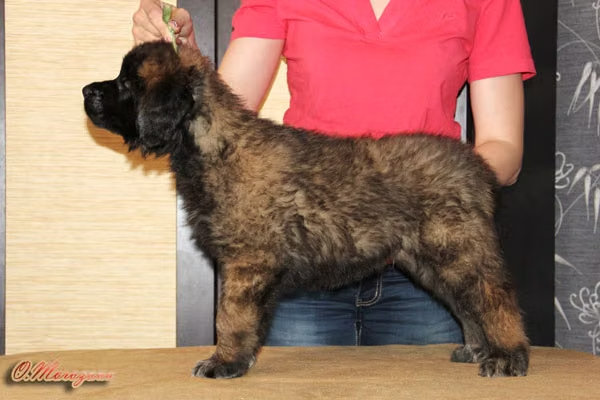
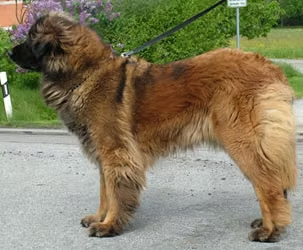

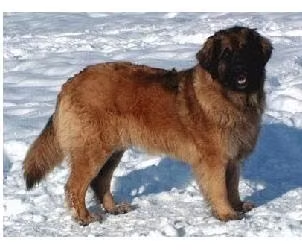
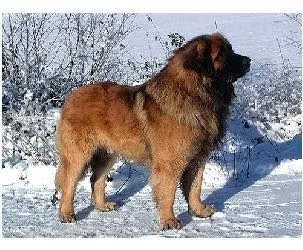

About the Leonberger
The Leonberger is a giant German working breed known for a gentle, patient temperament and strong devotion to family, suiting it to life as a calm household guardian.
The Leonberger is a giant dog from Germany, bred to combine size and strength with an even, gentle disposition. Adults stand among the tallest of all breeds, with males often reaching 79 cm at the shoulder and weighing well over 45 kg. Despite the imposing frame, the breed is calm indoors and patient with children, which is why it is often described as a gentle giant.
The coat is the breed's most recognisable feature: a medium-long double coat in lion-like shades of yellow to red-brown, finished with a dark mask on the face. The overall impression is a powerful, well-balanced dog that moves with an easy, ground-covering gait.
Leonbergers are devoted companions that prefer to stay close to their people. They tend to be friendly rather than aggressive, but their alertness and size give them natural presence as a family watchdog. The main trade-offs to weigh are the heavy shedding, the space and food a giant breed requires, and a relatively short lifespan of 8 to 9 years.
| Attribute | Detail |
|---|---|
| Origin | Germany |
| Size | Giant |
| Lifespan | 8 to 9 years |
| Group/role | Working breed, family guardian and companion |
| Good with | Children and families; generally sociable with other pets |
Who it suits
The Leonberger fits a household with room for a large dog and time for daily exercise and grooming. It is a good match for families with children who want a calm, devoted companion and can manage the shedding and feeding costs of a giant breed. It is less suited to small flats, people who are away for long hours, or owners who cannot commit to regular coat care.
History and origin
The Leonberger was developed in the town of Leonberg, Germany, in the mid-1800s, and the breed nearly disappeared during the two World Wars before being rebuilt from a small number of survivors.
The breed is named after the town of Leonberg in south-western Germany. It is associated with Heinrich Essig, a town councillor and animal dealer who promoted the dogs in the 1840s and 1850s. Accounts credit crosses among large working dogs, including the Newfoundland, the St. Bernard, and the Great Pyrenees, in the development of the breed.
Essig presented the Leonberger as a large, attractive dog with a lion-like coat, and the dogs gained popularity with notable owners across Europe during the second half of the 19th century. Used on farms and estates, they were put to work for draft tasks, guarding, and general farm duties.
The breed was hit hard by the two World Wars. Food shortages and disrupted breeding reduced numbers severely, and the population was rebuilt from a small group of surviving dogs. Dedicated breeders in Germany re-established the line, which is why modern Leonbergers trace back to a narrow base.
In Britain, the Kennel Club recognises the Leonberger within the Working Group. The breed remains moderately popular as a companion and working dog rather than a common household pet.
Appearance and breed standard
The Leonberger is a giant, well-balanced dog with a water-resistant double coat in lion-like yellow to red-brown shades and a distinctive black mask.
The Leonberger is large and muscular with a balanced, rectangular outline that is slightly longer than tall. The head carries a black mask, and dark, medium-sized eyes give a gentle expression. Males are noticeably larger and heavier than females, and mature males often develop a pronounced mane around the neck and chest.
| Trait | Standard |
|---|---|
| Height | Males about 72 to 80 cm; females about 65 to 75 cm at the shoulder |
| Weight | Roughly 50 to 77 kg (males larger than females) |
| Coat | Medium-long, water-resistant double coat with a mane on mature males |
| Colours | Yellow, golden to red and red-brown, often with black tipping; black mask |
| Eyes | Medium-sized, dark brown, with a calm expression |
Coat and colours
The outer coat is medium-soft to coarse and lies flat, with a dense undercoat that provides insulation and water resistance. Accepted colours run from yellow and golden through red and red-brown, frequently with darker tipping along the back. A black mask on the muzzle and face is a defining feature. A small white patch on the chest or white hairs on the toes may appear. The coat sheds year-round and goes through heavier seasonal shedding, so regular brushing is part of routine care.
Temperament and personality
The Leonberger is friendly, calm, and devoted, generally patient with children and sociable with other animals when raised and socialised well.
The Leonberger has a steady, even temperament. Around the family it is affectionate and likes to stay near its people, often following household members from room to room. With children it is typically patient and tolerant, though its size means interactions with very young children should be supervised to avoid accidental knocks.
With strangers the breed is usually confident and reserved rather than nervous or aggressive. It will alert to visitors and has natural presence as a watchdog, but a well-socialised Leonberger settles quickly once it understands there is no threat. Early and ongoing socialisation helps keep that confidence balanced.
With other pets the breed is generally sociable and gets along with dogs and household animals, particularly when raised alongside them. The calm disposition makes it less prone to reactivity than many large guarding breeds. It is sensitive to its handler's mood and responds best to a consistent, even-tempered home.
| Trait | Rating |
|---|---|
| Affection | 5 |
| Energy | 3 |
| Trainability | 4 |
| Vocalness | 2 |
| Shedding | 5 |
Care and grooming
The Leonberger needs regular brushing for its heavy double coat, moderate daily exercise, and indoor space suited to a calm giant breed.
Grooming
- Brush the coat several times a week, and daily during the heavy seasonal sheds, to control loose hair and prevent mats
- Pay attention to the mane, the feathering behind the legs, and the area behind the ears, where tangles form
- Bathe occasionally, every few weeks to a couple of months, depending on activity and coat condition
- Trim nails regularly and check ears for dirt or moisture
- Brush teeth several times a week
Exercise
- Provide around 30 to 60 minutes of moderate activity each day, such as walks and play
- Hold back on hard, repetitive exercise and jumping while the dog is still growing, to protect developing joints
- The breed enjoys cooler weather and water; many take to swimming readily
- Mental work such as basic training and scent games helps satisfy a working dog
Environment
The Leonberger does best in a home with room to move and a securely fenced garden, though it is calm enough to live indoors as a house dog. It tolerates cold well thanks to the dense coat but can overheat in warm weather, so plan exercise for cooler parts of the day in summer. It is a companion breed and is not suited to living outdoors or being left alone for long stretches.
Nutrition and feeding
The Leonberger needs a balanced diet portioned for a giant breed, with puppy feeding managed carefully to support slow, steady growth and joint health.
Feed a complete, balanced diet formulated for large or giant breeds. Adults generally do well on two measured meals a day rather than free feeding, which helps with portion control and may lower the risk of bloat. Growing puppies should be fed a large-breed puppy formula that supports slow, steady growth; overfeeding or excess calories can stress developing joints in a giant dog. Always provide fresh water, and adjust amounts to the individual dog's age, weight, and activity.
| Life stage | Amount per day | Meals |
|---|---|---|
| Puppy (2 to 6 months) | Large-breed puppy food per label, divided | 3 to 4 |
| Junior (6 to 18 months) | Large-breed formula per label | 2 to 3 |
| Adult | About 1.8 to 3.6 kg of large-breed food, by weight and activity | 2 |
| Senior | Adjusted lower for reduced activity | 2 |
Treats and supplements
Keep treats to a small share of daily calories to avoid weight gain, which is hard on a giant dog's joints. Some owners use joint supplements such as glucosamine and chondroitin, and omega-3 fatty acids for skin and coat, but introduce any supplement only after consulting a veterinary surgeon. Because the breed can be prone to bloat, avoid heavy exercise immediately before and after meals.
Health and lifespan
The Leonberger has a relatively short lifespan of 8 to 9 years and is prone to several giant-breed concerns including hip and elbow dysplasia, bloat, and certain cancers.
The Leonberger is a giant breed with a typical lifespan of 8 to 9 years, which is shorter than that of most small and medium dogs. Many of its health concerns are common to large and giant breeds, including joint problems, gastric bloat, and a higher rate of certain cancers. Buying from breeders who screen their dogs for known conditions improves the odds of a healthy puppy. The Kennel Club's Assured Breeder Scheme encourages health testing as part of responsible breeding practice.
| Condition | Signs | Note |
|---|---|---|
| Hip and elbow dysplasia | Limping, stiffness, trouble rising | Screened by breeders; manage weight and exercise |
| Gastric dilatation-volvulus (bloat) | Swollen abdomen, retching, restlessness | Life-threatening emergency; requires immediate veterinary care |
| Osteosarcoma and other cancers | Lameness, lumps, weight loss | Giant breeds carry higher cancer risk |
| Dilated cardiomyopathy | Tiring easily, cough, fainting | Heart condition seen in large breeds |
| Polyneuropathy (LPN) | Weakness, gait changes, exercise intolerance | Inherited nerve disorder with DNA tests available |
Preventive care
- Keep vaccinations and parasite prevention current
- Maintain a lean body weight to reduce strain on joints
- Schedule regular veterinary check-ups, with more frequent visits as the dog ages
- Choose breeders who provide hip, elbow, heart, eye, and DNA screening results
- Learn the signs of bloat and have an emergency plan
Training and socialisation
The Leonberger is intelligent and willing to please, training well with calm, consistent, reward-based methods and early socialisation.
The Leonberger is intelligent and generally eager to cooperate, which makes it trainable for an experienced or committed owner. It is sensitive and responds poorly to harsh handling, so a calm, consistent approach works best. Because the breed grows into a very large, strong dog, basic manners and reliable recall should be taught early, while the dog is still easy to manage. Early socialisation with people, places, and other animals is important for raising a steady, confident adult.
Basics
- Start socialisation and gentle handling in puppyhood, exposing the dog to varied people, sounds, and surfaces
- Teach name response, sit, down, and come first, in short sessions
- Train loose-lead walking early, before the dog reaches full size and weight
- Build a reliable recall and a solid stay for safety
- Practise calm greetings so a friendly giant does not jump on people
- Keep growing dogs off slick floors and away from repeated jumping to protect joints
Breeding and raising young
Leonbergers mature slowly, carry litters that often number in the high single digits to low teens, and require careful breeder screening because of the breed's narrow gene pool and health concerns.
The Leonberger matures slowly, and giant breeds are generally not considered physically ready for breeding until they are well past their first year and have completed health screening. Responsible breeding pairs dogs that have been tested for hip and elbow dysplasia, heart and eye conditions, and the inherited neuropathies, since the breed descends from a narrow base of survivors after the World Wars.
Gestation in dogs lasts roughly 63 days. Leonberger litters are often large, commonly ranging from about 6 to 12 puppies, reflecting the breed's size. The dam needs increased nutrition through late pregnancy and nursing, along with a quiet, clean whelping area.
Puppies grow rapidly and reach a substantial weight quickly, so weight, nutrition, and joint protection matter from the start. Early socialisation and gentle handling during the first weeks set the foundation for the breed's steady adult temperament. Reputable breeders place puppies in screened homes and provide full health documentation.
| Metric | Value |
|---|---|
| Sexual maturity | Around 1 to 2 years; breed after health testing |
| Gestation | About 63 days |
| Average litter size | About 6 to 12 puppies |
| Weaning | Around 6 to 8 weeks |
| Health screening | Hips, elbows, heart, eyes, and DNA tests for neuropathies |
Leonberger registration and microchipping in the UK
Your Leonberger's details on a record that satisfies UK microchip law: free with United Pet Club, for life, with nothing to renew.
Registering a Leonberger in the United Kingdom
Give your Leonberger five minutes of paperwork before it needs rescuing. The free profile takes a name, a date of birth, a photo and your contact details, and it lives on a registry that never charges for the privilege. Dog registration works whether the chip is already in or still on the to-do list.
A chip without a registration is a serial number and nothing more. File your Leonberger's fifteen digit number with United Pet Club and it becomes a route back to you: free for life, open to every chip brand sold in Britain, and searchable whenever a scanner finds it. Microchip registration takes less time than the kettle, and a free account covers the profile too.
How do I register my Leonberger in the UK?
Set up a free United Pet Club account, add your Leonberger's details and a photo, and save. The profile stays live for the whole of the dog's life at no charge, and the chip number can be added the moment you have it.
How do I register my Leonberger's microchip?
Key the fifteen digit number into your free United Pet Club account with your current address and phone number. The lifetime plan accepts any brand a British vet implants, and amendments after a house move are free.
Is microchipping a Leonberger required by law in the UK?
Yes. Dogs in England, Scotland and Wales have had to be chipped since 2016, with the keeper's details kept current. The law covers the chip; keeping the record pointing at a live phone number is what United Pet Club handles, free.
How much does it cost to register a Leonberger in the UK?
Nothing at all. The United Pet Club lifetime plan covers the profile, the microchip record and every amendment without a fee, so there is no renewal to remember.
Frequently asked questions
Common questions about the Leonberger cover its size, temperament, grooming needs, lifespan, suitability for families, and availability.
How big does a Leonberger get?
It is a giant breed. Males commonly stand about 72 to 80 cm at the shoulder and weigh roughly 50 to 77 kg, with females somewhat smaller.
What is the Leonberger's temperament like?
It is friendly, calm, and devoted, usually patient with children and sociable with other pets. It is confident and alert with strangers without being aggressive.
Is the Leonberger hard to care for?
It is moderately demanding. The heavy double coat needs brushing several times a week, the dog needs daily moderate exercise, and feeding a giant breed costs considerably more than smaller dogs.
How long do Leonbergers live?
The typical lifespan is 8 to 9 years, which is shorter than most small and medium breeds, as is common for giant dogs.
Is the Leonberger good for families?
Yes. It is known as a gentle giant and generally does well with children and other pets, provided there is enough space, time for grooming and exercise, and supervision of small children around such a large dog.
Are Leonbergers easy to find in the UK?
They are a moderately popular breed rather than a common one. Puppies usually come through dedicated breeders registered with the Kennel Club, and waiting lists are common, so expect to plan ahead and verify health screening.
Do Leonbergers shed a lot?
Yes. The breed sheds year-round and goes through heavier seasonal sheds, so regular brushing and tolerance for some hair around the home are needed.
From the community
Ask about the LeonbergerNo questions about the Leonberger yet. Be the first to ask.
Browse Dog breeds